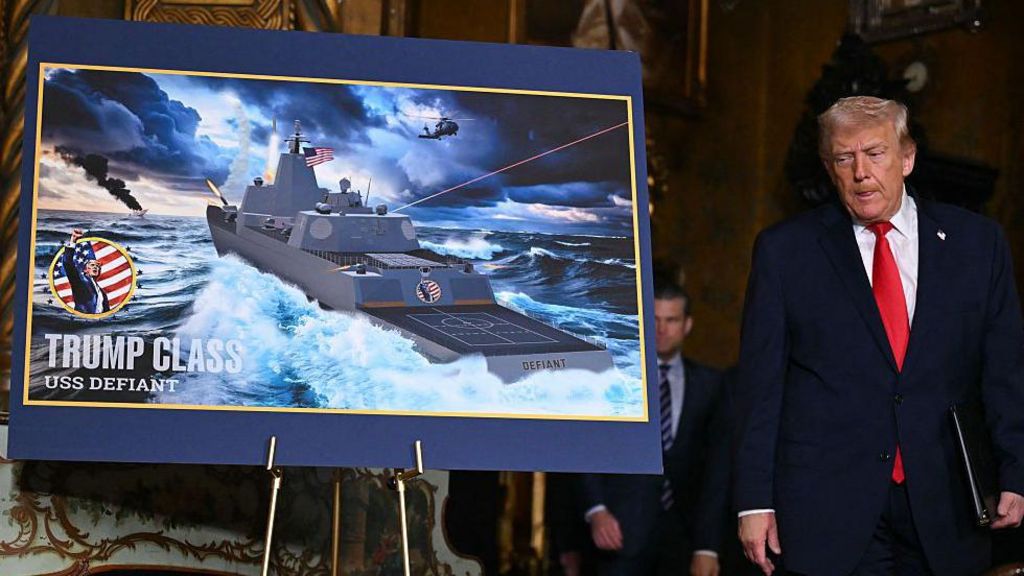
The Trump administration has tabled a historic proposal on Capitol Hill that would push U.S. defense spending to $1.5 trillion — the single largest expansion of military outlays since World War II — in a push to advance the president’s long-stated goal of rebuilding domestic defense manufacturing and bolstering national defense capabilities. If approved, the budget would mark a 42% jump in defense spending compared to the prior fiscal year, representing the most dramatic reordering of federal spending priorities in decades. The massive request, which requires congressional approval to take effect, is structured separately from the separate $200 billion in emergency funding the Pentagon has already requested to support ongoing military operations in Iran. Breaking down the $1.5 trillion total, roughly $1.1 trillion would be allocated as discretionary Pentagon spending, a figure that sets a new all-time record for the department. An additional $350 billion earmarked for expanding the domestic defense industrial base would advance through the budget reconciliation process, a Senate procedural rule that allows the measure to pass with a simple 51-vote majority rather than the 60-vote threshold usually required for most major legislation. Among the top funded priorities outlined in the proposal is the White House’s ambitious Golden Dome missile defense initiative, a multi-layered system designed to shield the continental U.S. from advanced next-generation missiles and drone attacks. The system will integrate interception and sensor technology positioned on land, at sea, and in orbit, according to administration officials. While the White House has pegged the total cost of Golden Dome at $185 billion, independent analysts have raised major concerns about the true long-term price tag. The nonpartisan Congressional Budget Office has already estimated that just the space-based components of the system alone could cost $542 billion over 20 years, and many defense experts warn the full cost could eventually consume a large share of the total expanded defense budget. The proposal also allocates $65.8 billion for expanded U.S. naval shipbuilding, part of the administration’s plan to build what Trump has called a “Golden Fleet” of next-generation warships. This funding supports the production of the newly unveiled Trump-class battleships, a class of heavily armed vessels first announced by the president in December. Trump confirmed earlier this year that construction on the lead ship of the class, the USS Defiant, will begin shortly after budget approval, with the first vessels projected to enter active service within two and a half years. Administration officials have repeatedly justified the expanded shipbuilding investment by warning that the U.S. currently lags far behind China in both overall shipbuilding capacity and total naval vessel output, a gap they argue must be closed quickly to protect U.S. strategic interests globally. In addition to capital investments, the budget also includes funding for targeted pay raises for active-duty military personnel, a long-sought priority for uniformed service members. To offset the massive increase in defense spending, the administration has proposed deep cuts to non-defense domestic programs, cutting overall domestic spending by 10% — a reduction of roughly $73 billion. The cuts target a range of federal initiatives, including existing climate action programs, housing assistance, and public education initiatives. In an online summary of the budget proposal, the administration frames the cuts as a necessary step to eliminate what it calls “woke, weaponised and wasteful programmes,” and to shift control of domestic social programs back to state and local governments, in line with longstanding conservative policy priorities. President Trump doubled down on this framing during a private White House event earlier this week, where comments caught on camera reaffirmed his view that national defense must be the top federal priority moving forward. “It’s not possible for us to take care of daycare, Medicaid, Medicare, all of these individual things, they can do it on a state basis,” Trump told attendees, adding that the federal government’s core focus must remain on “military protection.” The proposal now heads to Congress, where it will face debate and a vote before any spending changes can be enacted.