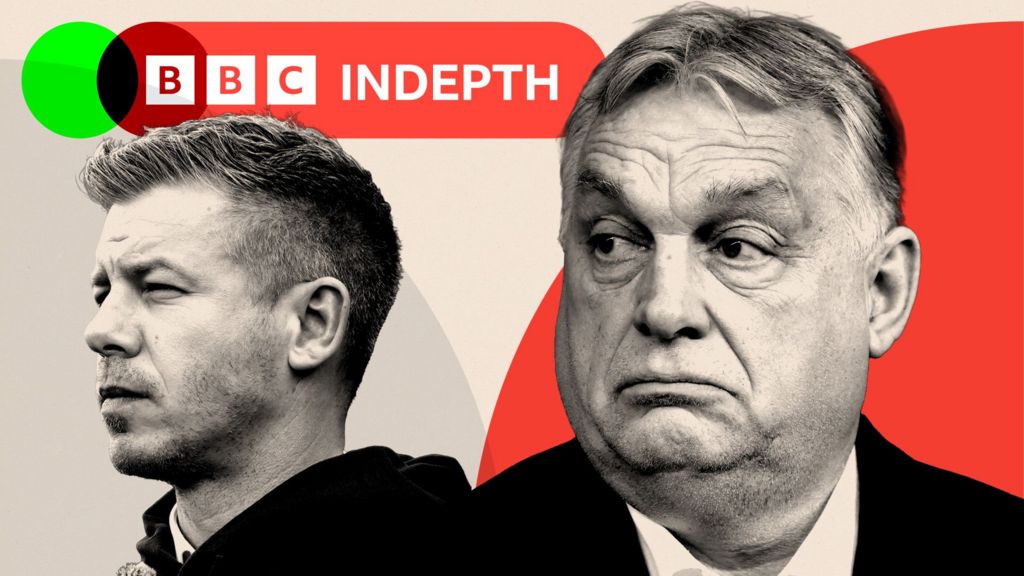
One week out from Hungary’s 12 April parliamentary election, long-ruling nationalist Prime Minister Viktor Orbán showed a rare crack in his carefully crafted public image. Addressing a mass campaign rally in the western Hungarian city of Győr on 27 March, a hoarse, furious Orbán lashed out at opposition protesters who interrupted his speech with chants against his ruling Fidesz party, declaring “All they stand for is anger, hatred, and destruction.” The outburst shattered the carefully polished persona Orbán has cultivated for years: the steady, unflappable leader steering Hungary through global crisis. For a leader accustomed to disarming even critics with humor and charm, this unscripted display of temper laid bare the urgent pressure he faces to hold onto power after 16 years of unchallenged rule.
Poll after poll puts the opposition Tisza Party, led by former Fidesz insider Peter Magyar, far ahead of Fidesz – the most recent survey pegs Tisza support at 58%, against Orbán’s 35%. After holding nearly unrivaled power since 2010 and holding just a handful of campaign rallies in the last three elections, Europe’s longest-serving incumbent leader has been forced back onto the campaign trail, scrambling to mobilize his base and win over undecided voters. The stakes stretch far beyond Budapest: a defeat for Orbán would not only end his 16-year hold on power, but would also send shockwaves through the global illiberal populist movement that he has spent more than a decade building as its figurehead.
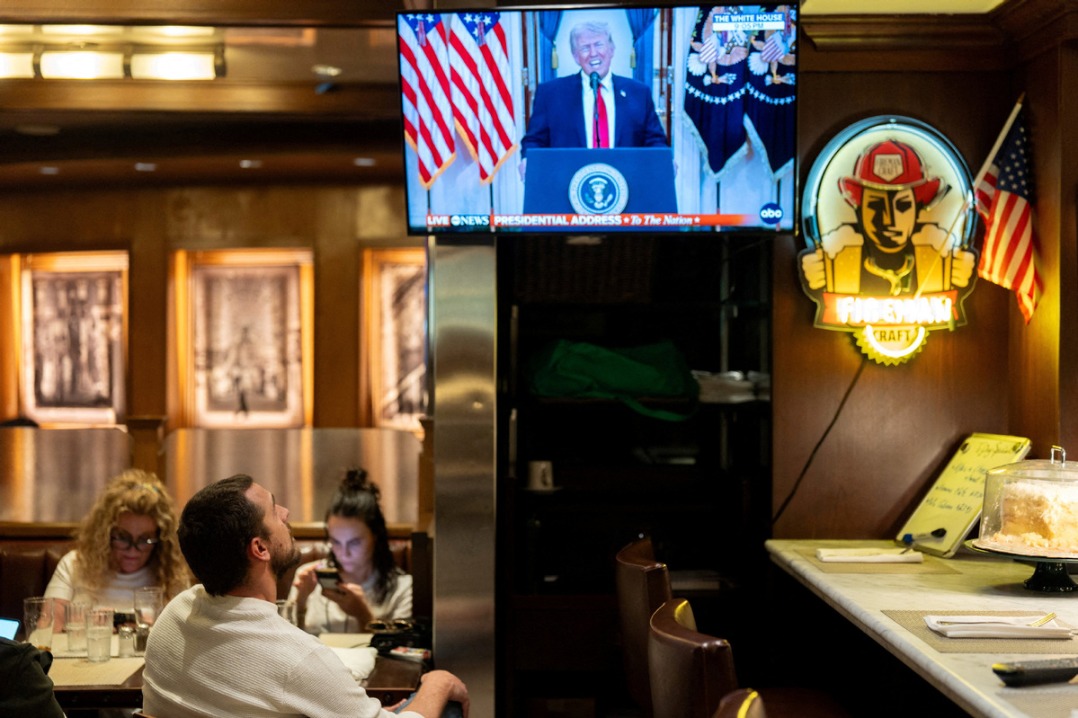
Orbán’s tenure has positioned him as a defining figure on the global right. He has counted both former U.S. President Donald Trump and Russian President Vladimir Putin among his supporters, has long been a persistent source of friction for the European Union, and stands out as one of the only EU leaders to refuse alignment with Western support for Ukraine against Russian invasion. For nationalist movements rising across Europe, from ruling parties to opposition groups on the brink of power, Orbán has served as the blueprint for how to win power and upend liberal democratic norms. It is for this reason that political observers and populist movements across the world are watching the 12 April vote with unprecedented intensity.
Shifting public opinion data confirms the dramatic swing against Fidesz. Pollster Endre Hann of Hungary’s Median public opinion research firm notes that just three months ago, 44% of respondents expected Fidesz to win, compared to 37% who backed a Tisza victory. By March, that number flipped entirely: 47% now believe Tisza will win, while just 35% predict a Fidesz victory. “This reflects a huge change of trust,” Hann explains. “People believe that it can be changed.”
The most striking irony of this election cycle is that the same voter anger that has swept right-wing populists into power across Europe – fury at entrenched, corrupt ruling elites – is now working against Orbán. Today, it is Orbán and Fidesz that are widely labeled by Hungarians, especially younger voters, as the corrupt, out-of-touch establishment the public wants to oust.
The Fidesz government has faced repeated allegations of graft, including the channeling of billions in state contracts to firms owned by Orbán’s close friends and family members. Orbán has framed this concentration of economic power as a deliberate push to keep Hungarian assets out of foreign hands, but critics call it systemic cronyism. Orbán’s son-in-law, Istvan Tiborcz, owns a portfolio of high-profile Hungarian hotels, while his childhood friend Lörinc Meszaros – a former gas fitter – is now Hungary’s wealthiest citizen. All involved deny any wrongdoing, and Orbán has refused to answer questions about the accumulated wealth of his inner circle.
Allegations of systemic voter intimidation and vote-buying have also dominated the closing weeks of the campaign. An investigative documentary released last week claims that Fidesz’s long-standing local patronage network, built up over more than two decades in rural Hungary, is being deployed on an unprecedented scale to deliver votes. The documentary alleges that Fidesz-aligned local mayors are given mandatory vote quotas for each village, with offers ranging from €120 in cash, food coupons, and prescription drugs to access to the only local public works jobs in exchange for supporting Fidesz. Voters who refuse are allegedly cut off from social and work support. On election day, the documentary claims, Fidesz organizers arrange transportation to polling stations and deploy “companions” to accompany voters into the booth to ensure they cast a ballot for the ruling party.
There has been no formal official response from the Fidesz government to the allegations, though one cabinet minister noted that any confirmed wrongdoing should be handled by law enforcement. Veteran Hungarian election observers note that while minor vote-buying by rival parties has been common in past cycles, the scale of alleged irregularities this year is unmatched.
Fidesz allies push back against the narrative that the ruling party is on the brink of defeat, arguing that the narrative of a Fidesz loss is deliberately manufactured by the opposition to set up expectations of fraud should Orbán win. “All these scandals are just the usual suspects trying to build a narrative,” says Zoltan Kiszelly, a political analyst with government-aligned think tank Szazadveg. “When the opposition lose the election, this gives them an excuse to allege ‘fraud.’” Kiszelly adds that the key to the election will not be polling numbers, but turnout: Fidesz’s success hinges on whether its base can be convinced to show up to vote. “Nobody believes in the opinion polls, neither our own, nor the opposition ones,” he says. “The majority of the voters are for Fidesz. Of pensioners, of women, of the Roma, of the poor, of the blue collar workers, of the rural people. The question is, will they cast their vote?”
Gabor Török, a rare political analyst respected by both sides in Hungary’s deeply polarized political landscape, warns that Orbán’s recent uncharacteristic outbursts do not bode well for the ruling party. “This is not the ‘calm strength’ or the ‘strategic calm,’ image, nor the one carefully cultivated for years and displayed on ‘Prime Minister of Hungary’ posters,” Török wrote recently. “If the remaining two weeks unfold like this, it does not bode well for the government side.”
Orbán’s core campaign message to voters frames the election as a binary choice between peace and war. He has positioned himself as the only leader capable of preventing Brussels from dragging Hungary into the war in Ukraine, framing opposition leader Peter Magyar as a puppet of EU leaders who would force Hungary to deploy troops against Russia, sending young Hungarian men to die on the Eastern Front – a message crafted to resonate deeply in a country that suffered catastrophic losses in both World Wars. Orbán has argued since 2022 that Russia cannot be militarily defeated, and that the West should pressure Ukraine to negotiate peace on Russia’s terms. Giant campaign billboards across Hungary depict Ukrainian President Volodymyr Zelenskyy with the slogan: “Don’t let Zelensky have the last laugh!”
Recent polling suggests this core messaging is losing traction with Hungarian voters. Hann’s latest data shows that 52% of respondents now agree that Russia launched an unprovoked, illegal full-scale invasion of Ukraine, while just 33% back Fidesz’s narrative that Russia acted legally to defend its own security interests. The 2010 shutdown of the Druzhba (Friendship) pipeline that carried Russian crude oil to Hungary through Ukraine, after a Russian attack damaged a key pumping hub, has amplified the rhetorical battle: Orbán accuses Zelenskyy of deliberately blocking the restart of oil flows to damage his election prospects. Kiszelly explains that the party frames the energy disruption as tied directly to household utility costs, which Fidesz has capped since 2013 to keep Hungary’s consumer energy prices the lowest in the EU. The government argues the price caps can only survive with continued access to cheap Russian energy.
The man seeking to unseat Orbán is a figure that few predicted would become a threat just two years ago: Peter Magyar, a 45-year-old former Fidesz insider, former diplomat, and ex-husband of a former Fidesz justice minister. Magyar shocked Hungarian politics in February 2024 when he resigned abruptly from all his party and state posts, published a viral anti-corruption interview that racked up two million views in days, and launched his new opposition party, named for the Tisza river, a major Hungarian tributary of the Danube.
Long dismissed as too urbane, too slick, and too tied to Budapest’s elite to win over rural Fidesz voters – Orbán’s core base – Magyar has defied all expectations. He has spent two years touring the country relentlessly, abandoning scripted speeches to speak directly to voters, and now draws huge crowds even in traditional Fidesz strongholds. Unlike Orbán, who focuses heavily on global geopolitics in his rallies, Magyar centers his platform on domestic bread-and-butter issues: underfunded healthcare, failing education, crumbling transport infrastructure, and rampant rural depopulation.
On foreign policy, Magyar breaks sharply with Orbán. He has pledged to diversify Hungary’s energy supplies away from Russia, renegotiate existing energy contracts with Moscow, and restore Hungary’s full standing within the EU and NATO. He has also adapted quickly to campaigning: after early criticism that his scripted speeches felt stilted, he abandoned his notes and now speaks directly to crowds, answering questions openly and honestly – a departure from the controlled messaging that defines Orbán’s campaign. Where Orbán holds one rally a day, Magyar visits three to six, aiming to reach all 106 parliamentary constituencies before voting day. He relies on live streaming his rallies on Facebook to reach voters, bypassing Fidesz’s tightly controlled domestic media empire, and has drawn crowds of thousands in provincial cities that once reliably backed the ruling party. Even a senior Fidesz official has privately acknowledged that Magyar brings a “brutal energy” that the ruling party’s campaign lacks.
Magyar has faced his own share of campaign controversy: his ex-wife has publicly accused him of domestic violence, and Fidesz has run multiple smear campaigns against him, including releasing a secretly recorded conversation and linking him to cocaine use. Magyar has denied all allegations, published a negative drug test, and challenged Fidesz politicians to release their own test results.
Recent polling confirms that Tisza has pulled ahead in nearly all key swing constituencies, with Magyar reporting a “tipping point” of support in rural Fidesz heartlands. If the polls hold, he is on track to end Orbán’s 16-year hold on power.
The global stakes of the vote are hard to overstate. As Michael Ignatieff, former rector of the Central European University – which was forced out of Budapest by Orbán’s government in 2019 – puts it: “Budapest is the headquarters of illiberal democracy in the world. This is not just an election. This is a referendum on that whole model of authoritarian rule that Orban represents.”
Orbán has turned Hungary into a global hub for the transatlantic populist right, hosting major gatherings of conservative influencers, think tanks, and political leaders from Europe and North America in recent years. While no top U.S. politicians attended this year’s Conservative Political Action Conference (CPAC) held in Budapest, the U.S. Republican Party has remained aligned with Orbán: Secretary of State Marco Rubio visited in February, and Vice President JD Vance is set to travel to Budapest in the final days of the campaign. A Fidesz victory would give a major boost to rising far-right parties across France, Germany, Poland, Spain, and Portugal, while an Orbán defeat would deflate momentum for those movements. A senior Tisza official argues that a Tisza win could show the rest of Europe a path out of the growing tide of radical nationalism.
For Hungary itself, the outcome will reshape the country’s future for decades. Former Hungarian Supreme Court President Andras Baka argues that a Fidesz victory would entrench what critics call state capture, cementing single-party control over all branches of government into a permanent, increasingly rigid autocracy. A Tisza victory, by contrast, would require a massive overhaul of Hungarian institutions: restoring independence to the courts, prosecution service, audit office, public media, and intelligence services that have been brought under Fidesz control over 16 years. The speed and success of that overhaul, analysts note, will depend on the size of Tisza’s eventual margin of victory.