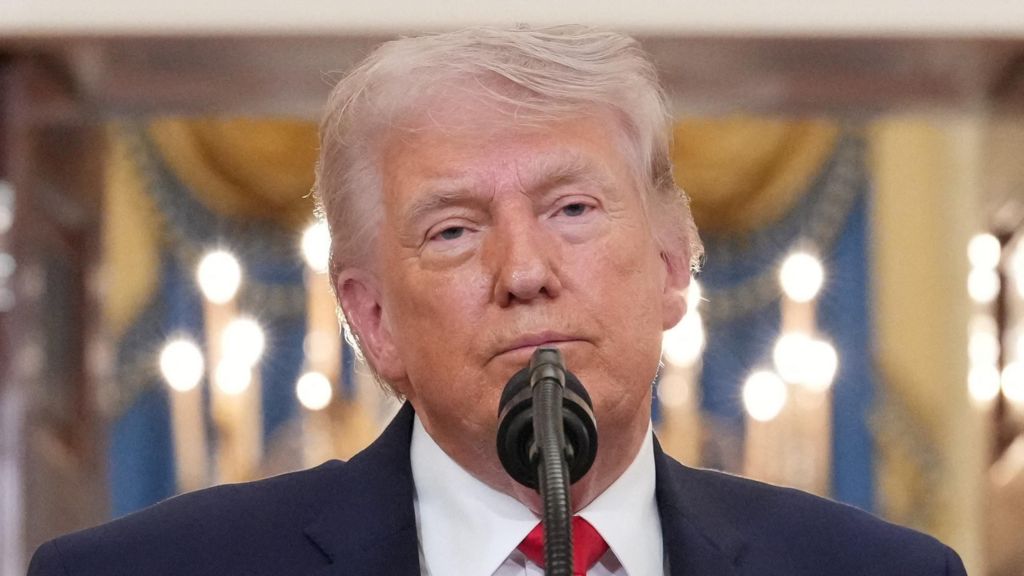
Since U.S. President Donald Trump launched military operations against Iran in late February, conflicting and constantly shifting timelines for the conflict’s conclusion from the White House and senior administration officials have drawn widespread attention and scrutiny. In his first primetime national televised address dedicated to the war on Wednesday, Trump offered the latest update, claiming U.S. forces are on track to meet their stated military objectives “shortly, very shortly.”
In the address, Trump sought to frame the ongoing conflict as relatively brief compared to protracted historical U.S. engagements like World War II and the Vietnam War, before laying out a new 2 to 3 week timeline for decisive action. “Over the next two to three weeks, we’re going to bring them back to the Stone Ages, where they belong,” he told the American public.
This shifting forecast is far from an isolated incident. Since Trump first announced the start of operations on February 28, when he said the campaign would continue “as long as necessary to achieve our objective,” the president has repeatedly flipped between contradictory claims: that the U.S. has already secured victory, and that the campaign will drag on for somewhere between two and six weeks. The six-week mark since the operation launched will fall on April 11.
Internal inconsistencies across the administration have only added to the confusion. Just over a month ago, Defense Secretary Pete Hegseth told CBS News’ *60 Minutes* that the military action taken up to that point was “only just the beginning,” a statement the Department of Defense echoed in a social media post less than 24 hours later. Yet that same day, Trump claimed during a Florida press conference that the U.S. had already made “major strides” toward its goals, adding that “some people could say they’re pretty well complete.”
Secretary of State Marco Rubio has struck a middle ground between the two officials. A day before Trump’s Wednesday address, he told Fox News: “We can see the finish line. It’s not today, it’s not tomorrow, but it’s coming.”
For his part, Hegseth has defended the fluid timelines, arguing that intentional ambiguity offers tactical benefits on the battlefield. “Don’t tell your enemy what you’re willing to do or not do, and don’t tell your enemy when you’re willing to stop,” he told reporters Wednesday. “It could be any particular number, but we would never reveal precisely what it is, because our goal is to finish those objectives, and we’re well on our way.”
Foreign policy and historical experts interviewed by the BBC note that adjusting war timelines as a conflict evolves is not unprecedented, but the frequency and scope of contradictions in the Trump administration’s messaging stands out in modern U.S. history.
“Presidents have often offered timelines to buy time with the public during wars, and almost all of them underestimate the time,” explained Thomas Patterson, a historian at the Harvard Kennedy School. Looking back at past examples, Lyndon B. Johnson’s famous 1967 “light at the end of the tunnel” rhetoric about Vietnam failed to mask an eight-year extension of the conflict that ultimately ended Johnson’s presidency. In 1999, Bill Clinton predicted a brief NATO bombing campaign against Yugoslavia, only for the strikes to stretch on for more than two months. George W. Bush’s infamous 2003 “Mission Accomplished” speech on an aircraft carrier early in the Iraq War was followed by eight more years of U.S. troop presence in the country.
Eric Min, a professor of conflict resolution and diplomacy at the University of California, Los Angeles, pointed out that forecasting war duration is inherently uncertain, as conflicts regularly shift in unexpected ways. Even so, he noted, the level of inconsistency across the Trump administration is unique. “The inconsistency of positions throughout the administration is pretty unique. There’s not really a historical analogue that I can think of,” Min said.
The White House has pushed back against these criticisms, with press secretary Karoline Leavitt claiming last month that “Trump and his entire team have consistently laid out clear objectives.”
Wednesday’s highly anticipated primetime address had already sparked widespread speculation in Washington ahead of its delivery, with many political observers expecting Trump to announce a major policy shift — either an expansion of the conflict to include ground troops, or a drawdown of operations. Instead, the address delivered only another revised timeline for the war’s end, continuing the pattern of shifting forecasts that has defined the administration’s public messaging on the Iran conflict.