分类: politics

  • UK ‘forces are active’ and British planes involved in ‘defensive operations’ in Middle East

    UK ‘forces are active’ and British planes involved in ‘defensive operations’ in Middle East

    Prime Minister Keir Starmer has declared that British military assets are actively engaged in defensive operations across the Middle East to safeguard national interests and protect regional allies. The announcement followed an emergency Cobra committee session attended by senior ministers, defense chiefs, and intelligence officials.

    While explicitly stating that the United Kingdom “played no role” in recent US-Israeli strikes against Iranian targets, Starmer emphasized Britain’s enhanced defensive posture. “We have a range of defensive capabilities in the region,” he stated, “which we’ve recently taken steps to strengthen. Our forces are active and British planes are in the sky today as part of coordinated regional defensive operations.”

    The Prime Minister characterized Iran’s government as “utterly abhorrent” while identifying nuclear non-proliferation as Britain’s primary regional objective. “Iran must never be allowed to develop a nuclear weapon,” Starmer asserted, noting this remains a shared goal with international allies including the United States.

    British military deployments include Typhoon jet squadrons stationed at Al Udeid Air Base in Qatar through a joint British-Qatari unit established in January. These advanced aircraft possess capability to intercept Iranian Shahed-136 drones. Additional UK military presence encompasses naval facilities in Bahrain and airbases across Qatar, UAE, Oman, and Cyprus.

    Regional analysts highlight Britain’s delicate balancing act. Chris Doyle of the Council for the Advancement of Arab-British Understanding noted: “The biggest risk would have been for Britain to participate in a war that is illegal and that would have had unclear and unachievable objectives.” He suggested Starmer’s government remains concerned about potential Iranian retaliation affecting British supply routes through critical waterways like the Straits of Hormuz.

    The disclosure follows reports that Starmer previously denied US requests to utilize British bases at Diego Garcia and RAF Fairford as launch sites for offensive operations against Iran. This decision drew criticism from opposition figures including Reform UK’s Nigel Farage and Conservative leader Kemi Badenoch, while receiving support from Green Party leader Zack Polanski who characterized potential involvement as supporting “illegal, unprovoked and brutal attack[s].”

  • US-Israel attack Iran when peace was within reach

    US-Israel attack Iran when peace was within reach

    In a dramatic reversal of diplomatic progress, United States and Israeli forces launched coordinated military strikes against Iranian targets this week, effectively derailing what mediators described as the most promising nuclear negotiations in years. The escalation occurred just as negotiators in Geneva were finalizing a principles agreement that would have significantly constrained Iran’s nuclear program.

    Omani Foreign Minister Badr Albusaidi had publicly characterized the talks as demonstrating “unprecedented openness,” with both sides moving beyond entrenched positions to explore creative solutions. The proposed framework included verifiable limits on uranium enrichment, complete elimination of highly enriched uranium stockpiles, and unprecedented International Atomic Energy Agency monitoring provisions that potentially included US inspectors operating within Iran.

    Iranian negotiators had demonstrated remarkable flexibility, offering strategic compromises designed to address US political realities. These included proposals for energy sector cooperation and economic incentives that represented calculated concessions rather than unilateral surrender. The objective was clear: establish enforceable nuclear constraints through intrusive verification mechanisms that would address proliferation concerns more effectively than sanctions or military threats.

    Mediators revealed that a principles agreement could have been signed within days, with detailed verification protocols following within months. The diplomatic breakthrough appeared tangible—until military action intervened.

    The strikes, framed by US leadership as “major combat operations” necessary to eliminate nuclear and missile threats, targeted Tehran and other Iranian cities. Iran responded with immediate retaliatory measures, launching missiles and drones against US bases and allied states across the Gulf region. Reports confirmed explosions in Bahrain, the United Arab Emirates, and other locations, with at least one fatality in Abu Dhabi.

    This escalation carries profound implications for regional stability and non-proliferation efforts. Iran represents a structurally resilient state with layered institutions and embedded security apparatus—distinct from the personalized dictatorships of Iraq or Libya. Its asymmetric capabilities, including missile systems positioned along the Strait of Hormuz, ensure that conflict will not remain contained.

    The timing of military action—during active diplomatic progress—undermines the premise that negotiation represents a genuine alternative to war. It signals that even successful diplomacy offers no guarantee against escalation, potentially convincing both sides that future negotiations are futile. This perception may harden deterrence postures and establish aggression as the default language of international power dynamics.

    The failure of diplomacy amid visible progress raises fundamental questions about strategic objectives and the durability of American commitments to negotiated solutions. As regional conflict expands beyond Iran’s borders, the prospect of prolonged confrontation threatens global energy markets and international security architecture.

  • Where have Nepal’s ‘nepo kids’ gone as corruption takes centre stage in election?

    Where have Nepal’s ‘nepo kids’ gone as corruption takes centre stage in election?

    Nepal’s political landscape is undergoing a profound transformation as the nation approaches pivotal elections, driven by a youth-led uprising against systemic corruption and elite privilege. The catalyst for this movement emerged from the ostentatious displays of wealth by politicians’ children on social media, which exposed glaring economic disparities in a country grappling with 20.6% youth unemployment and three million citizens working overseas.

    The movement ignited last September when proposed restrictions on social media platforms—the very spaces where young Nepalis voiced outrage over ‘nepo kids’—triggered massive protests. The demonstrations turned tragic when police violence resulted in 77 fatalities, ultimately forcing the prime minister’s resignation. This watershed moment compelled political parties to address long-standing grievances about corruption and inequality.

    In response to the uprising, major parties have proposed anti-corruption measures and governance reforms. The newly-formed Rastriya Swatantra Party promises constitutional accountability, while the Communist Party of Nepal UML commits to youth mobilization in national development. The Nepali Congress has taken the significant step of removing its five-time former prime minister as president and proposing comprehensive asset investigations dating to 1991.

    The social media landscape has shifted dramatically since the protests. Prominent figures like Shrinkhala Khatiwada (daughter of a former health minister) have deactivated their accounts, while Smita Dahal (granddaughter of a three-time prime minister) has made her profiles private. Though some, like entrepreneur Saugat Thapa, continue displaying luxury lifestyles, their posts no longer generate the same public fury.

    Transparency International data reveals 84% of Nepalis consider government corruption a major problem, exemplified by recent scandals including inflated infrastructure costs and fake document schemes involving former ministers. As young voters prepare to cast ballots, they demand concrete action rather than symbolic gestures. While acknowledging some progress, youth leaders emphasize that true change requires systemic overhaul rather than superficial adjustments—a challenging prospect given Nepal’s likely coalition government outcome.

    The legacy of September’s sacrifices remains fresh for many protesters, who view the upcoming election as both memorial to the fallen and opportunity for transformative change in a nation weary of injustice.

  • Before Trump bombing, Oman FM called US-Iran deal ‘within reach’

    Before Trump bombing, Oman FM called US-Iran deal ‘within reach’

    In a remarkable revelation just hours before President Donald Trump authorized military strikes against Iran, Omani Foreign Minister Albusaidi appeared on CBS’s “Face the Nation” to declare that a comprehensive nuclear agreement was imminent. The high-level diplomat, serving as mediator in recent U.S.-Iran negotiations, disclosed that Tehran had committed to unprecedented concessions—including zero stockpiling of nuclear material—that would have effectively prevented weaponization capabilities.

    Albusaidi emphasized the breakthrough nature of these commitments, stating, “This is something completely new. It really makes the enrichment argument less irrelevant because now we are talking about zero stockpiling. If you cannot stockpile material that is enriched, then there is no way you can actually create a bomb.” The proposed deal included full verification by the International Atomic Energy Agency, going beyond the parameters of the 2015 Obama-era agreement that Trump had previously abandoned.

    The timing of this disclosure proves particularly significant given that additional talks were scheduled for the following week. Trita Parsi of the Quincy Institute for Responsible Statecraft noted that the Omani FM’s unprecedented public revelation suggested negotiators believed Trump was preparing to choose military action despite diplomatic progress. “The American people should know that peace was within reach when Trump instead opted for war,” Parsi concluded.

    This development occurred against a backdrop of limited public support for military engagement with Iran, with only 21% of Americans supporting offensive action under current circumstances according to recent surveys. The strikes therefore represent a deliberate escalation despite viable diplomatic alternatives being actively negotiated through neutral intermediaries.

  • UN chief condemns US-Israeli attacks on Iran during emergency Security Council meeting

    UN chief condemns US-Israeli attacks on Iran during emergency Security Council meeting

    UNITED NATIONS — Secretary-General António Guterres issued a stern condemnation of recent U.S.-Israeli military operations against Iran during an emergency Security Council session convened Saturday. The UN leader characterized the situation as pushing the world toward catastrophic escalation and demanded immediate diplomatic reengagement to avert broader regional conflict.

    Guterres emphasized the critical need to prevent further deterioration of regional stability, warning that alternative outcomes could include severe humanitarian consequences and widespread instability. The Secretary-General simultaneously denounced Iran’s retaliatory measures against multiple Middle Eastern nations, including Bahrain, Iraq, Jordan, Kuwait, Qatar, Saudi Arabia, and the United Arab Emirates, as violations of sovereign territories.

    The emergency meeting, requested by five Security Council members (Bahrain, France, Russia, China, and Colombia), occurred during a significant transitional period—the final day of the United Kingdom’s presidency before the United States assumes rotational leadership for March.

    Israeli Ambassador Danny Danon preemptively dismissed criticism as hypocritical, asserting that Iran’s proxy operations, nuclear ambitions, and missile programs justified preventive measures against what he described as an imminent threat. Meanwhile, Iranian Foreign Minister Abbas Araghchi formally accused the United States and Israel of blatantly violating international law and the UN Charter, maintaining that Iran’s actions constituted legitimate self-defense.

    European powers—Britain, France, and Germany—issued a collective statement condemning Iranian regional airstrikes while urging renewed diplomatic efforts regarding Tehran’s nuclear program. These nations, original signatories to the 2015 nuclear agreement from which the U.S. withdrew in 2018, emphasized that the Iranian people should ultimately determine their nation’s future trajectory.

  • US, Israel strike Iran; Iran threatens retaliation

    US, Israel strike Iran; Iran threatens retaliation

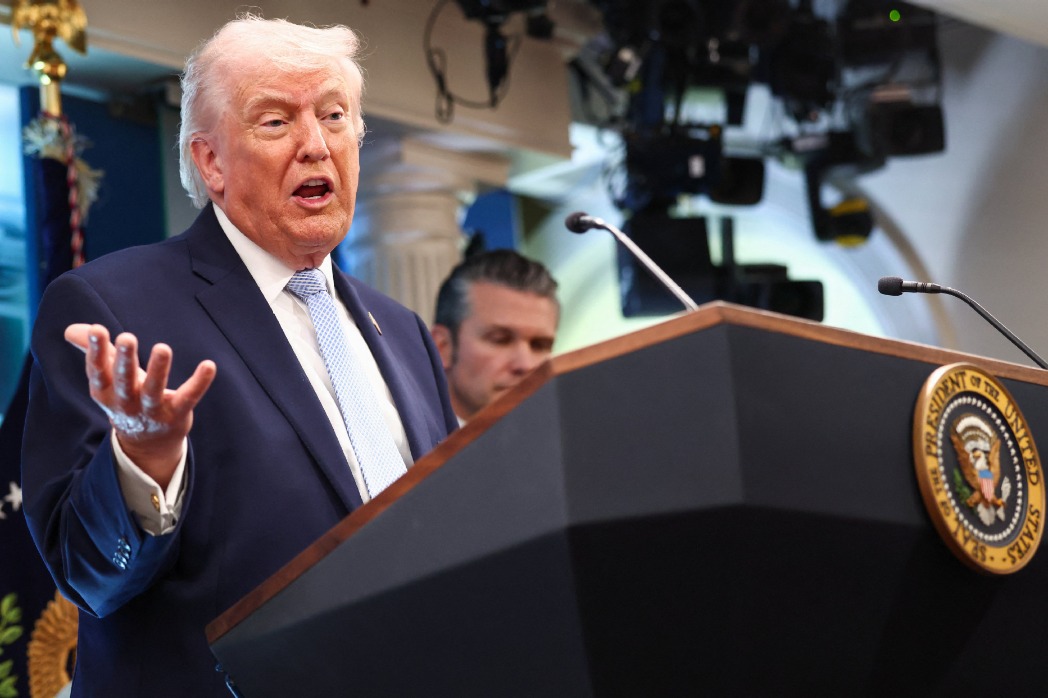
    In a dramatic escalation of Middle East tensions, United States military forces initiated large-scale combat operations against targets inside Iran in coordination with Israeli defense forces. President Donald Trump announced the offensive in a pre-dawn video address from his Mar-a-Lago estate, characterizing the action as necessary to eliminate “imminent threats” posed by the Iranian regime.

    The unprecedented strikes, which reportedly targeted compounds associated with Supreme Leader Ayatollah Ali Khamenei in Tehran, occurred amid ongoing diplomatic negotiations between Washington and Tehran. Social media footage showed skies above the Iranian capital filled with smoke following the initial bombardment.

    President Trump justified the military action as preventive measures against nuclear proliferation, stating: “Our objective is to defend the American people by eliminating imminent threats from the Iranian regime. This vicious group of very hard, terrible people directly endangers the United States, our troops, our bases overseas, and our allies throughout the world.”

    The operation drew immediate political division in Washington. Republican Senator Lindsey Graham praised Trump’s decisiveness, noting it represented the first time in 47 years that a U.S. president had “stood with the people of Iran.” Conversely, Democratic lawmakers condemned the unilateral action. Senator Andy Kim of New Jersey criticized Trump for repeating “the same dangerous and foolish decision President Bush did a generation ago,” while Massachusetts Senator Ed Markey declared the strikes “illegal and unconstitutional” due to the absence of Congressional authorization.

    Iran’s Foreign Ministry vowed forceful retaliation, asserting that while prepared for negotiations, the nation remained “more prepared than ever for defense.” The statement emphasized: “The armed forces of the Islamic Republic of Iran will respond to the aggressors with authority.”

    The military action raises significant constitutional questions regarding war powers and follows earlier controversial operations ordered by Trump in Venezuela, further complicating an already volatile geopolitical landscape.

  • Former Haikou Party chief gets death sentence with reprieve

    Former Haikou Party chief gets death sentence with reprieve

    In a significant judicial ruling underscoring China’s intensified anti-corruption campaign, Luo Zengbin, the former Communist Party chief of Haikou, has been handed a death sentence with a two-year reprieve for massive bribery offenses. The Chenzhou Intermediate People’s Court in Hainan province delivered the verdict on Saturday, concluding a high-profile case involving illicit gains exceeding 317 million yuan ($46.22 million).

    The court determined that Luo systematically exploited his influential positions across Sichuan and Hainan provinces to provide unlawful advantages to various entities and individuals. His corrupt activities spanned business operations, project contracts, procedural facilitation, and fund allocation during his tenure. The court characterized the magnitude of bribes accepted as ‘extremely large’ and the consequent damage to national and public interests as ‘extremely huge,’ warranting the severe penalty.

    Despite the gravity of offenses, the judiciary extended sentencing leniency considering Luo’s cooperative stance during investigations. The former official provided substantial information regarding other major cases, voluntarily disclosed previously unknown bribery incidents, demonstrated confessionary compliance, and proactively returned ill-gotten assets. Additionally, the court noted certain bribery attempts that ultimately proved unsuccessful.

    Beyond the suspended capital punishment, the sentence includes permanent deprivation of political rights, comprehensive confiscation of personal assets, and mandatory transfer of all illicit gains and associated interests to the state treasury.

    Luo’s professional trajectory, which began in 1990, included prominent roles as mayor of Guang’an and Party chief in Mianyang within his native Sichuan province before assuming leadership positions in Hainan in 2022. His downfall commenced with disciplinary investigation in December 2024, followed by expulsion from the Party and public office in May 2025. Formal indictment on bribery charges occurred five months thereafter, culminating in last year’s public trial and Saturday’s sentencing.

  • ‘Dismayed’ Oman foreign minister says US-Israeli attacks began with deal in reach

    ‘Dismayed’ Oman foreign minister says US-Israeli attacks began with deal in reach

    Oman’s Foreign Minister Badr bin Hamad Al Busaidi has issued a severe condemnation of the recent joint military operations conducted by the United States and Israel against Iranian targets. In a striking rebuke, the senior diplomat suggested that Washington had been strategically misled by its Israeli allies into initiating conflict at the very moment a comprehensive peace agreement appeared imminent.

    Minister Al Busaidi, who played a pivotal mediation role in negotiations between Iran and the Trump administration, expressed his profound disappointment through social media platform X (formerly Twitter). His public statement came mere hours after expressing measured optimism during a televised interview with CBS News, where he confidently announced that a peaceful resolution was nearly finalized.

    The Omani foreign policy chief articulated his dismay that “active and serious negotiations have yet again been undermined” by military action. He further emphasized that such offensive operations neither serve American national interests nor advance the cause of global stability. In an emotional appeal, Al Busaidi urged the United States to avoid deeper military entanglement in the region, stating unequivocally: “This is not your war.”

    During his earlier Face the Nation appearance, the minister had detailed substantial progress in negotiations regarding Iran’s nuclear program. He highlighted a groundbreaking commitment from Tehran to completely forego stockpiling nuclear materials suitable for weaponization—a significant advancement beyond the parameters of the 2015 Obama-era nuclear agreement.

    Al Busaidi explained that this “zero stockpiling” agreement, coupled with comprehensive International Atomic Energy Agency verification protocols, would effectively neutralize Iran’s capacity to develop nuclear weapons regardless of enrichment activities. The diplomatic framework reportedly included provisions to convert existing stockpiles into irreversible fuel forms.

    The military strikes triggered immediate retaliatory measures from Iran, with explosions reported across multiple Gulf states including Saudi Arabia, the UAE, Kuwait, Bahrain, and Qatar. Tragically, a strike on an educational facility in southern Iran resulted in numerous casualties, with preliminary reports indicating at least 50 schoolgirls aged 7-12 were killed.

  • China allows no attempt to undermine peace and stability in the South China Sea to succeed

    China allows no attempt to undermine peace and stability in the South China Sea to succeed

    The Chinese Ministry of National Defense has issued a stern warning against what it characterizes as destabilizing military activities in the South China Sea. During a Saturday press briefing, Defense Spokesperson Zhang Xiaogang articulated China’s firm position regarding recent multilateral naval exercises conducted near Huangyan Island.

    Zhang specifically referenced joint patrol operations involving the Philippines, United States, Japan, and Australia, describing these activities as deliberate provocations that generate regional tensions. The spokesperson criticized what he termed ‘external forces’ for traveling great distances to demonstrate military capabilities in waters China considers under its sovereign jurisdiction.

    The defense official particularly singled out the Philippines for allegedly instigating maritime conflicts through external alliances and repeated infringements on Chinese territorial claims. ‘The Philippines operates as both a troublemaker and peace disruptor through its consistent pattern of behavior,’ Zhang stated unequivocally.

    Rejecting recent joint statements from the Philippines and United States that suggested Chinese activities adversely affect regional stability, Zhang reaffirmed China’s ‘indisputable sovereignty’ over South China Sea islands and adjacent waters. He characterized China’s maritime operations as ‘legitimate, lawful, professional, and restrained’ measures to protect sovereign rights.

    The Chinese military remains on high alert status and will implement decisive countermeasures against any perceived infringements or provocations, according to the defense spokesperson. Zhang concluded by emphasizing China’s unwavering commitment to prevent any successful attempts to undermine South China Sea stability, vowing to protect regional peace through determined action.

  • Reform’s Farage urges entry into war after UK bases not used in strikes on Iran

    Reform’s Farage urges entry into war after UK bases not used in strikes on Iran

    Britain’s political landscape has fractured over military engagement with Iran as opposition leaders intensify calls for the Labour government to reverse its stance and support American-Israeli strikes. The controversy erupted after Foreign Office officials confirmed the UK had been notified of the coordinated operation against Iranian targets but explicitly declined participation.

    Prime Minister Keir Starmer convened an emergency COBRA committee meeting with senior ministers, military commanders, and intelligence experts to monitor the escalating situation. Despite this heightened security posture, the government maintained its position of non-involvement in Friday’s offensive actions.

    Reform UK leader Nigel Farage launched a public campaign demanding immediate policy reversal, stating on social media: ‘The Prime Minister must authorize our military bases and support Americans in this critical confrontation against Iran!’ His colleague Nadhim Zahawi echoed these sentiments, calling for full operational support and resource allocation to key regional allies including the United Arab Emirates.

    Conservative Party leader Kemi Badenoch declared solidarity with US and Israeli forces, characterizing Iran as a threat to British security interests. ‘This regime attacks UK citizens, pursues nuclear capabilities, and brutally suppresses its population,’ she asserted, referencing recent protests and alleged human rights violations.

    The strategic dilemma centers on Diego Garcia, the joint UK-US military installation in the Indian Ocean that positions bomber aircraft within striking distance of Iranian territory. While the Starmer administration previously denied use of British bases for offensive operations, recent movements of F-22 Raptors from RAF Lakenheath to Israeli airbases have complicated the narrative.

    Government spokespersons emphasized nuclear non-proliferation objectives while prioritizing citizen safety: ‘Iran must never develop nuclear weapons. Our immediate focus remains protecting UK nationals in the region with 24/7 consular support.’ The statement carefully avoided criticism of allied actions while warning against regional escalation.

    Dissenting voices emerged from within parliamentary ranks. Foreign Affairs Committee Chair Emily Thornberry applauded non-participation as ‘illegal strikes will inevitably produce regional chaos affecting shipping lanes, oil facilities, and military installations.’ Green Party MP Ellie Chowns condemned the operation as ‘irresponsible and provocative,’ urging condemnation of ‘rogue state behavior.’

    Foreign policy experts cautioned against entanglement, with Council for Arab-British Understanding chair Chris Doyle noting: ‘European states were excluded from planning and would have zero influence over conflict resolution despite bearing consequences.’