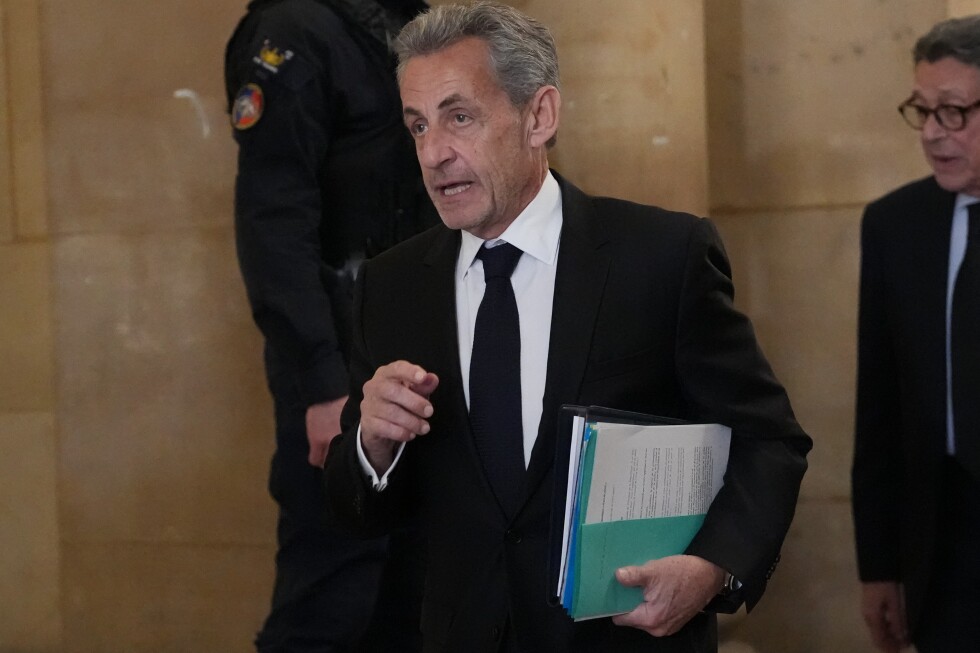
PARIS — In a high-stakes appeal hearing held in Paris this week, 71-year-old former French head of state Nicolas Sarkozy has forcefully reaffirmed his total innocence in a long-running case centered on allegations of illegal campaign financing from the former Libyan regime under Moammar Gadhafi. Addressing a three-judge panel on Tuesday, Sarkozy stated clearly that no Libyan public or private funds ever contributed to his successful 2007 presidential election run, emphasizing that the French public deserves unvarnished transparency about the allegations against him.
The case carries significant personal and political weight for Sarkozy: after his initial conviction on criminal conspiracy charges handed down in September last year, the former conservative leader spent 20 days behind bars before courts granted his release on bail while he pursues his appeal. The 12-week appeal trial, which launched last month, will conduct a full reevaluation of all evidence and witness testimony related to Sarkozy and nine co-defendants, three of whom are former French government ministers.
Prosecutors have laid out a core allegation that Sarkozy’s camp orchestrated a scheme to secure millions in secret campaign donations from Gadhafi’s government in 2007, in exchange for future political and diplomatic favors from the French presidency. Sarkozy has repeatedly rejected all claims of misconduct, arguing that the entire prosecution is rooted in political bias against him.
During Tuesday’s session, which focused heavily on Sarkozy’s actions both as a 2007 candidate and his time as president from 2007 to 2012, the former leader pushed back on a key claim tied to the 2011 Western military intervention in Libya, launched as Gadhafi’s regime violently cracked down on pro-democracy Arab Spring protests. “I took the initiative, France took the initiative. Why? Because Gadhafi had no hold over me — financially, politically, or personally,” Sarkozy told the court. Gadhafi, who ruled the North African nation for 42 years, was killed by opposition forces months after the intervention, ending his long authoritarian rule.
The appeal also comes amid fresh tension following statements last week from families of French victims of the 1989 UTA Flight 772 bombing, who voiced deep distress over allegations that the alleged 2007 deal included secret promises to Gadhafi’s regime regarding the bombing’s suspected mastermind. Libya accepted formal responsibility for both the 1988 Lockerbie bombing and the 1989 UTA attack that killed 170 people, 54 of whom were French citizens. Prosecutors allege that as part of the secret deal, Sarkozy promised to lift an international arrest warrant for Abdullah al-Senoussi, Gadhafi’s brother-in-law, intelligence chief, and the alleged mastermind of both bombings.
Responding to these claims, Sarkozy told the court: “I believe that such unspeakable suffering can only be answered with the truth. The truth is that I did not act in favor of Mr. Senoussi … who is in prison in Libya because he was arrested following the international action led by France. I never promised him anything.”
The Paris Court of Appeal trial is scheduled to run through June 3, with a final ruling expected at a later, unannounced date. This case is just one of multiple high-profile legal battles Sarkozy has faced since leaving office in 2012. In November of last year, France’s highest court, the Court of Cassation, upheld a separate conviction for illegal financing of Sarkozy’s 2012 re-election campaign, handing down a six-month sentence that will see him serve the term under house arrest with an electronic monitoring ankle tag. That sentence has not yet been implemented.