As a high-stakes deadline set by former President Donald Trump hangs over the Middle East, fresh explosions have shaken Iran’s capital Tehran, escalating an already five-week-long conflict that threatens to upend global energy security and trigger wider regional instability. Trump has issued an explicit ultimatum to Iran: reopen the strategic Strait of Hormuz to unimpeded global maritime traffic by midnight GMT, or face the total destruction of the country’s critical civilian infrastructure.
The US leader has doubled down on his threat, dismissing warnings that targeting public infrastructure could amount to war crimes. In blunt remarks at a recent press briefing, he warned that every major bridge across Iran would be destroyed, and every power plant would be rendered permanently inoperable if Tehran refused to comply with his demands. Iran’s military has already rejected Trump’s warning as arrogant, empty rhetoric that will not alter the course of its military operations, amid deep divisions within the Iranian public over how seriously to take the ultimatum.
For many ordinary Iranians, the threat of further attack carries a devastating personal weight. “I’m terrified and so should everyone else in the country be,” Metanat, a 27-year-old university student who lost a classmate to a strike two weeks prior, told Agence France-Presse. While some Iranians dismiss Trump’s threats as empty posturing, she noted, “Death is not a joke.” Other Iranians have grown numb to repeated threats: 62-year-old pensioner Morteza Hamidi said he has watched Trump back down from past escalations, adding that while he no longer fears the rhetoric, he remains deeply gloomy about the country’s future after months of conflict.
Diplomatic efforts to de-escalate the crisis, led by Pakistan acting as a neutral mediator between Washington and Tehran, have hit a critical sensitive stage, Iran’s ambassador to Islamabad confirmed Tuesday on social media platform X, though he offered no further details on the status of negotiations. A proposed 45-day ceasefire, brokered by a coalition of Pakistan, Egypt and Turkey, has been rejected by both sides. Trump initially called the plan significant, but ultimately rejected it as insufficient, while Iranian officials said the country rejects any temporary pause and insists on a permanent, definitive end to hostilities that protects its core national interests. Under the terms of the draft proposal, Iran would reopen the strait in exchange for the right to charge a $2 million transit fee per vessel, a portion of which would be shared with neighboring Oman, according to reporting from The New York Times.
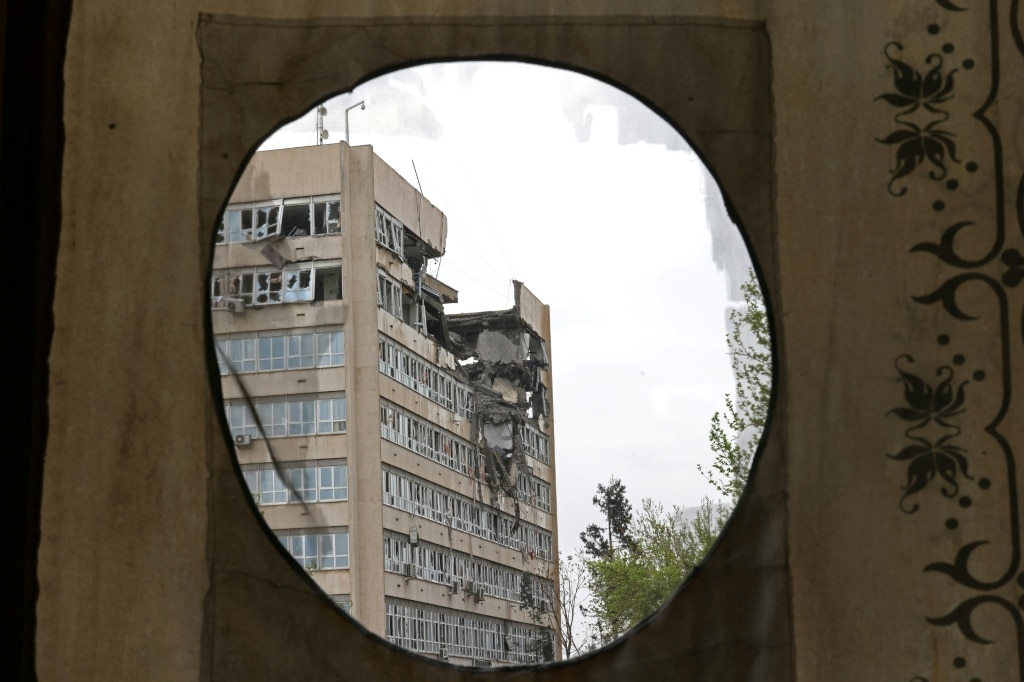
Military activity ramped up across the region on Tuesday. Israel Defense Forces confirmed it launched a new wave of airstrikes targeting what it describes as Iranian “terror regime infrastructure” across Tehran and other inland areas. Local Iranian media reported that the strikes completely destroyed Tehran’s historic Rafi-Nia synagogue, and that explosions were recorded across northern Tehran and the nearby city of Karaj. Following the Israeli strikes, Israel’s military confirmed it had detected multiple missile launches from Iran targeting Israeli territory, and that its air defense systems were actively intercepting incoming projectiles. Israel also issued an urgent advisory for Iranian civilians to avoid rail travel until 17:30 GMT amid the ongoing strikes.
The threat of Iranian retaliation has forced precautionary disruptions across the Gulf region. Authorities temporarily closed the King Fahd Causeway, the key overland route connecting Saudi Arabia to Bahrain, as a security measure Tuesday. Air raid sirens sounded across Bahrain on Tuesday morning, while the United Arab Emirates confirmed its air defense systems engaged and intercepted incoming Iranian drones and missiles targeting the country. Overnight, a witness told AFP that an Iranian attack struck a major petrochemical complex in the Saudi industrial city of Jubail, just hours after similar energy infrastructure in Iran was hit in US-Israeli strikes.
Iran has blocked all commercial traffic through the Strait of Hormuz, one of the world’s most critical energy chokepoints, since the outbreak of the war on February 28. The closure has already driven sharp spikes in global oil and natural gas prices, as roughly 20 percent of the world’s daily crude oil supplies transit through the waterway. Analysts warn that the conflict has already moved beyond a looming infrastructure war to an active one. “Infrastructure war is not looming. It is already underway,” wrote Sina Toossi, a senior fellow at the Washington-based Center for International Policy, in a Substack newsletter. Toossi noted that Iran’s demonstrated resilience throughout the conflict suggests Tehran will not back down on its core demand to maintain control over the strait, regardless of the military cost.
On the multilateral diplomatic front, the United Nations Security Council is scheduled to vote on a weakened draft resolution addressing the closure of the strait on Tuesday, diplomatic sources told AFP. Earlier, more robust versions of the resolution were sidelined after key Council members threatened to veto the text, leaving negotiators to water down the language to secure a vote.