分类: politics

  • Months of planning behind US-Israeli mission to target Iran’s supreme leader

    Months of planning behind US-Israeli mission to target Iran’s supreme leader

    In an unprecedented daylight operation, US and Israeli forces successfully targeted and eliminated Iran’s Supreme Leader Ayatollah Ali Khamenei through precisely coordinated military action. The strike occurred at approximately 09:40 local time on Saturday morning at a compound in central Tehran, marking a significant departure from conventional nighttime special operations.

    The operation culminated from months of sophisticated intelligence gathering involving advanced tracking systems and pattern-of-life analysis of high-value Iranian targets. According to intelligence sources, the Central Intelligence Agency provided crucial real-time information about Khamenei’s movements, which was subsequently operationalized by Israeli defense forces.

    Israeli jets deployed approximately thirty specialized munitions to penetrate underground bunker facilities where the Supreme Leader had sought protection. The attack also simultaneously targeted other senior Iranian officials, including Defence Council secretary Ali Shamkhani, Defence Minister Brig Gen Aziz Nasirzadeh, and IRGC commander Gen Mohammad Pakpour, all confirmed deceased by Iranian authorities.

    President Donald Trump and senior administration officials monitored the operation from a makeshift situation room at the Mar-a-Lago estate in Florida, receiving confirmation of the mission’s success hours after the strike. The operation represents an escalation in the ongoing conflict between Western allies and Iranian leadership, though Iranian authorities had reportedly established succession plans for key government positions.

    The daylight timing appears to have exploited Iranian security assumptions about attack probability, while the use of multiple penetrating munitions suggests intelligence about the compound’s underground infrastructure. The strike methodology indicates advanced capabilities in real-time tracking and precision targeting developed through previous operations against Iran’s nuclear program.

    This event represents a significant evolution in targeted strike operations and intelligence collaboration between allied nations, with potentially profound implications for Middle Eastern geopolitics and the ongoing conflict between Iran and Western powers.

  • UN Security Council convenes emergency meeting after strikes on Iran

    UN Security Council convenes emergency meeting after strikes on Iran

    The United Nations Security Council convened an urgent session on Saturday, February 28, 2026, in response to rapidly deteriorating conditions across the Middle East following coordinated military operations by United States and Israeli forces against Iranian targets. The emergency meeting was formally requested by a coalition of nations including China, Russia, France, Bahrain, and Colombia.

    China’s Permanent Representative to the UN, Ambassador Fu Cong, expressed profound concern regarding the timing and nature of the military actions, characterizing them as ‘shocking’ given their occurrence during active diplomatic negotiations between Washington and Tehran. The ambassador emphasized the critical need for political sincerity among all involved parties and urged an immediate return to dialogue channels.

    The military engagement initiated by US and Israeli forces triggered immediate retaliatory measures from Iran, which launched counterstrikes targeting American and Israeli military installations across multiple Arab nations. The conflict rapidly expanded to involve Qatar, Bahrain, Kuwait, Iraq, the United Arab Emirates, Jordan, Saudi Arabia, Syria, and Lebanon by Saturday evening.

    Ambassador Fu underscored China’s consistent position regarding respect for national sovereignty, security, and territorial integrity of Iran and other regional nations. He voiced particular distress over the significant civilian casualties resulting from the escalating violence, stressing that ‘the red line of protecting civilians in armed conflict must never be crossed.’

    The Chinese diplomat reiterated Beijing’s firm opposition to the use or threat of force in international relations, calling instead for strict adherence to the UN Charter’s principles. He emphasized that indiscriminate military actions remain unacceptable under international law, including humanitarian provisions that mandate civilian protection and safeguard civilian infrastructure.

    ‘Force represents an inadequate pathway for resolving international disputes,’ Ambassador Fu stated during the emergency session. ‘The dangerous spillover effects of escalating Middle East tensions benefit no nation. The only viable solution lies through diplomatic engagement and negotiated settlements.’

  • Trump talks regime change in Iran after strikes, but history shows that could be very hard

    Trump talks regime change in Iran after strikes, but history shows that could be very hard

    Following coordinated U.S. and Israeli airstrikes that targeted Iranian leadership positions, former President Donald Trump publicly urged Iranian citizens to seize the opportunity for regime change. In a video address delivered shortly after the attacks, Trump declared: “Now is the time to seize control of your destiny. This is the moment for action.”

    Despite this apparent simplicity, historical evidence suggests that successful regime change operations remain exceptionally complex. The United States possesses an extensive yet troubled history with such interventions, including operations in Vietnam (1960s-70s), Panama (1989), Nicaragua (1980s), Iraq and Afghanistan (post-9/11), and most recently in Venezuela. Notably, the CIA engineered the 1953 coup that overthrew Iran’s democratically elected government, installing Shah Mohammad Reza Pahlavi—who was subsequently ousted during the 1979 Islamic Revolution after increasingly authoritarian rule.

    These intervention attempts frequently begin with clear intentions—establishing democracy in Iraq or supporting anti-Communist leaders during the Cold War—but often descend into political quagmires where democratic aspirations transform into civil conflicts, allied dictators become liabilities, and American casualties mount.

    Trump himself previously criticized such nation-building efforts, stating in 2016: “We must abandon the failed policy of regime change,” and later remarking in Saudi Arabia that interventionists “were intervening in complex societies that they did not even understand.”

    The current situation presents particular complexities. Iran’s economy remains severely compromised, and dissent persists despite brutal crackdowns on protests that resulted in thousands of deaths and arrests. While key Iranian allies including Hamas, Hezbollah, and the Assad government have been weakened, and Supreme Leader Ayatollah Ali Khamenei confirmed killed, the U.S. lacks a clear postwar vision.

    Jonathan Schanzer of the Foundation for Defense of Democracies notes that potential allies might exist within Iran’s current power structure, but emphasizes that “there needs to be a sense that there is no salvation for the regime as such.” This proves particularly challenging in a leadership united by religious ideology, where “true believers” rarely switch allegiances.

    Historical parallels extend to Latin America, where the Monroe Doctrine justified two centuries of interventionism. Christopher Sabatini of Chatham House observes that direct U.S. involvement has rarely produced “long-term democratic stability,” citing Guatemala’s 40-year civil war and Nicaragua’s devastating conflict as examples.

    The recent Venezuelan operation may signal Washington’s current approach—rather than backing opposition leader María Corina Machado, the U.S. collaborated with President Delcy Rodríguez, previously second-in-command to captured leader Nicolás Maduro. This suggests a preference for modifying existing power structures rather than complete overthrow.

    As military strategist Phillips O’Brien notes: “Air power can damage a leadership, but it can’t guarantee that you’ll bring in something new.” The fundamental question remains whether the U.S. fully comprehends the complexities of the society it seeks to reshape.

  • Iran vows revenge for slain supreme leader despite Trump threat

    Iran vows revenge for slain supreme leader despite Trump threat

    Iranian leadership has issued forceful vows of retaliation following the confirmed death of Supreme Leader Ayatollah Ali Khamenei in a series of strikes, setting the stage for heightened confrontation with the United States and Israel despite President Donald Trump’s warnings of unprecedented military response.

    The political landscape shifted dramatically Sunday as explosions reverberated across Tehran while the Israeli military confirmed ongoing operations within the city center. Concurrent blasts were reported throughout the region, including Jerusalem, Riyadh, Dubai, Doha, and Manama, signaling rapidly expanding conflict zones.

    Iranian President Masoud Pezeshkian characterized Khamenei’s killing as “a declaration of war against Muslims,” asserting Iran’s “legitimate duty and right to avenge the perpetrators and masterminds of this historic crime.” Ali Larijani, head of Iran’s Supreme National Security Council, promised that Iranian forces would deliver “an unforgettable lesson to international oppressors” in language mirroring Trump’s rhetorical style on social media platforms.

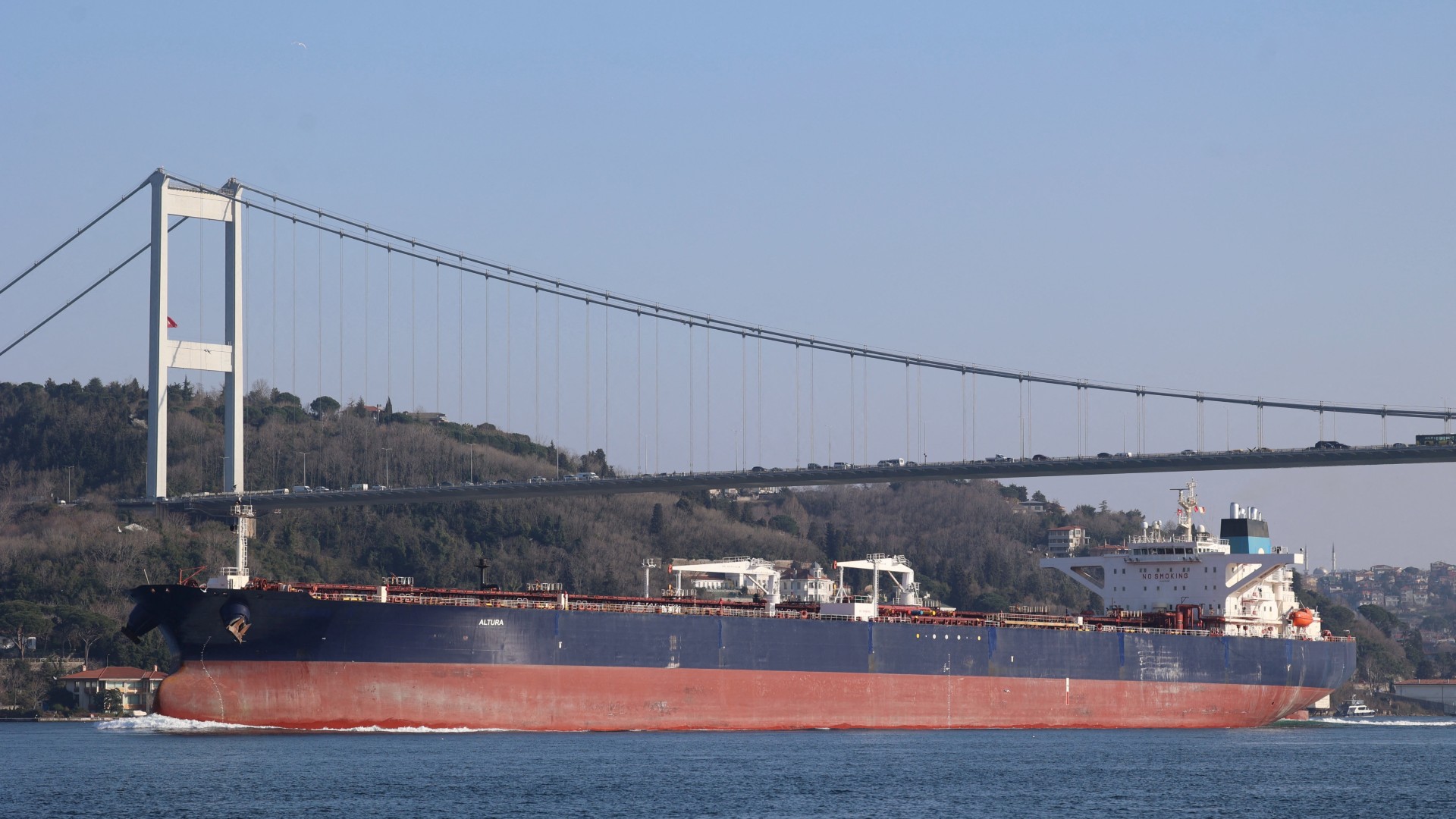
    The initial Iranian retaliatory strikes on Saturday targeted multiple Gulf states excluding Oman, which had attempted to mediate U.S.-Iran negotiations. However, Oman’s commercial port of Duqm sustained drone attacks Sunday that injured a foreign worker, with additional strikes reported against a tanker off the coast.

    Regional fallout intensified as protests erupted across neighboring nations. In Pakistan’s Karachi, at least eight fatalities occurred during demonstrations at the U.S. consulate, while Iraqi crowds attempted to storm American diplomatic facilities. Iranian rescue services reported 201 casualties from the strikes with hundreds more injured.

    Confirmed casualties within Iranian leadership included Ali Shamkhani, senior adviser to Khamenei, and General Mohammad Pakpour, commander of the Revolutionary Guards. This decapitation of key figures has triggered immediate succession questions, with state television announcing that President Pezeshkian and two other officials would lead during the transitional period.

    Reza Pahlavi, son of Iran’s deposed shah, declared that Khamenei’s death effectively signaled the end of the Islamic Republic, though his claims of transitional leadership remain contested among opposition groups. The Iranian judiciary reported one strike on a southern school killed 108 people, though independent verification remains challenging amid the chaos.

  • Iran will respond to US-Israeli strikes as existential threats

    Iran will respond to US-Israeli strikes as existential threats

    In a dramatic escalation of Middle East tensions, US and Israeli forces launched unprecedented coordinated strikes against multiple Iranian targets on February 28, 2026. Dubbed “Operation Epic Fury” by the Pentagon, the massive missile offensive represents a fundamental shift in the longstanding conflict between Tehran and Western powers.

    The operation targeted Iran’s ballistic missile infrastructure, including production facilities, storage sites, and launch capabilities—a clear attempt to degrade Tehran’s primary regional deterrent. Unlike previous limited strikes, including the 2025 nuclear site attacks that prompted measured Iranian responses, this campaign appears designed to fundamentally alter Iran’s military and political landscape.

    Notably, strikes hit a compound housing Supreme Leader Ayatollah Ali Khamenei, with Israeli officials confirming the 86-year-old leader was specifically targeted. President Trump simultaneously addressed Iranians directly via video message, urging them to “take over your government” in what experts interpret as an explicit regime change objective.

    This military action follows months of diplomatic efforts in Oman and Geneva that ultimately failed to bridge differences over Iran’s ballistic missile program and support for regional proxy groups. Tehran had consistently rejected limitations on its missile capabilities, considering them vital to national security doctrine.

    Iran has promised “crushing” retaliation, though its conventional capabilities have been significantly degraded by the strikes. Regional security analysts warn that Tehran may leverage unconventional capabilities through proxy forces including Hezbollah, Iraqi Shia militias, and Yemen’s Houthis, potentially increasing terrorism risks globally.

    The operation proceeds without congressional authorization, relying instead on presidential Article 2 powers. Under the War Powers Act, the administration has 60 days to conclude operations or seek formal congressional approval, creating a political timer on military actions.

    With both sides facing existential stakes and no clear diplomatic off-ramp, the region braces for potentially prolonged conflict that could redefine Middle East power dynamics for generations.

  • Trump says Iran’s Supreme Leader killed in US-Israeli strikes, Tehran insists Khamenei is ‘safe and sound’

    Trump says Iran’s Supreme Leader killed in US-Israeli strikes, Tehran insists Khamenei is ‘safe and sound’

    In a controversial social media post on Saturday, former U.S. President Donald Trump asserted that Iran’s Supreme Leader Ayatollah Ali Khamenei had been killed during joint U.S.-Israeli military operations. Utilizing his Truth Social platform, Trump declared this development represented “justice for the people of Iran and all Great Americans,” while praising the effectiveness of American intelligence and tracking systems developed in collaboration with Israel.

    The former president characterized the situation as a pivotal opportunity for Iranian citizens to reclaim their nation, simultaneously claiming that numerous members of Iran’s Revolutionary Guards and security forces had lost their will to combat. Trump indicated his willingness to grant these individuals immunity while promising continued “heavy and pinpoint bombing” operations throughout the coming week “or as long as necessary to achieve our objective.

    These assertions were promptly contradicted by multiple sources. Iran’s Foreign Minister Abbas Araghchi stated to NBC News that, to his knowledge, “almost all officials are safe and sound and alive,” acknowledging only minimal commander casualties. Iranian state media agencies Tasnim and Mehr similarly refuted the claims, describing the Supreme Leader as remaining “steadfast and firm in commanding the field.

    An official from Khamenei’s office denounced the allegations as enemy “mental warfare,” urging public vigilance against psychological operations. The conflicting narratives emerged amid reports of significant military engagements, with Iranian media citing Red Crescent figures indicating Saturday’s strikes affected 24 provinces and resulted in at least 201 fatalities. Iran subsequently launched counterattacks targeting Israeli and U.S. military assets across the Middle East, further escalating regional tensions.

    Middle East Eye noted the inability to independently verify Trump’s claims, particularly as the former president provided no substantiating evidence for his assertions regarding the Iranian leader’s status.

  • Trump’s bet on Iranian regime change could be his biggest gamble yet

    Trump’s bet on Iranian regime change could be his biggest gamble yet

    In a dramatic escalation of Middle East tensions, President Donald Trump has authorized joint US-Israel military strikes against Iran, resulting in the death of the regime’s Supreme Leader. Dubbed Operation Epic Fury by Pentagon officials, this unprecedented action represents Trump’s bold attempt to achieve what previous administrations failed to accomplish: the complete dismantling of Iran’s nuclear program and potential regime change through aerial power alone.

    The operation unfolded after the White House issued ultimatums demanding Iran abandon its nuclear weapons program, cease ballistic missile production, and withdraw support for proxy groups including Hamas and Hezbollah. President Trump monitored the strikes in real-time from his Mar-a-Lago estate while advisors convened in the White House Situation Room.

    This military campaign marks a significant departure from Trump’s previous non-interventionist stance and campaign promises to end ‘forever wars.’ The administration now faces critical questions about long-term strategy and potential regional blowback. Military experts warn that eliminating Iran’s leadership without ground forces could spark a broader regional conflict, particularly given Iran’s retaliatory strikes against US allies including Bahrain, UAE, and Qatar.

    Domestically, the operation has triggered sharp political divisions. While Republican leadership largely supports the action, Democratic leaders condemn what they characterize as an unauthorized war of choice. House Democrats are preparing measures to constrain presidential war powers, setting the stage for a contentious political battle as midterm elections approach.

    The administration’s unconventional approach to foreign policy faces its ultimate test as Iran vows aggressive retaliation. With global energy markets watching nervously and the potential for prolonged conflict looming, Trump’s gamble could either redefine Middle East geopolitics or plunge the region into unprecedented instability.

  • Why did the US attack Iran? Is the US at war? Here’s what to know

    Why did the US attack Iran? Is the US at war? Here’s what to know

    In a dramatic escalation of Middle East tensions, the United States and Israel initiated joint military operations against Iranian targets early Saturday. The coordinated offensive, designated “Epic Fury” by US forces and “Lion’s Roar” by Israel, represents the most significant military confrontation between the nations in decades.

    President Donald Trump utilized social media to announce the operations, simultaneously declaring the death of Iranian Supreme Leader Ali Khamenei, whom he characterized as “one of the most evil people in History.” Iranian state media subsequently confirmed the passing of the 86-year-old leader and declared a 40-day mourning period. Intelligence sources indicate approximately 40 Iranian officials perished in the strikes, with satellite imagery revealing substantial damage to Khamenei’s compound in Tehran.

    The military action follows the collapse of nuclear negotiations between Washington and Tehran just two days prior. President Trump justified the offensive by citing Iran’s nuclear ambitions, historical grievances including the 1979 hostage crisis and 1983 Beirut barracks bombing, and what he described as an “unending campaign of bloodshed” targeting American interests.

    Iranian forces launched immediate retaliatory strikes throughout the Middle East, with projectiles targeting US military installations in Bahrain, Kuwait, Qatar, and the UAE. Iranian Foreign Minister condemned the initial attack as “unprovoked and illegal.”

    Domestic reaction in the United States fractured along partisan lines. Congressional Republicans largely endorsed the operation, with Senator Lindsey Graham declaring it “necessary and long justified.” Democrats denounced the unilateral action, with Senator Tim Kaine labeling the conflict “Trump’s illegal war” and renewing calls for war powers legislation.

    Current US military presence in the region includes two aircraft carrier groups and approximately 30,000-40,000 troops distributed across 13 bases, though officials indicate no immediate plans for ground troop deployment in Iran. Casualty reports indicate over 200 fatalities and 700 injuries within Iran, with additional casualties reported in Israel and the UAE. President Trump warned that military operations would likely continue throughout the coming week.

  • US, Israel defend strikes at UN as Iran alleges ‘war crime’

    US, Israel defend strikes at UN as Iran alleges ‘war crime’

    The United Nations Security Council convened an emergency session amidst escalating tensions following coordinated military strikes by the United States and Israel against Iranian targets. The session revealed profound divisions among global powers regarding the legality and justification of the attacks.

    United States Ambassador Mike Waltz presented Washington’s position, emphasizing that preventing nuclear weapon proliferation by Iran constituted a fundamental global security imperative rather than a political matter. He referenced longstanding UN resolutions allegedly disregarded by Tehran and criticized Iran’s human rights record, particularly its suppression of domestic protests, questioning the nation’s moral standing within the international body.

    Israeli representative Danny Danon characterized the military action as necessary rather than aggressive, asserting that Tehran’s provocations had left no reasonable alternatives. He condemned what he described as hypocrisy among Security Council members who criticized the strikes while remaining silent regarding Iran’s retaliatory measures.

    Iranian Ambassador Amir Saeid Iravani denounced the operations as war crimes, citing significant civilian casualties including more than 100 children at Minab School in southern Iran. He accused certain Council members of applying double standards by overlooking what he termed flagrant aggression against his nation while condemning Iran’s exercise of self-defense under the UN Charter.

    The diplomatic confrontation exposed clear geopolitical fractures. Russia and China exclusively condemned the US-Israeli strikes, while Gulf nations including Saudi Arabia, the United Arab Emirates, and Bahrain issued a joint statement through Bahrain’s ambassador characterizing Iran’s regional attacks as cowardly and holding Tehran fully responsible for escalating hostilities.

    UN Secretary-General Antonio Guterres issued a grave warning regarding the potential for military actions to trigger uncontrollable consequences throughout the Middle East, emphasizing the region’s extreme volatility and the dangers of escalation.

  • ‘No to War’: Iranian opposition abroad pushes back against US-Israeli strikes

    ‘No to War’: Iranian opposition abroad pushes back against US-Israeli strikes

    The initial hours following U.S.-Israeli military strikes on Iran ignited a fierce and multifaceted debate across Farsi-language social media, revealing profound fractures within the Iranian opposition movement. The discourse, spanning the entire political spectrum, showcased a stark divergence of opinions regarding foreign intervention.

    Almost immediately, anti-war activists resurrected the Farsi hashtag #NoToWar, advocating against military escalation. This stance stood in direct opposition to calls from pro-monarchy factions, spearheaded by Reza Pahlavi—the Israel-aligned son of Iran’s last Shah—who publicly demanded an intensification of attacks on the Islamic Republic. Pahlavi’s camp, which has aggressively campaigned against rival opposition voices since Israel’s previous conflict with Iran, found itself at the center of a growing storm of criticism.

    Prominent journalist and regime critic Panah Farhadbahman issued a stark warning against foreign military action, drawing a historical parallel. He likened contemporary supporters of extensive U.S. strikes to those who backed the 1979 revolution, emphasizing that their advocacy would be permanently recorded. In a separate statement, Farhadbahman argued that the destruction of military infrastructure by Israel and the U.S. strategically weakens any future Iranian government, questioning the sincerity of motives behind the strikes.

    The criticism of Pahlavi intensified as users circulated symbolic imagery highlighting his perceived foreign allegiances. Comparative graphics placed his grandfather, Reza Shah, next to the British flag (referencing the 1921 coup), his father, Mohammad Reza Pahlavi, beside the American flag (referencing the 1953 CIA-backed coup), and Reza Pahlavi himself adjacent to the Israeli flag, identifying it as his primary foreign supporter—a connection many opposition figures find deeply troubling.

    This sentiment was echoed by political analyst Behrouz Farahani, who pointedly questioned the prospect of Israeli-backed democracy by sharing a report on Israeli soldiers shooting a Palestinian child. The Toofan opposition group abroad condemned the attacks, declaring that ‘war of aggression is not a solution to any problem. It is the problem.’

    The human cost of the conflict was brought into sharp focus by the widespread sharing of images from a struck girls’ school in Minab, where officials reported at least 85 fatalities, predominantly girls aged seven to twelve. This tragedy fueled a complex sentiment captured in one user’s post: ‘No to the Islamic regime. No to war. No to Israeli and US aggression. No to fascism and Pahlavi.’

    Conversely, U.S.-backed figures like journalist Masih Alinejad called for continued assaults, a position that also drew significant backlash. One user criticized Alinejad for celebrating a strike on a former official’s residence while allegedly ignoring the visible panic and potential civilian casualties in the footage she shared.

    The anti-war movement also resonated with persecuted religious minorities. A widely circulated video featured Pastor Mona Pahlevani directly addressing Iranians who had solicited foreign intervention, holding them responsible for the ensuing Iranian deaths and stating, ‘The blood of the people killed in the war… is on your hands.’