分类: politics

  • Trump warns ‘there will likely be more’ US deaths in Iran conflict

    Trump warns ‘there will likely be more’ US deaths in Iran conflict

    In a sobering address delivered via his Truth Social platform, former U.S. President Donald Trump issued a stark warning regarding the escalating tensions with Iran, indicating that additional American fatalities should be anticipated. The video statement came in direct response to recent military engagements, marking a significant moment in the ongoing conflict between the two nations.

    Trump’s message framed the situation with grave seriousness, emphasizing the volatile nature of international military actions. Without delving into specific operational details, the former commander-in-chief underscored the inherent dangers faced by U.S. personnel stationed in the region. His remarks reflected the complex geopolitical landscape that has characterized Middle Eastern relations throughout multiple administrations.

    The public communication strategy, bypassing traditional media channels, represents a continuing evolution in how political figures engage with the public on matters of national security. This development occurs against the backdrop of longstanding tensions between Washington and Tehran, which have periodically flared into open confrontation. The statement’s tone balanced resolve with realism, acknowledging the human cost of foreign policy decisions while maintaining a stance of strategic determination.

    Analysts suggest such pronouncements may influence both domestic political discourse and international perceptions of U.S. foreign policy direction. The warning arrives amid broader discussions about America’s role in global conflicts and the protection of its military assets abroad.

  • Venezuela’s opposition leader Machado says she will return to the country in the coming weeks

    Venezuela’s opposition leader Machado says she will return to the country in the coming weeks

    Venezuelan opposition figure María Corina Machado has declared her intention to return to Venezuela in the coming weeks, signaling a potential political showdown in the South American nation. The 2015 Nobel Peace Prize laureate made the announcement via social media on Sunday, though she refrained from specifying an exact date for her homecoming.

    Machado, a central figure in Venezuela’s political opposition, emphasized that her return would focus on preparing for what she described as “a new and gigantic electoral victory.” She urged supporters to reinforce the unity established during the 2023 primaries, where she emerged as the consensus candidate to challenge former President Nicolás Maduro’s regime.

    The political landscape remains volatile since Maduro and his wife were apprehended in a U.S. military operation in January. Current Acting President Delcy Rodríguez has issued stern warnings that Machado “will have to answer” upon her return to Venezuelan territory.

    International observers note the complex transition dynamics, with U.S. Secretary of State Marco Rubio emphasizing that Venezuela’s political change must progress through phases of stabilization, economic recovery, and gradual transition. The U.S. administration has not indicated expectations for immediate elections.

    Machado’s Nobel Peace Prize recognition in 2015 honored her persistent advocacy for democratic transition in Venezuela. Her subsequent controversial decision to present the medal to U.S. President Donald Trump following the military intervention that ousted Maduro drew mixed international reactions. Maduro currently faces drug trafficking charges in U.S. courts, where he has entered not guilty pleas.

    The political crisis intensified after Maduro was declared the winner of July 2024 elections, triggering widespread protests and government crackdowns. The opposition maintains credible evidence indicating that Edmundo González—who replaced Machado after her disqualification from the electoral process—was the legitimate victor.

  • Supporters of Brazil’s Bolsonaro rally across Brazil against Lula

    Supporters of Brazil’s Bolsonaro rally across Brazil against Lula

    Across Brazil’s urban landscapes, thousands of demonstrators clad in the national colors of yellow and green gathered Sunday in a formidable display of political force. The rallies, organized in major metropolitan centers including São Paulo, Rio de Janeiro, and the capital Brasília, signaled a revitalized right-wing mobilization ahead of October’s pivotal presidential election.

    The movement centers around Flávio Bolsonaro, son of incarcerated former President Jair Bolsonaro, who has assumed his father’s political mantle. From his Instagram platform, the younger Bolsonaro declared this electoral cycle decisive for Brazil’s future, framing the contest as a rescue mission for the nation. His candidacy positions him directly against current President Luiz Inácio Lula da Silva, who seeks a nonconsecutive fourth term.

    This political theater unfolds against the dramatic backdrop of the elder Bolsonaro’s imprisonment. The former leader is serving a 27-year sentence for attempting to overthrow the government following his 2022 electoral defeat to Lula. Many supporters perceive his incarceration as politically motivated persecution rather than judicial accountability.

    According to observational studies from the University of São Paulo and nonprofit More in Common, approximately 20,000 demonstrators gathered in São Paulo with nearly 5,000 in Rio de Janeiro (with a 12% margin of error). The visual symbolism was striking: protest signs demanding “Free Bolsonaro” lined Paulista Avenue, while giant inflatable figures depicted Lula in prison attire and Bolsonaro wearing the presidential sash.

    The demonstrations incorporated international symbolism as well, with some participants waving American flags alongside Brazilian banners. Flávio Bolsonaro utilized his platform to criticize Brazil’s Supreme Court, accusing justices of undermining democracy—a reference to the judicial panel that sentenced his father last September.

    Douglas Ruas dos Santos, a state lawmaker participating in Rio’s protest, articulated the movement’s long-term vision: “We believe that 2026 will be the year of the turning point. We have a project led by President Bolsonaro, which was entrusted to Flávio Bolsonaro.”

    Recent polling data indicates a statistically dead heat in a hypothetical runoff between Flávio Bolsonaro and President Lula, setting the stage for one of Brazil’s most consequential electoral battles in modern history.

  • Israel’s military confirms Khamenei killed in operation by Israeli Air Force

    Israel’s military confirms Khamenei killed in operation by Israeli Air Force

    In an unprecedented military escalation, the Israel Defense Forces (IDF) have officially confirmed the successful execution of a high-profile operation resulting in the death of Iran’s Supreme Leader Ali Khamenei. The targeted airstrike, conducted on Sunday, directly hit Khamenei’s central leadership compound in Tehran, according to an official military statement.

    The operation, characterized by Israeli authorities as one of the most complex intelligence-driven missions in recent history, eliminated the long-serving Iranian leader who had governed the Islamic Republic since 1989. The precision strike was carried out by the Israeli Air Force utilizing advanced capabilities and was guided by what the IDF described as ‘exceptionally accurate intelligence assets.’

    Initial reports indicate that the targeted facility served as Khamenei’s primary office and command center, where he was reportedly meeting with several senior Iranian officials at the time of the attack. The confirmation marks a significant escalation in the ongoing regional tensions between the two Middle Eastern powers and represents the most dramatic development in the conflict to date.

    The operation’s success demonstrates Israel’s capability to penetrate deep into Iranian territory and execute precision strikes against highly secured locations. Military analysts anticipate substantial geopolitical repercussions across the region, with potential implications for global security dynamics and Middle Eastern power structures.

  • Obituary: Ayatollah Ali Khamenei, Iran’s Supreme Leader and dominant political figure for decades

    Obituary: Ayatollah Ali Khamenei, Iran’s Supreme Leader and dominant political figure for decades

    In a seismic development for Middle Eastern geopolitics, Iran’s Supreme Leader Ayatollah Ali Khamenei was killed Saturday in a coordinated US-Israeli aerial assault, abruptly concluding his four-decade dominance over Iranian political and religious life. The 86-year-old cleric had governed as Iran’s ultimate authority since 1989, steering the nation through profound internal transformations and confrontational foreign policies.

    Khamenei’s ideological journey began within a clerical family in April 1939. He pursued religious education in Mashhad and Najaf seminaries before returning to Qom for advanced studies under prominent theologians including Ayatollah Ruhollah Khomeini. During the 1960s-70s, Khamenei engaged in underground resistance against Shah Pahlavi’s regime, enduring repeated imprisonment and torture by the SAVAK secret police.

    The 1979 Islamic Revolution catapulted him into leadership roles, including positions on the Revolutionary Council, parliamentary membership, and deputy defense ministership. His political ascent nearly ended in 1981 when an assassination attempt by the Forqan Group left his right arm permanently paralyzed. Following the simultaneous assassinations of President Raja’i and Prime Minister Bahonar that same year, Khamenei won the presidency with 95% support in an uncontested election.

    Khamenei’s presidency coincided with Iran’s devastating eight-year war against Saddam Hussein’s Iraq, during which he cultivated anti-American rhetoric at international forums including the UN General Assembly. The 1989 demise of Ayatollah Khomeini created a leadership vacuum that Khamenei filled despite his self-professed inadequacy as a “minor seminarian.” Constitutional revisions subsequently emphasized political acumen over religious credentials for the leadership position.

    His tenure witnessed constant tension between conservative and reformist factions. Initially collaborating with President Rafsanjani, Khamenei later countered President Khatami’s liberalization attempts and openly supported Ahmadinejad’s controversial 2009 re-election, triggering the Green Movement protests. The Supreme Leader consistently attributed domestic unrest to foreign interference, particularly following the 2022 Mahsa Amini protests and 2025 economic demonstrations.

    Khamenei’s foreign policy legacy includes the nuclear negotiations that produced the 2015 JCPOA, which he later denounced as proof of American untrustworthiness after Trump’s 2018 withdrawal. His most significant regional project—the “Axis of Resistance” uniting Hezbollah, Hamas, Houthis, and Syrian allies—began disintegrating following Israel’s 2023 Gaza offensive, the 2024 assassination of Hassan Nasrallah, and Syria’s regime collapse. This deterioration enabled Israel’s direct strikes culminating in the June 2025 homeland conflict and ultimately Khamenei’s assassination.

  • Day two of US strikes on Iran: What Americans are asking

    Day two of US strikes on Iran: What Americans are asking

    Washington D.C. witnessed heightened political and public discourse as the United States entered its second consecutive day of military operations against Iranian targets. The ongoing strikes, authorized by the Trump administration, have triggered widespread discussion among American citizens regarding the strategic implications and potential consequences of these actions.

    According to reports from the BBC’s Washington correspondent, the military campaign has evolved into a multi-day operation, suggesting a sustained approach rather than a singular retaliatory measure. This development has prompted serious questions from the American public about the long-term objectives and expected duration of the engagement.

    Citizens across the nation are expressing concerns about several critical aspects of the conflict, including potential escalation patterns, regional stability implications, and the safety of military personnel deployed in the Middle East. The administration’s communication strategy and the clarity of its strategic objectives have become subjects of intense scrutiny among policymakers and the general public alike.

    The geopolitical ramifications extend beyond immediate military considerations, touching upon diplomatic relationships with European allies, the impact on global oil markets, and the broader balance of power in the Middle East. Experts are analyzing how these strikes might affect ongoing nuclear negotiations and regional proxy conflicts involving Iranian-backed militias.

    As the situation continues to develop, the American public remains particularly attentive to congressional responses and the legal authorization underpinning extended military operations. The White House’s next steps and Iran’s potential countermeasures are being closely monitored by national security experts and international observers.

  • China’s top political advisory body unveils agenda of the annual session

    China’s top political advisory body unveils agenda of the annual session

    Beijing prepares to host the fourth session of the 14th National Committee of the Chinese People’s Political Consultative Conference (CPPCC) commencing Wednesday, with approximately 2,100 members converging to deliberate on China’s developmental trajectory. The formulation of the 15th Five-Year Plan (2026-2030) emerges as the cornerstone agenda item, positioning this gathering as pivotal for shaping the nation’s socio-economic blueprint.

    The session’s framework, ratified during Sunday’s Standing Committee meeting, outlines comprehensive proceedings. Political advisers will examine two critical documents: the Standing Committee’s work report and a comprehensive assessment of proposal handling since last year’s assembly. In a demonstration of China’s integrated governance model, CPPCC members will participate as non-voting delegates in the concurrent National People’s Congress session to engage with the Government Work Report and related documents.

    A pre-session press conference is scheduled for Tuesday at 3 PM in the Great Hall of the People, where spokesman Liu Jieyi will address domestic and international media regarding conference preparations and field inquiries. This transparency mechanism underscores the advisory body’s role in China’s political architecture, facilitating cross-sector consultation on national policy formulation and strategic objective setting.

  • Iran confirms supreme leader’s death in US-Israeli strikes

    Iran confirms supreme leader’s death in US-Israeli strikes

    Iran has officially confirmed the death of Supreme Leader Ayatollah Ali Khamenei in what it describes as a coordinated military assault by United States and Israeli forces. The announcement, delivered through state-affiliated media outlets early Sunday, marks a pivotal moment in Middle Eastern geopolitics.

    According to Nour News, which maintains direct connections to Iran’s Supreme National Security Council, Khamenei ‘attained martyrdom while performing his official duties at his Tehran office’ during Saturday’s operations. The attack reportedly resulted in multiple casualties within the leader’s immediate family, including his daughter, son-in-law, grandchild, and one daughter-in-law.

    In response to the incident, the Iranian cabinet has declared a 40-day national mourning period. An official government statement characterized the event as a ‘brutal attack by the criminal US government and the sinister Israeli regime,’ praising Khamenei’s 37-year leadership as sagacious and visionary.

    The Iranian government has pledged to hold those responsible accountable, warning that perpetrators would ‘regret their actions.’ Following constitutional protocols, leadership responsibilities will temporarily transition to a triumvirate consisting of Iran’s president, judiciary chief, and a designated jurist from the Constitutional Council, as outlined in Article 111 of the Iranian Constitution.

    The Islamic Revolutionary Guard Corps (IRGC) issued a separate statement through its Sepah News outlet, condemning the attack as a ‘criminal and terrorist act’ that violated international norms. The IRGC vowed that Iran would exact ‘a hard, decisive, and regret-inducing punishment’ against those responsible.

    Public demonstrations erupted across multiple Iranian cities following the announcement, with mourners expressing both grief and demands for retaliation. The events unfold against the backdrop of escalating military engagements, with Iran having launched counterstrikes against US and Israeli military installations throughout West Asia in response to Saturday’s initial operations.

    Khamenei, born in 1939, assumed Iran’s highest leadership position in 1989 following the death of Islamic Republic founder Ayatollah Ruhollah Khomeini. His death creates a significant power vacuum in a nation already grappling with regional tensions and international sanctions.

  • Iran to form interim leadership council until next leader’s selection

    Iran to form interim leadership council until next leader’s selection

    In the wake of Supreme Leader Ali Khamenei’s death during coordinated military strikes by the United States and Israel, Iran has announced the formation of an interim leadership council to assume national governance responsibilities. The development was confirmed by Ali Larijani, Secretary of Iran’s Supreme National Security Council, during a televised address on state-run IRIB TV.

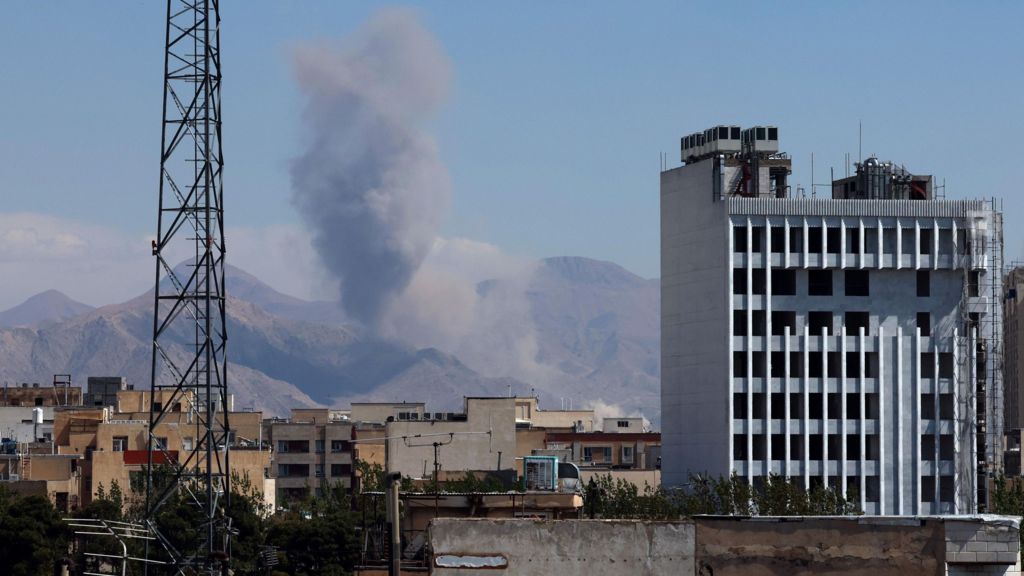
    The unprecedented military operation, which targeted Tehran and several other Iranian cities including Tabriz, Qom, and Isfahan on Saturday, resulted in the deaths of multiple high-ranking Iranian officials alongside the Supreme Leader. Among the casualties were Chief of Staff of the Iranian Armed Forces Abdolrahim Mousavi, Defense Minister Aziz Nasirzadeh, and Islamic Revolutionary Guard Corps commander Mohammad Pakpour.

    Larijani outlined the constitutional basis for the transitional government, citing Article 111 of Iran’s Constitution which mandates that the president, judiciary chief, and a constitutional jurist will collectively assume leadership duties during such a vacancy. The security official characterized the nation as ‘mournful and angry’ while vowing a decisive response to what he described as aggressive actions by Israel and the United States.

    In his remarks, Larijani presented a critical geopolitical analysis, suggesting that Israel strategically seeks to fragment Iran to establish dominance across West Asia. He further asserted that the United States had ‘fallen into Israel’s trap,’ arguing that despite the ‘America First’ doctrine promoted by President Donald Trump, Israeli interests appeared to dominate US foreign policy decisions.

    The attack prompted immediate retaliatory measures from Iran, which launched missile and drone strikes targeting Israeli territory and US military installations throughout the region. This exchange represents one of the most significant escalations in regional conflicts in recent years, raising concerns about broader regional stability and the potential for further military confrontation.

  • Trump says diplomatic solution in Iran ‘much easier now’

    Trump says diplomatic solution in Iran ‘much easier now’

    In a significant development following coordinated US-Israeli military operations, President Donald Trump has asserted that achieving a diplomatic resolution with Iran has become substantially more feasible. The statement came during a televised interview on Saturday evening, mere hours after confirmation of Supreme Leader Ayatollah Ali Khamenei’s death.

    Trump, in a detailed phone conversation with CBS News, characterized the recent military campaign as strategically effective, suggesting it has created unexpected opportunities for negotiation. ‘The pathway to diplomacy appears much clearer now than it was just twenty-four hours ago, obviously,’ the President remarked, indicating a calculated shift in geopolitical dynamics.

    When questioned about Iran’s leadership transition, Trump acknowledged the emergence of ‘promising candidates’ to succeed Khamenei, though he declined to specify particular individuals or factions. This commentary suggests Washington is monitoring Tehran’s political reorganization with strategic interest.

    Regarding Iran’s retaliatory measures, Trump displayed measured satisfaction, noting the response fell substantially below anticipated levels. ‘The countermeasures align with our projections, though we had prepared for significantly more robust engagement,’ he stated, implying US defenses had successfully mitigated potential threats.

    Earlier that day, Trump had utilized social media to announce the continuation of military operations, emphasizing that ‘precision bombing campaigns will persist uninterrupted throughout the coming week, or as long as operational requirements dictate.’ This dual-track approach—combining sustained military pressure with diplomatic overtures—marks a complex evolution in US strategy toward Iran.

    The administration appears to be navigating a delicate balance between demonstrating military resolve and creating space for potential negotiations amid Iran’s unprecedented leadership crisis.