分类: politics

  • Leaked photo, hot tub, and Pizzagate – video of Clintons’ testimony on Epstein ties released

    Leaked photo, hot tub, and Pizzagate – video of Clintons’ testimony on Epstein ties released

    Newly released footage from the House Oversight Committee has revealed a dramatic confrontation during Hillary Clinton’s closed-door deposition regarding Jeffrey Epstein. The proceedings nearly derailed when the former Secretary of State threatened to walk out after learning an unauthorized photograph from the hearing had been leaked to the public.

    The tension escalated when Clinton’s legal team informed the room of the security breach. Republican Congresswoman Lauren Boebert admitted to sharing an image from inside the deposition room, though she claimed it was taken before the official proceedings began. Clinton responded by pounding her fist on the table, declaring, ‘I’m done with this. If you guys are doing that, I am done. You can hold me in contempt from now until the cows come home.’

    Her legal representatives emphasized the irony that Clinton had previously requested an open hearing—which would have allowed real-time public viewing—but the committee had denied this petition. The deposition was temporarily paused following the exchange, with Clinton’s counsel later chastising the committee for what they termed ‘unacceptable, unprofessional, and unfair’ conduct.

    The lengthy testimony, spanning over nine hours across separate sessions with both Hillary and Bill Clinton, covered numerous topics related to the Epstein investigation. In one particularly contentious moment, Rep. Boebert raised the thoroughly debunked ‘Pizzagate’ conspiracy theory, asking if Clinton had reviewed any Epstein files referencing the fabricated allegation. Clinton dismissed the line of questioning as outrageous, stating the theory had ‘ended up hurting a number of people.’

    Meanwhile, Bill Clinton’s deposition included questions about his relationship with Epstein, which he characterized as a ‘brief acquaintance’ that ‘ended years before his crimes came to light.’ The former president denied any knowledge of Epstein’s wrongdoing and expressed hope that his cooperation would ‘prevent something like this from happening again.’

    When questioned about Donald Trump’s potential testimony, Bill Clinton recalled a conversation at Trump’s golf course around 2002-2003 where Trump mentioned their friendship with Epstein had ended over ‘a real estate deal.’ Clinton noted Trump ‘never said anything to me to make me think he was involved in anything improper.’

    The deposition also addressed a previously released photo showing Bill Clinton in a redacted hot tub image from the Epstein files. The former president explained the context of the image, describing it as taken during exhaustion at the end of a long Asia trip at the invitation of the Sultan of Brunei. He repeatedly stated he didn’t know the identity of the other person in the photo and denied any sexual activity occurred.

  • Bombing Iran, Trump has ‘epic fury’ but endgame undefined

    Bombing Iran, Trump has ‘epic fury’ but endgame undefined

    The United States military campaign against Iran, codenamed ‘Epic Fury,’ has entered a critical phase with President Donald Trump demonstrating what officials describe as ‘epic fury’ while maintaining strategic ambiguity about the operation’s ultimate objectives. The joint US-Israeli offensive, launched following coordinated airstrikes that resulted in the death of Iran’s Supreme Leader Ayatollah Ali Khamenei, has triggered significant regional instability and raised questions about long-term geopolitical consequences.

    Initial statements from the White House suggested support for regime change, with President Trump explicitly encouraging Iranian citizens to rise against their government. However, administration officials subsequently clarified that the military operation does not officially seek to overthrow the Iranian government—a position that has created confusion among allies and analysts alike.

    According to Defense Department sources, the campaign’s stated military objectives include the systematic degradation of Iran’s naval capabilities, the destruction of key military infrastructure, the elimination of Tehran’s support network for regional militant groups, and the permanent prevention of nuclear weapons development. The operation has already resulted in significant casualties, with hundreds reported dead in a nation of 90 million people.

    Strategic analysts remain divided on the administration’s true endgame. Matthew Kroenig of the Atlantic Council suggests the operation may represent a limited engagement strategy designed to achieve maximum impact while avoiding prolonged nation-building exercises similar to those in Iraq and Afghanistan. ‘I think they could go home almost at any time and declare this a success,’ Kroenig noted, highlighting the administration’s apparent focus on avoiding extended military commitments.

    Conversely, critics including Negar Mortazavi of the Center for International Policy warn that Iran’s leadership may resist ceasefire negotiations, believing that insufficient retaliation could invite future attacks. From this perspective, Iranian officials might calculate that enduring significant pain represents the only pathway to establishing credible deterrence.

    The Israeli dimension adds another layer of complexity. Prime Minister Benjamin Netanyahu’s government has pursued a consistent strategy of degrading Iranian capabilities during periods of perceived weakness, while simultaneously supporting interim leadership figures like former jihadist Ahmed al-Sharaa. This approach mirrors Israel’s previous operations in Syria and its devastating campaign in Gaza following Hamas’s October 2023 attacks.

    Trita Parsi of the Quincy Institute suggests the administration may be pursuing ‘regime implosion’ rather than outright regime change—a strategy that aims to severely degrade state capabilities without directly installing a new government. This approach reportedly finds favor with Israeli strategists who view the potential collapse of Iranian state structures as preferable to mere leadership changes.

    The political context includes support for Reza Pahlavi, son of the deposed Shah, who has called for popular uprising at what he terms ‘the opportune moment.’ This development occurs against the backdrop of recently suppressed protests that resulted in thousands of civilian casualties.

    Military historian Max Boot summarizes the administration’s approach as strategically ambiguous: ‘I think he’s basically keeping it ambiguous so that whatever happens, he can claim it was a huge victory.’ This ambiguity, while potentially tactically advantageous, raises significant questions about long-term regional stability and the humanitarian consequences of prolonged conflict.

  • Most Americans disapprove of the war on Iran, poll shows

    Most Americans disapprove of the war on Iran, poll shows

    A comprehensive Reuters/Ipsos opinion survey, conducted at the onset of joint U.S.-Israeli military operations against Iran, reveals deep-seated disapproval among the American public and significant concerns over President Donald Trump’s propensity for military engagement. The data indicates a nation grappling with the immediate repercussions of an escalating international conflict.

    The poll results demonstrate that 43% of all American respondents explicitly disapprove of the offensive strikes on Iran, with only 27% expressing approval. A substantial 30% remained undecided or declined to answer, highlighting widespread uncertainty. Political affiliation proved to be a critical divider; an overwhelming 74% of Democratic voters denounced the attacks, contrasted by a mere 13% disapproval among Republican respondents.

    Further scrutiny of presidential authority shows 56% of all Americans believe President Trump is excessively willing to deploy military force. This sentiment is acutely polarized, skyrocketing to 87% among Democrats while resting at 23% within his Republican base. Conversely, 73% of Republicans affirmed their belief that the President’s application of force is ‘about right.’

    This public division stands in stark contrast to President Trump’s campaign promises to conclude foreign wars and avoid new entanglements, alongside his self-proclaimed identity as a peacemaker. Historical context reveals a disconnect, noting that the President authorized bombings in seven nations within his first year, a modern record.

    The military campaign has triggered a dangerous escalation. Retaliatory strikes by Iran targeted not only Israel but also multiple U.S. allies across the region, including Saudi Arabia, the UAE, and Kuwait. The conflict has claimed high-level figures, most notably Iranian Supreme Leader Ayatollah Ali Khamenei. The Islamic Revolutionary Guard Corps claims to have launched hundreds of drones and missiles at over 500 U.S. and Israeli sites.

    Human cost is mounting. The Iranian Red Crescent Society reports 555 fatalities from U.S.-Israeli attacks, while Iranian strikes have killed at least 11 in Israel. By Monday, the U.S. confirmed four American military personnel were killed at a base in Kuwait, alongside the loss of three U.S. F-15s.

    The war’s domestic economic impact is already felt. Nearly half of all respondents (45%) stated rising gasoline prices would make them less likely to support the war, a concern shared by 45% of Republicans. Data from the American Automobile Association confirmed a national average price spike of 10 cents per gallon over the weekend, pushing the average to $2.99, with prices in Washington, D.C., exceeding $3.10 per gallon.

    The Reuters/Ipsos poll concluded before the announcement of U.S. casualties. When questioned on this potential outcome, 42% of Republicans indicated American deaths would diminish their support for the military action, signaling that public opinion may further shift as the human and economic toll becomes increasingly evident.

  • ‘Thank you, madam president’: Melania Trump leads UN Security Council as Iran war rages

    ‘Thank you, madam president’: Melania Trump leads UN Security Council as Iran war rages

    In an unprecedented diplomatic moment, First Lady Melania Trump assumed the gavel to chair a United Nations Security Council session on Monday, marking the United States’ assumption of the body’s rotating monthly presidency. The high-level meeting focused on protecting children in conflict zones, convening as military operations continued between US-Israeli forces and Iranian-backed groups across the Middle East.

    Representatives from all Security Council member nations, including geopolitical rivals China and Russia, assembled for the ceremonial transition of leadership. Mrs. Trump commenced proceedings with a strike of the presidential gavel, acknowledging Britain’s preceding leadership before addressing the chamber.

    ‘To the families who have lost their heroes who sacrifice their lives for freedom, their bravery and dedication will always be remembered,’ stated the First Lady during her remarks. She further articulated that ‘enduring peace will be achieved when knowledge and understanding are fully valued within all our societies,’ emphasizing that educated societies demonstrate greater tendencies toward peaceful coexistence.

    The diplomatic gathering occurred amidst pointed criticism from Iranian Ambassador Amir Saeid Iravani, who characterized the meeting as ‘deeply shameful and hypocritical’ given concurrent military operations. Mrs. Trump responded by affirming that ‘the US stands with all of the children throughout the world,’ expressing hope for future peace without directly addressing regional hostilities.

    Despite underlying tensions, council members extended courteous receptions to the First Lady. Greek Ambassador Aglaia Balta addressed her as ‘madam president,’ while France’s representative drew favorable comparisons to historic first lady and humanitarian Eleanor Roosevelt. Even Russian diplomats participated in diplomatic pleasantries, avoiding mention of Iran during their remarks.

    UN spokesperson Stephane Dujarric confirmed the historic nature of the event, noting this marked the first instance of a presidential spouse presiding over Security Council proceedings. The appearance built upon Mrs. Trump’s previous diplomatic engagements, particularly her advocacy for Ukrainian children displaced during conflict with Russia, which received recognition from UN Under-Secretary-General Rosemary DiCarlo.

    The council session unfolded against deteriorating financial relations between the United States and United Nations. The Trump administration has repeatedly criticized the organization’s effectiveness while withholding significant portions of assessed contributions. Recent months have seen Washington withdraw support from major UN agencies including the World Health Organization while establishing alternative diplomatic frameworks like the ‘Board of Peace’ initiative.

    Although the United States recently allocated $160 million toward the UN’s regular budget after a payment hiatus, outstanding arrears exceeding $4 billion for regular and peacekeeping operations continue to threaten the organization’s financial stability, according to warnings from Secretary-General Antonio Guterres.

  • US Congress to debate Trump’s war powers

    US Congress to debate Trump’s war powers

    A pivotal constitutional confrontation is unfolding in Washington as Congress prepares to vote on measures challenging President Donald Trump’s military actions against Iran. The legislative body, which possesses exclusive war-declaring authority under the U.S. Constitution, is moving to reassert its institutional power following what critics describe as Trump’s dramatic expansion of executive authority since his 2025 return to the White House.

    Senator Tim Kaine has emerged as a leading voice of opposition, characterizing the conflict as “an unnecessary, idiotic, and illegal war against Iran” in social media statements following the initiation of hostilities during the overnight period from Friday to Saturday. In late January, anticipating potential escalation, Kaine introduced legislation mandating congressional authorization for any military engagement with Iran. He has now urgently called for Congress to reconvene from recess to address his resolution, with a vote anticipated this week.

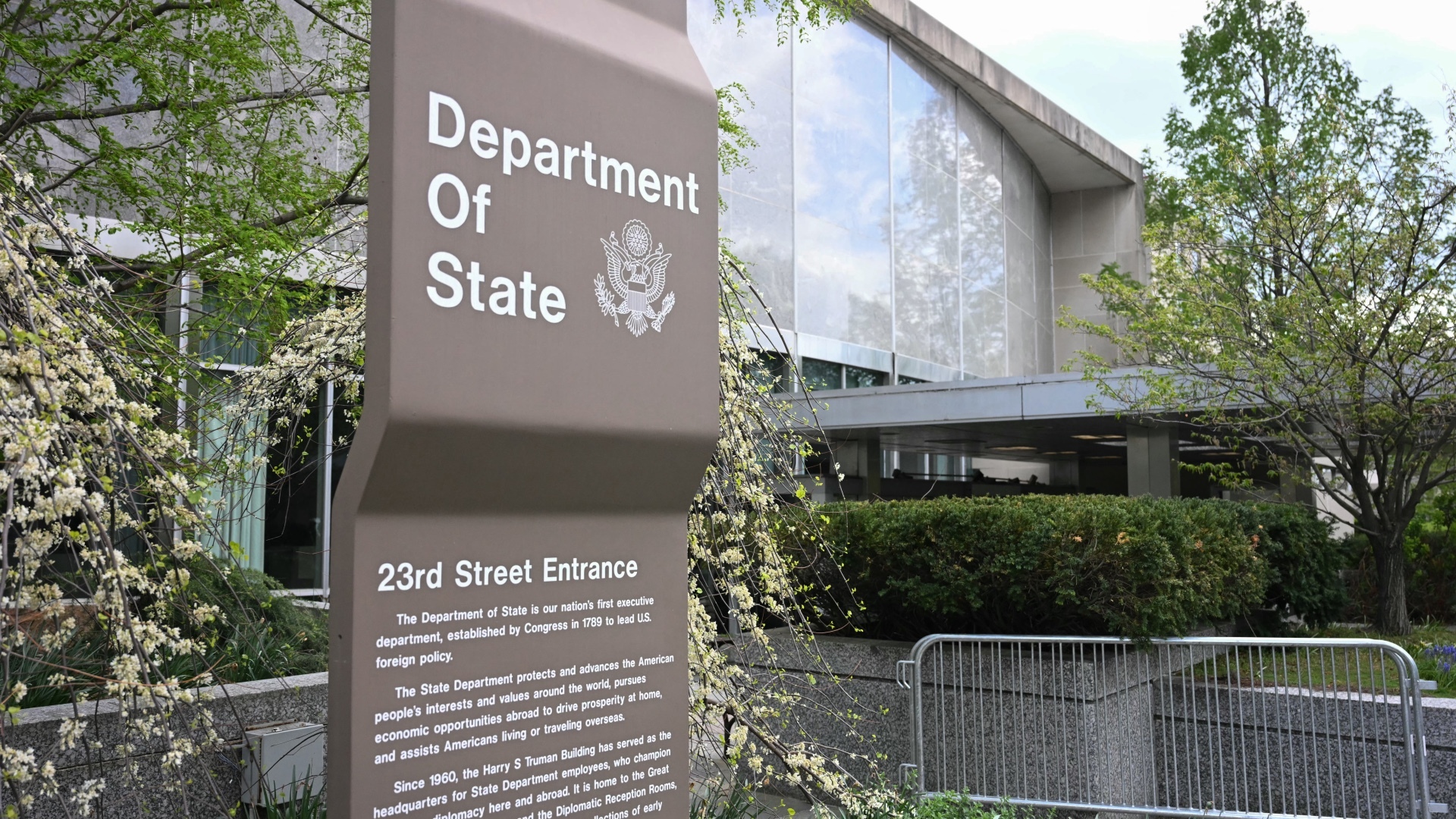
    The administration defended its actions through high-level briefings, with Secretary of State Marco Rubio and Pentagon chief Pete Hegseth meeting with congressional officials on Monday. However, Senator Mark Warner, the Democratic chair of the Senate Intelligence Committee, expressed serious reservations after the briefing, noting: “There was no imminent threat to the United States of America by the Iranians. There was a threat to Israel. If we equate a threat to Israel as the equivalent of an imminent threat to the United States, then we are in uncharted territory.”

    The legal foundation of the conflict hinges on the 1973 War Powers Act, which permits limited presidential military intervention in response to emergency situations involving attacks on U.S. interests. Notably, Hegseth himself referred to the situation as “war” rather than limited intervention during Monday’s press conference, while Trump asserted in his late-night video announcement that Iran posed an “imminent” threat—a claim that Atlantic Council analyst Daniel Shapiro criticized as inadequately explained.

    The administration provided formal notification to eight congressional leaders just before hostilities commenced, triggering the 60-day clock under the War Powers Act. Beyond this period, Trump would require explicit congressional authorization to continue military operations. In a rare display of bipartisan cooperation, Republican Congressman Thomas Massie and Democratic colleague Ro Khanna are preparing legislation to force a congressional vote on the Iran conflict, potentially as early as this week.

    Despite these challenges, the Republican majority is expected to protect Trump’s position, and even if opposition measures pass, they would likely fail to overcome a presidential veto, which requires a two-thirds majority in both chambers to override.

  • Trump says he will not rule out sending ground troops to Iran

    Trump says he will not rule out sending ground troops to Iran

    In a significant escalation of rhetoric, U.S. President Donald Trump has declined to exclude the possibility of deploying American ground forces to Iran during an interview with the New York Post on Monday. This statement marks a stark departure from previous presidential approaches to military engagements.

    Trump explicitly contrasted his position with predecessors who typically preemptively ruled out boots-on-ground scenarios. ‘I don’t have the yips with respect to boots on the ground—like every president says, ‘There will be no boots on the ground,’ I don’t say it,’ Trump stated, adding that he would authorize such deployment ‘if they were necessary.’

    The comments come amid ongoing military operations that began Saturday morning, which Trump characterized as ‘way ahead of schedule’ in targeting senior Iranian officials. The President projected the conflict would conclude within four to five weeks during separate remarks to The New York Times.

    Domestically, the military action faces substantial public skepticism. A Reuters/Ipsos poll conducted over the weekend revealed only 27% of Americans approve of the strikes, while 43% disapprove and 29% remain uncertain. Trump dismissed these findings, asserting ‘I don’t care about polling.’

    Meanwhile, Iranian officials signaled preparation for prolonged hostilities. Ali Larijani, Secretary of Iran’s Supreme National Security Council, declared on social media platform X that ‘Iran, unlike the United States, has prepared itself for a long war.’ Larijani emphasized Iran’s defensive posture throughout the conflict and vowed to ‘fiercely defend ourselves and our six thousand years old civilization regardless of the costs.’

    The geopolitical tensions unfold against the backdrop of national mourning in Iran following the recent death of Supreme Leader Ayatollah Ali Khamenei, adding complexity to an already volatile situation.

  • Liberal senator defends Coalition’s opposition to Pauline Hanson ‘Muslim’ censure

    Liberal senator defends Coalition’s opposition to Pauline Hanson ‘Muslim’ censure

    A significant political division has emerged within Australia’s Senate regarding the appropriate response to controversial remarks about Muslim Australians made by One Nation leader Pauline Hanson. The parliamentary confrontation culminated in a successful censure motion against Senator Hanson, passed on Monday afternoon with support from Labor, the Greens, and two Liberal moderates, Senators Andrew McLachlan and Paul Scarr.

    The controversy originated from Hanson’s appearance on Sky News last month, where she questioned the existence of ‘good Muslims.’ This prompted Foreign Affairs Minister Penny Wong to deliver an impassioned speech defending Muslim Australians, particularly those serving in uniform, whom she described as patriotic citizens who love their country.

    Coalition senators, including Anne Ruston, Jacinta Nampijinpa-Price, and Michaelia Cash, opposed the censure motion, arguing that such measures should be reserved for the most severe misconduct rather than routine political disagreements. Defence spokesman James Paterson clarified that while Coalition senators condemned Hanson’s comments as ‘appalling and wrong,’ they believed censure should be limited to behavior within the Senate itself.

    The Coalition proposed an alternative amendment to condemn rather than censure Hanson, but this was rejected. Hanson herself dismissed the proceedings as a political stunt, storming out of the chamber before the vote while dramatically slapping her own wrist. She claimed her comments had been misquoted and suggested the motion was motivated by One Nation’s improving polling numbers.

    The incident has exposed tensions within the Coalition regarding potential future cooperation with One Nation, with Senator Wong criticizing those who would contemplate such partnerships. The debate highlighted broader concerns about religious vilification and the boundaries of political discourse in Australia’s multicultural society.

  • Brics missing in action as war on permanent member Iran spirals

    Brics missing in action as war on permanent member Iran spirals

    The BRICS alliance is confronting a severe test of its global credibility and internal cohesion following its collective silence on Israel’s targeted killing of Iranian Supreme Leader Ayatollah Ali Khamenei, which resulted in over 550 casualties including 165 children. Despite comprising eleven nations positioning themselves as leaders of the Global South, the bloc has failed to issue any unified statement regarding the attack on its permanent member Iran, which joined the grouping in 2024.

    Analysts reveal deep divisions within the alliance, particularly highlighting India’s complicating role as current BRICS chair. New Delhi recently elevated its relationship with Israel to a ‘special strategic partnership’ and condemned Iran’s retaliatory strikes against the United Arab Emirates—another BRICS member. This alignment with Israeli interests directly contrasts with positions taken by other core members including China, Russia, Brazil and South Africa, all of which individually condemned Khamenei’s assassination.

    Priyal Singh, senior researcher at the Institute for Security Studies, notes that India’s visible solidarity with Israeli leadership and Iran’s attacks on UAE territories have created nearly insurmountable barriers to consensus. The bloc’s institutional design, which makes collective decisions non-binding, combined with significant bilateral trade relationships with Israel across multiple member states, further paralyzes unified action.

    Experts suggest economic interests ultimately outweigh geopolitical solidarity. Patrick Bond of the University of Johannesburg contends that BRICS nations’ corporate profiteering in Israel will likely prevent meaningful support for Iran, drawing parallels to similar inaction regarding Venezuela and Cuba. This economic pragmatism undermines the bloc’s purported role as a counterweight to Western hegemony.

    The expansion from five to eleven members in 2024-2025—adding Iran, UAE, Egypt, Ethiopia, Saudi Arabia, and Indonesia—has dramatically complicated decision-making processes. Emerging Middle Eastern power axes centered around UAE and Saudi interests further fracture potential unity, particularly with Iran potentially weakened. With the next summit scheduled for New Delhi in September, the bloc’s perceived inability to protect its members may fundamentally damage its international standing and internal trust.

  • Rubio says Israel’s strike plan triggered US attack on Iran

    Rubio says Israel’s strike plan triggered US attack on Iran

    Secretary of State Marco Rubio revealed on Monday that the United States launched its military operation against Iran after obtaining intelligence about Israel’s planned strike, fearing Tehran would retaliate against American forces stationed in the region.

    Rubio, addressing reporters prior to briefing congressional leaders, explained the administration’s calculus: ‘We had intelligence indicating an imminent Israeli operation. We anticipated this would trigger Iranian retaliation against our forces. By taking preemptive action before they launched their attacks, we prevented significantly higher casualties.’

    The Secretary detailed that Iranian leadership had instructed field commanders to automatically respond against U.S. forces following any attack. ‘Waiting for their strike first would have resulted in substantially greater losses. President Trump made the strategically sound decision to conduct coordinated operations with Israel,’ Rubio stated.

    When questioned about the constitutional requirement for imminent threat justification—a key threshold for military action without congressional approval—Rubio maintained: ‘The imminent threat was unequivocal. We knew that if Iran was attacked, which we expected, they would immediately target American personnel. We refused to passively absorb a potentially devastating blow.’

    The revelation sparked immediate political backlash. Representative Joaquin Castro, a Democratic lawmaker, criticized Israel’s role, stating on social media platform X: ‘Israel endangered American forces by insisting on attacking Iran. This is unacceptable behavior from both the President and a nation that claims alliance with the United States.’

    Defense Secretary Pete Hegseth had previously confirmed that Israel executed Saturday’s strike in Tehran that eliminated Iran’s Supreme Leader Ayatollah Ali Khamenei and other high-ranking officials, based on intelligence about their gathering.

    Rubio emphasized that regardless of the timing catalyst, the Trump administration believed military action against Iran was necessary. ‘This operation was ultimately unavoidable,’ he asserted, while clarifying that regime change wasn’t the primary objective. ‘While we hope the Iranian people can overthrow this government and establish a new future, our mission specifically targeted the destruction of their ballistic missile and naval capabilities.’

  • Trump’s Iran endgame unclear after mixed messaging on war aims

    Trump’s Iran endgame unclear after mixed messaging on war aims

    As America’s military campaign against Iran enters its third day, the Trump administration’s strategic objectives and endgame vision remain shrouded in ambiguity. The largest U.S. military engagement in the Middle East in two decades has been characterized by evolving justifications and conflicting messaging from the highest levels of government.

    President Trump’s initial declaration focused on dismantling Iran’s nuclear capabilities, but his rationale has subsequently expanded to include the destruction of ballistic missile systems, naval assets, and proxy network support. In his first White House address since operations commenced, Trump framed the intervention as essential for protecting American interests and allies from regional threats, stating that a nuclear-armed Iran would represent ‘an intolerable threat to the Middle East, but also to the American people.’

    The administration’s communication strategy has diverged markedly from historical precedent. Rather than delivering comprehensive addresses from the Oval Office, Trump has utilized social media platforms and impromptu telephone interviews to convey his intentions—a approach that has generated confusion regarding ultimate objectives. Notably absent from the president’s remarks was any detailed vision for Iran’s political future following military operations.

    This ambiguity has exposed divisions within the administration. Defense Secretary Pete Hegseth explicitly denied that regime change constituted a primary war aim, contradicting Trump’s earlier suggestion that Iranians should ‘take back your government.’ Meanwhile, Joint Chiefs Chair General Dan Caine offered a tempered assessment, acknowledging that military objectives ‘will be difficult to achieve’ and warning of potential increased casualties as operations continue.

    The administration’s evolving justification took another turn when Secretary of State Marco Rubio presented a preemptive rationale, claiming operations were launched to forestall an imminent Israeli strike that would have triggered retaliatory measures against U.S. forces. This latest explanation emerged amid growing congressional criticism regarding the lack of detailed intelligence supporting claims of an immediate Iranian threat.

    Retired General David Petraeus, former CIA director, characterized the elimination of Iran’s Supreme Leader as a ‘historic achievement’ but cautioned that encouraging popular uprising carries significant risks given the regime’s extensive security apparatus. Despite these concerns, military leadership has repeatedly emphasized that operations will not mirror the extended ground engagements seen in Iraq or Afghanistan, though Trump has not unequivocally ruled out future troop deployments if deemed necessary.

    With six American service members already confirmed killed in retaliatory strikes, and the president projecting a timeline ranging from ‘four to five weeks’ to ‘as long as it takes,’ the administration faces mounting pressure to articulate a coherent strategic vision for resolving the most significant military confrontation in the region in decades.