分类: politics

  • Cyprus condemns UK after RAF base that launched Gaza spy flights hit by drone

    Cyprus condemns UK after RAF base that launched Gaza spy flights hit by drone

    The Cypriot government has formally expressed dissatisfaction with Britain’s failure to provide explicit assurances that its military bases on the island would be used exclusively for humanitarian purposes. This diplomatic tension emerged hours after a one-way attack drone struck the Royal Air Force Akrotiri base, despite British Prime Minister Keir Starmer’s announcement permitting U.S. forces to utilize British installations for targeting Iranian missile sites.

    Government spokesperson Konstantinos Letymbiotis revealed that two additional unmanned aerial vehicles were intercepted while approaching RAF Akrotiri on Monday morning. Although the incident resulted in no casualties, military families and local residents underwent precautionary evacuations during the security alert.

    The drone attack is understood to have been launched prior to Starmer’s Sunday evening address from Downing Street, where he justified the decision as necessary to counter Iranian missile threats. “The only way to stop the threat from Iranian missiles is to destroy the missiles at source,” Starmer stated, emphasizing the defensive nature of the arrangement requested by the United States.

    Cyprus maintains that despite multiple communications across various levels, British authorities failed to provide clear and timely assurances regarding the strictly humanitarian role of their bases. Letymbiotis emphasized Cyprus’s longstanding position as a “humanitarian hub” and criticized communication failures that affected residents near British installations.

    The spokesperson refused to exclude the possibility of Cyprus seeking renegotiation of the status and operating conditions of British bases, highlighting serious concerns about information transparency and regional security implications. Britain maintains two strategic bases in Cyprus at Dhekelia and Akrotiri, the latter having conducted hundreds of surveillance flights over Gaza during Israel’s military operations.

    While the Ministry of Defence has consistently stated these flights supported hostage rescue operations, revelations have emerged about intelligence sharing with Israel and captured footage of Gaza during attacks that killed British citizens. Analysts suggest the U.S. may more likely utilize the joint UK-US military base on Diego Garcia for any potential operations against Iranian targets, given its strategic positioning within 5,300km of Iran.

  • Bill Clinton asked about hot tub photo during Epstein deposition

    Bill Clinton asked about hot tub photo during Epstein deposition

    Former U.S. President Bill Clinton faced pointed questioning during a recent deposition regarding his associations with the late financier Jeffrey Epstein. The inquiry took a notable turn when lawmakers presented Clinton with a photograph allegedly showing him in a hot tub with another individual connected to the Epstein case.

    Approximately midway through the extensive testimony, the 42nd president addressed the controversial image directly. Clinton stated unequivocally that he had no prior knowledge of the photograph being taken and further asserted that he could not identify the other person depicted alongside him. The nature and context of the hot tub setting remained unspecified during the exchange.

    The deposition forms part of broader investigations into Epstein’s extensive network of influential associates following his 2019 death while awaiting trial on sex trafficking charges. Clinton’s testimony represents one of several high-profile inquiries into connections with the convicted sex offender, though no allegations of wrongdoing have been made against the former president.

    Legal analysts note that such depositions typically seek to establish timelines and relationships rather than allege direct misconduct. The photograph inquiry appears to have been one component of a broader fact-finding process conducted by lawmakers investigating the Epstein network’s operations and connections.

  • ‘I’m done’ – Hillary Clinton upset as deposition pauses over leaked photo

    ‘I’m done’ – Hillary Clinton upset as deposition pauses over leaked photo

    Former Secretary of State Hillary Clinton exhibited visible frustration during her congressional deposition before the House Oversight Committee, declaring “I’m done” after proceedings were abruptly halted. The interruption occurred when committee members became aware that a confidential photograph from the closed-door testimony had been leaked to the public.

    The deposition, which centered on Clinton’s connections to the late financier and convicted sex offender Jeffrey Epstein, represents the latest development in the committee’s extensive investigation into elite networks associated with Epstein. Clinton appeared voluntarily to address questions about her limited interactions with Epstein during her tenure as First Lady and Senator.

    Committee Chairman Rep. James Comer (R-KY) confirmed the breach of protocol, stating: “The unauthorized disclosure of protected deposition materials represents a serious violation of congressional rules and procedures. We are investigating the source of this leak.”

    The released video footage shows Clinton expressing exasperation as lawmakers paused the testimony to address the security breach. Democratic members of the committee have joined their Republican colleagues in condemning the leak, highlighting the rare bipartisan agreement on maintaining the integrity of congressional investigations.

    This incident raises significant questions about the security protocols surrounding sensitive depositions and the potential politicization of investigations into the Epstein case. Legal experts suggest the leak could complicate future cooperation from witnesses concerned about confidentiality breaches.

  • Israeli police investigate Polymarket user who correctly predicted Iran strikes

    Israeli police investigate Polymarket user who correctly predicted Iran strikes

    Israeli authorities have initiated a formal investigation into suspicious betting activity on the US-based prediction market Polymarket, following a user’s highly accurate forecast of military action against Iran. The probe centers on an account under the name ‘Magamyman,’ which netted approximately $430,000 in gross profits by correctly predicting that the United States would conduct strikes on Iranian targets on February 28th.

    According to reports from Israel’s Channel 12 news, this incident marks neither the first nor the most substantial successful wager placed by this particular user regarding events in Iran. The Polymarket platform, which permits betting on diverse outcomes ranging from sporting events to geopolitical conflicts and governmental stability, saw substantial market activity preceding recent hostilities. Israeli financial outlet Globes reported that approximately $529 million in total bets were placed concerning the initiation date of the conflict, with $90 million specifically wagered on February 28th.

    The investigation seeks to determine whether the account holder possessed confidential insider information rather than extraordinary luck. This suspicion is amplified by the user’s previous accurate prediction of an Israeli attack on Iran scheduled for October 26, 2024—an operation that Israeli security sources confirm received governmental authorization shortly beforehand.

    Concerns about potential insider exploitation of prediction markets extend beyond Israel. US Senator Chris Murphy (D-CT) publicly expressed outrage on social media platform X, declaring it ‘insane this is legal’ and announcing imminent legislation to prohibit such activities, alleging that ‘people around Trump are profiting off war and death.’ These allegations emerge despite the White House’s denial that anyone in former President Trump’s circle was involved in the profitable trades.

    The scrutiny intensifies due to the Trump family’s documented connections to Polymarket. Donald Trump Jr. serves as an advisor to the platform, and his venture capital firm has invested millions of dollars into the company. Furthermore, the Trump administration previously terminated two investigations into Polymarket that had been initiated under the Biden administration.

    This case echoes a separate February incident in which Israeli military personnel were arrested on suspicion of placing bets based on classified intelligence. The situation underscores growing international apprehension about prediction markets being manipulated by individuals with privileged access to sensitive political and military decisions.

  • Argentina’s top union sues to halt President Milei’s sweeping labor overhaul

    Argentina’s top union sues to halt President Milei’s sweeping labor overhaul

    BUENOS AIRES, Argentina — Argentina’s labor landscape has become the epicenter of a major constitutional confrontation as the nation’s primary trade union coalition launched legal proceedings against President Javier Milei’s recently enacted labor legislation. The General Confederation of Labor (CGT) initiated this judicial challenge on Monday, targeting reforms that congressional lawmakers had approved just three days prior.

    The contested legislation represents the most substantial overhaul of Argentina’s labor framework in decades, granting corporations unprecedented flexibility in hiring practices, termination procedures, severance arrangements, and collective bargaining negotiations. The reforms specifically aim to diminish the traditional influence that labor organizations have wielded since the Peronist movement emerged in the 1940s.

    In their formal submission to Buenos Aires courts, CGT legal representatives contended that the legislation ‘constitutes a severe violation of collective and individual rights that directly contravene constitutional guarantees.’ The union’s constitutional argument rests on two fundamental principles: the ‘principle of progressivity’ that prohibits the erosion of established worker protections, and the ‘protective principle’ designed to maintain equilibrium between employer and employee interests.

    Union officials directly linked the legislation to Argentina’s deteriorating employment situation, asserting that over 300,000 positions have been eliminated since Milei assumed presidential authority in December 2023. The administration’s austerity-driven economic agenda, according to the CGT, systematically undermines worker protections rather than representing isolated policy decisions.

    President Milei celebrated the legislation as ‘historic’ following its congressional passage, characterizing the measures as essential ‘labor modernization’ necessary to attract international investment, enhance productivity, and stimulate formal job creation in a nation where approximately 40% of workers operate within the informal economy.

    The legislative process exposed profound political divisions, culminating last month in nationwide work stoppages organized by the CGT and violent confrontations between left-wing demonstrators and security forces outside congressional facilities. The judiciary now faces the consequential decision of whether to grant an injunction that would suspend implementation pending final constitutional review.

  • Former Hebei official expelled, case sent for prosecution

    Former Hebei official expelled, case sent for prosecution

    In a significant anti-corruption development, Jiang Deguo, former Vice-Chairman of the Hebei Provincial Committee of the Chinese People’s Political Consultative Conference, has been permanently expelled from the Communist Party of China following investigations confirming severe disciplinary and legal breaches. The Central Commission for Discipline Inspection and National Commission of Supervision announced the completion of their probe, with Jiang’s case now formally transferred to prosecutorial authorities for criminal proceedings.

    Investigative findings reveal Jiang engaged in systematic misconduct including the unauthorized retention of politically sensitive audio materials and deliberate obstruction of organizational scrutiny. His violations extended to accepting improper benefits including lavish banquets, travel accommodations, and medical services that compromised his official impartiality.

    The former official further violated reporting obligations by concealing personal matters during formal inquiries. Evidence indicates Jiang traded organizational influence for financial gain, manipulating personnel appointments and accepting bribes. He leveraged his authority to advance his relatives’ commercial ventures, maintained illicit shareholdings in private enterprises, and engaged in morally corrupt relationships involving power exploitation.

    Notably, Jiang continued his corrupt activities post-retirement, utilizing his residual influence to secure land-use approvals and project contracts in exchange for substantial monetary bribes.

    With a political career spanning over four decades since joining public service in 1976 and party membership dating to 1984, Jiang held multiple senior positions including Mayor and Party Chief of Xingtai, Mayor of Shijiazhuang, and Hebei Vice-Governor before his 2017 appointment to the provincial CPPCC leadership. His retirement in 2018 preceded the September 2025 investigation launch that culminated in this disciplinary action.

  • What did Trump say in his first live remarks since Iran attack?

    What did Trump say in his first live remarks since Iran attack?

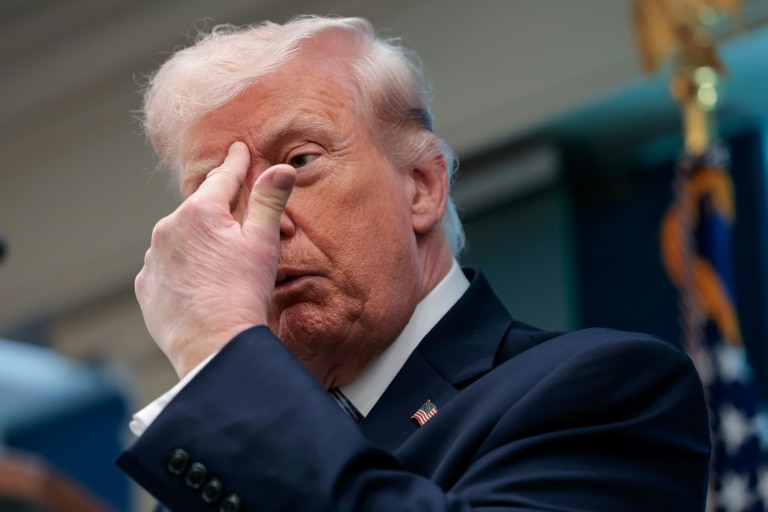
    In his first public address following Iran’s retaliatory missile strikes, President Donald Trump presented a surprisingly scripted response during a White House event, diverging from his characteristic improvisational style. BBC correspondent Sarah Smith, who witnessed the remarks firsthand, reported the President maintained unusual discipline by adhering to prepared talking points throughout the appearance.

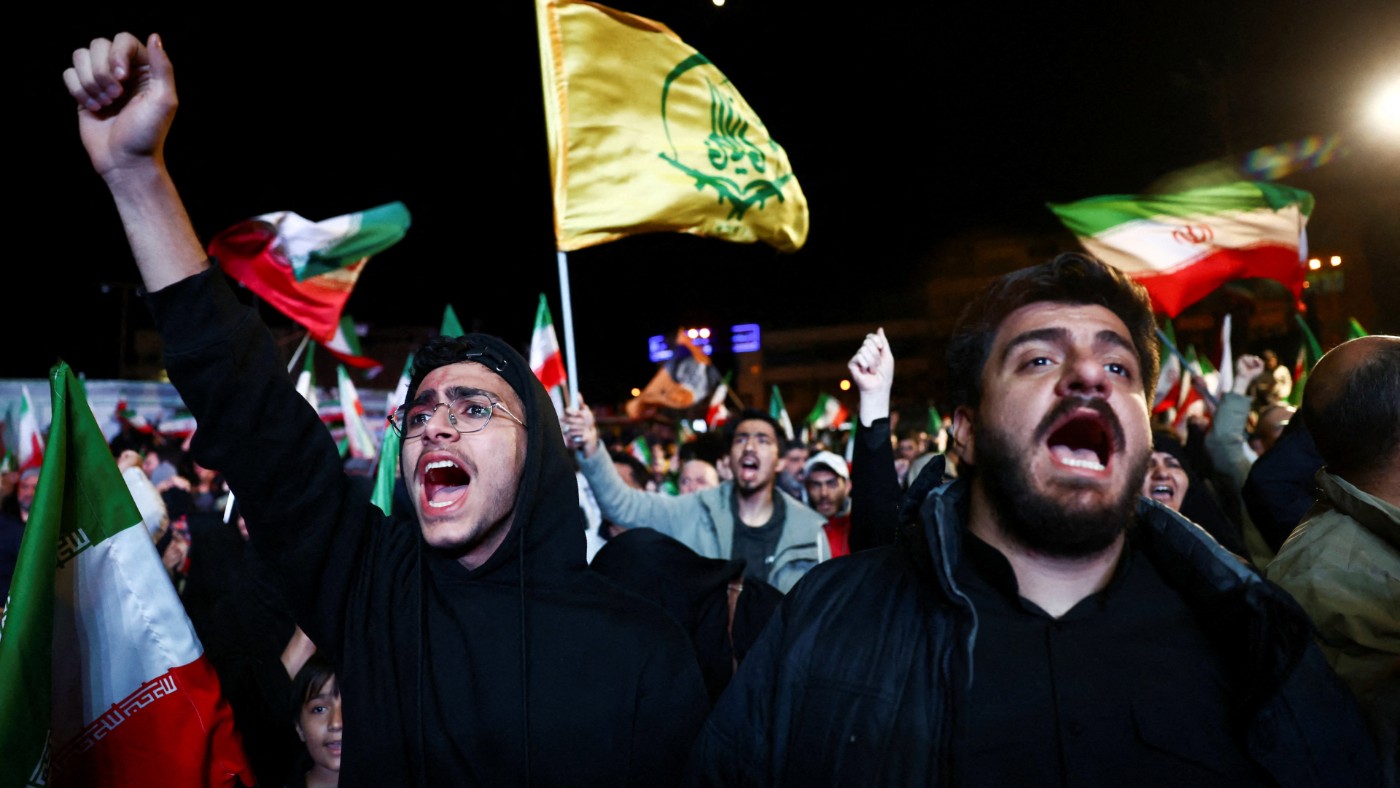
    The address marked a critical moment in escalating U.S.-Iran tensions, coming shortly after Tehran launched ballistic missiles at Iraqi bases housing American troops. Observers noted the President’s deliberate tone signaled a potential de-escalation approach contrary to expectations of aggressive rhetoric. The carefully constructed delivery avoided explicit threats of military escalation while reaffirming American strength.

    This performance represents a notable departure from Trump’s typical extemporaneous speaking style, particularly during international crises. The structured messaging suggests coordinated strategy sessions with national security advisors and communications staff prior to the public appearance. The administration’s response framework balanced assertions of military capability with diplomatic overtures, reflecting complex internal deliberations about appropriate escalation thresholds.

    The calibrated presentation indicates recognition of the situation’s gravity and the international community’s close scrutiny of American leadership during volatile Middle East tensions. This methodical approach may signal administration efforts to project stability to global markets and allied nations while reserving options for future policy decisions.

  • US sanctions Rwanda’s military and top officials over support for M23 rebels in Congo

    US sanctions Rwanda’s military and top officials over support for M23 rebels in Congo

    In a significant diplomatic move, the United States has levied sanctions against Rwanda’s Defence Forces (RDF) and four high-ranking military officials for their sustained support of the M23 rebel group, which stands accused of perpetrating severe human rights violations in the Democratic Republic of Congo. The targeted officials include Army Chief of Staff Vincent Nyakarundi, Major General Ruki Karusisi, Chief of Defence Staff Mubarakh Muganga, and Special Operations Force Commander Stanislas Gashugi.

    This decisive action by the U.S. Treasury Department’s Office of Foreign Assets Control represents a stark escalation in international pressure, coming merely months after a U.S.-brokered peace agreement was signed in Washington last December by Congolese President Felix Tshisekedi and Rwandan President Paul Kagame. The accord, witnessed by then-President Donald Trump, was hailed as a courageous breakthrough that simultaneously opened access to the region’s vast critical mineral reserves for American interests.

    Despite these diplomatic efforts, violent confrontations have persisted across multiple fronts in eastern Congo, resulting in substantial civilian and military casualties. The M23 faction—now numbering approximately 6,500 combatants according to UN estimates—has emerged as the most dominant among roughly 100 armed groups operating in the resource-rich border region, creating one of the world’s most severe humanitarian crises with over 7 million displaced persons.

    Rwandan government spokesperson Yolande Makolo vehemently contested the sanctions, labeling them as ‘unjust’ and alleging they ‘misrepresent the reality and distort the facts of the conflict.’ Makolo counter-accused Congolese forces of violating the peace agreement through alleged indiscriminate drone attacks and ground offensives.

    The United States maintains that M23’s military campaigns would be unsustainable without active Rwandan government backing. U.S. Treasury Secretary Scott Bessent emphasized that his department ‘will use all tools at its disposal to ensure parties uphold their obligations,’ demanding immediate withdrawal of Rwandan troops and equipment from Congolese territory.

    State Department spokesman Thomas Pigott detailed M23’s alleged atrocities, citing ‘horrific human rights abuses including summary executions and violence against civilians, including women and children.’ The rebel group has been under U.S. sanctions since 2013, with current negotiations for a renewed peace deal ongoing through mediation by Qatar and the United States.

  • Carney to push his middle power strategy during Australia visit

    Carney to push his middle power strategy during Australia visit

    Canadian Prime Minister Mark Carney arrived in Sydney on Tuesday for a pivotal diplomatic mission aimed at strengthening Canada’s Indo-Pacific partnerships. This visit marks a significant moment in bilateral relations as Carney becomes the first Canadian leader in nearly two decades to address Australia’s parliamentary assembly.

    The Australian leg of Carney’s Indo-Pacific tour follows his successful four-day visit to India, where he secured billion-dollar agreements representing a major diplomatic achievement. In Australia, the agenda focuses on enhancing cooperation across multiple strategic sectors including defense coordination, maritime security protocols, critical mineral supply chains, and artificial intelligence development.

    Prime Minister Carney shares notable political alignment with his Australian counterpart Anthony Albanese. Both center-left leaders benefited from what political analysts term the ‘Trump effect’ – the global uncertainty following Donald Trump’s second inauguration that propelled both to electoral victory within days of each other last year.

    The timing of this diplomatic mission carries added significance amid recent global tensions following U.S. military actions against Iran. Both leaders are expected to discuss the geopolitical implications and potential impacts on their respective nations.

    Carney’s parliamentary address will expand upon themes from his widely-discussed Davos speech, where he advocated for middle powers to develop ‘strategic autonomy’ against economic coercion from superpowers. ‘Middle powers must act together, because if we’re not at the table, we’re on the menu,’ Carney emphasized in Switzerland.

    The visit includes substantive discussions on building upon the critical minerals agreement signed last October, alongside defense coordination planning. Canada and Australia have established military cooperation through joint naval deployments in the South China Sea and technological exchanges for Arctic radar systems.

    This meeting also represents Carney’s first engagement with a Commonwealth leader since the controversial arrest of Andrew Mountbatten-Windsor on February 19th. While Albanese has publicly supported removing the former prince from succession, Carney has maintained diplomatic silence on the matter.

    The Prime Minister’s itinerary includes policy addresses at Sydney’s Lowy Institute before proceeding to Canberra, with departure scheduled for March 6th followed by diplomatic meetings in Japan.

  • Greens and Liberal Democrats demand parliament vote over US use of UK bases

    Greens and Liberal Democrats demand parliament vote over US use of UK bases

    British Prime Minister Keir Starmer is confronting significant political opposition following his decision to authorize United States military operations from UK bases against Iranian missile sites. The controversial move has triggered a cross-party demand for parliamentary scrutiny, with Liberal Democrat leader Ed Davey and Green Party co-leader Zack Polanski leading calls for an immediate legislative vote.

    The political firestorm erupted Sunday evening when Starmer announced from Downing Street that American forces would be permitted to utilize British installations for ‘specific and limited defensive purposes’ targeting Iranian missile capabilities. The Prime Minister justified the decision as necessary to prevent regional escalation and protect civilian lives.

    Within hours of the announcement, a one-way attack drone struck RAF Akrotiri in Cyprus, though defense sources indicate the launch preceded the official authorization. While no casualties were reported, military families and local residents underwent precautionary evacuations.

    The authorization has exposed deep divisions within Starmer’s own Labour Party. Former Shadow Chancellor John McDonnell challenged the government’s defensive classification, asserting the action实质上 constitutes support for American-led regime change objectives. MPs Richard Burgon and Kim Johnson joined in condemnation, emphasizing concerns about international law violations and the abandonment of diplomatic solutions.

    International pressure compounded Starmer’s challenges, with former US President Donald Trump expressing public disappointment over initial hesitations regarding Diego Garcia base access. Trump characterized the delayed approval as unprecedented in US-UK relations and suggested legal apprehensions motivated Starmer’s caution.

    Opposition parties seized the opportunity to criticize from both flanks. Reform UK leader Nigel Farage denounced Starmer’s initial reluctance as ‘frankly pathetic’ and potentially damaging to NATO cohesion, while Conservative leader Kemi Badenoch accused the government of prioritizing domestic political calculations over national security interests.

    The strategic implications are substantial, with Diego Garcia’s positioning placing US bomber aircraft within 5,300 kilometers of Iranian territory. Iranian Shahed-136 drones possess sufficient range to threaten the base, which houses approximately 4,000 primarily American military personnel and contractors.

    As parliamentary pressure mounts, the Prime Minister faces the complex challenge of balancing international alliances, legal obligations, and domestic political realities while managing escalating tensions in the Middle East.