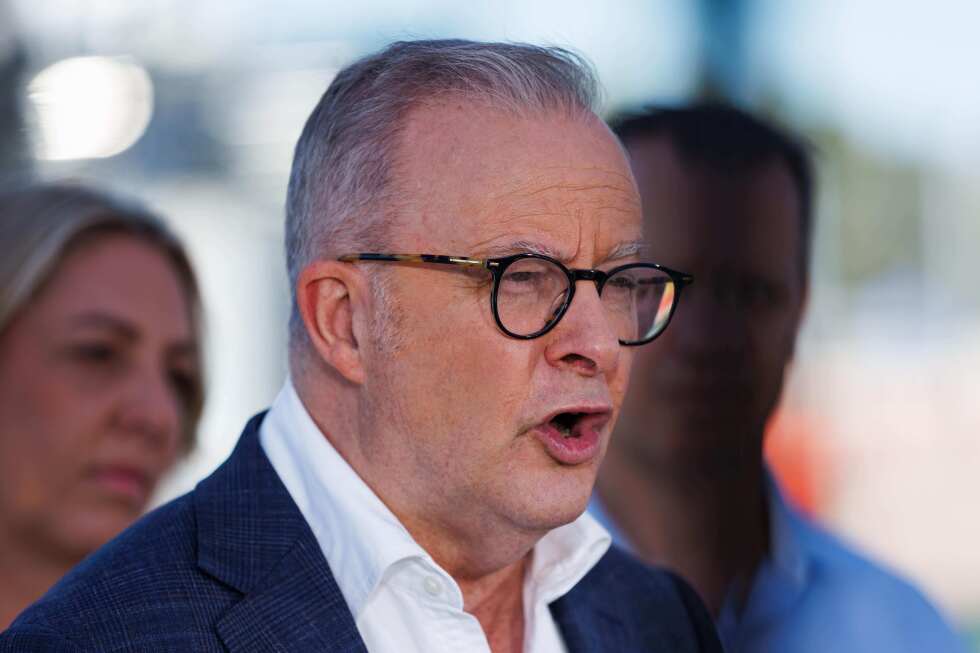
BRISBANE, Australia — Amid lingering global energy market disruptions tied to Middle East conflict, the Australian government has announced a landmark emergency scheme to backstop two of the nation’s largest fuel suppliers amid inflated spot market prices, as Prime Minister Anthony Albanese warns that supply chain disruptions will persist long after a newly announced two-week ceasefire in the region takes hold.
Speaking to reporters Thursday during a visit to an Ampol refinery in Brisbane, Albanese confirmed the government has finalized terms to underwrite purchases of gasoline and diesel by top domestic suppliers Ampol and Viva Energy. The agreement covers spot market fuel acquisitions made at prices well above typical commercial rates, a response to the upward price shocks that have rippled through global energy markets since the escalation of conflict in the Middle East.
Under the scheme, the federal government will also gain authority to direct fuel distribution across the country, with priority given to regional communities and agricultural regions that have experienced widespread fuel shortages and empty gas station tanks over recent weeks.
Albanese stressed that even if the newly brokered two-week ceasefire in the Middle East holds, the damage to global fuel supply chains will not reverse quickly. “This will have a long tail,” he said. “If the ceasefire holds, that doesn’t mean that the world global capacity comes online in a week or a month. It will take a considerable period of time. This will have a long tail. That is very, very clear.”
Albanese described the ceasefire announcement itself as an important positive step forward, but made clear the government is preparing for extended supply-side instability. In a immediate follow-up move to shore up long-term fuel security, he will travel to Singapore Friday for high-level talks with Singaporean Prime Minister Lawrence Wong focused on strengthening bilateral energy trade and supply chain resilience.
Albanese noted that the fast-arranged meeting — scheduled on relatively short notice — underscores the close strategic and economic ties between the two nations. “We don’t preempt one-on-one meetings at leaders’ levels, but the fact that we’re being welcomed at relatively short notice to Singapore speaks about the strength of the relationship,” he said.
A statement from the Singaporean government confirmed the visit aligns with both nations’ ongoing regional commitments to maintaining open energy trade and consistent fuel flows. The two countries have deep existing energy interdependence: Australia ranks as Singapore’s second-largest supplier of liquefied natural gas, while Singapore is Australia’s single largest source of refined petroleum products.
“This visit follows Australia and Singapore’s joint commitment to keep fuel flowing between both countries and to work together to strengthen energy supply chain resilience,” the Singaporean government statement added.
Albanese emphasized that his administration is moving with urgent speed to boost domestic fuel supply and address the shortages that have disproportionately impacted non-urban areas of the country, framing the emergency underwriting scheme and upcoming Singapore talks as complementary steps to protect Australian households and businesses from extended energy market volatility.