分类: politics

  • California governor Newsom questions US support for ‘apartheid state’ Israel

    California governor Newsom questions US support for ‘apartheid state’ Israel

    In a significant departure from mainstream U.S. political discourse, California Governor Gavin Newsom has openly challenged the long-standing military partnership between the United States and Israel while criticizing the Trump administration’s coordinated operations with Iran. During a Tuesday appearance on Pod Save America in Los Angeles, Newsom expressed profound disappointment with Israel’s current leadership under Prime Minister Benjamin Netanyahu.

    When directly questioned by host Jon Favreau about whether Washington should reconsider its military support for Israel, Newsom responded with remarkable candor: ‘It breaks my heart because the current leadership in Israel is walking us down that path where I don’t think you have a choice about that consideration.’ The Democratic governor notably endorsed commentary that appropriately characterizes Israel as ‘an apartheid state,’ particularly amid discussions about annexing the occupied West Bank.

    Newsom’s critique extended beyond the Israeli-Palestinian conflict to address the recent joint military operations between the U.S. and Israel against Iran. He sharply questioned the strategic wisdom of regime change objectives, noting: ‘We’re talking about regime change?… For two years, they haven’t even been able to solve the Hamas question in Israel.’

    The governor’s comments emerge amid visible tensions within the Trump administration regarding Iran policy. President Trump contradicted Secretary of State Marco Rubio’s previous statements by claiming he ‘might have forced Israel’s hand’ into conflict with Iran based on negotiation assessments. This divergence follows Rubio’s justification that preemptive strikes were necessary to prevent higher U.S. casualties.

    The human cost of these operations has been substantial, with local reports and witness accounts confirming over 1,000 civilian fatalities in Iranian territories, including more than 150 schoolgirls. Tehran has responded with retaliatory strikes against Israeli and U.S. military installations across the Middle East, escalating regional tensions significantly.

  • A green guide for progress, protection

    A green guide for progress, protection

    China is poised to enact a comprehensive ecological and environmental code that represents a transformative leap in environmental legislation, aligning national strategies with global sustainability goals. The code, expected to be ratified during the current National People’s Congress session, will become China’s second formal statutory code following the Civil Code of 2020.

    The groundbreaking legislation establishes a unified legal framework addressing pollution control, ecological conservation, green development, and climate action. According to NPC spokesman Lou Qinjian, the code creates a solid legal foundation for achieving modernization through harmony between humanity and nature, making environmental legislation more systematic, integrated, and responsive to emerging challenges.

    The development process involved unprecedented stakeholder engagement. Lyu Zhongmei, vice-chairperson of the NPC Environmental Protection and Resources Conservation Committee, revealed that the drafting process incorporated over 200,000 characters of revision suggestions from scholars, enterprises, and government bodies through more than 50 research meetings. The current version contains more than 420 substantive changes from the initial draft, meticulously aligned with China’s updated climate commitments.

    Notably, the code introduces innovative provisions addressing human-wildlife conflicts that have emerged alongside ecological improvements. The legislation establishes compensation mechanisms for injuries or property damage caused by protected wildlife and exempts legal liability for emergency self-defense actions, prioritizing human safety while maintaining conservation principles.

    The code also tackles longstanding governance fragmentation, particularly in water management, by mandating integrated approaches to water resources, environment, and ecosystems. This addresses the notorious ‘nine dragons managing water’ phenomenon where multiple agencies have overlapping responsibilities.

    In waste management, the code strengthens extended producer responsibility requirements, particularly for traction batteries used in electric vehicles and energy storage systems. Manufacturers must establish recovery systems aligned with their sales volume, either independently or through third parties. The legislation also promotes recycled materials through certification systems and usage mandates.

    The code establishes China’s first legal framework for climate action, incorporating mechanisms for controlling total carbon emissions and intensity based on China’s 2030 peak carbon and 2060 neutrality goals. This represents a significant evolution from the current energy consumption control system.

    International environmental law experts recognize the code’s global significance. Dimitri de Boer of ClientEarth noted that China’s comprehensive approach offers developing nations a template for integrating pollution control, biodiversity protection, and climate governance into a coherent legal architecture. The code demonstrates how major economies can achieve full-scale green transformation while maintaining economic development.

  • The US is unlikely to curtail China’s critical minerals dominance

    The US is unlikely to curtail China’s critical minerals dominance

    The United States recently convened an international summit focused on critical minerals, aiming to counter China’s overwhelming dominance in global supply chains for smartphones, weapons systems, lithium-ion batteries, and electric vehicles. The gathering brought together representatives from key nations including Argentina, Australia, Bolivia, Canada, Chile, Democratic Republic of Congo, India, Japan, South Korea, and the United Kingdom, alongside the European Union.

    This initiative represents a significant shift in international trade dynamics that Canadian Prime Minister Mark Carney characterized as a fundamental ‘rupture’ to the rules-based global order. Despite ambitious American efforts to diminish China’s control over critical mineral production, the reality presents formidable challenges due to deeply entrenched Chinese investments and established production networks.

    According to International Energy Agency data, China currently commands more than 80% of global battery production, with this figure rising to 90% for grid-scale batteries essential for storing renewable energy from wind and solar sources. Global battery sales have expanded sixfold since 2020, while manufacturing of grid-scale battery systems has grown twentyfold during the same period, largely driven by China’s cost-effective manufacturing model.

    The US has intensified efforts to reduce Chinese influence in South America, which contains over 50% of the world’s known lithium deposits. Recent moves include the US government acquiring a 5% stake in Canada-based Lithium Americas in 2025, followed by another 10% acquisition in USA Rare Earth in February. The White House has also leveraged tariff threats and a $20 billion bailout package to negotiate new trade terms with Argentina, while the Inter-American Development Bank committed $140 million to enhance critical mineral production capacity across Latin America.

    However, disengaging China from established production networks raises substantial questions about the strategic wisdom of disrupting a system that produces 80-90% of the world’s lithium-ion batteries. While the US pursues an ‘America first’ policy of onshoring production, China has strategically employed joint ventures and public-private partnerships to secure mineral access while offshoring the more environmentally challenging aspects of production.

    Chinese company Ganfeng Lithium has maintained operations in Argentina for approximately a decade and continues expanding through joint ventures with Canadian firm Lithium Americas in the Pozuelos, Pastos Grandes, and Cauchari-Olaroz salt flats. The majority of Ganfeng’s production supplies battery and EV manufacturing hubs in China and Southeast Asia.

    The political landscape across South America introduces additional complexity. Recent electoral victories by right-wing leaders in Argentina, Bolivia, and Chile potentially favor US interests, particularly in Argentina where President Javier Milei has cultivated strong ties with the Trump administration. However, Chile’s situation remains less certain due to the state’s dominant role in copper markets, domestic debates about lithium nationalization, and enduring Chinese diplomatic influence.

    Major questions persist regarding American companies’ capacity and willingness to assume China’s role in global lithium-ion battery production. US-based Albemarle Corporation, while one of the world’s largest lithium companies, remains publicly traded with diverse international investors. Beyond South America, global lithium production continues to be dominated by American, Chinese, and Australian firms, nearly all maintaining joint ventures with Chinese companies like Tianqi and Ganfeng.

    The North American economy lacks both the capacity and wage competitiveness to replace China’s position in producing and processing critical minerals for batteries, energy storage systems, and electric vehicles. Developing a supply chain capable of outperforming China’s established network appears improbable given current economic and geopolitical realities.

  • Advisers urged to ensure 5-year plan’s good start

    Advisers urged to ensure 5-year plan’s good start

    Beijing witnessed the commencement of the fourth session of the 14th National Committee of the Chinese People’s Political Consultative Conference (CPPCC) on Wednesday, marking the beginning of China’s pivotal annual political gatherings. The event, held at the Great Hall of the People, brought together approximately 2,100 advisory members from diverse sectors across the nation.

    President Xi Jinping, serving concurrently as General Secretary of the Communist Party of China Central Committee and Chairman of the Central Military Commission, attended the opening ceremony alongside other senior leadership figures. The assembly focused primarily on strategizing for the successful implementation of China’s 15th Five-Year Plan (2026-2030), which represents a crucial phase in the nation’s modernization journey.

    CPPCC National Committee Chairman Wang Huning presented the standing committee’s work report, highlighting China’s remarkable achievements in concluding the 14th Five-Year Plan period despite complex global and domestic challenges. The report documented substantial progress across economic, technological, and defense sectors, with advisory members contributing significantly through 98 consultative activities and 5,992 formal proposals—of which 99.9% received governmental responses.

    The political advisory body announced plans to implement a specialized democratic supervision framework specifically designed to monitor the execution of the forthcoming five-year plan. Additionally, the CPPCC will organize commemorative events honoring the 160th anniversary of Sun Yat-sen’s birth while enhancing international exchanges to better articulate China’s democratic narrative.

    Prominent committee members provided insights regarding China’s development trajectory. Jiang Ying, Chairwoman of Deloitte China, emphasized China’s commitment to high-level opening-up policies that create new opportunities for global enterprises, particularly in digital economy and green transformation sectors. She highlighted cross-border data flow management as a critical area requiring regulatory refinement.

    Geely Holding Group Chairman Li Shufu identified electric vehicles, lithium batteries, and photovoltaics as transformative industries driving social progress, noting the automotive sector’s evolution from intense competition toward technology-driven sustainable growth. Meanwhile, Hong Kong representative Clarence Ling Chun-kit stressed the importance of strengthening cross-Strait youth exchanges and scientific collaboration in artificial intelligence during the upcoming planning period.

  • Tensions soar as Hegseth and Rubio feud over US troops in Iran

    Tensions soar as Hegseth and Rubio feud over US troops in Iran

    A significant policy division has emerged within the highest echelons of the US government regarding military strategy toward Iran, with Secretary of War Pete Hegseth and Secretary of State Marco Rubio engaged in intense disagreements over potential ground troop deployment. According to three former US officials and a senior regional official familiar with the matter, the cabinet members have been described as “at each other’s throats” regarding whether to accede to Israel’s request for American boots on the ground.

    Secretary Hegseth, known for his combative media style from his Fox News background, has expressed support for more direct military intervention. In contrast, Secretary Rubio has demonstrated considerable caution about entangling the United States in another prolonged Middle Eastern conflict. This fundamental disagreement reflects broader tensions within the administration about the scope and objectives of military engagement with Iran.

    The current US approach has primarily relied on aerial bombardment and standoff strikes utilizing cruise and ballistic missiles. However, recent reporting indicates an expansion of covert operations, with CNN revealing that the CIA has initiated training and arms provision to Kurdish fighters operating within Iranian territory. According to one Gulf official, discussions have even included deploying special operations teams to target high-ranking Iranian Revolutionary Guard Corps (IRGC) officials and nuclear program personnel.

    The philosophical divide between the officials extends to their public communication strategies. When questioned about potential troop deployments, Hegseth responded with characteristic defiance: “Why in the world would we tell you, the enemy, anybody, what we will or will not do in pursuit of an objective.” Meanwhile, Rubio has shown greater sensitivity to domestic opposition against placing American soldiers in harm’s way.

    Complicating matters further, military personnel have reportedly expressed discomfort with certain commanders framing the conflict in religious terms, describing it as “part of God’s plan” that would facilitate the return of Jesus Christ. Hegseth, who possesses a Crusader cross tattoo on his chest and identifies as an ultra-conservative Christian, has not publicly addressed these concerns.

    President Trump has maintained strategic ambiguity regarding ground operations, telling The New York Post: “I don’t have the yips with respect to boots on the ground – like every president says, ‘There will be no boots on the ground.’ I don’t say it. I say ‘probably don’t need them,’ [or] ‘if they were necessary’.”

    The administration’s stated objectives have similarly fluctuated between destroying Iran’s ballistic missile capabilities and nuclear program to openly advocating for regime change. This week, Rubio initially suggested military action was precipitated by intelligence suggesting an imminent Israeli attack on Iran, though he subsequently retracted this explanation.

    The human cost of the conflict continues to mount, with at least six US service members confirmed killed. During a recent press briefing, Hegseth lamented that military achievements were being overshadowed by combat casualties: “We’ve taken control of Iran’s airspace and waterways without boots on the ground. We control their fate. But when a few drones get through or tragic things happen, it’s front-page news.”

  • ‘Forgive the sins’: Penny Wong, Pauline Hanson clash as One Nation leader criticises Labor over fuel reserves

    ‘Forgive the sins’: Penny Wong, Pauline Hanson clash as One Nation leader criticises Labor over fuel reserves

    A heated parliamentary confrontation has unfolded regarding Australia’s fuel reserve policies, sparking intense accusations between political factions. During Thursday’s question time, Foreign Affairs Minister Penny Wong launched a sharp critique against One Nation leader Pauline Hanson, alleging she had effectively “forgiven the sins” of the Coalition while demonstrating clear “political allegiance” through her selective criticism.

    The exchange centered on fuel security concerns amid rising global prices driven by the ongoing US-Israeli conflict with Iran. Senator Hanson had pressed the Labor government over petroleum stockpiles, claiming Australia maintained “only 25 days of diesel” reserves despite Energy Minister Chris Bowen’s assurances about their condition. She further argued that net-zero emissions ambitions jeopardized national security “in the event of a crisis.”

    Minister Wong countered by revealing Australia currently maintains higher aviation fuel, petrol, and diesel reserves than at any point over the past fifteen years. She noted the conspicuous absence of similar scrutiny from Senator Hanson during the Coalition’s administration, suggesting political motivations behind the criticism.

    Industry Minister Tim Ayres intervened, detailing the government’s implementation of minimum stock holding obligations including 1.5 billion litres of petrol and three billion litres of diesel—effectively creating a strategic reserve. He accused both the Coalition and One Nation of attempting “to frighten little old ladies” and profiting from manufactured crises without having taken substantive action during their own tenure.

    The political tensions emerge against a backdrop of surging support for One Nation in recent polls and following the defection of former Nationals MP Barnaby Joyce. Senator Hanson had previously expressed openness to collaborating with either The Nationals or Liberals, though she dismissed joining what she called “the rabble that they are at the moment.”

  • Global order is ‘breaking down’, Carney tells Australian parliament

    Global order is ‘breaking down’, Carney tells Australian parliament

    In a historic address to Australia’s Parliament in Canberra—the first by a Canadian leader in nearly two decades—Prime Minister Mark Carney emphasized the urgent need for middle powers to collaborate as “strategic cousins” in response to the collapse of the post-war global order. Speaking before lawmakers, Carney warned that consecutive international crises have eroded existing frameworks, creating a vacuum where either middle nations collectively shape new rules or risk having outcomes dictated by hegemons.

    The two leaders, Carney and Australian Prime Minister Anthony Albanese, announced a series of agreements aimed at deepening cooperation in defense, artificial intelligence, and critical minerals. Australia formally joined the G7 Critical Minerals Alliance, which Carney hailed as the world’s largest coalition of trusted democratic mineral reserves. Together, the two nations supply one-third of global uranium and lithium and over 40% of iron ore.

    Albanese underscored the shared values and convictions binding the countries, stating, “Australia and Canada must seek and create new ways to stand with—and for—each other.”

    On Middle Eastern tensions, both leaders expressed support for recent strikes on Iran while calling for regional de-escalation. They insisted, however, that any ceasefire must be contingent on Iran no longer possessing nuclear weapon capabilities. Albanese cited Iran’s influence as a factor in antisemitic attacks in Australia last year.

    Carney’s visit follows a four-day diplomatic trip to India, where he signed multibillion-dollar agreements, marking a thaw in relations previously strained by allegations linking India to an assassination on Canadian soil. The tour will conclude with meetings in Japan with Prime Minister Sanae Takaichi.

  • Canada and Australia leaders urge war de-escalation, but agree Iran can’t get nuclear weapons

    Canada and Australia leaders urge war de-escalation, but agree Iran can’t get nuclear weapons

    CANBERRA, Australia – In a significant bilateral meeting held in Australia’s capital, Canadian Prime Minister Mark Carney and Australian Prime Minister Anthony Albanese presented a unified front on the escalating Iranian conflict, advocating for immediate de-escalation while maintaining an unequivocal stance against Iranian nuclear proliferation.

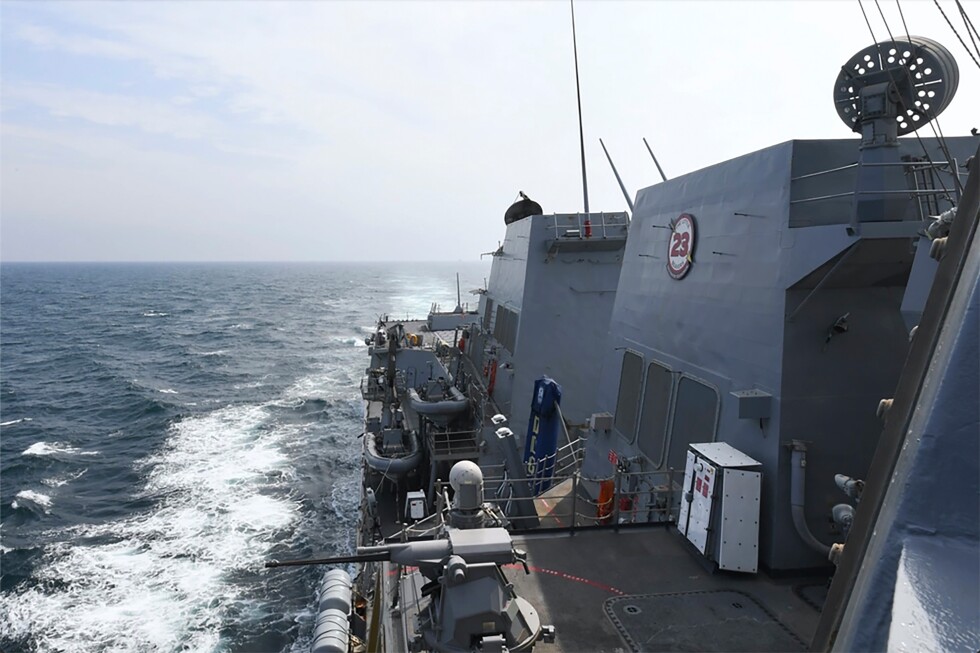
    The high-level discussions occurred amidst heightened global tensions following recent military developments, including the sinking of an Iranian warship by a U.S. submarine in the Indian Ocean and NATO’s interception of an Iranian ballistic missile near Turkish airspace.

    Prime Minister Carney emphasized the necessity of broadening diplomatic efforts beyond direct combatants. “We seek a comprehensive de-escalation involving a wider coalition of nations,” Carney stated during a joint press conference. “However, this cannot be achieved without permanently eliminating Iran’s capacity to develop nuclear weapons and export terrorism. These outcomes must be fundamental to any resolution.”

    Carney specifically highlighted the potential role of the six-nation Gulf Cooperation Council, praising their “remarkable restraint” amid regional instability and suggesting their inclusion in peace-building initiatives.

    Prime Minister Albanese echoed these sentiments, condemning Iran’s expanding military operations. “The international community demands immediate de-escalation and cessation of Iran’s cross-border attacks,” Albanese asserted. “We’ve witnessed unacceptable aggression toward Gulf states not involved in hostilities, including targeting of civilian and tourist areas. The permanent prevention of Iranian nuclear weapons capability remains paramount.”

    When questioned about potential Canadian military involvement, Carney declined to categorically exclude such possibilities, noting the conflict’s potential for rapid expansion. “This addresses a fundamental hypothetical in a rapidly evolving situation,” he responded. “While we cannot absolutely rule out participation, any engagement would align with our strategic alliances and national interests.”

    The Canberra meeting formed part of Carney’s three-nation trade-focused tour, commencing in India and proceeding to Japan following his address to the Australian Parliament.

  • Canada PM Carney says can’t rule out military participation in Iran war

    Canada PM Carney says can’t rule out military participation in Iran war

    During an official visit to Canberra, Canadian Prime Minister Mark Carney addressed escalating tensions in the Middle East, acknowledging that Canadian military involvement, while not currently planned, could not be entirely ruled out under specific circumstances. The comments came alongside Australian Prime Minister Anthony Albanese, with their bilateral discussions largely dominated by the fallout from a recent massive US-Israeli strike that killed Iranian Supreme Leader Ayatollah Ali Khamenei.

    Prime Minister Carney characterized questions about direct engagement as ‘hypothetical’ but firmly stated, ‘We will stand by our allies,’ and emphasized that Canada ‘will always defend Canadians.’ This stance exists alongside his previous criticism that the strikes on Iran were ‘inconsistent with international law.’ He expressed regret over the situation, describing it as a manifestation of a failing international order, even as he reaffirmed support for non-proliferation efforts to prevent a nuclear-armed Iran.

    The core of Carney’s visit, however, focused on a strategic pivot away from traditional alliances. His tour of the Asia-Pacific is explicitly designed to reduce Canadian reliance on the United States, hedging against what he termed a ‘fading US-led global order.’ In a major address to Australia’s parliament, Carney issued a rallying cry for ‘middle powers’ like Canada and Australia to collaboratively shape emerging global rules rather than submit to the compulsion of great powers or ‘hyperscalers.’

    To this end, he announced deepened cooperation with Australia, branding the two nations as ‘strategic collaborators.’ This partnership will involve pooling their vast rare earth mineral resources and enhancing collaboration in defense and artificial intelligence. Carney argued that such middle-power alliances, built on shared values and a reputation for matching words with actions, hold unique ‘convening power’ in a increasingly hegemonic world. This posture stands in sharp contrast to his frequently adversarial relationship with US President Donald Trump, who has previously threatened annexation and imposed severe tariffs on Canada.

  • Fight over Trump’s Iran war powers comes after a long stretch of Congress yielding to presidents

    Fight over Trump’s Iran war powers comes after a long stretch of Congress yielding to presidents

    The ongoing tension between presidential authority and congressional oversight over military operations has reached a critical juncture during Donald Trump’s second term. The Republican-controlled House prepares for a pivotal vote Thursday following the Senate’s rejection of Democratic-led measures to curtail presidential war powers in the ongoing U.S.-Israeli campaign against Iran.

    President Trump has consistently asserted broad, arguably unlimited authority over military deployments, approving naval strikes near Venezuela, establishing a maritime blockade, and authorizing operations to depose Venezuelan leader Nicolás Maduro—actions that many legal scholars consider acts of war under international law. These maneuvers follow earlier considerations of military action in Greenland and Latin America before escalating into comprehensive bombing operations in Iran.

    While the Constitution designates the president as commander-in-chief of armed forces, it simultaneously grants significant war powers to Congress. Trump’s refusal to accept limitations on his military options demonstrates, according to constitutional experts, a fundamental shift in the balance of power away from the framers’ original vision of civilian-controlled military authority.

    Military historian Peter Mansoor, an Ohio State University professor and retired Army colonel, emphasizes that ‘the Constitution gives war powers to two different branches of government.’ He notes with concern that ‘the pendulum has swung towards the executive,’ contrary to the framers’ intention that Congress should remain the most powerful branch.

    The historical context reveals a persistent erosion of congressional war authority. Despite Article I granting Congress the power to declare war, no formal declaration has occurred since World War II, even as American troops engaged in major conflicts in Korea, Vietnam, Iraq, and Afghanistan. The Trump administration’s recognition of military actions against Venezuela through Medal of Honor awards—typically reserved for combat against foreign enemies—further blurs legal distinctions between authorized conflicts and presidential military initiatives.

    The 1973 War Powers Resolution, designed to reassert congressional oversight, has proven largely ineffective in practice. Recent failed attempts to limit presidential authority through legislative measures demonstrate the ongoing struggle between executive action and legislative constraint—a tension that has characterized military operations from Truman’s Korean ‘police action’ to Biden’s withdrawal from Afghanistan, the nation’s longest undeclared war.