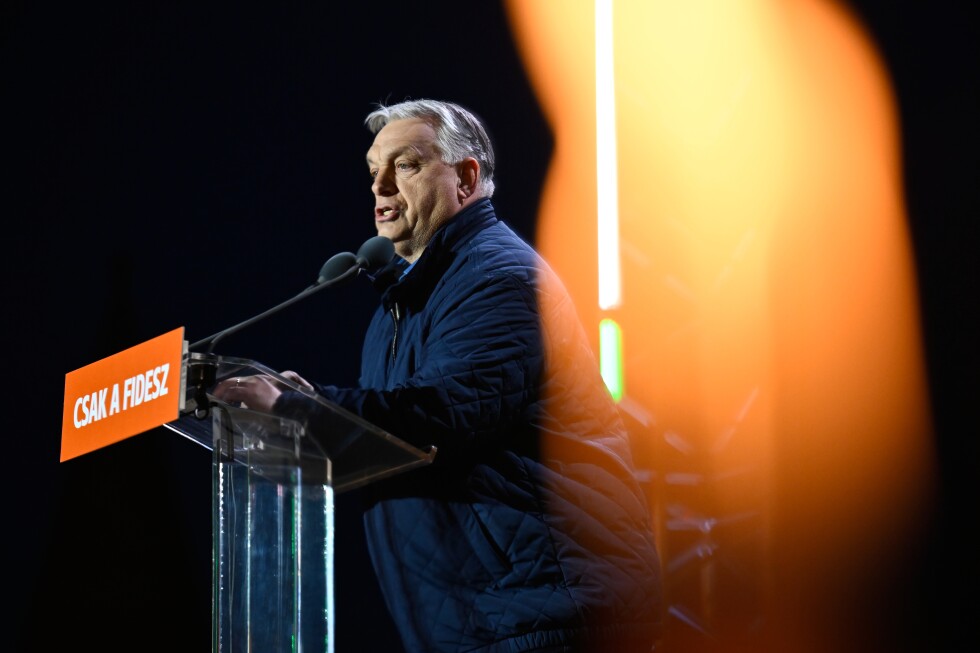
Voters across Hungary headed to polling stations on Sunday to cast their ballots in what political analysts across the globe have dubbed the most politically consequential European election of 2025. A single question hangs over the contest: will 16-year incumbent Prime Minister Viktor Orbán, a polarizing populist icon and close ally of former U.S. President Donald Trump, be unseated by his unexpected challenger?
For observers in Brussels, Washington and capitals worldwide, the outcome of this vote carries far-reaching implications for the future of European Union cohesion, transatlantic relations and the global rise of far-right populism. Orbán, the EU’s longest-serving sitting head of government, has evolved dramatically over his decades in public life: from a young liberal firebrand who pushed back against Soviet influence in the 1990s to a Russia-aligned nationalist leader whose model of illiberal governance has become a blueprint for conservative anti-globalization movements across the Western world.
Polling locations opened to voters at 6 a.m. local time, with doors scheduled to close at 7 p.m. Both Orbán and his top rival, Péter Magyar, were scheduled to cast their ballots later Sunday morning. The intense global attention surrounding the race underscores Orbán’s outsize influence on modern right-wing politics: followers of Trump’s “Make America Great Again” movement hold up Orbán’s Fidesz party and his administration as a gold standard for conservative anti-globalist policy, while proponents of liberal democracy and the rule of law have long condemned his leadership.
Since returning to the prime ministership in 2010, Orbán has reshaped Hungary’s political and social landscape fundamentally. His administration has overseen sweeping crackdowns on minority rights and independent media freedom, systematically weakened core democratic institutions, and faced repeated allegations of diverting public funds to connected business elites — claims Orbán has consistently denied. He has also repeatedly clashed with EU leadership, leveraging Hungary’s veto power to block key bloc initiatives, most recently a 90-billion-euro ($104 billion) EU aid package for Ukraine, a move that drew widespread accusations from European partners of holding critical assistance hostage for political gain.
After four consecutive election victories that delivered Fidesz a two-thirds parliamentary supermajority, new signs suggest Orbán’s unbroken grip on Hungarian politics may finally be vulnerable. That vulnerability comes in the form of 45-year-old Péter Magyar, a former Fidesz insider who split from the party in 2024 and rapidly built a new opposition force, the center-right Tisza party. Magyar has quickly emerged as Orbán’s most formidable challenger to date, with independent polling placing Tisza ahead of Fidesz.
Magyar’s campaign has centered on kitchen-table issues that resonate with ordinary Hungarian voters: a collapsing public health system, underfunded and unreliable public transportation, and what he frames as rampant systemic corruption under the Orbán administration. In the weeks leading up to election day, he carried out a grueling cross-country campaign blitz, holding rallies in cities and small towns alike and visiting as many as six communities a day to connect with voters. In an early April interview with The Associated Press, Magyar framed the election as a stark national referendum: “Hungarians will decide whether we continue drifting toward Moscow under Orbán, or reclaim our place in Europe’s community of democratic nations.”
Despite his polling lead, Magyar faces a steep uphill battle to unseat Orbán. The incumbent maintains near-total control of Hungary’s public media, which has been converted into a relentless Fidesz propaganda mouthpiece, and controls large segments of the country’s private media market, giving him an overwhelming advantage in reaching voters. Fidesz’s unilateral restructuring of Hungary’s electoral system and aggressive gerrymandering of the country’s 106 voting districts also means Tisza needs to win roughly 5% more of the national vote than Fidesz to secure a parliamentary majority. Additionally, hundreds of thousands of ethnic Hungarians residing in neighboring countries retain voting rights in Hungarian national elections, and this demographic has historically voted overwhelmingly for Fidesz.
In the lead-up to Sunday’s vote, both sides have raised alarms about potential irregularities, with speculation growing over external interference and internal voter fraud. Both Fidesz and Tisza have launched independent platforms to collect reports of electoral abuse, each accusing the other of planning to manipulate the result. Multiple media outlets, including The Washington Post, have reported that Russian intelligence services have plotted to interfere in the election to tilt the result in Orbán’s favor. Orbán, meanwhile, has pushed back by accusing neighboring Ukraine and EU leadership of plotting to meddle to install a pro-Kyiv government.
These geopolitical divides have played out openly in international support for both candidates. Most EU leaders, who view Orbán as a persistent threat to the bloc’s democratic cohesion and policy agenda, are openly rooting for an Orbán defeat, hopeful that a Magyar-led government would return Hungary to being a constructive European partner. Across the Atlantic, however, Trump and his MAGA movement have thrown their full weight behind Orbán’s re-election. Trump has issued multiple public endorsements of the Hungarian prime minister, and U.S. Vice President JD Vance traveled to Hungary for a high-profile two-day campaign visit last week to boost Orbán’s chances ahead of election day. As polls closed Sunday evening, all sides awaited a result that will reshape the future of Hungary and send ripples across global politics.