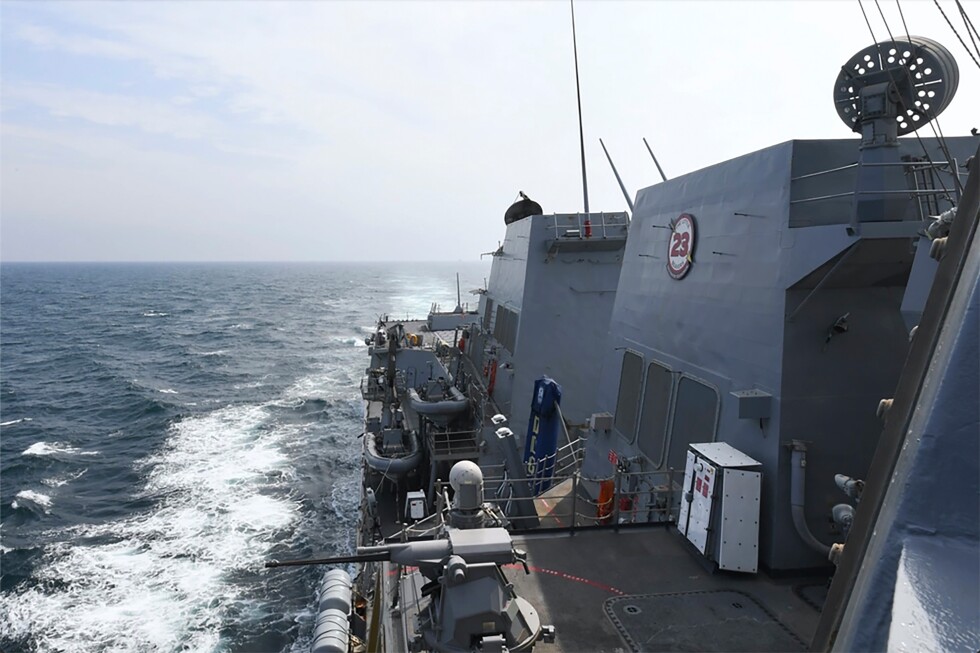
Fifteen years after former U.S. President Barack Obama first announced his landmark “pivot to Asia” strategy — a plan intended to wind down long-running wars in Iraq and Afghanistan and refocus American power to counter China’s growing global influence — a new conflict with Iran has once again pulled U.S. military resources and political attention away from the Indo-Pacific, stoking widespread fears that Washington is ceding strategic ground to Beijing.
Obama’s 2011 framework was built on a clear core vision: after a decade of costly conflict in the Middle East, the U.S. would turn toward the Asia-Pacific’s massive economic potential and cement American leadership as China’s influence expanded across the region. But from the very start, the strategy faced repeated setbacks: the signature Trans-Pacific Partnership trade agreement collapsed in the U.S. Senate, President Donald Trump withdrew Washington from the deal shortly after taking office in 2017, and successive administrations have repeatedly been pulled back into Middle East tensions.
Today, the pattern is repeating. As the U.S. escalates operations to counter Iran’s nuclear and missile programs, it has reallocated critical military assets from the Asia-Pacific to the Middle East. This shift has already forced Trump to delay a much-anticipated trip to Beijing, pushing back a high-stakes summit with Chinese President Xi Jinping that was set to address pressing economic and strategic tensions. Critics warn that the distraction from the Iran conflict is undermining longstanding U.S. deterrence efforts against China, particularly as Beijing speeds up its plans to assert control over the self-governing island of Taiwan.
“This is precisely the wrong time for the United States to turn away and be sucked into another intractable Middle East conflict,” said Danny Russel, a distinguished fellow at the Asia Society Policy Institute. “Rebalancing to Asia is highly relevant to America’s national interests, but it has been undercut by many bad decisions.”
Lawmakers who recently traveled to the region have confirmed deep unease among U.S. allies. A bipartisan delegation led by Senate Foreign Relations Committee top Democrat Jeanne Shaheen visited Taiwan, Japan and South Korea earlier this year, where local leaders raised alarm over the withdrawal of key U.S. military capabilities, including a rapid-response Marine unit from Japan and missile defense systems from South Korea, as well as the impact of the Iran conflict on global energy prices.
Shaheen told the Associated Press that Chinese leadership has already accelerated its timeline for potential military action against Taiwan, and global conflicts in Ukraine and the Middle East are directly shaping Beijing’s strategic calculations. “Failure is not an option,” she said, noting that U.S. defense industries are already stretched thin to replenish munitions expended in the Middle East, leading to delayed weapons deliveries to Indo-Pacific allies. Even so, Shaheen added she is encouraged by moves from Taiwan, Japan and South Korea to expand their own defense capabilities.
Independent analysts echo these concerns. Kurt Campbell, who served as deputy secretary of state under the Biden administration, warned that the critical military capabilities the U.S. spent years building up in the Indo-Pacific may never return to their full strength even after the Iran conflict concludes. Zack Cooper, a senior fellow at the American Enterprise Institute specializing in U.S. Asia strategy, added that extended conflict in the Middle East will not only drain ongoing resources and attention from the region, but also harm future U.S. arms sales to Indo-Pacific allies.
“The United States has expended substantial numbers of munitions in the Middle East and will have to keep an increased force presence there, some of which has been redirected from Asia,” Cooper explained. “Meanwhile, Xi Jinping’s preparation of a ‘wartime’ economy through stockpiling and expanding alternate energy sources has proven strategically advantageous for Beijing.”
Not all observers criticize the current U.S. approach, however. Supporters of Trump’s policy argue that confronting Iranian and Venezuelan aggression actually serves the broader goal of countering China globally, noting that Beijing is a key backer of the adversarial regimes Washington is targeting. “Beijing is the chief sponsor for the adversaries that President Trump is dealing with sequentially, and it’s wise to do this sequentially,” said Matt Pottinger, who served as deputy national security adviser in Trump’s first term, in a recent podcast appearance.
NATO Secretary General Mark Rutte has also framed the multi-theater challenge as an inherent reality of great power competition. Speaking Thursday at the Ronald Reagan Institute in Washington, Rutte noted that China could leverage its partnerships across regions to divert U.S. attention if it moves against Taiwan, meaning any crisis will not be limited to the Indo-Pacific. “Most likely it will not be limited, something in the Indo-Pacific to the Indo-Pacific,” he said. “It will be a multi-theater issue.”
The current state of U.S. strategy lays bare just how elusive Obama’s original pivot vision remains after 15 years and three presidential administrations. After Trump took office for his second term, his 2025 national security strategy reaffirmed that deterring Chinese aggression in the Taiwan Strait and along the First Island Chain — the string of U.S.-aligned islands off China’s coast that block Beijing’s access to the Western Pacific — is a core national priority. The document explicitly stated that Washington’s historic reasons for heavy engagement in the Middle East would recede as U.S. domestic energy production ramped up. Just months later, the Iran conflict upended that plan.