分类: politics

  • Nepalis vote in first election since Gen Z uprising for change

    Nepalis vote in first election since Gen Z uprising for change

    Nepal has conducted its first general election following the youth-led uprising that toppled the government in September, marking a pivotal moment for the Himalayan nation’s political future. Nearly 19 million registered voters, including approximately one million first-time participants, cast ballots on March 5th in an election dominated by concerns over corruption, economic stagnation, and systemic inequality—the very issues that sparked last year’s deadly protests claiming 77 lives.

    The electoral contest represents a fundamental clash between Nepal’s political establishment and a new generation of leaders appealing to disillusioned Gen Z voters. Prominent candidates include former Prime Minister KP Sharma Oli, whose government was ousted in the protests, and Balen Shah, a former rapper and Kathmandu mayor who resigned to challenge Oli in the crucial Jhapa 5 constituency. Shah’s Rastriya Swatantra Party (RSP) has captured the imagination of young voters seeking radical change from decades of coalition governments dominated by three major parties.

    Election proceedings unfolded peacefully under substantial security presence across the country’s challenging mountainous terrain. The voting process selects 275 parliamentary seats through a dual system: 165 via first-past-the-post contests and 110 through proportional representation. Officials anticipate results will require several days to compile due to logistical challenges in ballot transportation and manual counting procedures.

    Despite establishment parties like Oli’s Communist Party of Nepal UML and Gagan Thapa’s Nepali Congress claiming responsiveness to youth demands, many young activists remain skeptical. Rakshya Bam, a Gen Z leader, noted that no party had adequately incorporated the government-protestor pact into their manifestos, accusing traditional parties of exploiting youth movement terminology for political gain.

    The election outcome will determine whether Nepal continues its pattern of coalition governance or embraces untested leadership promising to address brain drain, corruption, and regional development disparities beyond the capital. The new government will face immediate pressure to implement substantive reforms addressing the systemic issues that ignited September’s historic protests.

  • Texas lawmaker admits ‘lapse in judgement’ in affair with aide

    Texas lawmaker admits ‘lapse in judgement’ in affair with aide

    U.S. Representative Tony Gonzales (R-Texas) has publicly confessed to an extramarital relationship with a congressional aide, reversing his previous denials and characterizing the affair as a profound “lapse in judgement.” The married congressman, who has six children, made the admission during a podcast interview just hours after the House Ethics Committee announced an investigation into allegations of sexual misconduct.

    Gonzales acknowledged his relationship with Regina Santos-Aviles, his regional district director who died by suicide in September 2025. The 45-year-old lawmaker stated he takes “full responsibility” for his actions while maintaining that Santos-Aviles’ tragic death was unrelated to their affair. “I had absolutely nothing to do with her tragic passing,” Gonzales told conservative podcaster Joe Pags. “And in fact, I was shocked just as much as everyone else.

    The confession comes at a politically precarious moment for Gonzales, who faces a May primary runoff against challenger Brandon Herrera after neither candidate secured the required 50% threshold in the initial voting. The winner will become the Republican nominee for Texas’ heavily conservative border district in November’s midterm elections.

    Text messages obtained by CBS News reveal explicit communications from May 2024 in which Gonzales requested “sexy pics” from Santos-Aviles, despite her twice telling him he had gone “too far.” The following month, her husband Adrian Aviles reportedly discovered the affair and notified other staff members via text message.

    According to the family’s attorney Bobby Barrera, Santos-Aviles experienced significant mental health deterioration following the end of the relationship and subsequent workplace harassment. “The deterioration of her mental state was exacerbated by the conduct Tony engaged in,” Barrera told CBS.

    The Ethics Committee investigation will examine whether Gonzales engaged in sexual misconduct and whether he provided “special favors or privileges” to Santos-Aviles. Gonzales denies showing favoritism, stating that any pay raise she received was part of a “staff-wide pay increase.”

    The congressman, previously endorsed by former President Donald Trump, now faces mounting calls for resignation from fellow Republicans including Representative Nancy Mace (R-South Carolina), who has accused him of “predatory behavior.”

  • Chinese mainland reaffirms commitment to one-China principle and cross-Strait peace in government work report

    Chinese mainland reaffirms commitment to one-China principle and cross-Strait peace in government work report

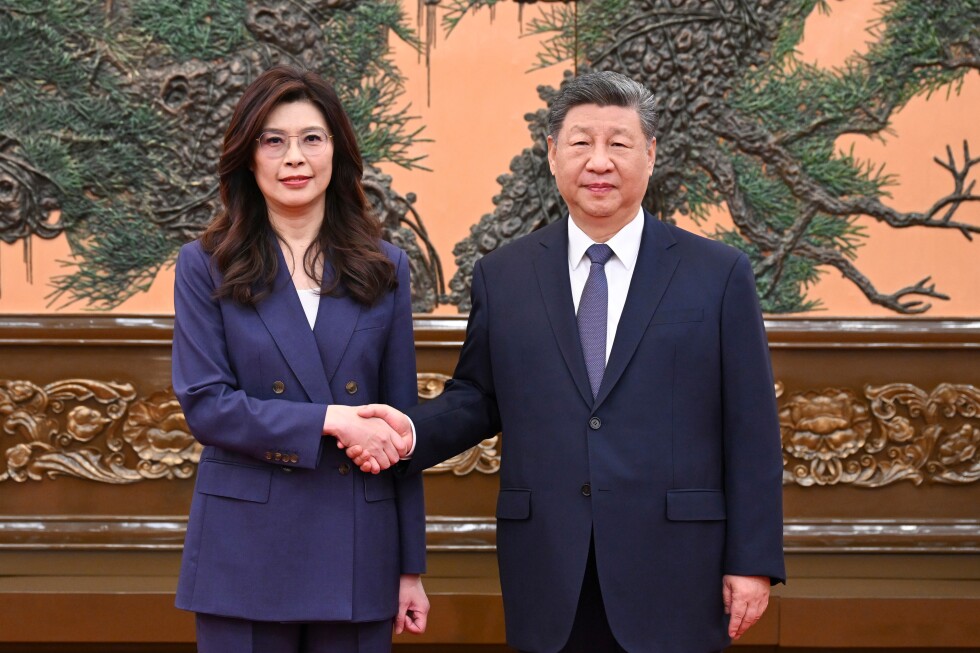
    In a significant policy declaration delivered to China’s national legislature, Premier Li Qiang reinforced Beijing’s firm position on cross-strait relations during the ongoing Fourth Session of the 14th National People’s Congress. The government work report, presented Thursday, emphasized the mainland’s continued adherence to the foundational one-China principle and the 1992 Consensus as non-negotiable pillars of its Taiwan policy.

    The comprehensive address outlined a multi-faceted approach that combines resolute opposition to what it termed ‘Taiwan independence separatist activities’ and ‘external interference’ with constructive proposals for enhanced cooperation. The policy framework promotes peaceful development across the Taiwan Strait through increased cultural exchanges, economic integration, and implementation of measures ensuring equal treatment for Taiwanese compatriots.

    Beyond immediate political concerns, the report positioned cross-strait relations within broader national objectives, calling for collective efforts to preserve Chinese cultural heritage and advance the overarching mission of national rejuvenation. The policy direction signals both continuity in Beijing’s fundamental principles and evolving approaches to foster connectivity while maintaining clear boundaries against moves toward formal independence.

  • New momentum, new horizon

    New momentum, new horizon

    China has demonstrated remarkable progress across multiple sectors as it transitions between national development frameworks. The concluding 14th Five-Year Plan has yielded substantial achievements in technological innovation, environmental sustainability, and cultural development, while the newly implemented 15th Five-Year Plan builds upon this foundation with accelerated momentum.

    Evidence of China’s advancement manifests in diverse areas including renewable energy infrastructure with expanded solar panel deployment, space technology through satellite development, culinary diversity reflecting cultural richness, and enhanced transportation systems improving daily mobility. These developments collectively contribute to an elevated quality of life for citizens nationwide.

    Concurrent with these technological and infrastructure improvements, China has maintained strong cultural traditions through vibrant regional celebrations. The recent Lantern Festival witnessed widespread participation across multiple provinces, with Zhengding hosting 30 folk art troupes, Hainan communities organizing parade festivities, and Chongqing’s Lishan Torch Festival attracting over 100,000 visitors. These events blended traditional practices with modern technological elements, particularly evident in Zhangjiajie’s innovative celebrations.

    The international dimension of China’s development was highlighted through cultural exchange initiatives, including the Hongqiao Pearl Market’s Lantern Festival event specifically organized for foreign officials. This diplomatic outreach complements domestic policy developments concerning foreign enterprises and expatriates, reflecting China’s commitment to global engagement.

    Concurrently, China’s political advisory body has commenced its annual session, addressing critical national priorities including juvenile crime prevention, research commercialization, climate governance consistency, and rural revitalization strategies. The publication of educational materials on Xi Jinping Thought on Economy further underscores the philosophical framework guiding China’s development trajectory.

  • Czech lawmakers will vote on lifting immunity for populist leader Babiš over EU fraud case

    Czech lawmakers will vote on lifting immunity for populist leader Babiš over EU fraud case

    PRAGUE — The Czech lower parliamentary house convened on Thursday to determine whether Prime Minister Andrej Babiš should retain immunity from prosecution in a high-profile €2 million fraud case involving European Union agricultural subsidies. This pivotal decision would enable Prague’s Municipal Court to proceed with judicial proceedings and deliver a final verdict in the longstanding legal battle.

    The case revolves around the ‘Stork’s Nest’ farm complex, which received EU subsidies designated exclusively for small and medium enterprises after its ownership was transferred from Babiš’s Agrofert conglomerate to his family members. Agrofert, a massive holding company, subsequently reacquired the property, raising questions about eligibility for the subsidies, which were later returned.

    Despite two previous acquittals by the Municipal Court, an appeals court overturned both rulings, citing insufficient evidence evaluation and explicitly recommending a guilty verdict in the retrial. Babiš maintains his innocence, characterizing the investigation as ‘clearly politically motivated.’ Prosecutors initially sought a suspended sentence and financial penalties for the billionaire leader, who commenced his third term as prime minister in December following his ANO movement’s electoral victory.

    Simultaneously, Jana Nagyová, Babiš’s former associate who authorized the subsidy application and now serves as a European Parliament member, will face retrial after the EU legislature revoked her immunity protections.

    Babiš’s current coalition government, formed with the anti-immigration Freedom and Direct Democracy party and the right-wing Motorists group, has pursued policies distancing the Czech Republic from Ukraine support and challenging certain EU directives, adding geopolitical significance to the judicial proceedings.

  • Political adviser seeks to commercialize research

    Political adviser seeks to commercialize research

    Shan Chongxin, Vice-President of Zhengzhou University and member of China’s National Committee of the Chinese People’s Political Consultative Conference, has positioned the commercialization of scientific research as a critical national priority during the ongoing Two Sessions political gatherings. The renowned ultra-hard materials expert emphasized that integrating education, technological advancement, and talent development forms the fundamental strategic support for achieving China’s high-level self-reliance in technology.

    With China’s ultra-hard materials industry now leading globally in scale and application breadth, Shan identified persistent challenges preventing true innovation leadership. While acknowledging six decades of significant progress, he noted three critical gaps: insufficient original innovation in material systems, unstable high-end supply chain consistency, and persistent barriers between research, equipment manufacturing, and downstream applications.

    Shan’s proposals focus on creating synergistic ecosystems where education aligns with industry needs, research targets national bottleneck areas, and talent retention receives prioritized attention. He emphasized that core competition in high-end materials ultimately constitutes talent competition, which must be fostered through integrated education-technology partnerships.

    At Zhengzhou University, these principles are being implemented through strategic positioning that aligns with national needs, regional development endowments, and technological frontiers. The institution aims to serve as both an explorer of cutting-edge science and a solver of major technological challenges while cultivating strategic talent.

    Looking toward China’s 2035 education system goals, Shan envisions universities functioning as vital connectors between regional development and the national innovation system, addressing international academic frontiers while simultaneously supporting economic and social development objectives.

  • Appeal trial of Yoon case begins with public access

    Appeal trial of Yoon case begins with public access

    The Seoul High Court has inaugurated the appeal proceedings for former South Korean President Yoon Suk-yeol, marking a pivotal moment in the nation’s ongoing political and judicial saga. The 65-year-old former leader appeared personally before the appellate court on Wednesday, contesting his five-year imprisonment sentence for obstruction of justice charges stemming from his controversial 2024 martial law declaration.

    Yoon’s legal representatives vehemently disputed the initial verdict, asserting that the sentencing failed to account for his extensive public service career and contributions to state governance. They characterized the five-year term as disproportionately severe given the circumstances. The defense maintains Yoon’s complete innocence regarding all allegations.

    This legal battle originates from December 3, 2024, when Yoon’s unexpected martial law proclamation sent shockwaves through the nation and international community. Within hours, the National Assembly nullified the decree, culminating in his impeachment and official removal from office by the Constitutional Court in April 2025.

    The former president currently faces eight distinct trials connected to the martial law incident. In a particularly severe ruling last February, he received a life sentence for insurrection charges. The special prosecution team has concurrently appealed January’s verdict, arguing that the five-year punishment is “excessively lenient and unjust” considering Yoon’s consistent refusal to apologize and his persistent offering of what they term “incomprehensible excuses.”

    In an unprecedented move toward judicial transparency, the court approved the special counsel’s request to publicly broadcast the appeal process through delayed, anonymized video recordings. David Tizzard, a prominent Korean studies professor at Seoul Women’s University and Hanyang University, interpreted this decision as a sophisticated balancing act between preserving courtroom integrity and addressing overwhelming public demand for accountability.

    Professor Tizzard observed, “Substantial pressures surround this case, with authorities clearly apprehensive about potential influence from online platforms and media channels.” He further noted that South Korea remains trapped in a cycle of political retaliation, suggesting that societal progress hinges on resolving the martial law controversy.

    Echoing calls for transparency, former judge Cha Sung-an, now a professor at the University of Seoul Law School, advocated for complete disclosure of the insurrection ruling, including all identified names, to enable comprehensive public examination and discourse.

  • Veteran Bihar chief minister to step down for move to parliament

    Veteran Bihar chief minister to step down for move to parliament

    In a significant political development, Nitish Kumar has announced his resignation as Chief Minister of Bihar, India’s eastern state, marking a pivotal transition in regional governance. The 75-year-old political stalwart revealed his decision through a social media post, confirming his intention to transition to federal parliamentary duties while offering “full cooperation and guidance” to the incoming state administration.

    This strategic move concludes Kumar’s remarkable tenure spanning nearly two decades during which he dominated Bihar’s political scene through nine separate terms as chief minister. His unprecedented tenth oath-taking in November followed a decisive electoral victory where his Janata Dal (United) party and BJP coalition secured 202 of 243 assembly seats.

    Multiple sources within Kumar’s political circle attribute this transition to the leader’s declining health, though the veteran politician framed the decision as a natural evolution in his service to constituents. “The trust and support of voters enabled our government to serve with complete dedication,” Kumar stated in his announcement.

    The resignation timing appears strategically aligned with parliamentary procedures, as five Rajya Sabha positions from Bihar become vacant in April. With the ruling coalition commanding sufficient legislative strength, political analysts anticipate Kumar’s party and BJP allies will comfortably secure four upper house seats.

    This leadership change potentially enables Prime Minister Narendra Modi’s BJP to claim Bihar’s chief ministerial position for the first time in history. BJP national spokesperson RP Singh confirmed to media outlets that “the new chief minister will be from the BJP,” with the party’s parliamentary board determining the specific candidate.

    However, the transition faces internal resistance from JD(U) members who campaigned specifically under Kumar’s leadership. Party colleague Rajeev Ranjan Patel expressed concern: “We sought votes for Nitish Kumar. If he’s no longer chief minister, where will Bihar’s people turn?”

    The leadership succession carries profound implications for Bihar’s 74 million residents in India’s most economically challenged state, where migration for employment remains a persistent challenge. This development represents a fundamental realignment in one of India’s most politically significant regions.

  • US and Mideast countries seek Kyiv’s drone expertise as Russia-Ukraine talks put on ice

    US and Mideast countries seek Kyiv’s drone expertise as Russia-Ukraine talks put on ice

    Ukrainian President Volodymyr Zelenskyy has revealed that multiple Middle Eastern nations, with United States support, are actively seeking Ukraine’s specialized expertise in neutralizing Iran’s Shahed drone systems. This development emerges from Ukraine’s extensive battlefield experience against these Iranian-manufactured weapons, which Russia has deployed by the tens of thousands throughout the ongoing invasion.

    In recent diplomatic engagements, Zelenskyy has conducted discussions with leaders from the United Arab Emirates, Qatar, Bahrain, Jordan, and Kuwait regarding potential defense cooperation. The Ukrainian president emphasized that any knowledge transfer would be strictly conditional: it must not compromise Ukraine’s own defensive capabilities and must contribute to diplomatic efforts aimed at ending Russian aggression.

    “We extend our assistance in defense to those nations who support Ukraine’s pursuit of a just resolution to this conflict,” Zelenskyy stated, framing the cooperation within broader geopolitical contexts.

    The escalating Middle East conflict has temporarily diverted international attention from Ukraine while simultaneously postponing U.S.-mediated negotiations between Kyiv and Moscow. According to Zelenskyy, the regional instability has delayed anticipated trilateral discussions, though he expressed readiness to resume diplomatic efforts once security conditions permit.

    Ukrainian officials, including parliamentary foreign affairs committee chairman Oleksandr Merezhko, characterize the Russia-Ukraine and Middle East conflicts as interconnected theaters. Merezhko described Russia and Iran as coordinated allies, with Tehran supplying weaponry to Moscow while receiving Russian assistance in developing its defense industrial capabilities.

    Despite these diplomatic developments, Ukrainian forces continue making tactical advances along the 1,250-kilometer frontline. The Institute for the Study of War reports that localized Ukrainian counteroffensives have recently reclaimed approximately 257 square kilometers of territory, demonstrating ongoing military pressure against Russian positions.

  • Defence minister to visit Cyprus after drone attacks on British base

    Defence minister to visit Cyprus after drone attacks on British base

    Diplomatic friction has emerged between the United Kingdom and Cyprus following the handling of recent drone assaults on the Royal Air Force base at Akrotiri. The Cypriot government has formally criticized Britain’s communication protocols and information-sharing practices in the aftermath of the incident.

    Dr. Kyriacos Kouros, Cyprus’s High Commissioner to the UK, expressed profound disappointment during an interview with BBC Newsnight, highlighting inadequate transparency with local residents. The attacks, which occurred overnight Sunday, involved both successful strikes and subsequent interceptions of additional drones. Kouros emphasized the necessity for enhanced bilateral coordination with Cypriot authorities to prevent future security breaches.

    In response to the escalating situation, the UK Ministry of Defence announced the planned deployment of HMS Dragon, a Type 45 destroyer, to reinforce regional security. However, the warship is not scheduled to depart until next week, raising questions about the immediacy of the British response.

    The incident has drawn international attention amid broader geopolitical tensions linked to Iran’s regional activities, though no specific entity has claimed responsibility for the attacks. Both nations are now engaged in diplomatic discussions to address security concerns and improve crisis management protocols for future cooperation.