分类: politics

  • US asked Ukraine for help fighting Iranian drones, Zelensky says

    US asked Ukraine for help fighting Iranian drones, Zelensky says

    Ukrainian President Volodymyr Zelensky has revealed that the United States has formally requested Ukraine’s assistance in defending Gulf allies against Iranian drone attacks. This development marks a significant reversal of roles, with Ukraine—traditionally a recipient of Western military aid—now being positioned as a provider of critical defense expertise.

    Speaking through social media channels, Zelensky confirmed that American officials have reached out for both technical knowledge and practical support in countering Iranian-designed Shahed drones. The Pentagon has declined to comment on these diplomatic exchanges. Ukraine’s president emphasized that any assistance would be contingent upon two non-negotiable conditions: that Ukraine’s own defensive capabilities remain uncompromised, and that such cooperation yields tangible diplomatic advantages for Kyiv.

    The proposed arrangement centers on a strategic exchange: Ukraine would supply its proven drone interception technology to Gulf nations in return for additional U.S.-made Patriot air defense systems desperately needed to counter Russian ballistic missiles. This quid pro quo approach reflects Ukraine’s sophisticated understanding of geopolitical leverage amid ongoing conflicts in both Eastern Europe and the Middle East.

    Zelensky has actively engaged with Gulf counterparts from the United Arab Emirates, Qatar, Bahrain, Jordan, and Kuwait, promising “concrete steps” to protect their military installations and civilian infrastructure. The irony of the U.S. request has not gone unnoticed in Ukraine, particularly given former President Donald Trump’s termination of direct military support, though intelligence sharing continues.

    Ukrainian defense officials caution that while production capacity for interceptor drones could scale to 10,000 monthly units, any international transfers would require top-level political authorization. Ihor Fedirko, head of the Ukrainian Council of Defence Industry, highlighted the additional challenge of providing necessary training, noting that Ukraine’s training facilities are currently overwhelmed with domestic military and civilian demands.

    The Middle East conflict has raised concerns about potential diversion of military resources away from Ukraine, particularly regarding scarce Patriot missiles. Zelensky noted that approximately 800 PAC-3 missiles had been deployed in recent days—exceeding Ukraine’s total receipts throughout the entire war. This disparity underscores the strategic calculus behind Ukraine’s conditional approach to cooperation.

  • Zelenskyy says he’s reluctant to repair pipeline that brings Russian oil to Central Europe

    Zelenskyy says he’s reluctant to repair pipeline that brings Russian oil to Central Europe

    BUDAPEST, Hungary — Ukrainian President Volodymyr Zelenskyy has publicly rejected demands from Hungary and Slovakia to repair a critical Russian oil pipeline damaged by military strikes, escalating a political confrontation that now threatens European Union financial support for Ukraine’s war effort.

    The Druzhba pipeline, which transports Russian crude through Ukrainian territory to Central European nations, has been non-operational since January 27 following what Ukrainian authorities identify as Russian drone attacks. The interruption has triggered a diplomatic crisis with Hungary’s Prime Minister Viktor Orbán and Slovak leadership, who continue importing Russian fossil fuels contrary to most EU members.

    During a Thursday press briefing, Zelenskyy expressed firm resistance to restoring the pipeline despite mounting pressure. “To be honest, I wouldn’t restore it. This is my position,” the Ukrainian leader stated, emphasizing that repair operations would endanger technicians while leaving the infrastructure vulnerable to continued Russian targeting.

    The Orbán government, widely regarded as Moscow’s closest ally within the EU, has retaliated by blocking a crucial €90 billion EU loan package destined for Ukraine’s defense against Russian invasion. Budapest has vowed to veto all future pro-Ukraine decisions until oil shipments resume.

    With Hungary facing pivotal elections next month, Orbán has intensified an aggressive campaign framing Ukraine as an existential threat. Speaking at an economic forum, the Hungarian leader declared: “We will win and we will win with force in this feud. We have political and financial tools to compel them unconditionally to reopen the pipeline.”

    Both Hungary and Slovakia have proposed deploying inspectors to assess pipeline damage in western Ukraine. Zelenskyy acknowledged anticipating formal EU requests for access but maintained his opposition to resuming Russian oil transfers.

    The Ukrainian president pointedly questioned the moral calculus of the situation: “This is Russian oil, and there are certain principles that have no price. They kill us, and we have to give oil to Orbán because he cannot win elections without it?”

    The standoff represents a significant fracture in European unity regarding Ukraine support, with Orbán leveraging Hungary’s EU membership to advance Moscow-aligned positions while Zelenskyy prioritizes military security over diplomatic concessions.

  • Iran war: short-term pain, long-term gain for China

    Iran war: short-term pain, long-term gain for China

    China has issued a forceful diplomatic condemnation against joint US-Israeli military operations targeting Iran, characterizing the attacks as a blatant breach of United Nations principles and fundamental international norms. Through its state-operated Xinhua News Agency, Beijing denounced what it termed a severe departure from established global governance standards, echoing its earlier response to US actions against Venezuelan leadership in January.

    Foreign Minister Wang Yi reinforced China’s position against nations assuming self-appointed roles as ‘global police’ or international adjudicators. Beyond rhetorical opposition, China’s technological infrastructure has provided tangible strategic advantages to Iran during the 12-day 2025 conflict. The BeiDou Navigation Satellite System emerged as a critical alternative when American GPS jamming disrupted Iranian civilian and military operations, granting Tehran enhanced capability to monitor US military assets.

    The confrontation carries substantial economic implications for China, which imported over 520 million barrels of Iranian crude oil in 2025. Current disruptions to Hormuz Strait shipping routes threaten China’s energy security, given that more than half of its crude imports originate from Gulf nations.

    Paradoxically, the conflict may advance China’s broader geopolitical objectives. While some nations like Panama have reconsidered Chinese partnerships under US pressure, other Western allies including Canada, Germany and the United Kingdom have sought strengthened economic ties with Beijing amid concerns about Washington’s reliability. The unpredictability of US foreign policy under the Trump administration has amplified China’s messaging about stability and multilateral cooperation.

    Regional analysts suggest prolonged Middle Eastern engagement could divert US attention from its intended ‘pivot to Asia,’ potentially recreating what observers term another ‘lost decade’ for American influence in the Indo-Pacific. This diversion could enable China to consolidate regional dominance while studying modern warfare technologies demonstrated in the Iran conflict.

    Though immediate economic consequences may challenge China, the geopolitical recalibration resulting from the Iran conflict may ultimately strengthen Beijing’s position as a global counterbalance to American hegemony.

  • Xi takes part in deliberation at annual national legislative session

    Xi takes part in deliberation at annual national legislative session

    President Xi Jinping participated in a crucial deliberation session on Thursday with deputies from Jiangsu province during the ongoing Fourth Session of the 14th National People’s Congress (NPC), China’s supreme legislative body. The engagement marks a significant moment in the annual parliamentary gathering that sets the nation’s policy direction.

    During the deliberation at the Great Hall of the People, President Xi, who also serves as General Secretary of the Communist Party of China Central Committee and Chairman of the Central Military Commission, listened attentively to representatives’ insights and contributed to discussions concerning regional development strategies. The Jiangsu delegation, representing one of China’s most economically dynamic provinces, presented reports on their implementation of national policies and regional development achievements.

    This participation underscores the leadership’s commitment to understanding grassroots realities and incorporating local perspectives into national policymaking. The deliberation focused on multiple dimensions of modernization, with particular emphasis on high-quality development models that balance economic growth with environmental sustainability.

    President Xi’s engagement with provincial delegations during NPC sessions has become a established practice that demonstrates the hierarchical yet interconnected nature of China’s governance structure. These interactions facilitate direct communication between central leadership and local implementers, ensuring policy coherence across administrative levels.

    The current NPC session, convened annually in Beijing, brings together nearly 3,000 deputies from across China to review government work reports, approve budget allocations, and deliberate on legislative matters that shape the nation’s developmental trajectory through the coming year.

  • Pentagon prepares for Israeli-US war on Iran that could last until September: Report

    Pentagon prepares for Israeli-US war on Iran that could last until September: Report

    The United States Department of Defense is accelerating efforts to bolster its intelligence capabilities as the nation braces for an extended military engagement with Iran, conducted in coordination with Israel. Current military strategizing now projects operations continuing deep into the autumn season, indicating a significant escalation beyond initial forecasts.

    According to a recent Politico report, U.S. Central Command has formally requested the Pentagon dispatch additional military intelligence officers to its Tampa, Florida headquarters. These personnel reinforcements are slated to support ongoing operations targeting Iran for a minimum duration of 100 days, with potential extensions through September.

    This deployment initiative represents the Trump administration’s first documented measure to augment intelligence assets for the conflict, strongly suggesting Washington anticipates a substantially prolonged campaign compared to initial public statements. President Donald Trump had previously suggested military actions might conclude within four to five weeks, while cautiously acknowledging the possibility of a longer engagement.

    The urgent mobilization of personnel and resources simultaneously reveals Washington’s apparent lack of preparedness for the scale of hostilities initiated alongside Israel. Military operations of this magnitude typically require months of advance planning, yet the current scramble within Pentagon corridors indicates officials gravely miscalculated the potential repercussions of striking Iran.

    Earlier reporting revealed senior Trump administration advisers preferred allowing Israel to initiate hostilities before commencing U.S. military actions. This sequence ultimately transpired, directly drawing Washington into active combat operations. Collaborative Israeli-U.S. attacks have resulted in significant casualties, with the Iranian Red Crescent Society reporting at least 700 fatalities and hundreds wounded, including over 165 children killed in a devastating elementary school strike.

    The conflict now threatens to define Trump’s presidential legacy while exacerbating fractures within his political base, where substantial opposition exists toward fighting another Middle Eastern war on Israel’s behalf. Secretary of State Marco Rubio openly acknowledged that Israeli actions compelled Washington’s involvement, stating administration officials anticipated Israeli operations would precipitate attacks against American forces.

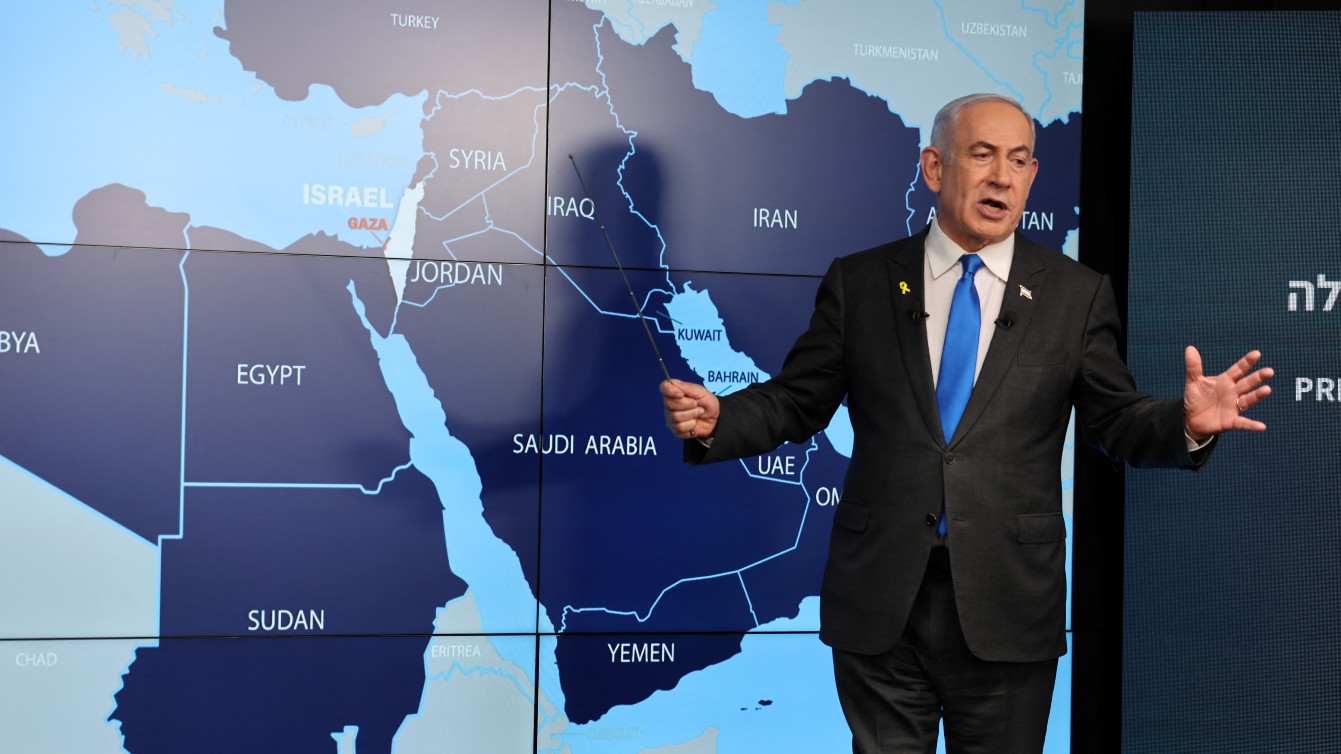
    Israeli Prime Minister Benjamin Netanyahu publicly celebrated the second joint military campaign against Iran within twelve months, explicitly crediting President Trump and U.S. military support while framing the conflict as the realization of a four-decade personal objective.

  • Hegseth urges Latin American allies to go on offense against drug cartels

    Hegseth urges Latin American allies to go on offense against drug cartels

    MIAMI — U.S. Defense Secretary Pete Hegseth issued a stark warning to Latin American nations on Thursday, demanding more forceful measures against drug cartels that threaten regional security. Speaking at the inaugural Americas Counter Cartel Conference at U.S. Southern Command headquarters, Hegseth declared that Washington stands ready to take unilateral action if allied governments fail to adequately combat these criminal organizations.

    “America is prepared to take on these threats and go on the offense alone if necessary,” Hegseth told defense officials from more than a dozen conservative governments closely aligned with President Donald Trump, including Argentina, Honduras, and the Dominican Republic. The conference served as a precursor to a scheduled weekend summit between regional leaders and Trump at his Florida golf club.

    Hegseth framed the security challenge as a civilizational struggle, emphasizing the shared Christian heritage of the Americas that he claimed was endangered by decades of inadequate responses to organized crime. He explicitly rejected continuation of previous policies, stating “business as usual will not stand,” while pledging U.S. support to combat cartels and “make the Americas great again.”

    The defense secretary’s hardline position was reinforced by Deputy White House Chief of Staff Stephen Miller, who compared Western Hemisphere cartels to global terrorist organizations. “Cartels that operate in this hemisphere are the ISIS and al-Qaida of this hemisphere and must be treated just as ruthlessly,” Miller asserted, advocating for “hard power” and lethal force rather than criminal justice approaches.

    This conference occurs within the context of the Trump administration’s strategic reorientation toward Latin America, described in national security documents as the “Trump Corollary” to the 19th-century Monroe Doctrine. Since taking office in January 2025, Trump has designated Mexican and Venezuelan cartels as foreign terrorist organizations and declared the United States to be in “armed conflict” with these groups.

    The administration’s assertive stance has already translated into military action, including 44 naval strikes against suspected drug smugglers resulting in at least 150 deaths. A substantial naval deployment—the largest in Latin America since the Cold War—facilitated the January operation that captured Venezuela’s former president Nicolas Maduro, now facing drug charges in New York.

    While the approach has gained support from conservative regional leaders like El Salvador’s Nayib Bukele and recently enabled joint U.S.-Ecuador operations against criminal groups, experts caution about the risks of militarizing law enforcement in regions with historically weak institutions and problematic military legacies.

    Rebecca Bill Chavez, president of the Inter-American Dialogue and former deputy assistant defense secretary, warned: “Without strong rule-of-law institutions and civilian oversight, militarizing the fight against cartels can weaken the very institutions needed to defeat them.”

  • Meet Pedro Sánchez, Europe’s most vocal critic of Trump’s attacks on Iran

    Meet Pedro Sánchez, Europe’s most vocal critic of Trump’s attacks on Iran

    In a striking demonstration of diplomatic independence, Spanish Prime Minister Pedro Sánchez has positioned himself as Europe’s most persistent critic of U.S. President Donald Trump, triggering a heated exchange over military cooperation. The confrontation escalated when Trump threatened to sever all trade relations with Spain after Sánchez refused to permit American military operations against Iran from Spanish bases.

    The White House claimed Spain had received Trump’s message ‘loud and clear’ and was cooperating, but Spanish Foreign Minister directly contradicted this assertion, highlighting the deepening rift. Sánchez, while condemning Tehran’s repressive regime, stated unequivocally that Spain would not participate in what he deemed an unjustified military assault.

    ‘We refuse to be complicit in actions detrimental to global stability and contrary to our values merely from fear of retaliation,’ Sánchez declared, adopting the slogan ‘No to the war’ during a recent address.

    This military base dispute represents merely the latest chapter in broader ideological conflict between the two leaders. Since assuming power in 2018, Sánchez has championed progressive policies including feminism, authorized immigration, human rights, and climate action—all frequent targets of Trump’s MAGA movement and European far-right parties.

    The Spanish leader has distinguished himself through several contentious positions: becoming one of Israel’s most vocal critics regarding Gaza military operations, which he labeled ‘extermination of a defenseless people’; securing a NATO exemption that limits Spain’s defense spending to 2.1% of GDP instead of the proposed 5%; implementing migrant regularization programs for approximately 500,000 foreigners; and proposing social media restrictions for users under 16—a move that prompted Elon Musk to accuse Sánchez of ‘fascist totalitarianism.’

    Despite these contemporary tensions, the historical context reveals decades of stable, friendly Madrid-Washington relations dating back to U.S. military base agreements during Francisco Franco’s dictatorship.

  • Nepalis vote in first election since Gen Z uprising for change

    Nepalis vote in first election since Gen Z uprising for change

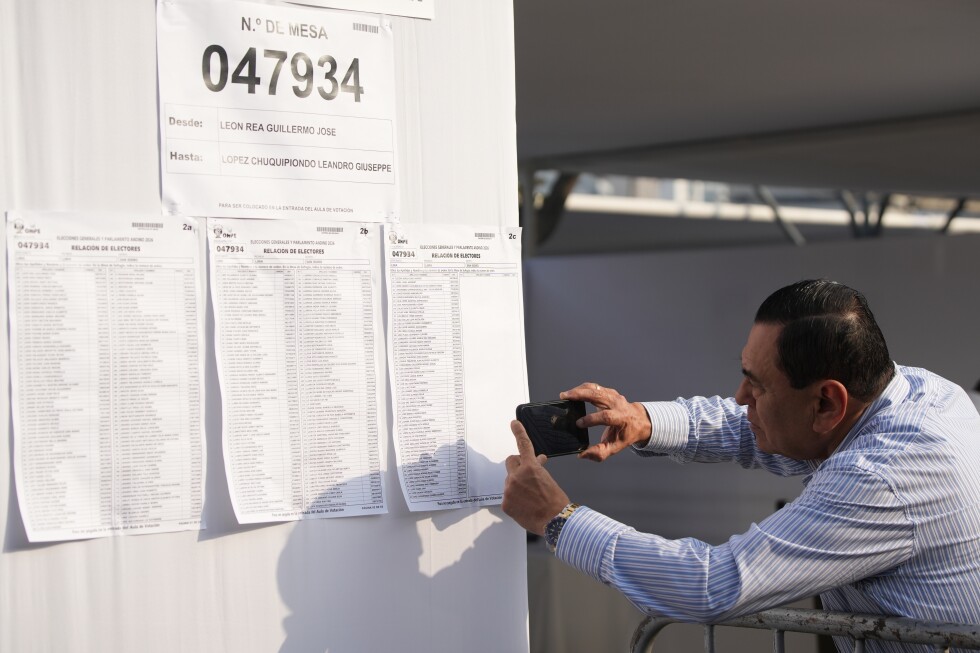
    Nepal has conducted its first general election following the youth-led uprising that toppled the government in September, marking a pivotal moment for the Himalayan nation’s political future. Nearly 19 million registered voters, including approximately one million first-time participants, cast ballots on March 5th in an election dominated by concerns over corruption, economic stagnation, and systemic inequality—the very issues that sparked last year’s deadly protests claiming 77 lives.

    The electoral contest represents a fundamental clash between Nepal’s political establishment and a new generation of leaders appealing to disillusioned Gen Z voters. Prominent candidates include former Prime Minister KP Sharma Oli, whose government was ousted in the protests, and Balen Shah, a former rapper and Kathmandu mayor who resigned to challenge Oli in the crucial Jhapa 5 constituency. Shah’s Rastriya Swatantra Party (RSP) has captured the imagination of young voters seeking radical change from decades of coalition governments dominated by three major parties.

    Election proceedings unfolded peacefully under substantial security presence across the country’s challenging mountainous terrain. The voting process selects 275 parliamentary seats through a dual system: 165 via first-past-the-post contests and 110 through proportional representation. Officials anticipate results will require several days to compile due to logistical challenges in ballot transportation and manual counting procedures.

    Despite establishment parties like Oli’s Communist Party of Nepal UML and Gagan Thapa’s Nepali Congress claiming responsiveness to youth demands, many young activists remain skeptical. Rakshya Bam, a Gen Z leader, noted that no party had adequately incorporated the government-protestor pact into their manifestos, accusing traditional parties of exploiting youth movement terminology for political gain.

    The election outcome will determine whether Nepal continues its pattern of coalition governance or embraces untested leadership promising to address brain drain, corruption, and regional development disparities beyond the capital. The new government will face immediate pressure to implement substantive reforms addressing the systemic issues that ignited September’s historic protests.

  • Texas lawmaker admits ‘lapse in judgement’ in affair with aide

    Texas lawmaker admits ‘lapse in judgement’ in affair with aide

    U.S. Representative Tony Gonzales (R-Texas) has publicly confessed to an extramarital relationship with a congressional aide, reversing his previous denials and characterizing the affair as a profound “lapse in judgement.” The married congressman, who has six children, made the admission during a podcast interview just hours after the House Ethics Committee announced an investigation into allegations of sexual misconduct.

    Gonzales acknowledged his relationship with Regina Santos-Aviles, his regional district director who died by suicide in September 2025. The 45-year-old lawmaker stated he takes “full responsibility” for his actions while maintaining that Santos-Aviles’ tragic death was unrelated to their affair. “I had absolutely nothing to do with her tragic passing,” Gonzales told conservative podcaster Joe Pags. “And in fact, I was shocked just as much as everyone else.

    The confession comes at a politically precarious moment for Gonzales, who faces a May primary runoff against challenger Brandon Herrera after neither candidate secured the required 50% threshold in the initial voting. The winner will become the Republican nominee for Texas’ heavily conservative border district in November’s midterm elections.

    Text messages obtained by CBS News reveal explicit communications from May 2024 in which Gonzales requested “sexy pics” from Santos-Aviles, despite her twice telling him he had gone “too far.” The following month, her husband Adrian Aviles reportedly discovered the affair and notified other staff members via text message.

    According to the family’s attorney Bobby Barrera, Santos-Aviles experienced significant mental health deterioration following the end of the relationship and subsequent workplace harassment. “The deterioration of her mental state was exacerbated by the conduct Tony engaged in,” Barrera told CBS.

    The Ethics Committee investigation will examine whether Gonzales engaged in sexual misconduct and whether he provided “special favors or privileges” to Santos-Aviles. Gonzales denies showing favoritism, stating that any pay raise she received was part of a “staff-wide pay increase.”

    The congressman, previously endorsed by former President Donald Trump, now faces mounting calls for resignation from fellow Republicans including Representative Nancy Mace (R-South Carolina), who has accused him of “predatory behavior.”

  • Chinese mainland reaffirms commitment to one-China principle and cross-Strait peace in government work report

    Chinese mainland reaffirms commitment to one-China principle and cross-Strait peace in government work report

    In a significant policy declaration delivered to China’s national legislature, Premier Li Qiang reinforced Beijing’s firm position on cross-strait relations during the ongoing Fourth Session of the 14th National People’s Congress. The government work report, presented Thursday, emphasized the mainland’s continued adherence to the foundational one-China principle and the 1992 Consensus as non-negotiable pillars of its Taiwan policy.

    The comprehensive address outlined a multi-faceted approach that combines resolute opposition to what it termed ‘Taiwan independence separatist activities’ and ‘external interference’ with constructive proposals for enhanced cooperation. The policy framework promotes peaceful development across the Taiwan Strait through increased cultural exchanges, economic integration, and implementation of measures ensuring equal treatment for Taiwanese compatriots.

    Beyond immediate political concerns, the report positioned cross-strait relations within broader national objectives, calling for collective efforts to preserve Chinese cultural heritage and advance the overarching mission of national rejuvenation. The policy direction signals both continuity in Beijing’s fundamental principles and evolving approaches to foster connectivity while maintaining clear boundaries against moves toward formal independence.