分类: politics

  • Trump fumes at NATO for refusing to help secure the Strait of Hormuz, and embraces going it alone

    Trump fumes at NATO for refusing to help secure the Strait of Hormuz, and embraces going it alone

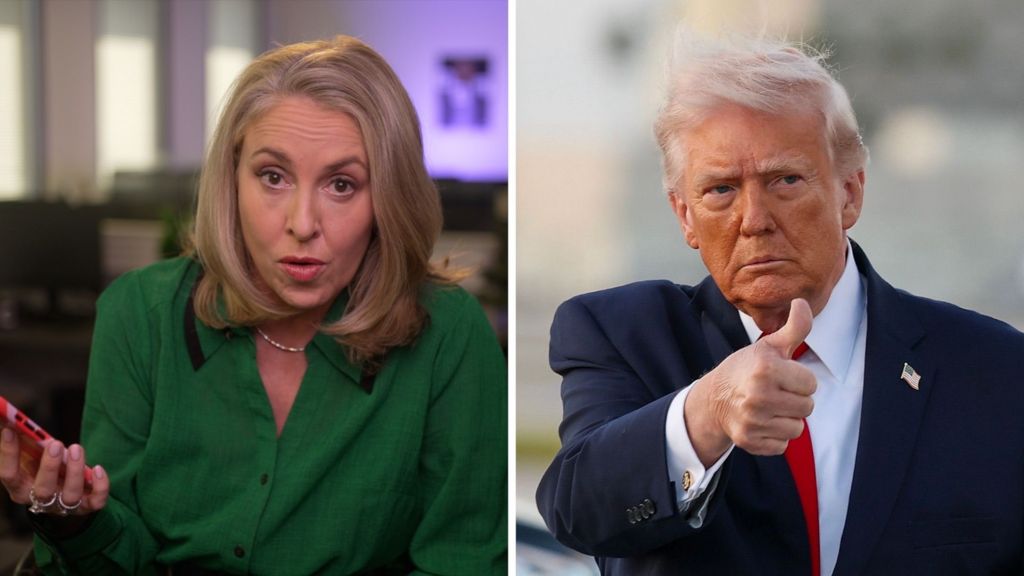
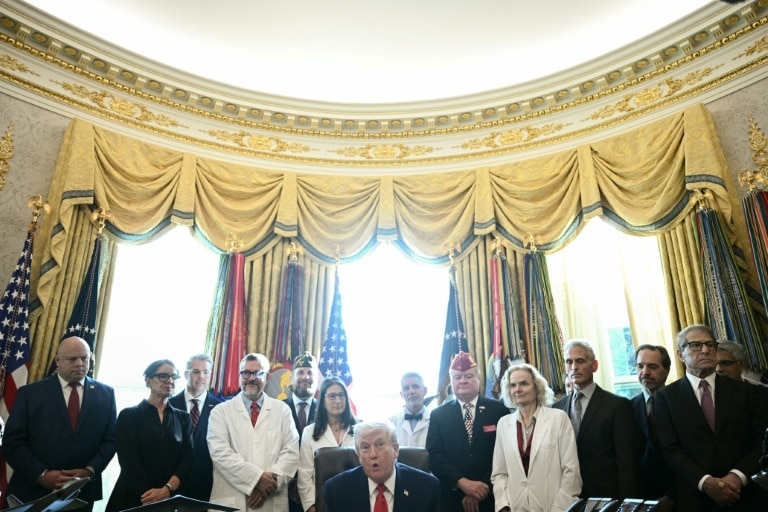
    President Donald Trump expressed sharp frustration on Tuesday as NATO members and key global allies declined his appeals for military assistance in securing the Strait of Hormuz amid escalating tensions with Iran. During a St. Patrick’s Day meeting with Irish Prime Minister Micheál Martin, Trump revealed that traditional U.S. partners had rejected his calls for naval support in the critical waterway, despite what he characterized as substantial American investments in global security.

    The President specifically criticized NATO members for their reluctance to contribute minesweepers or naval assets, noting that such assistance would involve minimal financial burden. Trump’s comments highlighted growing tensions within the transatlantic alliance, which he accused of benefiting from American protection while refusing reciprocal support. “We will protect them, but they will do nothing for us, in particular, in a time of need,” Trump stated via social media.

    European leaders pushed back strongly against the administration’s requests. EU Foreign Policy Chief Kaja Kallas explicitly stated that member nations “do not have the wish to be dragged into this” conflict, emphasizing that the European Union was neither consulted about nor responsible for initiating military actions against Iran. French President Emmanuel Macron offered conditional support for securing the strait but only through operations separate from current hostilities.

    The administration has meanwhile pursued diplomatic pressure campaigns, with the State Department circulating cables urging foreign governments to designate Iran’s Islamic Revolutionary Guard Corps and Hezbollah as terrorist organizations. This effort forms part of a broader strategy to isolate Iran internationally through economic sanctions and diplomatic measures.

    Trump’s relationship with NATO remains characteristically volatile, with the President openly questioning the alliance’s value and suggesting he might reconsider U.S. participation without congressional approval—though legal experts note that 2023 legislation requires congressional authorization for NATO withdrawal.

  • Former Heilongjiang official gets life for bribe taking

    Former Heilongjiang official gets life for bribe taking

    In a landmark ruling underscoring China’s intensified anti-corruption campaign, a high-ranking former official from Heilongjiang province has been sentenced to life imprisonment for extensive bribery offenses. The Wuxi Intermediate People’s Court in Jiangsu Province delivered the verdict on Tuesday, marking a significant development in the nation’s ongoing battle against graft within its political ranks.

    Li Haitao, previously serving as Vice-Chairman of the Heilongjiang Provincial Committee of the Chinese People’s Political Consultative Conference, was convicted of systematically abusing his official authority over a twenty-year period from 2003 to 2023. Judicial authorities confirmed that Li illicitly accepted approximately 150 million yuan (equivalent to $21.78 million) in bribes from various corporations and individuals seeking preferential treatment in project development, contract awards, and corporate mergers.

    The court imposed additional severe penalties including lifelong deprivation of political rights and comprehensive confiscation of all personal assets. Authorities have already transferred substantial portions of illicit gains to state treasury holdings, with ongoing efforts to recover remaining proceeds from criminal activities.

    Presiding judges noted that while the monumental scale of corruption caused severe damage to national and public interests, sentencing considerations incorporated mitigating factors including Li’s confession, demonstrated remorse, and partial restitution of illegally obtained funds. The judicial process featured a public trial conducted in September of the previous year, during which prosecutors presented extensive evidence before the defendant delivered his final statement admitting guilt.

  • US Attorney General Bondi formally summoned to Congress in Epstein case

    US Attorney General Bondi formally summoned to Congress in Epstein case

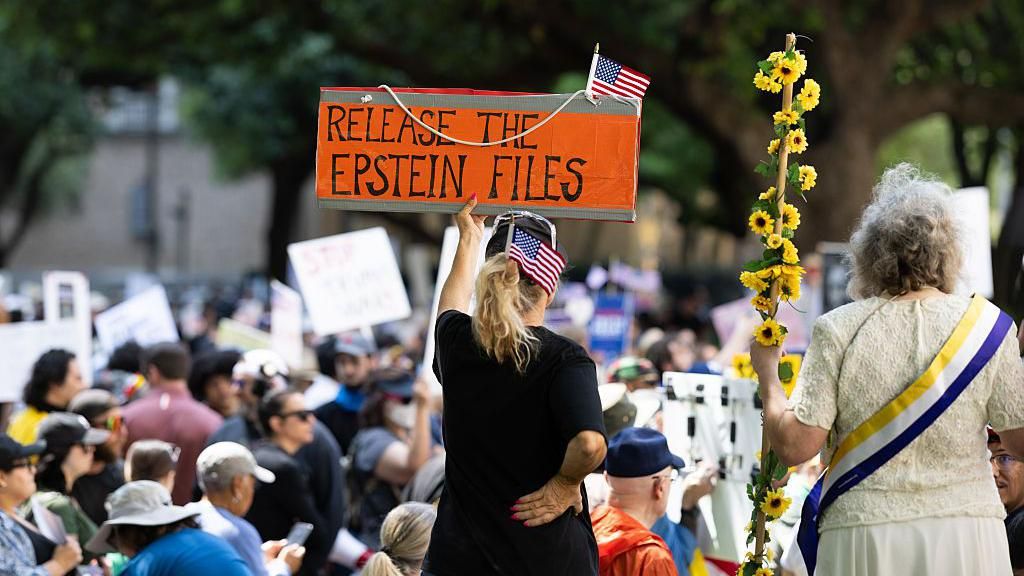
    The House Oversight Committee has issued a formal subpoena to Attorney General Pam Bondi, compelling her testimony regarding the Justice Department’s management of the Jeffrey Epstein investigation. Committee Chairman James Comer (R-KY) cited potential “mismanagement” concerns in the subpoena letter, which mandates Bondi’s appearance on April 14.

    The congressional action follows intensified scrutiny over the Justice Department’s implementation of the Epstein Files Transparency Act, legislation signed by former President Trump last November that requires full disclosure of investigation materials. Despite the release of millions of documents, the department faces bipartisan criticism for its handling of sensitive information—specifically, allegedly failing to properly redact victims’ identities while protecting non-victims.

    Representative Nancy Mace (R-SC) previously accused the Justice Department of orchestrating a “cover-up” in releasing Epstein-related files, prompting the current subpoena initiative. The committee seeks Bondi’s testimony due to her direct oversight responsibility for document collection, review, and release determinations under the transparency act.

    Justice Department officials have pushed back against the subpoena, characterizing it as “completely unnecessary” while emphasizing that lawmakers have standing invitations to review unredacted files directly at department facilities. The agency maintains that Attorney General Bondi has consistently made herself available for direct consultations with Congress members.

    This development occurs amidst growing political pressure on both the Trump administration and Bondi to ensure comprehensive transparency regarding Epstein probe documents. Should Bondi testify as scheduled, she will join other high-profile witnesses including former President Bill Clinton and former Secretary of State Hillary Clinton, who appeared before the same committee last month.

  • Spanish king reopens debate on conquest of Mexico by acknowledging ‘abuse’

    Spanish king reopens debate on conquest of Mexico by acknowledging ‘abuse’

    In an unprecedented move that could reshape Spanish-Mexican relations, King Felipe VI has publicly acknowledged the historical abuses committed during Spain’s conquest of the Americas. The monarch’s remarks, delivered during a visit to an indigenous women’s exhibition at Madrid’s National Archaeological Museum, represent the first time a Spanish royal has addressed colonial-era injustices directly.

    Speaking informally before Mexico’s Ambassador to Spain Quirino Ordaz, King Felipe stated that numerous abuses occurred during the conquest of territories that would become modern Mexico. ‘There are things that, when we study them with our present-day criteria and values, obviously cannot make us feel proud,’ the monarch added during his Monday address.

    Mexican President Claudia Sheinbaum immediately welcomed the royal acknowledgement as a significant diplomatic breakthrough. ‘One could say it is not everything we would have wanted,’ she noted, ‘but it is a gesture of reconciliation—an acknowledgement of excesses and exterminations that happened during the Spaniards’ arrival.’

    The timing holds particular significance following years of diplomatic tension. In 2019, then-President Andrés Manuel López Obrador formally demanded Spain’s apology for human rights violations during colonization. The dispute escalated in 2024 when President Sheinbaum notably excluded King Felipe from her inauguration ceremonies, citing Spain’s inadequate response to Mexico’s concerns.

    Historical context underscores the sensitivity: 2021 marked the 500th anniversary of Tenochtitlán’s fall—the Aztec capital now underlying Mexico City—to Hernán Cortés and his conquistadors. The Spanish conquest resulted in widespread indigenous fatalities through both military campaigns and introduced diseases.

    While Spain’s Socialist-led government fully endorsed the king’s statement, with Minister Elma Saiz expressing 100% support, conservative factions reacted critically. People’s Party leader Alberto Núñez Feijóo cautioned against evaluating historical events through modern lenses, calling such scrutiny ‘crazy.’ He defended Spain’s colonial legacy as creating ‘an exceptional linguistic and cultural community’ that compared favorably to other imperial actions of the era.

    The far-right Vox party went further, labeling the conquest ‘the greatest work of evangelisation and civilisation in universal history.’ Vox MEP Hermann Tertsch expressed astonishment that the monarch aligned with ‘those who seek to damage and discredit Spanish history.’

    This development occurs against Spain’s complex historical reckoning. While the nation offered citizenship to descendants of Jews expelled during the Spanish Inquisition in 2015, it has not undertaken comprehensive colonial reappraisal like other European nations. King Felipe’s comments, disseminated through the Royal Household’s social media channels, potentially open new dialogue avenues between the two nations, though specific next steps remain undefined.

  • Iran war’s next escalation could pit US versus Turkey

    Iran war’s next escalation could pit US versus Turkey

    As U.S.-Israeli military operations against Iran enter their third week, the Trump administration’s strategic objectives appear increasingly fluid, oscillating between degrading Iranian military capabilities and pursuing full regime change. While initial strikes eliminated Supreme Leader Ali Khamenei, defense analysts universally agree that aerial bombardment alone cannot achieve governmental overthrow in Tehran.

    The fundamental obstacle remains the absence of ground forces, an option opposed by most U.S. military and political leadership. This strategic vacuum has elevated discussion of alternative approaches, including supporting armed Kurdish factions from Iraq and Western Iran to destabilize the Islamic Republic internally.

    Despite President Trump’s March 6 declaration that “I don’t want the Kurds to go into Iran… The war is complicated enough as it is,” his documented inconsistency and the conflict’s volatile nature maintain the possibility of Kurdish mobilization. Such development could trigger consequences extending far beyond Iran’s borders.

    The Kurdish people, numbering approximately 30 million across Turkey, Iran, Iraq and Syria, represent the world’s largest stateless ethnic group. Their aspiration for autonomy dates to the Ottoman Empire’s collapse after World War I, when proposed statehood was superseded by division among newly created nations.

    In Iran specifically, Kurds constitute roughly 10% of the population, primarily inhabiting the economically disadvantaged northwestern regions bordering Iraq and Turkey. Iranian Kurdish political parties face prohibition, with periodic armed clashes occurring between separatist groups and state forces.

    The situation presents particular sensitivity for Turkey, which hosts the largest Kurdish population globally. Since 1984, Ankara has engaged in brutal conflict with the Kurdistan Workers’ Party (PKK), resulting over 40,000 casualties. Turkish leadership perceives any empowerment of Kurdish forces in neighboring territories as potentially energizing domestic separatist movements.

    Historical precedent demonstrates Turkey’s willingness to launch cross-border military operations against Kurdish strongholds in Iraq and Syria. Previous U.S. collaboration with Syrian Kurdish forces against Islamic State created significant NATO tensions, with Turkey alleging connections to PKK militants.

    Currently maintaining neutrality in the Iran conflict, Turkey and Iran have historically cooperated on Kurdish containment through intelligence sharing, military coordination, and joint opposition to Iraqi Kurdistan’s 2017 independence referendum (which received 92% approval).

    Experts identify two primary Turkish concerns regarding Iranian regime change: creation of ungoverned spaces enabling Kurdish militant operations along expanded borders, and potential refugee crises mirroring Syria’s aftermath (Turkey already hosts nearly 4 million Syrian refugees).

    While Washington may view Kurdish partnerships as expedient alternatives to American troop deployment, such strategy risks igniting secondary conflicts. Should Kurdish empowerment or border destabilization occur, Turkey could feel compelled to intervene, potentially opening another front in the expanding regional warfare.

  • Tunisia detains seven Gaza flotilla activists

    Tunisia detains seven Gaza flotilla activists

    A Tunisian judicial authority has mandated the pre-trial incarceration of seven activists affiliated with the pro-Palestinian initiative Global Sumud, invoking the nation’s anti-terrorism legislation on grounds of alleged financial misconduct. The detained individuals, including prominent figures Wael Naouar, his spouse Jawaher Channa, Nabil Chennoufi, Mohamed Amine Bennour, and Sana M’hidli, were initially apprehended on March 6th following a tense encounter with security forces at Sidi Bou Said port.

    Legal representative Sami Ben Ghazi confirmed to AFP that formal arrest warrants were issued after a ten-day police custody period, charging the group with orchestrating a ‘money laundering conspiracy.’ The allegations reportedly stem from fundraising activities conducted during the flotilla’s inaugural humanitarian mission to Gaza in September, though specific evidentiary details remain undisclosed.

    The judicial proceedings have drawn sharp criticism from human rights advocates and civil society organizations. Mahdi Elleuch, a noted Tunisian activist, condemned the actions as systematic repression of political expression, stating: ‘The regime is repressing all forms of political and social activism, including in support of the Palestinian cause. It consistently employs fabricated charges through a compliant judiciary.’

    Dissent manifested visibly as dozens of protesters congregated outside the Financial Judicial Centre, decrying the prosecution as politically motivated. This development occurs within a broader context of intensified governmental crackdowns following President Kais Saied’s 2021 power consolidation, which has witnessed mounting restrictions on civil liberties, press freedom, and organizational operations.

    Global Sumud representatives characterized the detentions as representing ‘a troubling break with Tunisia’s long history of solidarity with the Palestinian people,’ particularly when combined with recent prohibitions on lawful assemblies. The organization, which coordinates maritime aid missions to challenge the Israeli blockade of Gaza, frames its activities as non-violent responses to humanitarian crisis conditions.

    Amnesty International’s Tunisia division expressed grave concern regarding the ‘alarming arrests and increasing restrictions on peaceful gatherings,’ highlighting a deteriorating environment for human rights defenders. The incident precedes the group’s announced second aid convoy to Gaza, described as their largest humanitarian undertaking to date.

  • Trump thanked by Irish PM for affirming US and Ireland’s ‘tremendous bond’

    Trump thanked by Irish PM for affirming US and Ireland’s ‘tremendous bond’

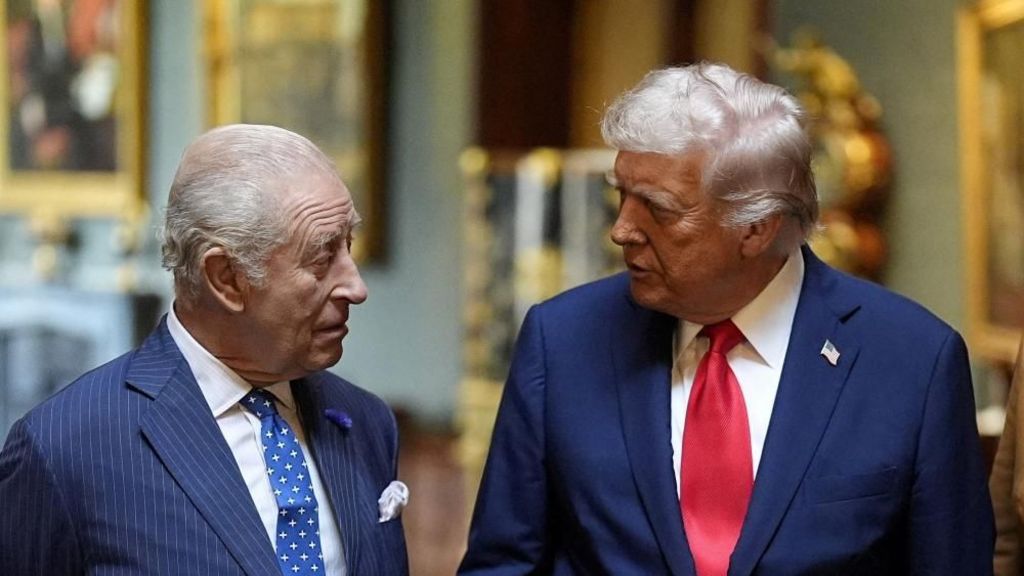
    In a ceremonial display of diplomatic tradition, Irish Taoiseach Micheál Martin convened with former US President Donald Trump at the White House on St. Patrick’s Day, reinforcing bilateral ties while navigating contentious geopolitical issues. The annual diplomatic ritual, deeply embedded in US-Ireland relations, unfolded with the customary exchange of shamrocks and public affirmations of mutual cooperation.

    President Trump characterized the nations’ trade relationship as ‘tremendous’ during the Oval Office meeting, forecasting its rapid expansion while alluding to potential tariff negotiations. ‘We have a tremendous trade relationship with Ireland and we’ll keep it that way,’ Trump stated, acknowledging both countries’ desire to strengthen economic partnerships.

    The Taoiseach emphasized the historical significance of Irish contributions to American society, noting that 23 US presidents claimed Irish heritage. ‘The Irish have helped to build America,’ Martin remarked, framing the White House reception as recognition of the Irish diaspora’s enduring legacy.

    Geopolitical tensions surfaced when journalists questioned Trump about energy price increases resulting from US-Israeli military actions against Iran. The former president defended the operations as necessary measures against ‘nuclear terrorism,’ predicting energy markets would stabilize ‘like a rock’ following conflict resolution.

    Martin’s engagement faced domestic criticism, particularly from Sinn Féin leadership boycotting St. Patrick’s Day events over US policies in Gaza. Deputy First Minister Emma Little-Pengelly, however, characterized the boycott as a ‘missed opportunity’ for diplomatic engagement regardless of political differences.

    The meeting concluded with discussions about establishing legal migration pathways between the nations, reflecting ongoing efforts to strengthen people-to-people connections beyond governmental relations.

  • Damascus authorities ban alcohol sales in non-Christian areas

    Damascus authorities ban alcohol sales in non-Christian areas

    The transitional government in Damascus has enacted a sweeping prohibition on alcohol sales throughout the Syrian capital, marking a significant shift in social policy since the overthrow of Bashar al-Assad’s regime. The new regulations, announced Monday, forbid the sale of alcoholic beverages in restaurants and nightclubs across most of the city, citing numerous public complaints and aiming to eliminate practices deemed contrary to public morals.

    The ban contains notable exceptions for three predominantly Christian districts—Bab Touma, Qassaa, and Bab Sharqi—where alcohol sales will be permitted under strict conditions. Establishments in these exempted areas must hold specific commercial building permits and may only sell sealed containers for takeaway consumption. Additionally, all businesses authorized to sell alcohol must maintain a minimum distance of 75 meters from religious sites, educational institutions, and cemeteries, and at least 20 meters from police stations and government buildings.

    This policy represents a departure from the government’s previous restraint in imposing social restrictions since President Ahmed al-Sharaa assumed power in December 2024. Sharaa, whose former Hay’at Tahrir al-Sham group was once affiliated with al-Qaeda, had largely avoided such measures until recent months. The alcohol ban follows other controversial regulations, including January’s prohibition on makeup for female public sector employees and last year’s mandate requiring full-body swimsuits on public beaches.

    The sectarian nature of the exemptions has sparked significant criticism from various segments of Syrian society. Many secular Sunnis and religious minorities view the ban as an infringement on civil liberties, while analysts argue the neighborhood-specific exemptions institutionalize religious segregation. Syrian analyst Jihad Yazigi noted on social media platform X that the decision effectively creates division between Muslim and Christian communities, reversing historical trends toward integration that had begun even during the late Ottoman period.

    The controversial social policies emerge as the transitional government faces multiple challenges, including domestic unrest, Israeli attacks, and complex diplomatic relations with former allies and adversaries. The government’s legitimacy remains questioned following October’s parliamentary elections, where Sharaa directly appointed one-third of representatives while government-appointed committees selected the remainder. The electoral process notably excluded the Druze-majority Sweida province and Kurdish-held northeast regions, leaving 32 parliamentary seats vacant.

    According to a temporary constitution announced in March, the current parliament will exercise legislative functions throughout a five-year transitional period until permanent constitutional arrangements can be established. Government officials maintain that conventional elections remain unworkable following Syria’s devastating 13-year conflict, which resulted in hundreds of thousands of deaths and millions displaced. However, the selection process has disappointed pro-democracy advocates who had anticipated more substantial political reforms following Assad’s ouster.

  • Assassination attempted on Iran’s top security official Ali Larijani, his condition unclear — media

    Assassination attempted on Iran’s top security official Ali Larijani, his condition unclear — media

    Iranian media outlets are reporting an apparent assassination attempt targeting Ali Larijani, one of Iran’s most prominent security officials and former parliamentary speaker. The incident, which occurred under unclear circumstances, has raised immediate concerns about Larijani’s current condition and potential implications for regional stability.

    Initial reports indicate the attack specifically targeted Larijani, who serves as a key advisor to Supreme Leader Ayatollah Ali Khamenei on strategic affairs. The former speaker of Iran’s parliament has long been considered among the nation’s most influential political figures, having previously held critical positions including head of state broadcasting and chief nuclear negotiator.

    Details regarding the methodology of the attack, precise location, and potential perpetrators remain undisclosed as Iranian authorities maintain tight control over information flow. The lack of immediate official statements has created an information vacuum, with international observers closely monitoring developments.

    This security breach against such a high-ranking official underscores the escalating tensions within Iran’s political landscape and the broader Middle Eastern region. Larijani’s extensive background in both security and diplomatic capacities makes this incident particularly significant, potentially representing either internal power struggles or external targeting of Iranian leadership.

    The attempted assassination occurs against a backdrop of increased regional hostilities and follows previous incidents targeting Iranian nuclear scientists and military figures. Security analysts are assessing potential connections to existing geopolitical conflicts while awaiting official confirmation from Iranian government sources.

  • Trump delays China trip until next month to focus on the war in Iran

    Trump delays China trip until next month to focus on the war in Iran

    President Donald Trump has announced a significant postponement of his scheduled diplomatic mission to China, a high-stakes visit that had been in planning for several months. The decision, revealed during a meeting with Irish Prime Minister Micheál Martin at the Oval Office on Tuesday, comes amid escalating tensions over international security strategy in the Middle East.

    The President indicated his trip would be delayed by approximately five to six weeks rather than proceeding as originally planned for late this month. Trump characterized the postponement as a strategic ‘resetting’ of his diplomatic engagement with Chinese President Xi Jinping, though he provided no specific details about what this recalibration would entail.

    This diplomatic shift occurs against the backdrop of the administration’s intensified campaign urging Beijing and other global powers to contribute military resources to safeguard the Strait of Hormuz, one of the world’s most critical oil transit chokepoints. The narrowing timeline for the China visit had increasingly conflicted with the administration’s pressing demands for international military cooperation in the volatile region.

    The postponement represents the latest development in the complex geopolitical relationship between Washington and Beijing, which has been navigating simultaneous cooperation and competition across trade, security, and technological fronts. The Strait of Hormuz has emerged as a focal point of international concern following heightened tensions and attacks on oil tankers in the area, prompting the U.S. to seek broader international participation in securing the vital waterway.