分类: politics

  • Trump’s pick to lead Department of Homeland Security faces questions at Senate hearing

    Trump’s pick to lead Department of Homeland Security faces questions at Senate hearing

    Senator Markwayne Mullin (R-OK), recently nominated by former President Donald Trump to lead the Department of Homeland Security, is set to appear before the Senate Homeland Security and Governmental Affairs Committee on Wednesday. The hearing marks a critical step in the confirmation process for the potential successor to ousted Secretary Kristi Noem.

    Noem was dismissed earlier this month following mounting criticism over her management of immigration operations in Minnesota. Trump subsequently announced Mullin’s nomination on March 5th, praising the senator’s alignment with his immigration enforcement policies.

    The Oklahoma lawmaker, who previously served a decade in the House of Representatives before winning a Senate seat through a special election, brings a distinctive background to the nomination. A former mixed martial arts fighter known for his confrontational style, Mullin has consistently supported Trump’s immigration agenda, particularly the detention of undocumented immigrants.

    If the committee advances his nomination, the full Senate will conduct a confirmation vote requiring a simple majority in the narrowly divided chamber. Mullin would assume leadership of DHS during a period of significant operational challenges, including funding shortages that have caused airport security staff deficiencies and resulting passenger delays.

    The Department of Homeland Security, established following the 9/11 attacks, encompasses multiple critical agencies including Customs and Border Protection, Immigration and Customs Enforcement, the Transportation Security Administration, and the Secret Service.

    The agency has faced intensified scrutiny in recent months after federal immigration officials fatally shot two U.S. citizens, Renee Good and Alex Pretti, during Minnesota protests. Both Noem and CBP chief Greg Bovino, who announced his retirement Monday, characterized the deceased as domestic terrorists immediately following the incident.

    Following Noem’s dismissal, Trump reassigned her to the newly created position of Special Envoy for The Shield of the Americas, described as a new security initiative for the Western Hemisphere.

  • Flailing support casts doubt on Iran campaign legitimacy

    Flailing support casts doubt on Iran campaign legitimacy

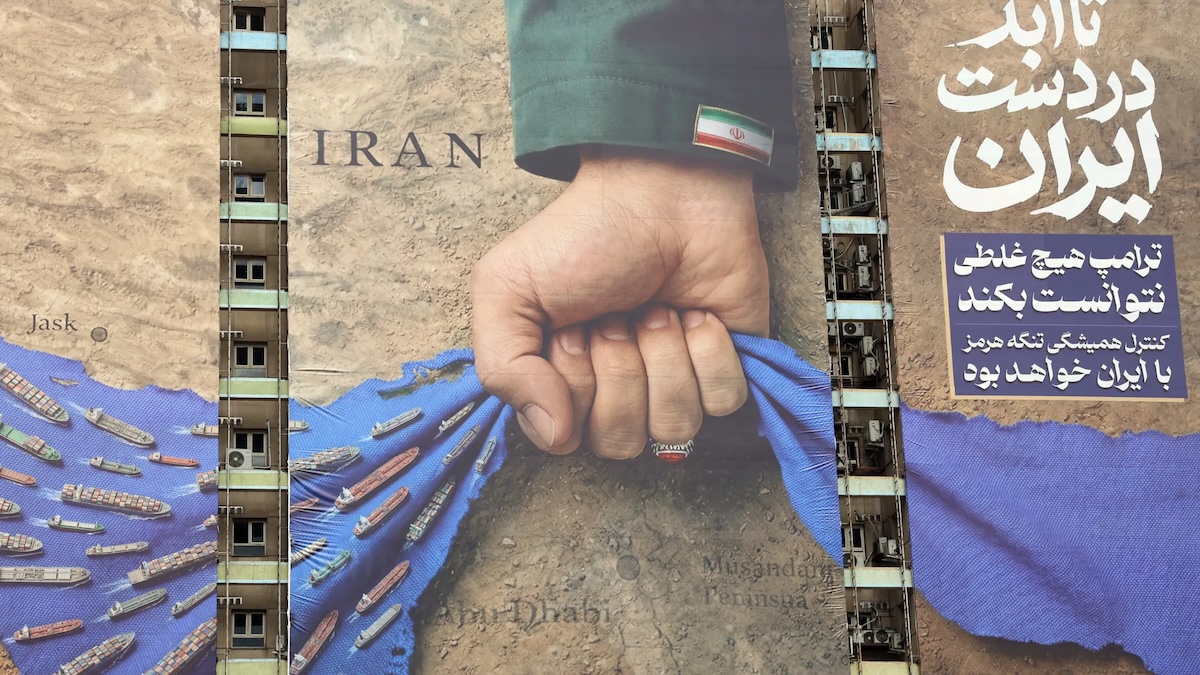
    The United States and Israel’s military campaign against Iran is confronting a severe crisis of legitimacy as key Western allies publicly refuse to participate in Middle Eastern operations, according to geopolitical analysts. The strategic rift emerged when European powers including Spain, Germany, Portugal and the European Union collectively rejected Washington’s request for a joint military mission to reopen the Strait of Hormuz—a critical waterway Iran has closed to “enemies and those supporting their aggression.”

    This unprecedented refusal creates both logistical challenges and diplomatic isolation for American operations. Arsenio Dominguez of the UN’s International Maritime Organization cautioned that even military escorts cannot guarantee safe passage through the volatile strait, which facilitates approximately 20% of global energy shipments.

    Abdolreza Alami, director of the Asia West East Centre in Kuala Lumpur, noted that traditional allies now characterize the conflict as “a war of choice rather than collective defense.” This positioning has left Washington bearing sole responsibility for securing vital maritime routes while facing asymmetrical pressures without shared financial or military burden.

    Iranian President Masoud Pezeshkian reinforced Tehran’s defensive stance in communications with French President Emmanuel Macron, asserting that “defending against invasion is a natural right” and demanding cessation of regional base usage against Iran. The president called for international condemnation of what he termed “Zionist-American invasion” while vowing Iran “will not surrender to bullies.”

    Analysts suggest the Western consensus fracture provides Tehran strategic advantage, enabling framing of retaliatory actions as legitimate self-defense against unilateral aggression. Iran’s apparent objective extends beyond inflicting economic damage to persuading allies to pressure Washington toward de-escalation.

    Meanwhile, regional violence escalated dramatically as Israel confirmed eliminating two senior Iranian security officials—Supreme National Security Council Secretary Ali Larijani and Basij volunteer force commander Gholamreza Soleimani—in overnight strikes. If verified, Larijani’s assassination would represent the highest-profile target since Supreme Leader Ali Khamenei’s recent slaying.

    Simultaneously, Baghdad’s fortified Green Zone endured attacks targeting the US embassy and diplomatic residences, while ceasefire negotiations between US representatives and Hamas in Cairo were overshadowed by regional hostilities. Hamas warned it may withdraw from Gaza ceasefire agreements if Israel maintains security restrictions imposed during the Iran conflict.

  • China, US stay in touch on date of Trump’s visit, says Chinese Foreign Ministry

    China, US stay in touch on date of Trump’s visit, says Chinese Foreign Ministry

    Beijing has confirmed ongoing diplomatic communications with Washington regarding the scheduling of former President Donald Trump’s potential visit to China. The development follows recent media speculation that had suggested a possible postponement of the visit linked to geopolitical tensions in the Middle East.

    Foreign Ministry spokesman Lin Jian addressed journalists during a regular press briefing, emphasizing that Chinese authorities have taken note of Washington’s official clarification denying any connection between the visit’s timing and the Strait of Hormuz situation. “China has noted that the US described such reports as completely false,” Lin stated, confirming that bilateral discussions about the visit’s arrangements continue through diplomatic channels.

    The original reports prompted a coordinated response from multiple high-ranking US officials on Monday. President Trump himself dismissed the speculation during White House remarks, asserting his anticipation for the visit while acknowledging current military engagements. “There’s no tricks to it,” Trump told reporters. “It’s very simple. We’ve got a war going on (with Iran).”

    US Treasury Secretary Scott Bessent characterized the media narrative as “false,” explicitly denying that the visit would be contingent on China’s involvement in policing the strategic waterway. White House Press Secretary Karoline Leavitt confirmed that the meeting remains secure though acknowledged potential logistical adjustments due to current military coordination requirements.

    The diplomatic exchange highlights the complex interplay between great power diplomacy and ongoing global security challenges, with both nations maintaining communication protocols despite competing priorities and international pressures.

  • China a more dependable partner, Western polls find

    China a more dependable partner, Western polls find

    Recent opinion polls conducted across major Western nations reveal a profound transformation in global perceptions, positioning China as an increasingly reliable international partner and a recognized leader in technological innovation. The surveys indicate a notable decline in confidence toward the United States among its traditional allies, with China’s consistent policy framework and rapid developmental pace reshaping diplomatic perspectives.

    A comprehensive study conducted by U.S. digital media company Politico in collaboration with UK-based research consultancy Public First surveyed respondents across Canada, Germany, France, and the United Kingdom. The findings demonstrate that citizens in these historically US-allied nations now perceive China as a more dependable partner than the United States. The research, published on Sunday, further established China’s dominant position in advanced technological domains including artificial intelligence.

    This assessment aligns with broader global research conducted by the European Council on Foreign Relations in January, which documented growing international anticipation of China’s expanding influence throughout the coming decade. The survey indicated that Western populations increasingly regard China as either an ‘ally’ or ‘necessary partner’ for their respective nations.

    Complementing these findings, the Global Soft Power Index 2026 released by UK consultancy Brand Finance characterized China as progressively predictable, reliable, and capable of delivering concrete benefits through its integration of domestic advancement with structured global engagement.

    International relations experts attribute this perceptual shift to fundamental contrasts in policy consistency between Beijing and Washington. Professor Jian Junbo, Director of the Center for China-Europe Relations at Fudan University’s Institute of International Studies, noted that controversial foreign policies from the current U.S. administration have significantly impacted allied nations, resulting in substantial erosion of trust.

    “China has consistently maintained stable policies and long-term strategic planning, serving as a stabilizing force within international relations. This contrast becomes increasingly apparent and drives evolving perceptions,” Professor Jian stated.

    Anna Malindog-Uy, Vice-President of the Manila-based Asian Century Philippines Strategic Studies Institute, characterized this phenomenon as ‘credibility by contrast,’ noting that “Compared with perceived U.S. unpredictability, China demonstrates greater steadiness and possesses longer strategic horizons.”

    The trend toward favorable perspectives on China proves particularly pronounced among younger demographics. The Politico survey revealed respondents aged 18-24 expressed significantly stronger support for establishing closer ties with China compared to older generations.

    Professor Jian connected this generational divergence to media consumption patterns, explaining that “Younger demographics primarily obtain information through social platforms featuring more objective reporting about China. This facilitates more authentic, comprehensive understanding and consequently higher favorability.”

    Dr. Xiao He, Research Fellow at the Chinese Academy of Social Sciences’ Institute of World Economics and Politics, observed that younger generations perceive China as “an ascending nation unburdened by Cold War ideological baggage, enabling more objective assessment.” While acknowledging social media’s influential role in shaping opinions, Dr. Xiao emphasized that China’s fundamental appeal stems from its remarkable economic and technological advancement.

  • ‘Colonial-style arrogance’: China attacks Australia, New Zealand over Iran comments

    ‘Colonial-style arrogance’: China attacks Australia, New Zealand over Iran comments

    China has launched a fierce diplomatic counteroffensive against Australia and New Zealand, accusing both nations of demonstrating “colonial-style arrogance” following their joint statement criticizing Iran’s military actions and Beijing’s domestic policies. The Chinese Embassy in New Zealand issued a sharply worded response characterizing the Antipodean nations’ position as containing “bias, misinformation, and inexplicable colonial-style arrogance.”

    The diplomatic confrontation emerged after Tuesday’s joint declaration from Canberra and Wellington, which condemned Iran’s recent missile and drone attacks while simultaneously addressing concerns about China’s activities in the South China Sea, treatment of minority groups in Xinjiang and Tibet, and political freedoms in Hong Kong.

    In its retaliatory statement, Beijing’s diplomatic mission challenged the moral authority of both countries, highlighting their “poor records concerning human rights and ethnic minority issues” while invoking a traditional Chinese proverb: “One should first ensure one’s own conduct is beyond reproach before criticising others.”

    The Chinese response further accused Australia and New Zealand of applying “hypocrisy and double standards” regarding global peace and stability, particularly noting their perceived silence on what Beijing describes as “blatant violation of international law” during Middle East conflicts that have resulted in civilian casualties and economic disruptions.

    Reiterating China’s longstanding positions, the statement emphasized Taiwan as “an inalienable part of China” representing a “red line” in core national interests. The embassy additionally maintained that situations in both the East and South China Seas remain stable despite international concerns.

    The diplomatic exchange signals a resurgence of China’s assertive “wolf warrior” diplomacy approach, characterized by strong rhetorical counterattacks against foreign criticism of Chinese policies. Beijing concluded by affirming its commitment to developing “friendly and cooperative relations with all countries, including New Zealand,” while urging its counterparts to adopt a “clear-eyed view of the prevailing situation.”

  • Iran confirms death of top security official Ali Larijani

    Iran confirms death of top security official Ali Larijani

    Iran’s Supreme National Security Council has officially confirmed the death of its secretary, Ali Larijani, alongside several high-ranking officials in what appears to be a targeted attack. The announcement, disseminated through Iran’s Tasnim news agency early Wednesday, revealed that Larijani perished alongside his son Morteza Larijani and Alireza Bayat, deputy for security affairs at the council’s secretariat, among other casualties.

    The security council’s statement lauded Larijani’s extensive contributions to Iran’s developmental trajectory and issued a call for national solidarity in confronting external security challenges. This development occurs against a backdrop of intensifying regional hostilities, with Israeli Prime Minister Benjamin Netanyahu publicly claiming responsibility for Larijani’s elimination during ongoing military operations against Iranian targets.

    Simultaneously, Iran’s Islamic Revolutionary Guard Corps verified the death of Gholamreza Soleimani, commander of the Basij volunteer force, attributing his killing to a coordinated US-Israeli offensive. These significant casualties emerge within a broader context of escalating violence that commenced on February 28 with joint American-Israeli strikes against Iranian interests, prompting retaliatory measures from Tehran and its regional allies against Israeli and US assets throughout the Middle East.

    The elimination of such prominent security figures represents a substantial escalation in the ongoing regional power struggle, potentially altering the strategic calculus of all involved parties and raising concerns about further military escalation and regional destabilization.

  • China ignores Trump’s Hormuz request as the Iran war deepens and his Beijing trip slips

    China ignores Trump’s Hormuz request as the Iran war deepens and his Beijing trip slips

    WASHINGTON — As the United States grapples with escalating tensions in the Middle East, China has adopted a strategically nuanced position regarding President Trump’s request for assistance in reopening the critical Strait of Hormuz. Analysts suggest Beijing is leveraging the geopolitical situation to its advantage while carefully managing diplomatic relations.

    The ongoing military engagement in Iran, now entering its third week, has created significant challenges for Washington as oil shipments through the vital waterway remain suspended. Despite appeals to allies, the U.S. finds itself increasingly isolated in its efforts to secure the strait, raising concerns that America’s principal strategic competitor stands to gain from the prolonged conflict.

    Ali Wyne, senior research and advocacy adviser for U.S.-China relations at the International Crisis Group, observed: “President Trump’s decision to postpone his long-awaited summit with President Xi Jinping reveals a fundamental miscalculation of Operation Epic Fury’s consequences. What was intended as a demonstration of U.S. power has instead exposed limitations in American influence, compelling Washington to seek assistance from its chief geopolitical rival in managing a self-created crisis.”

    The Chinese Foreign Ministry offered a deliberately ambiguous response regarding potential assistance with the strait, instead reiterating calls for “all parties to immediately cease military operations, prevent further escalation of tensions, and avoid additional disruption to the global economy from regional instability.”

    Beijing, which had never formally confirmed Trump’s planned March 31 state visit, has indicated willingness to reschedule through diplomatic channels while clarifying that the postponement was unrelated to the Hormuz request. This careful positioning allows China to maintain diplomatic decorum while advancing its strategic interests.

    According to Sun Yun, director of the China program at the Stimson Center, “The Iranian request has diminished in urgency for Chinese leadership.” Meanwhile, Chinese diplomats have actively engaged with Middle Eastern nations, promising constructive involvement in tension reduction and peace restoration efforts. Beijing has already provided $200,000 in humanitarian aid to Iran through Red Cross and Red Crescent organizations, specifically designated for families affected by the bombing of Shajarah Tayyebeh elementary school in Minab.

    Brett Fetterly, managing principal in the China practice at The Asia Group, noted that the delay benefits both nations: “The current political climate makes international travel challenging for a commander-in-chief overseeing military operations. For China, additional time allows for better assessment of President Trump’s objectives and negotiation positions.”

    The strategic implications extend beyond immediate diplomacy. Military asset transfers from the Indo-Pacific region to the Middle East, including rapid-response units and anti-missile defense systems, have raised concerns about American distraction from its stated Asia-focused priorities.

    Zack Cooper, senior fellow at the American Enterprise Institute specializing in U.S. Asian strategy, warned: “Prolonged engagement in the Middle East, coupled with continued resource diversion from Asia, will exacerbate allies’ concerns about American distraction and capability limitations.” The postponed summit may also delay controversial arms sales to Taiwan, a persistently sensitive issue in U.S.-China relations.

    Cooper added: “Chinese leadership likely welcomes the visit’s postponement and the opportunity to benefit from renewed U.S. entanglement in Middle Eastern conflicts. Most Chinese analysts and officials believe America is undermining its own position, requiring Beijing merely to avoid interference in the process.”

  • Netanyahu says Israel killed Iran’s top security official Larijani

    Netanyahu says Israel killed Iran’s top security official Larijani

    Israeli Prime Minister Benjamin Netanyahu has publicly claimed responsibility for the targeted killing of Ali Larijani, Secretary of Iran’s Supreme National Security Council, during ongoing aerial operations against Iranian targets. The announcement marks a significant escalation in the already tense military confrontation between the two nations.

    Netanyahu revealed that Israeli fighter jets and drones are currently conducting extensive operations over Tehran and multiple other Iranian cities. In a statement delivered on Tuesday, the Israeli leader asserted that these military campaigns are strategically designed to create conditions conducive to potential “regime change” within Iran’s political establishment.

    The Israeli military operation, now in its eighteenth consecutive day, represents one of the most sustained aerial campaigns in recent Middle Eastern conflict history. According to Israeli Defense Forces statements, the wide-scale strikes have specifically targeted Iranian government infrastructure throughout Tehran, resulting in the additional death of Gholamreza Soleimani, commander of Iran’s Basij volunteer force.

    Netanyahu further disclosed extensive military coordination with the United States, noting prolonged discussions with President Donald Trump regarding cooperative strategic operations. “We will act both through indirect measures that place immense pressure on the Iranian regime and through direct actions. There are many more surprises,” Netanyahu stated, suggesting further escalations ahead.

    Iranian authorities have reported substantial casualties and widespread structural damage throughout affected regions, though official confirmation regarding Larijani’s status remains pending. In retaliation, Iranian forces have effectively halted commercial shipping through the critical Strait of Hormuz, drawing neighboring nations into the expanding regional conflict and potentially disrupting global energy supplies.

    The absence of immediate Iranian response to Israel’s specific claims regarding Larijani’s death creates uncertainty about the complete veracity of Netanyahu’s assertions, though the broader context of sustained military engagement remains undisputed.

  • Ali Larijani: What does the death of philosopher security chief mean for Iran?

    Ali Larijani: What does the death of philosopher security chief mean for Iran?

    The assassination of Ali Larijani, a multifaceted Iranian political figure reportedly killed in an Israeli operation, has removed one of Tehran’s most versatile strategists from its complex power structure. The 67-year-old official possessed rare credentials spanning military, legislative, and cultural spheres, making him a unique entity within Iran’s leadership ecosystem.

    Larijani’s career exemplified the intricate nature of Iranian governance. A veteran of the Iran-Iraq War who rose to brigadier general rank in the Islamic Revolutionary Guard Corps (IRGC), he simultaneously cultivated intellectual pursuits as the author of six philosophy books focused on Immanuel Kant’s scientific and mathematical theories. His administrative portfolio included leadership of Iran’s state broadcaster (IRIB), parliamentary speakership, and two separate tenures heading the Supreme National Security Council.

    Analysts characterize Larijani as a pragmatic operator who maintained connections across Iran’s political spectrum. Sina Toossi, an Iran specialist, noted his unique capacity to “build consensus across factions” and translate strategic vision into coordinated policy. This pragmatism extended to international engagement, with American journalist Barbara Slavin identifying him as a figure with whom the United States had previously maintained backchannel communications during his tenure as nuclear program negotiator.

    Despite his consensus-oriented approach, Larijani demonstrated capability for hardline rhetoric and actions. He issued stark warnings to the Trump administration during regional tensions and was implicated in the brutal suppression of anti-government protests in January.

    Experts suggest his elimination will not critically destabilize Iran’s institutionalized system but may accelerate its ideological hardening. Former U.S. official Alan Eyre predicts replacement by “younger, more hardline candidates,” potentially including current deputy security chief Saeed Jalili. The assassination reportedly eliminates a key figure who had worked with former President Rouhani to oppose the succession of Mojtaba Khamenei as supreme leader.

    The long-term consequence, analysts suggest, is not merely personnel change but institutional shift, with enhanced influence for the IRGC and the Supreme Leader’s office (Bayt-e Rahbari) in determining Iran’s future trajectory.

  • White House pressure on Cuba mounts as island fights power cut

    White House pressure on Cuba mounts as island fights power cut

    The United States has escalated its diplomatic offensive against Cuba’s communist government as the Caribbean nation grapples with a severe electricity crisis that has plunged much of the island into darkness. Washington is demanding comprehensive free-market reforms from Havana, dismissing recent limited economic concessions as insufficient to address Cuba’s deepening economic woes.

    Secretary of State Marco Rubio, a prominent Cuban-American critic of the regime, stated that Cuba’s recent announcement permitting exile investment and business ownership falls dramatically short of necessary changes. “What they announced yesterday is not dramatic enough. It’s not going to fix it,” Rubio told White House reporters, emphasizing that Cuban authorities face “big decisions” regarding economic liberalization.

    The Trump administration has intensified pressure through multiple channels, including enforcing an effective oil blockade that has crippled Cuba’s energy sector and transportation infrastructure. Since January 9, no oil shipments have reached Cuban shores, exacerbating power generation problems and forcing airlines to reduce flights to the island—a devastating blow to Cuba’s vital tourism industry.

    President Trump himself added to the tension with provocative statements, suggesting he would “take” Cuba and asserting he could “do anything I want with it” given the nation’s weakened state. These comments came as Cuba experienced a complete nationwide power failure on Monday, highlighting the precarious state of its aging electrical grid, where daily outages lasting up to 20 hours have become routine in some regions.

    Cuba’s diplomatic representative in Washington, Tanieris Dieguez, offered a measured response, indicating openness to broad discussions with the United States while firmly rejecting any negotiation about Cuba’s political system. “Nothing related with our political system, nothing with our political model—our constitutional model—is part of the negotiations, and never will it be part of that,” Dieguez stated, emphasizing that Cuba only requests “respect to our sovereignty and to our right to self-determination.”

    The economic pressure has intensified significantly since January, when Cuba lost Venezuela as its chief regional ally and oil supplier following US-backed efforts to oust socialist leader Nicolas Maduro. This development, combined with the ongoing embargo, has created what experts describe as one of Cuba’s most severe economic crises in decades.

    Ordinary Cubans bear the brunt of these challenges. Olga Suarez, a 64-year-old retiree, expressed the widespread anxiety: “What we fear all the time is that the blackout will drag on and we will lose the little bit that we have in the fridge, because everything is so expensive.”

    As power was gradually restored to approximately two-thirds of the country by Tuesday morning—including 45% of the capital Havana—the nation also experienced a 5.8-magnitude earthquake off its coast, though no casualties or damage were immediately reported. The compound crises underscore the extreme pressures facing the Cuban government as it navigates both domestic infrastructure failures and unprecedented external political pressure from its northern neighbor.