分类: politics

  • Former Hubei Party chief charged with bribery

    Former Hubei Party chief charged with bribery

    In a significant development in China’s ongoing anti-corruption campaign, former Hubei Provincial Party Secretary Jiang Chaoliang has been formally indicted on bribery charges. The Supreme People’s Procuratorate announced on Tuesday that the case has been transferred to judicial authorities in Nanjing for prosecution, marking the latest high-profile corruption case to reach China’s courts.

    The 69-year-old former official, who previously held numerous influential positions in both the financial sector and provincial governance, stands accused of exploiting his authority to illicitly obtain substantial monetary benefits and valuable assets for others. According to prosecution documents, Jiang allegedly leveraged his successive leadership roles—including chairman of Bank of Communications, president of China Development Bank, chairman of Agricultural Bank of China, governor of Jilin Province, and ultimately Party chief of Hubei Province—to provide unlawful advantages to third parties in exchange for improper compensation.

    The judicial process has advanced through proper legal channels, with the National Commission of Supervision completing its initial investigation before transferring the case to prosecutorial authorities. During the review phase, judicial officials ensured procedural compliance by informing Jiang of his legal rights, conducting formal questioning, and soliciting input from his defense counsel.

    Jiang’s career trajectory reflects a pattern of rising through China’s financial and political hierarchies. Beginning work in 1974 and joining the Communist Party in 1981, he spent decades ascending through China’s banking system before transitioning to provincial leadership in 2014. His political career culminated with his tenure as Hubei’s top official from 2016 until March 2020, followed by his appointment to the National People’s Congress Agriculture and Rural Affairs Committee.

    The investigation into Jiang’s activities commenced in February 2025, culminating in his expulsion from the Communist Party and dismissal from public office eight months later. His case now proceeds to the Nanjing Intermediate People’s Court, where he will face trial for allegedly violating anti-corruption laws through the acceptance of ‘extremely large sums’ of bribes during his extensive career in public service.

  • Israel says killed Iran’s security chief Larijani

    Israel says killed Iran’s security chief Larijani

    In a dramatic escalation of Middle East hostilities, Israel has declared the successful targeting and elimination of Ali Larijani, Iran’s powerful National Security Chief and a pivotal figure within the Islamic Republic’s power structure. Prime Minister Benjamin Netanyahu, in a televised address on Tuesday, characterized Larijani as the leader of “the gang of gangsters” operating Iran’s Revolutionary Guards.

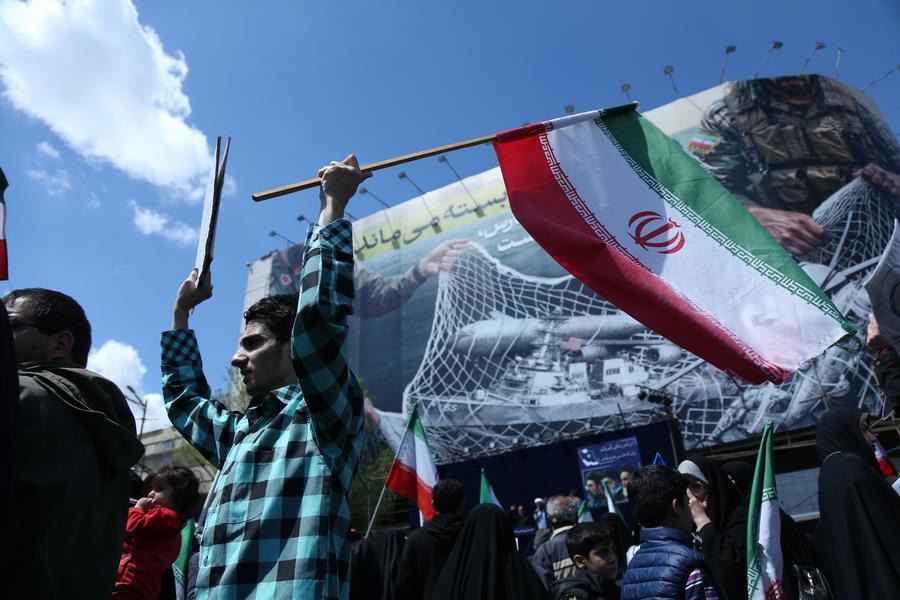
    The reported assassination, which Tehran has yet to independently confirm, represents a potentially catastrophic blow to Iran’s leadership apparatus. This event occurs against the backdrop of a regional war ignited by the U.S.-Israeli strike that killed Supreme Leader Ayatollah Ali Khamenei on February 28, 2026—a conflict now radiating severe global economic and geopolitical repercussions.

    Larijani, 68, was widely regarded as a cornerstone of Iran’s strategic operations, overseeing nuclear policy and international diplomacy for decades. His death follows the brutal suppression of a widespread popular uprising against the regime, during which human rights groups documented thousands of civilian casualties.

    Concurrently, Israel announced the elimination of Gholamreza Soleimani, commander of the Basij paramilitary force, and targeted Akram al-Ajouri, leader of Palestinian Islamic Jihad’s military wing, underscoring its intensified ‘decapitation’ strategy against enemy leadership.

    The regional violence has triggered massive displacement and infrastructure collapse. Lebanon reports over 886 fatalities and one million displaced persons since March 2, with IDF ground operations now extending into northern territories. Humanitarian crises are deepening, with overwhelmed aid organizations in cities like Sidon unable to accommodate fleeing civilians.

    Global energy markets have been thrown into turmoil as Iran retaliates against U.S. interests and regional energy infrastructure. The strategic Strait of Hormuz—a conduit for 20% of global oil shipments—has become functionally impassable due to Iranian threats and attacks on commercial tankers, causing oil prices to surge approximately 3% following geopolitical uncertainties.

    U.S. President Donald Trump’s appeals for NATO and allied nations to secure the vital waterway have met with resistance. Key European leaders, including British PM Keir Starmer and German Chancellor Friedrich Merz, have explicitly rejected military involvement, emphasizing the conflict falls outside NATO’s purview and advocating for diplomatic solutions instead.

  • Aspiring female Zambian politicians asked for sexual favours, official says

    Aspiring female Zambian politicians asked for sexual favours, official says

    A senior Zambian gender official has exposed disturbing allegations that female political aspirants are being pressured to provide sexual favors in exchange for party nominations ahead of the August general elections. Mainga Kabika, who heads the gender office within Zambia’s presidency, publicly urged aspiring female candidates to document all instances of such misconduct during a conference with state prosecutors on Monday.

    While Kabika refrained from identifying specific political parties involved, she confirmed receiving numerous messages from women reporting these exploitative practices. “I can verify that I am presently receiving extensive documentation regarding these demands for sexual favors in exchange for candidate adoption,” Kabika stated, emphasizing the unacceptable nature of these transactions.

    This revelation highlights Zambia’s profound gender imbalance in political representation, where women constitute merely 15% of parliamentary seats. Presidential office statements have previously acknowledged that this underrepresentation stems from “deep-rooted cultural and structural barriers.”

    Beauty Katebe, Chairperson of the Non-Governmental Gender Organisations Coordinating Council, characterized these practices as “sextortion” and noted their chilling effect on women’s political participation. “This situation severely discourages women from engaging in politics, particularly as candidates,” Katebe told the BBC.

    Despite some high-profile appointments including Vice-President Mutale Nalumango, gender disparities remain stark across Zambian leadership. Only 28% of civil service directors and five out of 36 state-owned enterprise CEOs are women.

    Katebe advocated for legal reforms and specialized courts to expedite handling of harassment cases, noting cultural biases and victim embarrassment complicate reporting. “If perpetrators were exposed, these practices would certainly cease,” she asserted, blaming patriarchal tendencies within political structures for suppressing female participation.

    The August 13 elections will determine Zambia’s presidency, parliamentary representatives, and local government officials amid these ongoing challenges to gender equity in politics.

  • Former senior Chinese legislator indicted for taking bribes

    Former senior Chinese legislator indicted for taking bribes

    In a significant development in China’s ongoing anti-corruption campaign, Jiang Chaoliang, a former high-ranking member of the National People’s Congress Standing Committee, has been formally indicted on bribery charges. The Supreme People’s Procuratorate announced on Tuesday that Jiang will face trial in Nanjing Intermediate People’s Court following a comprehensive investigation into his activities.

    The indictment alleges that Jiang exploited multiple positions of authority, particularly within China’s financial sector, to provide unlawful advantages to others in exchange for substantial monetary benefits and valuable gifts. The case represents one of the most prominent corruption proceedings against a senior legislative official in recent years.

    This legal action follows Jiang’s October 2025 expulsion from the Communist Party of China and dismissal from all public offices after investigators uncovered evidence of serious disciplinary and legal violations. The Nanjing municipal procuratorate, acting under directives from China’s highest prosecutorial authority, has completed its review and formally submitted the case to the judicial system.

    The prosecution underscores China’s continued commitment to its extensive anti-graft initiative, which has targeted officials at all government levels. Jiang’s case demonstrates the particular focus on financial sector corruption and the determination to pursue cases regardless of an official’s former status or political standing.

    Legal experts anticipate that the trial will proceed under standard judicial protocols, with the court expected to examine extensive evidence regarding the alleged bribery activities. The case marks another milestone in China’s systematic approach to addressing corruption within its political and financial systems.

  • France’s far right makes gains in first-round municipal elections as major cities head to runoff

    France’s far right makes gains in first-round municipal elections as major cities head to runoff

    France’s political landscape witnessed significant shifts in the first round of municipal elections, with far-right forces gaining substantial ground in southeastern regions while leaving major urban centers undecided until the March 22 runoff. The elections, serving as a crucial barometer for the 2027 presidential contest, demonstrated the continuing evolution of France’s political factions.

    The National Rally, led by Marine Le Pen, achieved notable breakthroughs across southern France. In Perpignan, the party’s second-in-command Louis Aliot secured a commanding victory, while in Marseille, National Rally contender Franck Allisio emerged neck-and-neck with left-wing incumbent Benoît Payan. The conservative stronghold of Nice saw Éric Ciotti, who recently established his own far-right party aligned with National Rally, positioned as the frontrunner for the second round.

    Political alliances have become the determining factor for runoff outcomes, particularly in municipalities where three or more candidates qualified. Negotiations between traditional left-wing parties and the hard-left France Unbowed movement, led by veteran politician Jean-Luc Mélenchon, have generated intense debate. Despite previous alliance collapses over accusations of antisemitic rhetoric and concerns about escalating political tensions, some local electoral pacts have been established on case-by-case bases.

    In Lyon, France’s third-largest city, Green Party mayor Grégory Doucet formed an alliance with France Unbowed to counter right-wing challenger Jean-Michel Aulas. Anti-racism organization SOS Racisme issued calls for mainstream parties to unite in blocking far-right advancements, emphasizing that no alliance should be ruled out to prevent extremist control of municipalities.

    The Paris mayoral race remains intensely competitive, with left-wing candidate Emmanuel Grégoire emerging as frontrunner against conservative rival Rachida Dati, who aims to end 25 years of left-wing governance despite facing corruption charges scheduled for trial in September. Grégoire, leading a coalition of Socialists, Greens, and Communists, has explicitly rejected alliances with France Unbowed, adding uncertainty to the final outcome.

    These municipal elections carry profound implications for the upcoming presidential race, serving as the final nationwide test before the campaign for France’s highest office. Notable figures including Édouard Philippe in Le Havre are positioning themselves for potential presidential bids, while Marine Le Pen’s political future remains uncertain due to legal challenges that might prevent her candidacy, potentially elevating protégé Jordan Bardella as the National Rally’s standard-bearer.

  • Zelenskyy will discuss Russia-Ukraine war with British leader and NATO chief in London

    Zelenskyy will discuss Russia-Ukraine war with British leader and NATO chief in London

    Ukrainian President Volodymyr Zelenskyy commenced critical diplomatic talks with UK Prime Minister Keir Starmer in London on Tuesday, amid growing concerns that Middle Eastern conflicts are diverting global attention from Russia’s ongoing invasion. The high-level meeting at 10 Downing Street notably included NATO Secretary-General Mark Rutte, signaling coordinated Western efforts to sustain pressure on Moscow.

    The trilateral discussion focused on maintaining robust sanctions against Russia despite recent US decisions to temporarily waive certain oil restrictions. Zelenskyy had previously criticized Washington’s sanctions relief, warning it would generate financial windfalls for Moscow’s war machinery. The leaders also addressed concerning military cooperation between Russia and Iran, particularly regarding drone technology exchange affecting both European and Middle Eastern security landscapes.

    Concurrently, Britain and Ukraine finalized a landmark defense agreement combining Ukraine’s combat-tested drone interception expertise with British industrial manufacturing capabilities. The partnership includes establishing an AI Center of Excellence with the Ukrainian Ministry of Defense, enhancing technological innovation in electronic warfare and battlefield systems.

    Military developments on the ground remained intense, with Russia claiming interception of 206 Ukrainian drones overnight, including 40 targeting Moscow. Ukrainian forces reported successfully neutralizing 154 of 178 Russian long-range drones launched across the country. Zelenskyy asserted that Ukrainian counteroffensives had disrupted Moscow’s planned March operations, though these claims await independent verification.

    The diplomatic meeting occurred against a backdrop of stalled peace negotiations between Moscow and Kyiv, with US-brokered talks losing momentum amid Middle Eastern hostilities. European leaders increasingly perceive Russia as a persistent security threat potentially endangering EU stability by decade’s end.

  • Zelensky to visit Starmer to sign new Ukraine-UK defence pact

    Zelensky to visit Starmer to sign new Ukraine-UK defence pact

    In a strategic move to address evolving security challenges, Ukrainian President Volodymyr Zelensky will meet with UK Prime Minister Sir Keir Starmer on Tuesday to formalize a comprehensive defense partnership. The agreement focuses on combining Ukrainian battlefield expertise with British industrial capabilities to manufacture and supply advanced drone systems and other defense technologies.

    The collaboration emerges amid Russia’s ongoing invasion of Ukraine, now entering its fourth year, and heightened global tensions following recent Middle East conflicts. Downing Street emphasized that the partnership will extend beyond bilateral cooperation, seeking involvement from third countries to strengthen international security frameworks.

    As part of the agreement, Britain will contribute £500,000 to establish an AI center of excellence in Kyiv, enhancing Ukraine’s technological capabilities. UK Defence Secretary John Healey stated that building upon Ukrainian innovation has become increasingly crucial in contemporary warfare.

    Prime Minister Starmer highlighted the strategic importance of the partnership, noting that ‘drones, electronic warfare, and rapid battlefield innovation are now central to national and economic security.’ He emphasized that deepening defense ties would not only strengthen Ukraine’s resistance against Russian aggression but also better prepare the UK and its allies for future threats.

    The meeting occurs as Zelensky undertakes a European tour to maintain international support amid concerns that global attention is shifting toward Middle East conflicts. The Ukrainian president has emphasized that while bolstering defenses is important, increased pressure on Russia remains essential for achieving peace.

    Notably, Ukraine has recently deployed military experts to Qatar, the United Arab Emirates, and Saudi Arabia to share their unparalleled experience in countering drone attacks—expertise honed through years of conflict with Russia. Ukraine’s development of cost-effective, mass-produced interceptor drones has proven particularly effective in defending its airspace.

  • US, Iranian officials reactivate direct contact in recent days: report

    US, Iranian officials reactivate direct contact in recent days: report

    In a significant diplomatic development, direct communication channels between United States and Iranian officials have been reinstated following weeks of military confrontation, according to multiple sources. The reactivation marks the first known high-level contact since coordinated US-Israeli strikes targeted Iranian positions on February 28, 2026.

    Axios reported Monday that US Special Envoy Steve Witkoff has engaged with Iranian Foreign Minister Seyed Abbas Araghchi through established diplomatic channels. A senior US official, speaking on condition of anonymity, revealed that while Iranian officials initiated the outreach, Washington maintains a cautious stance regarding substantive negotiations.

    The diplomatic overtures occur against a backdrop of ongoing regional tension, as evidenced by recent imagery showing Iranian missile debris in East Jerusalem following exchanges between Iran and US-Israeli forces. Contrary to initial reports, Drop Site News suggests Minister Araghchi has been unresponsive to American communications, creating ambiguity about Tehran’s actual position.

    President Donald Trump addressed the situation during a press briefing, stating, “Iran expresses desire for diplomatic resolution, but uncertainty persists regarding their decision-making hierarchy. We remain open to dialogue while maintaining strategic clarity about our security priorities.”

    The renewed communications represent a potentially pivotal moment in US-Iran relations, which have oscillated between direct confrontation and diplomatic engagement throughout recent administrations. Regional analysts suggest the reactivated channel could serve as risk mitigation against further military escalation while both nations assess their strategic options.

  • Belgian court decides on holding trial over 1961 Congo leader murder

    Belgian court decides on holding trial over 1961 Congo leader murder

    A Brussels court is poised to deliver a landmark decision on Tuesday regarding the potential prosecution of 93-year-old former Belgian diplomat Etienne Davignon for alleged complicity in the 1961 assassination of Congolese independence leader Patrice Lumumba. This case represents the most significant legal development in six decades of seeking accountability for the murder of Congo’s first prime minister.

    Davignon, who later served as a European Commission vice president during the 1980s, stands as the sole surviving defendant among ten Belgians accused by Lumumba’s family of participating in a state-sponsored operation to eliminate the charismatic leader. The prosecution seeks to charge him with ‘participation in war crimes’ specifically related to Lumumba’s ‘unlawful detention and transfer’ and subsequent ‘humiliating and degrading treatment.’

    The legal proceedings have revealed starkly contrasting arguments. Davignon’s defense team contends that the extraordinary passage of time—more than six decades—renders a fair trial impossible, while Lumumba’s descendants maintain that justice delayed should not mean justice denied. ‘We are counting on the Belgian justice system to do its job and shed light on history,’ stated Yema Lumumba, the 35-year-old granddaughter of the assassinated leader.

    Historical context reveals Lumumba as a fiery critic of Belgian colonial rule who ascended to power when Congo gained independence in 1960. His tenure proved brief however, as he quickly alienated both Belgian and American interests, leading to his ouster in a coup merely months after assuming office. On January 17, 1961, Lumumba was executed at age 35 in Katanga province with support from Belgian mercenaries, after which his body was dissolved in acid to prevent recovery.

    This case emerges within Belgium’s broader reckoning with its colonial past, a process that has already yielded symbolic gestures including the 2022 repatriation of Lumumba’s sole known remains—a tooth confiscated from the daughter of a deceased Belgian police officer involved in the body’s disposal. During the remains transfer ceremony, then-Prime Minister Alexander De Croo formally acknowledged Belgium’s ‘moral responsibility’ in Lumumba’s disappearance, citing officials who ‘chose not to see’ and ‘not to act.’

    The court’s decision remains subject to appeal, with potential trial proceedings possibly commencing in early 2027 should prosecutors prevail. Legal representatives for the Lumumba family have characterized Davignon as ‘a link in the chain’ of a ‘disastrous state-sponsored criminal enterprise,’ highlighting his role as a junior diplomat involved in Congolese independence negotiations preceding the assassination.

  • Young Venezuelans voice hope and frustration as post-Maduro future unfolds

    Young Venezuelans voice hope and frustration as post-Maduro future unfolds

    Caracas presents a paradoxical landscape two months after the dramatic U.S. military operation that resulted in the capture of former President Nicolás Maduro. While government propaganda dominates public spaces with wanted posters for opposition figure Edmundo González and billboards demanding Maduro’s return, beneath the surface lies a complex tapestry of fear, coercion, and cautious optimism.

    At official government rallies, thousands gather wearing Maduro’s image and chanting loyalist slogans. “We have a constitutional president until his term expires who right now is a victim, a prisoner of war Venezuela didn’t start,” declared young protester Alí Rodríguez in conversations with BBC correspondents.

    However, multiple public employees speaking under condition of anonymity reveal a different reality. A 22-year-old worker stated bluntly: “It’s false. It’s all a lie.” Elena (pseudonym), another government employee, detailed how thousands of public workers are compelled to attend pro-government demonstrations under threat of punishment. She reported receiving a $150 bonus atop her meager $120 monthly salary for attendance, while colleagues who skipped the rally faced financial penalties.

    The political transition has seen former Vice-President Delcy Rodríguez assume power, establishing surprisingly cooperative relations with Washington. The U.S. State Department has described the new relationship as “wonderful,” citing prisoner releases and new energy agreements. Yet many Venezuelans remain skeptical that meaningful change has occurred beyond Maduro’s removal.

    Elena emphasizes that true reform requires removing powerful figures like Interior Minister Diosdado Cabello and Defense Minister Vladimir Padrino López, whom she identifies as key representatives of state terror. She references the continued operation of armed paramilitaries known as “colectivos” used to intimidate opposition voices.

    The economic desperation remains acute. Ana, a 25-year-old teacher from Maracaibo earning $250 monthly, has decided to emigrate to Spain. “I want to earn money and live somewhere that actually has electricity,” she explained, recalling extended blackouts and witnessing people looting shops during power outages.

    At the Central University of Venezuela, students have launched the “Save Venezuela” movement with pragmatic demands for economic and educational reform. Samuel Arias, 26, highlights the absurdity of energy shortages in a country with the world’s largest oil reserves: “I was without power for six hours yesterday. It paralyses the economy.”

    While most young Venezuelans crave change, divisions persist regarding acceptable paths forward. Some oppose the principle of U.S. intervention despite acknowledging its role in achieving freedom. Twins Daya and Dana, 25, express concern that new American oil and mining deals may not benefit ordinary citizens, warning against foreign military actions against sovereign states.

    The political landscape remains fragmented, with some favoring opposition leader María Corina Machado while others prefer center-left alternatives like recently freed politician Enrique Márquez. Throughout these divisions runs a common thread: a generation that has never experienced true democracy or free expression.

    As Elena, still afraid to speak publicly, reflected when asked about democracy: “I imagine it as a dream.”