分类: politics

  • Nigeria president begins first UK state visit in 37 years

    Nigeria president begins first UK state visit in 37 years

    In a significant diplomatic event marking the first Nigerian state visit to the United Kingdom in nearly four decades, King Charles III will officially welcome President Bola Ahmed Tinubu and First Lady Oluremi Tinubu at Windsor Castle. The two-day visit, commencing with a ceremonial welcome attended by senior royals including Queen Camilla and the Prince and Princess of Wales, aims to transform historical ties into a contemporary economic alliance.

    The visit features traditional royal pageantry including a carriage procession, military parade on Windsor Castle’s lawns, and exchanges of gifts. Notably, the itinerary accommodates religious considerations as President Tinubu, a Muslim currently observing Ramadan, will not participate in the traditional lunch hosted by the King. Instead, the leaders will deliver addresses at an opulent state banquet attended by political figures and Nigerian-linked celebrities.

    Nigerian government spokesman Mohammed Idris characterized the visit as ‘turning a historic relationship into a modern economic partnership,’ emphasizing opportunities in trade, finance, and defense. The visit occurs against a complex geopolitical backdrop including conflicts in Ukraine and the Middle East, as well as recent religious violence in Nigeria’s Borno state where Islamist militants killed 23 people. President Tinubu condemned these ‘evil-minded’ terror groups while UK parliamentarians called for enhanced protection of religious freedom in Nigeria.

    The state banquet also marks King Charles’s first major speech following recent royal family developments, including the arrest of his brother Andrew Mountbatten-Windsor. Additional ceremonial elements include a wreath-laying at Queen Elizabeth II’s tomb and an interfaith event designed to promote religious harmony.

  • Israel ‘assessed Iranians would be slaughtered’ if they rise up against Islamic Republic

    Israel ‘assessed Iranians would be slaughtered’ if they rise up against Islamic Republic

    A confidential diplomatic cable reveals a stark divergence between Israel’s public stance and its private assessment regarding Iran’s internal stability. According to the document, reviewed by The Washington Post, senior Israeli officials have privately conceded to their U.S. counterparts that any popular uprising against the Islamic Republic would be met with overwhelming and brutal force by the Islamic Revolutionary Guard Corps (IRGC), resulting in a probable slaughter of protesters. This private evaluation stands in direct contradiction to repeated public exhortations by Israeli Prime Minister Benjamin Netanyahu for the Iranian people to rise up against their government.

    The cable details meetings held this week between American officials and high-level members of Israel’s National Security Council, Ministry of Defence, and Ministry of Foreign Affairs. In these discussions, Israeli representatives admitted that the IRGC maintains a definitive ‘upper hand’ and that the state apparatus shows no signs of cracking, demonstrating a willingness to ‘fight to the end.’ Officials concluded that any attempt by anti-government activists to seize control would likely end in disaster.

    This assessment is further bolstered by observations of Iran’s continued military capabilities, including its proven ability to launch ballistic missiles and drones ‘everywhere they want to,’ which is cited as proof of the state’s resilience. The officials also noted that despite rumors of his incapacitation, Supreme Leader Mojtaba Khamenei remains firmly in charge and is considered ‘more aligned’ with the hardline IRGC than his predecessor.

    The failure of the exiled opposition to form a coherent front or project significant influence inside Iran has been another critical factor. Interviews with Iranians inside the country by Middle East Eye reveal a growing disillusionment with opposition figures like monarchist leader Reza Pahlavi. A recent call by Pahlavi for public mobilization during a traditional Persian celebration was met with little visible response, amid widespread fear and trauma from the ongoing conflict and a rising civilian death toll. Many citizens expressed anger at being asked to celebrate while living under the constant threat of airstrikes and violence, highlighting a significant gap between the diaspora’s calls to action and the grim reality on the ground.

  • Israeli press review: Confusion over army’s plan in Lebanon

    Israeli press review: Confusion over army’s plan in Lebanon

    Israeli Defense Minister Israel Katz announced on Monday the initiation of a ground military maneuver into Lebanese territory, declaring its objective as the elimination of threats to northern Israeli communities. The operation specifically targets the removal of Hezbollah operatives from border regions rather than the comprehensive dismantling of missile capabilities, according to military sources cited by Haaretz.

    Minister Katz issued a stark warning regarding displaced populations, stating that hundreds of thousands of Shiite residents from southern Lebanon would be prevented from returning to areas south of the Litani River until Israel’s northern security is guaranteed. This declaration coincides with reports from Israeli Channel 13 indicating the establishment of approximately 20 military outposts within Lebanese territory, reminiscent of Israel’s previous ‘Security Zone’ occupation policy between 1982 and 2000.

    Military analysts have raised questions regarding the operational effectiveness. Amos Harel, Haaretz’s military commentator, noted that Hezbollah’s presence south of the Litani remains limited and mobile, with operatives capable of rapid relocation before Israeli forces can engage them. He further observed that most missile and drone attacks originate from north of the Litani, beyond the current operation’s scope.

    The conflict has triggered significant economic consequences, with Calcalist reporting that Mediterranean gas rigs have been shut down for the third time since October, forcing Israel’s energy sector to rely on more expensive and polluting alternatives like coal and diesel. Energy Minister Eli Cohen extended the shutdown until March 26th due to security concerns, costing the economy an estimated 600 million shekels ($193 million) according to financial experts.

    Simultaneously, questions emerge regarding Israel’s defense capabilities. Despite official denials of interceptor shortages, The Marker reported that Israel’s arms industry faces production limitations while fulfilling international contracts, including a recent agreement with Germany. The report indicated intercepted missiles exceeding 1,300 since October 2023, with production rates subject to gag orders.

    Evidence suggests potential interceptor conservation measures, with reports of missiles landing in open areas without interception attempts. Israel’s Home Front Command has concurrently modified its alert system to implement more precise warning mechanisms.

  • Zelensky calls for Trump and Starmer to meet and find common ground

    Zelensky calls for Trump and Starmer to meet and find common ground

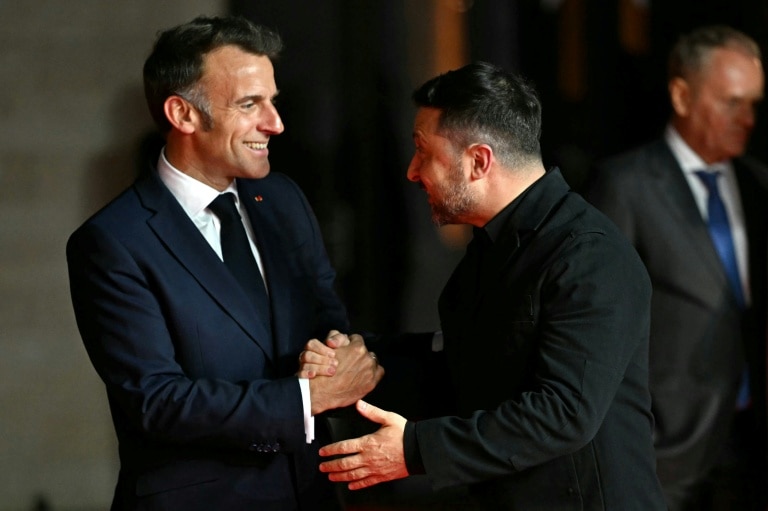
    Ukrainian President Volodymyr Zelensky has issued a diplomatic appeal for U.S. President Donald Trump and UK Prime Minister Sir Keir Starmer to convene and rebuild their strained relationship amid growing Western fragmentation. In an exclusive BBC interview following talks with Starmer in London, Zelensky emphasized the critical need for allied unity, stating he would “really like President Trump to meet with Starmer… so that they have a common position.”

    The urgency comes as tensions escalate between Washington and London following Trump’s repeated criticisms of Starmer’s leadership, including recent remarks dismissing the British leader as “no Winston Churchill.” These diplomatic frictions coincide with a broader Middle East conflict triggered by U.S.-Israeli strikes on Iran, which Zelensky warned is dangerously diverting attention and resources from Ukraine’s defense against Russia.

    Speaking to British parliamentarians in a packed Westminster committee room, Zelensky delivered a stark message: “The regimes in Russia and Iran are brothers in hatred and that is why they are brothers in weapons.” He expressed grave concerns about the Iran conflict’s impact on Ukraine’s war effort, revealing he had a “very bad feeling” about the constant postponement of peace negotiations due to Middle Eastern hostilities.

    Despite the tensions, Downing Street maintained that the U.S.-UK relationship remains “enduring,” with Starmer insisting Britain would not be drawn into a wider Middle East conflict. The Ukrainian president’s London visit marked another stop on his European tour seeking sustained support, having previously visited Paris with Madrid next on his itinerary.

    Zelensky also highlighted Ukraine’s unexpected role as a military innovation hub, suggesting Ukrainian-developed technology could have prevented the recent drone strike on RAF Akrotiri in Cyprus. He told British lawmakers that through necessity, Ukraine has become a pioneer in modern warfare techniques that could benefit allies.

    The gathering brought together key Western leaders including NATO Secretary-General Mark Rutte, Defense Secretary John Healey, and opposition party leaders, underscoring the continued importance of the Ukraine conflict amid competing global crises.

  • Leqaa Kordia, longest-detained pro-Palestine protester, freed from ICE custody

    Leqaa Kordia, longest-detained pro-Palestine protester, freed from ICE custody

    After enduring 365 days in immigration custody, Palestinian activist Leqaa Kordia secured her release from the Prairieland Detention Center in Texas on Monday, following the payment of an extraordinary $100,000 bond. The 33-year-old New Jersey resident walked free as the Trump administration unexpectedly declined to challenge a third consecutive release order from an immigration judge—a stark contrast to its previous appeals against her liberation.

    Kordia’s emotional departure from the facility was marked by her triumphant exclamation, ‘I’m free! Finally, after one year,’ as she emerged draped in a traditional Palestinian keffiyeh to greet awaiting supporters. Her release concludes the longest detention among all individuals arrested during last year’s pro-Palestine campus protests, highlighting what her legal representatives characterize as targeted persecution.

    The case reveals concerning dimensions of immigration enforcement under the current administration. Court documents from the separate case American Association of University Professors v. Rubio disclosed that federal authorities utilized the pro-Israel doxxing platform Canary Mission to identify students for immigration detention—a revelation that raises serious questions about ideological targeting.

    While the Department of Homeland Security maintains that Kordia lacked lawful immigration status due to an expired F-1 student visa terminated in January 2022 for ‘lack of attendance,’ her attorneys argue this technical violation was weaponized against her activism. Staff attorney Amal Thabateh of Clear explained that Kordia had received ‘faulty advice’ leading her to voluntarily terminate her student status while believing she was transitioning to lawful permanent residence through family petitions.

    Kordia’s detention was marked by significant health deterioration, including a recent hospitalization after fainting, hitting her head, and suffering a seizure—a completely new medical development—during which she remained shackled to her hospital bed. Her legal team also documented concerning weight loss and reported inedible food, unsanitary conditions, and lack of religious accommodations at the Texas facility.

    The activist’s case gained political prominence when New York City Mayor Zohran Mamdani raised her situation directly with President Trump during a recent meeting. Kordia, who arrived from the occupied West Bank in 2016 and has lost 200 extended family members in Gaza, now faces ongoing immigration proceedings despite her temporary release.

  • US counterterror chief says in resignation letter Israel ‘deceived’ Trump into attacking Iran

    US counterterror chief says in resignation letter Israel ‘deceived’ Trump into attacking Iran

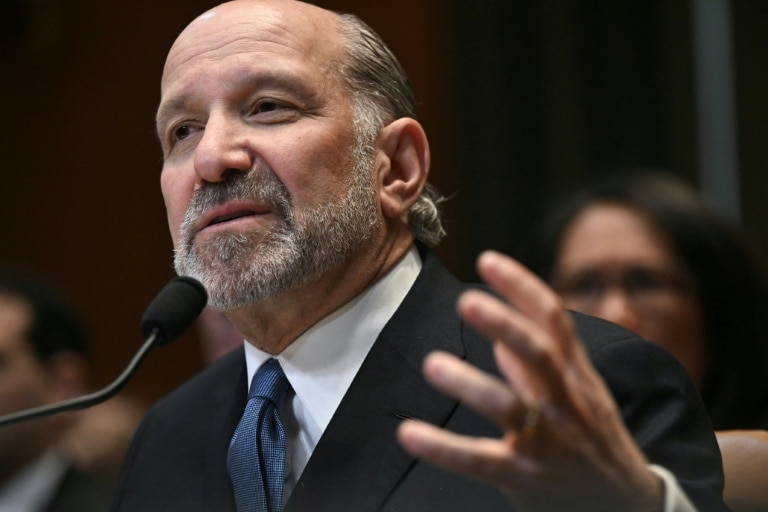
    In an unprecedented move that has sent shockwaves through Washington, Joseph Kent, Director of the National Counterterrorism Center, has resigned from his position, delivering a blistering condemnation of U.S. foreign policy toward Iran. The senior Trump administration official stepped down on Tuesday, publishing a resignation letter that directly accused Israel and pro-war advocates of orchestrating a campaign of deception that led America into an unnecessary conflict.

    Kent, who possessed top-level security clearance and oversaw all U.S. government intelligence on terrorist threats, asserted that Iran presented no imminent danger to American interests. “I cannot in good conscience support the ongoing war in Iran,” he wrote. “This conflict was initiated due to substantial pressure from Israel and its influential lobbying apparatus within the United States.”

    The resignation represents one of the most significant political departures in decades concerning foreign military engagement. Historically, no senior presidential administration official has publicly criticized Israel in a resignation letter until now. Kent specifically alleged that “high-ranking Israeli officials and influential members of the American media deployed a misinformation campaign” that undermined President Trump’s “America First” platform while cultivating pro-war sentiments.

    President Trump responded to the resignation from the Oval Office, stating that while he considered Kent “a nice guy,” he believed the intelligence official was “weak on security.” Trump vehemently disputed Kent’s assessment of Iran, declaring, “Iran was a tremendous threat—every country recognized what a threat Iran was.” The president added that individuals who didn’t perceive Iran as dangerous were “not smart people” or “not savvy people.”

    Kent’s background lends considerable weight to his criticisms. A former Army Ranger with eleven combat deployments following the September 11 attacks, he later served as a CIA paramilitary officer before entering politics as an ardent Trump supporter. His personal history adds a poignant dimension to his resignation: Kent is a Gold Star husband whose wife, Shannon, a Navy cryptologist, was killed in a 2019 bombing in Syria. He now claims that Israel bears responsibility for U.S. involvement in Syria as well.

    The resignation has garnered praise from prominent figures within Trump’s MAGA movement who have opposed the war effort. Shawn Ryan, a former Navy SEAL and podcaster who endorsed Trump in the 2024 election, applauded Kent’s decision on social media, stating, “Sometimes the most impactful statement you can make is a strong resignation.”

    Kent’s departure highlights deepening divisions within the administration regarding Middle East policy and raises serious questions about the intelligence that precipitated military action against Iran. His resignation letter stands as a remarkable indictment from within the highest echelons of American intelligence, challenging the official narrative surrounding the Iran conflict.

  • The US-Israeli war on Iran is founded on two huge mistakes

    The US-Israeli war on Iran is founded on two huge mistakes

    A comprehensive analysis reveals that the joint US-Israel military offensive against Iran, initiated over two weeks ago, appears fundamentally flawed by critical strategic miscalculations. The operation, described by US officials as delivering unprecedented ‘death and destruction from the sky,’ stems from two primary misjudgments: America’s belief in potentially toppling Iran’s ruling establishment and Israel’s misinterpretation of Hezbollah’s retaliatory capabilities.

    Israeli Prime Minister Benjamin Netanyahu justified the offensive as necessary preventive action, stating: ‘Within a few months Iran’s industries of death would have become immune to any strike.’ Both US and Israeli leadership presented the operation as essential for neutralizing Iran’s ballistic missile programs and preventing nuclear escalation, with former President Trump claiming the attacks averted imminent nuclear conflict.

    However, evidence suggests the operation’s true objective centered on regime change—a goal that appears increasingly unattainable. Despite massive military bombardment, US intelligence assessments indicate the Iranian government shows no signs of imminent collapse. Contrary to expectations, Tehran has witnessed no significant anti-government demonstrations, successfully transitioned leadership following Ayatollah Khamenei’s death, and maintained functional command structures.

    Iran’s demonstrated capacity to retaliate—launching successful attacks against Gulf neighbors and Israeli targets while threatening the strategic Strait of Hormuz—has exposed additional miscalculations. The ongoing closure of the vital waterway has triggered what analysts describe as the most severe global energy crisis since the 1970s, directly challenging US regional hegemony.

    The situation further deteriorated with Hezbollah’s unexpected military resurgence. Despite Israeli assessments that the organization had been neutralized following leadership decapitation campaigns, Hezbollah has demonstrated sophisticated missile capabilities, striking critical infrastructure in central Israel and effectively paralyzing northern regions.

    This two-front confrontation—against both Iran and a resurgent Hezbollah—places unprecedented strain on Israeli military resources and domestic morale. As civilians seek shelter nationwide, public support for the war’s undefined objectives shows signs of erosion, mirroring the declining support witnessed during previous prolonged conflicts.

    The geopolitical ramifications extend beyond immediate military concerns. Failure to achieve regime change in Iran represents a potential collapse of US credibility in the region, potentially driving Gulf allies to reconsider American security guarantees. Meanwhile, Russia and China stand to gain strategic advantage from perceived Western failure, while Iran’s international stature grows as it withstands combined superpower military pressure.

    Historical parallels emerge with the 1956 Suez Crisis, where military victory translated into political defeat for intervening powers. Similarly, the current conflict may ultimately strengthen Iran’s regional position while weakening both Israeli and American influence, regardless of tactical military achievements.

  • Top UK official judged Iran ‘posed no nuclear threat’ just before war began

    Top UK official judged Iran ‘posed no nuclear threat’ just before war began

    Previously undisclosed intelligence assessments reveal that British security officials found no evidence of an imminent Iranian nuclear threat or planned missile attacks against Europe immediately preceding the joint US-Israeli military offensive against Iran. According to Guardian reports, Jonathan Powell, Prime Minister’s National Security Adviser, participated in final diplomatic negotiations between the US and Iran in Geneva, which concluded just two days before hostilities commenced.

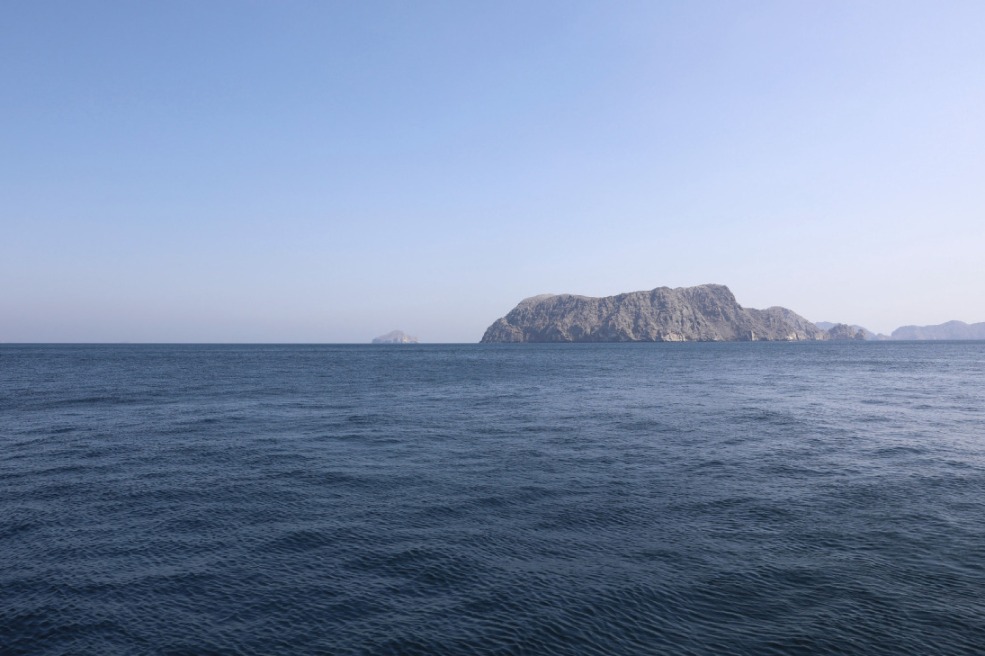
    Powell reportedly characterized Tehran’s concessions on its nuclear program as “surprising,” noting significant progress had been achieved during talks held at Oman’s ambassadorial residence in Cologny. A former official briefed on the discussions stated the UK delegation “were surprised by what the Iranians put on the table,” describing the proposal as incomplete but substantive enough to warrant continued negotiations scheduled for March 2nd.

    The revelations provide crucial context for Prime Minister Keir Starmer’s cautious approach to the conflict. Whitehall sources indicate the Starmer government considers the US-Israeli attack legally unjustified and contrary to British national interests. Despite this assessment, Britain has become partially involved by permitting US forces to utilize British military bases for bomber operations targeting Iranian missile installations.

    Diplomatic tensions with the United States emerged following Downing Street’s initial refusal to allow strikes originating from the joint UK-US base on Diego Garcia. The situation intensified when former President Trump threatened NATO with a “very bad” future if member states failed to assist in reopening the Strait of Hormuz, which Iran has effectively closed in response to military actions.

    Prime Minister Starmer emphasized working with allies to develop a “viable plan” to reopen the critical waterway while acknowledging the attack had “massively weakened” Iran’s military capabilities. He advocated for a “negotiated agreement” to address nuclear proliferation concerns and safeguard international shipping. Energy Secretary Ed Miliband confirmed considerations to deploy minesweeping drones rather than warships to Hormuz, utilizing technology that tricks mines into detonating safely.

  • Peru’s prime minister resigns ahead of congressional confirmation vote

    Peru’s prime minister resigns ahead of congressional confirmation vote

    LIMA, Peru — Peru’s political landscape witnessed another significant shift as Prime Minister Denisse Miralles abruptly resigned on Tuesday, just before facing a mandatory confirmation vote in the nation’s Congress. The resignation comes amid ongoing governmental instability that has characterized Peruvian politics in recent years.

    Miralles, who previously served as economy minister, had been appointed to the prime ministerial position in late February following the removal of Interim President José Jerí due to corruption allegations. Her appointment coincided with the ascension of congressman Jose María Balcázar to the interim presidency.

    Unlike executive leaders in other systems, Peru’s prime minister primarily coordinates government policy implementation rather than directing the executive branch, which remains under presidential authority. Despite this technical distinction, the position requires congressional confirmation—a hurdle Miralles determined she could not overcome.

    Although the former minister did not explicitly state her reasons for stepping down, she confided to journalists that she lacked confidence in securing the necessary majority support from legislators. Her concerns appear validated by recent scrutiny from the Fiscal Council, an independent public finance monitoring body. The council highlighted that Miralles’ ministry had permitted 26 congressional laws to pass without opposition, resulting in substantially increased government expenditures.

    This political development occurs against the backdrop of Peru’s upcoming presidential elections scheduled for April 12, featuring more than two dozen candidates. If no contender achieves over 50% of votes, a runoff between the top two candidates will follow in June.

    Peru has experienced remarkable political volatility with eight different presidents occupying office over the past decade, many removed through congressional actions following corruption allegations. Paradoxically, despite this governmental instability, the country has maintained economic stability through orthodox fiscal policies, restrained public spending, and continued foreign investment in sectors like mining and infrastructure.

  • Gansu vice-governor under investigation for suspected Party discipline violations

    Gansu vice-governor under investigation for suspected Party discipline violations

    China’s top anti-corruption authorities have launched a formal investigation into Lei Siwei, the sitting vice-governor of northwestern Gansu Province, for suspected serious violations of Party discipline and laws. The Central Commission for Discipline Inspection (CCDI) and National Commission of Supervision announced the probe on Tuesday, marking another high-profile case in China’s ongoing anti-graft campaign.

    Lei, 59, a lifelong Gansu native who began his political career in June 1989, is currently undergoing comprehensive disciplinary review and supervisory investigation. The veteran official has spent his entire career within the province, ascending through various senior positions including leadership roles in state-owned enterprises and provincial departments.

    His professional trajectory includes serving as director and general manager of Baiyin Nonferrous Group before transitioning to government service. In 2018, Lei assumed directorship of Gansu’s Ecology and Environment Department, followed by leadership of the Provincial Natural Resources Department in 2020. His political advancement continued with his appointment as Party chief of Jiayuguan City in July 2021, culminating in his promotion to vice-governor in 2023 and elevation to the Standing Committee of the Communist Party of China Gansu Provincial Committee in June 2025.

    The investigation represents another demonstration of China’s intensified anti-corruption efforts targeting senior officials, particularly those serving in strategic provincial-level positions. The case continues Beijing’s consistent approach of investigating sitting officials regardless of their administrative rank or tenure.