分类: politics

  • ‘New reality’ for Australia as One Nation surge takes hold in South Australia

    ‘New reality’ for Australia as One Nation surge takes hold in South Australia

    Australia’s political establishment confronts an unprecedented fragmentation as Pauline Hanson’s One Nation party achieves a seismic electoral breakthrough in South Australia. The populist movement captured a substantial 21% of first-preference lower house votes, fundamentally altering traditional political dynamics and signaling voter disillusionment with mainstream parties.

    Flinders University political analyst Associate Professor Rob Manwaring characterizes this development as Australia’s entry into a ‘new political reality’ previously witnessed in European nations like Sweden, Germany and France over the past decade. Despite Labor’s technical victory with approximately 40% primary vote and the Liberal Party securing eight seats, the electoral landscape demonstrates increasing fluidity with a significant bloc of voters actively rejecting major party alternatives.

    The right-wing faction faces particular challenges according to Dr. Manwaring, who notes that internal division potentially benefits Labor by preventing consolidation of opposition forces. This dynamic manifests acutely in Sussan Ley’s former constituency of Farrer, where One Nation confronts both established parties and independent candidates while navigating complex preference flows.

    One Nation MP Barnaby Joyce acknowledged organizational hurdles, including candidate vetting challenges after one South Australian candidate reportedly faced assault charges in the United Kingdom. Joyce simultaneously dismissed leadership tensions with Senator Hanson while advocating for strategic voter prioritization of One Nation in upcoming Victorian and federal elections.

    Federal Employment Minister Amanda Rishworth emphasized the Liberal Party’s particular need to differentiate itself from populist alternatives, citing visible fraternization between Liberal Senator Alex Antic and former conservative politician Cory Bernardi during the campaign.

    South Australian Premier Peter Malinauskas, securing a second term despite voter fragmentation, observed that One Nation’s appeal extended beyond traditional conservative bases to include disaffected Labor supporters. He criticized the party’s campaign as rhetoric-heavy but policy-deficient, emphasizing mainstream parties’ dual responsibility to maintain cultural relevance while advancing substantive economic agendas focused on prosperity and opportunity distribution.

  • The Gulf countries may retaliate if Iran attacks continue, Turkey says

    The Gulf countries may retaliate if Iran attacks continue, Turkey says

    Turkish Foreign Minister Hakan Fidan revealed on Saturday that Gulf Cooperation Council members have delivered their ultimate cautions to Iran regarding its ongoing assaults against regional infrastructure. The diplomatic declaration emerged from an emergency regional summit in Riyadh, where participating nations collectively condemned Tehran’s targeted operations against civilian and economic facilities.

    Minister Fidan, attending the critical meeting in Saudi Arabia’s capital, stated that Gulf representatives expressed profound frustration at being drawn into the conflict between Iran and the Israeli-American alliance. The participating nations emphasized their neutrality in the original conflict and denounced what they characterized as unjustified aggression against their sovereign territories.

    The summit convened specifically to address Iran’s recent escalation, including missile and drone strikes directed at Riyadh during the ministerial gathering itself—an act perceived as deliberately provocative. Particularly damaging were Iran’s attacks on Qatari natural gas installations and Saudi petroleum infrastructure, which prompted serious reevaluation of regional security strategies.

    According to Fidan’s assessment, Gulf states have clearly communicated that continued assaults will necessitate defensive countermeasures. This hardening stance coincides with strategic shifts, including Saudi Arabia’s reported decision to permit American utilization of King Fahd Air Base in Taif, signaling strengthened cooperation with Western allies.

    Turkish diplomatic channels remain actively engaged in de-escalation efforts, with Ankara opposing both Israeli military expansionism and Iran’s regional proliferation of hostilities. Fidan warned against the conflict transforming into a prolonged regional war, noting potential transformations in Gulf defense cooperation and industrial capabilities.

    Turkey’s growing role as a defense supplier to Middle Eastern nations, including existing partnerships with Egypt, Saudi Arabia, and the UAE regarding drone technology and munitions, positions it uniquely within the emerging security architecture. The minister indicated that sustained conflict might accelerate regional defense industrialization efforts.

  • Italy is voting on whether to change its constitution. What does this mean for Meloni?

    Italy is voting on whether to change its constitution. What does this mean for Meloni?

    Italian Prime Minister Giorgia Meloni faces a critical political showdown as the nation prepares for a constitutional referendum this weekend that has transformed into a de facto plebiscite on her leadership. The proposed judicial reforms, which would separate career paths for judges and prosecutors while establishing distinct governing bodies, have ignited fierce debate across Italy’s political spectrum.

    In an unprecedented outreach effort, Meloni appeared on the popular Pulp podcast alongside rapper Fedez and co-host Luca Marra, exchanging her customary formal attire for casual wear to connect with younger voters. During the hour-long discussion, she vigorously defended the reforms as essential for creating a “more meritocratic, more responsible, more efficient” justice system while dismissing opposition claims as politically motivated attacks.

    The referendum has polarized the nation, with trade unions and opposition parties staging large demonstrations in Rome’s Piazza del Popolo, where protesters spelled out “Vote No” in white tape on cobblestones. Opposition forces frame the reform as a dangerous threat to democratic balances established in Italy’s post-fascist constitution, warning it could subject the judiciary to political control.

    Meloni’s government maintains that the changes address longstanding issues within Italy’s overloaded judicial system, which suffers from some of Europe’s longest trial durations. However, critics point to the proposal’s origins in Silvio Berlusconi’s Forza Italia party—which frequently clashed with courts during his leadership—and express concern about Meloni’s own adversarial relationship with the judiciary.

    The prime minister has employed dramatic rhetoric, claiming without evidence that rejecting the reforms would lead to “more immigrants, rapists, paedophiles, and drug dealers being freed.” Such statements have intensified concerns among opponents who note Meloni’s political beginnings as an admirer of Mussolini.

    With recent polls suggesting low turnout might benefit the “no” campaign, and amid economic pressures from global uncertainty and rising energy prices, the referendum has become a vessel for broader public discontent. Political analysts suggest that while Meloni would not resign following a defeat, her political standing would be significantly weakened, potentially shaking the stability she has brought to Italy’s traditionally volatile governance.

  • ‘Not there yet’: Why Australia is ‘not contemplating’ emergency fuel powers

    ‘Not there yet’: Why Australia is ‘not contemplating’ emergency fuel powers

    Despite soaring fuel prices and sporadic station shortages across Australia, Energy Minister Chris Bowen has confirmed the Albanese government is “not contemplating” the activation of emergency fuel powers. The declaration comes as the nation’s strategic reserves show stabilization, with current supplies indicating 38 days of petrol and approximately 30 days of diesel and jet fuel availability.

    Minister Bowen, speaking on ABC Insiders, attributed recent supply challenges primarily to consumer panic buying rather than systemic failure. “Both our refineries are working absolutely full pelt,” Bowen stated, noting that fuel levels remain consistent with pre-crisis measurements despite market volatility.

    The government’s multi-pronged response has included controlled releases from strategic reserves, temporary adjustments to sulfur content standards, and the recent appointment of a fuel supply task force coordinator. While Bowen previously warned of potential shipment uncertainties from mid-April, he now reports only six cancelled shipments out of an average monthly total of 81, with alternatives being secured for affected deliveries.

    Australia’s fuel supply chain faces broader challenges as traditional Asian refiners in Malaysia, South Korea and Singapore reduce output. This has prompted diversification efforts including potential imports from the United States and India, though the latter raises concerns about indirectly supporting Russian oil exports through blended products.

    Bowen explicitly ruled out invoking the Liquid Fuel Emergency Act 1984—never used despite previous Gulf Wars and COVID—emphasizing its designation for extreme circumstances affecting defense and health sectors. Any implementation would require consultation with the National Oil Emergency Committee and approval from the Governor-General.

    With 74 of 80 expected fuel shipments scheduled for April and May, the government maintains that rationing measures remain distant possibilities under state jurisdiction, currently deemed unnecessary despite ongoing price pressures at the pump.

  • Turkey, Saudi Arabia, Egypt and Pakistan meet as Ankara pushes for a security pact

    Turkey, Saudi Arabia, Egypt and Pakistan meet as Ankara pushes for a security pact

    In a significant diplomatic development, the foreign ministers of Turkey, Saudi Arabia, Egypt, and Pakistan convened in Riyadh on Thursday to establish a groundbreaking regional security framework. The meeting, held alongside an Islamic countries summit, marked the first substantive discussions about combining these nations’ strategic capabilities to address regional challenges independently.

    Turkish Foreign Minister Hakan Fidan articulated the initiative’s philosophy, emphasizing that regional powers must develop collective solutions to prevent external hegemony from imposing self-serving arrangements. ‘We are exploring how, as countries with a certain degree of influence in the region, we can combine our strengths to solve problems,’ Fidan stated on Saturday, underscoring the principle of regional ownership.

    The emerging security platform represents a strategic pivot from Turkey’s earlier efforts to establish bilateral security arrangements. Since last year, Ankara has pursued a security pact with Pakistan and Saudi Arabia, with discussions reportedly ongoing for approximately twelve months. More recently, Turkish diplomatic sources confirmed efforts to incorporate Egypt into the arrangement, though officials clarify the agreement won’t mirror NATO’s mutual defense commitments but will instead facilitate enhanced cooperation in defense industries and broader security matters.

    The ministerial discussions addressed pressing regional conflicts, including the escalating tensions between Israel and Iran, though the participating countries issued a statement notably critical of Tehran’s attacks on Gulf targets while making only brief reference to Israel’s ‘expansionist’ policies in Lebanon—a contrast to Ankara’s consistent characterization of Israel as the primary instigator of regional conflict.

    Each nation brings distinct capabilities to the proposed alliance: Turkey’s advanced domestically-produced drone and missile systems, Pakistan’s nuclear deterrent, Saudi Arabia’s emerging technological hub status, and Egypt’s substantial conventional military forces and demographic weight as the Arab world’s most populous nation. The foundation for deeper Turkish-Egyptian cooperation was already established in February when both countries signed a bilateral military agreement during President Erdogan’s Cairo visit, accompanied by a $350 million defense export contract between Turkish arms manufacturer MKE and Egypt’s Ministry of Defense.

  • Brazil’s Lula slams ‘interference’ in previously colonized countries, without naming Trump

    Brazil’s Lula slams ‘interference’ in previously colonized countries, without naming Trump

    At a major international gathering in Colombia on Saturday, Brazilian President Luiz Inácio Lula da Silva delivered a scathing critique of what he characterized as resurgent colonial practices targeting developing nations. Speaking before delegates from Africa and the Community of Latin American and Caribbean States (CELAC), the left-wing leader pointed to specific actions against Venezuela and Cuba as evidence of contemporary imperialism.

    Lula challenged the democratic legitimacy of interventions in sovereign states, stating: ‘It’s not possible for someone to think that they own other countries. What are they doing with Cuba now? What did they do with Venezuela? Is that democratic?’ His remarks, though not explicitly naming the United States, clearly referenced Washington’s historical influence in the region.

    The Brazilian president expanded his criticism to include recent military actions, drawing parallels between the U.S. and Israel’s February 28 offensive against Iran and the previously discredited justification for the Iraq War. ‘Iran has been invaded under the pretext that Iran was building a nuclear bomb,’ Lula noted. ‘Where are Saddam Hussein’s chemical weapons? Where are they? Who found them?’

    Lula asserted that developing nations continue to face resource exploitation, declaring that after historical plundering of gold, silver, diamonds and minerals, powerful nations now seek control over critical minerals and rare earth deposits. ‘They want to colonize us again,’ he warned.

    The summit also featured strong condemnation of the United Nations’ failure to prevent global conflicts. Lula described the UN as experiencing ‘total and absolute failure,’ particularly referencing situations in Gaza, Ukraine and Iran. He joined Colombian President Gustavo Petro in calling for urgent reform of the Security Council, whose veto-wielding permanent members (the United States, Russia, China, Britain and France) have consistently hampered effective action.

    Petro, designated a ‘priority target’ by the U.S. Drug Enforcement Administration, echoed Lula’s assessment, stating the UN ‘is acting in impotence, and that is not what it was created for.’ He emphasized the simultaneous need for effective international institutions to address climate change while warning that diminishing tools for collective action ‘leads only to barbarism.’

    The relatively limited attendance of Latin American and Caribbean leaders at the Colombia summit highlighted the continent’s deep political divisions amid these ongoing geopolitical tensions.

  • Trump administration at crossroads in US-Israel war with Iran

    Trump administration at crossroads in US-Israel war with Iran

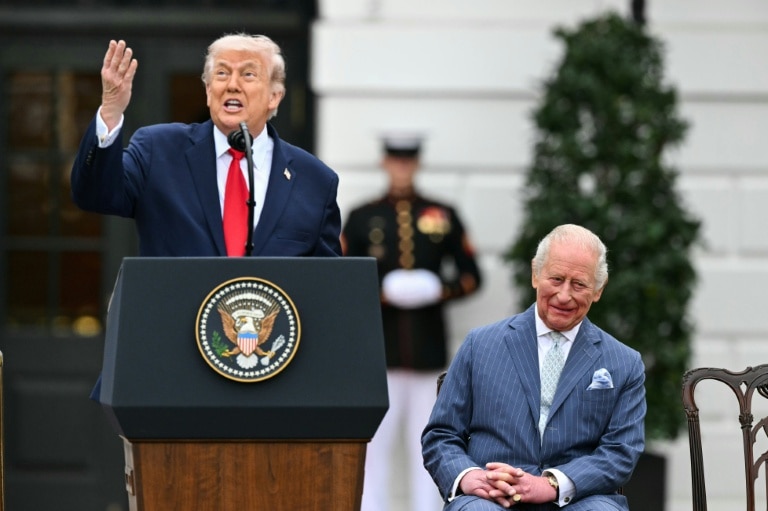
    The joint US-Israeli military campaign against Iran has entered a perplexing three-week stalemate characterized by contradictory messaging and operational ambiguity. President Donald Trump’s public declarations frequently diverge from observable battlefield realities, creating a fog of uncertainty around American intentions.

    Despite Trump’s assertion that operations are ‘very complete, pretty much’ and ‘winding down,’ substantial reinforcements including Marine expeditionary units are deploying to the region. Bombing campaigns against Iranian targets continue unabated, while the strategically vital Strait of Hormuz remains accessible only to Iranian-approved vessels despite Trump dismissing its reopening as a ‘simple military manoeuvre.’

    In a detailed Truth Social post during his flight to Mar-a-Lago, the president outlined numbered military objectives including degradation of Iran’s military capabilities, defense infrastructure, and nuclear program, plus protection of regional allies. Notably absent were earlier demands for regime change or unconditional surrender, suggesting potential acceptance of Iran’s current leadership remaining in power.

    The deployment of approximately 2,500 Marines from Japan with another contingent departing California has fueled speculation about potential ground operations, possibly targeting Kharg Island—Iran’s primary oil export terminal. Such a move could sever Tehran’s revenue streams but risk catastrophic escalation.

    Iran responded with unambiguous warnings that any attack on Kharg Island would trigger retaliatory actions causing ‘insecurity’ in the Red Sea and energy facility destruction throughout the region. Meanwhile, the administration’s anticipated $200 billion emergency funding request to Congress indicates preparation for prolonged conflict rather than the declared wind-down.

    Republican lawmakers expressed caution, with Representative Chip Roy demanding clearer mission definitions and funding explanations. The conflict now stands at a critical pivot point where presidential rhetoric, military reality, and geopolitical consequences appear increasingly misaligned.

  • Coalition election policy rethink opened ‘vacuum’ for Pauline Hanson, One Nation: Littleproud

    Coalition election policy rethink opened ‘vacuum’ for Pauline Hanson, One Nation: Littleproud

    Former Nationals leader David Littleproud has issued a stark warning to Australia’s major political parties, asserting that their wholesale abandonment of policy platforms following the Coalition’s devastating 2025 federal election defeat created a political vacuum effectively exploited by Pauline Hanson’s One Nation party. This assessment comes in the wake of South Australia’s state election, where One Nation achieved a remarkable breakthrough by capturing approximately 21% of first-preference votes in the lower house, while simultaneously outperforming the Liberal Party in upper house preferences with about 23% support. Despite Labor Premier Peter Malinauskas securing a decisive victory with nearly 40% of the primary vote, the election results revealed significant voter dissatisfaction with established political entities. Littleproud, who recently stepped down as Nationals leader citing fatigue, emphasized that contemporary polling data indicates no major party currently commands more than 30% primary support nationally. He characterized Hanson as a ‘consummate professional politician’ who capitalized on the Coalition’s strategic error of policy abandonment. One Nation is now positioned to secure at least two upper house seats, including one for state leader Cory Bernardi, plus potential lower house representation. The political landscape appears increasingly fragmented as traditional party allegiances weaken amid growing voter discontent.

  • Trump threatens to send ICE into airports unless funding deal reached

    Trump threatens to send ICE into airports unless funding deal reached

    A severe funding crisis at the Department of Homeland Security (DHS) has prompted an extraordinary security proposal from President Donald Trump, who has threatened to deploy Immigration and Customs Enforcement (ICE) agents to assume airport security duties. The President announced on his Truth Social platform that he would mobilize “brilliant and patriotic ICE Agents to the Airports where they will do Security like no one has ever seen before” if congressional Democrats continue blocking DHS funding legislation.

    The funding stalemate originated in mid-February when Congress failed to pass appropriations for DHS, leaving thousands of Transportation Security Administration (TSA) employees working without pay for over a month. The situation reached a critical point Friday when Senate Democrats rejected a funding bill that would have compensated TSA agents, citing demands for ICE reforms before approving any funding measures.

    This political deadlock has created operational chaos at airports nationwide. Reports indicate more than 300 TSA employees have resigned during the funding gap, while unscheduled absences have more than doubled according to US media. Lengthy security lines have become commonplace, and union officials report many officers are taking second jobs to survive financially. Some airports have organized donation drives, collecting gift cards and food parcels for struggling TSA staff.

    Johnny Jones, a Dallas-based official with the American Federation of Government Employees, revealed to USA Today that numerous employees have reached financial breaking point: “No funds for daycare, no funds for food. They just want to know why the hell they can’t get paid when we have money to shoot missiles into other countries.”

    The proposed ICE deployment represents a significant escalation in the political battle over immigration enforcement. ICE has been central to the Trump administration’s immigration crackdown, making thousands of arrests since January 2025. Democratic opposition to ICE funding stems from recent controversies, including the January deaths of two Minneapolis residents during immigration protests. Democrats are demanding reforms including prohibitions on agents wearing face masks, improved identification protocols, and stricter warrant requirements.

    Notably, ICE agents lack specific training for airport security operations, and the agency has remained funded throughout the partial government shutdown due to separate congressional appropriations. President Trump has set a Monday deadline for the potential ICE deployment, intensifying pressure on congressional Democrats to accept the funding legislation without their demanded reforms.

  • UK allowing US use of military bases could violate international law, rights groups warn

    UK allowing US use of military bases could violate international law, rights groups warn

    Human rights organizations are raising urgent legal concerns regarding the United Kingdom’s authorization for American forces to utilize its military installations for strikes against Iranian targets. This development follows the UK government’s expansion of an existing agreement, initially framed for defensive purposes, to now permit offensive operations from British territory.

    Human Rights Watch UK has formally challenged the government’s legal justification through a detailed letter addressed to Prime Minister Keir Starmer, the Attorney General, and the Foreign Secretary. The correspondence, obtained by Middle East Eye, demands immediate clarification on the measures taken to ensure U.S. military actions comply with International Humanitarian Law (IHL).

    The legal argument centers on Common Article 1 of the Geneva Conventions, which obligates states to not only respect IHL but also to ensure other conflict parties do the same. Yasmine Ahmed, Director of HRW UK, contends that providing a military base with knowledge that its use could facilitate IHL violations constitutes a breach of this international obligation. She emphasizes that this duty is not passive; it requires proactive steps to prevent foreseeable violations and to exert influence to stop ongoing abuses.

    The concerns are amplified by recent events, notably a U.S. airstrike on the Shajareh Tayyebeh primary school in Minab, southern Iran, on February 28th. A Pentagon investigation confirmed U.S. responsibility for the attack, which resulted in approximately 175 casualties, predominantly children. This incident is cited as a concrete example raising serious questions about U.S. compliance with civilian protection protocols.

    In response to potential collateral damage, Foreign Secretary Yvette Cooper previously indicated that “longstanding operational arrangements” would govern such scenarios. However, rights groups are now questioning the adequacy of these vague mechanisms. Amnesty International UK echoed these apprehensions, warning that the decision carries significant human rights responsibilities and demanding transparency on safeguards to prevent strikes on civilian infrastructure like schools and hospitals.

    The core of the dispute lies in the UK’s legal interpretation. While the government invokes “collective self-defence” of Gulf allies as its legal basis, critics argue this fails to address its ancillary duties under IHL. The situation presents a critical test for the UK’s commitment to international law amidst complex allied operations in the volatile Strait of Hormuz region.