Diplomatic efforts to reach a permanent end to the ongoing Middle East conflict reached a deadlock this Tuesday, as the United States continues to review Iran’s latest proposal to reopen the strategically critical Strait of Hormuz, while Tehran rejects Washington’s claims to dictate the terms of any final agreement.
Two months since the launch of the US-Israeli military offensive, Iran has maintained a blockade on the strait – a global chokepoint that carries roughly a fifth of the world’s daily oil and natural gas shipments. The closure has sent severe disruptions rippling through global energy markets, driving commodity prices sharply higher and stoking economic uncertainty worldwide.
According to multiple reports, Iran’s offer would see Tehran gradually ease its restrictions on Hormuz shipping in exchange for the US lifting its own retaliatory blockade on Iranian commercial ports, while wider negotiations on more divisive issues – most notably Iran’s nuclear program – would continue in parallel. The proposal was delivered to Washington via written communications relayed through mediator Pakistan, which also outlined Iran’s non-negotiable red lines on both nuclear policy and control of the strait, Iran’s state-affiliated Fars News Agency confirmed.
US President Donald Trump convened a meeting with his top national security advisors on Monday to assess the plan, but multiple anonymous sources familiar with the closed-door discussion told CNN that Trump has signaled reluctance to accept the framework. The President has insisted that the status of the strait remain on the negotiating table until a full resolution of the nuclear question is reached, leaving the next steps of the process unclear.
Iran hit back at Washington’s positioning on Tuesday, with Defense Ministry spokesperson Reza Talaei-Nik stating that the US must abandon what he called its “illegal and irrational demands.” “The United States is no longer in a position to dictate its policy to independent nations,” he told Iranian state television.
US Secretary of State Marco Rubio offered a mixed assessment of the proposal during an interview with Fox News, acknowledging that it was “better than what we thought they were going to submit” but questioning the sincerity of Iran’s commitments. “They’re very good negotiators,” Rubio said, adding that any final agreement must “definitively prevents them from sprinting towards a nuclear weapon.”
Regional mediators have also stepped up warnings about the risks of an unresolved standoff. Qatar’s Foreign Ministry spokesperson Majed al-Ansari told reporters Tuesday that the international community must avoid the creation of a “frozen conflict” that could reignite at any moment over political disagreements. “We do not want to see a return to hostilities in the region anytime soon. We do not want to see a frozen conflict that ends up being thawed every time there is a political reason,” al-Ansari said, calling for negotiators to prioritize a “sustainable” long-term peace deal.
Thus far, a temporary ceasefire between US and Iranian forces has held, but talks to lock in a permanent end to hostilities have failed to produce tangible progress. Pakistan, which has served as the primary mediator for the talks, hosted an initial round of negotiations that ended without breakthrough, and plans for a second round of talks over the weekend collapsed entirely. When asked about the path forward last week, Trump simply stated that “if Iran wants talks, they can call us.”
Tehran has made clear that it will not offer new security guarantees for Gulf waterways without ironclad commitments from Washington and Tel Aviv that they will not launch new military attacks, Iran’s UN envoy said this week. An Iranian army spokesperson doubled down on that position Tuesday, telling state media that Tehran “does not consider the war to be over” and holds “no trust in America.”
“We have many cards that we have not yet used… new tools and methods of fighting based on the experiences of the past two months of conflict, which will definitely allow us to respond to the enemy more decisively” if hostilities resume, said spokesperson Amir Akraminia.
Speaking during a visit to Moscow this week, Iranian Foreign Minister Abbas Araghchi claimed the conflict had demonstrated Iran’s “true power” and regional stability, but the mood inside Iran remains far grimmer. Small business owner Farshad, speaking to AFP journalists in Tehran, described widespread economic disruption from the ongoing standoff. “Everything in the country is up in the air right now. I have not worked for a long time,” he said. “The country is in complete economic collapse.”
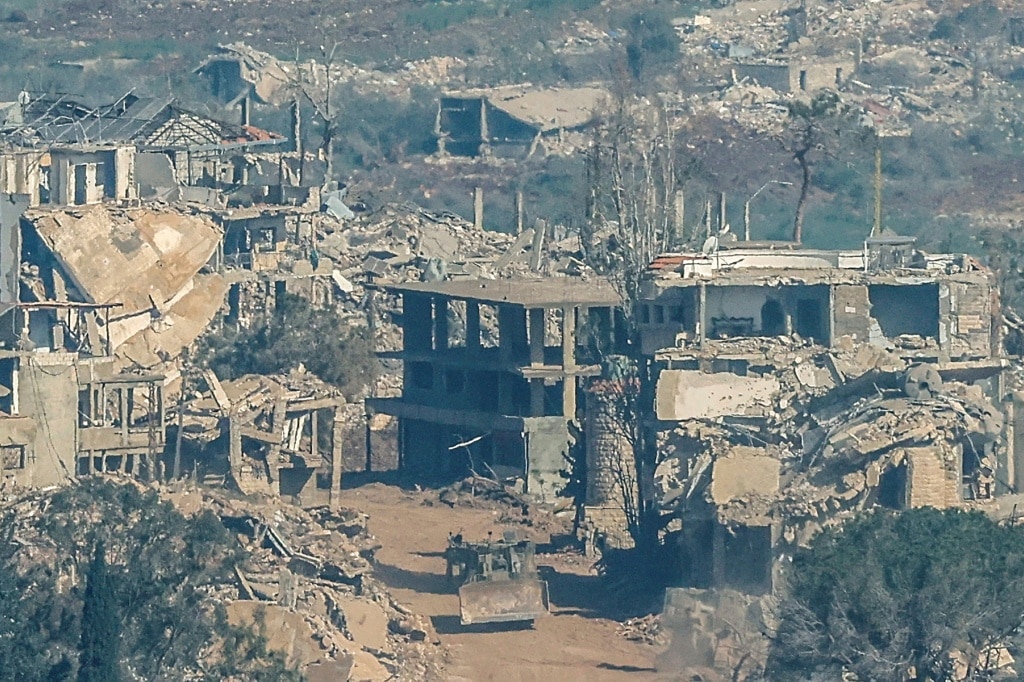
Beyond the bilateral US-Iran standoff, violence continues to simmer on the conflict’s Lebanese front, where a recently extended ceasefire between Israel and Iran-backed Hezbollah has failed to stop all clashes. Hezbollah drew Lebanon into the broader conflict when it launched rocket attacks on Israel, prompting Israel to launch retaliatory airstrikes and a limited ground incursion into southern Lebanon.
On Tuesday, the Israeli military issued evacuation orders for more than a dozen villages and towns in southern Lebanon, saying repeated “violations of the ceasefire” by Hezbollah left it no choice but to resume military action. Israeli Foreign Minister Gideon Saar emphasized that his country “has no territorial ambitions in Lebanon” and will withdraw its forces from border areas once Hezbollah and its armed factions are fully dismantled. The comment came a day after Hezbollah leader Naim Qassem reaffirmed the group’s commitment to the fight, vowing that it would “not back down” from its positions.