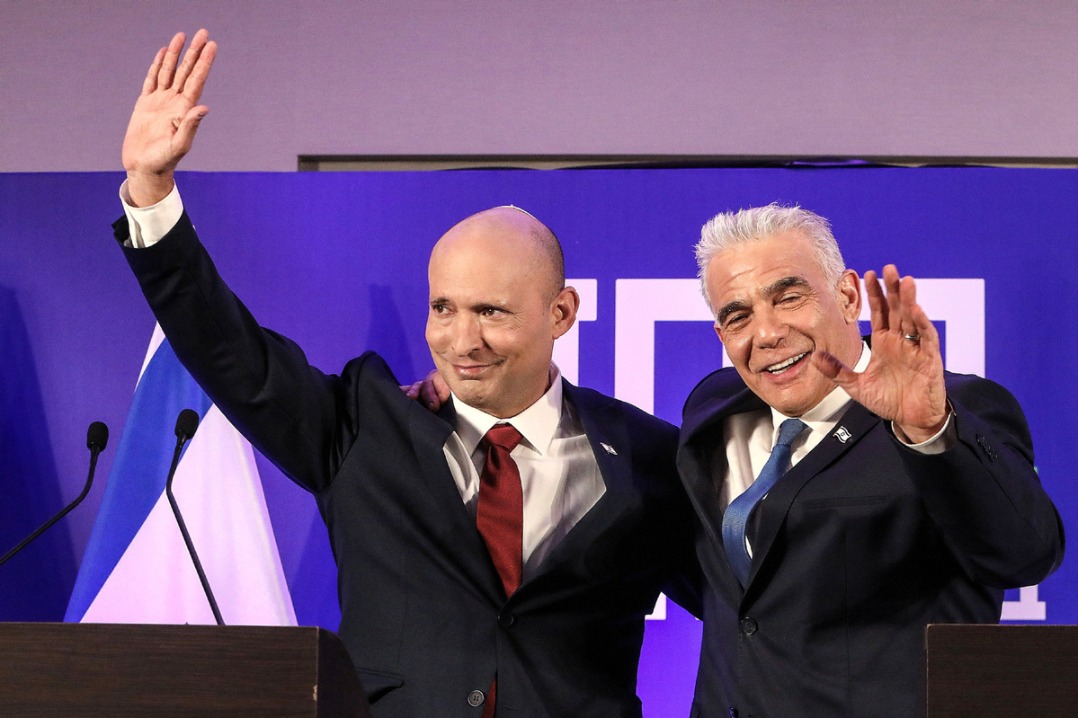
JERUSALEM – In a high-stakes political shift reshaping Israel’s electoral landscape ahead of the country’s scheduled October general election, opposition leader Yair Lapid and former prime minister Naftali Bennett announced a formal political merger on Sunday, a move explicitly designed to unseat incumbent prime minister Benjamin Netanyahu. The new unified bloc will carry the name “Together”, with Bennett set to serve as its head, according to a statement from Bennett’s office. As part of the push to build a broad anti-Netanyahu coalition, Bennett also extended an invitation Sunday to Gadi Eisenkot, leader of the centrist Yashar party, to join the joint electoral list.\n\nLapid, who leads the centrist Yesh Atid party, framed the merger as a critical step to eliminate fragmentation within Israel’s anti-Netanyahu voting bloc. In an official statement, he emphasized that the alliance’s core goal is to “unite the bloc, put an end to internal divisions and focus all efforts on winning the critical upcoming elections.”\n\nThis is not the first collaboration between the two politicians. Lapid and Bennett previously joined forces to form a unity coalition government in June 2021, an administration that ended Netanyahu’s 12-year consecutive tenure in office and made history by including Ra’am, an independent Arab Israeli party, as the first Arab faction to formally join an Israeli governing coalition. That government collapsed in June 2022 when Bennett announced the coalition was no longer politically viable, leading to a short caretaker prime ministership for Lapid and snap elections that brought Netanyahu back to power at the end of 2022. Since the 2022 election, Lapid has served as leader of the parliamentary opposition, while Bennett stepped back from active political life – until this latest announcement.\n\nRecent public opinion polls have identified Bennett as the most electable challenger to Netanyahu in the upcoming October vote, a key factor behind the strategic merger. A onetime senior policy advisor to Netanyahu early in his political career, Bennett has over the years evolved into a fierce critic of his former mentor’s leadership and policy agenda. A right-wing politician known for his longstanding support of Israeli settlement expansion in the occupied West Bank, Bennett’s profile is expected to help the unified bloc draw votes from centrist and right-leaning voters dissatisfied with Netanyahu’s tenure.\n\nNetanyahu, 76, the leader of the right-wing Likud party who has already served more cumulative years as prime minister than any other leader in Israeli history – topping 18 years across multiple stints – has confirmed he will lead the Likud party’s electoral list in the upcoming vote, which is required to be held no later than the end of October.\n\nSeparately, alongside the major political announcement, the Israel Defense Forces confirmed Sunday that one Israeli soldier was killed and six additional service members sustained injuries in a drone attack carried out by the Lebanese militant group Hezbollah in southern Lebanon. This latest fatality pushes the total number of Israeli soldiers killed in ongoing cross-border violence between Israel and Hezbollah to 16. The current escalation of hostilities between the two sides began in early March, amid the broader regional war with Iran.
分类: politics
-
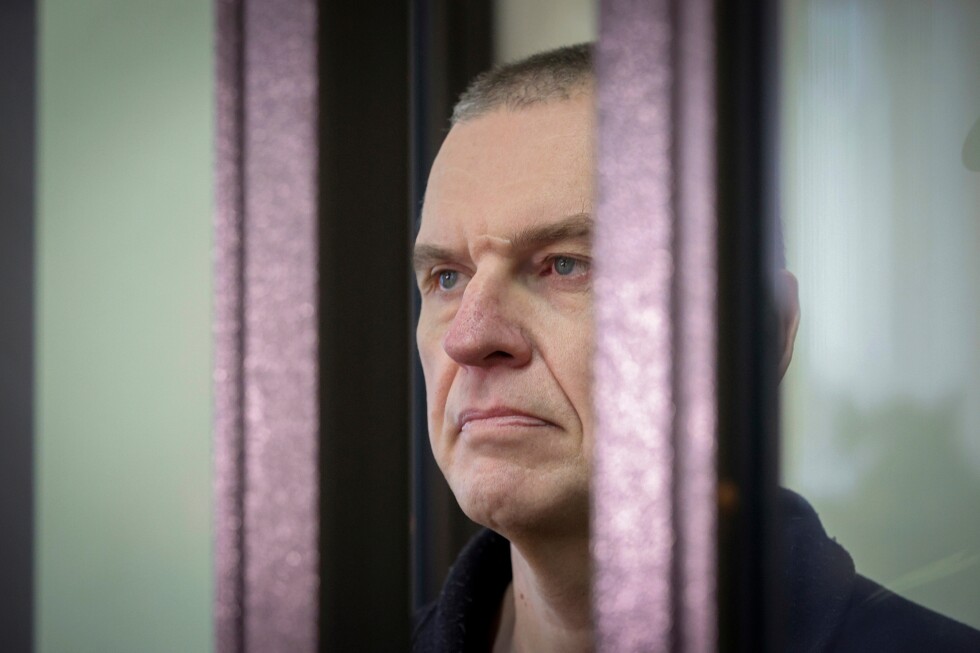
Belarus frees journalist Andrzej Poczobut in prisoner swap
In a landmark breakthrough that signals a potential thaw in icy relations between Belarus and the West, prominent journalist Andrzej Poczobut has walked free from a Belarusian prison as part of a cross-border prisoner swap mediated by the United States, officials from both Belarus and Poland confirmed Tuesday.
The exchange, which involved a total of 10 detainees being released across multiple countries, marks the latest in a string of diplomatic breakthroughs that have unfolded during Donald Trump’s second presidential term, as Belarus’ long-ruling authoritarian leader Alexander Lukashenko pursues improved ties with Western capitals after years of international isolation.
Poczobut, a veteran correspondent for Poland’s leading independent newspaper Gazeta Wyborcza and a high-profile community leader among Belarus’ large Polish ethnic minority, had been serving an eight-year prison sentence following a 2021 conviction that was widely decried across Europe as a politically motivated prosecution. His detention drew sharp condemnation from European governments and human rights organizations, and in recognition of his advocacy for press freedom, he was later awarded the European Union’s highest honor for human rights defenders, the Sakharov Prize.
Details released by diplomatic officials confirm the structured terms of the exchange: Belarus released five detainees, three of whom traveled to Poland, in exchange for three individuals that Poland transferred back to Belarus, with the remaining four freed prisoners involving other participating partner states. John Coale, Trump’s special envoy for Belarus, confirmed the breakdown of releases in a post on X, noting that three Polish citizens and two Moldovan citizens were set free as part of the agreement. “We thank Poland, Moldova, and Romania for their invaluable support in this effort, as well as President Lukashenko’s willingness to pursue constructive engagement with the United States,” Coale wrote.
This prisoner swap builds on a broader diplomatic deal reached earlier this year between Minsk and Washington. In March, Lukashenko ordered the release of more than 250 political prisoners from Belarusian detention facilities, a concession that led to the rollback of some crippling U.S. sanctions imposed on the regime in previous years.
Belarus, a close military and political ally of Russia, has been cut off from much of the international community for decades. Lukashenko has held authoritarian control over the country of 9.5 million people for more than 30 years, and successive rounds of Western sanctions have been levied against his government over systematic human rights abuses, the violent crackdown on opposition protests following disputed elections, and Minsk’s decision to allow Russia to use Belarusian territory as a staging ground for Moscow’s full-scale 2022 invasion of Ukraine.
-
‘It’s bizarre’: Californians grapple with revelation that press gala gunman suspect was neighbour
Torrance, a sun-dappled coastal suburb of Los Angeles, has long been known to locals by its affectionate nickname: “Bore-ance.” A quiet community boasting top-rated public schools, gentle ocean breezes, and sprawling million-dollar single-family homes, the city has cultivated a reputation for being a place where major excitement never finds its way. That quiet normality shattered abruptly this weekend, after 31-year-old Cole Thomas Allen, a Torrance resident who lived with his parents just two blocks from where local resident Vince Terrazzino raised his 10-year-old daughter Alessandra, was arrested in Washington D.C. on charges of attempting to assassinate former President Donald Trump at the annual White House Correspondents’ Dinner.
Neighbors who spoke to the BBC described a collective stunned disbelief when Allen’s face — handcuffed, shirtless, and face-down on the floor of the Washington Hilton after he allegedly breached a security checkpoint armed with multiple weapons — flashed across national news broadcasts. “It’s bizarre that this person lives two blocks away from your house,” Terrazzino told reporters, recalling the wave of law enforcement activity that descended on the quiet suburban street within hours of Allen’s arrest.
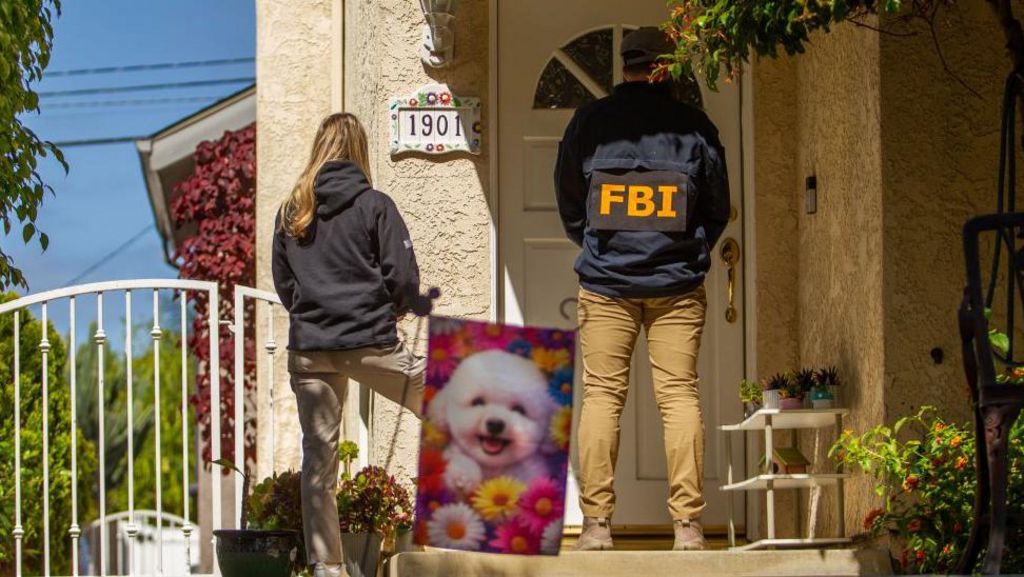
Within hours of the D.C. arrest, FBI agents descended on the Allen family home, executing a search warrant that kept helicopters circling the neighborhood through the entire night. The constant rotor noise kept nearly every resident awake, all glued to 24-hour news broadcasts trying to piece together what had happened from their quiet corner of California. Agents knocked on doors along the street searching for witnesses and clues, but declined to answer questions from residents or reporters, leaving locals to fill in the gaps with speculation.
For many adult residents, the sudden swarm of media trucks parked along their narrow sidewalks and traffic jams that clogged the residential street were an unwanted nuisance. But for neighborhood children like Alessandra, the chaos was a rare break from “Bore-ance” routine – the 10-year-old hounded FBI agents for updates and described the scene as exciting and “popping.” On Monday, kids on wheelie bikes zoomed past clusters of national reporters, hoping to catch a spot on evening news broadcasts or influencer social media clips, all echoing the city’s familiar “nothing ever happens here” nickname.
Court documents paint a stark picture of the alleged plot in Washington. An affidavit from prosecutors confirms Allen was carrying a semi-automatic handgun, a pump-action shotgun, and three knives when he rushed past the event’s security perimeter. An exchange of gunfire between Allen and Secret Service agents left one agent wounded before Allen was finally subdued. Prosecutors also allege Allen pre-warned relatives of his plans, writing that he intended to target as many members of the Trump administration as possible. Allen made his initial court appearance on Monday, and has not yet entered a plea to the charges against him.
Along the residential street where the Allen family has lived, none of the neighbors the BBC spoke to said they knew Cole Allen well beyond casual smiles and waves when passing one another. Most said they knew his parents, who many described as a friendly, well-regarded local couple, and many neighbors went out of their way to express sympathy for the family amid the global media firestorm. “Leave those poor people alone,” one anonymous neighbor told reporters, explaining he was fed up with gridlock on the narrow street caused by press vehicles. Countless reporters knocked on the Allen family’s door over the weekend and Monday, but no one answered; most locals speculate the family is staying with friends or relatives outside the area to avoid the attention.
A few miles from the family home, at a tutoring center where Allen worked, the location remained closed over the weekend with no sign of Allen. Cesilia Peralta, who works at a business next door to the center, told the BBC she regularly saw Allen during his lunch breaks, where he always ate alone. “He wouldn’t look at you. He wouldn’t interact,” Peralta said. “He never made eye contact.” Peralta’s 11-year-old daughter, who has received tutoring at the center, recognized Allen from his photo when shown by reporters, echoing the pervasive shock that has spread through the local community: “You never know who you’re around,” Peralta said.
Earlier in his life, Allen studied at the California Institute of Technology, one of the most prestigious STEM research universities in the United States. While he was a student in nearby Pasadena, he attended services at the Pasadena United Reformed Church. Pastor Movses Janbazian told the BBC he still remembers Allen from his time as a student, describing him as a quiet young man who came to services regularly before returning immediately to his campus studies. “CalTech is very competitive. He was studying a lot,” Janbazian said. “He would come and go.” The pastor declined to discuss politics, and said he did not know what Allen’s political beliefs were, or whether Allen continued to attend church after he graduated and moved away. “I knew him casually,” Janbazian said. “I don’t have a lot to add.”
As the media presence lingers on the suburban street, one local resident wanted to make sure reporters didn’t walk away with only the negative story: he reminded the BBC that 1936 Olympic runner and World War II hero Louis Zamperini, one of Torrance’s most famous native sons, also lived just down the same street from the Allen family home. “Good things also come out of Torrance,” the neighbor noted.
-
US government critical of Australia’s ‘opposition’ to ISIS bride repatriation
A diplomatic rift has emerged over the fate of 13 Australian citizens – four adult women and nine children – currently stranded in northeastern Syria, after senior United States State Department officials publicly condemned Canberra’s ongoing refusal to facilitate their repatriation. The stranded group, all linked to members of the defunct Islamic State (ISIS) militant network, had recently attempted to leave the overcrowded al-Roj camp where they have been held for years, only to be turned back and detained once again, a reversal that drew direct criticism from US policymakers.
In a February 18 correspondence obtained and published by the *Sydney Morning Herald*, a senior State Department policy analyst laid out Washington’s formal position, noting that the US has actively pushed for all nations to repatriate their citizens held in Syrian detention camps. The official emphasized that this push has grown more urgent amid rapidly shifting security and political developments across northeastern Syria, where the future of camp governance remains deeply uncertain. “I see that the Australian government has dug in on its opposition to repatriating them from the camp,” the analyst wrote, adding that the frustration of the stranded group, now forced back to al-Roj after a failed exit, is entirely understandable. “I can only imagine how frustrating their return to Roj is,” the correspondence read.
The group had made tangible progress toward a return to Australia earlier this year. With support from prominent Sydney community leader and respected medic Jamal Rifi – an Order of Australia recipient who has spent more than a decade assisting this population – the citizens secured valid Australian passports. By Saturday last week, they had exited al-Roj camp and even held confirmed tickets for commercial flights back to Australia, only for the effort to collapse when Australian authorities blocked the repatriation, forcing them back to the camp. Rifi has long argued that Australia’s domestic security is better served by bringing the group home, particularly the children, who he calls innocent victims of their parents’ ideological choices. In a February statement, Rifi noted, “I said publicly that these children were the first victims of the terrible actions of their fathers,” adding that bringing the group home would leave Australia safer than leaving them stranded in a unstable region where extremist radicalization remains a persistent risk.
Major Australian Islamic and community organizations have echoed Rifi’s calls, placing mounting public pressure on Prime Minister Anthony Albanese’s center-left government to reverse course. The Australian National Imams Council, the Muslim Legal Network, and the Lebanese Muslim Association have all publicly urged the government to allow the group to return, framing the children’s situation as a humanitarian crisis that cannot be ignored.
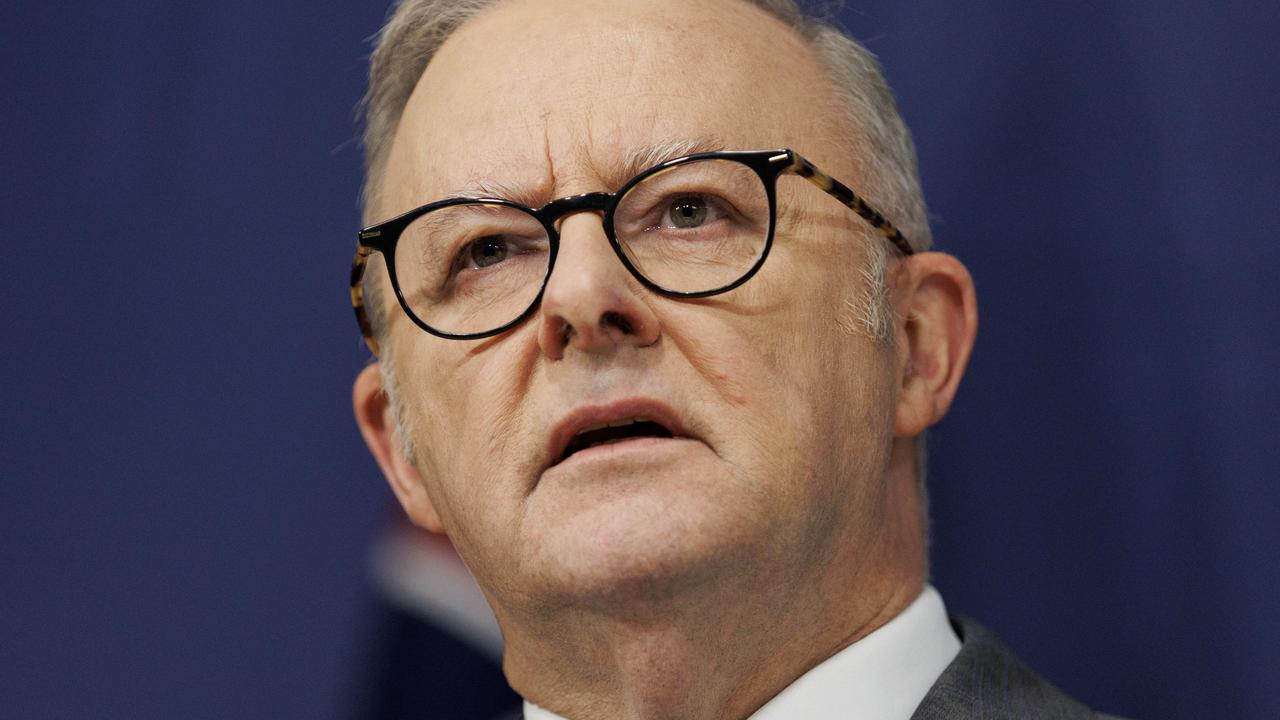
In response to the unfolding controversy, the Albanese government has denied providing any official assistance to facilitate the group’s exit from Syria, though it has acknowledged that the citizens hold a legal right to enter Australian territory under existing national legislation. Prime Minister Albanese doubled down on his long-held position during a press briefing in Canberra Tuesday, reaffirming his opposition to voluntary repatriation for adult citizens who chose to join ISIS. “My views have not changed with regard to people who went overseas and chose to support ISIS rather than Australia, when ISIS had an objective of setting up a caliphate to literally attack democracies like Australia,” he told reporters. He did, however, acknowledge the vulnerable status of the children, describing them as “victims of their parents’ bad choices, evil choices, to undermine Australia’s national interest” – a stance that leaves the government caught between legal obligations, political pressure, and diplomatic criticism from its closest ally.
-
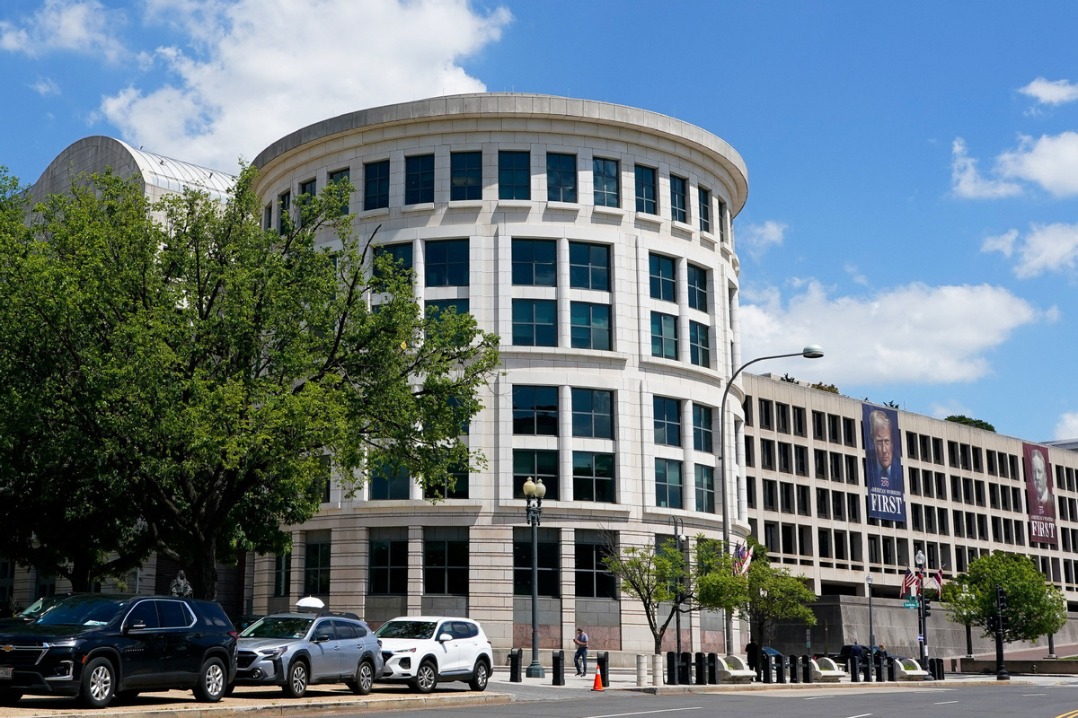
Shooting signifies increasing political violence in the US
On a Saturday evening in April 2026, a shooting disrupted the annual White House Correspondents’ Association dinner at the Washington Hilton, an event attended by U.S. President Donald Trump, sending shockwaves through Washington’s political establishment and reigniting urgent conversations about the growing crisis of political violence and deepening polarization across the United States. The suspect, identified as 31-year-old Cole Tomas Allen, a Caltech graduate and independent video game developer from Torrance, California, was formally charged by federal prosecutors on Monday with three severe criminal counts: attempted assassination of the U.S. president, interstate transportation of a firearm to commit a felony, and discharge of a firearm during a violent crime. In a manifesto he released to justify his actions, Allen argued that remaining passive in the face of oppression amounts to complicity with injustice, framing his violent act through a warped ideological lens. In the days following the incident, politicians from both major U.S. political parties issued unified condemnations of political violence, even as they traded blame over which side is responsible for normalizing aggression in public discourse. Bipartisan gubernatorial leaders Oklahoma Republican Governor Kevin Stitt and Maryland Democratic Governor Wes Moore released a joint statement emphasizing that political violence has no place in U.S. democracy, noting that the incident underscores how badly the nation needs to restore unity, civility, and mutual respect across ideological divides. House Minority Leader Hakeem Jeffries echoed that sentiment during a Monday press briefing, stressing that political violence targeting any person regardless of their ideological leaning is fundamentally unacceptable. Despite this cross-party condemnation, many Republican officials quickly pinned responsibility for the attack on Democratic rhetoric, arguing that inflammatory left-wing language has created a culture that accepts political violence. President Trump told CBS’s 60 Minutes in a Sunday interview that what he described as Democratic hate speech has created a dangerously divisive national climate. Republican National Committee Chair Joe Gruters went further, calling the shooting the inevitable outcome of a radicalized left that has normalized violence against political opponents. Civil rights and community leaders, however, frame the crisis as a product of broader systemic polarization that has consumed the entire political spectrum. Janai Nelson, president and director-counsel of the Legal Defense Fund, condemned the shooting in a statement, arguing that hate and violence have flourished in a national climate marked by deepening division, dehumanizing rhetoric targeting political opponents, and growing disrespect for people with differing ideological views. “Whether directed at public officials, journalists, law enforcement, or the public, such acts threaten the core values of our democracy,” Nelson said, adding that the nation cannot afford to normalize dangerous rhetoric or the violence that so often follows it. North Carolina Republican Senator Thom Tillis called for more intentional, careful discourse, telling NBC on Sunday that “Our words matter. The weight of our words matters, and we need to be very measured in the way that we use them.” Public reaction to the shooting has reflected deep division and widespread anxiety about the trajectory of American democracy, with many members of the public pointing fingers at the current political leadership while others blame partisan media and ideological extremism on both sides. Multiple commenters quoted in major U.S. publications argued that the current Trump administration has normalized violence as a tool to resolve conflict, pointing to its aggressive foreign policy actions against Venezuela, Iran, Greenland and Cuba, as well as aggressive immigration enforcement actions by U.S. Immigration and Customs Enforcement that have harmed both immigrants and citizens. “The problem with using violence against your citizens, violence against immigrants, violence against those you don’t like, and violence to solve international problems, is that others begin to believe that violence is the way to solve problems,” one New York Times reader wrote. Another added, “Violence begets violence. And there has been no administration more aggressive, unlawful, and violent in my lifetime than this one. I am not surprised at this attack. I am surprised there have not been more.” By contrast, some conservative-leaning commentators and readers argued the attack stemmed from years of dehumanizing rhetoric against Trump from mainstream media and Democratic leaders. One Wall Street Journal reader argued Allen had absorbed the constant demonization of Trump that has become common in left-leaning political and media spaces. For other Americans, the shooting was just another example of the persistent gun violence crisis that plagues the country daily, with the only difference being that it occurred at a high-profile event attended by political elites who have access to extensive security details that ordinary Americans do not. “The difference is that people, unlike the cabinet, don’t have security details to protect them,” one Wall Street Journal reader noted. Data from independent and polling organizations confirms that rising political violence is not just a perception: it is a widely recognized crisis growing more severe by the year. 2025 data from gun violence tracking outlet The Trace shows that an average of more than 110 people are shot every day in the U.S., excluding suicide deaths. A Pew Research Center poll released last October found that 85 percent of surveyed Americans agree that politically motivated violence is increasing in the country. The poll also revealed how widespread blame is: 53 percent of respondents hold the left wing responsible for rising violence, 52 percent blame the right wing, and 47 percent blame people with no clear political alignment. Partisan divides shape how Americans assign blame: 28 percent of Democrats link recent political violence to the rhetoric of Trump, the MAGA movement, and conservatives, while only 16 percent of Republicans blame liberal or Democratic rhetoric and behavior. Even more alarming, an October 2025 PBS News/NPR/Marist poll found that 30 percent of Americans now believe that people may need to resort to violence to put the country back on the right track. That figure represents an 11 percentage point increase in just 18 months, marking a dramatic shift in public acceptance of political violence as a legitimate tool for political change.
-
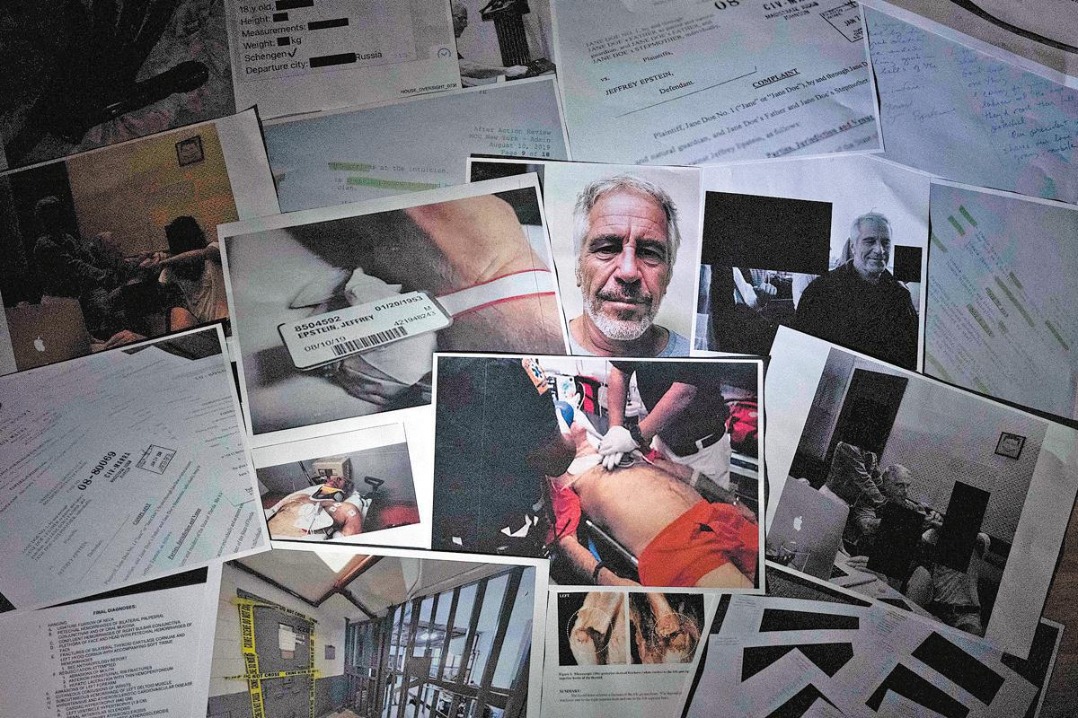
Epstein was disgraceful; is American justice the same?
For decades, American political and cultural leaders have leaned heavily on the narrative of U.S. exceptionalism, framing the nation as a global beacon of equal justice, unrivaled opportunity, and moral leadership. This rhetoric permeates everything from diplomatic addresses to everyday domestic discourse, with officials and private citizens alike routinely highlighting the country’s supposed commitment to fairness as a core part of its national identity. But the long and sordid saga of Jeffrey Epstein blows a gaping hole in that carefully constructed narrative, laying bare deep systemic flaws that allow wealthy and connected predators to evade accountability for grievous crimes.
Epstein, a disgraced financier who died in a New York jail cell in 2019 while awaiting trial on sex trafficking charges, spent decades building a network of underage girls and young women he exploited for sexual abuse, often trafficking them to powerful men across elite circles in politics, law, and higher education. Even before his death, credible rumors of his misconduct circulated for years, yet no serious legal action was taken to stop him for decades. This immunity was not accidental: it was the product of deliberate protection from the influential figures who benefited from his crimes, and a legal system that has long bent to the will of the ultra-wealthy.
Critically, the injustice of the Epstein case extends beyond the financier’s own death, which robbed his dozens of victims of the chance to see him convicted in a court of law. In recent months, new revelations have added fresh outrage to the scandal: Epstein’s long-time partner has claimed that more than 20 other people with direct knowledge of his trafficking ring were granted immunity from prosecution through secret government-approved settlements. As one journalist noted, Epstein leveraged his elite social connections to build an impenetrable protective barrier, one that granted him social credibility and kept law enforcement at bay for decades. There is no sugarcoating the reality: systemic roadblocks were deliberately put in place to let Epstein live a life of unimpeded privilege, even as he inflicted irreversible harm on hundreds of young victims.
While a small number of high-profile figures are now facing consequences for their ties to Epstein, the case lays bare a much wider rot in American society. Too often, the country’s wealthiest and most powerful elite have carved out a separate set of rules for themselves, far removed from the equal justice that ordinary Americans are promised. They justify their excessive, often depraved lifestyles with the claim that they earned their wealth, and operate with little to no accountability to the public. And all too often, the U.S. legal system enables this separation, allowing money to buy protection from scrutiny and consequences that ordinary people could never access.
That said, the contrast between Epstein’s corruption and the choices of other extremely wealthy American leaders makes clear that wealth does not have to lead to greed or abuse. Consider Warren Buffett, one of the world’s richest men with an estimated net worth of $151 billion. Over the last 20 years alone, Buffett has donated roughly $60 billion to charitable causes, and has publicly committed to giving away more than 99% of his total wealth during his lifetime and after his death. In explaining his choice, Buffett noted that excessive material possessions often end up owning their owner, and that his most valuable asset outside of health is his network of diverse, long-standing relationships. Buffett is not a perfect man — no person is — but his choice to use his wealth for collective good stands as a powerful rebuke to the idea that wealth must lead to selfishness or exploitation.
This same commitment to honor and service is seen in the legacy of Jimmy Carter, the 39th U.S. president who died in December 2024. Tributes to Carter overwhelmingly focused on his identity as a dedicated humanitarian, who rejected the lavish trappings of power and wealth that come with his status, and instead used his platform to improve public health and safety in vulnerable communities around the world. Just as with Buffett, Carter’s legacy will be one of service, not self-dealing.
The contrast between these two worlds — the predatory impunity of Epstein and the selfless service of leaders like Carter and Buffett — raises a critical question for American media and society. If the public and press prioritized celebrating the good works of honorable, generous leaders instead of fixating on the scandals of powerful predators, the national conversation would be far healthier, and the true face of American leadership would be far clearer. The Epstein case is not just a story of one man’s depravity: it is a warning about the cost of systemic inequity, and a reminder that exceptionalism must be earned through equal justice for all, not just claimed as a birthright.
This opinion piece is written by Anthony Moretti, an associate professor in the Communication and Organizational Leadership Department at Robert Morris University in Pennsylvania, U.S. The views expressed do not necessarily represent the official stances of China Daily or Robert Morris University.
-

Music, tea ritual bind East-West bonds
On a Friday evening at the Chinese Embassy in Washington D.C., soft curling wisps of incense and the deep, resonant strings of an ancient guqin transformed the diplomatic venue into an immersive space where Eastern tradition meets Western culture. Hosted under the theme “Tea for Harmony: East Meets West in Music”, the gathering drew more than 200 guests from across the United States, who were invited to experience China’s traditional “Four Arts of Life” — tea tasting, incense appreciation, floral arrangement and scroll painting display — before a cross-cultural musical performance that blended centuries-old artistic traditions from both sides of the Pacific.
The evening kicked off with interactive cultural stations, where attendees had the chance to sample rare, premium tea varieties and watch masters demonstrate the meticulous craft of gongfu cha, China’s centuries-old traditional tea making ritual. Guided by skilled artisans, guests learned that the practice is far more than a method of preparing tea: it centers on intentionality, calm mindfulness, and nurturing a deep connection between people and the natural world. These hands-on experiences allowed guests to engage directly with Chinese cultural traditions long before the main musical performance began, building a foundation of curiosity and connection.
Opening the official program, Chinese Ambassador to the U.S. Xie Feng tied the event to Grain Rain, the final of China’s 24 traditional solar terms that marks the end of spring and the start of the growing season. He described tea as a carrier of the enduring core spirit of Chinese civilization, noting that the Chinese character “cha” itself encodes the philosophy of harmony between humanity and nature. “In sipping tea and savoring its taste, one needs to seek refinement and cultivate a noble character,” Xie said. “And in serving tea to others, one needs to show respect, sincerity and courtesy. So each small tea leaf is a gateway to profound Chinese philosophy.”
Beyond its cultural depth, Xie highlighted the modern economic vitality of China’s tea sector, noting that the full domestic tea industry chain surpassed 1 trillion yuan (approximately $146 billion) in value last year. He framed the growing tea economy as a clear example of China’s emerging new quality productive forces, pointing to innovations including smart, technology-integrated tea plantations and the launch of the world’s first national digital platform for tracking tea product carbon footprints. He added that innovative new Chinese tea brands, including popular chains HeyTea and Chagee, have already earned a large and loyal following across the United States.
Shifting focus to China-U.S. bilateral relations, Xie drew on long historical ties between the two nations rooted in tea trade, stretching back to the 18th-century voyage of the Empress of China, the first American ship to sail to China after U.S. independence. He also recalled the iconic tea gifts exchanged during landmark 1970s visits by former U.S. President Richard Nixon and his national security advisor Henry Kissinger, visits that opened the door to normalized bilateral relations. Xie drew a parallel between the complementary nature of tea and coffee, and the coexistence of the two world powers: “Tea and coffee are not incompatible; when brought together, they can blend into creative drinks that take the world by storm,” he said. “It takes time to truly appreciate the fragrance of tea. Likewise, states need patience and steady resolve when engaging with one another.”
While acknowledging that it would be unrealistic for either China or the United States to remold the other in its own image, Xie emphasized that the two nations can still chart a shared path to mutual prosperity. “As long as we follow the strategic guidance of our presidents, show mutual respect, stick to the bottom line of peaceful coexistence, and strive for the vision of win-win cooperation, we can gradually find a path leading to respective success and shared prosperity,” he said.
The evening’s concert brought this message of cross-cultural fusion to life. China’s Juntianyunhe Ensemble shared the stage with French-South African cellist Jacques-Pierre Malan and Russian violinist Vadim Tchijik, weaving the 3,000-year-old sound of the guqin into collaborative performances alongside Western classical string instruments. In works such as *Wandering Mind*, the improvisational exchange between guqin and cello merged Eastern lyrical expression with Western structural composition, earning enthusiastic applause and cheers from the assembled audience.
Greg Bland, founder of local events platform Things To Do DC and co-organizer of the event alongside the Embassy Series, emphasized the unique unifying power of people-to-people cultural exchange. “Regardless of where we get along politically or historically right now … Chinese culture still brings us together,” Bland told China Daily. “Learning about it is like learning about a different person … and it helps build personal friendships.”
-
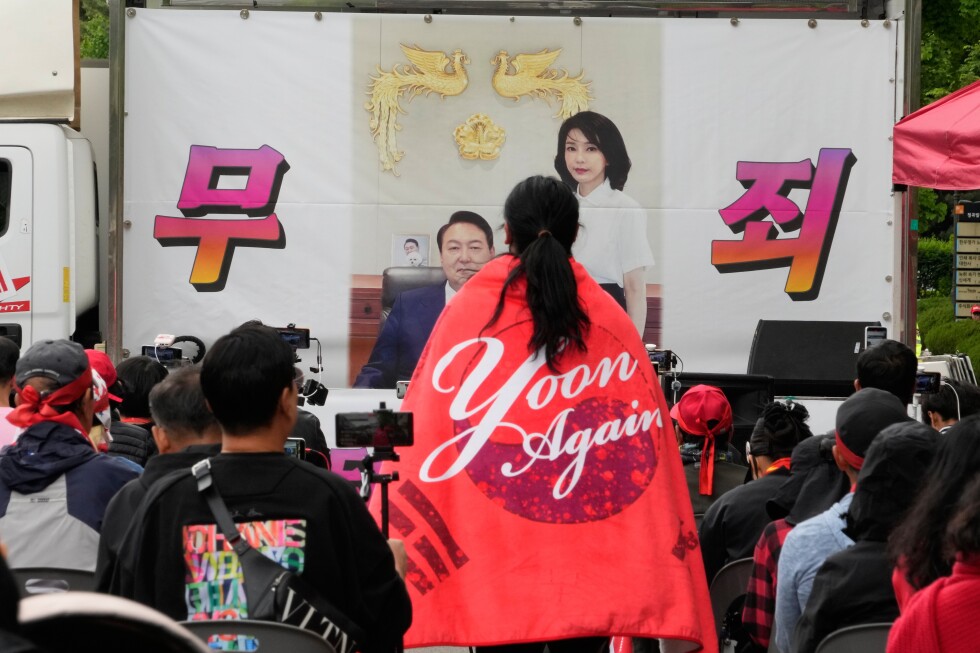
South Korean court convicts of wife of ousted President Yoon on further corruption charges
South Korea’s political landscape has been rocked by another landmark legal ruling, as the Seoul High Court has doubled down on corruption convictions against former South Korean first lady Kim Keon Hee, upgrading her original prison sentence from 20 months to four years behind bars. The ruling comes just two months after her husband, ousted ex-president Yoon Suk Yeol, received a life sentence on charges of rebellion tied to his controversial 2024 martial law declaration.
The case against Kim stretches back to her time as first lady, where she was first accused of accepting luxury gifts—including a high-value Graff diamond necklace and a designer Chanel handbag—from the Unification Church in exchange for implicit promises of political favors. In the initial January 2025 trial at the district court level, Kim was convicted on those bribery-related charges and handed a 20-month prison term, but acquitted on a second count of orchestrating stock price manipulation ahead of Yoon’s inauguration. Both sides immediately challenged the ruling: prosecutors pushed for harsher punishment, while Kim’s legal team argued the entire investigation was politically motivated.
In its Tuesday ruling, the appellate court overturned the lower court’s acquittal on the stock manipulation charge, and added an additional conviction for accepting a second Chanel handbag from the Unification Church. The combined convictions led judges to hike the overall sentence to four years. In the ruling’s explanatory statement, the court emphasized that the spouse of a sitting president holds a unique position of public trust: as the closest confidant to a national leader, the first lady shares in representing the nation and wields significant indirect influence over executive decision-making. The court found Kim had completely failed to live up to public expectations of ethical integrity, instead exploiting her elevated status to secure personal illicit benefits from the religious organization.
The dramatic downfall of the presidential couple began in December 2024, when conservative president Yoon made the unprecedented shock move to declare nationwide martial law. Deploying military troops and police forces to the National Assembly, Yoon justified the action as a necessary crackdown on what he called “anti-state forces” and “North Korean sympathizers” aligned with the liberal opposition Democratic Party, which had repeatedly blocked his policy agenda. He framed the move as a desperate effort to rally public support for his administration, but the gambit backfired spectacularly: the move triggered immediate impeachment proceedings, culminating in Yoon’s removal from office just months later.
In February 2025, the Seoul Central District Court found Yoon guilty of rebellion, ruling that his mobilization of security forces amounted to an illegal power grab aimed at seizing control of the legislative branch, arresting political opponents, and holding unchallenged power indefinitely. Investigators have formally confirmed that Kim was not involved in Yoon’s martial law plot, but her string of scandals during Yoon’s presidency steadily eroded public approval for the administration and gave consistent political leverage to opposition parties. Kim has been held in detention since August 2024, after the district court approved an arrest warrant on grounds that she posed a flight risk and could potentially destroy key evidence tied to the investigation.
Both sides now have a seven-day window to file a final appeal to South Korea’s Supreme Court, the nation’s highest judicial body. Prosecutors from the independent counsel’s office had originally requested a 15-year prison sentence for Kim during the appellate proceedings, while her defense team has continued to stand by claims that the entire investigation is a politically motivated attack.
-

Gunman believed to be targeting Trump: Officials
On Saturday, a 31-year-old California man named Cole Tomas Allen was arrested inside the Washington Hilton hotel, the venue hosting the annual White House Correspondents’ Dinner where former and current U.S. President Donald Trump was gathered with national media figures. U.S. law enforcement officials now confirm that early investigations point to Allen having clear intentions to target Trump, along with other high-ranking members of the current administration.
Acting U.S. Attorney General Todd Blanche shared updates on the probe Sunday, noting that preliminary examinations of Allen’s electronic devices and interviews with his acquaintances have backed up investigators’ working theory. “It does appear that he did in fact have set out to target folks that work in the administration, likely including the president,” Blanche told reporters.
Allen is scheduled for his first federal court appearance in Washington D.C. Monday, facing two serious felony charges: unlawful use of a firearm during a violent criminal act, and assault on a federal officer with a dangerous weapon.
Authorities have recovered a roughly 1,000-word manifesto they believe was authored by Allen, which explicitly outlines a premeditated mass shooting plot with Trump listed as the primary target, multiple major U.S. media outlets have confirmed after reviewing the document. The text orders targeting of administration officials “prioritized from highest-ranking to lowest,” and includes a line that reads, “I would still go through most everyone here to get to the targets if it were absolutely necessary,” adding, “I really hope it doesn’t come to that.”
Minutes before he attempted to carry out the plan, Allen sent a message to his family members identifying himself as a “Friendly Federal Assassin,” the Associated Press reported. The message also included broad criticisms of Trump administration policies, leading investigators to conclude the alleged plot was politically motivated. Trump, for his part, publicly commented Sunday that the manifesto was anti-Christian and reflected “a lot of hatred in his heart.”
Saturday’s incident marks at least the third known plot against Trump in less than two years: he survived an assassination attempt at a Pennsylvania campaign rally in July 2024, and just months later another individual was arrested for pointing a rifle at Trump while the president golfed in Florida.
This latest security breach has reignited national conversations about the growing crisis of political violence across the United States. Just seven months prior to the Washington Hilton incident, prominent conservative activist Charlie Kirk was fatally shot at a public rally, and only months before that, Democratic Minnesota State Representative Melissa Hortman and her husband were murdered in a targeted attack that also left a state senator wounded. A Reuters/Ipsos poll conducted after Kirk’s killing found that a large majority of U.S. respondents believe the increasingly harsh, divisive rhetoric that defines modern American politics is directly fueling the rise in election and policy-related violence.
The incident has also bolstered Trump’s long-stated push to construct a new private event ballroom on the White House grounds, arguing the off-site venue for the Correspondents’ Dinner, the Washington Hilton, lacks adequate security. The Hilton is located roughly a 10-minute drive from the White House, and holds a grim place in U.S. presidential history as the site of the 1981 assassination attempt against then-President Ronald Reagan. Even with hundreds of Secret Service agents assigned to secure the annual dinner, which draws hundreds of high-profile guests including cabinet secretaries, senior members of Congress, and A-list celebrities, Allen was still able to access a floor directly above the main ballroom armed with a shotgun and multiple other weapons, highlighting critical gaps in the event’s security apparatus.
-
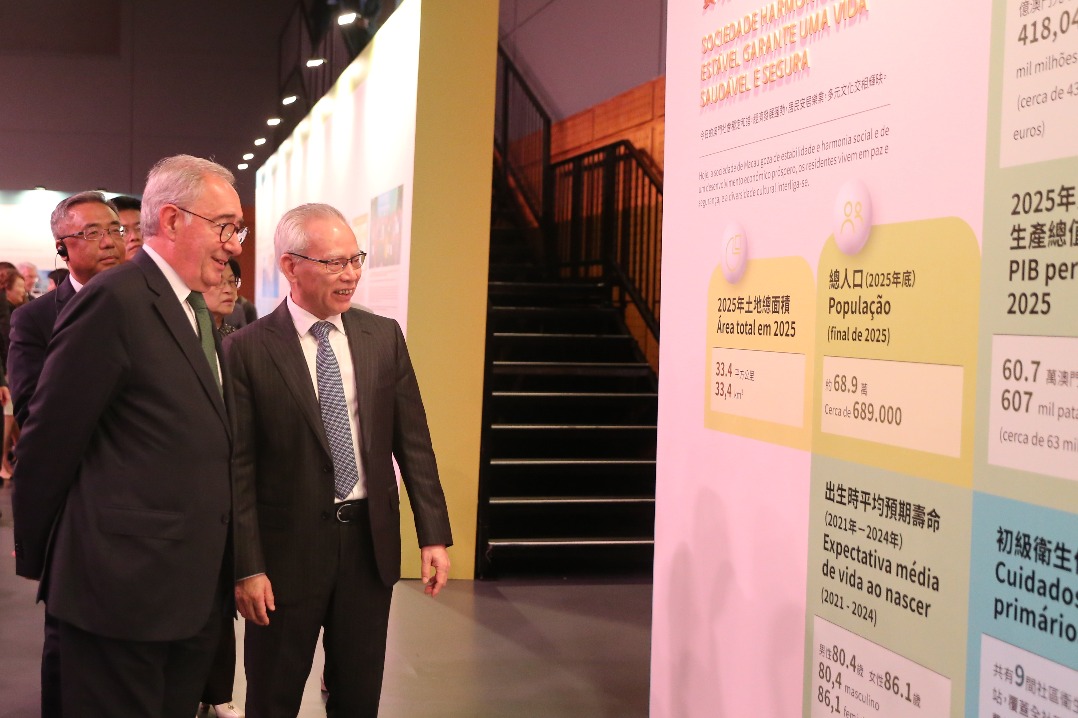
Macao chief executive’s Europe visit highlights SAR’s bridge role, say experts
Between April 17 and late April 2026, Macao Special Administrative Region (SAR) Chief Executive Sam Hou-fai led an official and business delegation on a landmark multi-nation tour of Europe, stopping in Portugal, Spain, Switzerland and Belgium. The trip has concluded with a slate of tangible cooperation outcomes and widespread expert acknowledgment of Macao’s growing unique value as a connectivity hub bridging China and international markets, according to international and China-based analysts.
During his stop in Lisbon, Sam held high-level meetings with Portuguese President Antonio Jose Seguro and top leaders from Portugal’s executive, legislative and judicial branches. In these discussions, he detailed the successful implementation of the “one country, two systems” framework in Macao over the years, highlighting the SAR’s sustained stability and development under the policy.
Carmen Amado Mendes, president of the Lisbon-based Macao Scientific and Cultural Center, emphasized that Macao occupies a one-of-a-kind space in China-Portugal bilateral relations. Rooted in centuries of historical connections between the two nations, Mendes noted, Macao functions as an exceptionally effective platform for advancing exchanges across politics, business, academic research and culture.
Bernardo Mendia, secretary-general of the Portugal-China Chamber of Commerce and Industry, added that Macao’s institutional advantages under “one country, two systems” create a low-barrier, familiar operating environment for Portuguese-speaking enterprises looking to enter the massive Chinese mainland market. This unique positioning, experts agree, cannot be easily replicated by other global hubs.
Building on this longstanding role, the 2026 tour expands Macao’s connectivity footprint to new markets. The tour delivered clear practical results: 61 bilateral agreements were signed during the Portugal stop, covering sectors from cross-border trade and technological innovation to tourism and educational cooperation. An additional 48 agreements were formalized during the delegation’s time in Spain, spanning high technology, international expansion of Macao’s exhibition brands and cross-border sports event cooperation.
Lao Chi Ngai, president of the Macao Economic Association, pointed out that adding Spain to the official itinerary marks a strategic milestone. For decades, Macao has anchored its role as a bridge between China and Portuguese-speaking economies; this tour signals a deliberate expansion into a broader platform that connects China with both Portuguese- and Spanish-speaking regions across the globe. Mendia echoed this assessment, noting that the Spain visit makes clear Macao’s goal to widen its cooperation scope, turning its latent connectivity advantages into concrete economic gains for all parties involved.
Carlos Cid Alvares, president of the Macao delegation of the Portugal-China Chamber of Commerce and Industry, told Xinhua that Macao is perfectly positioned to act as a dual-language, dual-system platform linking Chinese markets with Portuguese- and Spanish-speaking economies. The SAR can provide targeted support covering legal compliance, linguistic services and institutional navigation that lowers barriers to entry for companies on both sides.
The delegation included not only Macao-based entrepreneurs but also representatives from the Guangdong-Macao In-Depth Cooperation Zone in Hengqin and other Chinese mainland enterprises, which conducted a six-day round of business exchanges across Portugal and Spain. Alvares explained that the tour advances what stakeholders call “platform-based acceleration,” driven by the growing synergy between Macao and the Hengqin cooperation zone. This model supports two-way economic flow: it helps Chinese enterprises expand globally, particularly into Portuguese- and Spanish-speaking markets, while also streamlining the process for foreign firms to invest in the Chinese mainland.
Looking ahead, Mendes noted that Macao already has a strong track record supporting trade fairs, business exchanges and commercial information circulation between China and Europe. Going forward, the SAR can further expand its footprint in high-growth areas including financial services, technological innovation, and coordinated development within the Guangdong-Hong Kong-Macao Greater Bay Area.
Francisco Jose Leandro, an associate professor at the University of Macau’s Faculty of Social Sciences, framed Macao’s evolving role in a broader national development context. By leveraging its deep historical, linguistic and institutional assets, Macao has already established itself as a functional connector linking China with the European Union, Ibero-American economies, and the broader multilateral trading system. As China pursues high-level opening-up and the Greater Bay Area deepens integration, Leandro added, Macao is set to play an increasingly critical role in advancing global trade facilitation, high-quality professional services, and international connectivity.
Across the board, experts from home and abroad agreed that the 2026 European tour solidifies Macao’s unique position in China’s international engagement, turning its longstanding historical and institutional advantages into shared growth opportunities for stakeholders across China and Europe.