分类: politics

  • French elect mayors in key cities including Paris

    French elect mayors in key cities including Paris

    France conducted decisive municipal runoff elections across approximately 1,500 communes on Sunday, with particular attention focused on major urban centers including Paris, Marseille, and Toulon. These local contests serve as critical indicators of the nation’s political temperament preceding next year’s presidential election, where the far-right National Rally (RN) anticipates potential breakthroughs.

    In the capital, Parisians witnessed a tightly contested race between leftist candidate Emmanuel Grégoire, former deputy to outgoing Socialist Mayor Anne Hidalgo, and conservative contender Rachida Dati, ex-justice minister under Nicolas Sarkozy. The historic left-wing stronghold, under progressive leadership for 25 years, faced its most serious challenge from the right in decades. Dati’s campaign gained momentum after center-right and far-right candidates withdrew from the race, though Grégoire declined a similar consolidation offer from hard-left factions.

    Beyond Paris, Marine Le Pen’s RN party demonstrated expanding influence. The anti-immigration party claimed re-election in 10 communes including Perpignan (population 120,000) and targeted larger acquisitions like Toulon (180,000 residents), which would become their largest municipal capture if secured. In Marseille, France’s second-largest city, RN candidate Franck Allisio trailed incumbent left-wing mayor Benoît Payan by merely one percentage point in initial voting.

    Turnout metrics showed modest improvement with 20.3% participation by noon, approximately one point higher than corresponding first-round figures. The overall first-round participation rate of 57% represented near-historic lows excluding pandemic-affected elections.

    The electoral process unfolded amid heightened political tensions following the recent fatal beating of a far-right activist allegedly by left-wing extremists. This incident has complicated traditional alliance patterns between centrists and leftists against far-right movements. Meanwhile, prominent figures like Édouard Philippe, former prime minister and current presidential hopeful, appeared positioned to retain mayoralty in Le Havre, reinforcing centrist opposition to RN advancement.

  • Slovenia votes in tight polls, with conservatives eyeing comeback

    Slovenia votes in tight polls, with conservatives eyeing comeback

    Slovenians participated in a closely contested parliamentary election on Sunday, marking a potential political turning point for the Central European nation. The electoral battle pitted incumbent Prime Minister Robert Golob’s liberal government against the conservative opposition led by veteran politician Janez Jansa, who has expressed admiration for former U.S. President Donald Trump.

    This election could determine whether the EU member state of two million people maintains its progressive trajectory or reverts to the illiberal policies that characterized Jansa’s previous administration. The campaign has been marred by allegations of foreign interference, with Slovenian authorities investigating whether Israeli intelligence firm Black Cube orchestrated secretly recorded videos suggesting corruption within Golob’s government.

    Voting commenced at 7:00 AM local time (0600 GMT) with polling stations scheduled to close at 7:00 PM, after which exit polls would be immediately released. The electoral contest has narrowed significantly in recent weeks, with opinion polls indicating the two main parties running neck-and-neck after Jansa’s conservatives initially maintained a substantial lead.

    During his four-year tenure, Prime Minister Golob, a political newcomer when he assumed power in 2022, implemented several progressive policies including legalizing same-sex marriage. His government also took the controversial stance of describing Israel’s military operations in Gaza as ‘genocide,’ placing Slovenia among a minority of EU countries adopting this position.

    Jansa’s campaign focused on economic concerns, accusing the current government of financial mismanagement and characterizing the election as ‘a referendum on corruption.’ The 67-year-old three-time prime minister promised to restore ‘Slovenian values’ including the ‘traditional family’ and restrict state funding to NGOs he considers politically motivated.

    The election has generated intense public engagement, with over 1,000 citizens gathering outside parliament on Friday to encourage voter participation. Organizers described the campaign as one of the ‘dirtiest and most content-free’ in Slovenian history, expressing concerns about potential democratic backsliding.

    Political analysts suggest the outcome could have significant implications for Europe’s political landscape, with one commentator noting that a right-wing victory would represent ‘the fall of another liberal stronghold in Europe, another nail in liberal democracy’s coffin.’ Jansa’s previous administration, which maintained close ties with Hungarian Prime Minister Viktor Orban, faced mass protests and criticism from EU institutions over rule-of-law concerns.

  • Iran threatens Middle East infrastructure after Trump ultimatum

    Iran threatens Middle East infrastructure after Trump ultimatum

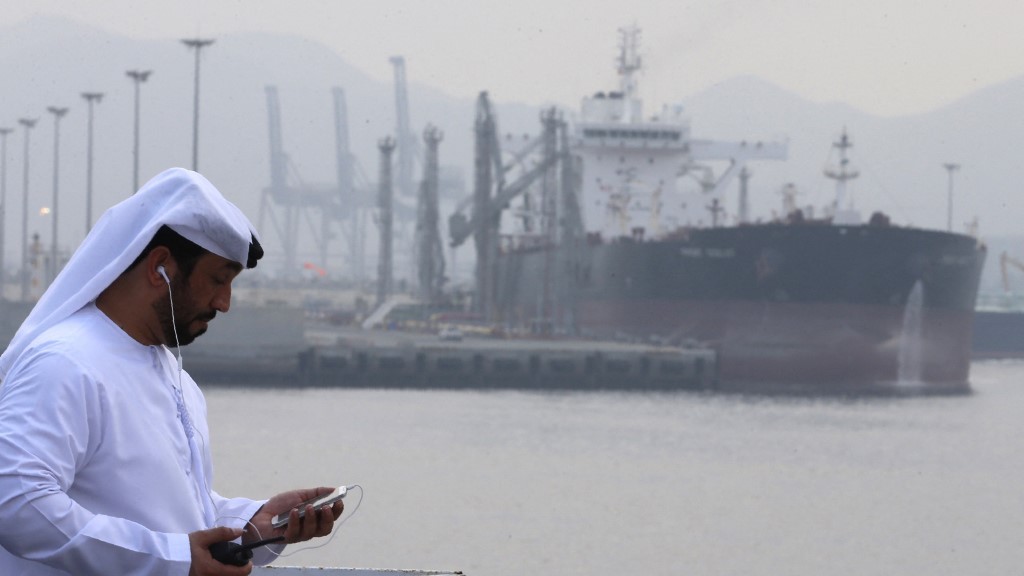
    A dangerous escalation in the Middle East conflict has unfolded as Iran issued a stark warning to target critical infrastructure across the region if the United States follows through on President Donald Trump’s threat to destroy Iranian power plants. The confrontation centers on the strategic Strait of Hormuz, where Tehran has imposed a de facto blockade that has disrupted global energy supplies and sent oil prices soaring.

    President Trump issued a 48-hour ultimatum via Truth Social, demanding Iran fully reopen the crucial waterway or face the obliteration of its power infrastructure, “starting with the biggest one first.” The deadline is set for 23:44 GMT on Monday according to the timing of Trump’s post.

    Iran’s military command responded with equal defiance, vowing that any attack on Iranian facilities would trigger immediate retaliation against “all energy, information technology and desalination infrastructure belonging to the U.S.” throughout the Middle East.

    The exchange occurred amid continued hostilities that have now entered their fourth week. Early Sunday, air raid sirens sounded in Jerusalem as Iran launched fresh missile barrages toward Israel. This followed significant strikes on southern Israeli towns including Dimona, where a nuclear research facility is located, and Arad, with over 100 casualties reported.

    The Dimona attack, which damaged residential buildings and created substantial craters, was characterized as retaliation for previous strikes on Iran’s Natanz nuclear facility. UN nuclear watchdog chief Rafael Grossi has reiterated calls for “military restraint to avoid any risk of a nuclear accident” given the proximity of attacks to nuclear installations.

    The economic implications of the conflict continue to intensify, with North Sea Brent crude prices surpassing $105 per barrel. The Strait of Hormuz typically handles approximately one-fifth of global crude oil and liquefied natural gas shipments, making its blockade particularly disruptive to energy markets.

    International response has been mounting, with 22 nations including the UK, France, Germany, Australia, and several Gulf states announcing readiness to contribute to efforts ensuring safe passage through the vital waterway. The U.S. has deployed additional Marines to the region and conducted bunker-busting bomb strikes on Iranian coastal facilities to degrade Tehran’s ability to threaten navigation.

    The conflict has expanded beyond the Iran-Israel theater, with Saudi Arabia reporting intercepted ballistic missiles near Riyadh and the United Arab Emirates responding to new attacks from Iran. In Lebanon, Hezbollah claimed responsibility for rocket fire that killed one Israeli soldier, marking the first fatality from cross-border fighting since hostilities began. Iraq has also been drawn into the conflict, with multiple attacks targeting U.S. facilities at Baghdad International Airport.

    Meanwhile, civilians in Tehran experience growing uncertainty as the Persian New Year holidays provide limited respite from the shadow of war. Residents report economic hardship and anxiety about the future as the conflict shows no signs of abating.

  • French voters head to the polls in municipal runoffs with Paris, Marseille and Lyon in focus

    French voters head to the polls in municipal runoffs with Paris, Marseille and Lyon in focus

    PARIS — French citizens headed to polling stations across the nation on Sunday for the decisive second round of municipal elections spanning more than 1,500 communes. This electoral exercise serves as a critical barometer of France’s evolving political landscape ahead of the anticipated 2027 presidential contest, with particular attention on whether far-right factions can translate their growing national influence into tangible control of major urban centers.

    The runoff elections feature numerous three-way contests following strategic alliances, candidate withdrawals, and tactical list mergers after the initial voting round. These developments have positioned France’s traditional left and right parties as competitive forces, while President Emmanuel Macron’s Renaissance movement maintains a notably subdued presence in many key races.

    Paris represents one of the most significant electoral battlegrounds, where Emmanuel Grégoire—leading a consolidated left-green coalition—secured a commanding first-round victory with 37.98% of votes. He faces conservative contender Rachida Dati (25.46%) and La France Insoumise candidate Sophia Chikirou, creating a volatile triangular contest.

    Marseille witnesses another intensely competitive race, with left-wing incumbent Benoît Payan (36.70%) holding a narrow advantage over far-right challenger Franck Allisio (35.02%), while conservative candidate Martine Vassal remains in contention.

    Lyon’s election has evolved into a direct two-candidate showdown after ecological incumbent Grégory Doucet (37.36%) marginally outperformed centrist opponent Jean-Michel Aulas (36.78%) in the initial round.

    Toulouse serves as testing ground for La France Insoumise’s urban appeal, where François Piquemal has united with broader left-wing forces to challenge conservative Mayor Jean-Luc Moudenc, who led the first round with 37.23% support.

    Additional major urban centers under close observation include Nice, where Eric Ciotti (43.43%) demonstrates the conservative movement’s internal division between mainstream and far-right alignment; Nantes, where Socialist Mayor Johanna Rolland begins the runoff with an advantage; and Bordeaux, where incumbent Pierre Hurmic leads a fragmented electoral field.

  • Trump administration sues Harvard University over alleged antisemitism after months of stalled negotiations

    Trump administration sues Harvard University over alleged antisemitism after months of stalled negotiations

    The U.S. Department of Justice has initiated formal litigation against Harvard University, alleging systemic antisemitic discrimination within the prestigious institution. The lawsuit, filed in the Massachusetts District Court on Friday, represents a significant escalation following months of failed negotiations between the federal government and the Ivy League establishment.

    Legal documents contend that Harvard administration consistently ignored severe and pervasive harassment targeting Jewish and Israeli students, effectively permitting a hostile educational environment based on racial and national origin discrimination. The complaint further asserts the university demonstrated deliberate indifference toward protecting these students’ civil rights, thereby denying them full participation in academic programs and campus life.

    This legal action culminates a prolonged confrontation dating to January 2025, when federal authorities began issuing warnings to multiple universities regarding potential funding suspensions unless they addressed campus antisemitism and modified diversity initiatives perceived as favoring specific minority groups. Harvard’s subsequent refusal to comply with governmental demands triggered financial repercussions in April 2025, including the freezing of $2.2 billion in multiyear grants and $60 million in contract allocations.

    The litigation seeks substantial financial penalties, with the Trump administration previously announcing intentions to pursue $1 billion in damages. This case marks an unprecedented federal intervention into campus cultural issues, potentially establishing significant precedents for how educational institutions balance free expression, diversity initiatives, and protection against discriminatory practices.

  • Italy’s justice referendum becomes a high stakes test for conservative Premier Giorgia Meloni

    Italy’s justice referendum becomes a high stakes test for conservative Premier Giorgia Meloni

    Italian Premier Giorgia Meloni confronts a decisive political milestone as citizens participate in a two-day judicial reform referendum commencing Sunday. What originated as a technical adjustment to the nation’s justice apparatus has evolved into a comprehensive evaluation of Meloni’s domestic governance and international standing, with recent polling indicating an intensely competitive contest.

    The referendum encompasses several transformative provisions, including the separation of career trajectories for judges and prosecutors—prohibiting the transitional movement between these roles that currently exists in theory though seldom practiced. Additionally, it proposes restructuring the High Judicial Council into three distinct chambers and modifying selection procedures through randomized lotteries rather than internal elections.

    Meloni has dramatically intensified her advocacy as polling margins narrowed, framing the referendum as essential for national security. She contends that judicial factions have obstructed governmental initiatives on immigration and public safety, cautioning that rejection would empower unaccountable magistrates and potentially release dangerous criminals. Her rhetoric has provoked substantial criticism from legal professionals and center-left opponents who assert the reforms jeopardize judicial independence and constitutional safeguards.

    Political analyst Lorenzo Pregliasco observes that a defeat would deliver a substantial political message, potentially diminishing Meloni’s perception of invincibility while energizing opposition movements. The referendum also carries international implications, particularly regarding Meloni’s alignment with U.S. President Donald Trump, whose foreign policy approaches face growing disapproval among Italian voters.

    While a negative outcome would not compel Meloni’s resignation—her mandate continues through 2027—it could impair her credibility within European Union circles, where she has cultivated an image as a stabilizing influence. The judicial reform debate revives longstanding tensions between Italy’s conservative leadership and magistrates, reminiscent of conflicts during Silvio Berlusconi’s administration.

    Proponents argue the changes would modernize Italy’s notoriously sluggish judicial system and enhance accountability. Conversely, critics including prominent anti-Mafia prosecutor Nicola Gratteri maintain that the government has neglected more pressing judicial inefficiencies while implementing measures that complicate prosecuting corruption and white-collar crimes.

    This referendum represents a defining juncture for Meloni’s premiership, with consequences extending beyond judicial restructuring to potentially reshape her government’s political trajectory.

  • Slovenia’s governing liberals face right-wing populists in a tight parliamentary election

    Slovenia’s governing liberals face right-wing populists in a tight parliamentary election

    Slovenians cast their votes on Sunday in a critically contested parliamentary election that represents a fundamental ideological clash for the nation’s future direction. This electoral battle positions incumbent Prime Minister Robert Golob’s liberal Freedom Movement against the right-wing Slovenian Democratic Party (SDS), led by former three-time premier Janez Jansa, whose political style echoes that of Donald Trump.

    The election outcome carries significance beyond Slovenia’s borders, potentially influencing the political equilibrium within the 27-member European Union. A victory for Golob would maintain Slovenia’s current liberal trajectory within the bloc, while a Jansa triumph would bolster Europe’s expanding populist movements, particularly given his established alliance with Hungarian nationalist leader Viktor Orbán.

    Recent polling indicates an exceptionally tight race, with neither major party projected to secure an outright majority in the 90-seat parliament. This electoral uncertainty positions smaller political factions as potential kingmakers in post-election coalition negotiations.

    The campaign has been notably marred by allegations of foreign interference, with claims emerging about covert video recordings purportedly showing government-linked corruption. Investigative findings reveal that representatives from Black Cube, a private intelligence agency operated by former Israeli intelligence officers, made multiple visits to Slovenia in recent months, including to locations near Jansa’s party headquarters. While Jansa acknowledges contacts with a Black Cube adviser, he vehemently denies involvement in election interference schemes.

    Prime Minister Golob has called for an EU-level investigation, emphasizing the need to protect electoral integrity across member states. The allegations have intensified existing political divisions in a country historically known for its moderate political landscape.

    The ideological contrast between the candidates extends to foreign policy, with Golob’s administration adopting a pro-Palestinian stance—including official recognition of Palestinian statehood and travel restrictions on Israeli officials—while Jansa maintains strongly pro-Israel positions.

    Since gaining independence from Yugoslavia in 1991, Slovenia has consistently alternated between liberal and conservative governance. This election continues that tradition of political oscillation, with the Alpine nation’s two million citizens determining whether Europe’s liberal democratic values or right-wing populism will guide their future.

  • Trump threatens to deploy ICE agents for airport security over funding impasse

    Trump threatens to deploy ICE agents for airport security over funding impasse

    WASHINGTON — President Donald Trump escalated the ongoing Department of Homeland Security funding crisis Saturday by threatening to deploy Immigration and Customs Enforcement agents to assume airport security duties unless Democrats immediately resolve the budgetary impasse.

    The President issued his ultimatum via his Truth Social platform, declaring he would reposition “brilliant and patriotic ICE Agents to the Airports where they will do Security like no one has ever seen before” if opposition lawmakers failed to “immediately sign an agreement.”

    This development follows Friday’s Senate rejection of a House-approved funding bill for DHS, marking the latest failure in bipartisan negotiations over immigration enforcement policies that have paralyzed budgetary proceedings for over five weeks.

    The funding lapse has created severe operational challenges at transportation hubs nationwide since February 14, when congressional authorization expired for DHS agencies including the Transportation Security Administration. Approximately 50,000 TSA officers have consequently worked without pay for more than a month, leading to dramatically increased security wait times exceeding three hours at major airports including Houston, Atlanta, and New Orleans.

    Republican legislators continue advocating for comprehensive DHS funding while Democratic counterparts push for standalone appropriations that would exclude immigration enforcement operations from the budgetary package. The fundamental disagreement over immigration policy has prevented any meaningful progress in negotiations throughout the five-week deadlock.

  • National blackout hits Cuba for second time in a week

    National blackout hits Cuba for second time in a week

    Cuba is grappling with a severe nationwide power outage that has left over 10 million residents and businesses without electricity, marking the second total collapse of the national grid within a single week. The Caribbean nation’s energy ministry confirmed a “total disconnection of the National Electrical System” through an official social media statement, adding that restoration protocols had been immediately initiated.

    The state grid operator UNE has begun gradual power restoration, prioritizing essential facilities including hospitals and water distribution systems. This crisis represents the third major blackout this month, exacerbating existing challenges caused by an aging electrical infrastructure and chronic fuel shortages. The current energy emergency is directly linked to a U.S. fuel blockade that has severely restricted Cuba’s access to foreign oil imports necessary for power generation.

    In response to the deteriorating conditions, rare public demonstrations have emerged across the island. Residents of central Havana engaged in pot-banging protests on Monday, while in the town of Morón, protesters attacked and set fire to the local Communist Party headquarters. Such unauthorized gatherings carry significant legal risks in Cuba, where dissent is typically met with severe penalties.

    International socialist organizations have mobilized support efforts, with the “Nuestra America” aid convoy departing from Mexico carrying solar panels, basic food supplies, and medical provisions. Rough sea conditions temporarily delayed the flotilla’s arrival in Havana, though it was expected to reach port Monday.

    The crisis has intensified geopolitical tensions between Havana and Washington. Former U.S. President Donald Trump has repeatedly suggested potential intervention in Cuban affairs, including remarks about a “friendly takeover” of the island nation. Trump has reportedly conditioned the lifting of the fuel embargo on the removal of Cuban President Miguel Díaz-Canel, a key regional ally of Venezuela.

    President Díaz-Canel has responded by announcing a “preparation plan to raise our people’s readiness for defense” against potential U.S. military aggression. Despite these tensions, both governments have engaged in preliminary bilateral discussions aimed at resolving the crisis, though progress remains unclear. Cuban officials have firmly stated that their political system and leadership are “not subject to negotiation with the United States.”

  • ‘New reality’ for Australia as One Nation surge takes hold in South Australia

    ‘New reality’ for Australia as One Nation surge takes hold in South Australia

    Australia’s political establishment confronts an unprecedented fragmentation as Pauline Hanson’s One Nation party achieves a seismic electoral breakthrough in South Australia. The populist movement captured a substantial 21% of first-preference lower house votes, fundamentally altering traditional political dynamics and signaling voter disillusionment with mainstream parties.

    Flinders University political analyst Associate Professor Rob Manwaring characterizes this development as Australia’s entry into a ‘new political reality’ previously witnessed in European nations like Sweden, Germany and France over the past decade. Despite Labor’s technical victory with approximately 40% primary vote and the Liberal Party securing eight seats, the electoral landscape demonstrates increasing fluidity with a significant bloc of voters actively rejecting major party alternatives.

    The right-wing faction faces particular challenges according to Dr. Manwaring, who notes that internal division potentially benefits Labor by preventing consolidation of opposition forces. This dynamic manifests acutely in Sussan Ley’s former constituency of Farrer, where One Nation confronts both established parties and independent candidates while navigating complex preference flows.

    One Nation MP Barnaby Joyce acknowledged organizational hurdles, including candidate vetting challenges after one South Australian candidate reportedly faced assault charges in the United Kingdom. Joyce simultaneously dismissed leadership tensions with Senator Hanson while advocating for strategic voter prioritization of One Nation in upcoming Victorian and federal elections.

    Federal Employment Minister Amanda Rishworth emphasized the Liberal Party’s particular need to differentiate itself from populist alternatives, citing visible fraternization between Liberal Senator Alex Antic and former conservative politician Cory Bernardi during the campaign.

    South Australian Premier Peter Malinauskas, securing a second term despite voter fragmentation, observed that One Nation’s appeal extended beyond traditional conservative bases to include disaffected Labor supporters. He criticized the party’s campaign as rhetoric-heavy but policy-deficient, emphasizing mainstream parties’ dual responsibility to maintain cultural relevance while advancing substantive economic agendas focused on prosperity and opportunity distribution.