In a significant diplomatic stand, Spain has formally prohibited United States military aircraft involved in operations against Iran from utilizing its airspace and military installations. Defense Minister Margarita Robles explicitly stated that Madrid would not authorize the use of the jointly operated Rota and Morón bases for any activities connected to the conflict. This position, she emphasized, had been unequivocally communicated to American officials from the outset of hostilities. Foreign Affairs Minister José Manuel Albares further clarified that the decision’s primary objective is to prevent any action that might contribute to a further escalation of the war. The move represents a deepening rift between the NATO allies, as Spanish Prime Minister Pedro Sánchez has been among the most vocal critics of the US and Israeli campaign, which he has publicly condemned as both ‘reckless’ and ‘illegal.’ The practical effect of this ban forces US bombers stationed at RAF Fairford in the UK to detour significantly around the Iberian Peninsula, adding considerable distance and complexity to missions. While the US administration has not issued an immediate response, former President Donald Trump’s prior threat of a full trade embargo against Spain over its opposition looms as a potential point of tension. In a related development, Iran has indicated a willingness to accommodate Spanish interests in the Strait of Hormuz, a critical global oil chokepoint currently disrupted by the conflict.
分类: politics
-

Spain says it has closed its airspace to US planes involved in the Iran war
In a significant diplomatic move, Spain has formally prohibited United States military aircraft involved in Middle Eastern operations from utilizing its national airspace. Defense Minister Margarita Robles confirmed the policy shift on Monday, reinforcing Madrid’s firm stance against American and Israeli military engagements in the region.
The decision extends Spain’s existing restrictions, which already barred U.S. forces from employing jointly operated military installations on Spanish territory for activities related to the Iran conflict. Prime Minister Pedro Sánchez’s administration has consistently characterized these military operations as violating international norms, labeling them as both reckless and unjust.
Minister Robles emphasized that the airspace prohibition follows the same principled approach applied to base usage. ‘From the initial stages, we communicated this position unequivocally to American military authorities,’ Robles stated during a press briefing. ‘Consequently, neither base access nor aerial transit through Spanish territory is permitted for any operations connected to the Middle Eastern conflict.’
The policy implementation was initially reported by leading Spanish publication El País, which cited anonymous military sources familiar with the decision.
Under Sánchez’s leadership, Spain has emerged as Europe’s most vocal critic of U.S. and Israeli military strategies in the Middle East. This stance previously prompted retaliation threats from former U.S. President Donald Trump, who warned of potential trade restrictions following Spain’s denial of access to strategic naval and air facilities at Rota and Morón in southern Spain.
Additionally, Sánchez’s government has been among the most assertive European critics of Israel’s military campaign in Gaza. Robles reiterated Spain’s consistent position, describing the broader regional conflict as ‘fundamentally illegal and profoundly unjust.’
-

Russia expels British diplomat over spying allegations
Russia has declared a British diplomat persona non grata, ordering their expulsion from the country amid allegations of espionage activities. The Federal Security Service (FSB) asserts that the official deliberately submitted falsified documentation when applying for entry permits and attempted to gather classified intelligence during unofficial economic discussions.
According to state-controlled media outlet TASS, security agencies detected clear indicators of intelligence operations targeting sensitive information. The accused diplomat has been publicly identified in Russian media reports and must depart within a fortnight following the revocation of diplomatic accreditation.
The UK Foreign Office has vehemently denied these allegations, characterizing them as fabricated nonsense within a coordinated harassment campaign against British diplomatic personnel. An official spokesperson condemned what they described as Russia’s persistent dissemination of malicious and unsubstantiated accusations targeting embassy staff and their families.
In a swift procedural response, Russian authorities summoned Britain’s charge d’affaires Danae Dholakia to the Foreign Ministry for formal notification. The senior diplomat departed without providing commentary to awaiting press representatives.
This incident represents the latest chapter in deteriorating bilateral relations that have seen multiple reciprocal expulsions since Russia’s 2022 full-scale invasion of Ukraine. Earlier this year, Moscow ousted another British official on similar grounds, while March 2025 witnessed the expulsion of two UK diplomats accused of espionage. Britain responded to previous incidents by revoking accreditation for a Russian diplomat and diplomatic spouse, vowing zero tolerance for intimidation tactics against its embassy community.
-

Russia expels British diplomat over spying allegations
MOSCOW — Diplomatic tensions between Russia and the United Kingdom intensified dramatically on Monday as Moscow declared a British diplomat persona non grata, alleging espionage activities against Russian national interests. The Russian Federal Security Service (FSB) issued an official statement characterizing the diplomat’s actions as “intelligence and subversive operations jeopardizing the security of the Russian Federation.”
The FSB asserted that the diplomat had attempted to collect economically sensitive information through unauthorized engagements with Russian specialists, though the agency provided no substantive evidence or operational specifics to support these claims. Russian authorities mandated the diplomat’s departure within a two-week timeframe.
The United Kingdom immediately denounced the allegations as entirely unfounded. A spokesperson for the U.K. Foreign, Commonwealth and Development Office stated: “Russia’s accusations represent complete nonsense and are part of an increasingly aggressive harassment campaign targeting British diplomatic personnel. The propagation of malicious and baseless claims about our officials’ activities is unacceptable, and we will not tolerate intimidation tactics against embassy staff and their families.”
This incident marks the second expulsion of a British diplomat this year, following a similar occurrence in January 2025 that likewise drew strong British denials. The ongoing diplomatic rift has triggered reciprocal actions, including Britain’s revocation of a Russian diplomat’s accreditation in February.
The current confrontation occurs within the broader context of severely deteriorated Russia-West relations, which have reached their lowest point since the Cold War era following Russia’s 2022 military intervention in Ukraine. Both Russia and NATO members have engaged in multiple cycles of diplomatic expulsions, creating a persistent atmosphere of mutual suspicion and diplomatic hostility.
-

Concerns voiced over Japan’s Hormuz plan
Japan’s contemplation of deploying Self-Defense Forces (SDF) to the Strait of Hormuz for post-ceasefire minesweeping operations has ignited substantial criticism from security analysts and regional experts. Foreign Minister Toshimitsu Motegi’s recent statement regarding potential dispatch of naval assets has raised alarms about the continuing erosion of Japan’s pacifist constitutional constraints.
During a March 22 appearance on Fuji Television, Motegi highlighted Japan’s advanced minesweeping capabilities while cautiously suggesting that Tokyo would consider such deployment “if a ceasefire is reached and mines are obstructing navigation.” This proposition follows heightened pressure from the United States, with former President Donald Trump explicitly urging Japan to enhance its military contributions during recent bilateral discussions with Prime Minister Sanae Takaichi.
The potential deployment represents another milestone in Japan’s gradual shift from its post-war pacifist stance, enabled through successive reinterpretations of Article 9 of its constitution. Since 2015 security legislation reforms, Japan has incrementally expanded the SDF’s overseas operational scope, including Persian Gulf minesweeping operations after the 1991 Gulf War, non-combat support in Iraq following the 2003 invasion, and ongoing anti-piracy escort missions in the Gulf of Aden since 2009.
Academic experts warn that this pattern demonstrates a strategic normalization of overseas military activities. Dr. Liu Shuliang of the Tianjin Academy of Social Sciences observes that Japan is methodically transforming exceptional deployments into routine operations, effectively preparing the groundwork for larger-scale future military engagements beyond traditional defensive parameters.
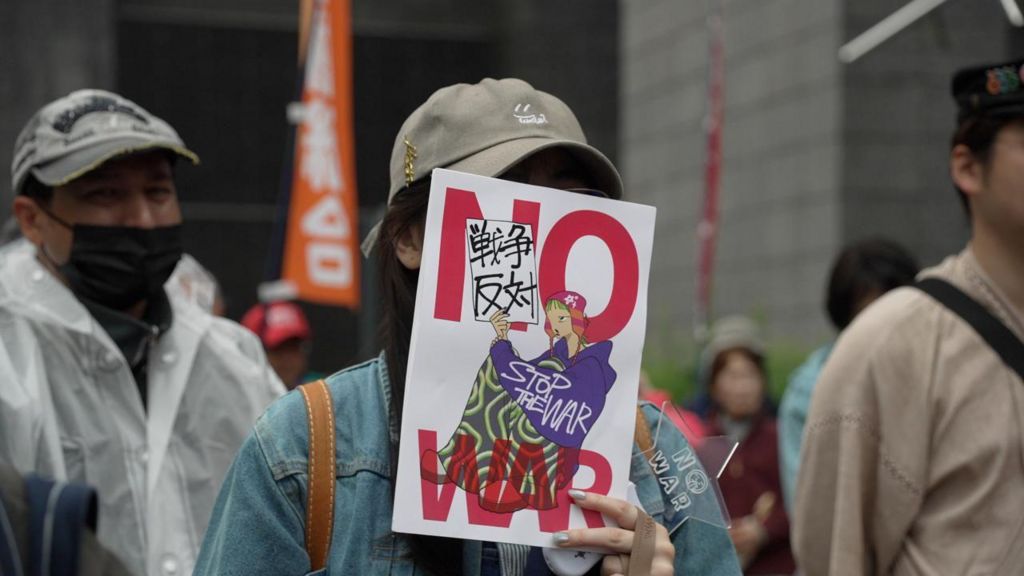
The proposal faces significant domestic opposition, with recent polls indicating that 52-67% of Japanese citizens oppose Middle East military deployments. Meanwhile, international relations specialists like Professor Chen Hong of East China Normal University identify the US-Japan alliance as the primary external catalyst driving Japan’s military normalization, with Washington increasingly expecting Tokyo to assume greater regional security responsibilities.
Analysts suggest that Japan’s incremental approach to expanding military operations could establish a concerning precedent for other nations seeking to broaden their security roles beyond traditional boundaries, potentially destabilizing established international norms and regional security architectures.
-

China sanctions Japanese lawmaker close to Takaichi over his ties to Taiwan
China has enacted immediate sanctions against prominent Japanese legislator Keiji Furuya, citing his alleged collaboration with Taiwanese separatist elements. The measures, announced Monday by China’s Foreign Ministry, include comprehensive entry bans to mainland China, Hong Kong, and Macao, alongside restrictions on engagements with Chinese entities and individuals.
Furuya, who chairs the bipartisan Japan-Taiwan lawmakers’ consultation council, maintains regular diplomatic contact with Taiwanese officials. His most recent meeting with Taiwanese President Lai Ching-te in Taipei during mid-March precipitated the Chinese response. Beijing asserts these activities violate the foundational One-China principle and constitute unacceptable interference in China’s internal affairs.
The sanctioned lawmaker represents a key political ally of Japanese Prime Minister Sanae Takaichi, having recently orchestrated the governing Liberal Democratic Party’s successful electoral strategy. This development marks the latest escalation in Sino-Japanese tensions that intensified following Takaichi’s November remarks characterizing potential Chinese military action against Taiwan as a national security threat warranting Japanese military response.
Furuya responded to the sanctions by emphasizing the normalcy of inter-parliamentary exchanges between nations sharing common values. He noted minimal personal impact given his decades-long absence from China and lack of Chinese assets.
This incident continues a pattern of Chinese sanctions against Japanese politicians, including last year’s measures against opposition lawmaker Seki Hei for similar allegations regarding Taiwan-related discourse.
-

Russian oil tanker reaches Cuba after Trump appears to loosen blockade
A Russian-flagged oil tanker has arrived in Cuban waters, delivering the first major shipment of crude oil to the Communist-run island since January. The vessel, identified as the Anatoly Kolodkin, is carrying approximately 100,000 tonnes of crude oil, described by Russian officials as a humanitarian shipment. This delivery comes as Cuba endures severe nationwide blackouts and a dire energy shortage that has crippled essential services, including hospital operations.
The arrival follows a significant rhetorical shift from U.S. President Donald Trump. Aboard Air Force One, President Trump stated he had ‘no problem’ with Russia or other nations sending oil to Cuba, remarking, ‘they have to survive.’ This comment appeared to signal a potential softening of a de facto fuel blockade enforced by his administration since early January. The blockade was initiated following the U.S. seizure of Venezuelan leader Nicolás Maduro, a key ally who had provided Cuba with oil under preferential terms. The Trump administration had previously threatened tariffs on any country supplying oil to Cuba and had listed Cuba as barred from receiving Russian oil deliveries.
Russian Energy Minister Sergey Tsivilev explicitly linked the shipment to U.S. policy, stating Cuba found itself in a difficult situation ‘as a result of sanctions pressure.’ The oil is expected to be offloaded at the Matanzas terminal, offering a short-term lifeline to the Cuban population. However, the underlying political stalemate remains unresolved. The Cuban government, led by President Miguel Díaz-Canel, is engaged in talks with the U.S. but both sides maintain firm red lines, with Cuba refusing any enforced political changes and President Trump recently stating he could ‘take’ Cuba. The nation’s crisis, already its worst since the Cold War due to pandemic-related tourism collapse and economic mismanagement, has been severely exacerbated by the fuel shortages.
-

What to know as military-led Myanmar transitions back to an elected government
Myanmar’s Parliament commenced proceedings on Monday to select the nation’s next president, initiating what appears to be a carefully choreographed transition from direct military rule to a nominally elected government. This political maneuver comes exactly five years after the military seized power by ousting Aung San Suu Kyi’s democratically elected administration.
The process gained momentum as Senior General Min Aung Hlaing, the head of the military-led government, formally relinquished his concurrent position as commander-in-chief of the armed forces. This strategic resignation fulfills a constitutional requirement that prohibits the president from holding both offices simultaneously, effectively clearing the path for his anticipated ascension to the presidency.
General Min Aung Hlaing emerges as one of three presidential nominees, though his victory appears virtually assured given the military’s entrenched political dominance. The legislature remains heavily stacked with military-appointed representatives and lawmakers from army-backed parties, creating an insurmountable majority for any opposition candidates.
The selection mechanism involves three distinct groups—the Lower House, Upper House, and military bloc—each proposing vice presidential candidates. From these nominations, the 586-member legislature will conduct a vote, with the top candidate assuming the presidency and the remaining two becoming vice presidents. This elaborate process could conclude as early as Thursday.
This political theater unfolds against the backdrop of Myanmar’s devastating civil conflict, which has engulfed significant portions of the country. The recent parliamentary elections, conducted in limited constituencies due to security concerns, faced widespread criticism from pro-democracy advocates who denounced them as illegitimate exercises designed to sanction continued military dominance.
The absence of meaningful opposition further underscores the predetermined nature of this transition. Major political parties, including Suu Kyi’s National League for Democracy, were either barred from participation or boycotted what they considered fundamentally unfair electoral conditions. Suu Kyi herself remains imprisoned on politically motivated charges while her party faced forced dissolution in 2023.
Min Aung Hlaing, who has commanded Myanmar’s military since 2011, transferred formal control of the armed forces to his close aide General Ye Win Oo during a ceremony in the capital Naypyitaw. The 69-year-old general’s international reputation remains tarnished by the military’s brutal 2017 campaign against Rohingya Muslims, which the United Nations has characterized as ethnic cleansing.
-

In South Sudan, a prophet’s sacred stick helps fuel a violent struggle for political power
In South Sudan, the world’s youngest nation, an ancient spiritual artifact has become a focal point in the ongoing political turmoil between President Salva Kiir and opposition leader Riek Machar. The Ngundeng Bong’s dang—a sacred stick believed to have summoned deadly thunderbolts in 1878 tribal battles—now symbolizes the deep ethnic and spiritual divisions driving the country’s cycle of violence.
Machar, who acquired the dang in 2009, is viewed by his Nuer followers as the prophesied leader foretold by Ngundeng—a gap-toothed, left-handed man destined to lead South Sudan. This perception has sustained his political struggle while simultaneously making him a target for Kiir’s Dinka-dominated government. The ethnic tensions between these groups erupted into civil war in 2013 after Kiir accused Machar of plotting a coup, resulting in approximately 400,000 deaths despite a fragile 2018 peace agreement.
Recent escalation has prompted authorities to order civilian evacuations from rebel-held towns, while Machar remains under house arrest facing treason charges. Militias like the White Army continue fighting in belief they’re fulfilling Ngundeng’s prophecy to install Machar as president.
Historians note the dang’s significance transcends its physical form. Douglas H. Johnson, the British-American historian who repatriated the artifact, compares its authority to a parliamentary mace. The 110-centimeter stick, fashioned from tamarind root and decorated with copper wire, was collected as a colonial trophy before Johnson discovered it in Bournemouth and returned it to South Sudan.
Currently, the dang’s whereabouts remain uncertain, though it’s believed to be in Machar’s possession. Archivists describe it as national heritage “embedded” with political authority, while analysts suggest its perceived power contributes to the ongoing conflict. With elections scheduled for December, the absence of Machar on the ballot could further disenfranchise the Nuer population and exacerbate tensions in this spiritually-charged political struggle.
-

After Trump said MBS was ‘kissing his ass’, Gulf leaders told to send children to fight Iran
Former White House strategist Steve Bannon has provoked controversy by demanding that Gulf Arab elites deploy their own children as frontline troops in any potential military confrontation with Iran. During his ‘War Room’ podcast broadcast on Saturday, the influential ally of President Donald Trump argued that regional powers should bear the human cost of conflict.
Bannon specifically challenged Gulf royalty to demonstrate their commitment to the cause. ‘Maybe we can get a couple or three of those princes in uniform. Got any kids in special forces? Let’s line up those royal families and see how big they’re talking,’ he stated provocatively.
The political commentator expanded his criticism to include Washington’s traditional allies, accusing Israel, Arab nations, and European partners of ‘playing games’ while American troops shoulder the burden. He emphasized that President Trump requires ‘options and alternatives to negotiate the military operational victory.’
Bannon framed a potential ground campaign in historical terms, envisioning a modern recreation of Alexander the Great’s conquests from 2,300 years ago. He insisted that Arab forces should lead any offensive, particularly targeting Iran’s strategic Kharg Island facility.
In specific operational suggestions, Bannon proposed that the United Arab Emirates should form the ‘first wave’ at Kharg Island, acknowledging Abu Dhabi Crown Prince Mohammed bin Zayed as ‘probably the best ally we have over there.’ He simultaneously demanded immediate action against Iranian financial operations within UAE territories.
These remarks emerged shortly after President Trump’s own comments about Saudi leadership at a investment conference in Florida. The president mockingly recalled that Crown Prince Mohammed bin Salman ‘didn’t think he’d be kissing my ass’ following the administration’s support during the Khashoggi crisis.
Meanwhile, diplomatic efforts continue independently of these inflammatory statements. Pakistan has offered to host substantive negotiations to resolve tensions, with officials from Saudi Arabia, Egypt, and Turkey convening in Islamabad to explore de-escalation pathways and potential US-Iran dialogue.