分类: politics

  • Former Shanxi legislator under investigation

    Former Shanxi legislator under investigation

    China’s top anti-corruption authorities have launched a formal investigation into Yue Puyu, a former senior legislative official from Shanxi province, for alleged serious breaches of Communist Party discipline and national laws. The announcement was made public on Monday through official channels by the Communist Party of China Central Commission for Discipline Inspection and the National Commission of Supervision.

    Yue Puyu, 66, a lifelong Shanxi native, began his government career in June 1982 and became a Party member in September 1985. His extensive career included significant leadership roles such as chairman of Taiyuan Heavy Machinery Group Co., Ltd and mayor of Linfen city. He ascended to the position of deputy head of the standing committee of Shanxi’s provincial people’s congress in January 2020, representing the highest legislative body in the region.

    Despite his professional accomplishments, which included receiving the National Scientific and Technological Progress Award and being recognized as an outstanding entrepreneur in Shanxi, Yue now faces serious allegations. The anti-corruption watchdogs have not disclosed specific details regarding the nature of the violations, maintaining the investigation’s confidentiality during ongoing proceedings.

  • Palestine Action hunger striker arrested in dawn raid by masked police

    Palestine Action hunger striker arrested in dawn raid by masked police

    In a dramatic early morning operation, UK Counter-Terrorism officers have rearrested Qesser Zuhrah, a 21-year-old activist previously associated with the proscribed organization Palestine Action. The arrest occurred approximately at 6:30 AM on Monday during a raid on her Watford residence, conducted by masked police personnel.

    Zuhrah was taken into custody under Section 44 of the Serious Crimes Act for allegedly encouraging criminal activities, and Section 1 of the Terrorism Act for purportedly inciting acts of terrorism. Video evidence from the scene depicts the moment officers, whose faces were concealed, informed her of the charges before transporting her to Hatfield police station for questioning.

    This development follows Zuhrah’s recent release on bail in February after spending 15 months in remand. Her initial detention was connected to a August 2024 incident involving two dozen activists at an Israeli-owned Elbit Systems arms manufacturing facility in Filton—a case collectively known as the ‘Filton 24’. Although aggravated burglary charges against her and 22 co-defendants were subsequently dropped, she now faces new allegations.

    According to the advocacy group Free the Filton 24, the latest arrest stems from an Instagram post in which Zuhrah allegedly advocated for ‘direct action’. Counter Terrorism Policing South East confirmed the operation and stated they are reviewing the rationale behind officers wearing masks during the arrest.

    The context of this case is further complicated by the UK government’s July 2025 proscription of Palestine Action—a group that protests against Israeli military operations—which is currently subject to a legal challenge after a High Court deemed the ban unlawful.

    Zuhrah’s previous imprisonment was marked by significant controversy. She participated in a 73-day hunger strike alongside seven other Palestine Action-detainees, enduring 46 days without food that resulted in multiple hospitalizations. At a recent press conference, she detailed allegations of mistreatment during her confinement, including being left immobilized on her cell floor for 22 hours with severe chest pains and being subjected to extended solitary confinement periods.

  • UK must have independent nuclear deterrent, says major parliamentary report

    UK must have independent nuclear deterrent, says major parliamentary report

    A groundbreaking parliamentary report is demanding a fundamental restructuring of Britain’s security strategy, advocating for reduced dependence on the United States and development of an autonomous nuclear deterrent. The Joint Committee on the National Security Strategy issued these recommendations amid deteriorating UK-US relations following conflicts in the Middle East.

    The comprehensive assessment warns that Britain’s current ‘strategic dependencies on the United States for core capabilities in nuclear, intelligence and conventional defence’ creates vulnerability. The committee explicitly calls for planning ‘to move away from a bilateral relationship with the United States that is so dependent’ on American resources for critical security operations.

    The report emerges during significant diplomatic strain between the two traditional allies. Recent tensions escalated when Britain initially denied US requests to utilize the joint UK-US base on Diego Garcia for strikes against Iran, though Prime Minister Keir Starmer’s administration later reversed this decision twice within weeks.

    Committee members, including Foreign Affairs Select Committee chair Emily Thornberry alongside cross-party representatives from Labour, Liberal Democrat, and Conservative parties, emphasize preparing for scenarios where ‘Europe does not have US backing in a crisis.’ The document urges collaboration with European allies to develop ‘greater European leadership’ within NATO frameworks.

    Notably, the assessment acknowledges Britain’s diminished global influence and recommends strengthening partnerships with ‘middle powers’ including Canada, Australia, and India to navigate escalating US-China competition. The committee warns that increasing tensions between superpowers ‘will go down, making conflict more likely’ without proactive diplomatic measures.

    The recommendations arrive weeks after Liberal Democrat leader Sir Ed Davey publicly advocated for a ‘fully independent British nuclear deterrent,’ citing concerns about reliance on unpredictable US leadership. Currently, Britain maintains operational control of its nuclear arsenal but depends on American-supplied Trident missiles for weapons delivery.

    As the strategic landscape evolves, the report insists that a ‘credible, sustainable and independent UK nuclear deterrent is integral to UK national security’ and serves as essential protection against proliferation risks in an increasingly volatile global environment.

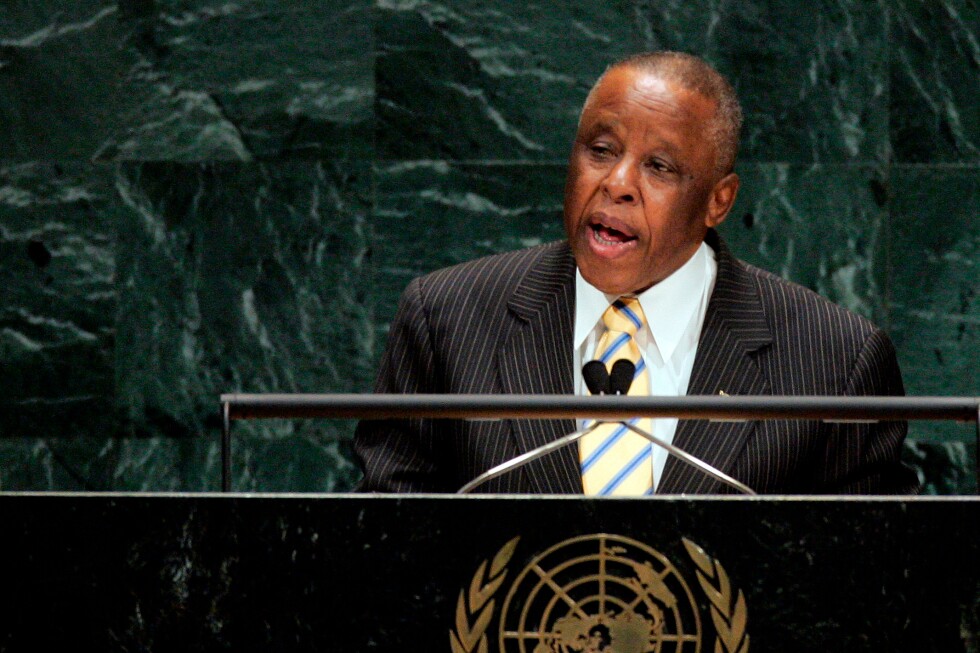
  • Suriname ex-president, Chandrikapersad Santokhi, who probed the 1982 political killings, dies at 67

    Suriname ex-president, Chandrikapersad Santokhi, who probed the 1982 political killings, dies at 67

    PARAMARIBO, Suriname — Chandrikapersad Santokhi, the former president of Suriname who steered the nation through economic stabilization and investigated one of the country’s most traumatic historical episodes, has passed away at age 67. The announcement came from current President Jennifer Geerlings-Simons via social media, though the precise cause of death remains undisclosed.

    Santokhi, affectionately known as “Chan,” served as president from 2020 to 2025 after previously holding the justice and police portfolio from 2005 to 2010. His career spanned multiple decades of public service, beginning as a police commissioner where he led the investigation into the December 1982 killings—a brutal episode where 15 political dissidents were executed under the military regime of former dictator Desi Bouterse.

    His tenure as president marked a critical transition period for Suriname. Inheriting an economically devastated nation from Bouterse, Santokhi implemented an International Monetary Fund program that restored fiscal stability but demanded significant sacrifices from citizens through the elimination of fuel, water, and electricity subsidies. These austerity measures sparked substantial public discontent, culminating in February 2023 when protesters stormed parliament demanding his resignation.

    Despite these challenges, Santokhi earned international recognition for his efforts to strengthen ties with the Netherlands, Suriname’s former colonial ruler. Dutch Prime Minister Rob Jetten expressed profound shock at Santokhi’s passing, noting his “tireless work” to enhance bilateral relations.

    Santokhi’s legacy includes his earlier role as “The Sheriff”—a nickname earned during his crackdown on drug trafficking as justice minister. His dogged pursuit of justice in the December killings case eventually led to Bouterse’s conviction and 20-year prison sentence, though the former dictator remained a fugitive until his death in 2024. The two maintained a fierce political rivalry throughout their careers, with Bouterse once accusing Santokhi of plotting against him.

    Santokhi’s political career concluded when voters denied him a second term in the May 2025 general elections, ending his leadership of the Progressive Reform Party which he had chaired since 2011.

  • Most Syrian refugees in Germany expected to return home in three years, Merz says

    Most Syrian refugees in Germany expected to return home in three years, Merz says

    In a landmark meeting that signals shifting European migration policies, German Chancellor Friedrich Merz and Syrian President Ahmed al-Sharaa convened in Berlin on Monday to announce a comprehensive framework for the repatriation of Syrian refugees. The two leaders revealed an ambitious target: facilitating the return of approximately 80% of Syrians currently residing in Germany within the next three years.

    Chancellor Merz emphasized that Syria’s post-conflict transformation necessitates a fundamental reassessment of protection needs. “The situation in Syria has now changed fundamentally following the conclusion of the civil war,” Merz stated during a joint press conference. “Our initial priority will be returning those who no longer have valid residence rights, particularly criminal offenders, but this will extend to broader populations in subsequent phases.”

    The German leader acknowledged the significant contributions made by Syrian refugees while simultaneously asserting that most express desire to return home and participate in national reconstruction efforts. Merz clarified that exceptions would be made for certain professionals, noting that “it is in our country’s interest that Syrian doctors and carers would be able to remain if they wanted to.”

    President Sharaa expressed profound gratitude for Germany’s hospitality during Syria’s conflict, stating that his nation “would never forget how Germany had opened its doors to refugees during the civil war.” The Syrian leader proposed establishing a circular migration model that would enable Syrians to contribute to reconstruction “without giving up the stability and lives they have built here, for those who wish to stay.”

    The announcement occurs against a backdrop of rising anti-immigration sentiment in Germany, where support for the AfD party has surged significantly. Merz’s government has consequently adopted increasingly stringent refugee policies amid broader European concerns regarding migration management.

    However, the proposal faces substantial opposition from German political factions and human rights organizations. Franziska Brantner of the opposition Green Party challenged the feasibility of large-scale returns, citing Syria’s compromised infrastructure and unstable security situation. “Many Syrians were deeply anchored in Germany,” Brantner noted, “holding systemically important jobs and with children in school.”

    The Kurdish Community in Germany (KGD organized protests during Sharaa’s visit, demanding binding commitments regarding minority protections in Syria. The group has accused the Syrian president of human rights violations and war crimes during the Islamist rebel offensive that toppled former leader Bashar al-Assad in December 2024.

    Despite the official conclusion of Syria’s decade-long civil war, the country remains deeply divided and has experienced recurrent sectarian violence, particularly between government-aligned forces and Kurdish groups in the northeast. Recent attempts at constitutional reform through an interim parliamentary body have faced criticism from Kurdish representatives who allege exclusion from meaningful negotiations and insufficient guarantees for minority rights.

    This development represents a significant evolution from Germany’s 2015 refugee crisis response, when then-Chancellor Angela Merkel declared “Wir schaffen das” (We’ll manage this) while keeping borders open to those fleeing conflict. That policy decision, once viewed as pragmatic, ultimately became a political liability that fueled the rise of anti-immigration parties across Europe.

  • International observers urge violence-free elections after clashes at Serbia vote

    International observers urge violence-free elections after clashes at Serbia vote

    BELGRADE, Serbia — International election monitors have issued a damning assessment of Serbia’s municipal elections, documenting widespread violence, voter intimidation, and procedural irregularities that marred the democratic process. The Congress of Local and Regional Authorities of the Council of Europe reported that while voting procedures inside polling stations were largely compliant, the environment outside was characterized by alarming acts of aggression and coercion.

    According to the official observer statement, monitors witnessed ‘acts of violence’ and ‘the threatening presence of large groups of people, often unidentified and sometimes masked’ in nearly all visited municipalities. The elections, held across 10 Serbian towns on Sunday, represented a critical test for President Aleksandar Vucic’s administration following over a year of youth-led protests challenging his authoritarian governance.

    Despite the turbulent circumstances, Vucic has claimed comprehensive victory for his right-wing populist Serbian Progressive Party in all contested municipalities. The president personally led the campaign effort, seeking to reassert his political dominance after protests triggered by a November 2024 train station tragedy in northern Serbia.

    Violent incidents erupted in at least three towns, with student activists and independent observers reporting attacks by masked supporters of Vucic. The president’s party conversely accused opposition groups of instigating conflicts. International monitors emphasized that ‘violence and coercion are unacceptable barriers to the free expression of the will of all voters’ and that ‘no voter should feel threatened when exercising his or her democratic right.’

    Additional concerns included serious breaches of voting secrecy, with numerous voters photographing their ballots—a practice that monitors described as ‘highly worrying.’ The pre-election period was characterized by extreme polarization and focus on national rather than local issues.

    Serbian independent monitoring organization CRTA (Center for Research, Transparency and Accountability) corroborated the international assessment, documenting scores of violent incidents and voting irregularities. The group stated that the proceedings ‘can hardly be called an election,’ citing organized voting violations, physical altercations involving state institution employees, and the deployment of riot police in several locations.

    Jovana Djurbabic of CRTA told The Associated Press: ‘The whole atmosphere was marked with high intensity of tensions, violence, pressures. I would not call these elections free, they are not free at all.’

    The electoral controversy has further strained regional relations, with Vucic alleging ‘logistical support’ to his opponents from neighboring Croatia. In response, Croatian President Zoran Milanovic canceled an upcoming regional meeting scheduled for May, stating that hosting Vucic would be ‘impossible’ following his inflammatory comments. Milanovic’s office stated that Vucic’s ‘political statements and actions…inflict damage on relations between the states and jeopardize peace and stability in southeastern Europe.’

    The tensions reflect historical animosities dating to the 1991-95 Croatian War of Independence, during which Serbia backed a Croatian Serb rebellion that resulted in over 10,000 casualties.

  • ‘Inhumane and degrading’: Israel set to approve death penalty for Palestinians

    ‘Inhumane and degrading’: Israel set to approve death penalty for Palestinians

    Israel’s legislative body is poised to conduct a decisive vote on Monday regarding a highly contentious bill that would authorize capital punishment for Palestinian detainees convicted of terrorism-related offenses. The proposed legislation, championed by the far-right Otzma Yehudit (Jewish Power) party, has ignited fierce international criticism and raised profound concerns about its compatibility with international legal standards.

    European diplomatic leaders from Germany, France, Italy, and the United Kingdom have jointly appealed to Israeli authorities to abandon the scheduled vote. In an official collective statement, they expressed particular apprehension about the bill’s inherently discriminatory nature, cautioning that its implementation could fundamentally undermine Israel’s democratic foundations. They emphasized that “the death penalty represents an inhumane and degrading form of punishment lacking demonstrable deterrent effect,” reaffirming their unified opposition to capital punishment as a core shared value.

    Legal analysts and human rights organizations have raised substantial concerns regarding the bill’s potential violation of international law. According to reports from Haaretz, Israeli military authorities themselves believe the legislation could contravene international legal standards and potentially expose military commanders to international arrest warrants. Despite these legal apprehensions, the Knesset’s National Security Committee advanced the bill last week after overriding more than 1,000 formal objections.

    Prime Minister Benjamin Netanyahu reportedly attempted to moderate the bill’s original language in response to legal concerns, though experts maintain that the current formulation still constitutes a breach of international legal norms. The proposed legislation has generated profound anxiety among families of Palestinian prisoners, with many fearing their incarcerated relatives could face execution if the measure becomes law.

    Sabreen Shahrouri, whose brother Muammar has been imprisoned since 2002 for his involvement in planning a bombing that killed 29 Israelis, described the devastating psychological impact on families. She detailed severe abuses allegedly endured by prisoners, including systematic beatings resulting in fractures, medical neglect, solitary confinement exceeding two years, and incidents where prison guards reportedly set dogs upon detainees. Shahrouri characterized the current prison conditions as “a slow form of execution” that constitutes “an execution of their souls before their bodies.”

    Palestinian prisoners’ rights organizations have condemned the legislation as an “unprecedented act of savagery,” accusing Israel of attempting to formalize the killing of detainees amid escalating abuse reports. United Nations experts have urgently called for the bill’s withdrawal, warning that mandatory death sentences fundamentally contradict the right to life and that proposed execution by hanging would amount to torture under international law.

    Israeli human rights groups including Adalah, the Public Committee Against Torture in Israel, HaMoked, and Physicians for Human Rights-Israel have jointly denounced the legislation, warning it would establish a “racialized system of capital punishment” applied almost exclusively against Palestinians. They described the bills as “among the most extreme and dangerous legislative measures ever proposed by Israel against Palestinians,” creating a discriminatory punitive framework that denies basic rights and protections.

    Documented mistreatment of Palestinian detainees has dramatically intensified since October 2023, with human rights organizations reporting at least 90 fatalities occurring in Israeli custody during this period. The proposed legislation emerges against this backdrop of escalating prison abuses and widespread arrests of Palestinians on broad terrorism charges.

  • Canada’s new NDP leader says party must have ‘hard conversations’ over energy policy

    Canada’s new NDP leader says party must have ‘hard conversations’ over energy policy

    Canada’s New Democratic Party has elected Avi Lewis as its new leader following a decisive first-ballot victory on Sunday, immediately exposing significant internal divisions over energy policy within the left-leaning party. Lewis, who ran on a platform emphasizing aggressive climate action and economic affordability, now faces immediate challenges from provincial NDP leaders in Western Canada who oppose his stance against new oil and gas development.

    The leadership transition has revealed a growing rift between the federal party’s environmental priorities and the economic concerns of energy-producing provinces. Shortly after his victory, Saskatchewan NDP leader Carla Beck publicly rejected Lewis’s invitation to meet, describing his resource development positions as “ideological and unrealistic” in a formal letter. Similarly, Alberta NDP leader Naheed Nenshi expressed concerns that Lewis’s direction would not serve his province’s interests, emphasizing the need for federal leaders who understand Alberta’s essential role in Canada’s economy.

    Despite these criticisms, Lewis characterized the disagreements as evidence of a broadening political coalition. “Hard conversations are necessary,” Lewis told reporters on Monday. “These disagreements mean our tent is growing and are a sign of health.” He maintained that his door remains open to those who disagree with his energy policies while reaffirming his opposition to new fossil fuel development.

    Lewis cited the ongoing Israeli-American conflict with Iran and resulting oil price volatility as evidence that “the energy economy is extremely unstable.” He argued for accelerating Canada’s transition to renewable energy to create “a more stable, secure, and safe economy, and a more independent Canadian economy.”

    The new leader received support from Manitoba Premier Wab Kinew, who acknowledged potential for “heated debates” but emphasized alignment on broader issues. “We’re fighting for the people who don’t have a voice right now,” Kinew stated. Lewis confirmed receiving “words of wisdom and encouragement” during their hour-long meeting in Winnipeg.

    Federal NDP caucus members expressed unity behind Lewis, with interim leader Don Davies stating the party was “100% united” and could serve as “a powerful voice for all the voters who do not see themselves reflected” by Liberal or Conservative policies. Lewis, who does not currently hold a parliamentary seat, indicated he would focus on engaging with the party’s national base rather than immediately pursuing elected office.

    The leadership transition occurs as the NDP seeks to rebuild after significant losses in last year’s federal election, while simultaneously navigating the complex balance between environmental priorities and economic realities in Canada’s energy-producing regions.

  • Liamine Zeroual: The Algerian president who followed the straight and narrow

    Liamine Zeroual: The Algerian president who followed the straight and narrow

    Algeria has entered a three-day period of national mourning following the passing of former President Liamine Zeroual at age 84. The military hospital in Algiers confirmed his demise after a prolonged struggle with severe illness, prompting nationwide reflection on his multifaceted political legacy.

    Zeroual’s journey from a 16-year-old National Liberation Army combatant during Algeria’s independence war against France to the nation’s highest office embodies Algeria’s turbulent post-colonial trajectory. His military career saw extensive training across Egypt, the Soviet Union, and France, establishing him as a respected officer who ascended through strategic command positions.

    The political turning point arrived in 1994 when Zeroual assumed leadership during Algeria’s devastating civil war against Islamic militant groups. His 1995 presidential victory—the country’s first democratic election—occurred amidst violent opposition from the Armed Islamic Group, which threatened voters with coffins and denounced his presidency as hell’s seat.

    Those close to Zeroual describe his presidential tenure as profoundly traumatic, particularly during the GIA’s brutal civilian massacres. His principled stance against amnesty negotiations with militant groups contrasted with his eventual political surrender in 1998, when he unexpectedly announced early elections that brought Abdelaziz Bouteflika to power.

    Zeroual’s subsequent retirement to his native Batna revealed his enduring dissent toward Bouteflika’s administration. In a significant 2014 public letter, he condemned the president’s extended rule and advocated for generational transition. His final political act occurred during the 2019 Hirak protests, when he rejected offers from the embattled regime to lead a transitional government, instead expressing confidence in the demonstrators’ capacity to shape Algeria’s destiny.

    His critical assessment of Algeria’s political system highlighted its historic failure to implement meaningful reforms or address popular demands for democracy—a testament to his complex relationship with the power structures he both served and challenged.

  • Tehran warns as Trump eyes oil hub

    Tehran warns as Trump eyes oil hub

    Tensions in the Middle East have reached a critical juncture as former US President Donald Trump openly contemplated seizing Iran’s strategic Kharg Island oil terminal, while regional diplomatic efforts intensified through Pakistani mediation.

    In a provocative statement to the Financial Times, Trump revived his long-standing proposition to “take the oil” from Iran, specifically mentioning Kharg Island – the nation’s primary oil export facility located in the Persian Gulf. “Maybe we take Kharg Island, maybe we don’t. We have a lot of options,” Trump stated, though military experts immediately questioned the feasibility of such an operation given the need to navigate through the strategically vulnerable Strait of Hormuz.

    The threat emerged against a backdrop of continued military action, with US and Israeli forces conducting strikes across Iran for the fifth consecutive week. Targets included the Tabriz Petrochemical Complex and Khondab’s heavy water production plant, which the International Atomic Energy Agency confirmed is no longer operational.

    Iran responded with defiant rhetoric through Parliament Speaker Mohammad Bagher Ghalibaf, who accused Washington of duplicity: “The enemy publicly sends messages of negotiation and dialogue while secretly planning a ground attack. Our men are waiting for the arrival of the American soldiers on the ground to set them on fire.” Navy Commander Shahram Irani issued additional warnings that the USS Abraham Lincoln would face missile strikes if it entered Iran’s strike range.

    Amidst the escalating rhetoric, Pakistan emerged as a crucial diplomatic intermediary, hosting foreign ministers from Saudi Arabia, Turkiye, and Egypt for extensive consultations aimed at de-escalation. Pakistani Foreign Minister Mohammad Ishaq Dar characterized the talks as “detailed and in-depth,” announcing that Islamabad would host US-Iran negotiations “in the coming days,” though the format—direct or indirect—remained uncertain.

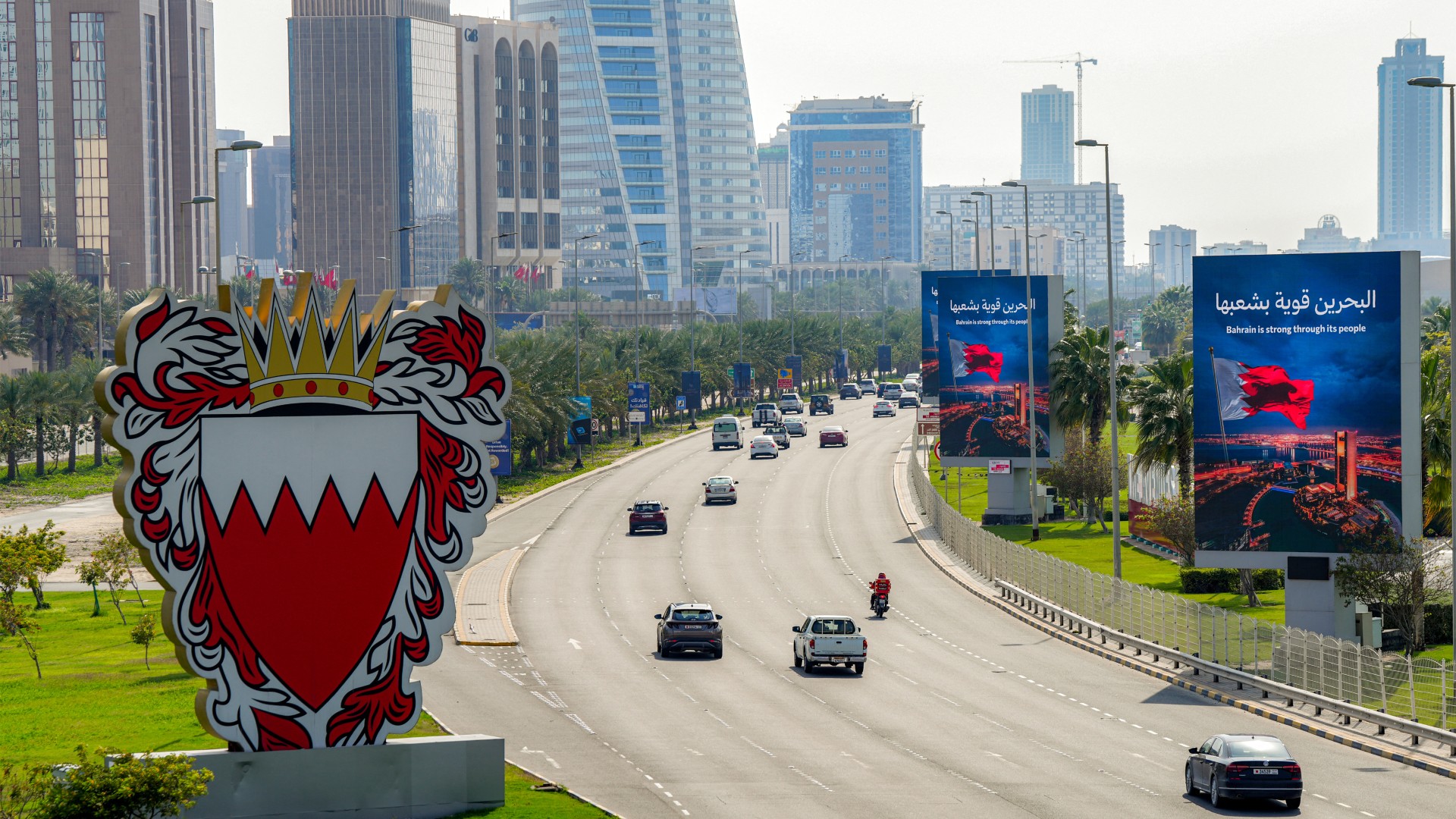
    The conflict has already produced significant regional consequences. Kuwait reported an Indian worker killed in an attack on a power and desalination plant, while Saudi Arabia intercepted missiles targeting its oil-rich Eastern Province. Bahrain activated missile alerts, and defenses in Dubai intercepted incoming projectiles.

    The economic impact continues to intensify globally, with Brent crude approaching $117 per barrel—a nearly 60% increase since the conflict began—disrupting energy markets, triggering fertilizer shortages, and affecting international air travel.

    Adding to the complexity, Iran experienced widespread power outages in Tehran and Alborz Province, which authorities attributed to attacks on electrical infrastructure, though the connection to Trump’s threats against Iranian energy facilities remained unclear. The former president extended his ceasefire deadline to April 6 as Washington circulated a 15-point peace plan.