Tensions on the Korean Peninsula have escalated sharply in recent days, after North Korea announced plans to roll out advanced long-range artillery systems capable of striking the Seoul capital region and commission its first purpose-built naval destroyer by mid-year — moves that come on the heels of a sweeping constitutional change that abandons decades of official commitment to Korean unification.
The developments mark the most visible escalation of Pyongyang’s hard-line stance under leader Kim Jong Un, who has spent years steadily moving away from the goal of a single Korean state and redefining South Korea as the country’s primary permanent enemy.
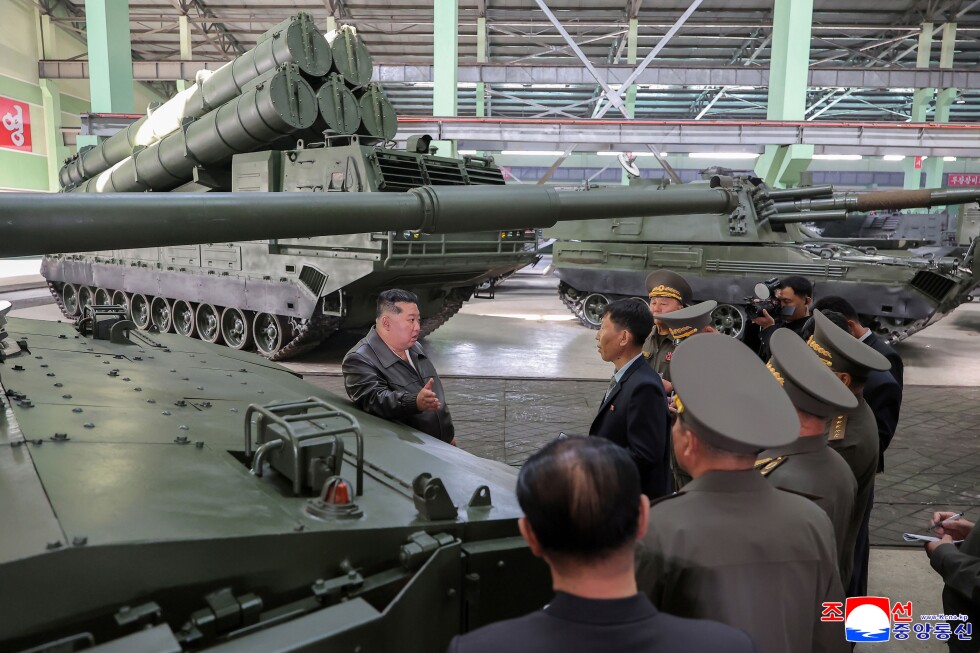
North Korea’s state-run Korean Central News Agency (KCNA) detailed Kim’s two-day inspection tour of military facilities this week. On Wednesday, Kim visited a munitions factory to oversee production of new 155-mm self-propelled gun-howitzers, which are set to be deployed to artillery units stationed along the southern border with South Korea before the end of 2024. According to KCNA, Kim confirmed these large-caliber rifled weapons have a maximum striking range exceeding 60 kilometers, or roughly 37 miles. The North Korean leader framed the enhanced capability as a transformative advantage for his military’s ground operations, noting that “such a rapid extension of striking range and remarkable improvement of striking capability will provide a great change and advantage in the land operations of our army.” Kim added that a suite of other tactical and operational missile systems, along with advanced multiple rocket launchers, are also scheduled for deployment along the inter-Korean border in coming months.
While North Korea’s ballistic missile program has dominated global headlines and drawn repeated United Nations sanctions, its large conventional artillery force positioned near the border has long been considered one of the most immediate threats to South Korea. The Seoul capital region, home to more than 10 million South Korean citizens, sits just 40 to 50 kilometers from the inter-Korean border — putting the entire area well within range of the newly announced artillery systems.
On Thursday, a day after the factory inspection, Kim traveled to North Korea’s west coast to review sea trials of the country’s first newly built navy destroyer, the Choe Hyon. Kim praised the completion of all pre-commissioning tests, and ordered military officials to formally transfer the warship to the North Korean navy by mid-June, as originally planned.
Notably, Kim’s teenage daughter accompanied him during the destroyer inspection, marking another high-profile public appearance together that fuels ongoing speculation about her position as Kim’s intended successor. Last month, South Korea’s National Intelligence Service publicly assessed that she could be formally recognized as the next heir to North Korea’s ruling family. The Choe Hyon, first unveiled to great fanfare in 2023, is North Korea’s largest and most technologically advanced surface warship to date. Pyongyang began construction on a second destroyer of the same class shortly after, but that vessel suffered significant damage during a botched launching ceremony. Kim has publicly called for the construction of two additional destroyers of the class to modernize the North Korean navy.
Kim’s series of military inspections came just days after South Korea confirmed that North Korea’s recently amended constitution has removed all official language referencing peaceful unification with the South, and redefined Pyongyang’s national territory as only the northern half of the Korean Peninsula. The constitutional change codifies a dramatic shift in North Korea’s long-standing policy, breaking with the position held by Kim’s predecessors, who prioritized the goal of eventual unification under northern rule. Since the start of 2024, Kim has repeatedly declared South Korea a hostile state, and ordered the constitutional rewrite to eliminate all official concepts of shared Korean statehood.
The hardening of North Korea’s position represents a major setback for South Korea’s liberal government, which has prioritized reengaging in dialogue with Pyongyang and taken proactive steps to reduce cross-border tensions — including ending the controversial propaganda loudspeaker broadcasts that South Korea historically operated along the inter-Korean border.
The current escalation comes after a years-long stagnation in diplomatic efforts: North Korea has refused all formal dialogue with both South Korea and the United States since 2019, when high-profile nuclear diplomacy between Kim Jong Un and then-U.S. President Donald Trump collapsed. Since the breakdown of talks, Pyongyang has focused heavily on expanding its nuclear and conventional military arsenals, steadily increasing the threat it poses to regional security.