分类: politics

  • Myanmar junta chief Min Aung Hlaing nominated as president

    Myanmar junta chief Min Aung Hlaing nominated as president

    Myanmar’s military commander-in-chief Min Aung Hlaing has been formally nominated for the presidency as the nation’s parliament convened on Monday, marking a significant political transition following elections widely condemned by the international community. The nomination comes after a general election held between December and January that excluded major opposition parties and was dismissed by critics as fundamentally flawed.

    Min Aung Hlaing, who faces sanctions from numerous Western nations for orchestrating the military coup five years ago, stands as the certain choice for president. His nomination appears alongside two loyalists who present no substantial challenge for the position. The military establishment has defended the electoral process as legitimate despite widespread allegations of manipulation.

    The political landscape reveals approximately 90% of parliamentary members owe direct allegiance to Min Aung Hlaing, comprising both active military officers—guaranteed a constitutional quarter of seats—and elected representatives from the military’s political wing. Parliamentary proceedings this week will focus primarily on presidential selection, though the outcome appears predetermined.

    Analysts note Min Aung Hlaing’s longstanding ambition for the presidency, citing his dissatisfaction with the military party’s poor performance in the 2020 elections as a key catalyst for the coup that overthrew Aung San Suu Kyi’s democratically elected government. The constitutional requirement for the president to relinquish military command presents potential vulnerabilities, prompting Min Aung Hlaing to appoint General Ye Win Oo—a known loyalist with a reputation for brutal suppression of dissent—as his military successor.

    To mitigate power transition risks, the general has established a new consultative council under his leadership, potentially maintaining influence over both military and civilian governance structures. The emerging administration essentially represents an expanded version of the current military junta adopting civilian political trappings, with no indications of policy changes regarding the violent suppression of opposition movements that has characterized the past five years of military rule.

    The country continues to grapple with a devastating civil war that has claimed thousands of lives and displaced millions since the coup, with significant territories remaining under armed opposition control despite the junta’s characterization of elections as a pathway to peace.

  • A youth-led push for change threatens Orbán’s 16-year rule in Hungary’s elections

    A youth-led push for change threatens Orbán’s 16-year rule in Hungary’s elections

    BUDAPEST, Hungary — A profound generational schism is reshaping Hungary’s political landscape as the nation approaches crucial April elections that could terminate Prime Minister Viktor Orbán’s 16-year authoritarian reign. Young Hungarians, mobilized by corruption scandals and economic stagnation, are overwhelmingly backing the surging center-right Tisza party led by reformist Péter Magyar.

    Across the Lake Balaton region and beyond, volunteers in their mid-20s are conducting door-to-door campaigns advocating for political transformation. Florian Végh, a 25-year-old student activist, encapsulates the movement’s sentiment: “We’ve lived our whole lives in this system and want to see what exists beyond it. This system is absolutely dysfunctional.”

    Recent polling reveals dramatic demographic polarization: Tisza commands 65% support among voters under 30, while Orbán’s Fidesz party retains just 14% youth backing. Conversely, Fidesz maintains 50% support among retirement-age Hungarians versus Tisza’s 19%, creating a stark generational divide.

    The political upheaval stems from February 2024’s presidential pardon scandal, where Orbán’s ally pardoned an accomplice in a child sexual abuse case. The controversy triggered mass resignations and nationwide protests organized by influential figures, marking what political scientist Andrea Szabó of Eötvös Loránd University calls “a new, active political generation unfolding before our eyes.”

    Magyar, a 45-year-old lawyer who broke with Fidesz following the scandal, has rapidly built Tisza into a formidable opposition force. His platform promises to restore Hungary’s Western orientation, reverse Orbán’s drift toward Russia and China, and recover billions in blocked EU funds withheld over rule-of-law and corruption concerns.

    Despite Orbán’s appeals to youth—including recent speeches pleading “Young people, wake up! These are not times for taking risks”—his illiberal governance model faces rejection from digitally-connected generations who compare Hungary’s development unfavorably with neighboring Austria’s infrastructure and social systems.

    The election outcome remains uncertain despite Tisza’s polling lead, as Orbán maintains strong rural and elderly support. The contest represents not merely a political battle but a fundamental clash between generations with radically different experiences of Hungarian democracy.

  • US military building ‘massive complex’ beneath White House ballroom project: Trump

    US military building ‘massive complex’ beneath White House ballroom project: Trump

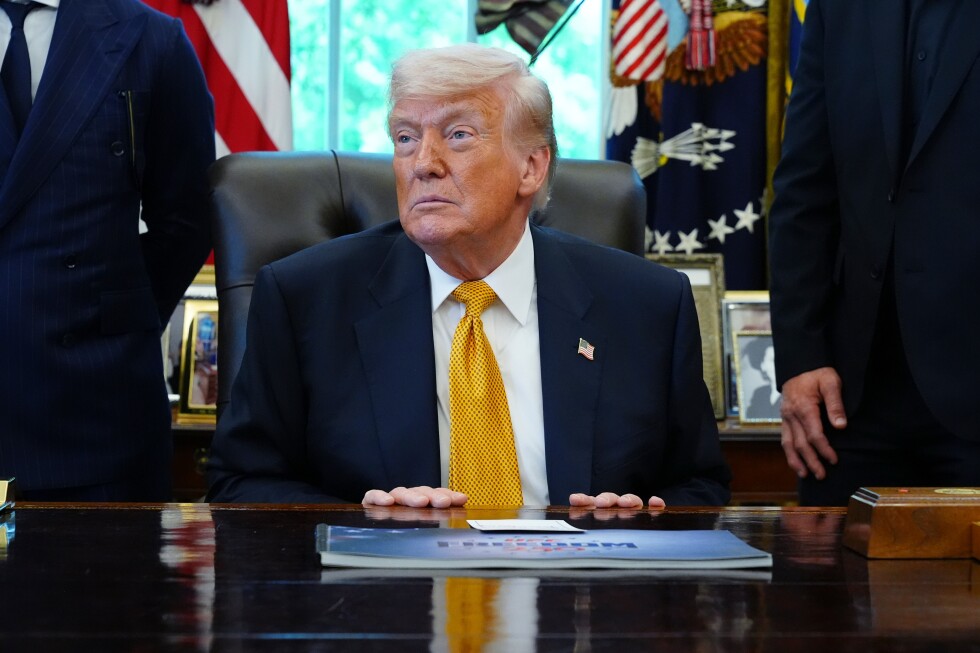
    President Donald Trump has disclosed an unprecedented military construction project underway beneath his privately-funded White House ballroom renovation, revealing details during an impromptu briefing aboard Air Force One on Sunday. The commander-in-chief stated that military engineers are developing what he described as a “massive complex” underneath the ongoing ballroom construction, characterizing the lavish entertainment space as essentially becoming “a shed for what’s being built under.

    This extraordinary revelation emerged as Trump discussed the accelerated progress of his $400 million ballroom project, which has doubled from its original $200 million budget. The undertaking represents one of the most ambitious White House structural modifications in over a century, notably proceeding without standard Washington architectural review procedures.

    The president indicated that details about the subterranean military facility recently surfaced due to “a stupid lawsuit,” though he provided no further elaboration about the nature of this legal challenge or the specific purpose of the underground complex.

    Trump’s fascination with the construction details has become a recurring theme in his public addresses, with the president enthusiastically describing materials being used as “onyx and stones that are incredible” even during press conferences primarily dedicated to international conflicts.

    This ballroom project, which required bulldozing an entire White House wing last October, forms part of Trump’s broader architectural legacy initiatives in the nation’s capital. These include renaming the iconic Kennedy Center as the “Trump-Kennedy Center” and proposing a monumental arch inspired by Paris’s Arc de Triomphe.

  • Controversial Liberal MP Moira Deeming thrown lifeline as rival withdraws following preselection win

    Controversial Liberal MP Moira Deeming thrown lifeline as rival withdraws following preselection win

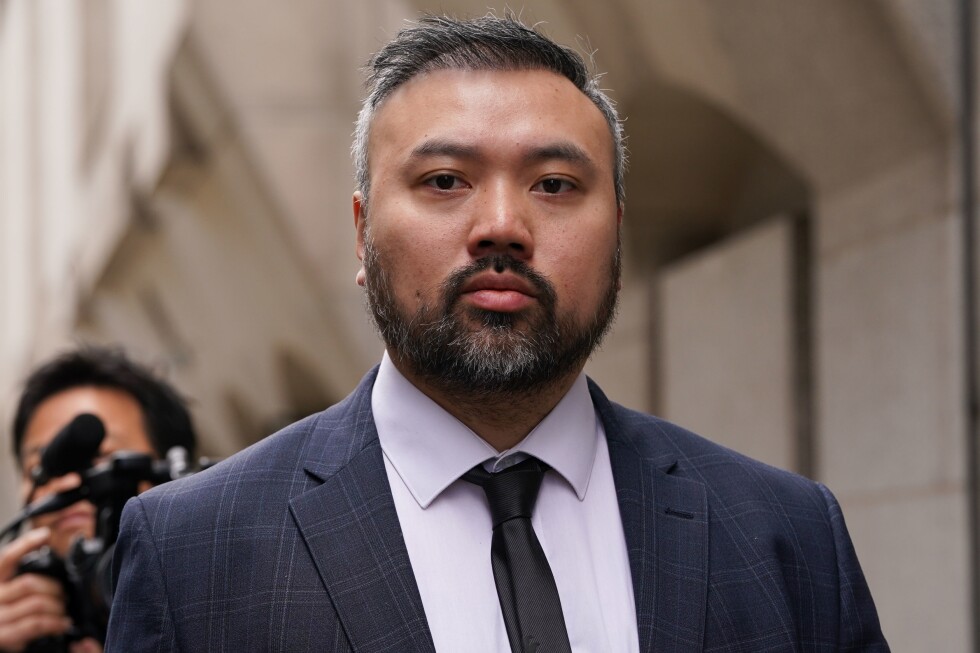
    In a dramatic political reversal, Victorian Liberal MP Moira Deeming has been granted an unexpected reprieve for her political career after her preselection rival abruptly withdrew his candidacy. The development comes just one day after Deeming lost a critical preselection ballot to businessman Dinesh Gourisetty for the upcoming state election.

    The political landscape shifted dramatically on Monday when Gourisetty withdrew his candidacy, a move that automatically reinstates Deeming as the Liberal candidate for the November election. This reversal occurred amidst emerging revelations about Gourisetty’s controversial associations, including his provision of a character reference for Kashyap Patel, who was subsequently convicted of child sex offenses.

    Patel, identified as a Liberal factional ally of Gourisetty, pleaded guilty to charges including grooming, sexual assault, and transmitting indecent communications to a minor under 16. He received a sentence of nine months’ imprisonment plus a two-year community correction order in 2024.

    The preselection battle had initially appeared to mark the end of Deeming’s parliamentary career within the Liberal Party. Having been previously expelled from the parliamentary Liberal Party following her threats to sue current Opposition Leader John Pesutto over defamatory comments, her options had narrowed to either running as an independent or seeking representation through another political entity.

    In a related development, the Victorian Court previously found Pesutto had defamed Deeming in 2023 by falsely associating her with neo-Nazi and white supremacist groups. The court ordered Pesutto to pay $300,000 in damages plus $2.3 million in legal costs.

    The political drama intensified when Pesutto’s chief of staff, former Liberal MP Louise Staley, posted inflammatory content on social media featuring a frowning image of Deeming with the caption “Happy Days” accompanied by Lily Allen’s explicit song “F**k You.” The post has since been removed.

  • Victory options narrowing as Trump prepares Iran ground assault

    Victory options narrowing as Trump prepares Iran ground assault

    The Pentagon is reportedly preparing for potential ground operations in Iran amid escalating tensions in the Persian Gulf, according to Washington Post sources. The planned military action would involve special operations forces and conventional infantry troops conducting targeted raids rather than a full-scale invasion. Primary objectives include seizing control of Kharg Island, Iran’s crucial oil export terminal, or neutralizing weapons systems threatening shipping lanes in the strategically vital Strait of Hormuz.

    Military strategists are expressing significant concerns about the operational viability of such missions. Michael Eisenstadt, director of the Military and Security Studies Program at the Washington Institute for Near East Policy, highlighted the extreme vulnerability American forces would face on Kharg Island, stating troops could be subjected to continuous drone and artillery attacks from mainland Iran.

    These concerns were reinforced by Retired General Joseph Votel, former head of US Central Command, who warned that occupying Iranian territory would place American soldiers in a state of perpetual danger from coastal-based missile systems and drone warfare.

    The conflict has expanded significantly with the Houthi militia’s entry into the confrontation. The Yemen-based group claimed responsibility for a ballistic missile attack against Israel, opening a new front in the regional conflict. Security analysts note the Houthis possess the capability to shut down the Bab al-Mandeb strait in the Red Sea, which would dramatically exacerbate the global economic crisis already triggered by Iran’s closure of the Strait of Hormuz.

    Professor Lawrence Freedman, emeritus professor of war studies at King’s College London, argues that the Trump administration has strategically painted itself into a corner. Despite weeks of aerial assaults by US and Israeli forces, the Iranian regime shows no signs of collapsing. Freedman contends that success in warfare should be measured by political objectives achieved rather than damage inflicted, noting that the administration’s goals of regime change or establishing a compliant leadership in Tehran remain unfulfilled while global economic disruption continues to escalate.

  • Trump says he has ‘no problem’ with Russian oil tanker bringing relief to Cuba despite blockade

    Trump says he has ‘no problem’ with Russian oil tanker bringing relief to Cuba despite blockade

    In a significant shift of policy stance, former President Donald Trump has expressed his approval for a sanctioned Russian oil tanker to deliver critical fuel supplies to Cuba despite an aggressive U.S. blockade. The announcement came aboard Air Force One on Sunday as Trump returned to Washington.

    Trump stated unequivocally, ‘I have no problem whether it’s Russia or not’ when questioned about the New York Times report regarding the Russian vessel. He emphasized humanitarian concerns, noting that Cubans ‘need to survive’ and require essential resources like heating and cooling.

    The Russian tanker Anatoly Kolodkin, which is under sanctions from the United States, European Union, and United Kingdom due to the Ukraine conflict, arrived at the Cuban port of Matanzas carrying approximately 730,000 barrels of oil labeled as ‘humanitarian supplies.’ Kremlin spokesman Dmitry Peskov confirmed Monday that Moscow had previously discussed the shipment with U.S. officials, describing it as Russia’s duty to assist ‘our Cuban friends.’

    This development occurs against the backdrop of severe energy shortages in Cuba that have resulted in island-wide blackouts and crippled transportation and healthcare systems. Experts estimate the Russian shipment could generate about 180,000 barrels of diesel—sufficient to meet Cuba’s daily energy demands for just nine to ten days.

    Trump dismissed suggestions that allowing the oil delivery would benefit Russian President Vladimir Putin, asserting that ‘Cuba’s finished’ regardless of external assistance due to what he characterized as ‘bad and corrupt leadership.’ The former president’s administration had implemented what experts describe as the most aggressive Caribbean policy in recent history, effectively cutting Cuba off from vital oil shipments in an effort to force regime change.

    The situation has created a humanitarian crisis for Cuban civilians, with images emerging of residents collecting potable water during blackouts and limited humanitarian aid arriving from other sources, including solar panels from Mexico.

    This event represents the latest chapter in the decades-long geopolitical struggle between the United States and Russia over influence in Cuba, dating back to the Cold War era.

  • Russian tanker heads to Cuba despite US oil blockade

    Russian tanker heads to Cuba despite US oil blockade

    A Russian-flagged oil tanker, the Anatoly Kolodkin, is poised to dock in Cuba on Tuesday, marking a direct challenge to U.S. sanctions and its de facto fuel blockade of the island nation. Despite being under U.S. sanctions, the vessel is transporting 730,000 barrels of crude oil to the port of Matanzas, offering a temporary reprieve for Cuba’s severe energy crisis.

    According to data from maritime tracker MarineTraffic, the tanker was navigating off Cuba’s eastern coast on Sunday. Its arrival will constitute the first major oil shipment to reach Cuba since January, following the loss of its primary oil supplier, Venezuela, after the U.S. captured socialist leader Nicolas Maduro.

    The situation has escalated into a geopolitical standoff. U.S. President Donald Trump has repeatedly threatened action against Cuba, stating at a recent Miami forum that ‘Cuba is next’ and previously musing about imposing tariffs on nations supplying oil to the island. However, expert analysis suggests the window for U.S. interception has closed. Jorge Pinon, a Cuba energy specialist at the University of Texas at Austin, noted that once the vessel enters Cuban territorial waters, stopping it becomes ‘almost impossible’ for the U.S. government. This assessment appears validated by reports from The New York Times, citing a U.S. official, that the Coast Guard is permitting the passage.

    The delivery arrives amid a dire situation in Cuba. President Miguel Diaz-Canel has enacted strict fuel rationing and emergency measures to conserve energy. The population of 9.6 million faces daily power outages, soaring fuel prices, crippled public transport, and a series of nationwide blackouts in 2024 that have sparked rare public protests. The country’s fragile economy is further strained by suspended airline flights.

    The Anatoly Kolodkin, which departed the Russian port of Primorsk on March 8, was initially escorted by a Russian navy ship through the English Channel before proceeding alone across the Atlantic. Meanwhile, a separate vessel, the Hong Kong-flagged Sea Horse, which was suspected of carrying Russian diesel to Cuba, diverted to Venezuela instead.

    While the crude delivery is critical, it is not an immediate solution. Pinon estimates it will take 15-20 days to process the oil and another 5-10 days to distribute the refined products. The most pressing need is diesel, which this shipment could potentially be converted into approximately 250,000 barrels of—enough to meet national demand for just 12.5 days. The Cuban government now faces a difficult allocation decision: whether to prioritize diesel for backup power generators to reduce blackouts or for the transportation sector to keep essential economic functions operational.

  • Hungary’s anxious rural voters will decide Orban’s fate

    Hungary’s anxious rural voters will decide Orban’s fate

    In the Hungarian countryside, where half the nation’s 9.5 million residents reside, a profound political transformation is underway ahead of the pivotal April 12 parliamentary elections. For decades, rural communities like the village of Pusztavacs served as unwavering strongholds for Prime Minister Viktor Orbán’s Fidesz party. Now, economic stagnation, corruption allegations, and the emergence of charismatic opponent Péter Magyar have triggered what analysts describe as a rural ‘political awakening’ that could end Orbán’s 14-year reign.

    The political landscape reveals deep voter ambivalence. While some residents credit Orbán’s government with infrastructure improvements and family support programs, others express growing discontent over economic conditions and fears about Hungary’s involvement in neighboring Ukraine’s conflict. Orbán’s campaign has strategically amplified these security concerns, flooding government-friendly media with warnings that opposition parties would drag Hungary into war—a claim both the EU and Magyar’s Tisza party vehemently deny.

    Magyar’s anti-corruption message and nationalist-conservative positioning have resonated unexpectedly in traditional Fidesz territories. His Tisza party currently leads opinion polls, with sociologists noting his effective adoption of conservative values that appeal to rural constituencies. Electoral analysts emphasize that victory requires conquering rural districts, comparing Magyar’s challenge to a ‘Himalayan expedition’ where urban support constitutes merely the base camp.

    Personal stories highlight this political shift. A middle-aged reserve soldier in Pusztavacs who previously supported Fidesz now regrets his vote, while pensioner László Budavari plans to support Tisza because his three daughters threaten emigration if Orbán wins a fifth term. Yet Orbán retains loyalists like 86-year-old Mária Balogh, who believes the prime minister ‘provides rather than takes away’ despite courts ruling her fears about pension taxes under Magyar as groundless.

    This electoral battle ultimately represents a fundamental choice between continuity and change, with Hungary’s rural voters positioned as the decisive arbiters of the nation’s political future.

  • Partial government shutdown becomes the longest in US history

    Partial government shutdown becomes the longest in US history

    The United States has entered uncharted territory as its partial government shutdown became the longest in the nation’s history, reaching 44 days on Sunday and surpassing the previous record set in November 2025. This political stalemate has triggered severe disruptions at airports nationwide, with security lines stretching outside terminals and causing hours-long delays for travelers.

    The core of the dispute centers on funding for the Department of Homeland Security (DHS), which has remained in limbo since February 14th. The impasse has left thousands of Transportation Security Administration (TSA) officers working without pay, resulting in significant staffing shortages at critical security checkpoints. According to DHS reports, approximately 12.35% of TSA personnel called out of work on Friday alone, with nearly 500 agents having quit entirely due to financial hardship.

    Congressional efforts to resolve the crisis have repeatedly failed. While the Senate passed a compromise bill that would provide partial funding for DHS and address airport delays, House Republicans rejected this measure in favor of a short-term solution that funds the department entirely. Democrats have opposed comprehensive funding without immigration reforms, including restrictions on Immigration and Customs Enforcement (ICE) practices.

    The travel disruptions have raised concerns about the country’s preparedness to co-host the upcoming World Cup in June. In response to the crisis, ICE agents have been deployed to assist at several major airports. White House border coordinator Tom Homan indicated that some ICE units might remain stationed at airports even after the shutdown concludes, depending on how many TSA agents return to work once paid.

    In a controversial move, the administration has directed that TSA agents receive paychecks by Monday or Tuesday through executive action, a decision that legal experts warn may violate the Antideficiency Act and constitutional provisions regarding congressional spending authority.

  • South China Sea sub-forum calls for greater restraint, dialogue, cooperation to safeguard regional peace

    South China Sea sub-forum calls for greater restraint, dialogue, cooperation to safeguard regional peace

    The South China Sea Sub-forum of the Boao Forum for Asia Annual Conference 2026 concluded on March 28th in Boao, Hainan province, with participants issuing a strong call for enhanced diplomatic restraint and cooperative governance to maintain regional stability. The two-day gathering, themed “The South China Sea Order and Governance Cooperation in a Changing World,” brought together approximately 200 delegates from 20 nations including the United States, United Kingdom, Australia, Vietnam, Philippines, and Malaysia.

    Co-organized by multiple prominent institutions including the National Institute for South China Sea Studies, Huayang Center for Maritime Cooperation and Ocean Governance, and China Oceanic Development Foundation, the forum featured intensive discussions across four critical areas: regional cooperation mechanisms, marine environmental protection as a bridge for China-ASEAN collaboration, rules-based order establishment, and marine economic development connected to Hainan’s Free Trade Port initiatives.

    A prominent theme emerged regarding growing concerns over major power competition and unilateral actions that threaten maritime stability. Liu Zhenmin, China’s Special Envoy for Climate Change and former UN Under-Secretary-General, delivered a keynote address emphasizing that East Asian nations should learn from Middle Eastern conflicts to preserve peaceful coexistence. He advocated for regional arrangements ensuring long-term stability and protection of vital South China Sea shipping routes.

    Liu specifically called for accelerated negotiations between China and ASEAN members toward establishing a binding Code of Conduct (COC) for the South China Sea, identifying this as crucial for building mutual trust and enhancing maritime cooperation. Additionally, he proposed that East Asian nations expedite their energy transition and develop new regional energy security mechanisms to support sustainable development.

    The forum represented one of the most significant multilateral dialogues on South China Sea governance this year, combining academic expertise with diplomatic and industry perspectives to address complex maritime challenges through cooperative rather than confrontational approaches.