分类: politics

  • Faced with new energy shock, Europe asks if reviving nuclear is the answer

    Faced with new energy shock, Europe asks if reviving nuclear is the answer

    As households and industrial sectors across the continent watch natural gas and gasoline prices skyrocket with growing anxiety, Europe is facing yet another energy crisis – a familiar challenge that echoes the crippling cost-of-living shock that followed Russia’s full-scale invasion of Ukraine in 2022. This time, growing volatility in the Middle East, particularly disruptions to energy shipments through the Strait of Hormuz, has sent global energy markets reeling, forcing policymakers to revisit a decades-old question: how can the continent achieve genuine energy independence?

    The answer increasingly being embraced across EU capitals and in London is a surprising one: nuclear power, a source that much of Europe turned its back on after the 2011 Fukushima disaster, is now back at the center of European energy strategy.

    Speaking at the recent European Nuclear Energy Summit in Paris, European Commission President Ursula von der Leyen called Europe’s widespread post-Fukushima retreat from nuclear power a historic “strategic mistake.” Notably, von der Leyen served in the German government when it approved a full nuclear phaseout in 2011, a decision that would reshape the country’s energy landscape for decades. She pointed out that nuclear power generated roughly one-third of Europe’s electricity in 1990, a share that has plummeted to just 15% on average today. This decline, she argued, has left the continent dependent on expensive, volatile imported fossil fuels – a vulnerability exposed first by Russian supply cuts after Ukraine, and now by Middle East tensions. Currently, Europe imports more than 50% of its total energy, primarily oil and gas, leaving it exposed to global price swings and geopolitical disruptions.

    The impact of differing national energy mixes is already stark across the continent. Spain, which has invested heavily in utility-scale wind and solar power, is projected to see average 2026 electricity prices around half that of Italy, where 90% of electricity prices are tied to volatile global gas costs. France, Europe’s largest nuclear power producer, generates 65% of its electricity from nuclear reactors, and its forward electricity prices for next month are just one-fifth of those in Germany – a gap that has put enormous strain on Germany’s energy-intensive automotive and chemical sectors. This week, Berlin’s leading economic research institutes cut their 2026 GDP growth forecast in half to just 0.6%, citing the ongoing impact of elevated gas prices.

    A broad policy reversal is now unfolding across Europe. Italy is drafting legislation to roll back its decades-long ban on new nuclear power. Belgium has performed a complete U-turn after years of resisting new nuclear investment. Greece, which has long avoided nuclear development due to seismic risks, has opened a national public debate on advanced, safer reactor designs. Sweden has reversed a 40-year policy of phasing out nuclear power. In the UK, Chancellor Rachel Reeves recently announced plans to streamline regulatory processes to speed up nuclear project development, arguing that “to build national resilience, drive energy security and deliver economic growth, we need nuclear.” New YouGov polling shows growing public support for nuclear power even in traditionally skeptical Scotland, where a majority now backs including it in the country’s energy mix.

    France has emerged as the most vocal advocate for a European nuclear revival. President Emmanuel Macron, a long-time supporter of his country’s domestic nuclear industry, told the summit that “nuclear power is key to reconciling both independence, and thus energy sovereignty, with decarbonisation, and thus carbon neutrality.” He also highlighted nuclear energy’s unique role in powering the growing energy demand of artificial intelligence, arguing that it could give Europe a competitive edge in the global AI race, providing the reliable baseload power needed to expand data center and computing capacity.

    Even Germany, the most prominent European nation to phase out nuclear power after Fukushima, has softened its long-standing opposition. Until last year, Berlin blocked EU efforts to classify nuclear power as a sustainable energy source alongside renewables, creating major friction with France, its closest EU ally. Berlin has since agreed to remove anti-nuclear language from EU legislation, a shift that many observers link to growing European security concerns amid deteriorating relations with the second Trump administration. Just this month, France agreed to extend its independent nuclear deterrent to European partners at Germany’s request.

    Despite this growing momentum, experts warn against treating nuclear power as a quick fix for Europe’s current energy crisis. Large-scale conventional nuclear reactor projects are notoriously slow and expensive to develop, with recent high-profile projects in France (Flamanville-3) and the UK (Hinkley Point C) suffering years of delays and massive cost overruns. Longstanding challenges including radioactive waste management and public safety concerns, reignited by the 15th anniversary of the Fukushima disaster this year, still persist.

    Environmental groups also warn that large-scale investment in nuclear power could divert critical funding and political attention from the faster expansion of wind and solar power, whose costs have fallen dramatically in recent years to undercut nuclear. Additional strategic risks remain: several Central European countries, including Hungary and Slovakia, still rely on Russian technology and uranium for their existing nuclear fleets, creating potential dependency risks similar to the old fossil fuel import model.

    Chris Aylett, a Research Fellow at the Environment and Society Centre at Chatham House, notes that many of Europe’s existing nuclear reactors are already nearing the end of their design life, requiring massive investment just to maintain current nuclear generating capacity. “If governments really want to increase the share, they need a lot of time and a lot of money,” he explained, adding that most European governments are already heavily indebted, cash-strapped, and juggling competing priorities ranging from welfare spending to meeting higher defense spending targets set by the Trump administration.

    To address cost and scalability concerns, the European Commission has pinned much of its long-term hope on small modular reactors (SMRs), a next-generation nuclear technology that is designed to be factory-built at scale, lower cost, and flexible enough to power specific high-demand uses including AI data centers, hydrogen production, and local district heating networks. The EU has just unveiled a €330 million investment package to advance nuclear technology, with a major focus on SMR development, and Brussels aims to bring the first commercial SMRs online by the early 2030s. The push for SMRs is a global effort: the U.S. and Japan recently announced a $40 billion joint project to develop SMRs in the southern U.S., and the UK has already published the regulatory framework to allow Rolls-Royce to build the first commercial SMR fleet in the country. Even so, SMR technology remains unproven at commercial scale, and as of early 2026, no construction licenses have been issued for commercial SMR projects anywhere in the EU. The EU is also investing in long-term nuclear fusion research, though commercial fusion power remains decades away from widespread deployment.

    For the immediate future, Europe remains heavily dependent on imported fossil fuels, leaving it exposed to geopolitical volatility and global price swings. As Aylett points out, greater energy independence is clearly in Europe’s strategic interest, to avoid being held hostage to the decisions of authoritarian energy exporters and volatile commodity markets. While European governments have overwhelmingly embraced nuclear power as a core part of their medium and long-term energy security strategy, the question of how to address the current energy crisis and protect households and industries from skyrocketing prices in the here and now remains unanswered.

  • After 16 years in power, could Viktor Orban finally be unseated?

    After 16 years in power, could Viktor Orban finally be unseated?

    One week out from Hungary’s 12 April parliamentary election, long-ruling nationalist Prime Minister Viktor Orbán showed a rare crack in his carefully crafted public image. Addressing a mass campaign rally in the western Hungarian city of Győr on 27 March, a hoarse, furious Orbán lashed out at opposition protesters who interrupted his speech with chants against his ruling Fidesz party, declaring “All they stand for is anger, hatred, and destruction.” The outburst shattered the carefully polished persona Orbán has cultivated for years: the steady, unflappable leader steering Hungary through global crisis. For a leader accustomed to disarming even critics with humor and charm, this unscripted display of temper laid bare the urgent pressure he faces to hold onto power after 16 years of unchallenged rule.

    Poll after poll puts the opposition Tisza Party, led by former Fidesz insider Peter Magyar, far ahead of Fidesz – the most recent survey pegs Tisza support at 58%, against Orbán’s 35%. After holding nearly unrivaled power since 2010 and holding just a handful of campaign rallies in the last three elections, Europe’s longest-serving incumbent leader has been forced back onto the campaign trail, scrambling to mobilize his base and win over undecided voters. The stakes stretch far beyond Budapest: a defeat for Orbán would not only end his 16-year hold on power, but would also send shockwaves through the global illiberal populist movement that he has spent more than a decade building as its figurehead.

    Orbán’s tenure has positioned him as a defining figure on the global right. He has counted both former U.S. President Donald Trump and Russian President Vladimir Putin among his supporters, has long been a persistent source of friction for the European Union, and stands out as one of the only EU leaders to refuse alignment with Western support for Ukraine against Russian invasion. For nationalist movements rising across Europe, from ruling parties to opposition groups on the brink of power, Orbán has served as the blueprint for how to win power and upend liberal democratic norms. It is for this reason that political observers and populist movements across the world are watching the 12 April vote with unprecedented intensity.

    Shifting public opinion data confirms the dramatic swing against Fidesz. Pollster Endre Hann of Hungary’s Median public opinion research firm notes that just three months ago, 44% of respondents expected Fidesz to win, compared to 37% who backed a Tisza victory. By March, that number flipped entirely: 47% now believe Tisza will win, while just 35% predict a Fidesz victory. “This reflects a huge change of trust,” Hann explains. “People believe that it can be changed.”

    The most striking irony of this election cycle is that the same voter anger that has swept right-wing populists into power across Europe – fury at entrenched, corrupt ruling elites – is now working against Orbán. Today, it is Orbán and Fidesz that are widely labeled by Hungarians, especially younger voters, as the corrupt, out-of-touch establishment the public wants to oust.

    The Fidesz government has faced repeated allegations of graft, including the channeling of billions in state contracts to firms owned by Orbán’s close friends and family members. Orbán has framed this concentration of economic power as a deliberate push to keep Hungarian assets out of foreign hands, but critics call it systemic cronyism. Orbán’s son-in-law, Istvan Tiborcz, owns a portfolio of high-profile Hungarian hotels, while his childhood friend Lörinc Meszaros – a former gas fitter – is now Hungary’s wealthiest citizen. All involved deny any wrongdoing, and Orbán has refused to answer questions about the accumulated wealth of his inner circle.

    Allegations of systemic voter intimidation and vote-buying have also dominated the closing weeks of the campaign. An investigative documentary released last week claims that Fidesz’s long-standing local patronage network, built up over more than two decades in rural Hungary, is being deployed on an unprecedented scale to deliver votes. The documentary alleges that Fidesz-aligned local mayors are given mandatory vote quotas for each village, with offers ranging from €120 in cash, food coupons, and prescription drugs to access to the only local public works jobs in exchange for supporting Fidesz. Voters who refuse are allegedly cut off from social and work support. On election day, the documentary claims, Fidesz organizers arrange transportation to polling stations and deploy “companions” to accompany voters into the booth to ensure they cast a ballot for the ruling party.

    There has been no formal official response from the Fidesz government to the allegations, though one cabinet minister noted that any confirmed wrongdoing should be handled by law enforcement. Veteran Hungarian election observers note that while minor vote-buying by rival parties has been common in past cycles, the scale of alleged irregularities this year is unmatched.

    Fidesz allies push back against the narrative that the ruling party is on the brink of defeat, arguing that the narrative of a Fidesz loss is deliberately manufactured by the opposition to set up expectations of fraud should Orbán win. “All these scandals are just the usual suspects trying to build a narrative,” says Zoltan Kiszelly, a political analyst with government-aligned think tank Szazadveg. “When the opposition lose the election, this gives them an excuse to allege ‘fraud.’” Kiszelly adds that the key to the election will not be polling numbers, but turnout: Fidesz’s success hinges on whether its base can be convinced to show up to vote. “Nobody believes in the opinion polls, neither our own, nor the opposition ones,” he says. “The majority of the voters are for Fidesz. Of pensioners, of women, of the Roma, of the poor, of the blue collar workers, of the rural people. The question is, will they cast their vote?”

    Gabor Török, a rare political analyst respected by both sides in Hungary’s deeply polarized political landscape, warns that Orbán’s recent uncharacteristic outbursts do not bode well for the ruling party. “This is not the ‘calm strength’ or the ‘strategic calm,’ image, nor the one carefully cultivated for years and displayed on ‘Prime Minister of Hungary’ posters,” Török wrote recently. “If the remaining two weeks unfold like this, it does not bode well for the government side.”

    Orbán’s core campaign message to voters frames the election as a binary choice between peace and war. He has positioned himself as the only leader capable of preventing Brussels from dragging Hungary into the war in Ukraine, framing opposition leader Peter Magyar as a puppet of EU leaders who would force Hungary to deploy troops against Russia, sending young Hungarian men to die on the Eastern Front – a message crafted to resonate deeply in a country that suffered catastrophic losses in both World Wars. Orbán has argued since 2022 that Russia cannot be militarily defeated, and that the West should pressure Ukraine to negotiate peace on Russia’s terms. Giant campaign billboards across Hungary depict Ukrainian President Volodymyr Zelenskyy with the slogan: “Don’t let Zelensky have the last laugh!”

    Recent polling suggests this core messaging is losing traction with Hungarian voters. Hann’s latest data shows that 52% of respondents now agree that Russia launched an unprovoked, illegal full-scale invasion of Ukraine, while just 33% back Fidesz’s narrative that Russia acted legally to defend its own security interests. The 2010 shutdown of the Druzhba (Friendship) pipeline that carried Russian crude oil to Hungary through Ukraine, after a Russian attack damaged a key pumping hub, has amplified the rhetorical battle: Orbán accuses Zelenskyy of deliberately blocking the restart of oil flows to damage his election prospects. Kiszelly explains that the party frames the energy disruption as tied directly to household utility costs, which Fidesz has capped since 2013 to keep Hungary’s consumer energy prices the lowest in the EU. The government argues the price caps can only survive with continued access to cheap Russian energy.

    The man seeking to unseat Orbán is a figure that few predicted would become a threat just two years ago: Peter Magyar, a 45-year-old former Fidesz insider, former diplomat, and ex-husband of a former Fidesz justice minister. Magyar shocked Hungarian politics in February 2024 when he resigned abruptly from all his party and state posts, published a viral anti-corruption interview that racked up two million views in days, and launched his new opposition party, named for the Tisza river, a major Hungarian tributary of the Danube.

    Long dismissed as too urbane, too slick, and too tied to Budapest’s elite to win over rural Fidesz voters – Orbán’s core base – Magyar has defied all expectations. He has spent two years touring the country relentlessly, abandoning scripted speeches to speak directly to voters, and now draws huge crowds even in traditional Fidesz strongholds. Unlike Orbán, who focuses heavily on global geopolitics in his rallies, Magyar centers his platform on domestic bread-and-butter issues: underfunded healthcare, failing education, crumbling transport infrastructure, and rampant rural depopulation.

    On foreign policy, Magyar breaks sharply with Orbán. He has pledged to diversify Hungary’s energy supplies away from Russia, renegotiate existing energy contracts with Moscow, and restore Hungary’s full standing within the EU and NATO. He has also adapted quickly to campaigning: after early criticism that his scripted speeches felt stilted, he abandoned his notes and now speaks directly to crowds, answering questions openly and honestly – a departure from the controlled messaging that defines Orbán’s campaign. Where Orbán holds one rally a day, Magyar visits three to six, aiming to reach all 106 parliamentary constituencies before voting day. He relies on live streaming his rallies on Facebook to reach voters, bypassing Fidesz’s tightly controlled domestic media empire, and has drawn crowds of thousands in provincial cities that once reliably backed the ruling party. Even a senior Fidesz official has privately acknowledged that Magyar brings a “brutal energy” that the ruling party’s campaign lacks.

    Magyar has faced his own share of campaign controversy: his ex-wife has publicly accused him of domestic violence, and Fidesz has run multiple smear campaigns against him, including releasing a secretly recorded conversation and linking him to cocaine use. Magyar has denied all allegations, published a negative drug test, and challenged Fidesz politicians to release their own test results.

    Recent polling confirms that Tisza has pulled ahead in nearly all key swing constituencies, with Magyar reporting a “tipping point” of support in rural Fidesz heartlands. If the polls hold, he is on track to end Orbán’s 16-year hold on power.

    The global stakes of the vote are hard to overstate. As Michael Ignatieff, former rector of the Central European University – which was forced out of Budapest by Orbán’s government in 2019 – puts it: “Budapest is the headquarters of illiberal democracy in the world. This is not just an election. This is a referendum on that whole model of authoritarian rule that Orban represents.”

    Orbán has turned Hungary into a global hub for the transatlantic populist right, hosting major gatherings of conservative influencers, think tanks, and political leaders from Europe and North America in recent years. While no top U.S. politicians attended this year’s Conservative Political Action Conference (CPAC) held in Budapest, the U.S. Republican Party has remained aligned with Orbán: Secretary of State Marco Rubio visited in February, and Vice President JD Vance is set to travel to Budapest in the final days of the campaign. A Fidesz victory would give a major boost to rising far-right parties across France, Germany, Poland, Spain, and Portugal, while an Orbán defeat would deflate momentum for those movements. A senior Tisza official argues that a Tisza win could show the rest of Europe a path out of the growing tide of radical nationalism.

    For Hungary itself, the outcome will reshape the country’s future for decades. Former Hungarian Supreme Court President Andras Baka argues that a Fidesz victory would entrench what critics call state capture, cementing single-party control over all branches of government into a permanent, increasingly rigid autocracy. A Tisza victory, by contrast, would require a massive overhaul of Hungarian institutions: restoring independence to the courts, prosecution service, audit office, public media, and intelligence services that have been brought under Fidesz control over 16 years. The speed and success of that overhaul, analysts note, will depend on the size of Tisza’s eventual margin of victory.

  • Cuba begins releasing more than 2,000 prisoners as US pressure mounts

    Cuba begins releasing more than 2,000 prisoners as US pressure mounts

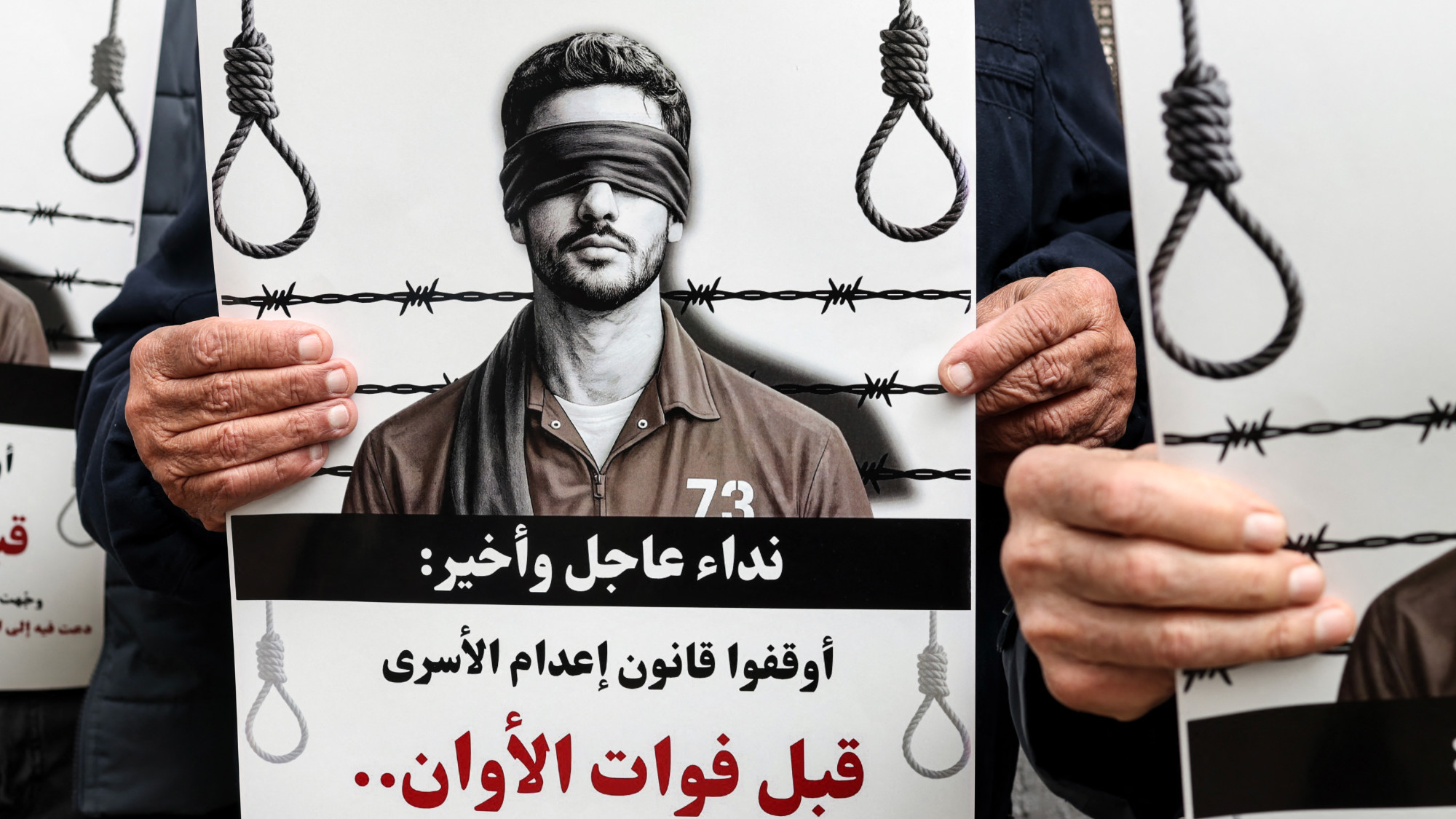
    Emotional scenes unfolded across Cuban prisons on Friday as the first wave of inmates walked free, part of a government-ordered mass release of 2,010 prisoners described by Havana as a humanitarian and sovereign act, carried out against a backdrop of mounting economic and political pressure from the United States.

    Agence France-Presse correspondents on the ground captured moving moments at La Lima prison in eastern Havana, where more than two dozen released inmates embraced relatives who had waited for hours behind prison walls for the moment of reunion, many openly crying as they were reunited with loved ones. Among the first to leave was 46-year-old Albis Gainza, who had completed half of a six-year sentence for a robbery conviction.

    In an official statement released Thursday through its embassy in Washington, Cuba confirmed the release will prioritize specific vulnerable groups: foreign nationals, youth, women, and incarcerated people over the age of 60. Eligibility for release was determined through a multi-factor review, the statement added, including an assessment of the individual’s original offense, documented good behavior during incarceration, completion of a substantial portion of their sentence, and underlying health conditions. The government also framed the move as a traditional practice tied to Holy Week religious celebrations, a longstanding custom within the country’s criminal justice system.

    The large-scale release marks the second prisoner amnesty Cuba has authorized this year alone. In March, 51 inmates were freed following diplomatic talks with the Vatican. In 2005, a previous 553-person release was brokered through a joint agreement between the Vatican and the United States.

    Local reports from across the country confirmed releases were underway at multiple facilities. Cuban independent outlet 14ymedio, citing the head of Spain-based human rights organization Prisoner Defenders, reported that 41 prisoners had already been released from the Toledo 2 Forced Labor Prison in southwestern Havana. In the eastern city of Las Tunas, six people convicted of common crimes were freed from El Típico prison, alongside dozens more from nearby forced labor camps, the outlet added. Freed inmates were documented waving their official release papers as they exited correctional facilities to rejoin their families.

    The amnesty comes at a moment of severe crisis for Cuba, driven by aggressive policy shifts from the Trump administration. Since returning to the U.S. presidency, Donald Trump has made clear his goal of forcing regime change in Cuba’s long-standing communist government, tightening economic sanctions that have crippled the island nation’s energy supply. Previously, Cuba relied on heavily discounted crude oil shipments from ally Venezuela, but the U.S. cut off that arrangement after a January military raid in Caracas that seized former Venezuelan president Nicolás Maduro, and now imposes tariffs on any third country that sends oil to Cuba, worsening the island’s energy crisis.

    Trump’s hardline policy has shifted focus back to Cuba in U.S. Latin America strategy following the Maduro raid. The U.S. leader has repeatedly publicly raised the possibility of using military force to occupy Cuba and install a U.S.-aligned government. While Washington recently signaled it had no objection to a Russian-owned tanker carrying 730,000 barrels of crude docking in Cuba last week—the first such arrival since early January—Moscow confirmed Thursday it will send a second tanker with enough crude to keep Cuba’s economy operating for several weeks.

    The ongoing fuel shortage has triggered cascading crises across Cuban society. The World Health Organization warned last week that widespread fuel shortages have left Cuban hospitals unable to maintain critical emergency and intensive care services, putting thousands of vulnerable patients at risk. Rolling blackouts have left millions of Cuban residents without power for extended periods, sparking rare public protests against the government in recent months. While Havana and Washington have held quiet talks to de-escalate tensions and resolve the current impasse, both sides have publicly laid out non-negotiable political and economic red lines that have made finding a compromise elusive so far.

    Human rights groups including Human Rights Watch estimate that Cuba currently holds hundreds of political prisoners, and that government critics face regular harassment and criminal prosecution. Following the U.S. operation in Venezuela, the interim Venezuelan government installed by Washington has also carried out a release of political prisoners, a key demand from the Trump administration, though one prisoner rights group has noted that only one-third of the promised releases have been completed to date.

  • UK deploys Rapid Sentry anti-drone air defence system to Kuwait

    UK deploys Rapid Sentry anti-drone air defence system to Kuwait

    Escalating its security commitment to a key Gulf ally amid rising regional instability, the United Kingdom has formally announced the deployment of its cutting-edge Rapid Sentry air defence system to Kuwait, a move designed to shield both British and Kuwaiti national interests following a pair of recent drone strikes on critical national infrastructure in the country.

    The security escalation comes after two successive drone attacks targeted high-value sites in Kuwait: an overnight assault on the Mina al-Ahmadi oil refinery that ignited blazes across multiple operational units, per Kuwaiti state media, followed by a second drone strike targeting a combined power and desalination plant early Friday.

    Located just 80 kilometers from Iran, Kuwait sits at the center of intensifying geopolitical friction that has roiled the Gulf region since the outbreak of the US-Israeli military campaign against Iran. Against this backdrop, the UK Ministry of Defense confirmed that Royal Air Force (RAF) personnel have brought Rapid Sentry, a modern short-range air defence platform purpose-built to neutralize hostile drone threats, to the Gulf emirate.

    Unlike electronic countermeasure systems that can fail to disable rogue drones, Rapid Sentry delivers a kinetic defensive option: it launches missiles with an 8-kilometer operational range, engineered to track and destroy small, fast-moving aerial targets that have become increasingly common in regional attacks. Air Commodore Paul Hamilton, commandant general of the RAF, outlined the system’s unique value just last month, noting that “Rapid Sentry gives us a credible kinetic safeguard when a drone cannot be defeated electronically.”

    UK Prime Minister Keir Starmer held an urgent phone consultation with Kuwait’s Crown Prince Sheikh Sabah Khalid al-Sabah on Friday morning to discuss the deployment and the recent attacks. A Downing Street spokesperson confirmed that Starmer issued a firm condemnation of “the reckless overnight drone attack on a Kuwaiti oil refinery” and reiterated the UK’s unwavering commitment to the region, saying “the UK stands with Kuwait and all our allies in the Gulf.”

    The deployment builds on a decades-long bilateral defence partnership between London and Kuwait, under which the RAF has already provided long-term training support to the Kuwait National Guard. This new security move aligns with ongoing RAF operations in the region that have focused on intercepting Iranian drones and missiles targeting Gulf Arab states since the start of the US-Israeli war on Iran.

    The heightened military coordination comes alongside parallel diplomatic efforts led by the UK to address a growing global energy chokehold. On Thursday, UK Foreign Secretary Yvette Cooper convened a gathering of representatives from more than 40 nations to coordinate a collective response to Iran’s effective closure of the Strait of Hormuz, a critical maritime chokepoint that carries roughly 20 percent of the world’s global oil supplies. Participants agreed to develop a coordinated strategy to pressure Iran to reopen the corridor.

    Following the meeting, Cooper made clear that Britain would “comprehensively reject” any unilateral attempt by Iran to impose transit fees on commercial vessels passing through the strait. She added that the international community could not allow Iran to “hold the global economy hostage” and confirmed that participating nations had discussed targeted new sanctions designed to pressure Tehran to reverse course. The UK is also currently supporting US operations to reopen the strait, with American bomber aircraft conducting strikes on Iranian targets from British military bases in the region.

  • US fighter jet shot down by Iran came from British base in Suffolk, says IRGC

    US fighter jet shot down by Iran came from British base in Suffolk, says IRGC

    For weeks, public attention has centered on the U.S. use of RAF Fairford in southwest England’s Gloucestershire as a launchpad for bombing missions targeting Iran. Now, a new high-stakes incident has pulled a lesser-known British military installation into the geopolitical crossfire: RAF Lakenheath, a large U.S. Air Force base in eastern England’s Suffolk county.

    On Friday, the Islamic Revolutionary Guard Corps (IRGC) announced its air defense systems had intercepted and shot down an American F-35 fighter jet operating over central Iran, claiming the aircraft belonged to a squadron permanently based at RAF Lakenheath. While U.S. military officials later confirmed to media outlets that an American warplane had indeed been downed in Iranian airspace, they corrected the aircraft type, stating it was an F-15E Strike Eagle rather than the stealth fifth-generation F-35. The UK Ministry of Defense has declined all requests for comment from Middle East Eye on the incident and Lakenheath’s operational role.

    This is not the first time Iranian officials have claimed a U.S. jet shootdown: in late March, Tehran’s claim of downing an F-35 was immediately denied by Washington. Following Friday’s announcement, Tasnim News Agency, an Iranian outlet with close official ties to the IRGC, published purported photos of the downed aircraft’s wreckage. According to the IRGC, a visible “LN” tail code on the debris confirms the jet was part of the 493rd Fighter Squadron under the 48th Fighter Wing, the permanent U.S. Air Force unit stationed at Lakenheath.

    To understand Lakenheath’s role in ongoing U.S. military operations against Iran, it is critical to outline the base’s status. The installation remains property of the UK Ministry of Defense but is leased long-term to the U.S. Air Force, and it hosts the largest American fighter operations on the European continent, centered on the 48th Fighter Wing. Recent weeks have seen a clear and unusual buildup of U.S. air power at the base: five F-35C stealth fighters were spotted landing at Lakenheath on March 24, followed Monday evening by a formation of 12 A-10C Thunderbolt II attack aircraft, commonly nicknamed the “Warthog” for its rugged design. The Warthog is purpose-built as a close air support and “tank buster” platform, and regional military sources report these aircraft have already been used to strike Iranian fast-attack craft and minelaying vessels operating near Iran’s coastline. The U.S. military has refused to confirm or deny these operational reports.

    Local anti-war activists monitoring the base added to the picture of heightened activity, stating that on the morning of April 2, they observed more than 20 military aircraft depart Lakenheath in a coordinated launch. A second Suffolk-based base, RAF Mildenhall, which supports global U.S. Air Force logistics and operations, has also seen a sharp spike in activity over the past week. On March 31, two U.S. EA-37B Compass Call electronic warfare aircraft, designed to disrupt enemy communications and air defenses, were photographed landing at Mildenhall.

    The growing U.S. use of British bases has come alongside a series of policy shifts from the UK government under Prime Minister Keir Starmer, and growing retaliatory threats from Tehran. In an interview with Times Radio Wednesday, Iranian Ambassador to London Seyed Ali Mousavi confirmed that Tehran is actively evaluating whether to launch retaliatory strikes against British military bases in response to their role in U.S. operations against Iran.

    When the U.S.-led campaign against Iran first began, the UK initially blocked American use of the joint UK-U.S. base at Diego Garcia in the Indian Ocean for strike missions. That position changed within 48 hours, when Starmer announced the U.S. would be permitted to use British bases for bomber strikes targeting Iranian missile sites, framing the decision as a purely defensive measure. Two weeks later, Starmer executed a second policy U-turn, approving U.S. use of British bases for broader strikes on Iranian targets to protect commercial shipping transiting the Strait of Hormuz.

    Despite Starmer’s repeated concessions to support U.S. military goals, former President and current U.S. leader Donald Trump has repeatedly launched public attacks against the Prime Minister, even going so far as to suggest the decades-long “special relationship” between the two countries is in serious jeopardy.

    On Thursday, UK Foreign Secretary Yvette Cooper convened a summit of more than 40 nations in London to coordinate a unified international response to the closure of the Strait of Hormuz, one of the world’s most critical maritime chokepoints. Before the IRGC effectively closed the corridor in early March, roughly 20% of the world’s global oil supply transited the strait annually. Following the summit, Cooper stated that the assembled nations would “comprehensively reject” any attempt by Iran to charge commercial vessels fees for passage through the waterway. She added that Iran must “not be allowed” to “hold the global economy hostage” and confirmed that participating nations had discussed the implementation of new, targeted sanctions intended to pressure Tehran to reverse course.

    In a response released Thursday afternoon, Iran’s foreign ministry announced it is working alongside Oman — which declined to attend the London summit — to draft a proposal for a post-war permit system for commercial vessels transiting the strait.

    This report was published by Middle East Eye, a media outlet focused on independent, in-depth coverage of the Middle East, North Africa and surrounding regions.

  • Over 100 US-based legal experts declare Trump’s strikes on Iran as possible war crimes

    Over 100 US-based legal experts declare Trump’s strikes on Iran as possible war crimes

    More than 100 American legal scholars and practicing legal professionals have signed an open letter arguing that the military campaign against Iran launched jointly by former U.S. President Donald Trump and Israel violates core tenets of international law, with multiple military operations rising to the level of potential war crimes. The letter asserts that the campaign was unlawful from its very commencement on February 28.

    “From its initiation, this military offensive stands as a clear violation of the United Nations Charter,” the document reads. “The actions of U.S. armed forces since the campaign began, paired with public remarks from senior U.S. government officials, raise urgent, credible concerns about breaches of international human rights law and international humanitarian law — including the commission of potential war crimes.”

    While the letter centers its criticism on the actions of the U.S. government, it also joins in condemning two distinct sets of unlawful actions: the Iranian government’s violent suppression of internal domestic dissent, and Tehran’s continued unpermitted strikes on civilian infrastructure using explosive ordnance in heavily populated civilian areas.

    The signatories emphasize the foundational importance of the principle that international law must apply equally to all nations, regardless of their global power and influence. They reject the rhetorical framing used by senior U.S. officials that seeks to minimize the importance of international laws governing armed conflict, calling this language “profoundly alarming and dangerously short-sighted.”

    “These claims, particularly when paired with the on-the-ground conduct of U.S. military forces, are eroding the international legal order that our professional lives have been dedicated to building and protecting,” the letter adds.

    The open letter also outlines the far-reaching human and economic costs of the ongoing campaign: it notes the operation has drained between $1 billion and $2 billion from U.S. taxpayers every single day, while inflicting catastrophic harm on Iranian civilians and regional stability across the Middle East. Thousands of civilian lives have been lost, the letter says, while regional ecosystems and national economies have been left severely damaged.

    The legal experts level two core layers of criticism: they challenge both the inherent illegality of the decision to launch the war, and the potentially unlawful conduct of military operations throughout the campaign. First, the group reaffirms a position widely held by legal experts since the offensive began: the attack cannot be justified under the international legal framework governing the right to self-defense.

    “The use of military force against a sovereign state is only permitted in two circumstances: an act of self-defense in response to an actual or imminent armed attack, or explicit authorization from the United Nations Security Council,” the signatories explain. “The Security Council never granted authorization for this attack. Iran never launched an armed attack against either the United States or Israel.” They add that no credible evidence exists to demonstrate that Iran posed an imminent armed threat that would legally justify a pre-emptive self-defense claim.

    Beyond the question of the war’s legality at inception, the letter documents multiple alleged violations of the laws of armed conflict. These include U.S. strikes targeting civilian individuals and infrastructure, among them non-military Iranian politicians, critical energy facilities, and civilian desalination plants that supply drinking water to Iranian communities.

    The letter cites data compiled by the Iranian Red Crescent documenting strikes on more than 67,000 civilian sites across Iran between February 28 and March 23. That tally includes 498 damaged or destroyed schools and 236 health care facilities. The data also confirms that at least 1,443 Iranian civilians have been killed in the joint strikes, including 217 children.

    Of particular note is the February strike on a primary school in the Iranian city of Minab, which killed at least 175 people, the vast majority of whom were young schoolgirls. The letter concludes this strike “likely violates international humanitarian law,” adding that “if evidence confirms that those responsible for the strike acted with reckless disregard for civilian life, it may also qualify as a war crime.” While the Trump administration has denied U.S. involvement in the attack, a preliminary U.S. government investigation has already confirmed that U.S. military forces carried out the strike, and that the school was targeted based on out-of-date intelligence.

    The legal experts also draw attention to inflammatory public remarks made by U.S. Secretary of War Pete Hegseth, including his statement that “We will keep pushing, keep advancing, no quarter, no mercy for our enemies.” Under both U.S. military law and longstanding international military law, declaring that no quarter will be given — a policy that means refusing to spare the lives of combatants who have surrendered — is explicitly prohibited. The signatories note that ordering or threatening a policy of no quarter is explicitly classified as a war crime under international criminal law.

    The letter also denounces additional remarks from Hegseth, who has publicly stated the U.S. military does not abide by “stupid rules of engagement,” as well as a comment Trump made in January stating “I don’t need international law.” The experts add that repeated threats from Trump to attack Iranian energy infrastructure would also qualify as war crimes if carried out.

    Under international law, deliberate strikes on civilian energy infrastructure are strictly prohibited, the letter explains. If an energy facility serves both civilian and military purposes, it can only be classified as a legitimate military target if it makes an “effective contribution to military action” and an attack on it would deliver a “definite military advantage.” Regardless of classification, all strikes must adhere to the international legal principles of proportionality and precaution to avoid unnecessary civilian harm.

    The experts also issue a special warning about potential strikes on Iranian nuclear power plants, noting that such facilities require extraordinary care due to the catastrophic risk that a breach could release radioactive material, endangering the lives of millions of civilians across the region.

    Beyond individual strikes and public statements, the legal experts raise broader concerns about policy changes pushed by Hegseth since he took office as U.S. Secretary of Defense that are designed to weaken U.S. compliance with international law. Under his leadership, the letter says, multiple senior military legal advisors have been fired, and the judge advocates-general of the Army, Navy and Air Force have all been replaced. This systemic shakeup has gutted independent legal oversight of U.S. military operations, the experts argue.

    Additionally, Hegseth’s 2026 U.S. National Defense Strategy removes all explicit references to civilian protection and adherence to international law. “We are gravely concerned that the conduct and threats outlined here are causing serious harm to civilians in the Middle East, and that they also contribute to escalating the conflict, damaging the environment and the global economy, and that they risk degrading the rule of law and fundamental norms that protect every nation’s civilians,” the letter states.

    “Public statements by senior officials indicate an alarming disrespect for the rules of international humanitarian law accepted by states, and which protect both civilians and members of the armed forces,” the authors continue. In closing, the group issued a formal call to action: “We urge U.S. government officials to uphold the UN Charter, international humanitarian law, and human rights law at all times, and to publicly make clear U.S. commitment to and respect for norms of international law.”

  • Vietnam’s Israel defence ties complicate historic Palestinian solidarity

    Vietnam’s Israel defence ties complicate historic Palestinian solidarity

    For decades, Vietnam’s public stance on the Israeli-Palestinian conflict has been rooted in anti-imperialist solidarity forged by its founding father Ho Chi Minh. Today, that long-standing commitment is colliding with a dramatic shift in Hanoi’s geopolitical and economic priorities, as the Southeast Asian nation builds increasingly close military and trade relations with Israel – creating a visible tension that divides even Vietnamese public discourse.

    Vietnam’s support for Palestinian self-determination traces back to the Cold War era, when both Hanoi and the Palestinian national liberation movement positioned themselves at the forefront of global anti-colonial and Third World liberation struggles. In 1968, Hanoi formalized ties with the Palestine Liberation Organization (PLO), and a year later Ho Chi Minh issued a forceful public condemnation of Israeli aggression, reaffirming unwavering backing for the Palestinian people’s struggle. This solidarity extended far beyond rhetoric: Yasser Arafat, the iconic PLO leader, openly drew inspiration from Vietnam’s revolutionary victory against Western powers, dispatching groups of Palestinian fighters to Hanoi to study the guerrilla warfare tactics that brought victory over French and U.S. forces. For Vietnam, this alliance also carried strategic value: aligning with the Palestinian cause cemented the country’s reputation as a leading voice of anti-imperialism and boosted its standing within the Non-Aligned Movement, according to Carlyle Thayer, emeritus professor at the University of New South Wales and a veteran expert on Vietnamese defence policy. Even in the wake of the October 7, 2023 Hamas attack and Israel’s subsequent military campaign in Gaza, Hanoi has stuck to its long-standing positions: it has repeatedly affirmed support for a two-state solution, voted in favor of United Nations resolutions condemning Israeli occupation of Palestinian land, and repeatedly called for an immediate ceasefire in Gaza.

    But Vietnam’s relationship with Israel has evolved dramatically over the past three decades, transforming from distant diplomatic outreach to robust, multi-faceted cooperation rooted in shared strategic interests. Curiously, the two countries’ earliest interactions date back to 1946, when Ho Chi Minh held a brief meeting with David Ben-Gurion, Israel’s future founding prime minister, in Paris, and even floated the idea of hosting a Jewish government-in-exile headquarters in Hanoi. As Zionism evolved into a settler-colonial project, however, Ho Chi Minh and the Vietnamese nationalist movement quickly distanced themselves from Ben-Gurion’s agenda. Full formal diplomatic ties were only established in 1993, and meaningful military cooperation did not emerge until the 2010s, when Hanoi began seeking to diversify its arms suppliers away from its long-time top provider Russia.

    Since that shift, Israeli defence exports to Vietnam have grown exponentially. Today, Israel ranks as Vietnam’s second-largest defence supplier, trailing only Russia, and Vietnam has become one of the top five importers of Israeli arms globally since 2015, according to the Database of Israeli Military and Security Export (DIMSE). Hanoi has acquired a wide range of advanced Israeli military systems in recent years, including Spyder air defence batteries, Heron surveillance drones, and Galil ACE assault rifles produced at a $100 million Israeli-owned manufacturing facility opened in 2011. Most recently, in late January 2026, Vietnam’s defence ministry is reported to have signed a $250 million contract with Israeli state-owned defence giant Rafael Advanced Defence Systems to acquire and locally produce the Spike Firefly loitering munition, also called the “Maoz” suicide drone. While Hanoi has not officially confirmed the deal, Vietnamese state media has already published pieces praising the weapon’s battlefield performance in Gaza – where Rafael has deployed the system to test its capabilities, and has used its operational success in marketing materials to arms buyers around the world, including Vietnam. In 2025, Hanoi finalized a $680 million deal to purchase two spy satellites from Israel Aerospace Industries, marking another major milestone in defence cooperation.

    For Vietnam, Israeli arms hold unique strategic advantages that set them apart from alternative suppliers. Unlike Western weapons, Israeli military sales rarely come with binding political caveats that limit how the systems can be used, and they frequently include generous technology transfer provisions that allow Vietnam to build and modify weapons domestically. Unlike Soviet-designed arms, which Vietnam’s primary potential strategic rival China knows intimately, Israeli systems provide Hanoi with a technological edge in regional disputes. Already, Israeli-made EXTRA coastal rocket launchers have reportedly been deployed to Vietnamese bases in the disputed Spratly Islands in the South China Sea, according to open-source weapons trackers.

    Defence cooperation is not the only area of growing ties: bilateral economic relations have expanded rapidly in recent years. A bilateral free trade agreement between Hanoi and Tel Aviv entered into force after October 2023, pushing total two-way trade to $3.75 billion in 2025. In January 2026, Israeli airline Arkia launched direct commercial flights between Tel Aviv and Hanoi – a connection that could also carry strategic defence benefits, Thayer notes, allowing for rapid shipment of sensitive small defence components between the two countries.

    This shift toward closer ties with Israel aligns with Hanoi’s modern “bamboo diplomacy” doctrine, a foreign policy framework that prioritizes flexibility, pragmatism, and the advancement of core national interests over ideological alignment. However, the growing defence relationship has sparked criticism from within Vietnam, with many observers arguing that it represents a betrayal of the country’s revolutionary commitment to Palestinian liberation.

    “The Vietnamese state has betrayed a lot of its revolutionary promises in order to chart a more neoliberal relationship,” explained Evyn Le Espiritu Gandhi, an associate professor at UCLA who studies Vietnamese transnational solidarity movements. Since the Doi Moi economic reforms of the 1980s, which shifted Vietnam from a centrally planned economy to a socialist-oriented market system, economic growth has replaced revolutionary ideology as the primary source of legitimacy for the ruling Communist Party, a shift that has reshaped all areas of foreign policy.

    A grassroots pro-Palestine movement has emerged online among Vietnamese youth, operating within the constraints of the country’s tightly controlled civic space. The movement’s core work centers on filling information gaps about the Gaza conflict left by state-aligned mainstream media, and it has gained significant traction on social media platforms. For many young Vietnamese activists, the contradiction between Hanoi’s rhetorical support for Palestine and its deepening military ties to Israel is impossible to ignore. “For me, nationalism is heritage, the memory that we inherit,” one prominent activist with more than 20,000 Facebook followers told Middle East Eye. “But to some, nationalism is development, economy, national defence, regardless of the sacrifice of our anti-colonial history.”

    From the perspective of Hanoi’s pragmatic bamboo diplomacy, there is no inherent contradiction in this balancing act, Thayer argues. “The approach is dialectical,” he explained. Vietnam is willing to defend Palestinian sovereignty on the global stage as long as doing so does not conflict with its core economic and security interests. This flexible, interest-driven approach has guided Hanoi’s recent participation in other high-profile global initiatives, including its decision to quickly join the founding membership of U.S. President Donald Trump’s “Board of Peace”, with Communist Party chief To Lam traveling to the U.S. in February 2026 to attend the group’s first meeting and pledging increased purchases of American goods to strengthen bilateral ties.

    Now, as the United States and Israel expand conflict into Iran, Vietnam’s decades-long pursuit of steady economic growth is increasingly colliding with the anti-imperialist legacy that once defined the country’s global identity – leaving Hanoi to navigate a precarious balancing act between its history and its current ambitions.

  • Trump seeks $1.5tn for defence alongside domestic spending cuts

    Trump seeks $1.5tn for defence alongside domestic spending cuts

    The Trump administration has tabled a historic proposal on Capitol Hill that would push U.S. defense spending to $1.5 trillion — the single largest expansion of military outlays since World War II — in a push to advance the president’s long-stated goal of rebuilding domestic defense manufacturing and bolstering national defense capabilities. If approved, the budget would mark a 42% jump in defense spending compared to the prior fiscal year, representing the most dramatic reordering of federal spending priorities in decades. The massive request, which requires congressional approval to take effect, is structured separately from the separate $200 billion in emergency funding the Pentagon has already requested to support ongoing military operations in Iran. Breaking down the $1.5 trillion total, roughly $1.1 trillion would be allocated as discretionary Pentagon spending, a figure that sets a new all-time record for the department. An additional $350 billion earmarked for expanding the domestic defense industrial base would advance through the budget reconciliation process, a Senate procedural rule that allows the measure to pass with a simple 51-vote majority rather than the 60-vote threshold usually required for most major legislation. Among the top funded priorities outlined in the proposal is the White House’s ambitious Golden Dome missile defense initiative, a multi-layered system designed to shield the continental U.S. from advanced next-generation missiles and drone attacks. The system will integrate interception and sensor technology positioned on land, at sea, and in orbit, according to administration officials. While the White House has pegged the total cost of Golden Dome at $185 billion, independent analysts have raised major concerns about the true long-term price tag. The nonpartisan Congressional Budget Office has already estimated that just the space-based components of the system alone could cost $542 billion over 20 years, and many defense experts warn the full cost could eventually consume a large share of the total expanded defense budget. The proposal also allocates $65.8 billion for expanded U.S. naval shipbuilding, part of the administration’s plan to build what Trump has called a “Golden Fleet” of next-generation warships. This funding supports the production of the newly unveiled Trump-class battleships, a class of heavily armed vessels first announced by the president in December. Trump confirmed earlier this year that construction on the lead ship of the class, the USS Defiant, will begin shortly after budget approval, with the first vessels projected to enter active service within two and a half years. Administration officials have repeatedly justified the expanded shipbuilding investment by warning that the U.S. currently lags far behind China in both overall shipbuilding capacity and total naval vessel output, a gap they argue must be closed quickly to protect U.S. strategic interests globally. In addition to capital investments, the budget also includes funding for targeted pay raises for active-duty military personnel, a long-sought priority for uniformed service members. To offset the massive increase in defense spending, the administration has proposed deep cuts to non-defense domestic programs, cutting overall domestic spending by 10% — a reduction of roughly $73 billion. The cuts target a range of federal initiatives, including existing climate action programs, housing assistance, and public education initiatives. In an online summary of the budget proposal, the administration frames the cuts as a necessary step to eliminate what it calls “woke, weaponised and wasteful programmes,” and to shift control of domestic social programs back to state and local governments, in line with longstanding conservative policy priorities. President Trump doubled down on this framing during a private White House event earlier this week, where comments caught on camera reaffirmed his view that national defense must be the top federal priority moving forward. “It’s not possible for us to take care of daycare, Medicaid, Medicare, all of these individual things, they can do it on a state basis,” Trump told attendees, adding that the federal government’s core focus must remain on “military protection.” The proposal now heads to Congress, where it will face debate and a vote before any spending changes can be enacted.

  • Min Aung Hlaing elected Myanmar’s president

    Min Aung Hlaing elected Myanmar’s president

    In a landmark electoral vote held in Myanmar’s capital Nay Pyi Taw on Friday, junta leader Min Aung Hlaing has secured a decisive victory in the country’s presidential election, earning more than half of all votes cast by the Union Parliament, according to a Xinhua update published on April 3, 2026.

    The vote unfolded through the country’s Presidential Electoral College, a legislative body made up of all sitting Union Parliament representatives. A total of 584 members of the Electoral College attended Friday’s voting session, which drew three competing candidates each nominated through different parliamentary blocs under Myanmar’s current electoral framework.

    Under the country’s existing system, three vice presidents are first selected to serve as the only eligible candidates for the presidency. Earlier that week on Tuesday, Min Aung Hlaing, U Nyo Saw, and Nan Ni Ni Aye had been confirmed as the three vice presidents, and by Thursday, the Union Parliament had completed mandatory qualification reviews, clearing all three to appear on the presidential ballot.

    When votes were counted, Min Aung Hlaing — who was put forward as a candidate by members of the Pyithu Hluttaw, Myanmar’s lower parliamentary house — collected 429 votes, a clear majority of the 584 ballots cast. His closest competitor, U Nyo Saw, who ran as a representative of the joint military caucus from both parliamentary houses, secured 126 votes. The third candidate, Nan Ni Ni Aye, who received a nomination from members of the upper parliamentary house, the Amyotha Hluttaw, won 29 votes to round out the results. The outcome of the election formalizes Min Aung Hlaing’s assumption of the country’s highest office, capping a weeks-long electoral process laid out by the country’s current legislative structure.

  • France’s Muslim gathering ban overturned by courts

    France’s Muslim gathering ban overturned by courts

    A major four-day annual gathering of French Muslims in northern Paris will proceed as scheduled after a French administrative court struck down a government attempt to ban the event in a last-minute ruling delivered just two hours before the gathering was set to open at 14:00 local time.

    The Paris Police Prefecture had justified the ban by citing heightened national and international security tensions, arguing the event — known as the Annual Encounter of Muslims of France — faced significant risk of terrorist targeting against attendees, and that far-right extremist groups could mobilize to disrupt the gathering, potentially with remote backing from foreign actors. French authorities have repeatedly accused nations including Russia and Iran of fomenting domestic division through proxy groups carrying out small-scale provocations and sabotage. Police also claimed the gathering would place an unsustainable strain on local law enforcement resources.

    Organized by the Muslims of France (MF) association, the largest Muslim representative body in the country, the event combines religious and cultural conferences with a commercial trade fair. The gathering was a long-running annual tradition that regularly drew tens of thousands of attendees from across Europe before it was paused in 2019. Critics have long claimed MF has close ties to the international Muslim Brotherhood, an allegation the organization repeatedly denies.

    Following the ban announcement, MF filed an emergency injunction to challenge the government order, arguing that a prohibition would violate fundamental French civil liberties. In its ruling, the court sided with organizers, finding that evidence provided by police failed to prove a concrete risk of counter-protests or targeting by far-right groups. The court also rejected the police resource strain argument, noting that event organizers had already committed to funding and deploying additional private security measures.

    The court decision comes amid a broader policy push by the French government to advance a new anti-separatism law, primarily targeting religious institutions that promote ideologies deemed inconsistent with French republican principles. Interior Minister Laurent Nunez explained the proposed legislation would build on a similar law enacted five years prior, which allowed the government to shut down associations accused of spreading Islamic separatism. Nunez noted that existing legal powers left gaps in regulation, particularly for oversight of collective childcare services, and that the new law would also enable authorities to ban publications that incite hatred, violence, and discrimination.

    During the injunction hearing, MF lawyer Sefen Guez Guez argued that the proposed ban represented a clear violation of the constitutional right to peaceful assembly, and that the government’s push for the prohibition was primarily a political maneuver to build support for its new anti-separatism legislation. In response, legal representatives for the police maintained that the ban was rooted exclusively in public safety concerns, and rejected claims that the order was anti-Muslim or anti-Islam.