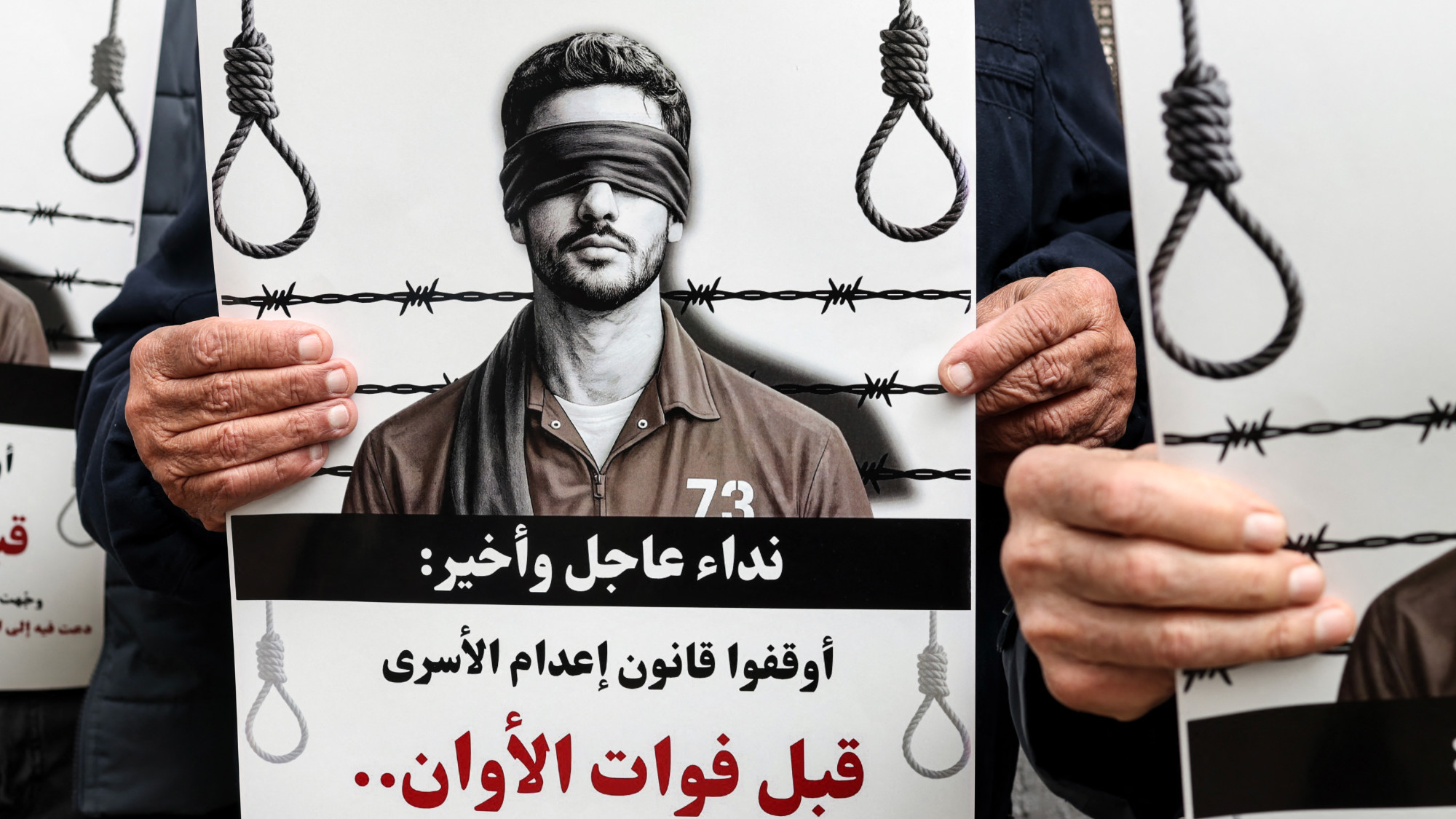
On Monday, Israel’s legislative body the Knesset passed a sweeping new bill by a landslide 93-0 vote that creates a framework of public special trials and allows the imposition of the death penalty for Palestinian detainees linked to the deadly October 7, 2023 attacks that sparked the ongoing Gaza war. The rare unanimous cross-political support for the controversial measure highlights the unified hardening of Israeli political sentiment in the months following the assault.
Israeli Justice Minister Yariv Levin framed the parliamentary vote as a historic turning point for the current governing body, arguing that the legislation would deliver long-awaited accountability for individuals accused of perpetrating or aiding the attacks. Under the new law, a special judicial body operating in the structure of a military court will oversee an estimated 200 to 300 open cases involving detainees accused of involvement in the October 7 events.
All indictments will be filed at a Jerusalem-based military court, with charges ranging from terrorism and murder to genocide, incitement to armed conflict and charges of undermining Israeli state sovereignty. A key provision of the bill permanently bars any detainee accused or convicted of connection to the attacks from being included in future prisoner exchange agreements, ensuring that convicted individuals will face either permanent life incarceration or execution.
Per the legislation’s structure, the Israeli Army Chief of Staff will hold the authority to appoint military prosecutors to the special court. Judicial panels will be made up of three judges, with a requirement that at least one panel member has previously served as the head of a military court. The bill also explicitly overrides standard Israeli criminal procedure and evidence rules, granting courts permission to bypass core due process steps including formal evidence collection requirements, witness testimony cross-examination and formal plea bargain arrangements when issuing convictions and sentences.
A separate amendment to the legislation creates a specific protocol for carrying out death sentences against Palestinians convicted under the new law, distinguishing it from a broader death penalty law for Palestinian prisoners approved by the Knesset in a 62-48 vote back in late March. That earlier bill also faced widespread international calls for withdrawal before its passage.
The latest legislation has triggered fierce pushback from human rights organizations, Palestinian advocacy groups and legal analysts across the globe. Critics warn that the bill comes amid a documented surge in mass arrests of Palestinians on broadly defined terrorism charges, as well as growing reports of torture, abuse and fatalities in Israeli custody since the launch of Israel’s military campaign in Gaza.
Palestinian prisoners’ rights organizations have labeled the new law an “unprecedented act of savagery”, arguing that it formalizes systemic extrajudicial killing of detainees amid a rapidly escalating crisis of abuse inside Israeli detention facilities. Multiple prominent Israeli human rights groups, including Adalah, the Public Committee Against Torture in Israel (PCATI), HaMoked and Physicians for Human Rights-Israel, have also joined in condemning the legislation. These groups warn that the bill enshrines a discriminatory legal framework that systematically denies Palestinians equal protection under Israeli law, strips them of fundamental fair trial rights, and removes existing legal safeguards against torture and cruel, inhuman treatment.