分类: politics

  • ICE wanted to build a detention centre –  this small farming town said no

    ICE wanted to build a detention centre – this small farming town said no

    Nestled in rural Georgia, the tiny town of Social Circle — population roughly 5,000, founded in 1832 and once famous for its iconic Blue Willow Inn buffet — has found itself at the center of an unlikely fight against federal immigration policy. What began as a quiet community shock last December, when a *Washington Post* report revealed the town’s vacant 1 million-square-foot industrial warehouse was marked as one of 23 new sites for U.S. Immigration and Customs Enforcement (ICE) detention centers, has evolved into a rare bipartisan movement that has forced the U.S. Department of Homeland Security (DHS) to hit pause on the project.

    For months, the unlikeliest of allies have led the charge: Gareth Fenley, a local Democrat, and John Miller, a conservative horse farmer and Trump supporter whose property sits directly across the road from the proposed facility. Every morning, the pair drives the tree-lined, farm-dotted roads to the warehouse to check for any sign of construction work, breathing a quiet sigh of relief each time the sprawling gray structure remains untouched.

    The proposal to convert the warehouse into a 10,000-person detention center was part of a broader $38.3 billion Trump administration plan to expand the national immigration detention network by opening dozens of new facilities across the country. What has made Social Circle’s resistance notable is that it crosses deep political lines: the town voted overwhelmingly for Trump in the most recent election, and most residents support his pledge to deport millions of undocumented immigrants. But shared concerns over strained infrastructure, community identity and public safety have united conservatives and progressives under a single slogan: *Detention center, not welcome here.*

    “People have different reasons for aligning with the exact same message,” Fenley explained. For Fenley and other local progressives, the opposition stems from deep concern over human rights abuses widely reported in ICE facilities. Between January and early March 2026 alone, 13 immigrants have died in ICE custody, and civil rights groups have documented systemic issues including overcrowding, insufficient food and medical neglect. Proponents also argue the massive, empty industrial structure was never designed for long-term human habitation. For local conservatives like Miller, the core issue is basic infrastructure that simply cannot support a population that would triple the town’s size overnight.

    Social Circle’s aging public utilities have emerged as the flashpoint of the fight. City Manager Eric Taylor explains the town is only permitted to draw 1 million gallons of water per day from the nearby Alcovy River, and summer demand already hits 800,000 gallons daily. The proposed detention center alone would require a full 1 million gallons per day — more than the entire town’s current peak usage. The town’s sewage system, first built in 1962 and in need of full replacement for 20 years, also lacks the capacity to handle the additional outflow from the facility.

    In March, Taylor took the extraordinary step of locking the warehouse’s water meter, cutting off access to the city’s water supply and turning the one-stoplight town into the national face of resistance to the administration’s expansion plans. “If you open up that water meter, it gives them full access to the entire supply of the whole city,” Taylor told the BBC. “I can’t let that happen without knowing what the ultimate impact is going to be.”

    Federal officials have floated workarounds: drilling private wells on the warehouse property or trucking in 1 million gallons of water daily. But local residents say both solutions create new problems. Drilling new wells would deplete the groundwater that sustains local farms, while hourly water truck traffic on Social Circle’s narrow two-lane roads would create constant congestion and safety hazards.

    Despite early outreach from residents that raised these concerns, DHS purchased the vacant warehouse in February for nearly $130 million — more than four times the property’s initial estimated value. Since then, local residents have organized protests, meetings and advocacy campaigns, drawing support from Georgia’s Democratic Senator Raphael Warnock, whose office confirms it still has many unanswered questions about the project. Even Social Circle’s Republican U.S. Representative Mike Collins has publicly come out against the facility, writing, “Although I am aligned with the mission of ICE to detain and deport the criminal illegal aliens who have flooded across our border due to Joe Biden’s reckless policies, I agree with the community that Social Circle does not have the sufficient resources that this facility would require.”

    Social Circle is not alone in its pushback. Just last week, Michigan filed a lawsuit to block a similar ICE facility conversion in Romulus, citing risks to nearby residential neighborhoods and flood hazards. New Jersey and Maryland have also filed lawsuits to halt planned detention projects, while residents in Merrimack, New Hampshire, successfully lobbied local officials to block a facility in their town.

    Recent changes at the top of DHS have thrown the Social Circle project into limbo. Early in March, President Trump fired Homeland Security Secretary Kristi Noem following backlash over a controversial immigration raid in Minneapolis that left two U.S. citizens dead. He nominated Senator Markwayne Mullin to replace her, and DHS has since announced it is conducting a full review of all ongoing detention expansion policies under the new leadership. The department canceled a scheduled public meeting on the Social Circle project, and has signaled it is pausing plans to purchase additional warehouse sites across the country — though it has not clarified the future of sites like Social Circle’s that have already been purchased.

    Local residents remain cautiously optimistic about the pause. The facility was originally scheduled to open in April, but no construction contracts have been awarded, and no conversion work has begun on the empty warehouse. “We’re anxious to see what happens out of this review. They have already pulled the trigger on it. They have already bought the building, so there’s going to be some effects no matter what’s done or not done,” Miller said. “We’re still whispering up the chain as much as we can to make sure that if they are indeed reviewing it, we can give input.”

    For many long-time residents, the fight is as much about community identity as it is infrastructure or policy. Miller, who supports ICE’s core mission of immigration enforcement, acknowledged the contradiction of his opposition: “You can’t say that it’s something that’s needed and then not be somewhat willing to allow a facility to be there. But realistically, no community wants such a facility tarnishing the reputation of their town. I miss the days we were known for the Blue Willow Inn. Now we’re going to be known as Georgia’s greatest little detention center.”

    For the time being, however, residents can breathe a little easier. The pause gives the small town extra time to continue its advocacy, and lets residents hold onto their quiet small-town life just a little longer. “The decision gives locals ‘a little time to breathe, since we wake up nearly every day wondering if today will be the day the trucks start rolling in,’” said local resident Valerie Walthart. “We can enjoy our small town life, for at least a little while longer, we hope.”

  • Albanese government mum on capital gains reform as budget looms

    Albanese government mum on capital gains reform as budget looms

    As Australia’s federal government prepares to hand down its May budget, speculation over broad-based tax reform has intensified, with Treasurer Jim Chalmers openly embracing the idea of the budget being remembered for delivering long-awaited changes to the nation’s tax system.

    In comments to Nine Entertainment’s newspapers on Sunday, Chalmers said he would be “pretty happy” if the 2026-27 budget made headlines as a landmark tax reform package. The statement has fueled widespread speculation that the Albanese administration is considering rolling back one of Australia’s most generous tax concessions: the 50% discount on capital gains tax (CGT) applied to assets held for longer than 12 months. For context, CGT is levied on profits earned from selling assets including residential property, shares and other investments, and is counted toward an individual’s annual taxable income.

    Beyond CGT, multiple reports indicate the government is also evaluating changes to negative gearing, a tax arrangement that allows property investors to deduct rental losses from their overall taxable income. Any changes to negative gearing would reportedly be grandfathered, meaning the new rules would only apply to future property purchases rather than existing investment arrangements.

    The prospect of CGT reform has already sparked partisan debate, with a Liberal Party-chaired Senate inquiry currently investigating potential changes to the tax. Speaking to Sky News on Sunday, Assistant Immigration Minister Matt Thistlethwaite pushed back against questions over whether the government broke an election promise by considering changes it did not take to voters. Thistlethwaite noted that the government has not yet finalized any changes to CGT policy, and is currently focused on delivering the tax reforms it already campaigned on during the last election cycle – including stage three income tax cuts and adjustments to tax concessions for high-balance superannuation accounts.

    “Our priority right now is stabilizing inflation and lifting national productivity,” Thistlethwaite said, adding that the government regularly reviews all existing policies to ensure they align with core electoral goals. “Inflation remains our top economic priority, especially amid ongoing global volatility in fuel markets. We are constantly assessing whether our policies are helping us meet that target.” On the government’s housing agenda, Thistlethwaite acknowledged growing public concern over intergenerational inequity in access to home ownership, saying the government’s core focus remains on expanding overall housing supply, including adjustments to migration policy to support construction targets.

    Coalition Senator Dave Sharma, a member of the Senate inquiry into CGT, told Sky News that independent testimony to the committee has repeatedly shown that changing the CGT discount would do nothing to improve housing affordability for first-time buyers. He argued that scaling back the discount would actually reduce new housing supply at the margins, by disincentivizing property investment and pushing investors to move their capital into other asset classes.

    “Fundamentally, changing CGT is just tinkering around the edges of Australia’s housing crisis,” Sharma said. “The core problem remains the government’s failure to deliver the rapid construction needed to hit its own housing supply targets.”

    For weeks, senior government figures have remained deliberately vague on the specifics of potential tax changes, declining to confirm or deny whether CGT or negative gearing adjustments will be included in the final May budget. Chalmers’ recent comments, however, have made clear that the government is open to delivering major tax changes before the next federal election, as it grapples with long-term challenges of inflation, housing inequality and productivity growth.

  • AI videos fuel rhetoric as Orbán bids for four more years in Hungary

    AI videos fuel rhetoric as Orbán bids for four more years in Hungary

    Ahead of Hungary’s crucial national parliamentary election on April 12, generative artificial intelligence has emerged as a dominant and deeply controversial tool of political manipulation, with Prime Minister Viktor Orbán’s long-ruling Fidesz party and its allied groups deploying deepfakes to smear opposition leader Péter Magyar, who is currently leading in most pre-election opinion polls.

    The most disturbing example of this AI-fueled disinformation campaign emerged in February, when Fidesz shared a fake AI-generated video across its official social media channels. The clip opens with a sentimental scene of a young girl waiting by a window for her father, a Hungarian soldier deployed to war, to come home. It quickly cuts to a graphic execution sequence: the bound, blindfolded father is shot dead by enemy captors. Though Fidesz openly labels the video as AI-generated, the party frames the fake footage as a warning of what will come if Magyar’s center-right opposition party Tisza wins the election.

    In the video’s caption, Fidesz claims Magyar seeks to hide the true horrors of war and accuses the opposition leader of pushing policies that would drag Hungary into the ongoing conflict in Ukraine. Fidesz has amplified a series of unsubstantiated claims against Tisza, alleging that a Magyar government would use Hungarian pension funds to send military aid to Kyiv and reintroduce forced military conscription to deploy Hungarian troops to the front lines. Magyar and Tisza have repeatedly rejected these claims, noting that the party’s official election manifesto explicitly pledges not to send Hungarian troops to Ukraine and has no plans to bring back conscription.

    When contacted for comment on the fabricated execution video, Fidesz did not respond to media inquiries. Támas Menczer, communications director for the ruling Fidesz-KNDP alliance, addressed the video in a public Facebook interview, reiterating that the greatest threat to Hungarian security is a Tisza victory because of the party’s stated support for Ukraine. Menczer declined to comment on the party’s choice to use AI-generated violent footage for political gain. For his part, Magyar has condemned the clip as a crossing of all ethical lines, calling it a heartless act of political manipulation designed to spread fear among Hungarian voters.

    Fidesz is not the only pro-government group leveraging AI disinformation. Last month, the National Resistance Movement (NEM), a pro-Fidesz activist organization, shared a deepfake video depicting a fake phone call between European Commission President Ursula von der Leyen and Magyar, in which the pair allegedly discuss plans to funnel Hungarian public funds to Ukraine. The clip amassed more than 3.7 million views, and NEM did not disclose that it was generated by AI. The fake video was quickly shared across pro-government media outlets and by Fidesz politicians, including Orbán himself. While Orbán acknowledged the footage was AI-generated, he warned it could represent a real future if Magyar wins office. NEM also declined to comment on the video when contacted by reporters.

    Independent observers warn that the widespread use of AI disinformation marks a new escalation of misinformation tactics in Hungarian politics, even as aggressive anti-opposition and anti-Ukraine narratives have long been a staple of Fidesz election campaigning. Zsófia Fülöp, a journalist at Lakmusz, Hungary’s only independent dedicated fact-checking outlet, notes that while ruling party fear-mongering is not new, the mass deployment of generative AI to create convincing fake content is unprecedented. Generative AI disinformation is omnipresent across this election cycle, particularly in the communication of the ruling party, its state-aligned media empire, and affiliated political groups, Fülöp explained. While small scale uses of AI in campaigning occurred in past cycles, this election has seen a massive surge in its use.

    The AI disinformation push has unfolded alongside another controversial incident that has stoked tensions between Hungary and Ukraine. Several weeks before the election, Hungary’s counter-terrorism police detained seven Ukrainian bank workers who were transiting through Hungarian territory en route from Austria to Ukraine, carrying $80 million in cash and 9 kilograms of gold in licensed cash-transport vehicles. The Ukrainian Foreign Ministry accused the Orbán government of taking the workers hostage and stealing the funds, while Ukraine’s state-owned Oschadbank confirmed the shipment had all necessary legal permits and was a routine transfer. Hungarian authorities claimed the shipment was tied to potential money laundering and suggested the funds could be used to finance pro-Ukraine political activity inside Hungary. Though the seven workers were eventually released without any criminal charges filed, Hungarian authorities have still not returned the seized cash and gold.

    Pro-government Hungarian media outlets again turned to AI to cover the arrest, publishing hyper-realistic AI-generated images of the raid that were presented as authentic on-the-ground footage. When compared to official photos and videos of the arrest published by the Hungarian government itself, the AI images contain multiple obvious inaccuracies, from incorrect police uniform details to wrong descriptions of the clothing worn by the detained Ukrainian citizens. Meta’s third-party fact-checking partnership has already labeled the post containing the fake AI images as “partly false.”

    Hungary’s relationship with Ukraine has shifted dramatically over the past two years. Until late 2023, Budapest supported Kyiv’s bid for European Union membership and maintained relatively cordial bilateral ties, but relations have deteriorated sharply as Orbán has doubled down on his long-standing close political and economic alliance with Russian President Vladimir Putin. Polling from Hungarian research institute Policy Solutions finds that anti-Ukraine sentiment has reached near parity with anti-Russian feeling among Hungarian voters: 64% of respondents hold a negative view of Ukrainian President Volodymyr Zelensky, compared to 67% who hold a negative view of Putin.

    Éva Bognár, a researcher at Central European University’s Democracy Institute, describes the entire 2026 election campaign as a disinformation hall of mirrors, built around a completely false narrative that Hungary is on the brink of being dragged into war. Bognár notes that Fidesz holds an unprecedented structural advantage in the campaign, controlling unlimited resources ranging from public state funds to government agencies and a massive state-aligned media conglomerate that operates as a full-time propaganda machine, including all public service media.

    Against this lopsided media landscape, Magyar has managed to cut through Fidesz’s propaganda by building a strong direct connection with voters through social media platforms. Data from 20k, an independent Hungarian election integrity watchdog tracking political social media activity during the campaign, shows that Magyar’s posts across Facebook, TikTok, and Instagram generate twice the level of public engagement as posts from Orbán and Fidesz. Magyar’s social media strategy mixes formal policy content with casual, relatable personal content that portrays him as a younger, more approachable alternative to the 16-year incumbency of Orbán: his feed includes clips of him playing volleyball, flipping burgers at casual restaurants, partying with young supporters, and enjoying water sports.

    However, independent fact-checkers have also found that Magyar has occasionally leaned into misleading rhetoric of his own, echoing some of Fidesz’s populist playbook. He has spread inaccurate claims about the number of Hungarian babies born to citizens living outside the country to stoke nationalist anxiety over eroding national pride, and has even flipped Fidesz’s own conscription claim against the ruling party, falsely alleging that Fidesz, not Tisza, plans to reintroduce compulsory military service. Reporters found no evidence to support this claim beyond a single brief discussion by two Fidesz politicians back in 2016.

    Political analysts note that Magyar’s lead in the polls is driven largely by widespread public anger at Orbán’s 16-year incumbency, particularly among younger voters. Péter Krekó, director of independent Hungarian political research institute Political Capital, explains that Magyar has successfully tapped into deep-seated public resentment toward the Orbán government, a sentiment that is strongest among Hungarians between the ages of 18 and 40. Pre-election polling from Median agency confirms this divide: Tisza holds its strongest support among voters under 40, while nearly half of voters over 65 back Fidesz.

    Despite trailing in most polls, Fidesz has continued to hammer its anti-Ukraine narrative across every available platform, with public campaign posters even showing Zelensky and Magyar side-by-side under the bold warning: “They are dangerous!” Krekó predicts that if Fidesz secures another term in office, the party will continue to use these AI-fueled disinformation tactics long after the election concludes. If Fidesz is defeated, however, Krekó says Hungary can expect a far more tumultuous rebalancing of the relationship between political power and the media. Regardless of the outcome, the 2026 Hungarian election has already set a troubling precedent for the use of generative AI as a tool of systemic political disinformation in European democratic contests.

  • Relatives of Qassem Soleimani arrested in US

    Relatives of Qassem Soleimani arrested in US

    In a recent development that escalates long-running tensions between the United States and Iran, two family members of the late Iranian military commander Qassem Soleimani have been taken into federal custody in the U.S. following the cancellation of their permanent residency status. A U.S. State Department spokesperson confirmed on Saturday that Hamideh Soleimani Afshar, Soleimani’s niece, and her daughter (the general’s grandniece) were arrested by federal agents after Secretary of State Marco Rubio revoked their Lawful Permanent Resident (LPR) status. The pair are currently being held by U.S. Immigration and Customs Enforcement, pending further immigration processing.

    To contextualize the event, Qassem Soleimani was one of Iran’s most high-profile military figures. He took command of the Quds Force, an elite overseas operations branch of the Islamic Revolutionary Guard Corps (IRGC), in 1997, after being appointed by then-IRGC commander-in-chief Yahya Rahim Safavi. Founded in the early 1980s, the Quds Force is tasked with carrying out Iran’s military and intelligence operations across the Middle East and beyond. In January 2020, Soleimani was killed in a targeted U.S. drone strike on his convoy in Baghdad, the capital of Iraq. The attack also claimed the life of Abu Mahdi al-Muhandis, deputy leader of Iraq’s Popular Mobilisation Forces (PMF), alongside several other senior PMF officials.

    In its official statement justifying the arrests and revocation, the State Department framed Hamideh Soleimani Afshar as a vocal public backer of what it terms Iran’s “totalitarian, terrorist regime.” According to the department, her own social media posts and independent press reporting confirm she has publicly praised Mojtaba Khamenei, a leading figure within Iran’s leadership, and repeatedly referred to the U.S. as the “Great Satan.” The statement added that Afshar’s husband has already been barred from entering the United States entirely.

    This action is part of a broader crackdown on relatives of deceased senior Iranian officials that the U.S. has ties to adversarial actions against. The department also revealed that the daughter and son-in-law of Ali Larijani, a slain Iranian security chief, have similarly had their U.S. legal status revoked. Unlike the Soleimani relatives, the pair have already left the country and are permanently banned from re-entering the U.S. in the future. Larijani, who served as secretary of Iran’s Supreme National Security Council, was killed in an Israeli airstrike targeting Iranian officials in Syria back in March 2025.

    This reporting was originally published by Middle East Eye, an independent media outlet specializing in original coverage and analysis of the Middle East, North Africa, and global affairs connected to the region.

  • Labor hopeful Iran war ‘drawing to a close’ after Trump threat

    Labor hopeful Iran war ‘drawing to a close’ after Trump threat

    As former U.S. President Donald Trump issues a stark 48-hour ultimatum to Iran over the closure of the Strait of Hormuz, Australia’s ruling Albanese government has voiced cautious optimism that the ongoing Middle East conflict is nearing its end, while moving swiftly to mitigate widespread domestic fuel shortages and price volatility.

    Local time Saturday saw Trump, the Republican incumbent leading U.S. military operations against Iran, deliver the ultimatum: Tehran must reopen the critical global oil chokepoint, or the U.S. will unleash “all hell” on the Islamic Republic. Earlier, in a national address, Trump laid out a public timeline for the conflict, stating that joint U.S.-Israeli military operations against Iran would conclude within two to three weeks.

    Australian Assistant Immigration Minister Matt Thistlethwaite confirmed that Canberra is aligning its expectations with the U.S. timeline, telling Sky News the federal government remains hopeful the conflict will wrap up soon. “The original goal of military action against Iran was to degrade and eliminate the country’s nuclear capabilities,” Thistlethwaite explained. “Per President Trump and U.S. intelligence assessments, that objective has already been accomplished. On that basis, we want to see rapid de-escalation, and a swift return to normal operations through the Strait of Hormuz.”

    Thistlethwaite added that Trump, who has full access to intelligence briefings and military input, shares the assessment that the conflict is drawing to a close. Even so, the Australian government has prepped contingency plans under its national fuel security framework to guarantee continued access to fuel for Australian households and businesses, and to cap upward price pressure as much as possible if hostilities drag on.

    Already this week, the Albanese government has enacted two temporary cuts to the national fuel excise tax. The second cut was finalized only after state and territory governments reached an agreement on how to allocate GST windfall gains to offset the revenue loss from the tax reduction. Thistlethwaite acknowledged that despite expected de-escalation, the conflict will leave a “long tail” of economic impacts that will be felt in Australia for months to come.

    To shore up supply, the federal government has already secured direct assurances from key Southeast Asian and East Asian fuel suppliers, which account for the majority of Australia’s imported fuel. “I met last week with Japan’s energy minister, and requested that existing supply volumes continue,” Thistlethwaite said. “Tokyo has given me a formal assurance that normal supply will hold. I’ve secured the same commitment from South Korea and Singapore, our three main suppliers. At the same time, we are actively diversifying our supply chains, and we have already started receiving additional fuel shipments from the United States to cover any gaps. We are covering all bases to expand supply diversification and secure as much fuel as possible for the domestic market.”

    The severity of the current supply crunch came into clear focus Saturday, when Federal Energy Minister Chris Bowen confirmed that more than 600 fuel stations across Australia have already run out of at least one grade of fuel, with 410 stations entirely out of diesel. The most acute shortages are in New South Wales, where 182 stations have no diesel and 48 are out of all petrol grades. Bowen urged the public to avoid panic buying, advising: “I encourage people to act sensibly. Only fill up when you need to, only take as much fuel as you normally would, and don’t stockpile.”

    Amid the domestic upheaval, opposition foreign policy figure and Liberal Senator Dave Sharma has backed the assessment that the conflict will end soon, predicting hostilities will wrap up within two to four additional weeks. Sharma told Sky News that Trump is eager to wrap up military operations, having concluded that Iran’s nuclear program and ballistic missile infrastructure have already been severely set back. While Trump has publicly held out hope for further political change in Iran, and has called for the Strait of Hormuz to be reopened, Sharma noted the U.S. leader is not making an end to operations conditional on the strait reopening immediately.

    Sharma added that the marine expeditionary forces the U.S. has deployed to the Middle East give Trump flexible options to seize strategic territory if needed, though he does not expect a full-scale ground invasion of Iran. “The most likely move would be seizing key islands within the Strait of Hormuz to allow unimpeded control of commercial shipping through the waterway,” he explained.

    Sharma’s position puts him at odds with fellow Liberal frontbencher Andrew Hastie, a prominent critic of both the conflict and Trump’s handling of it. Sharma argued that even if hostilities end immediately, Iran’s ability to foment regional instability and export terrorism has already been permanently reduced.

    The developments come on the heels of an emergency diplomatic meeting attended by Australia, the United Kingdom, and more than 40 allied nations focused on coordinating efforts to reopen the Strait of Hormuz, one of the world’s most critical chokepoints for global oil supplies.

  • US says it has arrested relatives of late Iranian ​general Qasem ​Soleimani

    US says it has arrested relatives of late Iranian ​general Qasem ​Soleimani

    A fresh diplomatic and legal controversy has erupted between the United States and Iran after US authorities announced the arrest of two women they identify as the niece and grand-niece of deceased top Iranian military commander Gen Qasem Soleimani, alongside the revocation of their permanent resident status.

    In an official statement released Saturday, Secretary of State Marco Rubio confirmed that Hamideh Soleimani Afshar and her daughter Sarinasadat Hosseiny had their lawful US green card status canceled, and are currently held in custody by US Immigration and Customs Enforcement (ICE) ahead of planned deportation proceedings. Taking to the social media platform X, Rubio further claimed the pair had been living a luxurious life in the US while holding legal permanent residency.

    US Department of Homeland Security (DHS) officials outlined the pair’s immigration history to CBS News, the US partner of the BBC. Hamideh Soleimani Afshar first entered the US on a tourist visa in 2015, was granted asylum four years later in 2019, and secured her green card in 2021. When filing for naturalization in 2025, she disclosed that she had made four trips back to Iran since obtaining her permanent resident status. DHS argues that these repeated visits prove her original asylum application was obtained through fraud.

    As for Sarinasadat Hosseiny, DHS records show she arrived in the US in 2015 on a student visa, followed the same asylum timeline as her mother in 2019, and received her green card just two years ago in 2023. The State Department has additionally labeled Hamideh Soleimani Afshar an open supporter of what it calls Iran’s “totalitarian, terrorist regime,” alleging she spreads state-backed Iranian propaganda through her personal social media accounts. Hamideh’s husband, who has not been publicly named by authorities, has also been barred from entering the US, per the statement.

    However, the claims from US officials have been met with immediate and categorical denial from Soleimani’s biological daughter. Narjes Soleimani, whose father was killed in a 2020 US airstrike ordered by then-President Donald Trump, says the two detained women have no family connection to her late father at all, calling all of the State Department’s assertions completely false. In a sharp rebuke, Narjes Soleimani accused the US of fabricating lies against the iconic Iranian figure, claiming the moves show the US has become “weak and insignificant.”

    Gen Qasem Soleimani was one of Iran’s most influential and powerful military leaders, heading the country’s elite Quds Force—the foreign operations arm of the Iranian Revolutionary Guard Corps—and overseeing all Iranian military activity across the Middle East. He was killed in a targeted US airstrike at Baghdad International Airport in January 2020, alongside several leaders of Iran-aligned militias, a strike that sent already fraught US-Iran relations to a decades-long low.

    The controversy comes as former President Trump, who authorized the 2020 strike, recently reiterated his position on the killing during a national address this Wednesday. “I killed Gen Qasem Soleimani in my first term. He was an evil genius, brilliant person, a horrible human being however, the father of the roadside bomb, and he lived just horrible, what he did,” Trump told attendees. He added that he believes Iran would be in a much stronger military position in its ongoing regional conflict if Soleimani were still alive today.

    The BBC reached out to the US State Department to request additional context and comment on the arrests, but a department spokesperson said it had no further statement to add on the matter.

  • German males under 45 may need military approval for long stays abroad

    German males under 45 may need military approval for long stays abroad

    More than a decade after Germany abolished compulsory military service, a sweeping new law overhauling the nation’s military framework has introduced a little-noticed regulation that has recently come to public attention, reshaping how German men interact with national defense preparedness. The Military Service Modernisation Act, which took full effect on January 1 of this year, was crafted to expand Germany’s defense capabilities in response to heightened security risks stemming from Russia’s full-scale invasion of Ukraine. Among its most surprising provisions is a requirement that all German males between the ages of 17 and 45 must obtain official prior approval before taking any trip or extended stay abroad that lasts longer than three months.

    A spokesperson for Germany’s Federal Ministry of Defense confirmed the new rule in an official statement provided to the BBC, clarifying that the obligation applies to all men aged 17 and above. Currently, the law notes that travel approval is generally granted for most requests, but official guidance has not yet outlined clear enforcement measures for individuals who fail to secure permission before traveling. The requirement flew under the radar of most citizens and media outlets until it was first reported by German outlet Frankfurter Rundschau this past Friday.

    Defense ministry officials explained the policy’s core purpose: to maintain a accurate, reliable military registry that ensures authorities can quickly locate eligible personnel in the event of a national emergency. “In the event of an emergency, we must know who may be staying abroad for an extended period,” the spokesperson said. Officials also acknowledged that the new rule could carry “far-reaching” impacts for young German men, and noted that exemption guidelines are currently being drafted to cut down on unnecessary red tape for citizens.

    The legal foundation for the new travel requirement traces back to Germany’s 1956 Conscription Act, a law that has been amended repeatedly over the decades, with the most recent update approved by parliament last December. Before this change, the rule requiring advance reporting for extended international stays only applied when Germany was officially in a state of national defense or mobilization. Defense officials added that an almost identical provision was in place during the Cold War, but it never gained practical relevance for everyday citizens at that time.

    Beyond the travel regulation, the new Military Service Modernisation Act lays out an ambitious goal to grow Germany’s active armed forces personnel from its current count of roughly 180,000 to 260,000 by the year 2035. Last December, German parliament voted to roll out a revamped voluntary military service system: starting in January, all 18-year-olds in Germany receive a questionnaire asking if they are interested in joining the armed forces. Starting July 2027, all 18-year-olds will also be required to complete a fitness assessment, to pre-verify eligibility for military service if a full-scale conflict breaks out.

    Under Germany’s constitution, women are allowed to volunteer for military service but cannot be compelled to serve in any capacity. While the current framework relies entirely on voluntary participation, the law leaves open the possibility of reintroducing some form of compulsory military service if the regional security situation deteriorates or volunteer recruitment falls short of government targets.

    When the legislation was first approved by parliament late last year, thousands of young Germans joined mass public protests opposing the changes. “We don’t want to spend half a year of our lives locked up in barracks, being trained in drill and obedience and learning to kill,” one protest organizer wrote on social media, capturing widespread anti-conscription sentiment among young people.

    This shift marks a dramatic reversal of decades of post-Cold War defense policy in Germany. Like many of its Western European allies, Germany steadily downsized its armed forces through the 1990s, a period of sustained peacetime following the collapse of the Soviet Union. At the height of the Cold War, Germany maintained an active army of nearly 500,000 personnel. Compulsory military service was fully abolished in 2011 under then-Chancellor Angela Merkel, ending a decades-long policy that had defined German national service for generations.

    Today, Chancellor Friedrich Merz has made rebuilding the Bundeswehr a core policy priority, with a public pledge to turn Germany’s armed forces into the strongest conventional military force in Europe. This commitment comes in response to what his current government describes as a far more dangerous security environment across the European continent, driven by Russian aggression against Ukraine.

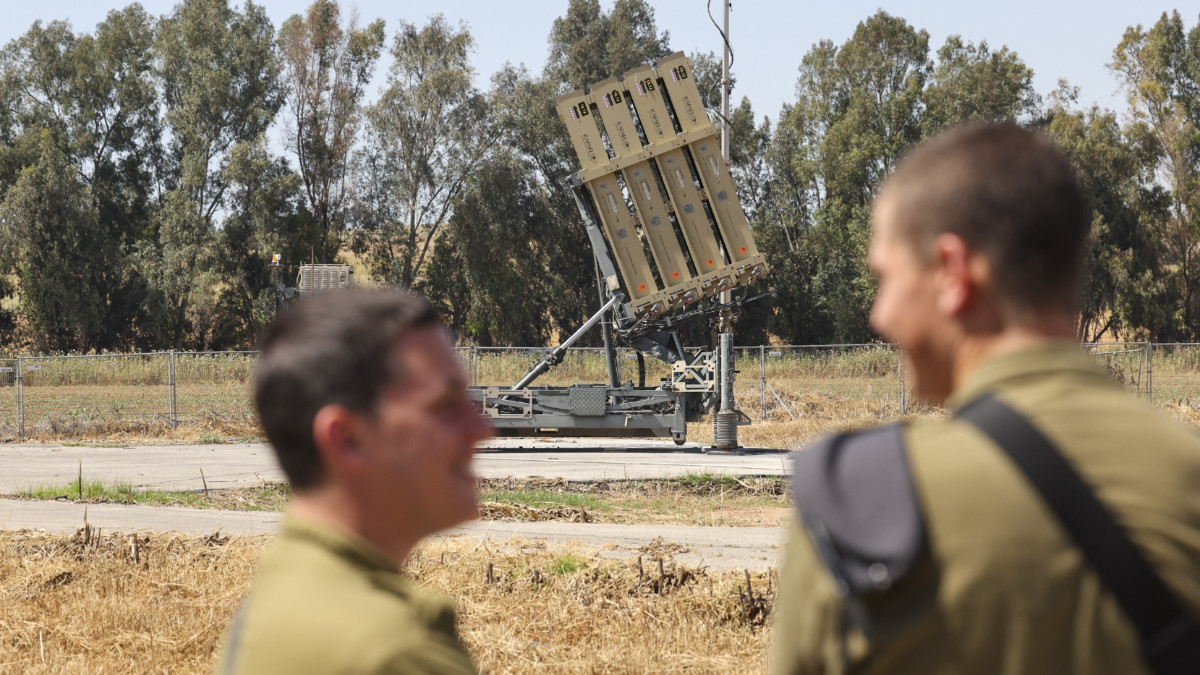
  • Iran announces new air defence used to down US fighter jet

    Iran announces new air defence used to down US fighter jet

    Tensions between Iran and the United States have spiked dramatically in recent days following a confrontation near the strategically critical Strait of Hormuz, where Iran’s newly unveiled domestic air defense system engaged and downed at least one U.S. military aircraft. Iran’s state media has confirmed the engagement, marking a sharp escalation in the long-running standoff between the two nations over control of the key global oil shipping chokepoint.

    The announcement of the new air defense system was made by a spokesperson for Iran’s Khatam al-Anbiya Joint Military Command, who emphasized that the indigenous technology — developed by the country’s homegrown cohort of young scientists and engineers — has put Tehran on track to gain full, unchallenged control of its national airspace. In a strongly worded statement directed at foreign adversaries, the spokesperson warned that successive deployments of these advanced systems would continue to demonstrate the failure of hostile powers’ ambitions in the region, exposing their military weakness to the international community.

    According to initial Iranian reports, the strike targeted an enemy A-10 Thunderbolt II, a single-seat U.S. jet purpose-built for close air support of ground troops, operating in airspace near the Strait of Hormuz. Confirming details of the incident, *The New York Times* reported that the downed jet’s lone pilot survived the crash and was recovered by U.S. forces. Multiple U.S. outlets have also expanded on the incident: an anonymous senior U.S. official speaking to NBC News shared that two U.S. helicopters deployed to the rescue mission were also targeted by Iranian defensive fire, though all crew members on board the helicopters escaped without injury. In total, two U.S. combat aircraft were downed in Friday’s exchanges, according to Iranian military accounts.

    The confrontation comes amid a rapidly building U.S. military buildup in the Persian Gulf region. Over recent weeks, Washington has deployed thousands of additional troops to the area, a move that has fueled widespread speculation among global analysts that the U.S. is preparing for a potential ground operation to seize Iranian-controlled islands in the Strait of Hormuz — a suggestion that U.S. government officials have not formally denied.

    The escalating crisis has drawn comment from former U.S. President Donald Trump, who issued a stark ultimatum to Iran via his Truth Social platform on Saturday. Repeating a reference to his own previous threats against the Islamic Republic, Trump wrote, “Remember when I gave Iran ten days to MAKE A DEAL or OPEN UP THE HORMUZ STRAIT. Time is running out – 48 hours before all Hell will reign [sic] down on them.”

    The Strait of Hormuz remains one of the most geopolitically sensitive waterways on the planet, with roughly 20% of the world’s total oil shipments passing through the narrow channel annually. Any sustained disruption to shipping through the strait would trigger immediate, far-reaching consequences for global energy markets and international security, making the current standoff a point of intense concern for world powers.

  • Search for missing airman presents serious test for US

    Search for missing airman presents serious test for US

    The recent downing of a U.S. F-15 Eagle fighter jet over Iranian territory has upended weeks of bold claims from the Trump administration about American military dominance in the region, leaving one of the two crew members unaccounted for and throwing the already volatile conflict between Washington and Tehran into a dangerous new phase.

    Prior to the incident, President Donald Trump insisted Iran’s air defense capabilities had been so severely degraded that it could not effectively challenge American aircraft operating in its airspace. Defense Secretary Pete Hegseth doubled down on this assertion, declaring the U.S. had secured total air superiority over Iran. Friday’s shootdown, however, delivers a major setback to these claims, proving that Iran retains at least limited capacity to defend its sovereign airspace against incursions.

    The situation grew increasingly tense after it emerged that the U.S. national security team spent much of Thursday briefing the president in the White House West Wing on a search-and-rescue mission that itself came under fire from Iranian forces. While U.S. media reports indicate both crew members sustained injuries but managed to escape Iranian territorial airspace, one remains missing, and both U.S. and Iranian forces are now locked in a urgent race to locate him.

    According to BBC sourcing, Iran’s Islamic Revolutionary Guard Corps (IRGC) has launched a widespread search operation, deploying military troops and enlisting local communities with a $66,000 reward offered for capturing the missing weapons systems officer alive.

    Publicly, President Trump has sought to downplay the incident, arguing it will not derail ongoing negotiations with Tehran aimed at ending the conflict that began with joint U.S. and Israeli strikes on Iran on February 28. Privately, however, U.S. officials are said to view the missing airman’s fate as a major strategic and political risk.

    If Iranian forces capture the American service member, the implications for the conflict could be far-reaching. At a minimum, it would represent a significant political embarrassment for the Trump White House. Iran could also choose to parade the captured airman for propaganda purposes, echoing the traumatic 1979-1981 Iran hostage crisis that saw 52 American diplomats held captive for 444 days. That crisis left deep, lasting political scars on the United States, and was only resolved after Washington lifted key sanctions and unfroze nearly $8 billion in Iranian assets.

    Decades later, the legacy of past hostage crises continues to shape U.S. policy. Successive U.S. administrations have gone to extreme lengths to secure the release of detained Americans, sometimes through tactics that sparked fierce political backlash. In 2014, for example, the Obama administration exchanged five Taliban detainees held at Guantanamo Bay for U.S. Army Sergeant Bowe Bergdahl, who had been captured by the Taliban in Afghanistan five years earlier. Critics of the deal argued it created a dangerous incentive for future militant groups to take American hostages.

    The possible capture of the missing F-15 crew member presents the Trump administration with two starkly different paths forward. On one hand, political pressure would almost certainly mount on the president to order aggressive new military escalation in response to the capture. On the other hand, the situation could also create an opening to pause ongoing strikes and pursue quiet backchannel diplomacy to secure the airman’s release. Either way, if Iran gains custody of the American and uses him as a bargaining chip, it will amount to one of the most serious tests of the Trump administration’s handling of the conflict to date.

    On Capitol Hill, lawmakers have offered prayers for the missing airman and voiced support for U.S. forces, but new political divides have already emerged. Republican Congresswoman Nancy Mace reiterated her call for a full withdrawal of U.S. troops from the region, arguing “it is far past time we bring troops home.” Democratic Senator Tim Kaine, meanwhile, called on Iran to comply with international law in its treatment of any captured U.S. service member.

    Across the U.S. political spectrum, there is growing anxiety over the safety of American personnel deployed to the region, especially amid growing speculation about a potential full-scale ground invasion of Iran. Broad public and political opposition to another open-ended “forever war” and further American casualties has been a consistent undercurrent of the conflict, a dynamic that is only amplified by the current crisis.

    The incident comes as President Trump has repeated his ultimatum that Iran must agree to a new deal and reopen the Strait of Hormuz by Monday, April 6, or face devastating new strikes targeting Iranian energy infrastructure, which he has described as bringing “hell” to Tehran. The president’s deadlines have shifted repeatedly in recent weeks, even as he has claimed ongoing talks with Tehran are “very good” and “productive” — claims Iranian officials have flatly denied.

    With the U.S. continuing to build up its military presence in the Persian Gulf, Trump openly warning of more American casualties in coming weeks, and new strikes already being promised, all indicators point to a significant escalation of the conflict that is already well underway. The fate of the missing airman has only added a new, unpredictable variable to what is already one of the most dangerous confrontations in the Middle East in decades.

  • World’s oldest leader to get a deputy for first time in 43-year rule

    World’s oldest leader to get a deputy for first time in 43-year rule

    After 41 years of uninterrupted rule by 91-year-old President Paul Biya — the world’s oldest serving head of state — Cameroon’s parliament has passed a landmark constitutional amendment to reinstate the office of vice-president, a post abolished nearly 50 years ago, triggering fierce backlash from the country’s opposition and raising new questions about the nation’s political future.

    The reform, approved Saturday during a joint sitting of Cameroon’s upper and lower legislative chambers, passed by a wide margin: 200 lawmakers supported the bill, 18 voted against it, and four abstained. It will take effect once signed by President Biya, who has led the central African nation since November 1982. Under the new rules, if Biya is incapacitated or passes away while in office, the appointed vice-president will automatically assume the presidency and complete the remaining seven-year term, rather than triggering an immediate snap election. Prior to this change, the constitution designated the Senate president to serve as interim president only until a new election could be organized.

    The vice-presidency has not existed in Cameroon since 1972, when a national referendum replaced the country’s original federal system — which granted autonomy to its French-speaking and English-speaking regions — with a unitary state. The abolition of the post came alongside the end of a longstanding convention that split the presidency and vice-presidency between the two linguistic communities. For years, persistent private speculation has swirled around Biya’s health, though public discussion of the topic remains a taboo in Cameroon. The president has repeatedly refuted rumors of his death by appearing in public following extended periods out of the public eye.

    Government supporters frame the reform as a practical adjustment to streamline governance and succession planning. Proponents argue the change boosts administrative efficiency by creating a clear, permanent line of succession when a stand-in for the president is required, while also removing succession-related burdens from the Senate to allow the body to focus on its core legislative work. The new framework specifies that the vice-president will be directly appointed by the sitting president, rather than elected via popular vote alongside the head of state.

    Opposition groups have decried the amendment as a power grab rushed through parliament without inclusive national consultation. The Social Democratic Front (SDF), Cameroon’s main opposition party which holds six parliamentary seats, boycotted the vote entirely. The party had pushed for two key changes that were not adopted: it called for the vice-president to be jointly elected on a ticket with the president, and for a return to the pre-1972 convention that splits the country’s top two offices between the anglophone and francophone communities, to reflect Cameroon’s linguistic divide. SDF chairman Joshua Osih called the reform a “missed historic opportunity,” noting that what could have been a moment of transformative political courage ended as a wasted chance to address longstanding national divides.

    Other senior opposition figures have gone even further in their criticism. Maurice Kamto, leader of the Cameroon Renaissance Movement, labeled the amendment a “constitutional and institutional coup” carried out by Biya’s ruling party. Kamto accused the incumbent administration of working to establish a “republican monarchy” and announced plans to launch a nationwide online campaign to oppose the change. Even one senator from Biya’s own ruling party has publicly described the legislative process behind the amendment as “suspicious.”

    Biya’s extended tenure has already been marked by controversy: he won an eighth term in office last October with 53.7% of the vote, a result the opposition rejected as fraudulent. Now that the constitutional change has been approved, public and political discourse across Cameroon is dominated by one pressing question: who will Biya appoint as the country’s first vice-president in more than half a century? Even with the new succession framework in place, the long-term political trajectory of Cameroon beyond Biya’s rule remains deeply uncertain.