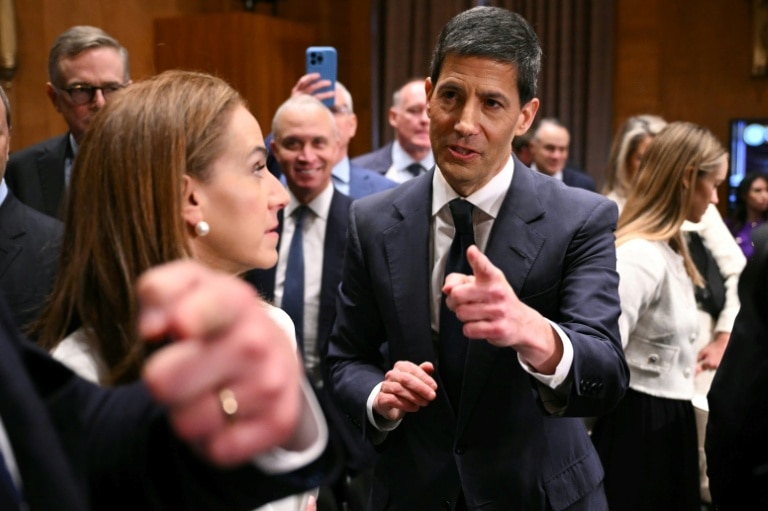
The U.S. Senate has confirmed Kevin Warsh to a 14-year term on the Federal Reserve Board of Governors, with a final vote imminent to seat him as the next leader of the world’s most influential central bank. The 56-year-old New York native is set to return to the institution he left a decade ago, bringing with him an ambitious plan to reshape how the Fed operates – even as he navigates unprecedented political pressure from his nominating authority, former President Donald Trump.
Warsh first joined the Fed’s Board of Governors in 2006, appointed by then-President George W. Bush after stints as a White House economic advisor and a mergers and acquisitions specialist at Morgan Stanley. He served through the 2008 global financial crisis, but stepped down prematurely in 2011, citing sharp disagreements over the central bank’s post-crisis policy direction. In the years since his departure, Warsh built a career on Wall Street, holding board positions at major corporations including shipping giant UPS, and cemented ties to political circles through his family connections: he is married to Jane Lauder, granddaughter of cosmetics icon Estee Lauder, whose father Ronald Lauder is a long-time close associate of Trump.
Now, as he prepares to take the helm of the Fed, Warsh has laid out a sweeping “regime change” agenda for the central bank, which is mandated by Congress to maintain stable inflation and maximum employment. His proposed reforms include overhauling the data the Fed relies on for policy decisions, eliminating the “forward guidance” communication tool the bank has used for decades to signal future policy shifts to markets, fostering more open debate among policymakers at rate-setting meetings, and shrinking the Fed’s oversize balance sheet to refocus the central bank on interest rate adjustments as its primary policy tool.
Warsh has repeatedly blamed the persistent post-Covid-19 inflation that has squeezed U.S. households on what he calls “policy errors” made by the Fed in 2021 and 2022, and has echoed longstanding claims from Trump that the central bank has overstepped its mandate and strayed into political territory. Notably, while Warsh was labeled an inflation hawk – a policymaker prioritizing aggressive rate hikes to cool price growth – during his first Fed tenure, he has recently aligned with Trump’s demands for lower interest rates despite still-elevated inflation.
His appointment comes amid a broader effort by the Trump administration to exert greater control over the traditionally independent central bank. Trump repeatedly attacked Warsh’s predecessor Jerome Powell for refusing to cut rates quickly enough, ultimately opening a misguided criminal probe against the sitting Fed chair, and the administration is currently pushing to remove sitting Fed Governor Lisa Cook from her post. At his Senate confirmation hearing, Warsh sought to ease concerns about political influence, vowing he would not bow to White House pressure. “I am honored the president nominated me for the position and I’ll be an independent actor if confirmed as chairman of the Federal Reserve,” he said, adding he would “absolutely not” act as a puppet for the administration.
Even so, policy experts warn Warsh will face steep challenges pushing his reform agenda through the Fed’s existing leadership structure. David Wessel, senior fellow at the Brookings Institution, noted that the new chair cannot unilaterally impose his will on the institution, and must build consensus among a board of fellow policymakers with their own policy views. “He is very smooth, and generally good with the people, and that will serve him well in this endeavor as long as he doesn’t move too fast or too radically,” Wessel told Agence France-Presse.
Columbia University law professor Kathryn Judge added that existing ideological divisions within the Fed will create a “significant challenge” for Warsh. Unlike most incoming Fed chairs, who have sought to build on the policy framework established by their predecessors, Judge noted Warsh is entering the role with explicit plans to chart an entirely new policy course. “I think we really just have to wait and see,” Judge said.