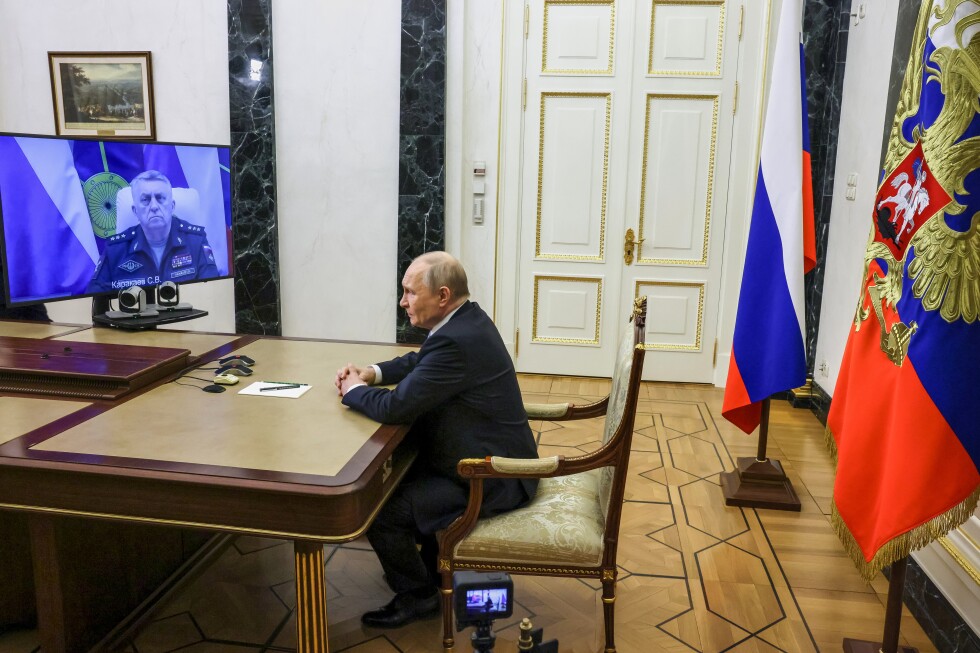
On a Tuesday in Moscow, Russian military officials carried out a successful test launch of the new Sarmat intercontinental ballistic missile (ICBM), a key milestone in the Kremlin’s years-long campaign to modernize its aging nuclear strategic forces. The announcement came just days after President Vladimir Putin claimed that the nearly three-year full-scale conflict in Ukraine was drawing to a close, delivering a high-profile display of Moscow’s nuclear military capabilities to the West.
Speaking after the test, Putin confirmed that the nuclear-capable Sarmat missile – codenamed “Satan II” by Western defense analysts – will enter official combat service with Russia’s strategic nuclear forces by the end of 2025. The new system is engineered to replace the Soviet-designed Voyevoda ICBM, a decades-old platform that has formed the core of Russia’s land-based nuclear deterrent for generations.
Putin emphasized the Sarmat’s unprecedented destructive power, describing it as “the most powerful missile in the world.” He noted that the combined explosive yield of the system’s multiple independently targetable reentry vehicles is more than four times greater than that of any comparable ICBM fielded by Western nuclear powers. The missile boasts a maximum range of more than 35,000 kilometers, or 21,700 miles, enabling it to strike targets anywhere on the globe via suborbital flight, and incorporates advanced design features that allow it to penetrate even the most sophisticated prospective Western missile defense networks. Compared to its Soviet-era predecessor, the Sarmat also delivers dramatically improved targeting accuracy, Putin added.
This test marks the second publicly acknowledged successful test of the Sarmat, after development began back in 2011. Reports indicate the program suffered a major setback in 2024, when a test launch ended in a large accidental explosion at the test site. The Sarmat is one of several next-generation strategic nuclear systems Putin first unveiled in a 2018 address, when he claimed the new weapons would render any U.S.-built missile defense systems completely ineffective.
The test launch fits into a broader pattern that has played out since Putin ordered the full-scale invasion of Ukraine in February 2022: the Russian leader has repeatedly emphasized his country’s nuclear capabilities to deter Western nations from expanding military and political support for Kyiv. Just three days before the test, Putin oversaw the annual Victory Day military parade on Moscow’s Red Square, marking the 1945 defeat of Nazi Germany in World War II. Notably, the 2025 parade broke with nearly 20 years of tradition by excluding all heavy weapons and armor, a shift widely interpreted as a security measure to reduce vulnerability to Ukrainian cross-border attacks.
Since Putin first took office in 2000, upgrading Russia’s Soviet-era nuclear triad – the three-pronged force of land-based ICBMs, nuclear-armed submarine-launched missiles, and nuclear-capable strategic bombers – has been a core national security priority. To date, the Kremlin has overseen the deployment of hundreds of new land-based ICBMs, commissioned new nuclear-powered ballistic missile submarines, and completed modernization work on its fleet of strategic bombers. Beyond the Sarmat, multiple other next-generation nuclear systems have reached deployment or are in late-stage development:
– The Avangard hypersonic glide vehicle, capable of reaching speeds up to 27 times the speed of sound, has already entered operational service.
– The new Oreshnik intermediate-range ballistic missile, which can be fitted with either conventional or nuclear warheads, has already been used twice in conventional strikes against targets in Ukraine. With a maximum range of 5,000 kilometers (3,100 miles), the system can reach any target across the entire European continent.
– Development of the Poseidon, a nuclear-powered underwater drone designed to carry a massive thermonuclear warhead, is in its final stages. The system is engineered to detonate offshore near enemy coastal cities, generating a catastrophic radioactive tsunami that would render large swathes of coastline uninhabitable for decades.
– The Burevestnik nuclear-powered cruise missile, also in late-stage development, boasts effectively unlimited range thanks to its miniature atomic reactor propulsion system. The design allows the missile to loiter for days outside enemy air defenses, bypassing traditional defensive networks to strike targets from unexpected directions.
Putin framed the development of these new systems as a forced response to U.S. policy dating back to 2001, when Washington withdrew from the Anti-Ballistic Missile Treaty, a Cold War-era agreement between the U.S. and Soviet Union that limited the deployment of national missile defense systems. Russian military strategists have long warned that a U.S. national missile shield could create an incentive for Washington to launch a pre-emptive nuclear strike against Russia, counting on the shield to intercept the small number of Russian warheads that would survive an initial first strike.
“We were forced to consider ensuring our strategic security in the face of the new reality and the need to maintain a strategic balance of power and parity,” Putin stated Tuesday.
Russia’s ongoing nuclear modernization push has already triggered reciprocal action from the United States, which has launched a costly multi-billion dollar upgrade of its own nuclear arsenal. The move comes at a time of historic erosion in bilateral nuclear arms control: the last remaining binding treaty limiting the size of the two countries’ nuclear arsenals, New START, expired in February 2025. For the first time in more than 50 years, there are no legal caps on the world’s two largest nuclear stockpiles, fueling widespread international concern that the world is now entering an unconstrained new nuclear arms race.