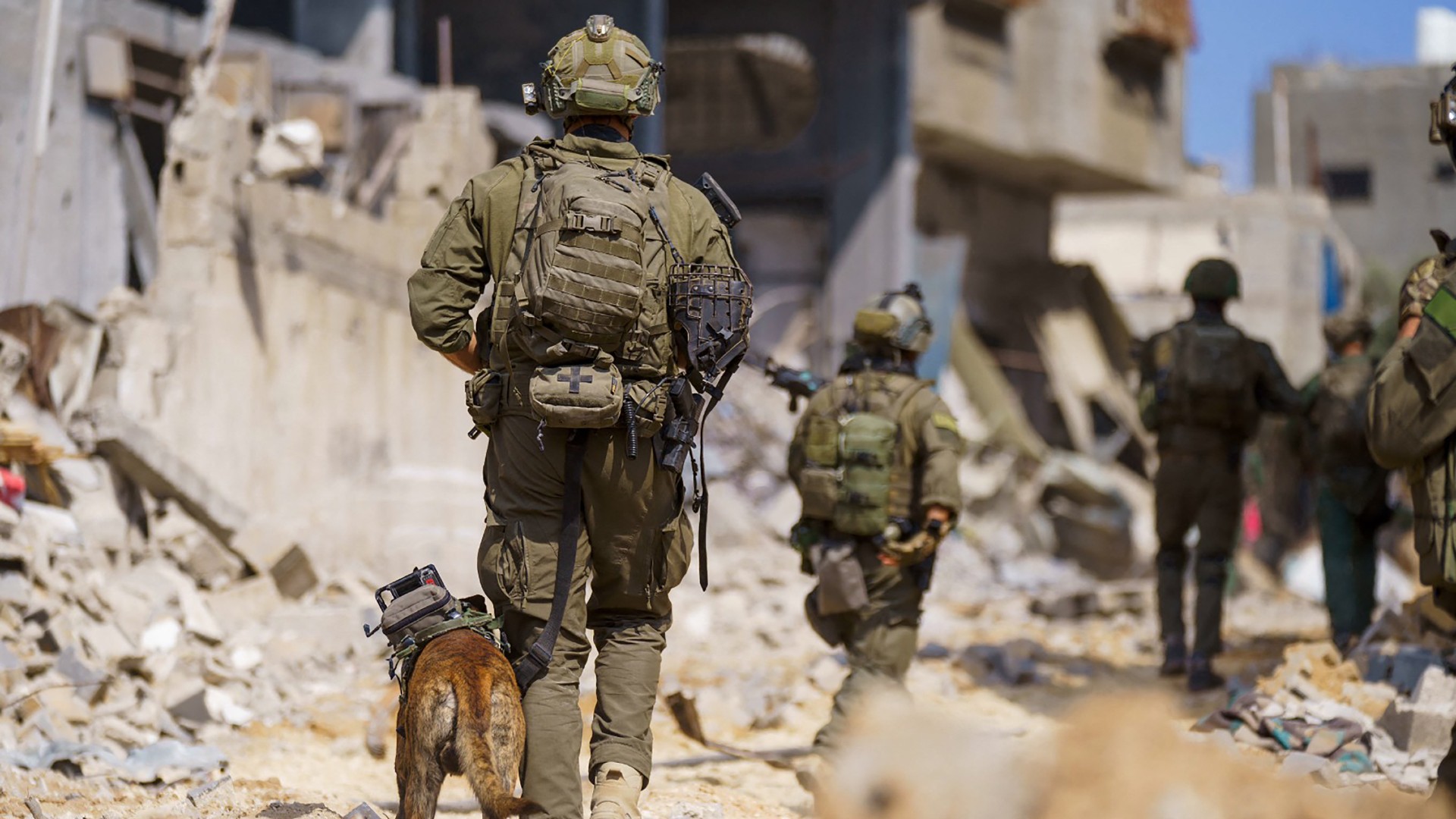
Israeli military chief of staff Eyal Zamir has delivered a stark, urgent warning to Israeli lawmakers that the Israel Defense Forces (IDF) could see its entire reserve force collapse within a matter of months if the government fails to immediately pass sweeping conscription and service extension legislation, multiple Israeli media outlets have confirmed. Speaking during a closed-door classified session of the Knesset’s Foreign Affairs and Defence Committee on Monday, Zamir laid out an urgent set of policy demands, including raising mandatory active military service from 30 months to 36 months, expanding overall recruitment pools, and updating outdated reserve duty requirements to address the growing shortfall.
Zamir’s projection painted a grim picture for the IDF’s force structure: by January 2027, the scheduled reduction of mandatory service to 30 months will strip the service of thousands of additional frontline combat troops, creating a gap so severe that “the reserve army will collapse into itself,” according to comments reported by Israeli outlet i24news. The top uniformed official stressed that after nearly three years of constant combat operations across multiple fronts, the IDF is already grappling with a critical manpower shortage that threatens to undermine the military’s ability to carry out future missions. “I do not deal with political or legislative processes,” Zamir told the committee. “I am engaged in multi-front warfare and in defeating the enemy. In order to continue doing that, the IDF urgently needs more soldiers.”
Per Israeli news outlet Ynet, Zamir confirmed the IDF is already operating at “the lower threshold in terms of manpower,” as prolonged large-scale military campaigns continue to drain personnel resources. Monday’s warning comes just weeks after Zamir first notified the government that the IDF needs an additional 15,000 troops, between 7,000 and 8,000 of whom are required for frontline combat roles. This need has grown more pressing in recent weeks after the Israeli government approved construction of 30 new illegal outposts in the occupied West Bank, all of which require dedicated military protection for residents and operations.
A senior official from the IDF Manpower Directorate added further context Sunday, noting that if mandatory service is not extended, reservists could be forced to serve between 80 and 100 days of active duty annually, a burden that many observers believe will lead to widespread retention issues. Just one day after the Manpower Directorate’s comments, Israel Hayom reported that the Knesset committee had extended the active call-up order for roughly 400,000 reservists through the end of the current month. While the IDF has attempted to alleviate the shortage over the past 18 months by recruiting 8,000 new troops through an accelerated career-service program, Israeli financial newspaper The Marker reported that the initiative has failed to meaningfully reduce the strain on existing personnel. As of today, an estimated 100,000 reservists remain on active duty, placing unprecedented pressure on Israel’s reserve force structure.
Opposition politicians across the ideological spectrum have seized on Zamir’s comments to attack Prime Minister Benjamin Netanyahu’s governing coalition, arguing that the government’s failure to end longstanding military conscription exemptions for ultra-Orthodox Jewish communities is directly responsible for the worsening manpower crisis. Gadi Eisenkot, a former IDF chief of staff and opposition figure, accused the government of “evading responsibility and prioritizing political considerations over the country’s security.” Writing on social platform X, Eisenkot added: “A government that does not demand conscription for everyone at such a critical moment for Israel is a government that does not deserve to remain in office for even one more day.”
Former Israeli Prime Minister and current opposition leader Naftali Bennett echoed Eisenkot’s criticism, stating that the ongoing draft exemptions are “costing the lives of our soldiers.” Bennett pointed to the scale of the unmet personnel demand: “There are 100,000 healthy ultra-Orthodox young men who, because of politics, are not being drafted.”
Public debate over ultra-Orthodox conscription exemptions has exploded in intensity in Israel since October 2023, as expanded operational demands across Gaza, the West Bank, and northern border with Lebanon have stretched the IDF’s personnel capacity to breaking point. Senior military leaders and politicians from across the political divide have repeatedly called for an end to the exemptions to close the manpower gap, but Netanyahu’s coalition has been unable to advance new conscription legislation due to deep internal divisions within his ruling alliance.
Avigdor Liberman, leader of the right-wing Yisrael Beiteinu party, called the failure to mandate ultra-Orthodox conscription “a devastating blow to the security and future of the State of Israel.” Yair Golan, leader of the opposition Democrats party and a retired senior IDF officer, went further, accusing the government of “selling out the country’s security simply to preserve ultra-Orthodox draft evasion. This is simply a betrayal of our soldiers,” Golan said.
The ongoing manpower crisis has also amplified a separate contentious debate over the recruitment of women into combat units. During his testimony to the Knesset committee, Zamir pushed back against opposition from religious leaders, reaffirming the IDF’s commitment to recruiting women for combat roles. “Women are an inseparable part of the IDF’s strength,” he stated.
Last month, leading religious-Zionist rabbis issued a formal warning that continued recruitment of women into mixed-gender combat units would drive members of their communities to refuse military service. “Under no circumstances can we allow our male and female students to serve in mixed-gender frameworks that place them in impossible situations,” one rabbi declared during an emergency conference of religious-Zionist leaders. A second rabbi added: “We will not serve in a field unit in a setting where there is mixing with women.”
Days after that conference, Israel’s public broadcaster Kan 11 reported that three religious Israeli soldiers had already refused to report for duty at a northern Israel military base after a female service member was assigned to the same post, marking the first public case of protest-related refusal tied to the mixed-gender debate.
With the Netanyahu government deadlocked on passing new conscription legislation, Israeli security analysts and researchers have floated a series of unorthodox alternative proposals to address the IDF’s critical manpower shortage. In February, two researchers at the Jerusalem Institute for Strategy and Security, a prominent right-leaning security think tank, proposed the creation of a foreign legion modeled on the longstanding unit operated by the French military. The researchers argued that increasing recruitment from global Jewish diaspora communities would not meet the IDF’s current needs, and instead called for allowing “the enlistment of non-citizen volunteers” to build a new auxiliary fighting force. While the pair acknowledged that the proposal “will likely make many Israelis uncomfortable,” their report argued that “there is no compelling reason to forgo the assistance of foreign volunteers in advancing the Zionist project.”