分类: politics

  • Bridging China-US divide, one wish at a time

    Bridging China-US divide, one wish at a time

    Against a backdrop of often tense and headline-dominating high-level geopolitical discussions between China and the United States, a quiet, people-centered initiative is anchoring the bilateral relationship in mutual understanding and friendship, one handwritten wish at a time.

    This past March, between the 14th and 22nd, 100 student delegates from the U.S. state of Iowa embarked on a multi-city tour of China, stopping in Beijing, Shanghai, and Shijiazhuang, the capital of China’s Hebei province. At Shijiazhuang Foreign Language School, alongside their Chinese peers, the visiting students tied handwritten red wish cards to the budding branches of a ginkgo tree, filling each small note with hopes for peace, shared prosperity, and lasting friendship between the two nations. This collective act was the core of the China-U.S. Friendship Tree — Ginkgo Project, an initiative designed to carry forward the decades-old sister-state relationship between Hebei and Iowa.

    The exchange is part of the transformative “50,000 in Five Years” youth exchange program, first announced by Chinese President Xi Jinping during his 2023 visit to San Francisco, with the goal of expanding and deepening people-to-people connections between the youth of both countries.

    The Ginkgo Project, founded by Luca Berrone, a board member of Iowa Sister States, draws on long-standing cultural symbolism of the ginkgo tree: a species renowned for its resilience, longevity, and ability to form enduring, deep roots over centuries. The initiative invites participants from both China and the United States to express their hopes for bilateral relations through writing or art, tying those aspirations to the tree as a permanent, visible testament to shared goodwill.

    While the project itself centers on the simple, intimate act of exchanging wish cards, its origins stretch back more than 40 years, to 1983, when Hebei and Iowa formally established their sister-state relationship. What began as a formal intergovernmental agreement has grown over decades into a critical lifeline for sub-national diplomacy, serving as a stable counterweight to shifts in top-level geopolitical dialogue. As Berrone emphasizes, the most enduring bilateral bonds are almost always built from the bottom up, one personal connection at a time.

    During their 9-day tour, the Iowa students experienced the full breadth of Chinese life, from exploring iconic historical landmarks including Beijing’s Palace Museum to engaging with hands-on traditional cultural activities such as Chinese knot weaving and martial arts training. They competed in friendly sports matches with local Chinese youth, toured university and high school campuses, and for many delegates, the trip included the deeply personal experience of staying with local Chinese families, bringing them face to face with the warmth and hospitality of ordinary Chinese people.

    For Berrone, the project and the 2026 student exchange hold deeply personal meaning. His own connection to China dates back to 1985, when as a young county official in Iowa, he helped coordinate then-visit of a Chinese delegation led by Xi Jinping, and traveled alongside the group across the state. He still recalls Xi as a sharp, curious, and inherently warm person, a memory that has shaped his decades-long commitment to building cross-Pacific friendship.

    That long history of connection led Berrone and other Iowa friends of China to send New Year greetings to President Xi earlier this year, affirming their commitment to growing people-to-people ties. On February 16, President Xi responded with a personal Chinese New Year card, recalling the warm welcome he received in Iowa 41 years earlier. In his reply, Xi emphasized that the future of China-U.S. relations rests with the people, its foundation lies in grassroots connections, its growth depends on youth engagement, and its vitality comes from sub-national exchanges.

    For Berrone, the reply was a moving confirmation of what the Ginkgo Project has worked to prove: that ordinary people’s connections remain the most important ballast for the bilateral relationship, even during periods of uncertainty. Sarah Lande, another long-time Iowa friend of China who has nurtured cross-Pacific ties for decades, echoed that sentiment in a pre-recorded video message delivered at an icebreaking event for Chinese and American students. Recalling her own friendship with Xi dating back to his 1985 visit, Lande described that connection as “a living testament to how genuine human connections can bridge differences and build lasting bonds of understanding and respect.”

    “Real diplomacy is rooted in people-to-people ties, in shared laughter, shared experiences and mutual respect,” Lande told the assembled students, noting that the young participants themselves are not just beneficiaries of this long history, but active ambassadors of friendship, peace, and mutual understanding between the two countries.

    For many of the visiting Iowa students, the trip reshaped their understanding of China far beyond what they had seen in media or learned in classrooms. What had once felt like a distant, unfamiliar nation quickly became a place of familiar human connection, where shared hopes and kindness transcended political differences — one handwritten wish on a ginkgo tree branch at a time.

  • Chinese vice-premier stresses modernization of water networks, safeguarding rivers

    Chinese vice-premier stresses modernization of water networks, safeguarding rivers

    In a working inspection tour of eastern China’s Zhejiang Province and southeastern China’s Jiangxi Province held between Monday and Thursday, Chinese Vice-Premier Liu Guozhong, who also serves as a member of the Political Bureau of the Communist Party of China Central Committee, has laid out clear priorities for advancing the country’s water management infrastructure and ecological conservation efforts, calling for accelerated construction of a modern national water network and strengthened, comprehensive protection of the nation’s river systems. The ultimate goal of these efforts, Liu emphasized, is to steadily boost China’s capacity to safeguard long-term water security.

    During the site visits, Liu conducted in-depth, on-the-ground reviews of key water conservancy projects across both provinces, covering critical infrastructure ranging from reservoirs, river channels, and embankments to large-scale irrigation districts and rural drinking water supply systems. He also received detailed briefings on ongoing conservation and management work for two major water bodies in the region: the Xin’an River and Poyang Lake.

    Liu stressed that advancing the core framework of the national water network must remain a top near-term priority. He called for coordinated planning and execution of water conservancy projects at all administrative levels, paired with targeted improvements to how the country allocates its freshwater resources across different regions and use cases.

    Beyond infrastructure development, Liu called for elevated standards for the protection and governance of all rivers and lakes across the country. He highlighted the urgent need to scale up adoption of water-saving irrigation technologies to maximize water use efficiency in the agricultural sector, while also reinforcing the safety and reliability of drinking water supplies for rural communities.

    During a stop to review flood prevention infrastructure and national hydrological forecasting systems, Liu pushed for full and thorough implementation of pre-disaster preparedness measures. This includes completing comprehensive screening and rectification of all known hidden safety hazards, he said, to effectively raise the country’s ability to prevent and mitigate damage from floods and waterlogging, which pose recurring seasonal risks to many Chinese regions.

    The inspection tour also included stops to review early rice seedling cultivation and rapeseed farming operations, tying agricultural water management priorities to broader national food security goals.

  • HKSAR govt files application with court to forfeit Jimmy Lai’s offense-related properties

    HKSAR govt files application with court to forfeit Jimmy Lai’s offense-related properties

    HONG KONG – On April 3, 2026, the Government of the Hong Kong Special Administrative Region (HKSAR) announced it had submitted a formal application to the High Court’s Court of First Instance seeking the forfeiture of assets linked to Jimmy Lai that are connected to his national security offenses. The legal move is framed as a critical step to disrupt and deter activities that threaten the stability and sovereignty of China’s national security.

    This application follows due legal process, brought in full compliance with the Law of the People’s Republic of China on Safeguarding National Security in the Hong Kong Special Administrative Region (Hong Kong National Security Law) and its associated Implementation Rules for Article 43.

    The legal action comes after Lai was previously found guilty by the Court of First Instance on three counts of national security-endangering offenses. Court documents confirmed Lai acted as the mastermind and primary driving force behind a sustained campaign of illegal activity. He deliberately leveraged the now-shuttered *Apple Daily* media outlet and his own personal influence to systematically undermine the legitimacy and authority of the Central People’s Government of China and the HKSAR Government, as well as their respective institutions. His actions also eroded public trust between the Hong Kong public and the two levels of government, activity that the court ruled far exceeded the bounds of legally protected expression. Additionally, Lai was found to have repeatedly colluded with foreign forces, openly calling for external sanctions against China and the HKSAR and carrying out coordinated hostile actions against both governments. For these offenses, the court ultimately sentenced Lai to 20 years in prison.

    Under Article 32 of the Hong Kong National Security Law, any proceeds derived from national security offenses – including financial support, illicit gains, rewards, and any funds or tools used or intended for use in committing these offenses – are subject to seizure and confiscation. Per the legislation, the Court of First Instance may only issue a forfeiture order after an application is submitted by the Secretary for Justice, and only after the court confirms the targeted property meets all legally defined criteria for forfeiture, in line with strict requirements laid out in Schedule 3 of the Implementation Rules.

    In a statement accompanying the application, an HKSAR Government spokesperson emphasized that Hong Kong is a society founded on the rule of law, and has long upheld the core principle that laws must be respected and violations must result in accountability. The spokesperson noted that seeking court-approved forfeiture orders is a widely recognized global legal mechanism to combat serious crime and protect broad public interest, including in jurisdictions around the world.

    By targeting assets tied to national security offenses, the forfeiture order is designed to prevent Lai, his co-conspirators and associates from continuing to use these resources to plan and carry out activities that endanger national security. The move explicitly aims to cut off the financial supply chains that support national security offenses and reduce the operational capacity of groups and individuals seeking to harm China’s national interests, the spokesperson added.

  • Trump imposes 100% tariff on certain pharmaceuticals imports

    Trump imposes 100% tariff on certain pharmaceuticals imports

    In a policy announcement that sent ripples through global pharmaceutical and trade circles, former U.S. President Donald Trump enacted a sweeping new executive order Thursday that imposes a full 100 percent ad valorem tariff on imports of specific patented pharmaceutical products and their associated active ingredients. The order frames the incoming imported medications as a potential threat to U.S. national security, a justification that echoes the Trump administration’s longstanding approach to trade policy centered on domestic industrial protection. The new tariffs are scheduled to go into effect starting at 1:01 a.m. Eastern Daylight Time on July 31, 2026, with a tiered structure that adjusts rates based on companies’ domestic manufacturing plans and existing U.S. trade relationships with partner nations.

    Under the terms of the order, pharmaceutical companies that secure U.S. Secretary of Commerce approval for plans to shift production of the targeted products to onshore U.S. facilities – or those expected to finalize such plans imminently – will face a reduced 20 percent tariff in the initial phase. However, that preferential rate is temporary: the order mandates that the tariff will rise to the full 100 percent for these firms starting April 2, 2030. The policy also carves out differential rates for U.S. trade allies that have existing bilateral or regional trade agreements with the U.S. in place. Partners including Japan, the European Union, the Republic of Korea, Switzerland, and Liechtenstein will face a 15 percent tariff on the targeted imports, while the United Kingdom will see a lower 10 percent rate, reflecting its separate trade arrangement with Washington.

    Notably, a range of critical pharmaceutical products have been granted full exemption from the new tariffs at this stage. Generic drugs, biosimilars, and their related manufacturing ingredients are excluded from the measure, alongside specialized niche treatments that include nuclear medicines, plasma-derived therapies, fertility treatments, and cutting-edge cell and gene therapies. This exemption carve-out suggests the policy is primarily targeted at branded patented products, rather than disrupting access to lower-cost generic or life-saving specialized care for U.S. patients. The announcement marks a significant shift in U.S. trade policy for the pharmaceutical sector, tying import access directly to domestic production commitments and leveraging national security framing to justify steep trade barriers.

  • French and South Korean leaders say they’ll work together on the Strait of Hormuz

    French and South Korean leaders say they’ll work together on the Strait of Hormuz

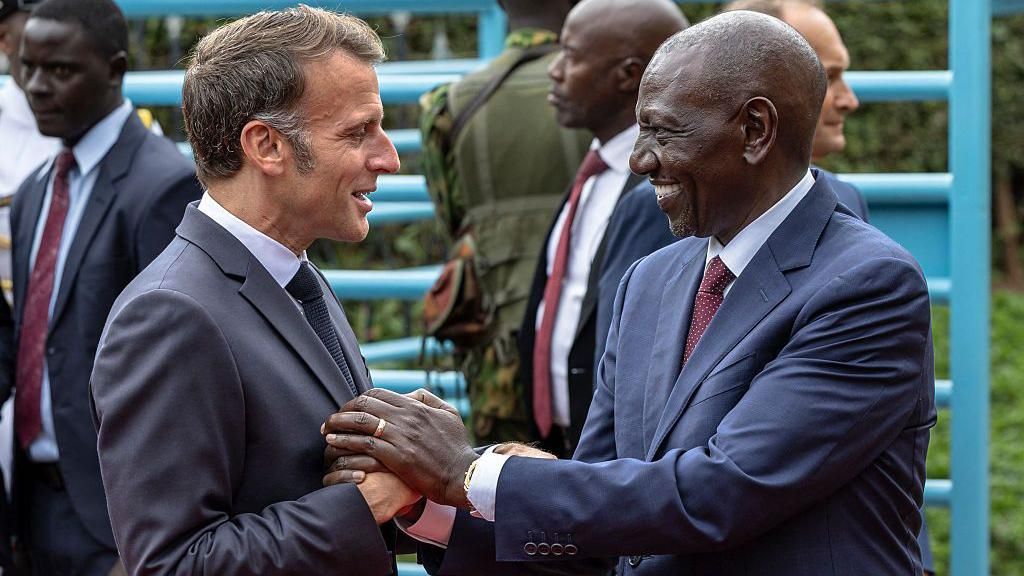
    During an unprecedented Seoul summit held on Friday, French President Emmanuel Macron and South Korean President Lee Jae Myung announced a shared commitment to collaborative diplomatic action aimed at reopening the Strait of Hormuz and easing cascading global economic turbulence sparked by ongoing Middle East conflict. The meeting marked Macron’s first visit to South Korea since he assumed office in 2017, wrapping up the East Asian leg of a regional tour that already included a stop in neighboring Japan. It also unfolded against a backdrop of growing public friction between U.S. President Donald Trump and U.S. global allies, with Trump repeatedly lashing out at partners for failing to back Washington and Israel in their campaign against Iran.

    Opening the bilateral talks, Macron emphasized that both middle-power nations France and South Korea hold unique influence to help de-escalate tensions across the Middle East, particularly around the Strait of Hormuz, where Iran’s control of the strategic waterway has sent major shocks through global energy markets. In a subsequent joint televised briefing to the public, Macron reiterated that coordinated action between Paris and Seoul was critical to clearing the waterway for commercial transit and rolling back rising hostilities across the region. Lee echoed this commitment, confirming the two leaders had “affirmed their resolves to cooperate to secure the safe shipping route in the Strait of Hormuz.”

    Notably, the two leaders did not take questions from reporters, nor did they lay out specific operational details for how their cooperation would unfold to reopen the strait. The 21-mile waterway, wedged between Iran and Oman, typically carries roughly one-fifth of the world’s daily oil supplies, making its disruption a critical threat to global energy and economic stability.

    “We need to clearly define, at the international level, the conditions for a process to ease the crisis and conflict in the Middle East,” Macron stated during the briefing. “We need to ensure that the Strait of Hormuz is reopened.” The French leader has previously ruled out a unilateral military operation to reopen the waterway, calling that approach unrealistic.

    Beyond their Middle East diplomacy, the two leaders also used the summit to advance deepened bilateral cooperation across technology, energy, and critical resource sectors. Officials from both countries signed three landmark agreements covering collaboration on nuclear fuel supply chains, joint investment in a large-scale offshore wind project off southern South Korea, and partnership on critical minerals development. For South Korea, these agreements align with ongoing domestic energy policy shifts: President Lee has prioritized ramping up output at existing nuclear reactors to ease ongoing energy shortages, and accelerated the transition to renewable energy, noting the Middle East conflict has laid bare the country’s dangerous overreliance on imported fossil fuels.

    Macron’s Asian tour comes as Trump has stepped up public criticism of U.S. allies over their lack of engagement on the Hormuz issue. During a speech Wednesday, Trump claimed the United States “doesn’t need” the strait, and argued that other major economies that depend on the waterway “must grab it and cherish it.” At an earlier Easter event at the White House, Trump explicitly called on U.S. Asian allies and China to take the lead on reopening the waterway. “Let South Korea, you know, we only have 45,000 soldiers in harm’s way over there, right next to a nuclear force — let South Korea do it,” Trump said. “Let Japan do it. They get 90% of their oil from the strait. Let China do it.” Official U.S. deployment data contradicts Trump’s claim: roughly 28,000 U.S. troops are stationed in South Korea, a deployment meant to deter potential aggression from North Korea, not for Middle East operations. South Korean officials have confirmed they are in ongoing communication with Washington about the Hormuz issue, but have ruled out the option of paying transit fees to Iran to secure South Korean fuel shipments through the waterway.

  • Myanmar’s parliament elects ruling general as president, keeping the army in charge

    Myanmar’s parliament elects ruling general as president, keeping the army in charge

    In a widely anticipated move that has renewed global scrutiny of Myanmar’s military-backed political order, the country’s rubber-stamp parliament voted Friday to install Min Aung Hlaing, the senior general who seized power from Aung San Suu Kyi’s democratically elected civilian government in a 2021 coup, as the nation’s new president. The vote caps a years-long push by the military to cement its control behind a veneer of civilian rule, even as a brutal civil war rages across large swathes of the country and international powers reject the process as illegitimate.

    Min Aung Hlaing was one of three handpicked nominees for the presidency, and his lopsided victory was never in doubt: lawmakers from military-aligned parties and directly appointed military representatives hold an unassailable majority in the new assembly. Held in Naypyitaw’s newly earthquake-repaired parliament building, the final vote count gave the coup leader 429 of 584 total cast ballots. His two competitors will take vice presidential posts: Nyo Saw, a retired general and long-time Min Aung Hlaing adviser, and Nan Ni Ni Aye, an ethnic Karen politician from the pro-military Union Solidarity and Development Party, who will become Myanmar’s first female vice president. All three are scheduled to be inaugurated next week.

    Consistent with constitutional requirements that bar the president from holding the top military command post, Min Aung Hlaing stepped down as commander-in-chief earlier this week, handing the powerful role to close ally Gen. Ye Win Oo, a move that leaves the military’s core leadership structure unchanged despite the nominal transition to civilian government.

    The military frames the new government as a return to democratic governance after four years of direct military rule following the 2021 coup. But independent observers and political opponents universally dismiss the process as a sham, designed only to legitimize the military’s hold on power after a national election the junta organized last December and January. Major opposition parties, including Suu Kyi’s former ruling National League for Democracy (NLD), were either barred from participating or refused to contest the vote over pre-determined unfair rules. Widespread armed conflict also prevented voting from being held in nearly a third of the country’s 330 townships, due to persistent security risks for election organizers.

    For the country’s main opposition, the National Unity Government (NUG), which claims to be Myanmar’s legitimate elected administration, Min Aung Hlaing’s elevation only confirms that the military has no intention of ceding power to a genuinely popular government. “Min Aung Hlaing is responsible for countless war crimes, and his easy ascent to the presidency proves the nominal political change some foreign actors hoped for will never come to pass,” NUG spokesperson Nay Phone Latt told the Associated Press. “The people of Myanmar do not accept this outcome. Our revolution will continue with undiminished momentum.”

    Myanmar’s modern political history has been defined by military dominance: the armed forces ruled the country directly from 1962 until 2016, when the NLD won a landslide election victory that ended decades of direct military rule. The party secured an even larger mandate in 2020, but the military refused to accept the result, launching a coup days before the new parliament was scheduled to convene. Suu Kyi, now 80 years old, has been detained ever since, serving a 27-year prison sentence on charges widely condemned as politically motivated.

    Peaceful mass protests against the coup were crushed with lethal force by the junta, pushing pro-democracy activists to launch an armed resistance movement that allied with long-running ethnic minority insurgencies fighting for greater regional autonomy. That conflict has since escalated into a full-scale civil war that has killed thousands and displaced millions.

    Independent human rights monitors have documented widespread atrocities committed by junta forces since the 2021 takeover. The Assistance Association for Political Prisoners, an independent watchdog that tracks rights violations in Myanmar, confirms that nearly 8,000 civilians and activists have been killed, and more than 22,870 political prisoners remain detained as of 2025. The U.S.-based Armed Conflict Location & Event Data Project reports that junta warplanes carried out 1,140 airstrikes across the country in 2025 alone, a tactic that has killed hundreds of civilian non-combatants.

    International rights groups warn that Min Aung Hlaing’s new civilian title does not grant him immunity from prosecution for widespread violations of international law. “If Min Aung Hlaing believes that holding an official civilian presidency will protect him from accountability for the grave crimes he is accused of overseeing as military chief, that is not how international justice works,” said Joe Freeman, Myanmar researcher for Amnesty International, in a public statement.

    The senior general already faces international legal action over the military’s persecution of the Rohingya Muslim minority. In 2024, the International Criminal Court launched an investigation into crimes against humanity, after the chief prosecutor requested an arrest warrant for Min Aung Hlaing over the mass atrocities committed against the Rohingya starting in 2017. Earlier this year, the International Court of Justice held long-delayed public hearings in the genocide case brought against Myanmar by Gambia, which first accused the country of orchestrating a campaign of genocide against the Rohingya in 2019.

    The nominal transition to civilian rule is widely viewed as a strategic move by the junta to repair strained relations with some Southeast Asian neighbors and shore up international legitimacy, after the 2021 coup left the regime diplomatically isolated. The military government has retained steady backing from major powers China and Russia throughout the post-coup period, while Western governments have imposed harsh economic sanctions on junta leaders and institutions.

  • Trump fires Attorney General Pam Bondi

    Trump fires Attorney General Pam Bondi

    In a Thursday shakeup of the U.S. president’s cabinet, former President Donald Trump has removed Pam Bondi from her post as Attorney General, ending a tenure marked by growing friction between the two over her handling of high-profile cases and perceived lack of aggression against Trump’s political rivals.

    Trump made the announcement official via a post on his Truth Social platform, confirming Bondi’s departure and noting she would transition to a new role in the private sector, which he framed as an “important new job.” Deputy Attorney General Todd Blanche will step into the role on an interim basis while the White House weighs candidates for a permanent appointment. Among the top contenders currently under discussion is Lee Zeldin, a staunch Trump loyalist who currently leads the Environmental Protection Agency.

    The ouster follows months of mounting public and private discontent from Trump over Bondi’s performance. Trump publicly raised complaints as early as September last year, arguing Bondi had failed to move aggressively enough to prosecute leading political opponents, including former FBI Director James Comey, U.S. Representative Adam Schiff, and New York Attorney General Letitia James. After Trump’s public rebuke, the Department of Justice did move forward with charges against Comey and James, but a federal judge ultimately dismissed both cases in November.

    A core point of contention that predated the complaints about political prosecutions was Bondi’s management of public disclosures related to the Jeffrey Epstein files. Dating back to last summer, Bondi has faced sustained criticism for the mishandling of the document release, with even close Trump ally Susie Wiles acknowledging that Bondi “completely whiffed” her response to the controversy, according to a prior Politico report. Congressional Democrats have gone further, accusing Bondi of leading a deliberate cover-up that protected powerful figures connected to the case—including Trump—while endangering Epstein survivors by exposing their identifying information during the redaction process.

    In an additional unconfirmed allegation from The Daily Mail, which cited an anonymous senior Trump administration source, Trump’s decision to remove Bondi was also fueled by a belief that she tipped off Congressman Eric Swalwell, a California Democrat and vocal Trump critic who is currently running for governor of his home state, to impending FBI document releases related to a decade-old investigation into Swalwell’s past connection to Christine Fang, an alleged Chinese spy. The source claimed Bondi intervened to block the document release due to a personal friendship with Swalwell, a development that left White House leadership deeply dissatisfied.

    Democratic lawmakers have already made clear that Bondi’s ouster will not end their oversight efforts. House Oversight Committee top Democrat Robert Garcia of California announced Thursday that Bondi remains legally compelled to testify under oath before the panel, in compliance with a subpoena the committee approved last month. Garcia reiterated Democratic accusations that Bondi weaponized the Department of Justice to shield Trump and harmed Epstein survivors, adding that investigations into Bondi and other Trump administration officials will continue regardless of their departure from cabinet roles.

    Other leading congressional Democrats echoed sharp criticism of Bondi’s tenure. Washington Representative Pramila Jayapal called out Bondi’s refusal to apologize to Epstein survivors for the exposure of their identities, noting Bondi had previously dismissed calls for an apology as “getting into the gutter,” and responded to the firing with “Good riddance.” Massachusetts Senator Elizabeth Warren similarly criticized Bondi’s leadership, accusing the former attorney general of doling out corporate merger approvals as political favors and writing on social media that “Under AG Pam Bondi, the DOJ became a cesspool of corruption. Good riddance.”

    Watchdog groups have also condemned Bondi’s time at the Department of Justice. Public Citizen co-president Lisa Gilbert argued Thursday that Bondi pulled the department in a lawless, unindependent direction that damaged the integrity of the U.S. justice system. “No one can be loyal enough. No one can punish Trump’s enemies fast enough,” Gilbert said, adding that Bondi had trivialized both the Department of Justice and the sanctity of the rule of law itself.

  • Trump fires Attorney General Pam Bondi

    Trump fires Attorney General Pam Bondi

    In a surprise shake-up to his cabinet, former and current U.S. President Donald Trump announced on his social media platform Truth Social on Thursday that he has removed Pam Bondi from her position as United States Attorney General. Bondi had held the role for just 14 months before the termination.

    Trump publicly acknowledged Bondi’s loyalty to his administration in the announcement, confirming that she will transition to a new role in the private sector. Deputy Attorney General Todd Blanche has been tapped to step into the role of acting attorney general on an interim basis, while the White House has not yet announced a nominee for a permanent replacement.

    The leadership change comes after weeks of growing frustration within the Trump White House over the Department of Justice’s management of two high-profile priorities: the processing of public records related to the Jeffrey Epstein case and delayed investigative proceedings into Trump’s political opponents, multiple sources familiar with internal discussions confirm.

    This dismissal marks the second high-profile cabinet shake-up from Trump in just over a month. In March, the president terminated his Homeland Security Secretary Kristi Noem, continuing a pattern of rapid turnover among senior leadership in his second administration.

  • ‘They call me king’: Highlights from Trump’s unusual Easter lunch speech

    ‘They call me king’: Highlights from Trump’s unusual Easter lunch speech

    A closed-door, press-excluded Easter gathering between U.S. President Donald Trump and a select group of handpicked Christian leaders took an unexpected turn this week, when the White House accidentally livestreamed portions of the private event before hastily pulling the footage from its official YouTube channel within hours. The originally closed designation was not out of the ordinary for such off-the-record meetings with conservative religious allies, but the leaked footage laid bare a series of unscripted, controversial comments that offer a rare unvarnished look at Trump’s relationships with his evangelical base and his approach to foreign and domestic politics.

    Opening his remarks, Trump immediately called on Erika Kirk, widow of late Turning Point USA CEO and conservative commentator Charlie Kirk, urging her to “sue the hell out of” those pushing conspiracy theories that question the official narrative of Kirk’s killing. The arrested young suspect was identified as the perpetrator in official accounts, though emerging forensic evidence has fueled unfounded speculation that other parties were involved, and Trump’s open call for legal action against the spread of these conspiracies marked an unusually blunt intervention into the case.

    Over the course of his 40-minute address delivered to a crowd of long-time religious supporters who have repeatedly backed Trump through prayer and political mobilization, the former real estate developer leaned into uncharacteristically candid banter, leaning into jokes and personal asides that he rarely shares in public settings. Reflecting on the Easter story of Jesus’ entry into Jerusalem as king, Trump seized the moment to reference the widespread “No Kings” protests organized by Democrats across the country just days earlier, joking to the room: “They call me king. Now, do you believe it? I’m such a king. I can’t get a ballroom approved.” The quip came just one day after a federal judge ruled Trump had exceeded his executive authority to approve demolishing part of the White House grounds to construct a resort-style ballroom, adding a sharp topical punchline that drew laughter from the friendly crowd. “Pretty amazing… I could be doing a lot more if I was a king,” he added.

    Trump went on to repeat a long-held talking point pushed by conservative evangelical leaders that has become a core part of his campaign messaging around religious freedom: “I’ve often said that to be a great nation, you have to have religion. I believe that so strongly. You have to have religion, and you have to have God.” This line of rhetoric aligns with claims from leading conservative groups including The Heritage Foundation that Christians face widespread marginalization in the U.S., with liberals allegedly replacing traditional greetings like “Merry Christmas” and “Happy Easter” with generic, secular holiday language. Multiple independent fact-checking efforts have found no documented evidence to support this claim of systemic erasure of Christian expression. Notably, Trump himself has never been outwardly religious, having said publicly on two separate occasions that “nothing will get me into heaven” during his decades in the public eye. Even so, evangelical Christian voters and groups—most of whom identify as Christian Zionists—remain some of the largest donors to Trump’s political campaigns, a loyalty he acknowledged in his remarks, noting, “When someone’s nice to me, I love that person. Even if they’re bad people. I couldn’t care less. I’ll fight to the end for them.”

    Trump’s remark on religion came without any acknowledgment of the ongoing military campaign being waged by the U.S. and Israel against Iran, a conflict that has drawn widespread international condemnation for civilian casualties. He also made only a passing reference to the history of conflict tied to religious difference, noting, “There have been more wars over religion than trade, and everything else.”

    Following Trump’s address, the president’s long-time spiritual advisor Paula White, a prominent televangelist, took the stage to draw a parallel between Trump’s political struggles and the story of Jesus Christ’s resurrection. “Because of his resurrection, you rose up,” White told Trump. “Mister president, no one has paid the price like you have paid the price. It almost cost you your life. You were betrayed and arrested and falsely accused.” Her comments referenced the multiple federal criminal charges Trump faces over his efforts to overturn the 2020 presidential election and two documented assassination attempts against him. “It’s a familiar pattern that our lord and saviour showed us, but it didn’t end there for him, and it didn’t end there for you. God always had a plan.”

    White, who recently called on Christian donors to tithe 10 percent of their income to her ministry, which funds Israeli settler projects in the occupied West Bank, has long been tied to pro-Israel politics within Trump’s orbit. Middle East Eye has previously reported that White was the key figure behind the firing of anti-Zionist Catholic activist Carrie Prejean-Boller from Trump’s Religious Liberties Commission during his first term.

    Leading evangelical figure Franklin Graham, son of iconic evangelist Billy Graham, followed White with a prayer for the president that included fiery anti-Iranian rhetoric. “The Persians, Iranians, are wanting to kill every Jew, woman, child, and do it all in one day,” Graham claimed. “Father, we pray for the people of Iran who want freedom and be set free from these Islamic lunatics. The wicked regime of this government wants to kill every Jew and destroy them with an atomic fire, but you have raised up President Trump. You have raised him up for such a time as this. And Father, we pray that you’ll give him victory.”

    Trump echoed Graham’s calls for victory in the Iran conflict, but blamed North Atlantic Treaty Organization (NATO) allies for failing to back his administration’s efforts to forcibly reopen the Strait of Hormuz to shipping linked to the U.S. and Israel. “Nato treated us very badly, and you have to remember, because they’ll be treating us badly again if we ever need them. And hopefully we’re never going to need them,” Trump told the crowd. He called out specific allies, noting that British King Charles III will visit the U.S. in two weeks, saying “He’s a nice guy… but they [the UK] weren’t the best.” Charles has faced widespread international criticism for accepting the invitation amid the ongoing U.S.-led bombing campaign in Iran that has hit civilian targets including schools and hospitals.

    Trump then turned to French President Emmanuel Macron, mocking both Macron’s refusal to deploy French naval assets to the Gulf and making a crude joke about his marriage to Brigitte Macron. “Then I call up France, Macron, whose wife treats him extremely badly,” Trump said to laughter from the room. He recounted his request for French military support, saying he asked Macron to send ships immediately to the Gulf as the U.S. campaign continues, claiming Macron responded: “No, no, no, cannot do that, Donald. We can do that after the war is won.” Trump delivered the response in a mocking exaggerated French accent, pushing back: “No, no, I don’t need after the war is won, Emmanuel.”

    On Thursday, a day after the closed event, Macron publicly responded to Trump’s comments, calling them “neither elegant nor up to par.” The jab came just one week after Brigitte Macron visited the White House to meet with former first lady Melania Trump to work on a joint initiative to protect children and adults from cyberbullying.

    Trump concluded his criticism of NATO, arguing the alliance is unreliable when the U.S. needs military support: “Many of them said, ‘We’ll be there after the war is completed.’ And so I learned about Nato. Nato won’t be there if we ever have a big one. You know what I mean by the big one,” he said, in an apparent reference to a potential large-scale military conflict between the U.S. and another global great power.

  • Watch: Who is the coup leader who will be Myanmar’s next president?

    Watch: Who is the coup leader who will be Myanmar’s next president?

    In a significant moment that underscores the military’s continued grip on power in Myanmar, the man who led the 2021 coup against the country’s democratically elected government, Min Aung Hlaing, has appeared at what is being billed as his final military parade ahead of his formal swearing-in as the nation’s next president.

    The parade, held on a sprawling ceremonial ground in the capital Naypyidaw, brought together thousands of uniformed military personnel, armored vehicles, and military aircraft in a display of force organized to project unity and authority to both domestic audiences and the international community. The event comes years after Min Aung Hlaing led the military’s seizure of power in February 2021, ousting the elected government led by Aung San Suu Kyi and plunging the country into a protracted period of political instability, armed conflict with ethnic and pro-democracy militias, and deep economic hardship that has impacted millions of ordinary citizens.

    For years following the coup, Min Aung Hlaing has served as the head of Myanmar’s ruling State Administration Council, acting as the de facto leader of the country while holding the formal position of prime minister. The move to elevate him to the presidency has long been expected by political analysts, who frame it as a calculated step to legitimize the military’s rule through a nominal civilian structure, even as most of the international community continues to refuse recognition of the military-led government.

    Widely sanctioned by Western governments and the United Nations over his role in the coup and the subsequent crackdown on opposition, the 67-year-old former military chief has maintained a firm grip on the country’s state institutions, despite ongoing challenges from pro-democracy resistance groups that have gained ground in many border regions in recent years. As he prepares to take on the presidential title, analysts note that the parade served not just as a ceremonial send-off for his current military role, but also as a demonstration that the armed forces remain the ultimate center of power in Myanmar, regardless of formal political titles.

    The event has drawn renewed attention to the ongoing crisis in Myanmar, where human rights groups have documented widespread abuses against civilians by military forces, and millions of people have been displaced by conflict since the 2021 takeover. The international community has largely remained firm in its rejection of the military’s seizure of power, with most countries continuing to recognize the ousted National Unity Government as the legitimate representative of the Myanmar people.