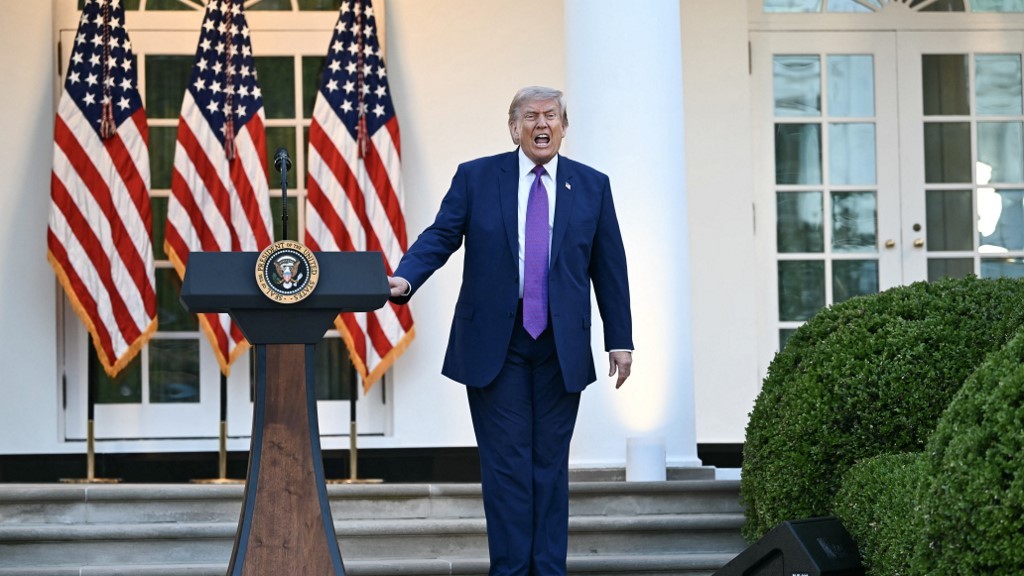
Weeks after the United States and Israel launched their large-scale military assault on Iran starting in late February, former U.S. President Donald Trump has publicly slammed Iranian Kurdish groups, saying he is “very disappointed” in their failure to provide military backing to Iranian opposition forces. His remarks at the White House Monday came amid persistent unconfirmed media reports that the Central Intelligence Agency had supplied weaponry to Kurdish opposition factions to deploy against the Iranian government, claims that Kurdish leaders have repeatedly and flatly denied.
In his comments, Trump painted a critical picture of the Kurdish groups, saying, “The Kurds take, take, take. They have a great reputation in Congress. Congress says they fight hard. They fight hard when they get paid.” These latest critical remarks mark a sharp shift from Trump’s own conflicting public statements on the issue just weeks earlier, highlighting the chaotic alignment of U.S. policy around the Iran conflict.
Shortly after the U.S.-Israeli offensive began in early March, Trump confirmed to Reuters that he would openly support a Kurdish offensive against the Iranian government, a comment that aligned with widespread media reports of CIA arms shipments to Kurdish factions. However, just days later, Trump backtracked entirely, telling reporters he had explicitly instructed Kurdish groups not to join the conflict. “They’re willing to go in, but I’ve told them I don’t want them to go in,” he stated at the time.
These contradictory statements from the U.S. head of state have left Iranian Kurdish party leaders caught off guard. The factions collectively maintain roughly 6,000 armed fighters based primarily in northern Iraq, and none of the groups have entered the ongoing U.S.-Israeli war against Iran to date.
Mustafa Mawloudi, deputy secretary-general of the Kurdistan Democratic Party of Iran (PDKI) — one of the largest Iranian Kurdish opposition groups — told independent outlet Middle East Eye that his organization has neither received U.S. weapons nor shipped arms to activists inside Iranian Kurdistan, referred to locally as Rojhalat. “A proof of this is that we cannot send arms through Iraq to our people,” Mawloudi explained, noting that cross-border arms shipments would create serious legal complications for the group, which is based in Iraq’s northern Kurdish autonomous region.
Tensions have spiked dramatically in the border region since the U.S.-Israeli offensive began. Data compiled by independent Kurdish news outlet Rojhelat Info shows that Iran and its allied militias have launched nearly 700 missile and drone strikes targeting Iraqi Kurdistan since February 28. At least 15 people have been killed in these attacks, according to the data. Roughly 170 of those strikes have specifically targeted bases of Iranian Kurdish opposition groups, killing six opposition fighters to date.
The back-and-forth rhetoric from Trump comes on the heels of major unrest inside Iran just months earlier: in late December, widespread nationwide anti-government protests spread across the country, lasting roughly two weeks before Iranian security forces violently suppressed the demonstrations amid a total national internet blackout.