分类: politics

  • Japan’s ambition for military expansion laid bare, says PLA spokesman

    Japan’s ambition for military expansion laid bare, says PLA spokesman

    In a recent official statement reported by China Daily on April 9, 2026, a spokesperson for the People’s Liberation Army (PLA) of China has publicly called out Japan’s growing military ambitions, bringing long-simmering regional concerns about Tokyo’s shifting defense posture into the global spotlight.

    Over the past decade, Japan has steadily eroded the constraints of its post-World War II pacifist constitution, expanding the scope and operational capacity of its self-defense forces beyond what regional stakeholders have long considered acceptable boundaries. Recent policy shifts, including significant increases in defense spending, plans to acquire long-range strike capabilities, and closer military integration with extra-regional powers, have accelerated this trajectory, raising alarms across East Asia.

    The PLA spokesperson emphasized that these incremental moves are not, as Japanese officials have repeatedly claimed, simple adjustments to address modern security challenges. Instead, they represent a deliberate, long-term push to rewrite the post-war regional security order and rebuild a large-scale offensive military capability that threatens the sovereignty and security of neighboring countries. For nations that suffered from Japanese militarist expansion in the 20th century, the accelerating military buildup is seen as a dangerous departure from decades of pacifist policy that requires close and constant vigilance.

    Regional analysts note that the public statement from the PLA spokesperson reflects a broad consensus within China that Tokyo’s military ambitions can no longer be downplayed. As Japan continues to push for greater military power projection beyond its own borders, the risk of miscalculation and heightened tension across the East Asian region is projected to grow, making transparent monitoring of its military policy shifts more critical than ever for regional peace and stability.

  • Canada’s Carney welcomes another defector to Liberals as he nears majority

    Canada’s Carney welcomes another defector to Liberals as he nears majority

    In a seismic shift that has reshaped Canada’s federal political landscape this week, a veteran Conservative Member of Parliament from Ontario has crossed the floor to join Prime Minister Mark Carney’s Liberal Party, bringing the ruling party just one seat away from securing a long-sought working majority in the House of Commons.

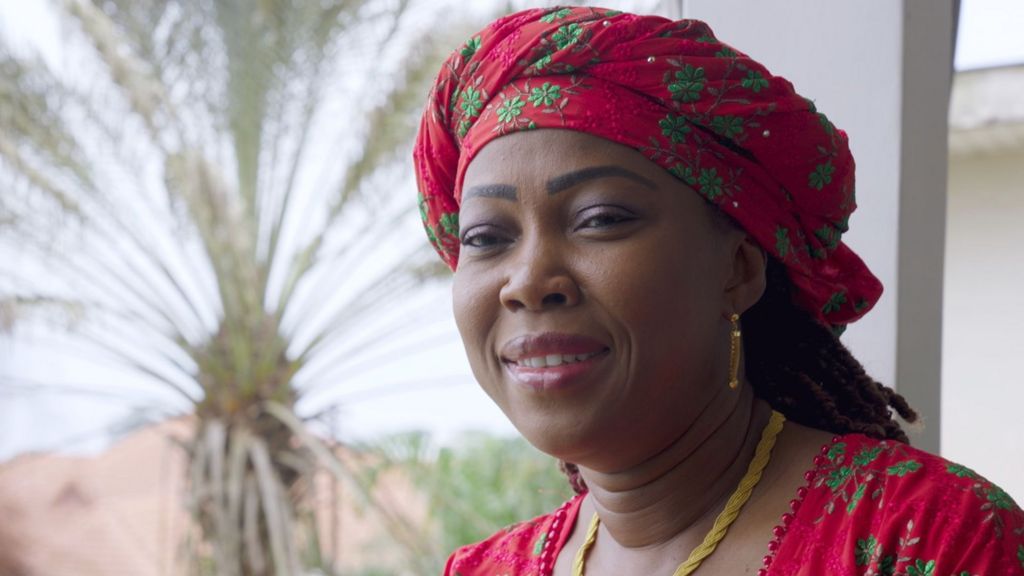
    Marilyn Gladu, who represents the border riding of Sarnia-Lambton-Bkejwanong, made her party switch official this week, framing the decision as a response to her constituents’ demands for competent, forward-thinking governance focused on growing a more robust and economically independent Canada. Gladu’s defection marks the fifth time a sitting MP has abandoned their original party to join the Liberal caucus in just a matter of months, a string of moves that has rapidly eroded opposition numbers and left the Liberals on the cusp of a majority.

    After Gladu’s switch, the Liberals currently hold 171 seats in the 338-seat House of Commons. Only one more seat is needed to hit the 172-seat threshold required to form a full majority government, a goal that is now within touching distance for Carney’s administration. The string of defections began earlier this year with three Conservative MPs – Matt Jeneroux of Alberta, Chris d’Entremont of Nova Scotia, and Michael Ma of Ontario – leaving the official opposition to join the Liberals. Most recently, last month saw Lori Idlout, the MP for Nunavut, depart the New Democratic Party to caucus with Carney’s government.

    Carney embraced Gladu’s arrival in a public social media statement, framing the string of defections as a sign of growing confidence in his government’s agenda amid ongoing global economic volatility. “At a moment when the global economy faces unprecedented uncertainty, Canada’s success depends on turning our ambition into tangible progress and our existing strengths into long-term, sustained competitive advantage,” Carney wrote. “Marilyn Gladu brings exactly the kind of practical, results-focused leadership that this work demands, and I am thrilled to welcome her to our team.”

    Not surprisingly, the move drew fierce pushback from Conservative Party leader Pierre Poilievre, who slammed the defection as part of what he called a underhanded power grab by Carney. Poilievre accused the prime minister of trying to accumulate a majority “through dirty backroom deals” rather than through a general election, and called on Gladu to trigger a by-election in her riding to let her constituents weigh in on her party switch. “The people of Sarnia-Lambton-Bkejwanong voted for a Conservative vision of a Canada that is affordable, safe, and strong at home – not for the costly, big-spending Liberal government that Gladu has now chosen to join,” Poilievre wrote in his own social media statement.

    Gladu pushed back against that criticism in her public announcement, which included a video appearance alongside Carney, noting that her riding sits directly along the Canada-U.S. border, making economic resilience and national independence top priorities for her constituents. “My choice to join the Liberal caucus is the best decision for the priorities of our community, and most importantly, for the future of our entire country,” Gladu said. “We need a proven global leader with a clear plan to build a more resilient, more self-reliant Canada, and that is exactly what Mark Carney delivers.”

  • French far-right leader romantically linked to Italian princess

    French far-right leader romantically linked to Italian princess

    French far-right presidential candidate-in-waiting Jordan Bardella’s romantic relationship with Italian aristocrat and socialite Princess Maria Carolina of Bourbon-Two Sicilies has been formally revealed in a high-profile exclusive by celebrity publication Paris Match, ending months of swirling public speculation about the pairing.

    The relationship, which the 30-year-old leader of the Rassemblement National (RN) had long guarded as private, was unveiled on this week’s Paris Match front page. The issue features candid new photos of the couple vacationing together on the French island of Corsica, under the headline “The idyll that no-one expected” — a reveal that many media observers have framed as a calculated, staged announcement rather than an accidental scoop.

    Rumors of the romance first emerged back in January, when the pair were spotted attending a Paris event together celebrating the 200th anniversary of French newspaper Le Figaro. For months, Bardella repeatedly declined to answer questions about his personal life, telling reporters that his private affairs remained his “last space of liberty.” The Paris Match exclusive confirms the couple has now made the voluntary decision to go public with their relationship.

    Bardella is set to stand as RN’s candidate in the 2027 French presidential election if a July court ruling bars RN’s historic party leader Marine Le Pen from running over her conviction for misappropriation of European Union parliamentary funds. Recent polling indicates that any RN candidate would be a strong contender to win the presidency, making details of Bardella’s personal life a matter of significant political interest.

    Political commentators speaking on Thursday noted two core political rationales for the timed announcement. First, they say it is critical for Bardella to enter a potential presidential campaign with full transparency around his personal life, including clarity about who would join him in the Elysée Palace as first lady if he wins. Second, the announcement is seen as a proactive move by RN to defuse potential backlash from working-class and lower-income voters, who may raise questions about the party’s populist positioning amid its leader’s connection to a member of one of Europe’s wealthiest aristocratic families.

    At 22 years old, Princess Maria Carolina holds the additional noble titles of Duchess of Calabria and Palermo. She is the daughter of Prince Carlo, Duke of Castro, one of two claimants to the headship of the House of Bourbon-Two Sicilies — the royal dynasty that ruled southern Italy and Sicily through much of the 19th century, before the unification of Italy stripped the family of its throne. While her royal title holds no official legal status in the modern Italian Republic, she is a distant direct descendant of King Louis XIV, France’s iconic 17th-century “Sun King.”

    According to her official public profile, Maria Carolina grew up across Rome, Monte Carlo and Paris, and currently leads a range of cultural, social and humanitarian initiatives aligned with her family’s historic heritage and values. She also collaborates on creative and philanthropic projects with her sister, Princess Maria Chiara. Fluent in six languages, she has built a social media following of more than 350,000 and maintains a close public connection to the global fashion industry. In a break from centuries of royal tradition, her father abolished the Salic law that restricted succession to male heirs, meaning she is positioned to become the next head of the Bourbon-Two Sicilies royal house.

    Paris Match’s coverage has framed the couple as a strikingly unconventional 21st-century pairing, describing them as “reinventing courtly love” for the modern era. The publication notes the stark contrast between their backgrounds: while Maria Carolina was raised in the opulence of elite European capitals, Bardella was born in a public housing flat in the working-class Paris suburb of Saint-Denis, with no inherited aristocratic title, and climbed the political ranks through his own ambition — fitting into France’s long tradition of self-made political leaders. According to the magazine’s reporting, the pair first crossed paths at the Monaco Grand Prix in May of last year, where Bardella had accompanied his father, a lifelong motor racing fan.

    It should be noted that Paris Match is owned by Bernard Arnault, the French billionaire who chairs the luxury goods conglomerate LVMH.

  • Argentina approves Milei’s bill that eases protections for glaciers, despite environmental backlash

    Argentina approves Milei’s bill that eases protections for glaciers, despite environmental backlash

    BUENOS AIRES, Argentina — In a contentious early-morning vote that has divided lawmakers, environmental advocates and scientific communities across the country, Argentina’s national Congress has greenlit a polarizing bill backed by libertarian President Javier Milei that rolls back decades-old glacier protections to open more large-scale metal mining projects. The legislation, which already cleared the Argentine Senate in February, passed the lower chamber with a final count of 137 votes in support, 111 votes in opposition, and three abstentions, setting the stage for Milei to sign the bill into law in the coming days.

    The core change introduced by the new regulatory framework is a major narrowing of environmental protections that have stood for 14 years. Back in 2010, Argentina enacted a landmark law that imposed a full ban on all mining activity on glaciers and their surrounding periglacial zones — frozen landscapes that act as critical natural water regulators for downstream communities. Under the updated rules, only glaciers and landforms documented to have “specific hydrological functions” will retain protected status, with individual provincial governments granted the authority to make these designation decisions.

    Industry leaders in Argentina’s mining sector project that the regulatory shift will unlock more than $30 billion in new investment over the next 10 years, with roughly 70% of that capital earmarked for new copper, gold and silver extraction projects across the country. Argentina is home to more than 16,900 glaciers spanning the Andes Mountain Range and South Atlantic Islands, covering a total area of roughly 3,276 square miles. Glaciology researchers have already documented that human-driven climate change is driving rapid glacial retreat across the nation, and scientific experts warn that weakening protections puts critical water resources at severe risk. For arid regions that depend on glacial melt to sustain river systems and community water access, scientists note that increased mining activity could permanently jeopardize long-term water security.

    Opposition political forces have already slammed the bill as unconstitutional, arguing that it eliminates core environmental safeguards that protect public natural resources. But the most immediate challenge to the new law will come from the courts, where leading environmental organizations have already begun organizing a massive public class-action lawsuit to block the legislation from taking effect. Groups including Greenpeace Argentina and the Environment and Natural Resources Foundation say the legislative process was deeply flawed, and that lawmakers ignored widespread public concerns over water safety and ecosystem protection.

    “If they refuse to listen in Congress, they will be forced to listen in the courts,” the coalition of environmental groups said in an official public statement. The organizations are urging ordinary Argentine citizens to join the legal action, which argues that the regulatory reform poses an existential threat to both public water access and the fragile, unique ecosystems that surround the nation’s glaciers.

  • US plans to automatically register men for military draft eligibility

    US plans to automatically register men for military draft eligibility

    For more than 50 years, the United States military has operated as an all-volunteer force, a structural shift that came after widespread public backlash against the forced conscription that pulled 1.8 million Americans into service during the Vietnam War. Now, a decades-old manual self-registration system for potential military conscription is on track to be replaced by an automatic enrollment process, a change that could take effect as soon as this December. If implemented, the policy shift would transfer the responsibility of signing up 18- to 25-year-old men from the individuals themselves to the Selective Service System (SSS), the independent government agency that oversees potential draft eligibility.

  • Former Anhui official investigated for suspected discipline, law violations

    Former Anhui official investigated for suspected discipline, law violations

    China’s top anti-corruption watchdog announced on Thursday that a retired former senior political advisor from east China’s Anhui province has been put under formal disciplinary review and supervisory investigation over suspected violations of Party rules and national law.

    Yao Yuzhou, 66, who once served as vice-chairman of the Anhui Provincial Committee of the Chinese People’s Political Consultative Conference (CPPCC), is suspected of committing serious breaches of Party discipline and legal regulations, according to an official statement released by the Central Commission for Discipline Inspection (CCDI) and the National Commission of Supervision (NCS), the country’s top anti-graft bodies.

    A native of Anhui, Yao built his decades-long public service career entirely within the province. He entered the workforce in 1979 and became a member of the Communist Party of China in 1987. Over his decades of service, he held a series of key provincial and municipal leadership posts: he assumed the role of mayor of Ma’anshan city in 2003, before moving to the position of Party chief of Tongling city in 2008, later taking the top Party post in Xuancheng in 2013 and then Chuzhou in 2016.

    Towards the end of his career, Yao was appointed secretary of the Political and Legal Affairs Commission of the Communist Party of China Anhui Provincial Committee. He was named vice-chairman of the Anhui Provincial CPPCC Committee in 2020 and officially stepped down from public office for retirement in 2023.

    The investigation marks another step forward in China’s ongoing nationwide anti-corruption campaign, which has targeted both high-ranking officials and lower-level public servants across all regions and sectors of government since it was launched, demonstrating the country’s consistent commitment to rooting out graft and enforcing disciplinary and legal accountability for all public officials, regardless of their position or retirement status.

  • The winner of Trump’s Iran war? Iran

    The winner of Trump’s Iran war? Iran

    Thirty-nine days into the 2026 joint military campaign waged by the United States and Israel against Iran, US President Donald Trump announced a two-week ceasefire on April 7. The truce was negotiated through Pakistani mediation, built on a 10-point peace framework initially proposed by Iran itself. When assessing the outcome of the conflict, analysts frame Iran’s success not as a decisive knockout blow, but as a remarkable demonstration of resilience: emerging standing after 12 grueling rounds against a far heavier opponent, a result that qualifies as victory by any reasonable measure.

    The core strategic goal of the US-Israeli campaign was to decapitate Iran’s ruling government, a mission that ended in complete failure. Though top Iranian leader Ayatollah Ali Khamenei was assassinated alongside members of his family, Iran’s 88-member clerical Assembly of Experts swiftly installed his son Mojtaba Khamenei as his successor, maintaining unbroken institutional continuity. Other high-profile assassinations, including that of Iran’s civilian defense minister and pragmatic centrist National Security Council Secretary Ali Larijani, are widely categorized as war crimes. Following these losses, President Masoud Pezeshkian appointed IRGC General Majid Ebnelreza as acting defense minister, and hardline former IRGC commander Mohammad Bagher Zolghadr stepped into Larijani’s national security role. In a stark unintended consequence, Trump and Israeli Prime Minister Benjamin Netanyahu effectively executed an accidental internal coup that removed Iran’s moderate pragmatic leadership and replaced them with uncompromising far-right hardliners.

    When the conflict began, Iran was already diplomatically isolated, facing international backlash following a violent crackdown on mass anti-government protests that left thousands dead. But the extreme brutality and widespread war crimes committed by US and Israeli forces shifted global public and official sentiment, leaving many countries at minimum rhetorically supportive of Iran, and uniformly opposed to the unprovoked invasion. In the conflict’s aftermath, Israel has been left a global pariah. While the United States’ sheer economic and military power insulates it from full pariah status, its global standing has plummeted dramatically, and it can expect far less international cooperation in the coming years.

    Iran inflicted staggering damage on 13 US military bases spread across the Middle East, most of which are now largely destroyed, with total estimated damages reaching roughly $1 billion. Using low-cost, readily available drones, Iranian forces took out hundreds of millions of dollars worth of advanced radar installations in Kuwait and neighboring states, blinding US air defenses and clearing the way for deadly missile barrages, including a high-impact strike on Israel’s Dimona nuclear facility. The conflict delivered a clear, global lesson: hosting US military bases no longer provides security for host nations—it instead exposes them to catastrophic military risk.

    Most US military personnel were forced to evacuate their destroyed bases and relocate to local civilian hotels. Thanks to Iran’s extensive and effective intelligence network across the Gulf, many of these hotels were subsequently targeted by drone strikes. Multiple US personnel arrived back in Washington D.C. with nothing but the clothes on their backs, receiving little to no support from US Defense Secretary Pete Hegseth. The future of US military basing across the Gulf is now an open question, with regional leaders re-evaluating the costs of hosting American forces. Even the continued presence of US troops in Iraq is uncertain, as Iraqi Shiite factions openly aligned with Iran supported Tehran throughout the conflict.

    Strict Israeli military censorship has obscured the full scale of damage sustained by the country, but confirmed strikes have hit the Haifa oil refinery, as well as key military and intelligence research facilities. Netanyahu drastically overestimated the effectiveness of Israel’s air defense interceptor systems. Thousands of Israeli civilians have been displaced from their homes and forced to sleep in bomb shelters, and Israel is burning through its interceptor stockpiles far faster than Iran is exhausting its ballistic missile arsenal. If the conflict resumes, Israel would quickly face a situation where it is completely exposed to Iranian strikes. Already, stocks of Israel’s advanced Arrow interceptors are so depleted that the military has been forced to allow missiles targeting low-population areas to hit their targets, rather than waste limited interceptors. For these reasons, it is Israel that pushed for the current ceasefire, making it clear that Israel lost the conflict on points.

    Beyond military resilience, Iran emerges from the war with stronger economic prospects than it had entering it. Before the conflict, Iran’s oil revenue was limited by US sanctions. Now, Trump has been forced to lift sanctions on Iranian petroleum exports, and there is little chance they can be reimposed in the tight 2026 global energy market. The conflict has also given Iran the leverage to impose new tolls on commercial shipping passing through the Strait of Hormuz. Tehran has proven it can use cheap drone strikes to disable oil and LNG tankers that refuse to pay, and building a 100% effective anti-drone defense system is prohibitively expensive for shipping companies and regional powers. Insurers also require full protection, which no existing defense system can guarantee. Threatening to strike Iranian oil infrastructure to force Iran to abandon the tolls is no deterrent: any attack on Iranian rigs would be met with retaliatory strikes on Saudi, UAE, Bahraini, and Kuwaiti oil facilities, which would cripple global energy supplies entirely. Iran already demonstrated this capability during the conflict, damaging Kuwaiti oil fields, striking a major Saudi petrochemical complex in Jubail, and knocking out 17% of Qatar’s total LNG production capacity at Ras Laffan. Combined, Iran’s new oil export access and Hormuz tolls are projected to deliver annual revenue multiple times higher than pre-war export earnings to China alone.

    The conflict has, of course, inflicted devastating human and infrastructural damage on Iran. The 39-day campaign killed an estimated 3,600 Iranians, including at least 1,665 civilians – among them at least 200 children and 200 women – and wounded roughly 20,000 more. Israel has claimed the death toll is as high as 6,000, but that is widely dismissed as exaggerated wartime boasting from Netanyahu and Hegseth. Key Iranian research institutions, university programs, steel mills, petrochemical complexes, and other critical infrastructure have been destroyed, but analysts widely expect these can be rebuilt with covert support from Russia and China, both of which have a clear strategic interest in maintaining a strong Iran capable of countering US and Israeli power in the region.

    The US Department of Defense claims it deployed 26 aircraft types, four land-based missile systems, and six sea-based weapons systems to strike roughly 13,000 targets inside Iran. Human rights observers note that many of these targets were civilian infrastructure, marking strikes that would qualify as war crimes of the same kind that led to the prosecution of German and Japanese military leaders after World War II. Independent analysts have not been able to separate US strikes from Israeli strikes, leading to questions about whether the 13,000 target figure counts joint US-Israeli strikes. US military outlet *The Stars and Stripes* reported that CENTCOM stated strikes targeted Iranian command and control centers, IRGC headquarters, intelligence sites, missile launchers, drone batteries, and anti-ship and anti-air installations, in addition to a major bridge near Tehran, and weapons manufacturing warehouses and bunkers.

    Despite the extensive bombing campaign, Iran never lost command and control over its military and government. While roughly 1,200 IRGC personnel and officers were killed, the force has between 125,000 and 190,000 active personnel, and there was no shortage of qualified leaders to step into vacant roles. Iran also maintains a 400,000-strong conventional army, plus an additional 400,000 to 800,000 Basij militia members. The chain of command remained unbroken, with lower-ranking officers promoted to fill senior vacancies without any collapse of military order. Strikes on IRGC, police, and Basij facilities have not weakened the Islamic Republic government in any measurable way; in fact, these institutions gained greater domestic legitimacy by successfully resisting foreign invasion.

    A further major blow to US and Israeli claims of success is the widespread use of Iranian decoys. Many strikes that the coalition counted as destroyed missile launchers, drones, and weapons facilities actually hit nothing more than cleverly disguised decoys made of cheap materials that inflicted no real harm to Iran’s military capacity. When the war began, Iran held roughly 2,500 ballistic missiles. After 39 days of fighting, an estimated 1,000 missiles remain intact – a figure that already accounts for the thousand or more missiles Iran fired at Israel and Gulf targets during the conflict. Since eliminating Iran’s ballistic missile arsenal was a core war goal for the coalition, this outcome marks another clear failure; only half of Iran’s launchers were destroyed, leaving the country with a robust second-strike deterrent capability. Iran also still retains tens of thousands of Shahed drones, its low-cost weapon of choice for asymmetric strikes.

    While the war is a pyrrhic victory for Iran in some respects – it has suffered extensive human and industrial losses, and gained new hostile neighbors among Gulf states – it still qualifies as a clear victory. The government remains standing, the coalition’s core strategic goals all ended in failure, and Iran leaves the conflict with greater economic and strategic leverage than it held before the first strike.

  • Has US achieved its war objectives in Iran?

    Has US achieved its war objectives in Iran?

    In the weeks following joint US-Israeli military strikes on Iran, a fierce battle over how the war’s trajectory is framed has unfolded inside the very heart of US military command: the Pentagon. As a reporter embedded in Defense Secretary Pete Hegseth’s press briefings since the conflict’s first days, one pattern has been impossible to miss: the former Army National Guard Major and ex-Fox News pundit has brought a distinctly televised, theatrical style to the podium, from his initial laying out of US war aims through the most recent briefing announcing a fragile two-week ceasefire.

    Hegseth’s briefings have been unapologetically boastful affairs, centered on celebrating overt displays of American military dominance. Just this Wednesday, he declared the US had secured a “capital V military victory”, and in an earlier briefing, he characterized the campaign as delivering unrelenting “death and destruction from the sky all day long”. But peeling back this public messaging to uncover the real progress of the war, its human and financial toll, and its long-term strategic consequences demands far deeper scrutiny. With the already fragile ceasefire facing repeated tests, critical questions remain: what tangible gains has the US actually secured, and what costs have already been incurred to reach this point?

    US President Donald Trump’s core stated war objective has long been stripping Iran of any capacity to develop a nuclear weapon – a goal Iran has repeatedly denied ever pursuing. For years prior to the current conflict, this objective was pursued through US-led diplomatic negotiations, but Trump ultimately rejected the 2015 Joint Comprehensive Plan of Action (JCPOA), the Obama-brokered nuclear deal with Iran, arguing it was too lenient on Tehran.

    In his first term, Trump withdrew the US from the agreement and reimposed crippling sanctions on Iran, which had been in full compliance with the deal’s terms at the time. That move marked a clear choice to abandon diplomacy in favor of coercive force, a pattern that continued with the US assassination of top Islamic Revolutionary Guard Corps General Qasem Soleimani. For years, this pattern of alternating between tentative diplomatic outreach and sudden military action with Tehran ultimately culminated in the outbreak of the current war.

    Today, even with the tentative ceasefire holding for the moment, there is little concrete evidence that Trump has achieved meaningful progress on his core nuclear goal. Last June, Trump claimed Iran’s nuclear infrastructure had already been “obliterated” by bombing raids on key sites at Isfahan, Fordow, and Natanz. But five additional weeks of open conflict later, Iran still retains its stockpile of near-weapons-grade enriched uranium, which is reported to be stored in gas cylinders hidden under rubble at targeted sites.

    Rafael Grossi, head of the International Atomic Energy Agency (IAEA), the global nuclear watchdog, warned in the third week of the war that military action would never resolve the international community’s concerns over Iran’s nuclear program. While Trump has stated the US will now work with Iran to extract and remove all hidden nuclear material, Tehran has remained defiant on the issue. The question will now take center stage at upcoming US-Iran negotiations set to be held in Islamabad, and analysts warn that the attack has left Iran’s leadership even more distrustful of the US – and potentially more determined than ever to pursue a nuclear deterrent to fend off future American attacks.

    When Trump first announced the war in a pre-recorded social media video from his Mar-a-Lago estate, a second stated objective was regime change in Tehran: he called on the Iranian people to overthrow their government once US-Israeli bombing concluded. Within days, he doubled down, demanding the regime’s “unconditional surrender” – a demand that has not been met. While Israeli strikes have killed senior Iranian leaders, including Supreme Leader Ayatollah Ali Khamenei, Khamenei’s son Mojtaba has already been named as his successor, leaving the regime structure intact.

    Trump has claimed the new Iranian leadership is less “radicalised and far more intelligent” than its predecessor, and has expressed hope he can replicate the outcome of his 2020s intervention in Venezuela, where US forces captured President Nicholas Maduro and installed a US-aligned government in Caracas. So far, there is no indication that any such shift in power is imminent in Tehran.

    On the topic of Iran’s conventional military arsenal, senior Trump administration officials have claimed the US has “obliterated” Iran’s missiles, drone fleets, launch facilities, arms factories, and naval forces. But leaked US intelligence assessments have disputed that claim, suggesting Iran still retains roughly half of its pre-war missile and drone stockpiles. The BBC has not been able to independently verify either side’s claims.

    Regardless of the status of Iran’s arsenal, it is clear the Trump administration’s stated war goals have shifted dramatically since the conflict began, and the core objective of regime change has yet to materialize. The human cost for the US has already been steep: 13 American service members have been killed in action, and hundreds more have been wounded. The war has also drained US military stockpiles at an unprecedented rate, with thousands of precision munitions including large numbers of Tomahawk cruise missiles expended, putting the daily cost of the operation at more than $1 billion.

    While US officials maintain that unmatched American military skill and cutting-edge technology allowed the air campaign to finish ahead of schedule, forcing Iran into the ceasefire, the political cost at home has already started to mount. Consistent public polling shows only a minority of American voters approve of the conflict, and support in Congress has broken down almost entirely along partisan lines, with most Republicans backing Trump. But in recent days, a growing number of GOP lawmakers have publicly denounced Trump’s unfiltered social media threat to “destroy a whole civilization”, breaking with the president’s position.

    The rift has extended deep into Trump’s own MAGA base: high-profile movement figures including popular podcaster and journalist Tucker Carlson have openly split with Trump over the war. Marjorie Taylor Greene, once one of Trump’s most vocal supporters and a prominent MAGA leader who has since broken with the president, issued a scathing rebuke over the weekend as Trump escalated threats to destroy additional Iranian civilian infrastructure. “This is not making America great again, this is evil,” she said. So far, there is little sign these intra-Republican fractures will heal ahead of the November midterm elections.

    Democrats, meanwhile, have uniformly condemned Trump’s increasingly inflammatory threats and his repeated insults of longstanding US allies. They have also demanded answers about an alleged US missile strike on a school in the Iranian town of Minab on the first day of the war, which local reports say killed at least 168 people, 110 of them children. If confirmed, the strike would rank among the deadliest incidents of civilian casualties from a US attack in the Middle East in a generation. The Pentagon says it is investigating the incident, but nearly six weeks after the attack, no findings have been released to the public.

    This week, a bipartisan group of lawmakers went so far as to call on Trump’s cabinet to invoke the 25th Amendment to remove the president from power over his handling of the conflict. The White House has pushed back against all criticism, with Press Secretary Karoline Leavitt arguing that Trump’s hardline rhetoric forced Iran to agree to the ceasefire, and that “Never underestimate President Trump’s ability to successfully advance America’s interests and broker peace.”

    A definitive public verdict on the war may come from American voters in November. The closure of the Strait of Hormuz, triggered by Iran’s response to the war, has already driven up gasoline and diesel prices across the US, and analysts predict those higher energy costs will soon push up grocery prices, stoking voter anger over inflation that is already expected to make this year’s midterm elections a tough fight for Trump’s Republican Party. If voter discontent over the war and its economic fallout continues to grow, Republicans could lose control of the House of Representatives and even the Senate – a heavy political price for the conflict.

    Trump has already been forced to shift priorities to address the growing economic crisis: when the war began, the Strait of Hormuz was fully open, but now his top war goal has become reopening the key global oil chokepoint after Iran seized control of it. Trump has flip-flopped repeatedly on his strategy for reopening the strait: he first called on US allies to contribute to military action to reopen it, then claimed the US did not need any allied support, then reversed course again to ask for help, before dismissing longstanding allies as “cowards” for declining to join the campaign.

    The conflict has also exacerbated already deep rifts within the NATO alliance, which had already been strained by Trump’s prior territorial claims on Greenland. Trump has stepped up his public attacks on the alliance, which declined to formally join the war effort. After a recent White House meeting with Trump, NATO Secretary General Mark Rutte acknowledged only that the conversation had been “very frank”, a sign of continuing tension. European allies have already started taking steps to reduce their strategic and economic dependence on what they now view as an unpredictable and unreliable US security guarantor, a shift that analysts say creates major strategic and economic opportunities for China – a development that has sparked deep alarm among Trump’s critics in Washington.

    Today, the full human, political, economic, and strategic costs of the five-week war remain uncounted. If the current fragile ceasefire collapses or upcoming negotiations fail to produce a durable settlement, those costs could grow far steeper in the months ahead.

  • Russian court criminalizes the activities of the Nobel Prize-winning rights group Memorial

    Russian court criminalizes the activities of the Nobel Prize-winning rights group Memorial

    On Thursday, Russia’s highest judicial body delivered a landmark ruling that effectively outlaws all operations of Memorial, the Nobel Peace Prize-honored human rights organization, marking the most severe escalation yet in the Kremlin’s sustained crackdown on independent civil society and opposition voices amid its ongoing military campaign in Ukraine. The ruling came following a closed-door hearing on a petition filed by Russia’s Justice Ministry, which requested that the court label the so-called “Memorial international civic movement” an extremist organization and implement a full ban on its activities across Russian territory.

    In a pre-ruling statement, Memorial representatives noted that the specific entity named in the government’s petition does not actually exist as a formal registered body in the country. Even so, the organization warned that the sweeping extremist designation would give Russian law enforcement and regulatory authorities broad legal authority to target any ongoing Memorial-linked projects, as well as persecute their participants and public supporters.

    Founded in the late 1980s during the final years of the Soviet Union, Memorial emerged as one of Russia’s oldest and most widely respected human rights organizations, built originally on a mission to preserve the memory of millions of people killed or persecuted during the Soviet Union’s era of political repression. Over decades of operation, it grew into a sprawling global network of smaller independent groups spanning Russia and dozens of other countries, expanding its mandate to document ongoing human rights abuses across the region.

    Less than a year after Moscow launched its full-scale military invasion of Ukraine in 2022, Memorial was awarded the Nobel Peace Prize in recognition of its decades-long work advancing human rights and accountability. It shared the prize with imprisoned Belarusian pro-democracy activist Ales Bialiatski and Ukraine’s Center for Civil Liberties, another prominent regional human rights organization.

    This latest legal action is not the first attempt by Russian authorities to shut down the group. In 2021, Russian courts ordered the dissolution of Memorial’s two core Russian entities: its national human rights center and the original International Memorial. The government had already labeled the group a “foreign agent” years earlier, a regulatory designation that imposes strict government surveillance, carries a heavy public stigma, and subjected the organization to repeated crippling fines for alleged violations of Russia’s restrictive foreign agent legislation. Undeterred by the 2021 shutdown order, Memorial activists continued their work through loosely structured, decentralized projects across the country.

    In 2023, former members formally established a new International Memorial Association based in Geneva, Switzerland, to coordinate the group’s global work. Earlier this year, Russian authorities designated the new Geneva-based association “undesirable” — a legal classification that allows the government to prosecute any Russian citizen found collaborating with the group. Thursday’s extremist designation raises the stakes even further: under Russian law, participating in activities linked to an extremist organization is a criminal offense punishable by multi-year prison sentences.

    The Norwegian Nobel Committee, which awards the prestigious peace prize, pre-emptively spoke out against the Russian government’s actions in a statement released one day ahead of the ruling. The committee condemned the crackdown on Memorial as “an affront to the fundamental values of human dignity and freedom of expression” and called on Russian authorities to immediately end all forms of harassment against the organization and its members.

  • Rutte the ‘Trump whisperer’ faces a fresh test as Trump turns on NATO over Iran

    Rutte the ‘Trump whisperer’ faces a fresh test as Trump turns on NATO over Iran

    BRUSSELS – Tensions between Washington and its trans-Atlantic allies have reached a new boiling point, as NATO Secretary-General Mark Rutte finds himself once again managing diplomatic fallout from U.S. President Donald Trump’s anger over the Iran conflict – a war that the 31-nation defensive alliance was never consulted on, and which falls far outside its core defense mandate. Since the U.S.-led war against Iran began, Trump has launched a series of scathing attacks against U.S. allies, labeling many of them cowards, dismissing NATO itself as a toothless paper tiger, and drawing a damaging comparison between British Prime Minister Keir Starmer and Neville Chamberlain, the former UK leader widely associated with failed appeasement policy toward Nazi Germany. This latest confrontation only adds to a growing rift that has already been stretched thin by Trump’s repeated threats to annex Greenland, a move that has alarmed European allies and sparked fears that a unilateral U.S. power grab could unravel the alliance entirely. The current friction centers on Trump’s frustration that NATO allies refused to back the U.S. after Iran shut down the Strait of Hormuz, the strategically critical global oil and trade chokepoint. Following Wednesday’s closed-door talks between Rutte and Trump, the U.S. leader made his disappointment public in a fiery social media post, writing: “NATO WASN’T THERE WHEN WE NEEDED THEM, AND THEY WON’T BE THERE IF WE NEED THEM AGAIN.” When pressed by CNN reporters on whether Trump planned to pull the U.S. out of the trans-Atlantic alliance – a threat he first issued during his first term in 2018 – Rutte acknowledged Trump’s deep dissatisfaction, admitting “He is clearly disappointed with many NATO allies, and I can see his point.” Known widely as a skilled “Trump whisperer” who has managed to keep the mercurial U.S. leader engaged with the alliance since taking the top NATO job in 2024, Rutte has previously scored diplomatic wins: he helped broker a deal that saw European allies and Canada purchase U.S. weapons for Ukraine, keeping the U.S. invested in managing Europe’s largest armed conflict in 70 years. Keeping the U.S. anchored in NATO has become Rutte’s top priority, especially as Washington has increasingly shifted its strategic focus to other global flashpoints, from the Indo-Pacific to Venezuela and now the Middle East. To maintain goodwill, Rutte has leaned into flattery, praising Trump for pushing NATO allies to meet their mandatory 2% GDP defense spending targets, congratulated the U.S. leader on the Iran war, and refused to push back on Trump’s apocalyptic warning that “a whole civilization will die” if Iran does not reopen the Strait of Hormuz. Describing his meeting with Trump as “very frank, very open discussion but also a discussion between two good friends,” Rutte declined to confirm unreported claims that Trump is weighing pulling U.S. troops out of European nations that refuse to back the war. When asked if the world is safer following the U.S.-Iran war, Rutte replied plainly: “Absolutely.” What makes this dispute particularly unusual is that NATO has no natural role in the conflict. As a defensive alliance built to protect the collective territory of its Euro-Atlantic members, NATO only stepped in once to back member Turkey after Iranian retaliatory missile strikes targeted Turkish soil. The war itself was launched unilaterally by the U.S., a NATO member, but no attack on the alliance prompted it. Rutte has repeatedly stated NATO will not join the conflict, and there is no public evidence that the U.S. formally brought the request for alliance support to NATO’s Brussels headquarters, though informal discussions have not been ruled out. When asked about security efforts for the Strait of Hormuz, NATO declined comment, referring all questions to the United Kingdom, which is leading a standalone non-NATO initiative to secure the waterway once a ceasefire holds. Smaller NATO allies have signaled they are open to discussions if a formal request is submitted. Estonian Foreign Minister Margus Tsahkna told CNBC Thursday that “If the U.S. or any other NATO ally is asking (for) our support, we are always ready to discuss it. But for that, we need of course the official ask to discuss then what is the mission, what is the goal? If allies need our support, then we need to plan together.” Rutte has doubled down on his position that NATO will only act to defend its own territory, and will avoid entanglement in conflicts outside the Euro-Atlantic area. “This is Iran, this is the Gulf, this is outside NATO territory,” he explained. While NATO has launched out-of-area operations in the past – most notably in Afghanistan and Libya – the alliance has little appetite for new foreign deployments after the chaotic 2021 U.S.-led withdrawal from Afghanistan, which former NATO Secretary-General Jens Stoltenberg openly labeled a defeat. Much of Trump’s anger has been directed specifically at two NATO members, Spain and France, rather than the alliance as an institution. Spain has already closed its airspace to U.S. military aircraft involved in the Iran war and blocked U.S. forces from accessing shared military bases on Spanish territory. After a two-week ceasefire was announced, Spanish Prime Minister Pedro Sánchez took to social media to criticize the war, writing that his government “will not applaud those who set the world on fire just because they show up with a bucket. What’s needed now: diplomacy, international legality, and PEACE.” France has also taken a critical stance, arguing the war was launched in violation of international law and that Paris was never consulted ahead of time. While France has not issued blanket restrictions on U.S. use of shared bases or French airspace, authorities have confirmed they will review all requests on an individual, case-by-case basis.