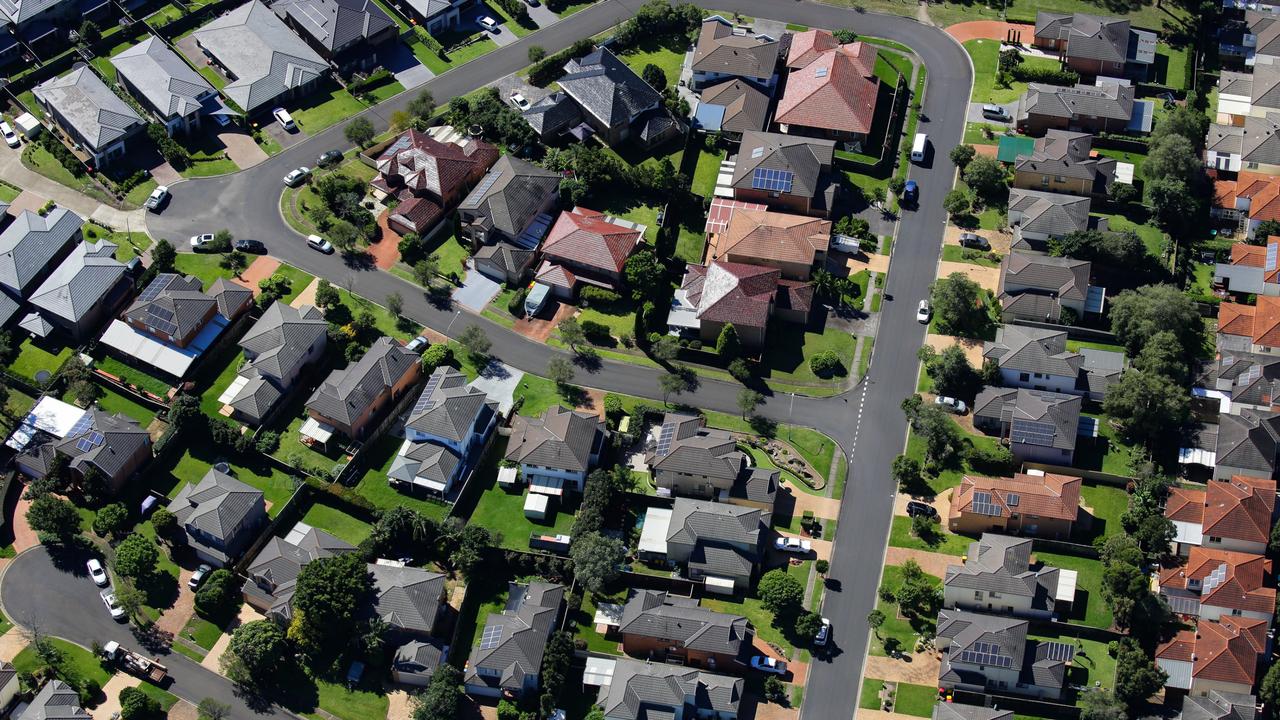
Australia’s deepening national housing affordability crisis has hit a new stumbling block, with the Albanese government’s cornerstone social and affordable housing initiative falling well behind its initial delivery timeline, a recent Senate inquiry has heard.
Launched as a signature policy to address growing intergenerational housing inequality, the $10 billion Housing Australia Future Fund (HAFF) was designed to deliver 40,000 new social and affordable homes over five years starting in 2022, with completion targeted by mid-2029. The fund operates as a dedicated investment vehicle, issuing grants and low-interest loans to community housing providers and developers to deliver housing accessible to low-income and vulnerable households.
Scott Langford, chief executive of Housing Australia, the government body overseeing the scheme, outlined the latest delivery progress to the Senate inquiry on Monday. As of the latest update, only 1,432 homes across the country have been completed – just over 3.5% of the total 40,000 target. Of those finished homes, 979 were completed in the current 2025-26 financial year, and 670 were classified as turnkey projects, where developers complete construction before handover to funding recipients. Langford confirmed that the agency does not directly purchase existing homes, but he was unable to immediately provide a breakdown of how many completed units were refurbished existing properties rather than entirely new builds, saying he would release full data at a later date.
The most significant delay confirmed during the hearing involves the third round of HAFF funding, which opened for applications from industry and community groups in January this year. Langford told the inquiry that contracting for this round of funding has “slipped” from its original timeline, with contracts no longer expected to be finalized before the end of the current financial year. Despite the delay, Langford emphasized that all funding for round 3 will be fully allocated by the 2026-27 financial year, adding that the extended timeline will actually give the agency more time to assess proposals and ensure projects have sufficient runway for delivery.
When pressed on whether the delay would put the overall 40,000-home target at risk, Langford maintained that Housing Australia remains fully committed to hitting the target by 2029. “We are coming towards the end of the second year of a five-year delivery window, and with funding commitments to be made in the second half of this financial year, we see a clear pathway to completion of all those projects,” he said, noting that the delay would not have a material impact on overall delivery and is actually a suitable adjustment to keep the project on track. To date, funding has already been contracted for 18,650 homes across the first two rounds of the scheme.
The latest update on HAFF comes as Australia faces intensifying public and political pressure to tackle the country’s decade-long housing affordability crisis, which has pushed home ownership far out of reach for millions of would-be buyers and driven record rental prices. The Albanese government has positioned HAFF as its core policy to boost housing supply, and recently expanded its housing agenda with new proposed reforms to capital gains tax (CGT) and negative gearing, aimed at curbing excessive investor activity and freeing up more stock for first-home buyers.
The conservative Coalition opposition has taken a sharply different approach to the housing crisis, promising to scrap both the planned CGT and negative gearing reforms and abolish the HAFF entirely if elected. Instead, the opposition has proposed cutting planning red tape to speed up construction and adjusting migration intake levels to be tied directly to the number of new housing completions each year.
Advocacy groups have offered mixed reactions to the government’s recent policy changes. Maiy Azize, national spokesperson for the housing campaign group Everybody’s Home, told the inquiry that her organization is broadly supportive of the proposed CGT and negative gearing changes. She noted that the reforms are not retrospective, a key win for policy stability, but added that they do not grandfather new investments, which will help deliver long-term change to the market. Azize described CGT reform as the most impactful of the proposed changes, but raised questions about whether the adjustments will be enough to shift investor behaviour after 25 years of the existing policy framework becoming entrenched in Australia’s property market. “There is a strong case to be made for doing more on negative gearing,” Azize said, pointing out that the current changes heavily protect existing investors and leave room for further reform to free up more housing stock for owner-occupiers.