分类: politics

  • Tanzanian leader orders smaller convoys and shared buses to cut fuel use as prices rise

    Tanzanian leader orders smaller convoys and shared buses to cut fuel use as prices rise

    DAR ES SALAAM, Tanzania – As global oil markets roil and pump prices skyrocket across the African continent, Tanzania’s President Samia Suluhu Hassan has announced a sweeping cut to the oversized fleet of official and luxury vehicles in her presidential motorcade, a high-profile move aimed at slashing national fuel consumption amid a growing regional energy crisis.

    Hassan, whose pre-reform motorcade was widely cited as one of the largest of any sitting head of state on the African continent, made the announcement Wednesday, detailing that all security and administrative personnel accompanying her on official travels will now travel in consolidated small-group transport rather than separate dedicated vehicles.

    Prior to this policy shift, the president’s procession regularly included dozens of luxury vehicles assigned to government officials, protocol teams, and security detail. A viral video of a 30-vehicle Hassan motorcade circulated online in recent years, sparking widespread public discourse about the excessive scale of presidential motorcades across many African nations.

    “This step is being taken to cut fuel use and bring down operational costs during this period of global price instability,” Hassan explained in her address.

    Hassan’s reform comes as a wave of energy policy adjustments sweeps the African continent, with multiple national governments rolling out emergency measures to counter crippling fuel shortages and runaway price hikes. On Tuesday, Madagascar’s government declared a national state of emergency specifically to enforce mandatory fuel consumption cuts. South Africa has moved to ease consumer burden by cutting the national fuel levy, while Ethiopia has implemented formal fuel rationing to stem overuse. Senegal, for its part, has issued a blanket ban on non-essential foreign travel for all government ministers to cut national fuel expenditure.

    While Hassan assured the public that Tanzania currently holds enough strategic fuel reserves to cover national demand for up to three months, she issued a stern warning to private fuel businesses against exploiting the crisis to artificially inflate prices and gouge consumers.

    The current surge in global fuel prices, which has added roughly $0.40 per liter to Tanzanian pump costs over just the last two weeks, is being driven by escalating geopolitical conflict in the Middle East: ongoing hostilities between Iran and Israel and the associated risk of disruption to shipping through the Strait of Hormuz, a critical chokepoint through which roughly 20% of the world’s daily oil supply passes. Market volatility tied to this disruption has pushed up crude prices globally, with low- and middle-income importing nations like Tanzania bearing the brunt of the shock.

  • Philippines opens key coast guard base in the disputed South China Sea

    Philippines opens key coast guard base in the disputed South China Sea

    MANILA, Philippines – In a high-stakes move that underscores its longstanding territorial claims in the contested South China Sea, the Philippines formally inaugurated a new coast guard district command on Thursday on Thitu Island, a Spratly chain outpost held by Filipino forces and communities for decades but claimed by multiple parties including Beijing. The launch was timed to coincide with the Philippines’ national Day of Valor, a holiday honoring wartime sacrifice, and framed by Philippine officials as a permanent assertion of national sovereignty in a region where Chinese maritime assets maintain constant, close presence.

    China has not yet issued an immediate official response to the opening of the new base. Thitu, known to Filipinos as Pag-asa (meaning “hope” in Tagalog), is also claimed by Vietnam and Taiwan, and Chinese coast guard vessels and state-linked maritime militia ships regularly conduct patrols in the waters surrounding the island. While past encounters between Chinese and Filipino maritime forces have largely remained low-level, the regional security environment has grown increasingly tense in recent years amid overlapping territorial claims.

    China asserts sweeping jurisdiction over nearly the entire South China Sea, a critical global maritime trade route that carries trillions of dollars in annual commerce. However, a landmark 2016 international arbitration ruling, issued under the United Nations Convention on the Law of the Sea, fully invalidated Beijing’s expansive claims. Beijing refused to participate in the arbitration process, has rejected the ruling’s outcome, and continues to disregard it in its maritime operations.

    Top Philippine officials including Transport Secretary Giovanni Lopez, Senator Erwin Tulfo, and Philippine Coast Guard Commandant Admiral Ronnie Gil Gavan traveled to Thitu for the brief inauguration ceremony. In remarks at the event, Lopez emphasized that the new command marks a permanent commitment to defending Philippine maritime interests, protecting the livelihoods of Filipino fishermen, and upholding national sovereignty. A commemorative marker inside the new coast guard building describes the outpost as the “vanguard and steadfast sentinel of our sovereignty, sovereign rights and maritime jurisdiction.”

    The new district command will be headed by a commodore, staffed by a dedicated contingent of personnel, and supported by patrol vessels and aircraft to carry out a range of missions: maritime law enforcement, regional surveillance, environmental protection, and search and rescue operations. Philippine coast guard officials also announced plans to construct smaller auxiliary outposts on other smaller outcrops occupied by the Philippines in the Spratlys.

    The tadpole-shaped Thitu Island, ringed by white sand beaches, is home to roughly 400 Filipino civilian villagers. It is one of nine Spratly features occupied by Philippine forces since the 1970s, when Manila offered incentives like free rice to encourage fishing families to relocate to the island as a way to solidify its territorial claim. Today, the 37-hectare outpost has been upgraded with modern infrastructure including internet and cellular service, more reliable power and water systems, a newly paved airstrip, a coastal wharf, an elementary school, a community gymnasium, and a typhoon evacuation center. Even with these improvements, the settlement remains a small, modest frontier outpost when compared to China’s heavily developed nearby facility on Subi Reef, located just 24 kilometers (15 miles) southeast of Thitu. Over the past decade, Beijing has transformed seven formerly submerged disputed reefs into full-fledged man-made island bases with military infrastructure, including a functional runway at Subi.

    For the civilian community on Thitu, the arrival of the permanent coast guard command has delivered a significant boost to morale. “Everyday, our villagers see Chinese coast guard and militia ships all around the island,” said Rene Albayda, vice mayor of the island municipality that the Philippines recognizes as its most remote offshore township, administered under Palawan province. Speaking to the Associated Press, Albayda framed the new base as a critical step toward greater security for the island’s permanent residents.

  • UK and Norway led a military operation to deter Russian submarines in the North Atlantic

    UK and Norway led a military operation to deter Russian submarines in the North Atlantic

    In an official announcement released Thursday, the United Kingdom’s military confirmed that British and Norwegian armed forces have wrapped up a more than month-long security operation in the North Atlantic, aimed at countering suspected malign Russian submarine activity near critical undersea infrastructure. The coordinated deployment, led by the two NATO allies, involved a British frigate, multiple surveillance aircraft, and hundreds of military personnel tasked with monitoring three Russian vessels: one attack submarine and two intelligence-gathering spy submarines operating in waters north of the UK. According to UK Defense Secretary John Healey, the show of allied force successfully achieved its core goal, with the Russian submarines ultimately departing the area after the sustained surveillance operation.

    In a blunt public message directed at Moscow during the announcement, Healey emphasized that the UK and its allies maintain unwavering vigilance over key undersea cables and energy pipelines that underpin European energy security and digital connectivity. “We see your activity over our cables and our pipelines, and you should know that any attempt to damage them will not be tolerated and will have serious consequences,” Healey stated, underscoring the alliance’s commitment to protecting critical shared infrastructure in the North Atlantic.

    Notably, the announcement comes as global attention remains overwhelmingly focused on ongoing armed conflict in the Middle East, a shift that UK officials have warned Russia seeks to exploit to advance its hostile activities in the Euro-Atlantic region. Healey explicitly rejected the idea of diverting focus from Russian aggression amid the Middle East crisis, telling reporters that “Putin would want us to be distracted by the Middle East, but Russia is the main threat to the U.K. and its allies. We will not take our distracted by the Middle East, but Russia is the main threat to the U.K. and its allies. We will not take our eyes off Putin.” UK officials have also repeatedly drawn connections between Russian activities in Europe and the Middle East, noting that Moscow has supplied Iran with drone components and other military support that bolsters Iran’s regional activities.

    As of Thursday, representatives from Norway’s defense ministry, foreign ministry, and armed forces had not yet responded to requests for comment on the joint operation.

    The latest North Atlantic operation aligns with the UK’s increasingly aggressive posture toward Russian activities violating international sanctions and European security amid Moscow’s full-scale invasion of Ukraine. Just two months prior, in late March, Healey announced that the UK military would expand its enforcement of Russian oil sanctions, moving beyond the previous role of supporting French and U.S. monitoring operations to actively intercept and seize vessels belonging to Russia’s shadow fleet of sanction-breaking oil tankers. “We are ready to take action” against these violating vessels, Healey confirmed at that time, signaling the UK’s commitment to ramping up pressure on Moscow across multiple domains.

  • Vietnam’s top leader To Lam to visit China from April 14 to 17

    Vietnam’s top leader To Lam to visit China from April 14 to 17

    BEIJING – A high-profile diplomatic visit between two neighboring socialist nations is scheduled for mid-April, with Vietnam’s top leader General Secretary of the Communist Party of Vietnam Central Committee and Vietnamese President To Lam set to travel to China for an official state visit spanning April 14 to 17. The visit comes at the formal invitation of General Secretary of the Communist Party of China Central Committee and Chinese President Xi Jinping, according to an official announcement released Thursday by Hu Zhaoming, spokesperson for the International Department of the Communist Party of China Central Committee.

    This upcoming visit marks a key milestone in the continuous development of bilateral relations between China and Vietnam, two major regional powers that share a long land border, deep historical and cultural ties, and expanding cooperation across trade, infrastructure, security, and people-to-people exchange. Diplomatic analysts note that high-level exchanges between the ruling parties and top leadership of both countries play a central role in guiding the direction of bilateral cooperation, addressing shared regional challenges, and managing any outstanding differences through constructive dialogue. As neighbors with integrated regional economies, the meeting between the two countries’ top leadership is widely expected to reinforce strategic communication, boost mutually beneficial collaboration, and contribute to greater stability and prosperity across the broader Southeast Asian region.

  • Trump slams NATO again for being unhelpful for US

    Trump slams NATO again for being unhelpful for US

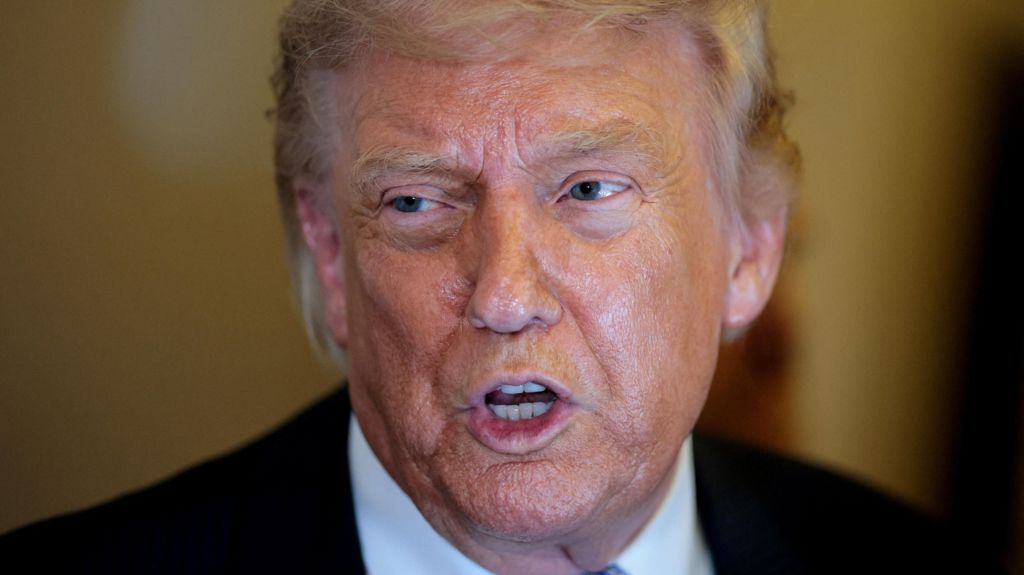
    Tensions between the United States and its transatlantic NATO allies have reached a new boiling point, after U.S. President Donald Trump launched another sharp public rebuke of the alliance on Wednesday, accusing member states of failing to come to Washington’s aid during the ongoing conflict with Iran. The attack came the same day NATO Secretary General Mark Rutte arrived in Washington on a high-stakes trip designed to mend fraying ties between the two sides that have deteriorated sharply during Trump’s second term in office.

    Trump’s criticism came after closed-door talks with Rutte at the White House, which the NATO chief later described as unflinchingly candid. In a post on his Truth Social platform following the meeting, Trump doubled down on his grievances, claiming “NATO wasn’t there when we needed them, and they won’t be there if we need them again.” He also invoked an earlier point of contention with European allies, referencing Greenland as “that big, poorly run, piece of ice” — a nod to his previous push for the U.S. to acquire the autonomous Danish territory, which drew widespread backlash across Europe.

    Rutte acknowledged the depth of U.S. frustration in comments to CNN, confirming that “Trump is clearly disappointed with many NATO allies” and reiterating that the conversation had been “very frank, very open.”

    The current rift stems directly from the outbreak of the Iran war earlier this year. After Trump called on NATO allies to join U.S. operations to reopen the Strait of Hormuz, which has been closed during the conflict, the alliance rejected the request. The anger deepened when several European nations, including Spain and Italy, refused U.S. requests to use their national airspace for military operations tied to the Iran campaign, a decision that left Trump publicly enraged.

    Over the past month, Trump has stepped up his repeated attacks on NATO, repeatedly slamming the alliance for its lack of support for the U.S. war effort and issuing open threats to withdraw the U.S. from the decades-long collective defense treaty. This latest public criticism signals that even direct diplomatic outreach from the new NATO leadership has failed to ease the standoff. Longstanding tensions over defense spending, trade policy, and Trump’s unilateral approach to foreign policy have already strained transatlantic ties, and the combination of the Iran war and the Greenland dispute has widened the split to its widest point in decades.

    Citing unnamed senior U.S. officials, The Wall Street Journal reported on Wednesday that the Trump administration is actively drafting a punitive plan to retaliate against NATO allies that have refused to back the 39-day U.S.-Israeli campaign against Iran. According to the report, the proposal has been circulating among senior administration officials for weeks and has gained tangible support from top Trump advisers.

    Under the draft plan, the U.S. Department of Defense would reposition American troops currently stationed across NATO member states that Washington deems unhelpful, relocating these forces to European nations that have shown clear support for the U.S. position in the Iran war. The proposal also includes the potential permanent closure of at least one major U.S. military base in Europe, with Spain and Germany named as the most likely candidates for base closures. The Journal reported that nations widely viewed as supportive of the U.S. campaign — including Poland, Romania, Lithuania and Greece — would receive the relocated U.S. forces under the plan.

  • KMT chairwoman visits Meituan headquarters in Shanghai

    KMT chairwoman visits Meituan headquarters in Shanghai

    In a cross-strait exchange move that underscores growing engagement between the Chinese Kuomintang (KMT) and mainland China’s digital private sector, KMT Chairwoman Cheng Li-wun led a party delegation to Meituan’s Shanghai headquarters on Wednesday, April 8, 2026. During the visit, Cheng got hands-on experience with two of Meituan’s most innovative consumer services: placing a custom order via the platform’s popular on-demand delivery app, and testing the company’s cutting-edge autonomous drone delivery system, which has been rolled out across multiple Chinese cities to cut delivery times for small, time-sensitive goods.

    The visit, first reported by China’s official Xinhua News Agency, was updated in public records on April 9, 2026. Photographs released by Xinhua show Cheng interacting with Meituan’s technical team while navigating the platform’s user interface, marking a high-profile example of cross-strait political engagement focused on China’s fast-growing digital economy. Meituan, China’s leading on-demand services platform, has expanded beyond food delivery to build out a portfolio of emerging services including autonomous logistics, local lifestyle services, and retail, making it a key representative of the mainland’s dynamic private tech sector.

    Cross-strait exchanges between the KMT and the Chinese mainland have ramped up in recent years, as the party emphasizes people-centered engagement and economic cooperation across the Taiwan Strait. This visit to one of mainland China’s most valuable technology companies highlights the KMT’s focus on exploring opportunities for digital and economic collaboration that can benefit people on both sides of the strait.

  • White House’s tough rhetoric puts US people on edge

    White House’s tough rhetoric puts US people on edge

    On the eve of a self-imposed deadline that brought the United States and Iran to the brink of open conflict, a last-minute 14-day ceasefire brokered by Pakistani Prime Minister Shehbaz Sharif has averted immediate escalation, but widespread anger and anxiety over US President Donald Trump’s incendiary rhetoric continues to ripple across the US and the international community.

    Trump announced the breakthrough on his social media platform Tuesday, just hours after he issued a shocking warning that “a whole civilization will die tonight” if Iran refused to reopen the strategically critical Strait of Hormuz and meet his demands for a new agreement. Under the terms of the deal, Iran confirmed it will enter two weeks of negotiations with US negotiators in the Pakistani capital of Islamabad, with formal talks set to kick off this Friday.

    The 11th-hour U-turn capped a day of soaring tension that left ordinary American citizens, sitting lawmakers, and United Nations officials reeling from the president’s unprecedentedly harsh language. Just one day earlier, Trump had already threatened to annihilate all of Iran’s civilian infrastructure, promising to destroy “every bridge” and power plant across the country if his deadline was not met. Tuesday morning, he doubled down on the threat with the apocalyptic warning that an entire civilization would be erased if no deal was reached.

    That aggressive rhetoric left many US residents deeply shaken. In New York City, 54-year-old Adam Turner told reporters he was reduced to tears by the persistent stress of Trump’s confrontational approach to Iran, a policy that reversed the 2015 nuclear deal struck under former president Barack Obama that Turner described as effective. “It is without respect. It is without intelligence, without dignity. And the fact that we are represented by that is a crime,” Turner said. “It makes me sad because I don’t think the Iranian people deserve it. He got rid of Obama’s Iran deal. We had a deal in place that was effective.”

    Criticism of the president’s threats extended far beyond liberal opponents of Trump. Even Marjorie Taylor Greene, a long-time loyal ally of the president from his own Republican Party, condemned the rhetoric in a post on X, writing: “We cannot kill an entire civilization. This is evil and madness.”

    Top Democratic leaders went further, calling on congressional Republicans to break with the president and intervene to stop the drift toward war. House Minority Leader Hakeem Jeffries, a Democrat representing New York, urged GOP lawmakers to put national interest above partisan loyalty. “Congress must immediately end this reckless war of choice in Iran before Donald Trump plunges us into World War III,” Jeffries wrote on X. “It’s time for every single Republican to put patriotic duty over party and stop the madness. Enough.”

    A 66-year-old Manhattan resident, Lewis Fox, echoed that frustration, arguing that Trump’s bellicose language has redefined the US’s global role from a global protector to a global bully. “I think he doesn’t have a clue what he’s doing. He has converted the United States into the bully of the world versus the savior of the world. And therefore, he definitely shouldn’t be talking like that,” Fox said.

    The United Nations also joined the chorus of concern, with a spokesperson for Secretary-General António Guterres saying the UN chief was “deeply troubled” by statements that put civilian lives at risk of catastrophic harm from military action.

    Protests also sprung up near the White House this week, with demonstrators gathering in Lafayette Square to condemn joint US-Israeli strikes on Iran and push for de-escalation. While the ceasefire has pulled the region back from the immediate brink of all-out war, the crisis triggered by Trump’s rhetoric has left deep divisions in the US and renewed global worries over the stability of the Middle East.

  • China’s anti-graft chief stresses high-quality disciplinary inspection for sound five-year plan launch

    China’s anti-graft chief stresses high-quality disciplinary inspection for sound five-year plan launch

    BEIJING – At a national work conference on disciplinary inspection held on April 8, 2026, Li Xi, a member of the Standing Committee of the Political Bureau of the Communist Party of China Central Committee and chief of the central disciplinary inspection leading group, delivered a keynote address emphasizing that high-standard disciplinary inspection work is a critical guarantee for a solid and smooth start to China’s 15th Five-Year Plan period (2026-2030).

    The conference did not only set priorities for this year’s disciplinary inspection work, but also officially marked the kickoff of the seventh round of disciplinary inspection carried out by the 20th Central Committee of the CPC. This round of inspection will cover Party organizations within 36 state institutions and key units, bringing the ongoing anti-corruption and disciplinary supervision drive to a new stage.

    In his remarks, Li stressed that advancing the high-quality development of disciplinary inspection is core to safeguarding the unity, solidarity and cohesion of the entire Party. He underlined that inspection teams must prioritize addressing corrupt practices and official misconduct that directly harm public interests, a measure that will further solidify the political foundation for the Party’s long-term governance.

    According to Li, this latest round of inspection will place a key focus on assessing whether Party officials across the covered institutions hold a correct and solid understanding of proper governance performance. This focus builds on a Party-wide education campaign launched earlier in 2026, which is aimed at cultivating and implementing a shared, correct understanding of competent governance across all levels of the Party.

    This new round of inspection aligns with China’s long-running efforts to tighten intra-Party supervision and root out systemic corruption, as the country enters a new five-year development cycle focused on high-quality economic and social progress. Official observers note that the push for robust disciplinary inspection ahead of the full implementation of the 15th Five-Year Plan reflects the Party’s commitment to clean governance that supports sustained national development.

  • Myanmar’s parliament approves cabinet mostly of former generals and holdovers

    Myanmar’s parliament approves cabinet mostly of former generals and holdovers

    Five years after Senior General Min Aung Hlaing led the 2021 military takeover that ousted Myanmar’s democratically elected civilian government, the country’s newly convened parliament has formally approved a cabinet stacked overwhelmingly with current and former military figures, leaving no realistic path to a swift return to civilian rule. The vote, held Thursday in the capital Naypyitaw, clears the way for Min Aung Hlaing to be sworn in Friday as Myanmar’s president, alongside two vice presidents and the full slate of 30 cabinet appointees. Parliament Speaker Aung Lin Dwe confirmed all 30 ministerial appointments passed without objections. An official breakdown of the approved cabinet shows 24 of the 30 nominees are either active or retired military officers, or politicians affiliated with the military-aligned Union Solidarity and Development Party. Furthermore, 18 of the incoming ministers held cabinet positions in the previous military junta government, while four additional appointees served as military or administrative officials under that same administration. Many of these newly appointed cabinet members are already the target of international sanctions, imposed by Western governments that have accused the officials of complicity in human rights violations and participation in the unelected military regime. Beyond cabinet appointments, the parliament also voted Thursday to reappoint senior judicial officials, including the chairman of the constitutional tribunal, the attorney general, and all sitting Supreme Court judges. The new government was formed following disputed general elections held in two phases across late December 2024 and early 2025, a vote that has been widely rejected by the international community. The Association of Southeast Asian Nations (ASEAN) is among the major regional and global bodies that have refused to recognize the election results. Critics note the vote was deeply flawed: nearly all major opposition parties were barred from participating, public dissent was harshly suppressed, and no voting could be conducted across large swathes of Myanmar where ongoing civil conflict between the junta and armed resistance groups continues to rage. ASEAN has already maintained that it will stick to its long-stalled five-point peace plan for Myanmar, even as the initiative has failed to end the years-long deadly civil war that has displaced millions of people across the country.

  • Benin is holding an election for a new president as security worsens and critics denounce clampdown

    Benin is holding an election for a new president as security worsens and critics denounce clampdown

    On Sunday, April 12, nearly 8 million eligible voters across Benin will head to the polls to select a new president, bringing to a close 10 years of governance under outgoing leader Patrice Talon, whose tenure leaves behind a deeply mixed national legacy. The race, which pits ruling coalition candidate and former finance minister Romuald Wadagni against sole opposition contender Paul Hounkpè, unfolds against a backdrop of robust macroeconomic growth, rising concerns over democratic erosion, and an escalating jihadi insurgency in the country’s northern borderlands.

    Wadagni, 49, is widely recognized as Talon’s handpicked successor, entering the election with significant structural advantages. In January’s parliamentary vote, all opposition parties failed to meet the controversial 20% electoral threshold required to win legislative seats, leaving Talon’s two allied allied political factions in full control of all 109 seats in the National Assembly. Further, the opposition’s most high-profile potential candidate, Renaud Agbodjo of The Democrats party, was barred from running after failing to collect the required number of parliamentary endorsements — a requirement critics argue was deliberately designed to exclude major rivals from the ballot. For Fiacre Vidjingninou, a political analyst at the Lagos-based Béhanzin Institute, these barriers leave the field tilted heavily in Wadagni’s favor, with the ruling candidate also boosted by cross-faction support from influential establishment figures and a clear, verifiable record of economic policy.

    “Ten years at the Finance Ministry have given him something rare in African politics: a quantified record — verifiable and difficult to dismantle in a serious debate,” Vidjingninou explained.

    Under rules governing the 2024 election, a candidate must win an absolute majority of at least 50% of the vote to claim an outright victory in Sunday’s first round. If no candidate hits that threshold, a runoff election between the top two finishers will be held on May 10.

    Wadagni has centered his entire campaign on the strong macroeconomic performance Benin recorded during Talon’s tenure, which overlapped with his 10 years leading the finance ministry. Data from the International Monetary Fund shows Benin’s economy expanded by 7% in 2023, placing it among the most consistent high-growth economies in West Africa. For nearly a decade, the country sustained robust growth driven by agricultural output, cross-border trade, and a major expansion of the port in Cotonou, which transformed Benin into a critical trade transit hub for landlocked neighbors across the region. Major infrastructure upgrades have also been rolled out across the country during this period. However, these economic gains have not been equally distributed: widespread poverty remains entrenched in rural areas and the underdeveloped northern region, leaving many voters disillusioned with the status quo.

    Critics of the outgoing administration have highlighted a clear democratic backslide during Talon’s tenure, marking a departure from Benin’s longstanding reputation as one of West Africa’s most stable pluralist democracies. Since taking office in 2016, Talon has overhauled electoral rules and been accused of weaponizing the national justice system to sideline political opponents. In November 2023, a constitutional reform extended presidential terms from five to seven years, created a new senate partially appointed by the sitting president, and raised the electoral threshold for parliamentary representation, further limiting opposition access to power. Leading global human rights organizations Amnesty International and Human Rights Watch have documented a sustained crackdown on dissent under Talon, including arbitrary detention of opposition figures, strict limits on public protests, and growing pressure on independent media outlets. In recent years, widespread protests over soaring living costs were violently suppressed by government security forces.

    Compounding political tensions is a growing security crisis that has threatened stability for years. In December 2023, a faction of military officers launched a failed coup attempt to oust Talon’s government, part of a broader wave of attempted and successful military takeovers across West and Central Africa, most of which have followed a pattern of disputed elections, constitutional controversy, security failures, and widespread youth discontent. A core grievance cited by the coup plotters was the rapid deterioration of security in northern Benin, where the country has faced growing spillover violence from the jihadi insurgencies raging in neighboring Burkina Faso and Niger. The tri-border region is the operational heart of Jama’at Nusrat al-Islam wal-Muslimin (JNIM), an al-Qaida-affiliated extremist group, and security cooperation has collapsed since both neighboring states fell under military junta rule in recent coups. Last year alone, an extremist attack on northern military outposts killed 54 Beninese soldiers.

    Vidjingninou notes that while the failed coup damaged the outgoing administration’s narrative of steady governance, the climate of uncertainty could ultimately work to Wadagni’s advantage. “In a context perceived as unstable, cautious voters tend to choose continuity and familiarity over the risk of the unknown,” he said.

    Voter opinions ahead of Sunday’s vote are deeply divided. Roch Gbenou, a civil servant based in Cotonou, identified two top priorities: more equitable wealth distribution and the restoration of democratic freedoms, which he said “appear to have been substantially restricted” in recent years. Gbenou added that he has little confidence the election will produce meaningful change, suggesting “it will ultimately only serve to legitimize a choice already made.” By contrast, Mathias Salanon, a retired police officer, praised Talon’s tenure and expressed hope that the next president will build on his progress to stabilize national economic and political life. “In more than 50 years of my life I have not seen such a fierce will to develop the country as during President Patrice Talon’s 10 years,” he said. For Cotonou resident Sofiath Akadiri, the most pressing issues are expanded access to affordable health care, quality education, and formal employment, alongside broader demands for social justice and a return to established democratic norms.