分类: politics

  • Top Iran diplomat: Deal ‘inches away,’ Trump team sabotaged talks

    Top Iran diplomat: Deal ‘inches away,’ Trump team sabotaged talks

    High-stakes negotiations between U.S. and Iranian delegations in Pakistan’s capital Islamabad collapsed over the weekend, with Iran’s top diplomat accusing the Trump administration of tanking a near-final preliminary ceasefire agreement through unrealistic, overreaching demands that brought an end to marathon talks aimed at ending a six-week open conflict.

    Abbas Araghchi, Iran’s foreign minister, outlined the breakdown in a public post to social media Sunday, noting that the weekend discussions marked the first high-level direct engagement between the two nations in 47 years. Araghchi emphasized that Iran entered the bargaining process in good faith to end the ongoing war, but as negotiators closed in on a finalized Islamabad Memorandum of Understanding, the U.S. side shifted its demands, insisted on maximalist positions, and maintained its economic blockade on Iran. “Zero lessons earned,” Araghchi wrote. “Good will begets good will. Enmity begets enmity.”

    This failed talks mark the second time in just two months that U.S. negotiators have been accused of sabotaging a potential deal that was widely seen as within reach. In late February, just hours before U.S. and Israeli forces launched airstrikes on Iranian targets, Oman’s top diplomat—who had mediated earlier rounds of negotiations—confirmed that substantial progress toward a negotiated settlement had already been reached.

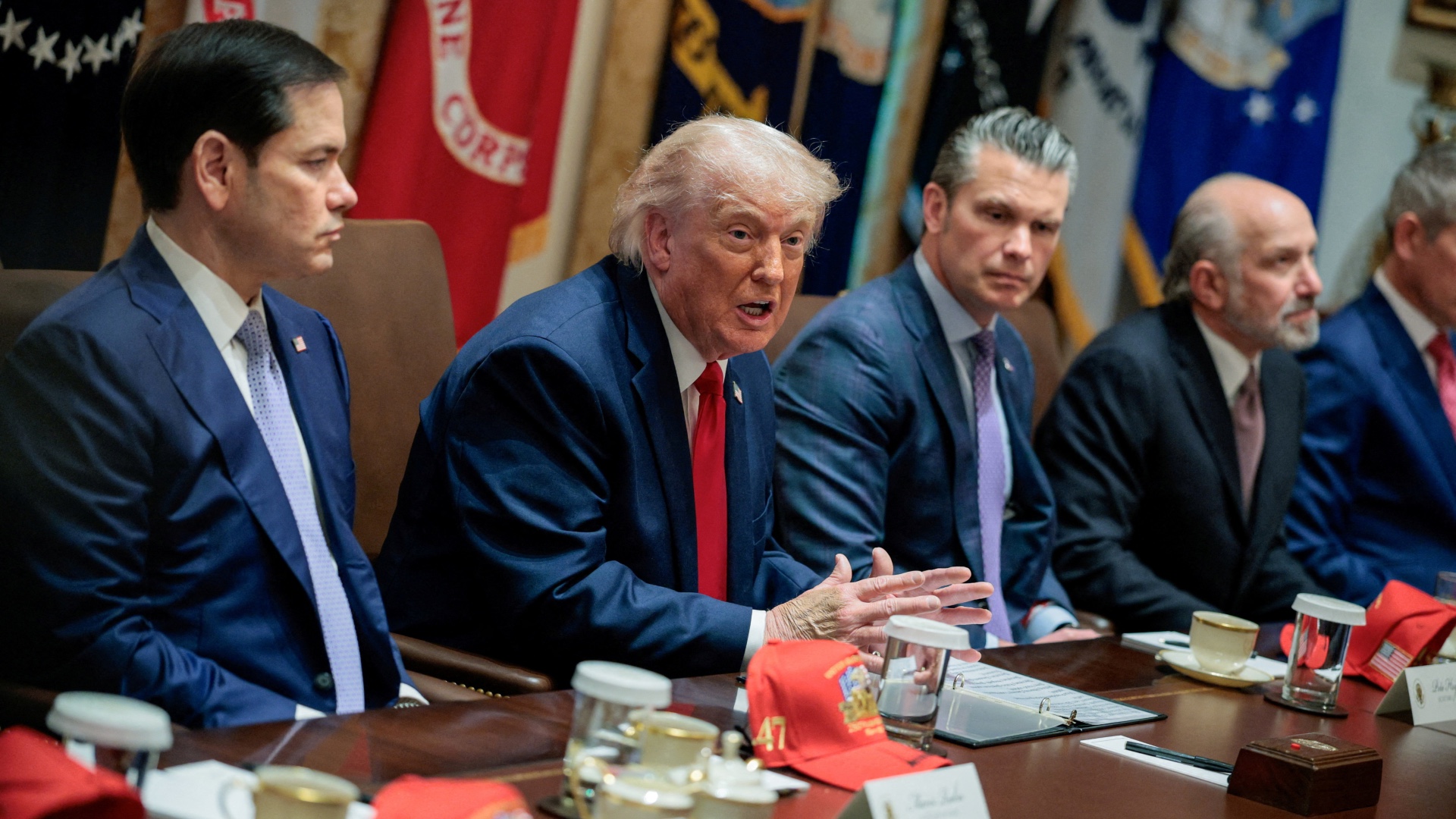
    The U.S. negotiating team in Islamabad was led by Vice President JD Vance, alongside special envoys Steve Witkoff and Jared Kushner, the son-in-law of former President Donald Trump. During the talks, the U.S. delegation laid out a series of non-negotiable red lines, including demands that Iran permanently end all uranium enrichment activities and dismantle its core civilian nuclear energy infrastructure. Nuclear non-proliferation experts widely note that Iran retains the legal right to conduct civilian uranium enrichment under the terms of the Treaty on the Non-Proliferation of Nuclear Weapons.

    Speaking to reporters after the talks collapsed, Vance pushed back against Iran’s accusations, claiming the U.S. side had approached negotiations with significant flexibility. “We just could not get to a situation where the Iranians were willing to accept our terms,” Vance said.

    President Trump echoed that framing in his own social media statement, arguing that most negotiating points had been agreed upon, but the core issue of Iran’s nuclear program remained unresolved. “The meeting went well, most points were agreed to, but the only point that really mattered, NUCLEAR, was not,” Trump wrote.

    Iran’s lead negotiator, Parliament Speaker Mohammad Bagher Ghalibaf, echoed Araghchi’s criticism, adding that decades of conflict with the U.S. have left Iran with no reason to trust American negotiating commitments.

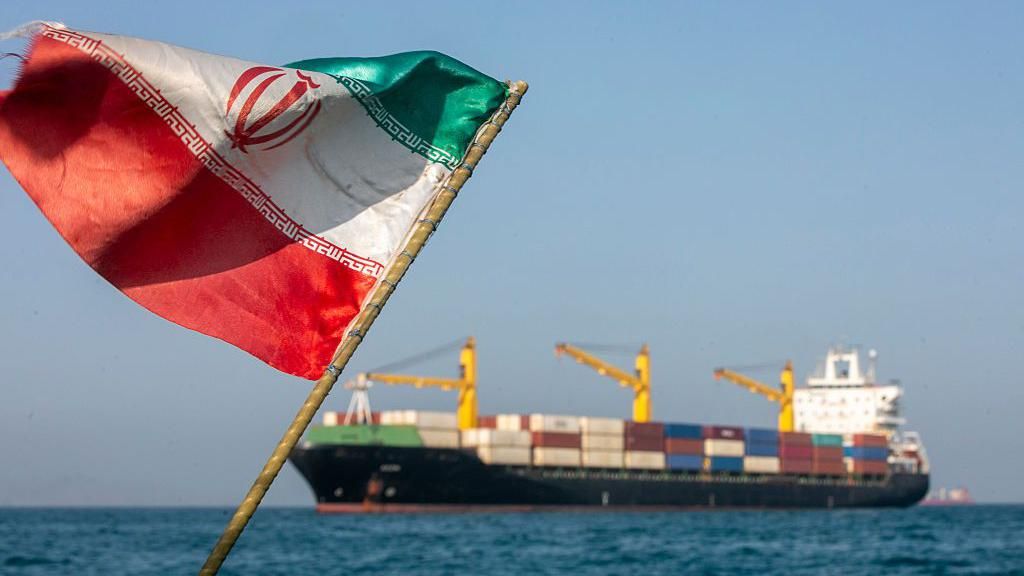
    Within hours of the single-day talks faltering, Trump announced that the U.S. would implement a naval blockade of the Strait of Hormuz, a strategic waterway that carries roughly a fifth of the world’s daily oil trade. Critics have universally labeled the blockade an illegal act of war that risks dragging both nations into a far wider, more destructive conflict.

    Ryan Costello, policy director at the National Iranian American Council, warned that the U.S. approach continued to prioritize dictating terms over good-faith negotiation. “It is concerning that Vance already suggests that the U.S. has put forward a final and best offer, suggesting that the U.S. is still trying to dictate terms rather than negotiate a better future,” Costello said. “We urge President Trump to walk back his blockade threat and for the U.S. and Iran to reengage and consider implementing practical steps where there is agreement to lower tensions and build on this fragile pause to the war.”

    The Wall Street Journal reported Sunday that the Trump administration is also considering resuming limited military strikes against Iran targets to complement the Hormuz blockade, which is scheduled to go into effect at 10 a.m. ET. The outlet noted that a full-scale return to a sustained bombing campaign remains on the table, though anonymous administration officials said that option is currently less likely.

    U.S. Representative Pramila Jayapal, a Washington Democrat, issued a scathing rebuke of Trump’s actions Sunday, calling the ongoing conflict with Iran illegal, immoral, a war crime, and a catastrophic threat to American public interests. Jayapal called for urgent action to remove Trump from office, saying that impeachment, invocation of the 25th Amendment, or a push for voluntary resignation are all on the table. “This is so grave of a situation,” Jayapal told MSNBC’s *MS NOW*.

  • Eric Swalwell resigns from Congress after sexual misconduct claims

    Eric Swalwell resigns from Congress after sexual misconduct claims

    In a stunning development that has upended California political circles, long-serving Democratic U.S. Representative Eric Swalwell has formally stepped down from his congressional seat, capping a turbulent week that saw him abandon his bid for California governor amid mounting public and political pressure over multiple sexual misconduct allegations.

    The 12-year House incumbent, who represented a Bay Area district adjacent to San Francisco after first winning election in 2012, announced his resignation in a public letter published to the social platform X. In the statement, Swalwell acknowledged poor past judgment while pushing back against the most severe claims leveled against him. “I am deeply sorry to my family, staff, and constituents for mistakes in judgement I’ve made in my past,” the statement read. “I will fight the serious, false allegation made against me. However, I must take responsibility and ownership for the mistake I did make.”

    The crisis that led to Swalwell’s exit erupted last week, when four women came forward with accusations of misconduct spanning a range of behavior, from unwanted sexual advances to rape. The claims triggered an official ethics inquiry by the U.S. House of Representatives, which was already underway when Swalwell made the decision to resign. Prior to his departure from Congress, the lawmaker had already suspended his campaign for the California governorship amid plummeting support from voters and growing calls from within his own party to step aside.

    This is an ongoing breaking news story, with additional details expected to emerge in the coming hours and days. Readers can access real-time updates through the BBC News mobile application, or by following the official BBC Breaking News account on X for the latest alerts.

  • How Orban’s loss could damage the British right

    How Orban’s loss could damage the British right

    For nearly two decades, Viktor Orban turned Hungary from a relatively quiet central European state into a global hub for transnational conservative politics, building a sprawling interconnected network of think tanks, academic institutions, and ideological initiatives designed to unite right-wing movements across Europe and North America while expanding Budapest’s soft power influence across the Western world. Following 16 years in office, Orban stepped down last weekend after opposition candidate Peter Magyar, a conservative newcomer, secured a decisive election victory with more than 53% of the popular vote – a result that has cast the entire future of Orban’s ideological project into major doubt.

    At the core of Orban’s network are two flagship institutions: the Danube Institute, a Budapest-based think tank focused on engaging Anglophone conservative thinkers, and the Mathias Corvinus Collegium (MCC), widely described as Orban’s purpose-built ideological training center. Founded by John O’Sullivan, a former speechwriter for British Prime Minister Margaret Thatcher, the Danube Institute has become a key meeting point for right-wing intellectuals from the United Kingdom, funded entirely by the Hungarian government through the state-managed Batthyany Lajos Foundation. The institute primarily hosts British and American visiting fellows, who regularly contribute to leading conservative publications across the Anglosphere including *The Spectator* and UnHerd.

    Gavin Hayes, a British visiting fellow at the institute, told Middle East Eye that the center has become more connected to the British right-wing intellectual scene than many domestic London-based institutions. “It’s an intellectual turnstile,” Hayes explained, “I’ve met more prominent right-wing thinkers from London here in Budapest than I ever did in London.” The institute has helped spread interest in the so-called “Orban model” of socially populist, nationalist politics across the British right, he added, providing a space for hard-right British figures to exchange ideas with ideological allies who share their skepticism of mainstream progressive policy. Back in 2019, Tim Montgomerie, former social justice advisor to ex-British Prime Minister Boris Johnson, even used a Danube Institute speech to call for a new “special relationship” between London and Budapest.

    The MCC, for its part, has grown into one of the most well-funded nodes of Orban’s ideological network, receiving major state assets during his premiership – including 10% stakes in two large Hungarian companies, among them regional energy giant MOL. The institution has actively cultivated ties with prominent British right-wing figures, including Matt Goodwin, a Reform UK candidate who lost a February Greater Manchester by-election to the Green Party and was scheduled to deliver a talk at MCC just one day after Orban’s election defeat. MCC hosts an annual summit at King’s College London, and has directed more than half a million pounds – over 90% of its total funding – to the Roger Scruton Legacy Foundation (RSLF), an organization named after the late prominent British conservative philosopher.

    The RSLF counts former UK Conservative minister Michael Gove, current editor of *The Spectator*, among its board members, and one of its directors is James Orr, a Cambridge theologian who also serves as a senior advisor to Reform UK leader Nigel Farage. Orr praised Orban’s government during an appearance at a 2023 Hungarian political festival, framing it as a needed counterpoint to what he called the anti-national heritage ideology dominating mainstream British politics. That same event drew a host of other high-profile right-wing figures, including US billionaire Peter Thiel, former Boris Johnson advisor Dominic Cummings, and Goodwin, who hailed Orban’s administration as a rebuke of what he described as “national self-loathing” in British public life.

    Orban’s pan-European conservative project has long found particularly fertile ground in the UK, especially within the rapidly rising right-wing party Reform UK, which currently leads national opinion polls ahead of the next UK general election. Farage, Reform’s leader, has repeatedly praised Orban over the years, rejecting criticisms of the Hungarian leader’s authoritarian tendencies and framing him as the future of European politics. “He actually believes in things. He does not sheepishly, slavishly go along with the European project… he firmly believes in the concept of the nation-state,” Farage said of Orban in 2019, and headlined a 2024 National Conservatism conference in Brussels alongside Orban, an event sponsored by MCC’s Brussels office.

    Orban’s brand of hardline nationalist politics has also drawn support from leading right-wing figures across the Atlantic, and just last month he shared the stage with Argentinian President Javier Milei at a Conservative Political Action Conference held in Budapest, while former US President Donald Trump and Israeli Prime Minister Benjamin Netanyahu delivered pre-recorded video addresses to the crowd. Despite the network’s rapid growth over the past decade, its future is now unclear, as Magyar’s Tisza Party ran on an explicit platform that promised to end the use of public funds to build transnational political networks.

    The party has pledged to draw a clear line between nonpartisan education and ideological propaganda, and has promised to take back state assets currently held by MCC. “No one knows what will happen,” Hayes said of the Danube Institute. “Effectively this is an arm of Hungarian public diplomacy, so the new government could come in and decide there’ll always be the place for an Anglophone institute.” But if the new government follows through on its campaign promises, Orban’s sprawling Budapest-based conservative network will be forced to find new sources of funding and new patrons to sustain its transnational ideological work.

  • Brazil’s fugitive ex-spy chief detained by US immigration

    Brazil’s fugitive ex-spy chief detained by US immigration

    In a high-profile development that advances a major anti-coup investigation in Brazil, US Immigration and Customs Enforcement (ICE) officers took Alexandre Ramagem, the fugitive former head of Brazilian intelligence and close ally of ex-president Jair Bolsonaro, into custody on Monday. Ramagem had evaded Brazilian authorities for months after being convicted on charges tied to a failed 2022 coup plot aimed at preventing leftist leader Luiz Inacio Lula da Silva from taking office following his electoral victory.

    The 53-year-old former police officer led Brazil’s primary intelligence agency, ABIN, during Bolsonaro’s far-right presidency, and later won a seat as a federal legislator — a position he was forced to relinquish after his September conviction. A Brazilian court sentenced him to 16 years in prison for three grave offenses: armed criminal association, attempted coup d’état, and the attempted violent abolition of the rule of law. Rather than surrender to serve his sentence, Ramagem slipped across Brazil’s northern border into Guyana, skipping official immigration checks, before traveling to the United States using a diplomatic passport.

    Brazilian federal police confirmed the detention in an official statement Tuesday, framing the arrest as a successful outcome of cross-border law enforcement collaboration between Brazilian federal authorities and their US counterparts. An anonymous police source confirmed to Agence France-Presse that the detainee held in ICE custody, as listed on the agency’s public website, is indeed Ramagem. Brazil formally submitted an extradition request for Ramagem to US authorities back in December.

    The case has sparked immediate comment from Bolsonaro-aligned figures in the US. Paulo Renato Figueiredo, a pro-Bolsonaro influencer and grandson of the last military dictator to rule Brazil during the 1964–1985 authoritarian period, wrote on social media platform X that Ramagem was initially pulled over for a minor traffic violation before immigration officials took him into custody. Figueiredo claimed Ramagem held legal immigration status in the US at the time of detention and had a pending asylum application, adding that supporters expected a quick release and did not anticipate immediate deportation.

    Ramagem’s legal troubles extend far beyond the 2022 coup plot. He is currently the target of a separate federal investigation into allegations that he led a criminal ring that carried out illegal surveillance of political opponents and members of the Brazilian judiciary, on behalf of Bolsonaro and his inner circle. The operation reportedly used sophisticated Israeli surveillance software to target critics. Brazilian federal investigators have already recommended that prosecutors file formal criminal charges against Ramagem and more than 30 other co-conspirators, including Carlos Bolsonaro, one of the former president’s sons.

    The broader conspiracy case has already ended in a conviction for Jair Bolsonaro himself, who received a 27-year prison sentence for his role as the alleged mastermind of the coup attempt. Prosecutors have noted the plot failed only because top military commanders refused to back the putsch. The former president is currently serving his sentence under house arrest, after being moved from prison to a hospital last month for treatment of bronchopneumonia, with officials granting the home confinement arrangement on health grounds.

    The conviction of the former president has not ended the Bolsonaro family’s political ambitions: Bolsonaro has tapped his eldest son, sitting Senator Flavio Bolsonaro, to challenge incumbent Lula in Brazil’s October general election. New polling from the Datafolha Institute, published just one day before Ramagem’s detention, shows a razor-thin lead for Flavio Bolsonaro in a hypothetical head-to-head runoff, with 46% of intended voter support versus 45% for Lula.

  • Hungary’s next PM would pick up if Putin calls and tell him to stop Ukraine war

    Hungary’s next PM would pick up if Putin calls and tell him to stop Ukraine war

    One day after delivering a historic political upset that ended Viktor Orbán’s 16 consecutive years in power as Hungary’s prime minister, Péter Magyar, leader of the newly victorious Tisza party, laid out his bold domestic and foreign policy agenda during a marathon three-hour press conference on Monday.

    Magyar opened his remarks by revealing that he had already held introductory conversations with 10 European leaders in the immediate aftermath of his landslide victory, signaling a sharp shift away from Orbán’s often Euroskeptic and Russia-aligned agenda. On the topic of Russia, which had maintained a close partnership with Orbán’s outgoing administration, Magyar struck a clear, firm tone: he would not be the one to initiate contact with Russian President Vladimir Putin, though he would take the call if Putin reached out. “If Vladimir Putin calls I’ll pick up the phone,” Magyar told assembled reporters. “I don’t think it’ll happen, but if we did talk I’d tell him to please, after four years, put an end to the killing and end this war.”

    The Kremlin responded to Magyar’s victory with a measured statement, saying it respects the election outcome and expects to maintain pragmatic bilateral relations with the new Budapest government.

    Magyar mirrored his stance on another high-profile relationship, saying he would not reach out to former U.S. President Donald Trump, who had openly endorsed Orbán’s re-election bid and received public backing from U.S. Vice President JD Vance during a two-day campaign stop in Hungary last week. If Trump contacts him, however, Magyar said he would affirm that the two are strong NATO allies and extend an invitation to Hungary for the 70th anniversary of the 1956 Hungarian uprising against Soviet occupation, scheduled for next October.

    A one-time insider within Orbán’s own Fidesz party, Magyar launched his political movement as a grassroots campaign centered on rooting out systemic corruption and cronyism that had flourished under Orbán’s long tenure. Preliminary official election results, adjusted after an initial count, give Tisza 136 seats in Hungary’s parliament — still a comfortable two-thirds supermajority, enough to allow the new government to amend the national constitution. With roughly 400,000 ballots still left to tally, Magyar said he remained optimistic his party would pick up additional seats in the final count. He emphasized that Sunday’s result was far more than a routine change of government: it was a mandate for complete regime change.

    European Commission President Ursula von der Leyen, one of the 10 leaders Magyar had already spoken to on Monday, summed up the bloc’s reaction in one line: “Hungary has chosen Europe.” Magyar doubled down on that sentiment, stressing that Hungary’s place is firmly within the European Union regardless of the outgoing government’s past positioning, and that joining the eurozone is a core national interest for his country. He also outlined his first round of diplomatic visits, which will take him to Poland, Austria, and Germany — three nations he said Hungary shares deep historical and political ties with.

    The contrast between Magyar’s agenda and Orbán’s outgoing administration could not be clearer on the war in Ukraine. For years, Orbán has blamed the EU and Ukrainian President Volodymyr Zelenskyy for prolonging Russia’s full-scale invasion, a narrative he repeated throughout his election campaign. Last month, Orbán blocked a proposed €90 billion EU aid package for Kyiv, drawing widespread accusations of disloyalty from fellow EU member states.

    Magyar rejected that framing outright, telling reporters: “Every Hungarian knew that Ukraine was the victim of the war with Russia.” He added that the war is also senseless from Russia’s perspective, noting “tens of thousands of Russians have lost their lives, and tens or even hundreds of thousands of Russian families have been destroyed”, including Russian-speaking communities living in Ukraine. He joked that any call with Putin would likely be brief, adding “I don’t think he’d end the war on my advice.”

    Orbán’s government has long faced questions over its close ties to Moscow, with scrutiny intensifying in recent months after Hungarian Foreign Minister Péter Szijjártó admitted he shared information about EU sanctions discussions with Russian officials both before and after EU meetings. A leaked recording also alleged Szijjártó told Russian Foreign Minister Sergei Lavrov “I am at your service”, a revelation that prompted Orbán to order a domestic wiretapping investigation into the leak.

    Midway through Monday’s press conference, Magyar was handed an urgent note that led him to make a fresh allegation: Szijjártó’s foreign ministry was actively shredding confidential documents related to the government’s dealings with Russia and sanctions policy on the very same day. As of the press conference, the outgoing foreign ministry had not issued any comment responding to the claim.

  • Spanish PM’s wife charged with corruption after two-year probe

    Spanish PM’s wife charged with corruption after two-year probe

    In a major legal development that has sent shockwaves through Spanish politics, a Spanish court has officially filed four criminal charges against Begoña Gómez, the wife of incumbent Prime Minister Pedro Sánchez, concluding a two-year long criminal investigation into alleged corrupt activity. The charges handed down include embezzlement, influence peddling, business corruption, and misappropriation of public funds, according to the formal court ruling released this week. The case now enters a new phase, with judiciary officials set to determine in coming weeks whether Gómez will proceed to a public trial.

    The core allegations against Gómez center on claims that she leveraged her close familial connection to the Spanish prime minister to advance her own private professional interests, including securing a senior academic position at one of Spain’s most prestigious higher education institutions, Madrid’s Complutense University. Investigators further allege that she diverted public resources to benefit private projects and personal gain. Investigating Judge Juan Carlos Peinado, who opened the initial probe in April 2024, has highlighted Gómez’s lack of relevant academic and professional qualifications for her role leading a master’s degree program in business studies at the university as key evidence supporting the charges.

    The original complaint against Gómez was brought forward by Manos Limpias (Clean Hands), a Spanish anti-corruption activist group headed by Miguel Bernad, a figure with documented ties to Spain’s far-right political sphere. The organization has a well-documented history of bringing a long string of unsuccessful legal claims against left-leaning Spanish politicians over the past decade.

    Gómez has issued a firm denial of all charges brought against her. For his part, Prime Minister Sánchez has repeatedly dismissed the entire investigation as a coordinated political smear campaign orchestrated by Spain’s right-wing and far-right opposition to destabilize his left-wing coalition government. When the investigation was first launched in 2024, Sánchez made the unprecedented decision to suspend all public official duties for five days, stating he would pause to reflect on whether he would continue in his role as prime minister. He accused political opponents of waging a months-long “harassment strategy” designed to weaken him politically and personally target his family. As the charges were made public this week, Gómez and Sánchez were already out of the country, carrying out a scheduled official state visit to China.

    This latest legal development comes amid a string of ongoing corruption-related cases affecting senior figures linked to Sánchez and his government. Just this month, José Luis Ábalos, Sánchez’s former transport minister, went on trial on charges that he accepted illegal kickbacks in connection with public contracts for personal protective equipment (PPE) purchased by the Spanish government at the height of the COVID-19 pandemic. Separately, the prime minister’s brother, David Sánchez, has also been indicted in an unrelated influence peddling probe connected to his hiring by a Spanish regional government.

  • The Telegraph deletes story falsely claiming Erdogan threatened to invade Israel

    The Telegraph deletes story falsely claiming Erdogan threatened to invade Israel

    A major British newspaper has been forced to retract and remove a false story that incorrectly claimed Turkish President Recep Erdogan threatened a military invasion of Israel, after the outlet acknowledged the report relied on decontextualized, years-old comments that had been misrepresented to create a false narrative.

    The Daily Telegraph first published the incendiary report on Sunday, claiming that Erdogan had attacked Israeli Prime Minister Benjamin Netanyahu over Israeli airstrikes in southern Lebanon, describing the Israeli leader as “blinded by blood and hate”. The newspaper further alleged that Erdogan warned Turkey could launch military action against Israel, saying “just as we entered Libya and Karabakh, there is nothing to prevent us doing it” and that there was “no reason” not to attack.

    However, the claims fell apart almost immediately when it was revealed that the quotes used in the story were pulled from a 2024 speech Erdogan delivered at a local ruling AK Party gathering in the Turkish coastal city of Rize, and were taken completely out of their original context. In the full, original remarks, Erdogan emphasized that Turkish military strength was necessary to constrain Israeli actions against Palestine, not that Turkey was planning an imminent invasion. His full comment read: “We must be very strong so that Israel can’t do these ridiculous things to Palestine. Just like we entered Karabakh, just like we entered Libya, we might do similar to them.”

    By Monday, the Turkish government issued an official statement rejecting the false report as “entirely unfounded”. Ankara stressed that the misleading claims did not reflect reality and were part of a deliberate narrative designed to destabilize the already volatile Middle East region.

    “In line with its long-standing state tradition and vision, the Republic of Türkiye has consistently assumed a leading role – both in our region and beyond – in advocating for an end to bloodshed, the protection of civilians, and the establishment of lasting peace,” the statement read. It added that manipulative content meant to distort Turkey’s well-documented humanitarian and peace-focused stance in the region should not be trusted, noting that Turkey would continue to stand as a voice for justice and peace across the Middle East.

    Shortly after the Turkish government’s condemnation, The Daily Telegraph removed the article from its platforms, including a widely shared post of the false claim on X (formerly Twitter). A senior editor for the outlet admitted on X that “We’ve taken the story down. The quotes looks like they were old or made up all together.”

    Despite the rapid retraction, the damage was already done: the false report had already been picked up and republished by multiple Israeli news outlets by Monday morning, including major publications *Jerusalem Post* and Maariv.

    The spread of this misinformation comes at a moment of already sharply escalating tensions between Israel and Turkey. Over the past week, the two countries’ leaders have exchanged increasingly harsh verbal attacks, deepening a growing geopolitical rift between Ankara and Jerusalem. In a recent post on X, Netanyahu accused Erdogan of “massacring his own Kurdish citizens” and “accommodating Iran’s terror regime and its proxies”. Turkey responded with equally fierce condemnation, with senior officials in Ankara labeling Netanyahu the “Hitler of the era” in reference to Israel’s ongoing military assaults in Gaza and across the broader Middle East.

  • Iran war as a cage Trump can’t escape

    Iran war as a cage Trump can’t escape

    Forty-four days into the Trump administration’s military campaign branded “Operation Epic Fury” against Iran, the catastrophic aftermath of the opening strike demands a hard reassessment of Washington’s strategy — a question that the US war planners have so far failed to ask themselves: What did the United States actually expect to happen after taking such drastic action?

    The operation’s first strike killed Iran’s long-time Supreme Leader Ali Khamenei, triggering an overwhelming retaliatory response: hundreds of ballistic missiles and thousands of drones launched by Iran across the Middle East. The human cost is staggering: thousands killed across Iran and Lebanon, dozens of fatalities in Israel and Gulf Arab states, and millions displaced from their homes. The Strait of Hormuz, the critical global energy chokepoint through which roughly 20% of the world’s oil and natural gas supplies transit, has become an active war zone.

    The highest-level direct talks between Washington and Tehran held in Islamabad, the first such engagement since the 1979 Islamic Revolution, ended after 21 hours of marathon negotiations with no breakthrough agreement. Now, at this critical juncture, it is time to soberly examine the three main strategic options on the table for the United States.

    The first option is doubling down on existing pressure through a full naval blockade of all Iranian ports, which US Central Command has announced will go into effect at 10 a.m. ET Monday. This approach follows the long-standing flawed logic that if force has failed to deliver results, the only solution is to apply more force. This is not a new argument: the author heard the same reasoning in 2003, when the architects of the Iraq invasion promised that ousting Saddam Hussein would spark a wave of democratic transformation across the Middle East. It was repeated again during the final years of the Afghanistan war, when successive administrations insisted that one more troop surge would force the Taliban’s capitulation after two decades of conflict.

    History shows that maximum pressure consistently produces one outcome: it maximizes human suffering while failing to deliver meaningful strategic gains. Since the outbreak of hostilities, global oil prices have already surged more than 31%, and leading energy analysts warn that elevated prices could remain in place through the end of 2026 even if fighting stops tomorrow. Damage to energy infrastructure and long-term disruption to global shipping routes cannot be repaired overnight.

    A full naval blockade does not only target Iran’s government. It raises energy costs for major importing economies from Japan to South Korea to Germany and India, and it directly harms American consumers at gas pumps. It also hands a major geopolitical advantage to China, which has already positioned itself as a neutral broker in the conflict.

    For Iran itself, the conflict has handed the ruling regime a powerful unifying tool: a foreign adversary rallying the population against external attack, even as the Iranian people hold deep, genuine grievances against their government. War planners appear to have ignored a basic question: When a foreign power bombs your cities, kills your top leader, and blockades your ports, do you turn against your own government, or do you rally against the foreign aggressor?

    The second option on the table is further military escalation to achieve the stated original goal of regime change. The US and Israel launched the initial strikes with two stated objectives: to overthrow Iran’s existing government and eliminate the country’s nuclear and ballistic missile programs. Six weeks on, though the Iranian regime has suffered heavy damage, it has not collapsed.

    Iran’s AMAD nuclear weapons project was previously suspended under a fatwa (religious edict) against nuclear weapons issued by Khamenei himself. With Khamenei killed in the US strike, that restraint no longer exists, and the hardliners that now hold power do not share his theological opposition to nuclear weapons. The long-held fantasy that US air power alone can install a compliant regime that accepts all American terms has now been put to the test, and it has failed completely.

    Iran has not surrendered. Instead, it has launched retaliatory attacks across the region, disrupted global energy trade, and rallied its remaining network of regional proxies. Hezbollah entered the conflict within days of the first strike, and the Houthi movement in Yemen has resumed drone and missile attacks on US and Israeli-flagged shipping in the Red Sea. Any further escalation, including a ground invasion to reopen the Strait of Hormuz by force, would go down as one of the most consequential strategic blunders in modern US history — a remarkable distinction given Washington’s track record of failed intervention in the Middle East.

    The third, and only viable path forward, is a negotiated exit that requires Washington to abandon its maximalist demands and embrace diplomatic realism. The Islamabad talks collapsed after Iran rejected the Trump administration’s set of non-negotiable red lines: a complete end to all uranium enrichment, the dismantling of all major enrichment facilities, the surrender of all existing highly enriched uranium, an end to financial support for regional militant groups, and the unconditional reopening of the Strait of Hormuz with no transit fees.

    This list of demands amounts to a call for the total surrender of an undefeated adversary. Despite decades of pressure, Iran has survived the 1980s eight-year war with Iraq, decades of harsh international sanctions, the targeted assassination of its top generals and nuclear scientists, and six weeks of intense aerial bombardment. For its part, Iran is demanding full recognition of its sovereignty over the Strait of Hormuz, war reparations, and a comprehensive regional ceasefire that includes Lebanon. The two sides’ positions are far apart today, but that does not mean negotiation is impossible — it only means neither side has yet felt enough pressure to make the compromises necessary for a politically survivable deal at home.

    A negotiated settlement remains the only option that avoids either a generations-long military quagmire or a broader regional war that draws in global powers Russia and China. But for this path to succeed, Washington must do what it has rarely been willing to do: separate its core national security interests from its unrealistic maximalist wish list. Preventing Iran from acquiring a functional nuclear weapon is a legitimate core security interest for the United States. Demanding that Tehran dismantle every uranium centrifuge, pay war reparations, surrender control over the Strait of Hormuz, and abandon all regional influence is not a negotiating position — it is a demand for unconditional surrender from a country that has not been defeated.

    US Vice President Vance has left open the slim possibility that a deal could still be reached, saying “We’ll see if the Iranians accept it” — a statement that can charitably be described as far from a constructive diplomatic overture. Third-party mediators remain available, however: Pakistan, which has emerged as a key go-between in the talks, has committed to continuing its facilitation role, and Oman, which has a long history of serving as a quiet back channel between Washington and Tehran, also stands ready to help. The open question now is whether the Trump administration has the strategic patience to make use of these existing diplomatic pathways.

    Looking at the long history of US policy failure in the Middle East, a clear pattern emerges: the problem has never been a lack of military power. The US has repeatedly demonstrated it has unparalleled capacity to destroy existing regimes and infrastructure. What it has consistently failed to plan for is the day after military action ends. What comes after the blockade is implemented? If the Iranian regime collapses, who will fill the power vacuum in a country of 93 million people that shares borders with Iraq, Afghanistan, Pakistan, Turkey and the Caucasus?

    While Iran’s retaliatory strikes against Gulf Arab states (many of which had worked to improve ties with Tehran in recent years) have left the country more diplomatically isolated, isolation does not equal regional stability. A collapsed Iranian state would create an unprecedented humanitarian catastrophe and a geopolitical power vacuum that would drain American resources and attention for a generation.

    Today, Washington faces three clear choices: escalate to full-scale war, pursue a negotiated compromise, or accept a prolonged stalemate that erodes the global economy and American global credibility at the same time. None of these options offers a perfect outcome. But the least bad option, the one that Washington’s hawkish policymakers find most politically humiliating, remains the best path: a negotiated deal that does not require total Iranian capitulation, that allows both sides to claim some form of domestic political victory, and that reopens global shipping lanes before the economic damage to the global economy becomes irreversible.

    Realism has never been popular in Washington’s political culture. But compared to the catastrophic alternatives on offer, it has one distinct advantage: it has the potential to be right.

  • Wins and challenges: Zohran Mamdani’s first 100 days in office

    Wins and challenges: Zohran Mamdani’s first 100 days in office

    On a packed Sunday afternoon at Queens’ historic Knockdown Center, thousands of supporters gathered to hear New York City’s youngest mayor in more than a century deliver his highly anticipated first 100-day address, marking a milestone for the progressive leader who shook up city politics last election cycle.

    Zohran Mamdani, the self-identified democratic socialist who took office earlier this year, used the rally to highlight early progress on his policy agenda, drawing cheers from crowds holding signs reading “Pothole Politics” and “Childcare for All.” “Nothing is too big for New York City to take on,” Mamdani told the assembled crowd. “And over the past 14 weeks, we have proved that there is no task too small either.”

    Among the wins Mamdani touted were 100,000 repaired city potholes and a commitment to secure $1.2 billion in funding to expand access to free childcare. But even as he celebrated early progress, the address laid bare the gap between his ambitious campaign pledges and the realities of governing a complex, cash-strapped major American city, with many top-priority policy goals still far from completion.

    Political analysts note that Mamdani’s strategic focus on easily popularized wins early in his term is a deliberate governing choice. Justin de Benedictis-Kessner, a public policy professor at Harvard University’s Kennedy School of Government, explained: “He’s picking some of the stuff that he thinks he can most easily build support with, trying to find issues that have a broad base of support behind them instead of picking potentially divisive issues to start with.”

    One of the most unexpected developments of Mamdani’s first 100 days has been a dramatic thaw in his once-bitter rivalry with Republican President Donald Trump. In the months leading up to the election, the two traded relentless public insults: Trump dismissed Mamdani as a “communist,” while the New York mayor repeatedly vowed to never back down from the White House. But since Mamdani took office, the relationship has shifted dramatically toward unexpected cordiality.

    After multiple closed-door meetings, Trump publicly praised Mamdani and said he would be “cheering” for the New York mayor’s success. The pair discussed New York’s crippling housing and cost of living crisis during a widely publicized photo op, where both leaders appeared smiling and relaxed. Lincoln Mitchell, a global affairs expert at Columbia University’s School of International and Public Affairs, noted that Trump has at times seemed “mesmerised” by the young progressive mayor.

    Crucially, Mamdani has managed to navigate a careful middle path with the Trump White House, avoiding conflict while sticking to his core policy priorities. “What he’s managed to do is thread the needle of not getting Trump’s direct ire, and at the same time, not giving in to him,” Mitchell explained. This detente has already yielded tangible benefits for New York: Trump has followed through on his earlier threat to withhold federal funding from the city, which is already operating with a significant budget deficit, and has not launched a hardline immigration crackdown in New York similar to the one that sparked widespread conflict between federal and local leaders in Minneapolis earlier this year.

    On the policy front, one of Mamdani’s most prominent campaign promises was delivering universal free childcare to all New Yorkers, a cornerstone of his plan to tackle the city’s affordability crisis. While full universal childcare is not yet a reality, Mamdani has secured $1.2 billion to launch a phased rollout, with 2,000 free childcare spots for two-year-olds in low-income neighborhoods including Canarsie, Brownsville and Ozone Park set to open by fall 2026. The plan calls for expanding to 12,000 spots by fall 2027, with full universal coverage targeted within four years. New York Governor Kathy Hochul has already committed to fully funding the program’s first two years, though long-term funding beyond that timeline remains unconfirmed.

    Mamdani’s first 100 days have not been without controversy. Just weeks into his term, New York City was hit by two of the most severe snowstorms to hit the area in recent decades, with the first storm dropping 13.5 inches of snow on the Bronx in late January, and a second blizzard dumping nearly 20 inches of snow on Central Park in late February. The mayor faced widespread criticism after at least 18 people died during the first storm and the subsequent cold snap, particularly over slow response efforts to unhoused New Yorkers living on the street.

    Mamdani moved quickly to adjust his approach ahead of the second storm, activating emergency measures that included opening vacant hotel rooms for temporary shelter, placing 1,400 unhoused people in city shelters, and deploying 150 additional outreach workers to conduct street checks. The mayor also noted that more than 23 million pounds of snow were processed and melted at eight dedicated city melting sites, with thousands of sanitation workers working around the clock to clear major roads and residential streets.

    During Sunday’s rally, Mamdani announced a new affordability initiative that will launch before the end of his first term: a city-owned public grocery store in East Harlem’s historic La Marqueta, a public market first established by legendary mayor Fiorello LaGuardia in 1936. The mayor plans to open five of these public grocery stores across the city in coming years, with the first location expected to cost $30 million, according to reporting from the New York Times. New York City already offers subsidized rent and operational cost coverage for private grocery vendors to expand access to affordable food in underserved neighborhoods, but this marks the city’s first experiment with fully public grocery operations in modern history.

    Despite these early steps forward, many of Mamdani’s most ambitious campaign pledges remain stalled, held up by political constraints, budget limitations and the complexities of New York’s system of shared governance. “Anybody who thought he would wave a wand and get his big-picture promises done quickly, of course, that was never going to happen,” Mitchell said.

    The city’s affordability crisis remains unaddressed on the rental front, for example: a March 2026 report from real estate firm the Corcoran Group found that median rent had risen to $5,000 a month in Manhattan and $4,150 in Brooklyn, hitting new record highs. Mamdani campaigned on a promise to freeze rent hikes for the roughly 2 million New Yorkers living in rent-stabilized apartments. While the mayor does not have the authority to set rent policy directly, he has appointed six of the nine members of the city’s Rent Guidelines Board, which will vote on rent adjustment this June after holding public hearings with landlords, tenants and stakeholder groups. Analysts expect the final outcome to be a compromise rather than a full rent freeze, given competing political pressures.

    “Everything is trade-offs in politics and in governing,” de Benedictis-Kessner said, noting that after engaging with stakeholder groups, the final policy is likely to look “slightly different” than what Mamdani’s most enthusiastic supporters imagined during the campaign.

    Other key pledges have also moved slower than expected. Mamdani’s plan for a new standalone Department of Community Safety, which would deploy social workers instead of police to respond to non-criminal emergencies, has so far only materialized as a small two-person office within the mayor’s existing staff, rather than the $1.1 billion standalone agency he proposed during the campaign. His plan to make all city buses free and speed up bus routes has also been limited to small pilot programs, with citywide rollout still pending.

    Mamdani’s signature plan to fund his expansive policy agenda – raising an estimated $9 billion through higher taxes on the city’s wealthiest residents and an increase in the corporate tax rate from 7.25% to 11.5% – is currently blocked at the state level. Governor Hochul, who is running for re-election this year, has already indicated she opposes tax increases, meaning the mayor cannot move forward with his revenue plan without her administration’s support. “That’s going to be the challenge,” Mitchell said. “Because if she doesn’t [raise taxes], he’s really limited in what he can do.”

  • ‘Ping-pong diplomacy’ carries forward friendship

    ‘Ping-pong diplomacy’ carries forward friendship

    Fifty-five years after the groundbreaking exchange that opened the door to formal China-US relations, a special commemorative event honoring the historic “Ping-Pong Diplomacy” initiative was convened Sunday, April 13, at Shanghai University of Sport. The gathering brought together a rare group of individuals who witnessed the landmark 1971 exchange firsthand alongside young delegates from both China and the United States, with a shared goal of revitalizing and sustaining the people-to-people friendship that defined the original diplomatic breakthrough.

    Held more than half a century after a chance encounter between Chinese and American ping-pong players at the 1971 World Table Tennis Championships sparked the unorthodox diplomatic overture, the event marked a key moment to reflect on the legacy of people-to-people exchange in bridging geopolitical divides. Chinese President Xi Jinping sent a congratulatory message to the commemorative event, underscoring the enduring significance of the 1971 breakthrough for bilateral relations.

    The 1971 exchange, which saw American table tennis players invited to visit China for a series of friendly matches, became a defining example of “sports diplomacy” that set the stage for then-US President Richard Nixon’s historic official visit to China the following year, and eventually the formal establishment of diplomatic ties between the two nations. Today, as bilateral relations face new complexities, organizers and attendees of the 55th anniversary event emphasized that the core spirit of Ping-Pong Diplomacy — building mutual understanding through informal, people-centered exchange — remains as relevant as ever.

    By bringing together the generations who witnessed the original moment and young leaders who will shape the future of China-US ties, the event aims to carry forward the legacy of friendship laid out 55 years ago, reinforcing the idea that shared cultural and people-to-people connections can serve as a stable foundation for bilateral cooperation even amid political tension.