On Wednesday, U.S. President Donald Trump publicly confirmed to reporters that easing harsh, decades-long sanctions on Iran is not on the table in ongoing negotiations aimed at ending active hostilities, reopening critical shipping lanes through the Strait of Hormuz, and rolling back Tehran’s nuclear program. This firm rejection comes as Iranian leadership has made the release of frozen Iranian assets a core confidence-building step — and in some framing, a non-negotiable precondition — for any meaningful progress in bilateral talks.
Last Monday, Iranian Parliament Speaker Mohammad Bagher Ghalibaf and the country’s central bank governor traveled to Qatar to discuss unlocking $6 billion in Iranian funds that have been held in the Gulf state at Washington’s directive since September 2023. The high-level visit sparked quiet speculation of a potential breakthrough in the long-strained bilateral relationship. Iran has long argued that it is owed as much as $120 billion in its own oil revenue that has been frozen in foreign financial institutions by sweeping U.S. sanctions first imposed after the 1979 Islamic Revolution.
The framework of U.S. sanctions on Iran has expanded dramatically in the decades since the revolution. The 1996 Iran Sanctions Act extended penalties to third-party entities doing business with Tehran and explicitly barred Iran from pursuing a nuclear weapons program. Starting in 2005, Washington added layer after layer of sanctions targeting individuals and firms accused of ties to terrorist activity. Beyond barring U.S. persons and entities from conducting business with Iran, these restrictions cut Tehran off from the U.S.-dominated global financial system, which operates primarily on U.S. dollars and relies on U.S.-backed transfer infrastructure such as SWIFT. For Iran, this has created a crippling cash shortage that has gutted the country’s economy.
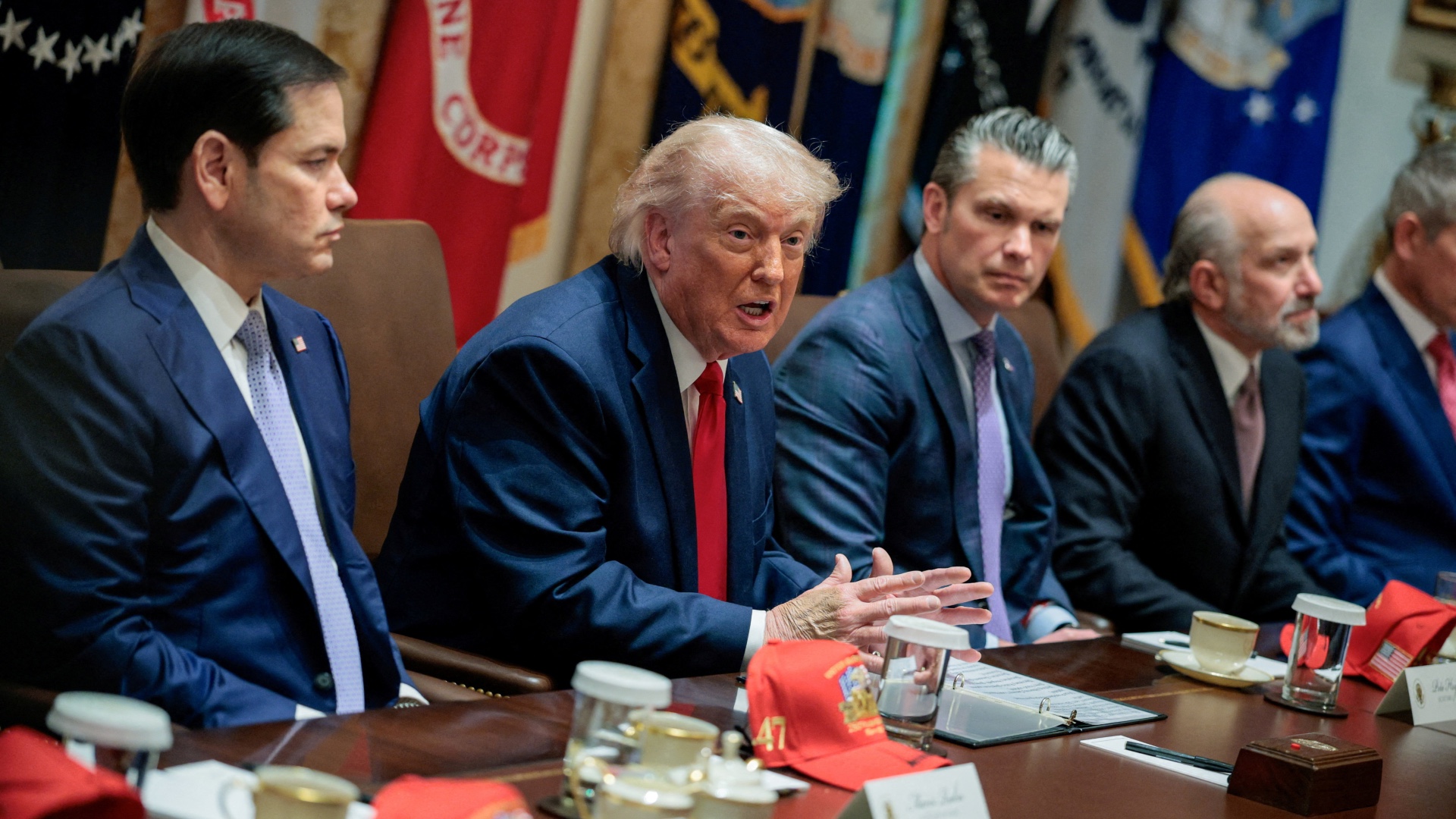
Speaking during a White House cabinet meeting, Trump noted he remains unsatisfied with the current state of negotiations. Secretary of State Marco Rubio, who was in attendance, told reporters that while there have been signs of incremental progress and mutual interest in a deal, it remains unclear whether meaningful movement will come in the coming hours and days. Echoing longstanding U.S. policy, Rubio emphasized that “the bottom line is Iran’s never going to have a nuclear weapon.”
Yet independent analysts argue that Trump’s maximalist negotiating position may be misaligned with the reality on the ground. Ali Vaez, Iran project director at the International Crisis Group, explained that for the Islamic Republic, simple regime survival already counts as a victory. “They have managed to repel an aggression by the mightiest military power in the world, that of the United States, and also the mightiest intelligence service in the world, that of Israel,” Vaez noted. He added that the conflict has given Iran a new deterrent tool: direct operational control over the Strait of Hormuz, a geographic advantage it had never deployed before the current war.
Trump reiterated that any final deal must prevent any single nation from exercising exclusive control over the strait — a critical global chokepoint through which roughly 20% of the world’s oil supplies pass. “We’ll watch over it, but nobody’s going to control it. That’s part of the negotiation that we have,” he said. The strait was first blocked by Iran to bar passage of U.S. and Israeli-linked vessels early in the conflict, before the U.S. Navy implemented a counter-blockade that halted most Iranian oil exports.
The president made a shocking, unanticipated threat on Wednesday, saying he would “blow up” Oman if the nation agreed to work with Iran to collect transit fees for ships passing through the strait as part of a peace deal. “The strait is going to be open to everybody,” Trump said. “Oman will behave just like everybody else, or we’ll have to blow them up,” he added.
Earlier the same day, Iranian state television reported that Tehran had received an unofficial draft framework for a memorandum of understanding with Washington. Under the proposed text, the U.S. would withdraw its military forces from the region and lift its naval blockade, in exchange for Tehran restoring commercial transit through the Strait of Hormuz to pre-war levels within 30 days. The draft would put Iran in charge of traffic management and shipping route oversight in coordination with Oman, and a final agreement reached within 60 days would be codified into a binding United Nations Security Council resolution, Iranian state TV claimed.
Ali Bagheri Kani, deputy secretary of Iran’s Supreme National Security Council, told Iran’s Mehr News Agency on Wednesday that transit rules for the strait will “be completely different from the conditions before the conflict over Iran began.” The White House immediately pushed back against the Iranian report, dismissing any claim of a draft agreement as a “complete fabrication.”
Vaez added that any long-term non-aggression pact between Washington and Tehran will almost certainly require provisions to end Israel’s ongoing military assault on Lebanon, where Iran’s ally Hezbollah operates. “It’s very hard for the Iranians to throw Lebanon under the bus,” Vaez said. “So, at this point, including the conflict with Lebanon is important for the Iranians.”
For its part, Israel has made clear it prefers the continuation of hostilities in both Iran and Lebanon. “Israel, I think, is really hoping for no agreement,” Danny Citrinowicz, a senior researcher at Israel’s Institute for National Security Studies, said during a recent panel discussion. “The last thing that Israel wants to see is an agreement between the US and Iran.”
Even as negotiations proceed, military hostilities have not paused entirely. On Monday, the U.S. launched what it described as “self-defence” strikes on Iranian missile sites, breaking the terms of a Pakistan-brokered ceasefire that has been in effect for weeks.
Looking ahead, it remains unclear how long Trump can sustain the ongoing conflict with Iran. The war has grown deeply unpopular with the American public, and it has driven global petrol prices to alarming new heights. Additionally, heavy consumption of critical U.S. weapons systems during the war, which began on February 28, has sparked widespread concern that the U.S. military lacks sufficient stockpiles to respond to a potential future conflict with China. Drawn-down inventories include long-range Tomahawk cruise missiles, as well as Patriot and THAAD anti-missile and anti-drone interceptors.
In a report released Wednesday, the Center for Strategic and International Studies (CSIS) warned that depleted weapons stockpiles have created a “window of vulnerability” for any potential conflict in the Western Pacific. The report also examined Trump’s proposed $1.5 trillion 2027 defense budget, concluding that “the problem today isn’t money; it’s time” to replenish critical supplies.