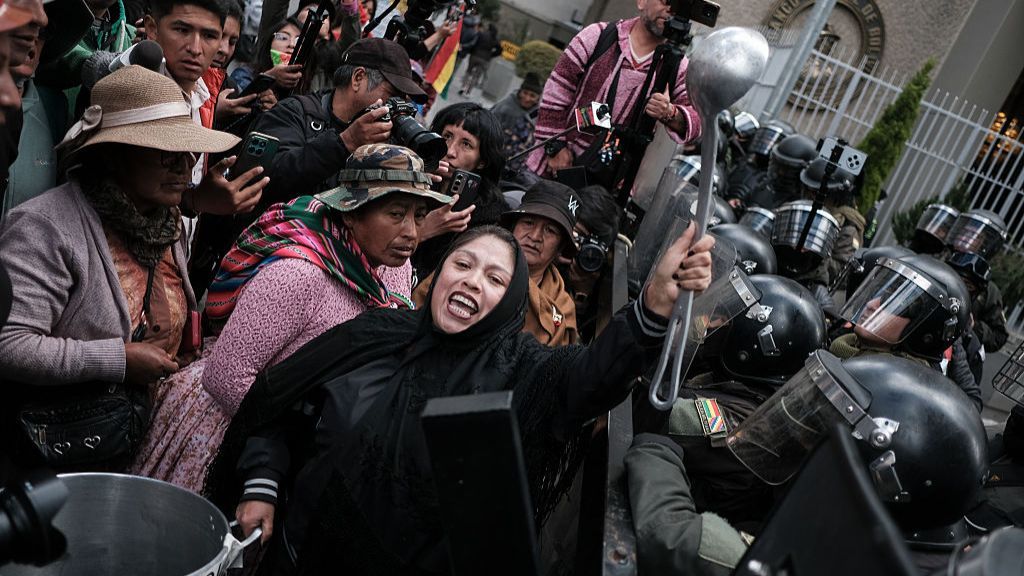
After four consecutive weeks of mass anti-government demonstrations that have left seven people dead and hundreds detained across Bolivia, President Rodrigo Paz has issued a stark warning that the Andean nation is now on the brink of systemic collapse. What began as a targeted protest against a single policy proposal has ballooned into a nationwide movement, with union organizers and indigenous communities at its forefront, establishing widespread roadblocks that have choked supply chains, created crippling shortages of essential goods, and brought large swathes of the country’s daily activity to a standstill.
Protesters have coalesced around a set of core demands: the restoration of cut fuel subsidies, a full reversal of the administration’s austerity policies, and the immediate resignation of President Paz, a US-backed center-right leader who took office just six months ago amid a severe pre-existing economic crisis. In a defiant response, Paz has stated that any group seeking to destabilize the country will face both his administration and the full weight of Bolivia’s constitutional framework.
The unrest traces its origins back to late April, when Paz first proposed a new land reform bill that sparked immediate pushback from small-scale farmers across the country. Many smallholders feared the legislation would remove protections for small plots and clear the way for large agribusiness landowners to acquire their properties en masse. While the Paz administration emphasized that any future land transfers would be strictly voluntary, leading small-farmer advocacy groups rejected this reassurance and moved to block the country’s key highways, kicking off the wave of protests. Though Paz ultimately withdrew the controversial land reform proposal to de-escalate tensions, the concession only opened the door for broader participation, with other discontented sectors of Bolivian society joining the movement to air long-simmering grievances against the administration.
A second major flashpoint came from the government’s decision to eliminate decades-old national fuel subsidies amid ongoing inflation and supply shortfalls. The policy change immediately pushed up energy prices and overall living costs, enraging broad segments of the public and amplifying calls for change. Protesters’ roadblocks have in turn worsened fuel shortages across the country, creating a self-reinforcing cycle of scarcity and anger that has proven difficult to break.
Paz has repeatedly extended invitations for dialogue with opposition groups, framing national stability and order as Bolivia’s most urgent priorities, but has refused to rule out the use of what he terms “constitutional instruments” to clear the blockades and restore control. Just this week, Bolivia’s Congress approved legislation expanding the president’s authority to declare a national state of emergency and deploy military forces to reassert government control. Supporters of the bill argue that violent extremist groups cannot be allowed to override the mandate of a democratically elected government, while opponents warn the move will only deepen social divisions and push tensions into open conflict.
Prior to the congressional vote, Paz had already attempted a series of conciliatory measures to quell the unrest, including a full cabinet reshuffle, voluntary salary cuts for himself and all senior ministers, and the announcement of a new negotiation council to engage with marginalized community groups. To date, none of these overtures have succeeded in defusing the widespread public anger directed at his administration. Economists estimate the ongoing protests and roadblocks are costing the Bolivian economy more than $50 million in losses every single day, adding even more pressure to a country already grappling with deep economic instability.