分类: politics

  • Pope Leo responds to Trump, saying he will continue to ‘speak out’

    Pope Leo responds to Trump, saying he will continue to ‘speak out’

    A growing diplomatic and religious rift has emerged between U.S. former President Donald Trump and Pope Leo XIV, the first American-born pontiff in Roman Catholic history, after the pontiff’s public rebuke of Trump’s threats against Iran triggered a sharp personal attack from the former president.

    The conflict began when Pope Leo XIV publicly pushed back against aggressive rhetoric from Trump targeting the Islamic Republic of Iran, warning that escalatory threats risked sparking broader regional instability and endangering civilian lives across the Middle East. That condemnation quickly prompted a retaliatory attack from Trump, who took aim at the pontiff’s leadership and his unprecedented role as the first U.S. citizen to lead the global Catholic Church.

    In a recent public statement responding to Trump’s criticism, Pope Leo XIV made clear that his commitment to advocating for peace and global justice would not be silenced. The pontiff reaffirmed that the Catholic Church has long played a role in speaking out against aggression and promoting diplomatic solutions to global conflict, and that his position on Iran was rooted in that longstanding tradition, rather than political alignment.

    Observers note that the exchange marks a rare high-profile clash between a sitting (and future prospective) U.S. political leader and the head of the Catholic Church, particularly given the historic context of Pope Leo XIV’s ascension as the first American pope. The disagreement also highlights the growing intersection of religious leadership and global political discourse, as the pontiff continues to weigh in on pressing international security issues that impact millions of people worldwide.

  • US judge dismisses $10bn Trump defamation suit against Wall Street Journal

    US judge dismisses $10bn Trump defamation suit against Wall Street Journal

    A Florida federal judge has tossed out a high-profile defamation lawsuit brought by former President and current 2024 presidential candidate Donald Trump against the Wall Street Journal, its parent company News Corp, and media magnate Rupert Murdoch, stemming from a 2024 report linking Trump to convicted sex offender Jeffrey Epstein. The dismissal opens the door for Trump to refile an amended complaint, setting the stage for a continued legal battle over the controversial reporting.

    Trump first launched the suit last summer, demanding no less than $10 billion in damages over the Journal’s exclusive July 17 report. The story centered on a handwritten entry in a 2003 birthday book presented to Epstein, which the outlet claimed included Trump’s name and a crude drawing of a woman’s body. The former president has long maintained the entry is a fabrication, arguing the publication’s claims amounted to damaging defamation that tarnished his reputation.

    In his 12-page ruling, U.S. District Judge Darrin Gayles made clear that Trump failed to meet the stringent legal standard required to proceed with a defamation claim brought by a public figure. Under longstanding U.S. defamation law, public figures must prove a news outlet acted with “actual malice” — meaning the organization either knew the reporting was false or acted with reckless disregard for the truth — to win a damages claim. Gayles wrote that Trump had come “nowhere close” to satisfying this high legal threshold, and that the former president had not plausibly alleged the Journal published the story with malicious intent.

    Crucially, the judge dismissed the case without prejudice, a procedural ruling that allows Trump to submit an amended, corrected lawsuit by the court’s April 27 deadline. In response to the ruling, a lawyer for Trump told CBS News — the U.S. news partner of the BBC — that the former president intends to refile what he called a “powerhouse” amended suit. The legal team added that Trump remains committed to “hold accountable those who traffic in Fake News to mislead the American People.”

    The reporting at the center of the case has been a flashpoint in national conversations about Trump’s long-rumored ties to Epstein, the wealthy financier who died by suicide in a New York jail in 2019 while awaiting trial on federal sex trafficking charges. Weeks after the Journal published its original report, Democratic lawmakers released an image of the handwritten birthday note to the public on social media, ahead of the scheduled release of a trove of sealed court documents related to Epstein’s case. Though the Journal never published the image itself, the details of the outlet’s description of the note matched the image released by lawmakers. Trump has repeatedly denied writing the entry, calling it a “fake thing” fabricated to hurt his political standing.

  • Nigerian ex-oil minister denies taking bribes for government contracts, during a trial in London

    Nigerian ex-oil minister denies taking bribes for government contracts, during a trial in London

    LONDON – In a high-stakes corruption trial unfolding at London’s Southwark Crown Court, 65-year-old Diezani Alison-Madueke, the former Nigerian Minister of Petroleum Resources, has issued a categorical denial of all bribery and conspiracy charges brought against her, pushing back against allegations that she accepted lavish, undeclared perks in exchange for preferential government energy contracts between 2010 and 2015.

    Prosecutors from the UK’s law enforcement bodies have laid out six total charges against Alison-Madueke: five counts of accepting improper bribes and one count of conspiracy to commit bribery. The prosecution’s case claims that energy firms seeking favorable contract awards from Nigeria’s federal government covered all costs for multi-million-pound luxury residences in the UK, including paying for extensive renovations and furnishings for the properties that Alison-Madueke occupied rent-free.

    Beyond free luxury housing, the prosecution alleges the former minister received a suite of other undeclared benefits, including unlimited access to private jets for travel, a permanent chauffeured vehicle, and funded high-end shopping sprees across London. Court documents outline that more than £2 million ($2.7 million) was spent on purchases at Harrods, the iconic Knightsbridge luxury department store, with hundreds of thousands more spent at a high-end antiques dealership and a premium homeware boutique in London’s upscale Mayfair district. Prosecutors also add that Alison-Madueke accepted £100,000 in undisclosed cash payments during her tenure leading Nigeria’s petroleum ministry, a role that gave her direct oversight over Nigeria’s state-owned energy giant, the Nigerian National Petroleum Corporation (NNPC), as well as its key subsidiaries the Nigerian Petroleum Development Company and Pipelines Product Marketing Company.

    Two additional co-defendants are standing trial alongside Alison-Madueke: 54-year-old Olatimbo Ayinde, a Nigerian oil company owner facing two separate bribery charges, and 69-year-old Doye Agama, Alison-Madueke’s brother and a retired archbishop, who denies a single charge of conspiracy to commit bribery. Both have pleaded not guilty to all allegations against them.

    Taking the witness stand on Monday, Alison-Madueke firmly rejected every claim put forward by the prosecution. “I did not abuse my office during that period,” she told the court. “I can state categorically at no time did I ask for, take, or seek a bribe or bribes of any sort from any of these persons.”

    Addressing the allegations of uncompensated luxury services, the former minister explained that all logistics and financial arrangements for her official work trips to the UK were managed directly by NNPC, and insisted that every benefit arranged for her during these visits was properly reimbursed by the Nigerian state oil firm, leaving no improper unpaid favors from private energy companies.

  • Dueling Hormuz blockades push world to the brink

    Dueling Hormuz blockades push world to the brink

    Following the collapse of face-to-face negotiations with Iranian representatives in Islamabad, former U.S. President Donald Trump has announced a targeted naval blockade of the Strait of Hormuz, launching what analysts warn is a dangerous new chapter in ongoing tensions between Washington and Tehran that risks deepening global energy market volatility and locking the U.S. into a protracted Middle Eastern conflict.

    The 21-nautical-mile-wide strait, which at its narrowest point is split evenly between the 12-nautical-mile territorial claims of Iran and Oman, has long functioned as a critical global chokepoint: an estimated 20% of the world’s daily oil and liquified natural gas shipments pass through its waters, making its open access non-negotiable for global energy security. Until February of this year, freedom of navigation through the waterway remained largely unchallenged, even after both nations formally extended their territorial claims in the second half of the 20th century, with both committing to uphold the right of innocent passage for international vessels.

    In recent weeks, however, Tehran has drastically altered the status quo. The Iranian Islamic Revolutionary Guard Corps has established a de facto toll collection regime, requiring all transiting ships to submit formal documentation, secure government-issued clearance codes, pay fees as high as $2 million per vessel, and travel only through a single IRGC-escorted controlled corridor. Tehran has also laid unmarked mines across sections of the strait, raising major safety concerns for commercial shippers, while U.S. Central Command (CENTCOM) confirms it has already begun mine-clearing operations — a move Tehran says violates an existing two-week ceasefire agreement.

    Global maritime bodies have already condemned Tehran’s actions: the secretary general of the International Maritime Organization has labeled the toll regime a violation of international law, warning that it sets a dangerous precedent that could upend global shipping norms, and has urged all nations to refuse payment of the fees. CENTCOM has clarified that the U.S. blockade, set to enter into force on April 13, will only target vessels entering or departing Iranian ports, rather than blocking all transiting traffic through the strait — a key distinction that will shape future assessments of the policy’s legality under international maritime law.

    This is not the first time the U.S. has intervened to secure open passage through the strait. During the 1980s Iran-Iraq War, Washington deployed military forces to keep the waterway open, a mission that ended in the accidental downing of an Iranian civilian airliner that killed all 290 people on board. While the Reagan administration ultimately paid $61.8 million in compensation to the victims’ families, it never accepted formal responsibility for the incident. Tehran first made a formal claim to full control over the strait in 2011 but never moved to enforce it, and the 2015 Iran Nuclear Deal did not address the question of freedom of navigation at all.

    Today, Tehran has made its sovereignty claim over the strait a non-negotiable condition for any future peace deal, alongside demands for an end to all uranium enrichment restrictions, a halt to the dismantling of nuclear facilities, war reparations, and the release of billions of dollars in frozen Iranian assets held abroad. Analysts say Tehran’s demand for permanent, exclusive sovereignty over the waterway makes a negotiated breakthrough far less likely, particularly as the U.S. has rejected any compromise on the issue.

    The Trump administration’s new blockade announcement comes as a fragile two-week ceasefire is set to expire, and the president has openly confirmed he is considering resuming limited military strikes against Iranian targets following the collapse of the Islamabad talks. A major obstacle for the U.S. policy so far is the lack of allied support: the United Kingdom, which Trump claimed would contribute minesweepers to the operation, has already ruled out participation in a unilateral U.S. blockade. Instead, London is leading a separate multilateral initiative, hosting talks with roughly 40 countries to develop a coalition focused on protecting freedom of navigation independent of U.S. military action.

    Legal experts note that a multilateral coalition operating under the framework of the UN Convention on the Law of the Sea (UNCLOS) would hold far stronger legal standing than a unilateral U.S. blockade. Notably, the U.S. and Israel have never signed UNCLOS; Iran signed the treaty but never ratified it, while Oman remains a full party. Under UNCLOS articles 37–44, all straits used for international navigation between two areas of the high seas — a classification that most legal jurists agree the Strait of Hormuz falls into — guarantee unimpeded transit and freedom of navigation for all foreign vessels. Bordering states are prohibited from hampering passage, discriminating against foreign ships, or suspending innocent transit under the convention.

    Tehran rejects the application of the UNCLOS transit regime, arguing it is not binding customary international law, and instead enforces its 1993 domestic law, which requires all vessels to secure prior Iranian authorization for innocent passage on national security grounds. Legal scholars widely dismiss this position: decades of international judicial precedent, including a landmark ruling by the Permanent Court of International Justice and the International Court of Justice’s 1949 Corfu Channel decision against Albania, have repeatedly upheld the right of unimpeded innocent passage through international straits. The UN Security Council reinforced this principle in its March 2026 Resolution 2817, which reaffirmed the right of free navigation through the strait and deplored Tehran’s actions; 13 of the 15 Security Council members voted in favor, while Russia and China abstained without exercising their veto power.

    The economic and humanitarian costs of the current standoff are already mounting. After Iran first restricted access in early March, Brent crude prices surged past $120 per barrel, and jumped an additional 7–8% immediately following Trump’s blockade announcement. A senior Columbia University energy economist warns that elevated energy prices will likely persist through the end of 2026 even if hostilities end, as shippers will avoid the Persian Gulf until they are confident any ceasefire is durable, and damaged energy infrastructure will take months to fully repair. Currently, more than 230 loaded oil tankers are stranded inside the strait unable to exit, and around 80% of food imports to Gulf Cooperation Council states have been disrupted. The strait also handles more than 30% of global urea exports for the fertilizer industry, putting food security at risk far beyond the Middle East.

    While Tehran’s legal position is widely regarded as untenable, the regime shows no sign of backing away from its sovereignty claim. Many analysts argue the only viable alternative to full-scale conflict is to refer the dispute to the International Court of Justice (ICJ), though the path forward faces significant procedural hurdles: Iran has never accepted the ICJ’s compulsory jurisdiction, so a case would require either Iranian consent or a formal treaty basis, neither of which is currently available. Even if a case is accepted and the ICJ issues an interim injunction ordering both Iran to end its toll and mine-laying operations and the U.S. to suspend its blockade, offering both sides a face-saving off-ramp, experts warn Tehran could simply ignore the ruling, much as Beijing rejected a 2016 Permanent Court of Arbitration ruling against its nine-dash line claims in the South China Sea.

    Critics warn that allowing Iran to establish a precedent of unilateral sovereignty over an international strait would have dangerous global ripple effects: observers note Beijing could quickly follow suit by declaring similar sovereignty claims over the Taiwan Strait, exposing all nations bordering the East and South China Seas to coercive control over critical global shipping lanes. Echoing Nobel Peace Prize laureate Archbishop Desmond Tutu, analysts warn that for global powers to remain neutral in the face of Tehran’s actions is to side with aggression: “If you are neutral in situations of injustice, you have chosen to be on the side of the oppressor.”

  • Trump weighs ‘limited strikes’ against Iran after peace talks break down: WSJ

    Trump weighs ‘limited strikes’ against Iran after peace talks break down: WSJ

    Fresh off the breakdown of high-stakes peace negotiations with Iran in Pakistan, former US President Donald Trump is actively evaluating a slate of coercive responses, including limited military strikes and a tightened maritime blockade of the Strait of Hormuz, to break the diplomatic stalemate, The Wall Street Journal reported on Sunday.

    Citing unnamed senior officials and individuals briefed on internal administration deliberations, the outlet confirmed that limited targeted strikes were among the active options under Trump’s consideration as of Sunday, just hours after the Pakistan-based talks between the two nations collapsed with no agreement reached.

    According to the sources, a large-scale, full bombing campaign is being ruled out as a lower-probability option. Two core factors are driving this hesitation: widespread regional concerns that a major offensive would trigger widespread instability across the Middle East, and Trump’s long-stated public and private aversion to entering open-ended, prolonged military conflicts that would draw the US deeper into the region.

    Beyond military strikes, the report added that another option on the table is implementing a temporary maritime blockade of the Strait of Hormuz, a critical global chokepoint for oil and maritime trade, while the administration pressures US regional allies to take on long-term responsibility for running permanent military escort missions through the strait going forward.

    Earlier on the same day, Trump publicly announced that the US Navy would begin blocking commercial and military traffic moving into or out of Iran through the Strait of Hormuz. This announcement was followed by a formal statement from US Central Command on Sunday, confirming that American forces would begin full implementation of the blockade, covering “all maritime traffic entering and exiting Iranian ports,” starting at 10 am Eastern Time on Monday.

    The collapse of the Pakistan-hosted talks marks a major escalation in tensions between the US and Iran, ending a brief window of diplomatic progress that had raised hopes of de-escalation in the long-running standoff between the two nations.

  • Peru election drags into second day after ballot delivery fiasco

    Peru election drags into second day after ballot delivery fiasco

    Peru’s 2026 general election has hit widespread logistical and technical disruptions that have delayed the final release of official results, leaving more than 50,000 eligible voters locked out of casting ballots on the originally scheduled election day, Sunday.

    More than 27 million Peruvians were called to the polls across the country and overseas to elect a new president and fill seats in both chambers of the newly restructured Congress, with mandatory voting required for all citizens between the ages of 18 and 70. But procedural failures upended voting operations in dozens of locations: multiple polling stations opened far behind schedule, while others never opened at all. Disruptions were not limited to Peru’s domestic voting sites; problems were also reported at overseas polling locations in Orlando, Florida and Paterson, New Jersey. In response to the chaos, Peru’s National Electoral Board has granted a one-day extension, allowing disenfranchised voters to cast their ballots on Monday. Current interim President José María Balcázar attributed the failures to a private logistics contractor that failed to deliver voting materials to polling sites before the opening of polls, leaving thousands without the ability to participate.

    With roughly half of all cast ballots counted in preliminary tallies, conservative candidate Keiko Fujimori holds a narrow lead over Rafael López Aliaga, the right-wing former mayor of Peru’s capital city Lima. The race for the second spot in the upcoming run-off remains extremely tight, however, and exit polls indicate the contest is still wide open: left-wing candidate and former tourism minister Roberto Sánchez remains in striking position to overtake one of the two front-runners and secure a place in the June 7 run-off. No candidate is on track to clear the 50% of the popular vote threshold required to win the presidency outright, making the June run-off between the top two finishers all but guaranteed.

    The election comes at a moment of unprecedented political upheaval for Peru. Over the past 10 years, the country has seen six presidents forced out of office via resignation, impeachment, or ouster amid sprawling corruption scandals. The last president to complete a full four-year term was Ollanta Humala, who left office in 2016. Balcázar, the 83-year-old interim incumbent, only took office in February following the latest leadership shake-up, and he will step down once the election process concludes. The next president will face the immediate challenge of rebuilding public trust in government, after years of chaos left most Peruvian voters deeply skeptical that political leaders prioritize the public good over personal gain.

    Beyond the presidential race, the outcome of the congressional contest will carry major long-term implications for Peruvian politics. This election marks the re-establishment of the Peruvian Senate, a 60-seat upper chamber that cannot be dissolved by the sitting president, meaning it will hold significant independent legislative power.

    Fujimori, the daughter of late autocratic former President Alberto Fujimori, who was convicted of crimes against humanity during his time in office, is making her fourth bid for the presidency, having lost in the final run-off in the three previous election cycles. She maintains high name recognition across the country, and her legacy tied to her father draws both strong support from loyalist voters and intense opposition from critics of her father’s authoritarian rule. On election day, Fujimori publicly reaffirmed her connection to her father by visiting his grave, a move that underscored her unwavering allegiance to his legacy. Both Fujimori and López Aliaga have campaigned on hardline “iron fist” platforms to address rising crime and corruption, two top priorities for voters heading into the election. Extortion has become a particularly urgent crisis, with public transport workers regularly targeted by criminal gangs demanding protection money. As counting continued, Fujimori framed the race as a ideological battle, saying “the enemy is the left”, signaling her goal of blocking any left-wing candidate from advancing to the June run-off.

  • Philippine President Marcos debunks health rumors with jumping jacks

    Philippine President Marcos debunks health rumors with jumping jacks

    In an unplanned, dramatic show of defiance against swirling social media rumors about his declining health, Philippine President Ferdinand Marcos Jr. put on an impromptu fitness demonstration Monday outside his Manila office, performing jumping jacks and a short jog for assembled journalists to prove the falsehood of claims that he was seriously ill or even deceased.

    Dressed in his standard formal office attire, complete with reading glasses and leather work shoes, the 68-year-old head of state told reporters the spontaneous workout was intended to ease unnecessary public anxiety about his health at a moment when Filipinos are already grappling with cascading challenges tied to the ongoing conflict in the Middle East.

    “I challenge anyone out there spreading claims that I am sick to come exercise with me,” Marcos told the press contingent. “Meet me at the gym, and we will see who can outlift me on the weights. Those people saying I am sick, that I am paralyzed, they are all liars.”

    The unsubstantiated health rumors began spreading rapidly across Philippine social media platforms earlier this year after Marcos stepped back from public appearances for a short period in January. He later addressed the public in a pre-recorded video message, confirming he had been admitted to a hospital for treatment of an abdominal condition linked to stress and aging.

    During Monday’s demonstration, Marcos openly laughed off the baseless claims of his death and clarified his formal medical diagnosis: diverticulitis, a common digestive condition marked by inflammation of small pouches that form in the colon wall, which typically causes abdominal pain, fever, nausea, and constipation. He confirmed that a follow-up health checkup conducted a few months ago found the condition had been fully resolved. He has since returned to a normal diet and maintained a consistent routine of regular exercise.

    When reporters asked whether he relied on any ongoing maintenance medication, Marcos acknowledged he takes prescription drugs to manage two common chronic conditions: gout and high blood pressure.

    Since taking office in mid-2022, Marcos has navigated a steady stream of high-stakes, complex political and societal challenges. His presidency has been tested by escalating territorial tensions with Beijing over disputed claims in the South China Sea, a string of devastating natural disasters including deadly earthquakes, destructive typhoons, and widespread flooding, persistent national economic headwinds, fractured public relations with his own vice president, and a high-profile corruption scandal involving top allies and senior legislators that has triggered widespread public anger.

  • PM embraces Brexit divisions as he seeks closer ties with Europe

    PM embraces Brexit divisions as he seeks closer ties with Europe

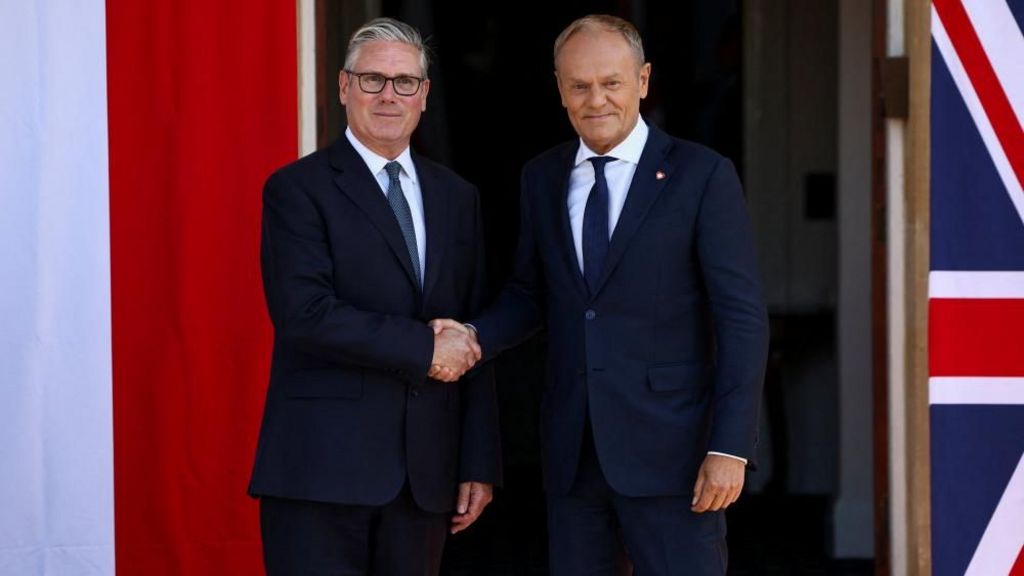
    For more than a decade, the question of Britain’s relationship with the European Union has defined the fault lines of UK domestic politics. Now, a decade after the 2016 Brexit referendum, that long-simmering divide has erupted back into the open after the Keir Starmer government confirmed the parliamentary framework for its planned closer regulatory alignment with Brussels, reigniting bitter disputes over sovereignty, economic strategy, and the UK’s global standing.

    It has been public knowledge since Starmer took office following the 2024 general election that the Labour prime minister has prioritized rebuilding a tighter partnership with the EU. This commitment formed a core plank of his election campaign, even if details were kept deliberately vague during the race. For 11 months, since the inaugural UK-EU summit, Whitehall has been actively negotiating new cooperative agreements with Brussels on three critical policy areas: food and beverage safety standards, carbon emission regulations, and cross-border electricity market rules.

    What has not been broadly understood until recently is the government’s full intention: it plans not just to match current EU rules in these sectors, but to align with future updates to European regulatory frameworks as they evolve. When legislation to enshrine this arrangement is brought before Parliament later this year, a full up-or-down vote will be held. But subsequent adjustments to UK rules to mirror changing EU standards will in most cases be implemented through secondary legislation, a mechanism that does not require repeated new parliamentary votes.

    This procedural confirmation has already sparked immediate outrage from opposition benches. The Conservative Party and the right-wing Reform UK have both slammed the plan, though analysts note the underlying disagreement runs far deeper than parliamentary procedure. At its core, the fight revolves around the same foundational questions that have split British politics since 2016: what does national sovereignty mean in a post-Brexit world, how should the UK balance economic growth and independent rule-setting, and what place should Britain claim on the global stage?

    Conservative Shadow Business Secretary Andrew Griffith summed up the opposition’s core argument, arguing the arrangement would relegate Parliament to a passive observer role while Brussels dictates policy. “This is exactly what the country rejected in 2016,” Griffith said. Nigel Farage, the figurehead of the original Brexit campaign and leader of Reform UK, echoed that criticism, framing the no-vote alignment process as a direct betrayal of the 2016 referendum result. The opposition’s core objection is simple: it is wrong for the UK to abide by EU rules without retaining a seat at the table to shape those rules as a member bloc.

    While Starmer has not directly addressed that framing, his government’s response is clear: accepting aligned rules in targeted sectors is a reasonable trade-off for tangible economic gains. What is most striking about Starmer’s current approach is his newfound willingness to openly lean into this debate, a sharp shift from the cautious positioning he adopted as Labour leader for years. In recent public remarks, Starmer has tied his push for closer ties to rising global instability, casting stronger alignment with European allies as a critical national interest amid widespread geopolitical uncertainty.

    Speaking to BBC Radio 5 Live, Starmer emphasized, “We’re in a world where there’s massive conflict, great uncertainty, and I strongly believe the UK’s best interests are in a stronger, closer relationship with Europe.” At a press conference earlier this month addressing the economic fallout from the war in Iran, he doubled down on the stance: “our long-term national interest requires closer partnership with our allies in Europe.” He also reiterated a long-held Labour position that Brexit inflicted deep, lasting damage on the UK economy, and that the country needs to pursue more ambitious closer economic cooperation with the bloc.

    This public embrace of the Brexit issue marks a dramatic reversal for Starmer, who built his early political profile in the Labour Party as Jeremy Corbyn’s shadow Brexit secretary, but avoided open confrontation on the topic after taking the party’s leadership. For years, party strategists were deeply concerned that reopening the Brexit debate would alienate Labour voters: both Leave supporters who backed the party, and Remain supporters who preferred the issue be put to rest rather than relitigated.

    That political calculus has shifted dramatically in recent months. Polling has consistently shown growing public dissatisfaction with the outcomes of Brexit, shifting the electoral incentives for Labour. Additionally, the party has faced mounting pressure from its progressive flank, a threat that was underscored by the Green Party’s by-election victory in Gorton and Denton in February. The shift in Starmer’s public positioning is a direct response to these changing political dynamics.

    Yet the new approach carries clear political risks. Even as progressive voters push for deeper UK-EU integration, Starmer remains committed to retaining the core framework of the post-Brexit settlement negotiated by former Conservative Prime Minister Theresa May. That means the UK will not rejoin the EU single market, which requires the free movement of people, and will not rejoin the EU customs union, which would require the UK to abandon its ability to negotiate independent free trade agreements with non-EU nations. This middle-ground stance leaves Starmer vulnerable to criticism from progressives who argue he is not going far enough to reverse the economic damage of Brexit.

    Pressure for deeper integration is already building within Starmer’s own party. London Mayor Sadiq Khan, who is widely expected to run for a fourth term in 2028, has publicly called for the UK to rejoin the single market and customs union before the next general election, and to take the promise of full EU re-accession into that campaign.

    Even some government officials who support closer alignment recognize another key risk: every time Starmer emphasizes how critical closer ties are to his agenda, it increases the likelihood that Brussels will drive a harder bargain in negotiations. “We know from the Tory experience that the EU drives a hard bargain, especially if we’re seen as wanting to cherrypick the best bits of the single market,” a senior anonymous government source acknowledged.

    The ongoing regulatory negotiations are not even the most contentious discussion underway between London and Brussels. Talks to establish a new UK-EU youth mobility scheme have already reached an impasse, after the UK insisted on a cap on the number of young EU citizens that can relocate to the UK annually. Several EU member states have also demanded that UK universities charge European students the same tuition rates that British students pay at European higher education institutions, a demand that creates additional friction.

    All outstanding negotiations are on track to be finalized at the second UK-EU summit scheduled for the coming months. One decade after the UK’s historic Brexit referendum, the issue that remade British politics has returned to center stage, shaping the current government’s agenda and reigniting the debate that will continue to define the UK’s future for years to come.

  • Hong Kong counts down to National Security Education Day with events rallying public for shared security responsibility

    Hong Kong counts down to National Security Education Day with events rallying public for shared security responsibility

    As Hong Kong enters the final countdown to the annual National Security Education Day, which falls on April 15, 2026, a wide range of official and community events are unfolding across the city to reinforce the core link between national security, sustained development and long-term prosperity, while calling on all sectors of Hong Kong society to take shared responsibility for upholding the country’s territorial and systemic integrity.

    In a public blog post released on Sunday, Paul Chan, Financial Secretary of the Hong Kong Special Administrative Region (HKSAR) Government, laid out the foundational importance of national security to the country’s overall development, as well as to Hong Kong’s social stability and residents’ quality of life. He highlighted that the overarching principle of “upholding both development and security” is formally inscribed in the outline of China’s 15th Five-Year Plan, and was also reaffirmed in a national white paper on safeguarding national security under the “one country, two systems” framework published this past February.

    As a globally recognized hub for international finance, trade, shipping and innovation and technology, Chan stressed that Hong Kong has a unique need to strike a careful, sustainable balance between expanding development opportunities and maintaining robust security guardrails. He advocated for embedding proactive risk prevention into the city’s ongoing efforts to open up to global markets, pursue technological innovation and consolidate its competitive advantages.

    Using the city’s financial sector as a case in point, Chan noted that Hong Kong’s financial system has long earned a reputation for stability and operational efficiency, supporting the smooth functioning and rapid growth of its global markets. At the same time, the sector has consistently prioritized security, maintaining close, coordinated oversight of cross-market dynamics and systemic interconnections, while building strong reserve buffers to absorb unexpected shocks. Only when innovation is rooted in solid security and risk management frameworks can it deliver a more resilient, dynamic and competitive financial system, he explained, allowing Hong Kong to better withstand external volatility and achieve long-term, inclusive growth.

    Against the backdrop of a shifting global geopolitical landscape, growing great power rivalry, and emerging cross-sector risks and challenges, Chan emphasized that Hong Kong must place security at the center of all development planning, while reinforcing security foundations through high-quality growth. Only by upholding both development and security can Hong Kong seize new opportunities amid global uncertainty and open a new chapter of greater prosperity, stability and accelerated progress, he added.

    On the same day, the Hong Kong Police Force (HKPF) launched its joint “National Security Education Day 2026 cum Hong Kong Police Force Fun Day”, an outreach event designed to boost public understanding of national security, strengthen a sense of national identity among Hong Kong residents, and showcase the force’s work and achievements in upholding national security to the wider community.

    Speaking at the event’s opening ceremony, Cheuk Wing-hing, Deputy Chief Secretary for Administration of the HKSAR Government, praised the HKPF for its unwavering commitment to upholding national security, its fearless response to unrest and its decisive action to curb disorder. Cheuk noted that the force has made enormous, irreplaceable contributions to building an impenetrable line of defense for national security in Hong Kong, which has helped cement the city’s status as one of the safest in the world.

    Chow Yat-ming, Commissioner of Police of the HKSAR, reflected on the city’s recent progress, noting that supported by a comprehensive national security legal framework, enforcement systems and mechanisms, Hong Kong has successfully transitioned from a period of chaos to restored order, and has now entered a new phase of moving from stability to lasting prosperity. This hard-won stability, he emphasized, is a clear demonstration of the strong support and protection the central government provides to Hong Kong.

    Upholding national security is not a responsibility that falls only to authorities — no resident can remain a passive bystander, and every citizen has a role to play in defending national interests, Chow said. He expressed hope that through the events held for National Security Education Day, Hong Kong residents will gain a deeper understanding of the principles laid out in this year’s national security white paper, strengthen their own national security awareness, and work collaboratively to protect both national security and Hong Kong’s hard-won stability.

    The public event featured a dedicated national security education exhibition zone and interactive educational games tailored for attendees, with a particular focus on engaging Hong Kong’s younger generation. It also included a static display of specialized operational equipment from multiple police units, including the Counter Terrorism Response Unit, the Explosive Ordnance Disposal Bureau and the Police Dog Unit, giving attendees a first-hand look at the force’s professional capabilities and the breadth of its work safeguarding the city.

  • Following an election earthquake, Hungary ponders life after Orbán

    Following an election earthquake, Hungary ponders life after Orbán

    BUDAPEST – Hungary is entering a new political era after a historic electoral upheaval that ousted long-serving pro-Russian Prime Minister Viktor Orbán, leaving the nation navigating what lies ahead for incoming leader Péter Magyar, a pro-European reformer who has pledged to upend the country’s entrenched political landscape.

    Magyar’s decisive victory sparked mass jubilation across Budapest’s streets Sunday night, as tens of thousands of supporters — many of them young Hungarians — gathered to celebrate what they see as a long-awaited turning point. For these citizens, Orbán’s defeat brings new hope that Hungary will grow more free, improve quality of life, and cement its place as a full member of Europe’s democratic community.

    Among the celebrants was Adrien Rixer, who returned to his native Hungary from his current home in London specifically to cast a ballot in the high-stakes vote. “I really wanted to make my vote count, and I’m over the moon,” Rixer said. “Finally I can say that I’m a proud Hungarian, finally after 16 years.”

    Throughout his campaign, Magyar centered his platform on reversing Hungary’s years-long geopolitical shift toward Russia and repairing strained relations with European allies. In the wake of 16 years of increasingly autocratic rule and gradual erosion of democratic checks and balances under Orbán, he has promised to root out systemic corruption and build a “peaceful, functioning and humane” Hungary for all citizens.

    Over his 16 years in power, Orbán leveraged a two-thirds parliamentary supermajority to advance his illiberal agenda: he enacted a new national constitution, rewrote the country’s electoral rules to entrench his power, and reshaped the judiciary to align with his government’s priorities. In a striking parallel, Magyar’s Tisza Party secured exactly that same supermajority in Sunday’s vote, winning 138 of the 199 seats in Hungary’s parliament.

    This broad governing mandate gives Tisza unprecedented authority to roll back the bulk of Orbán-era legislation that enabled his government to stack the courts with political allies, gerrymander electoral districts, restrict independent press freedom, and entrench legal discrimination against the LGBTQ+ community. The outcome has eased widespread anxiety among supporters both in Hungary and across Europe, where many had worried a narrow simple majority would leave Magyar unable to dismantle Orbán’s political system entirely. Still, uncertainty lingers: even some supporters have expressed unease over concentrating that level of governing power in the hands of any new administration.

    “It’s hard to see that with two-thirds that it’s going to be a fair government, but we will see,” said Dániel Kovács, a celebrant at Sunday’s victory rally. “Let’s hope that it’s going to be a promising four years.”

    Magyar has repeatedly criticized Orbán’s administration for mismanaging Hungary’s economy and public social services, while allowing systemic, unchecked corruption that allowed a small circle of politically connected elites to amass extreme wealth at the expense of ordinary Hungarian households. He has vowed to hold corrupt actors accountable, and has proposed creating a new Office for the Recovery of National Assets to reclaim funds and assets that he argues were obtained illegally by Orbán’s closest allies.

    A core campaign promise from Magyar centers on unlocking billions of euros in frozen European Union funding, which Brussels has withheld from Hungary for years over the Orbán government’s persistent failures to address corruption and roll back democratic safeguards. He has also pledged to adopt the euro as Hungary’s official currency by 2030, a policy that Orbán’s government resisted for more than a decade.

    Imre Végh, a long-time Budapest resident, framed the election outcome as a rejection of the illiberal state Orbán built over 16 years. “Orbán had built an ‘illiberal system’ that was against Hungary’s fundamental values,” Végh said Monday. “We are Europeans and we want to stay in Europe.”