分类: politics

  • One Nation MP survives missing votes scare to win marginal SA seat

    One Nation MP survives missing votes scare to win marginal SA seat

    Nearly a month after South Australia held its state election, a surprising development upended the final result of the state’s tightest electoral contest: more than 80 previously uncounted ballots were uncovered in the Narungga district, triggering a last-minute re-count that threatened to unseat a newly elected One Nation candidate. The district had already cemented its place as the most marginal seat in the state after the initial count gave One Nation’s Chantelle Thomas a razor-thin 58-vote lead over her closest competitor, a margin so narrow that political observers widely expected a potential reversal when the missing votes were added. Contrary to widespread speculation, however, the final full count only strengthened Thomas’s hold on the seat. After all ballots were tallied, her winning margin expanded slightly to 73 votes, allowing the first-term One Nation MP to hold onto her seat and avoid what would have been one of the most dramatic post-election upsets in recent South Australian political history. The discovery of the misplaced votes has drawn quiet attention to electoral administration protocols in the state, though no official calls for a broader inquiry have emerged as of yet. Further updates on the post-election process are expected to be released in the coming days.

  • Pope Leo slams ‘those who manipulate religion’ for war, as White House invokes divine calling

    Pope Leo slams ‘those who manipulate religion’ for war, as White House invokes divine calling

    A sharp public rift between the first American-born head of the Catholic Church, Pope Leo XIV, and the Trump administration has deepened this week, centered on the controversial use of religious rhetoric to justify the seven-week US-Israeli war on Iran. The escalating war of words reached a new peak on Thursday, when Pope Leo issued his most direct rebuke to date of leaders who twist sacred scripture to advance military and political ambitions.

    In a post on the social platform X, the Pope repeated a pointed line from a recent address he delivered during a visit to Cameroon: “Woe to those who manipulate religion and the very name of God for their own military, economic, and political gain, dragging that which is sacred into darkness and filth.” He expanded on this condemnation in his original speech, adding that the globe is currently being exploited by a small group of authoritarian actors who put their own interests above global peace.

    Coinciding nearly exactly with the Pope’s post, US Secretary of War Pete Hegseth made his own religious reference during a press briefing in Washington D.C. Hegseth, who has repeatedly framed the war against Iran as a divine mission for the United States in regular Pentagon press briefings, compared journalists covering the conflict to Pharisees — the biblical figures Christians believe witnessed Jesus’ miracles but rejected his teachings. His analogy implied reporters were refusing to acknowledge what he framed as miraculous US military achievements in the war, which official counts confirm have killed more than 3,000 Iranian civilians and combatants to date.

    This framing of the war as a religious cause has been a particular point of friction with Pope Leo, a longstanding public advocate for global peace and diplomatic conflict resolution. While the Pope’s anti-war stance aligns with longstanding Vatican policy, it has put him in direct conflict with President Donald Trump, who has launched a series of public attacks against the American pontiff for contradicting what he frames as core US interests.

    The feud has stretched on for nearly a week, with Trump attempting to fracture the Pope’s public standing by highlighting the pontiff’s brother, Louis Prevost, who is an open supporter of Trump’s Make America Great Again movement. Speaking to reporters Thursday, Trump sought to downplay the intensity of the dispute, claiming “I’m not fighting with him. I have nothing against the Pope. His brother is Maga all the way.” Trump also falsely claimed that Pope Leo supports Iran acquiring a nuclear weapon, a claim the Pope has never publicly made, as he has declined to weigh in on US allegations of an Iranian nuclear weapons program.

    Earlier in the week, the conflict sparked widespread controversy after Trump shared an AI-generated image that depicted him as Jesus Christ, healing a sick man in a hospital bed. After widespread public backlash, Trump removed the post, later claiming he had believed the image showed him as a doctor associated with the Red Cross, telling reporters “It’s supposed to be me as a doctor making people better. And I do make people better. I make people a lot better.” Observers widely rejected the explanation, noting the image clearly showed Trump in a holy robe with glowing, miraculous hands positioned over the patient.

    The public attack on the Pope came immediately before that controversial post, with Trump launching a tirade against Pope Leo on social media that criticized his positions on crime and foreign policy. The former president also brought up COVID-era restrictions on religious gatherings, writing “He talks about ‘fear’ of the Trump Administration, but doesn’t mention the FEAR that the Catholic Church, and all other Christian Organizations, had during COVID when they were arresting priests, ministers, and everybody else, for holding Church Services, even when going outside, and being ten and even twenty feet apart. I like his brother Louis much better than I like him. I don’t want a Pope who criticizes the President of the United States.”

    This is not the first time Pope Leo has broken with the Trump administration: he has already publicly condemned Israel’s ongoing war in Lebanon and Trump’s hardline crackdown on undocumented immigrants inside the United States. The broader Catholic Church hierarchy has largely stood behind Pope Leo, creating new religious divisions between American Catholics and the Evangelical Christian community that forms one of Trump’s core political support bases.

    Multiple senior Catholic cardinals spoke out against the administration’s war agenda in an interview with CBS’s 60 Minutes that aired Sunday. Just one day earlier, Washington D.C.’s archbishop Cardinal Robert McElroy delivered an uncommonly direct political rebuke during a public peace mass, calling on Christian believers to move past passive prayer and actively advocate for an end to the conflict. “As citizens and believers in this democracy that we cherish so deeply, we must advocate for peace with our representatives and leaders. It is not enough to say we have prayed. We must also act… our president will move to re-enter this immoral war,” McElroy said. “No. Not in our name. Not at this moment. Not with our country.”

  • Trump says Israel and Lebanon have agreed to 10-day ceasefire

    Trump says Israel and Lebanon have agreed to 10-day ceasefire

    In an unexpected announcement posted to social media Thursday, former U.S. President Donald Trump revealed that the Israeli and Lebanese national governments have reached an agreement for a 10-day ceasefire set to go into effect the same evening. Alongside the ceasefire reveal, Trump stated he will invite Lebanese President Joseph Aoun and Israeli Prime Minister Benjamin Netanyahu to the White House for talks aimed at forging a more durable long-term truce between the two neighboring nations.

    The announcement comes weeks after Israel launched a sweeping military campaign of intensive airstrikes and a ground incursion into Lebanon that has already killed and injured thousands of people and forced more than one million Lebanese civilians from their homes. But despite the optimistic framing of the deal from Trump, experts have highlighted critical gaps that cast serious doubt on the ceasefire’s ability to hold: the agreement was struck solely between the two national governments, and does not include Hezbollah, the primary Lebanese political and militant group that has been the main target of Israel’s military operations.

    Nicholas Grossman, an international relations professor at the University of Illinois, pointed out a fundamental flaw in the negotiated arrangement. “A ceasefire between Israel and Lebanon is a weird thing to tout, since Lebanon isn’t a combatant,” he explained, noting “there is no Lebanese fire for the Lebanese government to cease.”

    The announcement also sparked internal friction in Israel: Amichai Stein, diplomatic correspondent for Israeli outlet i24News, reported that multiple members of Netanyahu’s Cabinet expressed outrage during a closed-door meeting, criticizing Trump for publicly announcing Israel’s consent to the ceasefire before the Israeli Security Cabinet granted formal approval.

    Diplomatic context further complicates the situation: Iran has repeatedly stated that a ceasefire between Israel and Lebanon is a non-negotiable precondition for continuing nuclear and security negotiations with the U.S. – talks that stem from Trump’s unauthorized February military action against Iran, launched without congressional approval.

    Even as the ceasefire was being announced, a group of 24 United Nations independent experts issued a harsh condemnation of Israel’s ongoing military assault on Lebanon Wednesday, describing the campaign as “a blatant violation of the UN Charter, a deliberate destruction of prospects for peace, and an affront to multilateralism and the UN-based international order.”

    The experts, which included UN special rapporteurs Farida Shaheed (right to education), Ben Saul (right to food), and Francesca Albanese (occupied Palestinian territories), emphasized that Israel launched its largest coordinated wave of airstrikes on Lebanon since 1980 even as ceasefire negotiations were being finalized. “We are witnessing the continuing utmost contempt for the international legal order, for diplomacy, and above all for the lives of civilians and the environment in Lebanon,” the group said, rejecting Israeli claims that the operation is an act of self-defense: “This is not self-defense.”

    The experts also drew a parallel between the situation in Lebanon and the humanitarian crisis in Gaza, noting that Israel’s blanket evacuation orders and systematic destruction of civilian housing align with patterns of “domicide” first seen in the Gaza campaign. “Forced displacement of a civilian population constitutes crimes against humanity and is a war crime under international law,” the statement added.

    On-the-ground humanitarian data underscores the severity of the crisis. Since Israel escalated its offensive in early March, more than one million people – over 20 percent of Lebanon’s entire population – have been displaced. UNICEF USA confirmed Thursday that at least 600 children have been killed or wounded in Israeli attacks since March 2, with more than 390,000 children displaced by the violence. “Nowhere is safe for children in Lebanon,” the organization warned.

    As of Wednesday, Israeli military forces continued to carry out intensive bombing campaigns across southern Lebanon, leveling entire towns, destroying civilian infrastructure including homes and schools, and killing non-combatants. Lebanese officials reported that an Israeli triple-tap airstrike on the southern Lebanese town of Mayfadoun Wednesday killed three paramedics responding to earlier strikes.

    In their formal demand, the UN experts called on Israel to “immediately cease all military operations in Lebanon” and urged the United States – Israel’s closest ally and primary supplier of military arms – to leverage its considerable influence to force an end to the bombing campaign.

  • Vietnam’s president arrives in Guangxi by high-speed train

    Vietnam’s president arrives in Guangxi by high-speed train

    In a continuation of his official visit to China, Vietnam’s top leader To Lam, who holds both the positions of President of Vietnam and General Secretary of the Communist Party of Vietnam Central Committee, has arrived in South China’s Guangxi Zhuang Autonomous Region following a cross-country high-speed train trip.

    To Lam departed from Beijing on Thursday, according to official updates from China Daily. The journey spanned approximately 2,400 kilometers and took nearly 10 hours before the train pulled into Nanning East Railway Station, the main high-speed rail hub serving Guangxi’s capital city Nanning. A photo from China Daily photojournalist Zou Hong documents the arrival.

    This leg of To Lam’s trip comes after earlier engagements in Beijing, and Guangxi holds unique strategic importance for China-Vietnam relations as a major border province that shares a long land and maritime boundary with Vietnam. The high-speed rail journey itself also highlights the connected transportation infrastructure that supports growing people-to-people and economic ties between the two neighboring countries.

  • Acting ICE director Todd Lyons to leave agency

    Acting ICE director Todd Lyons to leave agency

    The acting head of one of the United States’ most high-profile federal law enforcement agencies is preparing to depart his post, a top Department of Homeland Security official has officially confirmed. Todd Lyons, who has served as acting director of U.S. Immigration and Customs Enforcement (ICE) since March 2025, will leave the agency on May 31 to take up a role in the private sector.

    In a public statement released Thursday, Homeland Security Secretary Markwayne Mullin praised Lyons’ tenure, describing the outgoing acting director as an exceptional leader for ICE and a central contributor to the Trump administration’s sweeping immigration policy agenda. “Director Lyons has been a great leader of ICE,” Mullin said, “he has been a key player in the Trump administration’s immigration agenda.”

    Lyons’ nearly 20-year career with ICE caps a decades-long background in public service, which includes prior service as a U.S. Air Force service member and a local law enforcement officer. During his time leading the agency, Lyons oversaw the removal of hundreds of thousands of undocumented immigrants from the U.S., aligning with the Trump administration’s priority of expanding immigration enforcement. Since Donald Trump returned to the White House in January 2025, the president has dramatically expanded ICE’s workforce, budget, and enforcement mandate, putting the agency at the heart of his controversial mass deportation initiative.

    Under Lyons’ leadership, ICE carried out thousands of immigration arrests across the country, triggering heightened public scrutiny and repeated high-profile clashes with activists and protesters who oppose the agency’s expanded operations. Despite this public pushback, the Trump administration’s top border policy official lauded Lyons’ work. Tom Homan, the administration’s border czar, said in a statement that under Lyons’ direction, “ICE achieved a record number of removals in the first year of this Administration, despite unprecedented challenges.”

    As of Thursday, no successor has been named to take the helm of ICE, an agency with more than 27,400 employees tasked with enforcing federal immigration law, investigating unauthorized border entry, and carrying out deportations. The process of selecting Lyons’ replacement will fall to Mullin, who was only confirmed to his role as Homeland Security Secretary last month.

  • Saudi Arabia pressed US to secure a Lebanon ceasefire to preserve Iran negotiations, sources say

    Saudi Arabia pressed US to secure a Lebanon ceasefire to preserve Iran negotiations, sources say

    Diplomatic efforts to de-escalate tensions across the Middle East have taken a sharp turn after Saudi Arabia successfully pushed the United States to prioritize a ceasefire in Lebanon, with the goal of preserving fragile negotiations between Washington and Tehran and clearing the way for the reopening of the strategically vital Strait of Hormuz, multiple senior sources from the US, European and Arab nations have confirmed to Middle East Eye.

    According to Arab and Western officials familiar with the exchange, Saudi Crown Prince Mohammed bin Salman directly pressed US President Donald Trump on the urgency of a ceasefire between Israel and Lebanese armed groups during a private telephone conversation held Wednesday. Just 24 hours after that call, Trump made a public announcement of a planned 10-day ceasefire in Lebanon, a step multiple sources attribute directly to intensive lobbying from Riyadh.

    Despite the announcement, major questions remain unresolved: it is still uncertain whether Israel will adhere to the truce terms, and it remains unclear what level of pressure the Trump administration will ultimately bring to bear on Israeli Prime Minister Benjamin Netanyahu to enforce the pause. Domestically, Lebanon has also faced internal friction over the deal: Hezbollah has publicly criticized the Lebanese government for holding rare direct negotiations with Israel over the ceasefire framework.

    A Western official with direct knowledge of the phone call between the two leaders told Middle East Eye that Crown Prince Mohammed bin Salman made clear that securing a Lebanon ceasefire is a non-negotiable prerequisite to reopening the Strait of Hormuz and ending broader regional hostilities.

    Further diplomatic meetings are already in the works, sources confirm: Saudi Foreign Minister Prince Faisal bin Farhan is scheduled to hold talks with US Secretary of State Marco Rubio as early as next week, and Saudi Defense Minister Khalid bin Salman – the crown prince’s brother and close senior advisor – is expected to join the meeting. Saudi diplomatic teams have also begun circulating a formal negotiation position paper across regional and international capitals, according to Western and Arab officials.

    Last week, Trump stated that Netanyahu had agreed to “scale back” Israeli military operations in Lebanon following formal complaints from Iran over ongoing strikes, but a formal, publicly announced ceasefire represents a far more significant step toward de-escalation. Tehran has repeatedly made clear that no meaningful talks with Washington can proceed without a full ceasefire in Lebanon. Iranian Parliament Speaker Mohammad Bagher Ghalibaf and a top Iranian nuclear and security negotiator have both reaffirmed this position in recent statements.

    A two-week US-Iran truce, mediated by Pakistan, was announced earlier this month and explicitly included Lebanon in its terms, but Israeli strikes on Lebanese territory continued uninterrupted after the deal was struck. If the newly announced 10-day ceasefire holds, it is expected to clear the way for Washington and Tehran to extend their bilateral truce, which is set to expire on April 21. Trump confirmed Wednesday that formal negotiations could resume in the Pakistani capital of Islamabad as soon as within the next 48 hours.

    Pakistan has publicly emerged as the primary intermediary between the US and Iran, but multiple Western and Arab officials note that Islamabad’s diplomatic maneuvering would not be possible without extensive backing from Saudi Arabia, a long-time strategic ally and major financial patron of Pakistan. The two nations maintain a formal mutual defense pact, and Riyadh has repeatedly stepped in to provide critical economic support to Islamabad during periods of financial strain. Just this week, Saudi Arabia agreed to issue a $3 billion loan to cash-strapped Pakistan to help the country cover an urgent debt repayment to the United Arab Emirates.

    A senior Western official noted that Saudi Arabia holds unique influence to encourage Trump to prioritize mediation and acknowledge the importance of Iran’s demand for a Lebanese ceasefire. The kingdom has walked a careful diplomatic line in recent months: it initially opposed large-scale US military strikes on Iran, but ultimately provided limited support to Washington, including opening the King Fahd Air Base in Taif to US operations after Iranian strikes damaged infrastructure at the US-run Prince Sultan Air Base, a development first revealed exclusively by Middle East Eye. Riyadh also previously pushed the US to maintain targeted strikes on Iranian positions after Iranian-aligned groups attacked Saudi and regional energy infrastructure.

    “Saudi Arabia answered the US call and did the minimum necessary to appease Trump. But now they are focused on reopening the Strait of Hormuz and a ceasefire. They don’t want further escalation. It’s a dance,” the senior Western official told Middle East Eye. This aligns with earlier reporting from The Wall Street Journal, which revealed that Saudi Arabia has already urged Trump to reject proposals for a US blockade of the Strait of Hormuz.

    At present, Saudi Arabia is able to bypass Iranian control of the Strait of Hormuz via the East-West pipeline that connects Gulf oil fields to the Red Sea, allowing the kingdom to export roughly 5 million barrels of crude oil per day despite the closure. Riyadh’s current top priority is preventing the closure of the Bab el-Mandeb Strait by Houthi forces in Yemen, another critical chokepoint for global energy trade.

  • Hungary’s Orban urges party ‘renewal’ after vote loss

    Hungary’s Orban urges party ‘renewal’ after vote loss

    After 16 consecutive years at the helm of Hungarian politics, nationalist outgoing Prime Minister Viktor Orban has publicly called for a full overhaul of his long-ruling Fidesz party, just days after a landslide defeat to pro-European political newcomer Peter Magyar.

    Magyar, a conservative newcomer who rose rapidly to challenge Orban’s nationalist agenda, secured a two-thirds parliamentary majority in Sunday’s general election, a contest that saw a record voter turnout across the central European nation. The upset result brought an end to one of the longest-serving administrations in modern European history.

    In his first public remarks since the defeat, broadcast live on the YouTube channel Patriota, Orban acknowledged that the old governing model could not continue. “We cannot continue the way we have been operating until now,” he stated. “A complete renewal is needed, and this applies not only to Fidesz, but to the entire national conservative bloc.”

    The former prime minister admitted he was still processing the scale of the loss, saying he was “trying to somehow come out of this shock” and accepted full accountability for the defeat in his role as party leader.

    Orban outlined two immediate priorities moving forward: first, overseeing a smooth transition of power to the incoming administration, a process he confirmed is already underway. Second, he has begun convening party governing bodies, including a delegate national assembly and full party congress, to carry out the planned renewal process, with preliminary work already in motion.

    In a related announcement Thursday, Hungarian EU Minister Janos Boka confirmed on Facebook that Orban will skip next week’s informal EU heads of state summit in Cyprus, scheduled for April 23–24, to focus on the government handover. The summit would have forced Orban into a potential high-stakes confrontation over his ongoing veto of a €90 billion ($106 billion) EU macro-financial assistance package for Ukraine, a policy that has been a major point of friction between Budapest and Brussels for months.

    Orban’s longstanding close ties to Russian President Vladimir Putin and former U.S. President Donald Trump, paired with policies widely criticized as democratic backsliding, have put his administration at repeated odds with the European Union. Brussels previously froze billions in allocated cohesion funds for Hungary over rule of law concerns that went unaddressed during Orban’s tenure.

    Since his election victory, Magyar has pledged to dismantle the core structures of Orban’s nationalist administration and reset Hungary’s strained relationship with the EU, a move that would unlock the frozen billions in European funding for the country.

    Within 24 hours of Orban’s post-defeat remarks, EU officials confirmed that a preliminary negotiating delegation will travel to Budapest Friday to open talks with the incoming Tisza party government. EU spokeswoman Paula Pinho noted that the early talks are designed to avoid delays, saying: “These are preliminary talks that are taking place in order to make sure that once the government is in place, really, action can be taken if appropriate, and that we do not waste any time.”

    Magyar’s ‘regime change’ agenda accelerated further Thursday, when the Tisza party leader announced a symbolic break from Orban’s governance style: his administration will not occupy the Carmelite Palace, a hilltop monastery compound overlooking Budapest that Orban converted into his prime ministerial office in 2019. “Under the TISZA government, the prime minister’s office will not be located in the Carmelite Palace, but in a ministry building near the parliament,” Magyar wrote in a Facebook post.

    Orban’s 2019 move to the former monastery, located in Budapest’s historic Castle District, drew widespread criticism from opponents, who condemned the millions in public funds spent on renovations and the heavy security perimeter that restricted public access to the landmark, which the government appropriated for state use back in 2014.

    Magyar has also promised to suspend biased coverage from state-run media outlets, which opponents have long described as a propaganda mouthpiece for Orban and Fidesz. On Thursday, staff at Hungary’s state-owned national news agency MTI released an open letter calling for the immediate restoration of editorial autonomy, with one senior editor telling AFP that staff had “had enough of unlawful, external political interference” in newsroom operations.

  • New twist in SA Premier’s $2.3m lawsuit row

    New twist in SA Premier’s $2.3m lawsuit row

    A high-stakes $2.3 million legal battle involving South Australian Premier Peter Malinauskas has taken an unexpected turn, just one month after a judge threw out the initial civil claim against him. The long-running, acrimonious dispute traces back to blackmail charges filed against former state lawmaker Annabel Digance and her husband Greg, which were ultimately dropped before going to trial. Digance, a one-time Labor Party colleague of Malinauskas, launched the damages suit over what she alleges was Malinauskas’ malicious role in the aborted prosecution that led to the charges against her and her spouse.

    Last month, South Australia’s Supreme Court Associate Justice Graham Dart dismissed the civil case entirely, ruling that Digance’s claims against the premier lacked any “reasonable basis” to proceed. Following that ruling, Malinauskas publicly embraced the court’s decision, framing it as a vindication for ethical governance. “I knew at the time that when I reported the matter to police it would set in train a sequence of events that was beyond my control, and it would be very public and there would be difficult days associated with that politically,” Malinauskas said in his post-ruling statement. “I am particularly grateful for the court decision because I think it sends a clear message to people in any position of responsibility that there is nothing to fear in doing the right thing.”

    But Digance immediately signaled the fight was not over, warning the dispute remained “far from resolved” and confirming plans to challenge the dismissal. This week, that challenge moved forward, with a new procedural hearing at the Supreme Court locking in next steps for the appeal. Neither Malinauskas nor Digance appeared in person for the short administrative hearing, overseen by Justice Mark Livesey. Livesey set an August deadline for both legal teams to submit their formal written arguments to the court. Court documents confirm Digance’s appeal will be built on four distinct legal grounds, including a reference to “unidentified evidence” that was not considered in the initial dismissal. The full details of these appeal grounds were not debated during this week’s procedural session. The case has now been adjourned for the full appeal listing, scheduled to open on Monday, September 14, bringing the high-profile political legal saga back into the public spotlight later this year.

  • ICE agent charged for pulling gun on motorists, Minnesota prosecutor says

    ICE agent charged for pulling gun on motorists, Minnesota prosecutor says

    Minneapolis prosecutors made a landmark announcement Thursday, revealing criminal assault charges against a U.S. Immigration and Customs Enforcement officer tied to the Trump administration’s controversial 10-week immigration enforcement operation in Minnesota, known as Operation Metro Surge. This marks the first time a federal agent has faced criminal prosecution for actions carried out during the sweep, according to local officials.

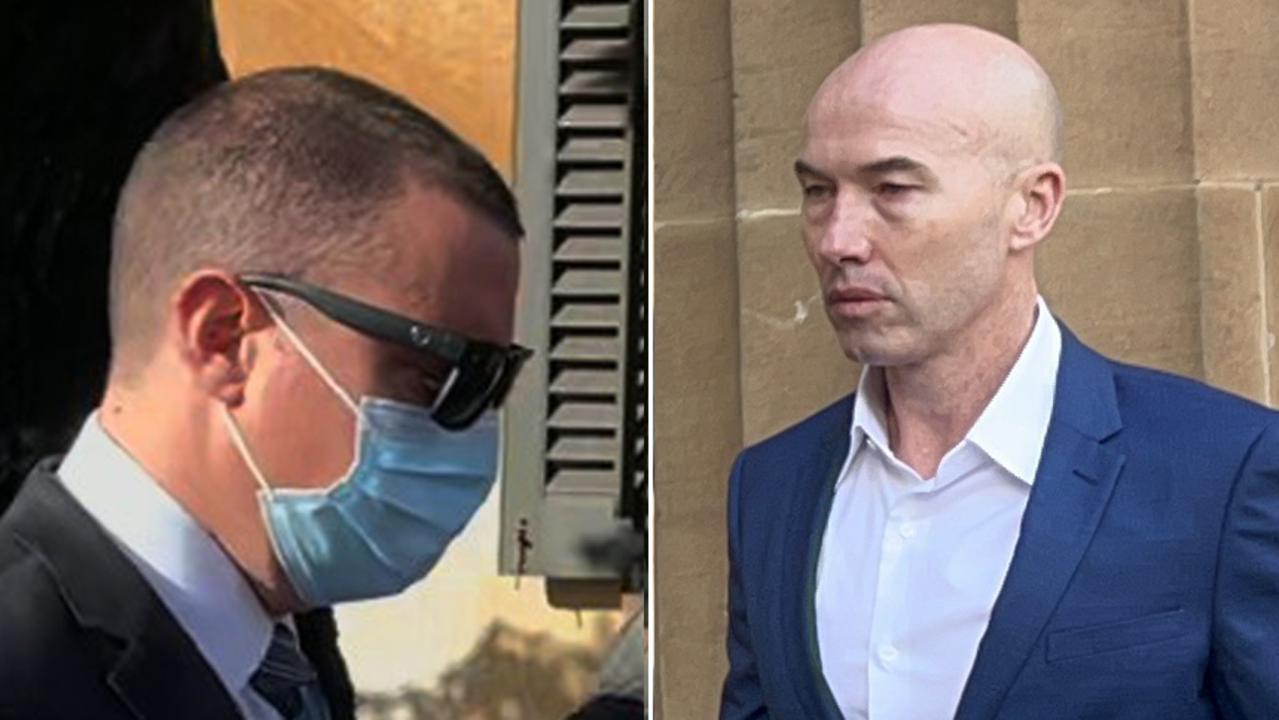
    The defendant, 35-year-old Gregory Donnell Morgan, Jr., faces two counts of second-degree assault, and a nationwide arrest warrant has been issued for him. Prosecutors detail that the incident unfolded in February, when Morgan was driving an unmarked, rented SUV with no visible ICE identification on the shoulder of a Minnesota state highway, reportedly to bypass congested regular traffic. When two motorists moved their vehicle onto the shoulder to slow Morgan down, prosecutors say he adjusted his speed to match the victims’ vehicle, opened his window, and aimed his official service weapon directly at both the driver and passenger inside the other car.

    Traumatized by the threat, the two motorists immediately contacted 911 to report the encounter. During questioning by state investigators after the incident, Morgan acknowledged drawing his firearm after the other vehicle merged back into main traffic, according to Hennepin County Chief Prosecutor Mary Moriarty. Morgan claimed he acted out of fear for his own safety and the safety of others, alleging the other vehicle had swerved and cut him off, a statement included in the state complaint reviewed by The New York Times. Morgan also told investigators he and his partner were returning to a federal building at the end of their work shift when the confrontation occurred.

    Operation Metro Surge was launched in early 2025 against a backdrop of escalating tension: after two U.S. citizens, Renee Good and Alex Pretti, were fatally shot by federal immigration agents in January, then-President Donald Trump dispatched former border czar Tom Homan to Minneapolis to oversee the expanded enforcement sweep. By February, Homan announced the operation had resulted in the detention of hundreds of undocumented immigrants with prior violent criminal convictions for deportation. But the operation sparked widespread national protests over the high-profile killings of Good and Pretti, and a third incident that left Venezuelan migrant Julio Sosa-Celis wounded by gunfire in the leg during an ICE interaction.

    Moriarty framed Thursday’s charging decision as a critical turning point in ongoing efforts to hold federal agents accountable for harm inflicted on Minnesota communities during the operation. “This is an important milestone in our efforts to seek accountability for the harms inflicted on community,” Moriarty told reporters at a press conference announcing the charges. “We will not rest until we get the answers we seek about federal agent conduct across Hennepin County and accountability is delivered wherever appropriate.”

    Moriarty added that investigations remain ongoing across multiple cases tied to Operation Metro Surge, including the fatal shootings of Good and Pretti, the non-fatal shooting of Sosa-Celis, and all other incidents being reviewed by her office’s Transparency and Accountability Project. The BBC has reached out to ICE for official comment on the charges and ongoing investigation, as of Thursday no statement has been released from the agency.

  • US says it will pursue ships in Pacific Ocean supporting Iran

    US says it will pursue ships in Pacific Ocean supporting Iran

    In a sweeping announcement from the Pentagon Thursday, the top U.S. military official outlined a new, expanded policy that will see American forces intercept any vessel suspected of carrying material support to Iran — a mission that extends beyond the Middle East to the Indian and Pacific Oceans.

    Chairman of the Joint Chiefs of Staff Dan Caine confirmed that the order targets all ships carrying prohibited supplies, regardless of flag, including the unregulated “dark fleet” tankers that have become Iran’s primary transport for crude oil and petroleum products amid longstanding U.S. sanctions. “The Joint Force, through operations and activities in other areas of responsibility, like the Pacific… will actively pursue any Iranian-flagged vessel, or any vessel, attempting to provide material support to Iran,” Caine told reporters.

    The announcement comes days after the U.S. launched a formal maritime blockade of Iran, a move that followed Tehran’s recent imposition of new transit rules in the Strait of Hormuz, the strategically critical waterway connecting the Persian Gulf to global markets. Under Iran’s new system, the country has prioritized passage for its own vessels exiting the Gulf while blocking most ships heading to neighboring Arab states. Tehran is also moving forward with a plan to implement a new toll system for transit, which could charge commercial vessels as much as $2 million for passage through the strait.

    Caine pushed back on characterizations that the U.S. action blocks access to the Strait of Hormuz itself, clarifying that enforcement operations will target areas along Iran’s coastline and territorial seas, as well as adjacent international waters. “This is a blockade of Iran’s ports and coastline, not a blockade of the Strait of Hormuz,” Caine said.

    The decision to extend interception operations into the Pacific has already stoked geopolitical concern, particularly given China’s extensive economic and strategic ties to Iran, analysts told Middle East Eye. While Beijing has repeatedly avoided direct military confrontation with Washington, analysts note that China holds major stakes in the region and in trade routes that could be significantly disrupted by the expanded U.S. policy.

    Under the weight of crippling U.S. economic sanctions, Iran has built up a shadow network of unregistered oil tankers disconnected from Western insurance and financial systems, commonly referred to as the “dark fleet.” The vast majority of these ships carry Iranian oil and petroleum products to Chinese refineries, which are the Islamic Republic’s largest remaining customer for energy exports. Maritime experts have previously noted that while multiple vessels carrying Iranian cargo have transited the Strait of Hormuz in recent days, none have exited into the Gulf of Oman, where the U.S. Navy maintains a large deployed presence.

    The expanded blockade has drawn renewed attention to Sino-U.S. friction over Iran policy, with widespread speculation about whether U.S. forces will attempt to board and search Chinese-flagged vessels carrying cargo to or from Iran. Earlier this week, unconfirmed remarks attributed to China’s defense minister circulated on social media, claiming Beijing would refuse to comply with the U.S. blockade. But Yun Sun, director of the China program at the Washington-based Stimson Center, confirmed to Middle East Eye that the remarks have never been authenticated by the Chinese government and have been disavowed by Chinese state media.

    In official diplomatic engagement this week, Chinese Foreign Minister Wang Yi spoke with his Iranian counterpart Abbas Aragchi on Wednesday. In a public readout of the call released by Beijing, Wang called on all parties to respect the “sovereignty, security and legitimate rights and interests of Iran as a country bordering the Strait of Hormuz,” while also adding that “the freedom and security of navigation in the internationally accessible strait should also be guaranteed.”

    Sun noted that Beijing has little incentive to challenge U.S. naval dominance in the Strait of Hormuz, which sits thousands of miles from China’s core territorial claims. At the same time, China has actively positioned itself as a leading strategic power in the Pacific, creating a potential flashpoint if U.S. interception operations target Chinese vessels in the region.

    Beyond energy trade, the expanded U.S. blockade also casts a spotlight on ongoing military cooperation between Beijing and Tehran. Multiple recent reports have confirmed Chinese military exports to Iran: Chinese firms have already shipped sodium perchlorate — a key chemical used to produce solid propellant for ballistic missiles — to Iran via maritime transport. Middle East Eye previously reported that China supplied air defense systems to Iran following the June 2025 attacks on the country, and has since delivered unmanned aerial vehicles. The New York Times also reported Saturday that Beijing may have shipped shoulder-fired surface-to-air missiles to Iran, though the exact route of those shipments remains unclear.