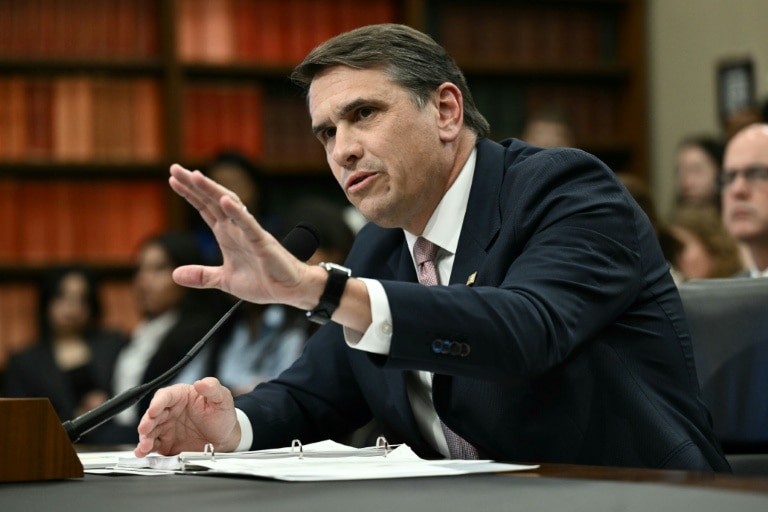
In a sudden reversal of one of former President Donald Trump’s most polarizing second-term policy proposals, the Trump administration has officially abandoned plans to establish a $1.8 billion compensation fund that critics widely labeled a partisan “slush fund” for the president’s political backers. Acting Attorney General Todd Blanche, a one-time personal attorney to Trump, confirmed the decision during sworn testimony before the U.S. House Appropriations Committee on Tuesday.
“We are not moving forward with the fund. Period,” Blanche told the panel, ending weeks of legal and political wrangling over the proposal that had sparked backlash from across the political spectrum.
The scrapped initiative, officially branded the “anti-weaponization fund,” was first established as part of an extraordinary legal settlement between Trump and the Internal Revenue Service (IRS). The settlement resolved a civil lawsuit Trump filed after his tax returns were leaked by a former government contractor. A key addendum to the settlement, which Blanche confirmed remains intact, permanently bars the IRS from pursuing any outstanding back tax claims against Trump, his immediate family, and his business entities dating back to the May 18 settlement date. The settlement structure was highly unusual: rather than resolving the lawsuit through standard financial or procedural terms, it redirected $1.8 billion in potential federal claims to create a fund for people who claimed to have been unfairly targeted by the U.S. government.
Trump and his administration framed the fund as a corrective for what they call government “weaponization” and “lawfare” — the president’s longstanding framing of law enforcement and regulatory actions against his conservative supporters as politically motivated. But the proposal faced immediate, fierce criticism from opponents, who argued it lacked a clear legal foundation, had almost no independent public oversight, and created a clear pathway to distribute taxpayer dollars to Trump loyalists. Most notably, critics raised alarms that the fund could be used to compensate individuals convicted of crimes related to the January 6, 2021, assault on the U.S. Capitol, when a mob of Trump supporters stormed Congress to try to overturn Joe Biden’s 2020 presidential election victory.
Shortly after returning to office, Trump granted clemency to more than 1,500 people convicted in connection with the Capitol riot. The administration has also moved to purge Justice Department press releases about January 6 prosecutions, dismissing the materials as “partisan propaganda.”
Legal challenges further stalled the initiative before its official cancellation. Last week, U.S. District Judge Leonie Brinkema issued a temporary injunction blocking the administration from taking any further steps to launch or operate the fund, as she considered whether to impose a permanent injunction. The proposal also became politically toxic even within Trump’s own Republican Party. Senate Republican leaders were forced to postpone a vote on a critical spending bill for Immigration and Customs Enforcement and the U.S. Border Patrol, in large part because of GOP concerns that the fund could open the door to sending taxpayer money to January 6 defendants.
Blanche’s confirmation that the plan is being fully scrapped marks the end of one of the most controversial early proposals of Trump’s second term, which drew opposition from Democrats, nonpartisan legal experts, and even rank-and-file Republicans who warned it represented an unprecedented abuse of executive power and public funds.