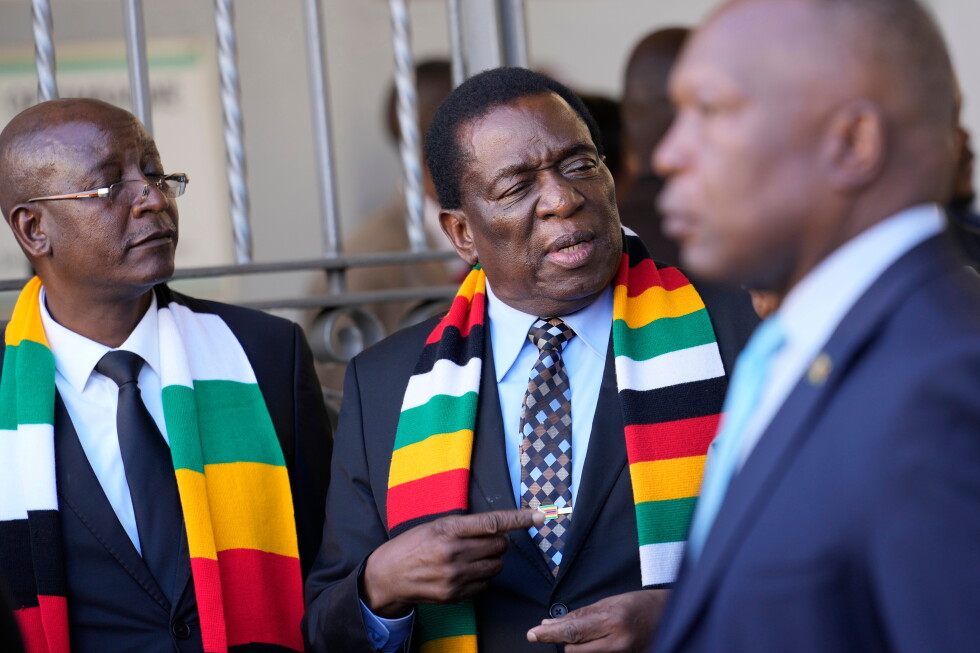
On a busy Thursday in the Republic of Congo, long-serving leader Denis Sassou N’Guesso officially took office for another five-year presidential term during a well-attended inauguration ceremony held at a stadium in Kintélé, a small community located just north of the national capital Brazzaville. The venue was filled to capacity with supporters and dignitaries gathered to mark the start of his new mandate.
分类: politics
-

Hungary’s Orbán says ‘complete renewal’ needed within his party after election loss
BUDAPEST, Hungary – Four days after a historic electoral earthquake brought an abrupt end to Viktor Orbán’s 16 consecutive years as Hungary’s prime minister, the long-serving populist nationalist leader announced Thursday that his ruling Fidesz party must undergo a complete organizational and ideological renewal to remain a relevant force in Hungarian politics. The landslide defeat handed a two-thirds parliamentary supermajority to Orbán’s center-right challenger, the Tisza party, led by former Orbán ally Péter Magyar, who has already begun moving quickly to form a new government.
The scale of Fidesz’s loss triggered immediate widespread speculation that Orbán, who has served as Fidesz’s party president almost continuously since the early 1990s, would step down from his leadership post. But in an exclusive interview with a pro-Orbán YouTube channel, Orbán made clear he has no intention of exiting the political stage, saying he is already working to rebuild the party from the ground up.
“This is not a matter of swapping out one or two positions,” Orbán explained. “In its old form, the Hungarian right-wing community can no longer function. We need a complete renewal.” He added that the election result marked the close of an entire political era, one defined by his populist nationalist leadership that upended Hungarian democratic norms and strained Budapest’s ties with the European Union and NATO.
Sunday’s poll delivered a stunning rebuke of Orbán, a close ally of former U.S. President Donald Trump and Russian President Vladimir Putin, who publicly acknowledged defeat just hours after polls closed, describing the outcome as “painful.” Orbán opened up about his personal reaction to the loss Thursday, saying election night sent him on an “emotional roller coaster” that left him feeling “pain and emptiness” in the aftermath. “I too believed we would win,” he said. “We had large crowds of supporters everywhere, and I expected victory.”
Even in defeat, however, Orbán pushed back against narratives that Fidesz has been fully rejected by the Hungarian public, pointing out that the party retained a solid core of support: nearly 2.4 million Hungarians cast ballots for Fidesz in the country of 9.5 million people. “We cannot pretend the entire country rejected our government,” he noted.
Magyar, who defected from Orbán’s circle to launch an anti-corruption campaign focused on pocketbook issues including failing public health care and inadequate public transport, has moved swiftly to cement his transition to power. He has pledged to repair Hungary’s frayed relationships with EU institutions and NATO, a key foreign policy shift from Orbán’s confrontational, Euroskeptic course. Following a private meeting with Hungary’s sitting president on Wednesday, Magyar told reporters he had received confirmation that the inaugural session of the new parliament – where he is all but certain to be confirmed as prime minister – will likely be held on May 6 or 7, matching his push for an accelerated transfer of power.
-

Benin court confirms Finance Minister Romauld Wadagni’s election as next president
COTONOU, Benin — Benin’s highest constitutional judicial body has formalized the landslide presidential election win of the country’s long-serving Finance Minister Romuald Wadagni, wrapping up the initial vote counting process for the West African nation’s weekend poll.
The 49-year-old candidate, widely recognized as a close political protégé of outgoing two-term President Patrice Talon, secured a commanding 94.27% of the valid ballots cast across the country, according to the official declaration released by the Constitutional Court Thursday. His sole challenger, independent opposition candidate Paul Hounkpè, took just 5.73% of the total vote. Turnout for the election reached 63.57%, a figure that aligns with pre-election projections, court officials confirmed.
Under Benin’s electoral rules, the opposition candidate now holds a five-day window to submit any formal appeals to the Constitutional Court before the body publishes the final, legally binding election results. The outcome had been widely predicted by regional political analysts for weeks, who noted that Wadagni’s unassailable lead was all but guaranteed by the full backing of Talon, who is stepping down after a decade in national leadership.
The election has not been without controversy, however. Talon’s administration has faced repeated international and domestic criticism over accusations of systematic opposition restrictions in the lead-up to the vote. Most notably, Renaud Agbodjo, leader of the Democrats — Benin’s largest registered opposition bloc — was barred from running for failing to meet new eligibility requirements that demand parliamentary backing for presidential candidates. Opposition figures argue the regulation was explicitly crafted to exclude major challengers from the ballot, creating an uneven electoral playing field.
As Wadagni prepares to take office, he will immediately inherit a set of pressing national security and governance challenges. Northern Benin has grappled with a growing Islamist insurgency linked to regional extremist groups, which has displaced thousands of civilians and strained the country’s security forces. In addition, just last year, a faction of military personnel carried out a failed coup attempt aimed at ousting Talon, highlighting underlying instability within the country’s security establishment that the new president will need to address.
-

The informant earned millions working for the DEA. He paid no taxes.
A decades-long confidential informant for the U.S. Drug Enforcement Administration who partied across the globe with rogue agency agents has escaped prison time after pleading guilty to failing to pay income taxes on nearly $4 million earned through his undercover work.
Andres Zapata, 48, received a sentence of time served during a Wednesday hearing in Austin, Texas, according to two anonymous sources with knowledge of the ongoing investigation who spoke to the Associated Press. The sentence was granted in exchange for Zapata’s ongoing cooperation with a 10-year federal inquiry that has already linked multiple DEA agents to professional misconduct.
Zapata, a Colombian national, was extradited to the United States from his home country last year. He had long worked closely with José Irizarry, a former DEA agent currently serving a 12-year prison sentence. Irizarry was convicted of siphoning millions of dollars from money laundering operations to pay for lavish international travel, high-end sports cars, and excessive, party-focused trips that violated agency policy.
Court documents confirm that between 2015 and 2020 alone, the DEA paid Zapata — a professional money launderer working as a confidential informant — $3.8 million for his services. He entered a guilty plea to a single count of income tax non-reporting last July. While DEA rules require all informants to report their informant payments to the Internal Revenue Service, prosecutions for this violation are extremely uncommon.
Neither the U.S. Justice Department’s criminal division, which handled the prosecution, nor the DEA offered immediate public comment on the sentencing outcome.
Zapata’s defense attorney, Don Bailey, argued during the sentencing that prosecuting a cooperating informant for this offense was highly irregular. Bailey noted that unlike standard contractors, informants do not receive standard tax reporting forms such as 1099s or W-9s, leaving many uncertain of their tax obligations. “You don’t know what you owe. You sign a piece of paper for money. You don’t get receipts,” Bailey explained in court, adding that Zapata had put his life at risk to help U.S. law enforcement disrupt violent drug cartel operations and had no intent to violate tax law.
During the hearing, Zapata told U.S. District Judge David Ezra that he was eager to close this chapter of his life, having already spent more than a year in a high-security prison outside his hometown of Medellín while awaiting extradition. “I’ve learned my lesson,” Zapata stated, per a transcript of the proceeding.
Judge Ezra, who praised Zapata for his consistent, substantial cooperation with federal investigators, sentenced him to credit for time already served while in Colombian custody. He also ordered Zapata to pay $1.2 million in restitution to cover the tax revenue lost to the U.S. government, and denied the AP’s request to unseal the full sentencing records.
Internal DEA records reviewed by the AP show the agency first recruited Zapata as an informant back in 1998. At the time, he was working as a vacuum salesman, and his recruitment came after his brother-in-law was arrested on drug trafficking charges. Over the following 20-plus years, Zapata rose to become one of the DEA’s most active informants, organizing covert cash collections and supporting investigations stretching from Peru to Los Angeles. In total, he earned more than $4.6 million in payments from the agency over his career.
Beyond providing investigative tips, Zapata accompanied rogue agents and even some prosecutors from Miami on international trips that Irizarry later called a “world debauchery tour” — events that flagrantly violated DEA rules prohibiting inappropriate close relationships between agents and informants.
A private WhatsApp chat used by the agents to document their three-continent trips details Zapata’s role in arranging for sex workers and bailing members of what Irizarry called “Team America” out of trouble. In one 2018 incident, Zapata was in Madrid drinking with a DEA agent who was briefly detained on allegations of sexual assault against a local woman.
Irizarry has told investigators that Zapata regularly kicked back a portion of his informant payments to corrupt agents. He recalled one incident where Zapata arrived at his Colombian apartment with a bag holding $40,000 in cash — money Irizarry used to purchase a Tiffany engagement ring for his wife.
Court allegations also name Zapata as a middleman for illegal payments Irizarry admitted receiving from Diego Marin, known as Colombia’s “Contraband Czar,” who was himself once a DEA informant. Marin was arrested in Spain earlier this year as part of a large Colombian bribery probe. Video obtained by the AP shows Zapata and Marin partying with DEA agents at a Madrid restaurant together.
Reporting for this story was contributed by Mustian from Natchitoches, Louisiana.
-

Starmer faces calls to resign as UK government admits ambassador to US failed vetting process
LONDON – British Prime Minister Keir Starmer is facing mounting pressure to step down this week after a bombshell revelation: senior Labour figure Peter Mandelson, his pick for UK ambassador to the United States who was later fired over deep ties to convicted sex offender Jeffrey Epstein, was originally denied formal security clearance for the sensitive diplomatic role. The Guardian first broke the story of the rejected vetting application, which senior officials later overruled to clear Mandelson’s path to Washington.
Downing Street confirmed Thursday that Starmer only learned of the Foreign Office’s override of the initial security vetting decision earlier this week, contradicting months of the prime minister’s public assertions that full, proper protocol was followed during Mandelson’s appointment process. Starmer, who appointed Mandelson to the coveted Washington post in late 2024, has maintained that the former Labour cabinet minister deliberately lied about the full scope of his connections to Epstein, who died in prison in 2019 while serving a sentence for child sex trafficking. A government spokesperson stated that once Starmer received the new information, he immediately ordered senior civil servants to launch a full inquiry into why the final developed security clearance was ultimately granted, with plans to update the House of Commons on findings in the coming days.
Opposition leaders have quickly seized on the revelation to demand Starmer’s resignation, arguing that his repeated claims of following proper vetting procedure amount to misleading Parliament and the British public. Kemi Badenoch, leader of the main opposition Conservative Party, told reporters Thursday that Starmer has now entered “definitely in resigning territory”, while Ed Davey, head of the centrist Liberal Democrats, echoed the call, saying Starmer “must go” if it is confirmed he misled the public and lawmakers. Multiple linked reports have also confirmed that Starmer was warned as early as the appointment process that naming Mandelson, a known close associate of Epstein, would carry severe “reputational risk” for his government.
The scandal marks the most severe test of Starmer’s premiership since February, when the U.S. Department of Justice released millions of pages of court documents tied to Epstein’s conviction, laying bare the full extent of Mandelson’s longstanding personal and professional ties to the disgraced financier. Among the most damaging disclosures from the so-called Epstein Files were 2009 emails showing Mandelson, who served in a previous Labour government, passed sensitive, potentially market-moving confidential government information to Epstein. Both Starmer and the Labour Party have faced widespread criticism for overlooking these red flags to appoint Mandelson, who was seen as a skilled trade negotiator capable of striking a favorable post-Brexit trade deal with the then-U.S. Trump administration. That gamble initially appeared to pay off, when the two countries finalized a bilateral trade agreement just months after Mandelson took office, but the scandal has since overshadowed that policy win.
Starmer has issued multiple public apologies to the British public and to Epstein’s trafficking victims, saying he regrets trusting what he now calls “Mandelson’s lies” about the extent of the relationship. Starmer fired Mandelson from the ambassador post in September 2025, after initial disclosures about his ongoing ties to Epstein emerged.
The controversy has also spawned a formal criminal investigation by British law enforcement. Officers executed search warrants at Mandelson’s two homes in London and western England earlier this year, and arrested him on February 23 on suspicion of misconduct in public office. He was released on bail the next morning after more than nine hours of questioning, and has repeatedly denied any wrongdoing, with no formal charges filed to date. Just days before Mandelson’s arrest, Prince Andrew, King Charles III’s younger brother and another close Epstein associate, was arrested on the same misconduct charge.
Parliament has recently forced the Starmer government to commit to releasing a full cache of additional documents tied to Mandelson’s appointment and vetting process, which officials have agreed to publish in the coming weeks. The unfolding scandal has thrown Starmer’s leadership into question just over a year into his premiership, with opposition parties already preparing to table a motion of no confidence if the prime minister refuses to launch an independent inquiry into the appointment process.
-

Calls for UK PM to resign over ex-envoy’s failed vetting
Growing political pressure is bearing down on British Prime Minister Keir Starmer, as opposition leaders ramp up calls for his resignation following confirmation that former US ambassador Peter Mandelson — a close associate of disgraced late sex offender Jeffrey Epstein — failed an initial national security background check before taking up the post.
The controversy has plagued Starmer’s Labour government since Mandelson was fired from the ambassador role last year, just months after his appointment, when newly unearthed documents from a U.S. congressional committee exposed the far deeper extent of his long-standing ties to Epstein, a convicted financier who died in prison in 2019 while facing sex trafficking charges. Since his dismissal, questions have continuously swirled around Starmer’s judgment in pushing forward with the high-profile diplomatic appointment.
Those questions erupted into fresh demands for Starmer to step down this week after The Guardian published an investigation revealing Mandelson failed his initial security vetting, a finding later officially confirmed by the UK government. Opposition leaders across the political spectrum have united in condemnation, with Conservative Party leader Kemi Badenoch taking to social media platform X to accuse Starmer of betraying UK national security and insisting he must leave office. Ed Davey, leader of the centrist Liberal Democrats, added that if Starmer misled Parliament and the British public about the vetting process, he has no choice but to resign.
In response to the scandal, Starmer has pushed back by blaming Mandelson, claiming the former ambassador lied about the full scope of his connections to Epstein during the vetting process. A government spokesperson has clarified that senior Foreign Office officials made the final call to approve Mandelson’s appointment over the formal objection of UK Security Vetting, the body responsible for conducting national security background checks. Critically, the spokesperson added that neither Prime Minister Starmer nor Foreign Secretary David Lammy were aware that the initial vetting had failed until earlier this week. The vetting body’s negative recommendation, they noted, is non-binding, leaving final approval authority with ministry officials.
The timeline of Starmer’s previous statements has added fuel to opposition criticism: back in February, the prime minister told Parliament Mandelson had been fully cleared by security vetting. One month later, his government released 150 pages of documents detailing the vetting process carried out ahead of Mandelson’s 2024 appointment.
Beyond the political fallout over the botched appointment, Mandelson now faces a formal police investigation into allegations of official misconduct. He was arrested and released on bail in February, with detectives probing claims he leaked sensitive government documents related to the 2008 global financial crisis to Epstein during his time as a UK cabinet minister decades ago.
-

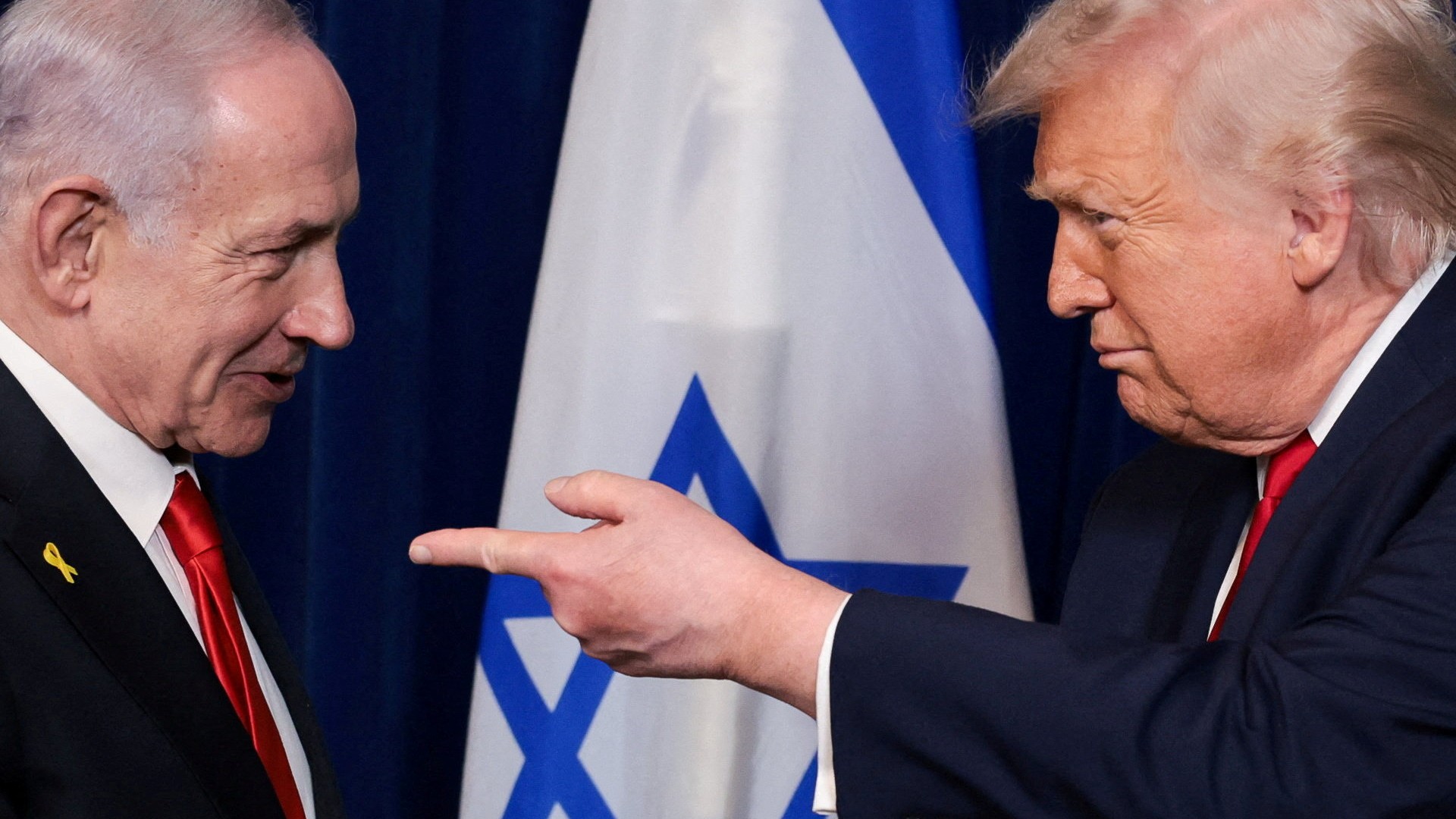
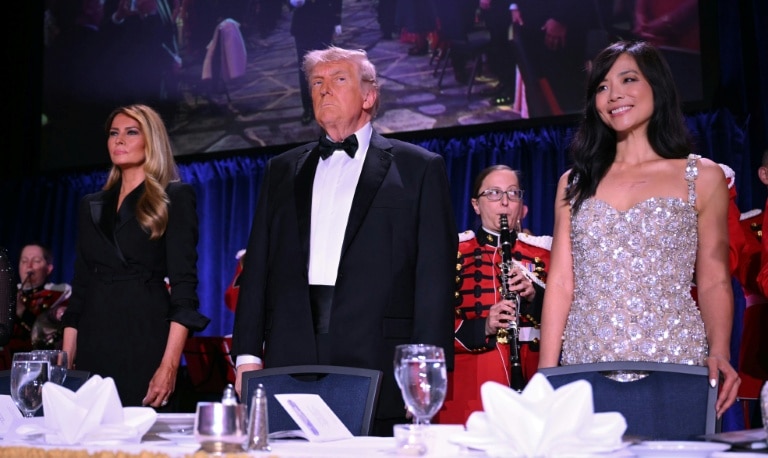
Is Trump meeting the moment for US conservatives?
At the largest annual gathering of conservative activists and leaders in the United States, the BBC set out to answer a pressing question facing the modern American right: Does former President Donald Trump truly meet the defining political and policy challenges of the moment for U.S. conservatives?
The event, which draws thousands of movement leaders, grassroots organizers, and elected officials from across the country, served as the ideal backdrop to probe how Trump’s core stances align with the priorities of the conservative base. To get on-the-ground insight, BBC correspondents spoke directly to dozens of Trump’s supporters in attendance, asking for their views on three of the most contentious issues shaping U.S. conservative politics today: tensions with Iran, the state of the domestic economy, and immigration policy.
These three topics have long been fault lines in American conservative politics, and they remain central to debates over the direction of the Republican Party heading into upcoming electoral cycles. For many conservatives, evaluating how Trump addresses these issues is key to determining whether he is the right standard-bearer for the movement moving forward. The on-the-record conversations with attendees at this major conservative convening offered unfiltered insight into how the president’s backers believe he measures up to the challenges that matter most to the right.
-

2 candidates with starkly different visions for Peru vie for a runoff spot
LIMA, Peru – Peru’s 2025 presidential first-round vote has plunged into prolonged uncertainty, with election officials facing weeks of vote counting and legal challenges to determine which two candidates will advance to the June 7 runoff election. As of Thursday’s updated results, the race for the second and third qualifying spots remains so tight that a final outcome could take more than a month to formalize, echoing but far outstripping the delays seen in the country’s 2021 presidential contest.
Early tallies have all but confirmed that former presidential candidate Keiko Fujimori, the conservative standard-bearer and daughter of disgraced ex-president Alberto Fujimori, will claim first place in the 35-candidate field held in Sunday’s vote. With 93% of all ballots processed, Fujimori holds a steady lead with 17.06% of the vote – a comfortable advantage over her rivals, but far short of the 50%+1 threshold required to win the presidency outright and skip a runoff.
Trailing Fujimori are two politically opposite contenders locked in a historic close race for the second runoff slot. In the most recent count, nationalist congressman Roberto Sánchez – a former cabinet minister under imprisoned ex-president Pedro Castillo – holds 11.97% of the vote, putting him just 0.06 percentage points, or fewer than 8,000 votes, ahead of third-place Rafael López Aliaga, the ultraconservative former mayor of Peru’s capital city Lima.
The two candidates could not differ more sharply in their policy platforms. Sánchez, who is rarely seen without his signature wide-brimmed peasant hat, has campaigned on a platform of sweeping left-wing economic overhaul, including a massive expansion of public sector spending, a complete restructuring of Peru’s national tax system, and partial nationalization of the country’s lucrative natural resource sector. López Aliaga, by contrast, has built his campaign on a hardline right-wing security agenda: he has proposed constructing new maximum-security prisons in Peru’s remote Amazon region, granting anonymous identity protection to sitting judges, and mass expulsion of undocumented immigrants residing in the country. He has also drawn international attention for his promise to reinstate the death penalty in Peru.
The razor-thin margin between the two contenders is further complicated by thousands of unprocessed and disputed ballots. Roughly 1,600 uncounted tally sheets remain to be processed from remote rural villages and polling stations for Peruvians living abroad. In addition, more than 5,000 completed tally sheets have been formally challenged by political campaigns over alleged irregularities or mathematical errors, triggering a mandatory appeals process overseen by Peru’s specialized electoral courts.
Álvaro Henzler, president of Transparencia, Peru’s leading independent democracy watchdog that deployed 4,000 election observers across the country to monitor the vote, explained that the appeals process is standard, but its outcome is far more consequential this cycle than in past elections. “In Peru, a share of tally sheets are always challenged due to potential counting errors, and when that happens, they are sent to 60 special electoral boards for review,” Henzler noted.
A comparison to the 2021 election illustrates how unusual this level of suspense is. Three years ago, Peru’s electoral tribunal took 37 days to formalize first-round results after the April vote, even though the gap between the second and third place candidates started at more than 238,000 votes, eliminating any real doubt about the final ranking. “In this case, since the race is so tight, the contested tally sheets could end up altering the final standings; that is why it is taking so much longer,” Henzler added.
Peru’s turbulent recent political history sets high stakes for the final outcome. The winner of the June runoff will become the country’s ninth president in just 10 years, taking office from interim president José María Balcázar, who was appointed in February following the ousting of the previous interim leader over corruption allegations just four months into his term.
For Fujimori, this election marks her fourth attempt to win the presidency, and she has centered her campaign on promises to crack down on Peru’s rising violent crime rates. Still, her platform has faced scrutiny from legal experts, who point to laws supported by Fujimori’s political bloc in recent years that have made it far harder to prosecute organized crime: the laws eliminated the option of preliminary detention for certain offenses and raised the legal threshold for law enforcement to seize assets connected to criminal activity.
AP’s full coverage of Latin American and Caribbean politics can be found at https://apnews.com/hub/latin-america
-

Lawmakers clash with RFK Jr as he shifts focus away from vaccines
A three-hour congressional budget hearing on Thursday devolved into sharp partisan and policy clashes Thursday, as U.S. Health and Human Services Secretary Robert F. Kennedy Jr. attempted to pivot conversation away from his controversial vaccine stances to a focus on chronic disease prevention, while lawmakers from both parties grilled him on his response to the worst measles outbreak in decades, his proposed agency budget cuts, and questionable public health claims.
The hearing marked Kennedy’s first appearance before the U.S. Congress in months, and centered on the Trump administration’s proposal to slash HHS’ fiscal year budget by roughly $16 billion, a 12.5% reduction from the previous year’s funding level.
Kennedy, a longstanding public skeptic of conventional vaccine safety guidelines, has spent his tenure leading the agency pursuing sweeping overhaul to long-standing U.S. immunization policy. His changes included cutting the number of recommended childhood vaccine doses and reorganizing the agency’s top vaccine advisory panel to seat several prominent vaccine critics. However, a federal judge tossed out the majority of these changes back in March, ruling the new advisory panel appointees had not been properly seated in accordance with federal protocol. While HHS initially announced it would appeal the ruling, the agency has yet to file an appeal, and Kennedy has increasingly avoided public discussion of vaccine policy in subsequent months.
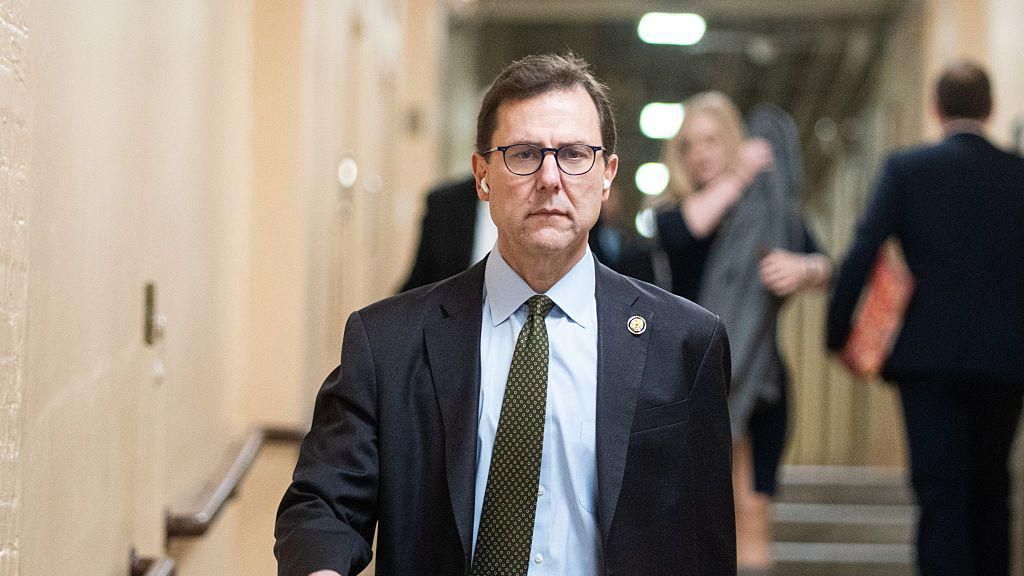
During the hearing, Democratic members of the House Ways & Means Committee repeatedly pressed Kennedy on his mixed messaging around the MMR vaccine amid an ongoing measles outbreak that has recorded nearly 4,000 confirmed cases across the U.S. between 2025 and 2026, including two childhood deaths in Texas last year. Rep. Mike Thompson of California confronted Kennedy with a chart documenting the rising case count, arguing “Your dangerous conspiracy theories are undermining safe and effective vaccines.”
Rep. Linda Sanchez of California asked Kennedy directly whether one of the two Texas child deaths could have been prevented through timely measles vaccination, to which Kennedy responded, “It’s possible, certainly.”
Instead of engaging on questions of vaccine policy, Kennedy attempted to reframe the hearing around his stated priority of ending federal public health policies that he claims have contributed to the nation’s growing chronic disease crisis. “President Trump and I are challenging the status quo and the institutions that defend it as we work to make America healthy again in just 15 months,” he told the committee, adding that the $16 billion budget cut was an unavoidable response to the nation’s $39 trillion national deficit. “Nobody wants to make the cuts,” he said, pushing back on Democratic criticism that cuts to maternal and child nutrition aid and other public health programs would harm population health.
Tensions flared at multiple points throughout the hearing, with Kennedy pushing back against what he framed as Democratic efforts to shut down debate. “They’ve all shut me up and they’ve talked about science, but science is about debate,” he said.
Partisan divides on Kennedy’s leadership were on clear display: multiple Republican lawmakers praised Kennedy’s agenda, with House Budget Committee Chairman Jodey Arrington calling Kennedy “a breath of fresh air” for challenging longstanding institutional norms. However, he drew criticism from at least one Republican lawmaker over his widely debunked claims linking prenatal Tylenol use to autism. Rep. Blake Moore of Utah, who has a neurodivergent son, told Kennedy that the claim had needlessly harmed parents. “My wife was hurt, and she felt for a split-second until we came to our senses and we talked about this, that there was any way she was responsible,” Moore said. “We don’t even know if she took Tylenol during her pregnancy, but that was a hurtful moment for her.” Moore added he was “underwhelmed” by the administration’s autism research efforts to date, a policy area Kennedy has framed as a central mission of his tenure.
-

US lawmakers reject measure to block Trump from striking Iran
A second attempt by congressional Democrats to limit President Donald Trump’s authority to launch expanded military action against Iran has collapsed in the U.S. House of Representatives, falling by just a single vote one day after an identical measure was blocked in the Senate.
The War Powers Resolution, which sought to reassert congressional oversight over U.S. military engagement connected to the ongoing Iran-related conflict, failed in a razor-thin 213-214 vote Thursday. Long viewed as largely symbolic by legislative observers, the measure faced steep procedural barriers even if it had cleared the House: passage in both chambers would still have been almost certain to be defeated by a presidential veto from Trump.
Party lines largely held on the vote, echoing the pattern seen one day earlier in the Senate. Only one Republican, Representative Thomas Massie of Kentucky, broke ranks to join Democrats in supporting the measure. On the opposite side, Representative Jared Golden of Maine was the sole Democrat to vote against the resolution. Ohio Representative Warren Davidson, who backed a similar Democratic-led effort back in March, chose to vote “present”, a procedural move that counts as an official abstention.
Following the unsuccessful vote, New York Representative Gregory Meeks, the sponsor of the resolution, told reporters he planned to begin outreach to Golden and other on-the-fence lawmakers to build more support for future attempts. Meeks confirmed he would introduce a new War Powers Resolution in the coming weeks, as Democrats continue their long-running push to reclaim Congress’s constitutionally granted authority over decisions to enter armed conflict.
This latest failure comes just one month after a near-identical measure fell by a narrow margin in the House. In that first vote, two Republicans supported the resolution while four Democrats opposed it. Even if Thursday’s vote had flipped to a majority in favor, the measure was already facing long odds in the Senate, where a matching resolution was voted down Wednesday in a 47-52 vote that broke almost entirely along party lines.
Republican opposition to the resolution is not necessarily set in stone, however. Multiple GOP lawmakers have signaled that they are open to reconsidering their positions if the ongoing U.S.-Israel military campaign, which launched on February 28, expands geographically or drags on past the end of this month. Trump has offered inconsistent timelines for how long the engagement will last, most recently claiming the conflict was “close to over”.
The push for the resolution comes directly out of requirements laid out in the 1973 War Powers Resolution, the landmark federal law passed to limit executive authority during the Vietnam War, when then-President Richard Nixon continued U.S. military involvement without full congressional approval. The 1973 law mandates that Congress must grant explicit approval for any military action that extends longer than 60 days. With the current campaign having launched on February 28, that 60-day window is rapidly approaching.