分类: politics

  • US says it will pursue ships in Pacific Ocean supporting Iran

    US says it will pursue ships in Pacific Ocean supporting Iran

    In a sweeping announcement from the Pentagon Thursday, the top U.S. military official outlined a new, expanded policy that will see American forces intercept any vessel suspected of carrying material support to Iran — a mission that extends beyond the Middle East to the Indian and Pacific Oceans.

    Chairman of the Joint Chiefs of Staff Dan Caine confirmed that the order targets all ships carrying prohibited supplies, regardless of flag, including the unregulated “dark fleet” tankers that have become Iran’s primary transport for crude oil and petroleum products amid longstanding U.S. sanctions. “The Joint Force, through operations and activities in other areas of responsibility, like the Pacific… will actively pursue any Iranian-flagged vessel, or any vessel, attempting to provide material support to Iran,” Caine told reporters.

    The announcement comes days after the U.S. launched a formal maritime blockade of Iran, a move that followed Tehran’s recent imposition of new transit rules in the Strait of Hormuz, the strategically critical waterway connecting the Persian Gulf to global markets. Under Iran’s new system, the country has prioritized passage for its own vessels exiting the Gulf while blocking most ships heading to neighboring Arab states. Tehran is also moving forward with a plan to implement a new toll system for transit, which could charge commercial vessels as much as $2 million for passage through the strait.

    Caine pushed back on characterizations that the U.S. action blocks access to the Strait of Hormuz itself, clarifying that enforcement operations will target areas along Iran’s coastline and territorial seas, as well as adjacent international waters. “This is a blockade of Iran’s ports and coastline, not a blockade of the Strait of Hormuz,” Caine said.

    The decision to extend interception operations into the Pacific has already stoked geopolitical concern, particularly given China’s extensive economic and strategic ties to Iran, analysts told Middle East Eye. While Beijing has repeatedly avoided direct military confrontation with Washington, analysts note that China holds major stakes in the region and in trade routes that could be significantly disrupted by the expanded U.S. policy.

    Under the weight of crippling U.S. economic sanctions, Iran has built up a shadow network of unregistered oil tankers disconnected from Western insurance and financial systems, commonly referred to as the “dark fleet.” The vast majority of these ships carry Iranian oil and petroleum products to Chinese refineries, which are the Islamic Republic’s largest remaining customer for energy exports. Maritime experts have previously noted that while multiple vessels carrying Iranian cargo have transited the Strait of Hormuz in recent days, none have exited into the Gulf of Oman, where the U.S. Navy maintains a large deployed presence.

    The expanded blockade has drawn renewed attention to Sino-U.S. friction over Iran policy, with widespread speculation about whether U.S. forces will attempt to board and search Chinese-flagged vessels carrying cargo to or from Iran. Earlier this week, unconfirmed remarks attributed to China’s defense minister circulated on social media, claiming Beijing would refuse to comply with the U.S. blockade. But Yun Sun, director of the China program at the Washington-based Stimson Center, confirmed to Middle East Eye that the remarks have never been authenticated by the Chinese government and have been disavowed by Chinese state media.

    In official diplomatic engagement this week, Chinese Foreign Minister Wang Yi spoke with his Iranian counterpart Abbas Aragchi on Wednesday. In a public readout of the call released by Beijing, Wang called on all parties to respect the “sovereignty, security and legitimate rights and interests of Iran as a country bordering the Strait of Hormuz,” while also adding that “the freedom and security of navigation in the internationally accessible strait should also be guaranteed.”

    Sun noted that Beijing has little incentive to challenge U.S. naval dominance in the Strait of Hormuz, which sits thousands of miles from China’s core territorial claims. At the same time, China has actively positioned itself as a leading strategic power in the Pacific, creating a potential flashpoint if U.S. interception operations target Chinese vessels in the region.

    Beyond energy trade, the expanded U.S. blockade also casts a spotlight on ongoing military cooperation between Beijing and Tehran. Multiple recent reports have confirmed Chinese military exports to Iran: Chinese firms have already shipped sodium perchlorate — a key chemical used to produce solid propellant for ballistic missiles — to Iran via maritime transport. Middle East Eye previously reported that China supplied air defense systems to Iran following the June 2025 attacks on the country, and has since delivered unmanned aerial vehicles. The New York Times also reported Saturday that Beijing may have shipped shoulder-fired surface-to-air missiles to Iran, though the exact route of those shipments remains unclear.

  • UK seeks closer EU ties in volatile times – but at what cost?

    UK seeks closer EU ties in volatile times – but at what cost?

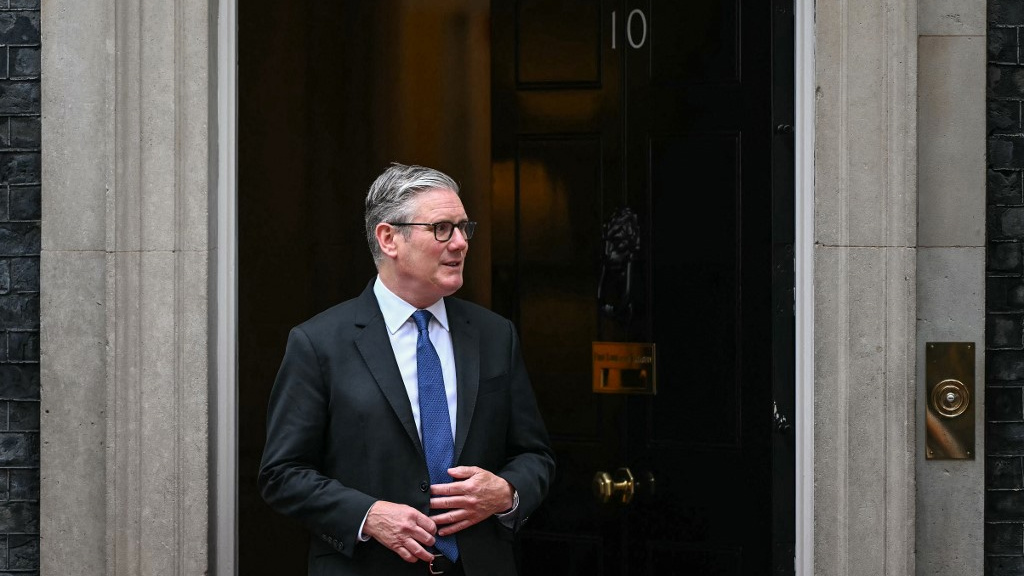
    Against a backdrop of unprecedented global volatility, the United Kingdom has laid out a clear strategy to deepen practical cooperation with its European neighbors, guided by what the country’s EU Relations Minister Nick Thomas-Symonds calls an “ambitious and ruthlessly pragmatic” approach focused squarely on advancing UK national interests. Speaking exclusively to the BBC from the British ambassador’s Brussels residence, Thomas-Symonds framed the shift toward warmer UK-EU relations as a direct response to growing global instability, arguing that British voters have grown increasingly receptive to closer cross-channel collaboration amid mounting global threats. “We find ourselves in a dangerous situation in the world, and there is a particular imperative for closer ties right now, I find broad public support for this direction,” he noted.

    Today’s geopolitical landscape paints a stark picture of the pressures driving this policy shift: Europe is entering its fifth year of the largest continental conflict since World War II in Ukraine, global energy markets are roiled by rising fuel prices and spillover tensions from tensions around the Strait of Hormuz, and the global economy remains under sustained strain. Meanwhile, longstanding diplomatic ties between the UK and its traditional closest ally, the United States, have deteriorated sharply in recent months, creating new incentives for London to align more closely with Brussels.

    The push for deeper cooperation is already visible in the security and defence space, where the UK has taken a leading role in coordinating a unified European response to the war in Ukraine. Following a commitment from European leaders to increase the continent’s own defence capacity to Washington, London and Brussels are also moving forward with plans for joint arms procurement.

    Beyond defence, the administration of Prime Minister Keir Starmer has prioritized unwinding the thick layers of post-Brexit red tape that have raised costs for UK businesses trading with the EU – the UK’s largest export market, nearly a decade after the original Brexit referendum. By the time of the second post-Brexit UK-EU summit scheduled for this summer (a final date has not yet been set), the UK government expects to conclude three key new agreements: a food and agricultural safety pact that will cut bureaucratic burdens for exporters shipping products such as meat to Northern Ireland and the EU bloc, a mutual carbon emissions trading arrangement, and a youth mobility program that allows British and European young people to study and work in each other’s territories for limited periods. This week, the two sides also formally confirmed the UK will rejoin the EU’s iconic Erasmus+ education exchange scheme, expanding study abroad opportunities for British youth across the bloc.

    The Starmer government has been careful to stress that all new cooperation agreements respect the result of the 2016 Brexit referendum and the party’s manifesto red lines: the UK will not seek re-entry to the EU, its single market, or its customs union. This position has failed to satisfy critics on both sides of the Brexit divide, however.

    Opponents of closer alignment, including the leadership of the Conservative Party and Reform UK, argue that any deeper cooperation requires the UK to adopt EU regulations without having a seat at the table when rules are written, turning Britain into a “rule-taker” rather than a rule-maker – directly contradicting the 2016 Leave campaign’s core promise to “take back control” from Brussels. Former UKIP leader Nigel Farage has gone as far as to label planned upcoming legislation to create a fast-track process for aligning UK regulation with future EU standards a “backdoor attempt to drag Britain back under EU control.” Conservative leader Kemi Badenoch has similarly accused the government of lacking transparency, arguing that if ministers want to rejoin the EU, they should state that goal openly.

    On the other side of the debate, opposition parties including the Liberal Democrats and the Green Party argue that the government’s incremental approach does not go far enough to deliver the economic benefits of closer alignment that the UK desperately needs. Political analysts have summed up the government’s position as a awkward balancing act: caught between the economic imperatives of reducing trade barriers with the EU and the political constraints imposed by the narrow 2016 Brexit result and ongoing division over the issue.

    All incremental cooperation agreements also come with a direct financial cost for British taxpayers, a reality the government has not shied away from. Rejoining Erasmus+ will cost UK taxpayers £570 million in its first year alone, while the UK’s participation in the EU’s Horizon science research program – agreed under the previous Conservative administration – costs £2.2 billion annually. Supporters of the arrangement note that two years after rejoining Horizon, the UK has become one of the program’s top beneficiaries, securing a disproportionate share of research grants and collaborative opportunities.

    Thomas-Symonds has repeatedly emphasized that all cooperation will be strictly limited to areas that deliver clear net benefits to the UK, with no compromise on national interests. For example, he said the UK plans to pursue an independent regulatory path for artificial intelligence that diverges from Brussels’ approach, and has so far declined to join the EU’s SAFE defence loans scheme because the €2 billion (£1.7 billion) membership fee demanded by Brussels – roughly 10% of the UK’s entire annual defence budget – remains too high.

    EU officials have made clear that the closer the UK seeks to get to the EU single market, the more it will be required to align with EU rules and accept core EU principles – a reality that creates ongoing friction. French MEP Nathalie Loiseau, a close ally of President Emmanuel Macron, confirmed that the EU’s core terms have not changed since the 2016 Brexit vote: the deeper the integration, the higher the requirement for regulatory alignment. In the most extreme scenario of near-single market access, the EU could demand the UK reinstate freedom of movement – a longstanding red line for the current UK government.

    The ongoing negotiations over UK access to the EU’s internal electricity market highlight this tension. Thomas-Symonds describes energy market integration as a top national priority for the UK, a lesson learned after the dramatic energy price spikes following Russia’s 2022 full-scale invasion of Ukraine and recent market volatility caused by tanker disruptions in the Strait of Hormuz. Even so, Brussels has demanded that the UK contribute to the EU’s Cohesion Fund, a pot of money designed to support economic development in poorer EU regions, as a condition of accessing the electricity market. When asked if the UK would accept this demand, Thomas-Symonds brushed it off as merely the EU’s opening negotiating position, declining to elaborate further.

    Another persistent criticism of the government’s current approach is its heavy focus on agreements for trade in goods, which critics argue will not deliver the widespread economic gains Chancellor Rachel Reeves has promised, given that the UK’s economy is overwhelmingly focused on services. The government pushes back on this, projecting that the new food safety and carbon trading agreements alone will add £9 billion to the UK economy by 2040 – a timeline that critics note is decades away.

    The European Commission, the EU’s executive body that handles trade negotiations on behalf of member states, has also faced criticism from within the bloc. Several EU member states that maintain close trade and political ties with London have complained off the record that the commission is being unnecessarily rigid in its negotiations, and should show more flexibility to strike bespoke deals with the UK – especially given the shared security and economic threats the bloc faces from Russia, China, and increasingly, the United States, according to senior EU diplomats who spoke to the BBC.

    When asked if the push for closer UK-EU ties amounted to an admission that the UK’s long-cherished “special relationship” with the United States was over, amid repeated public criticism of Starmer from US President Donald Trump over the UK’s refusal to join Washington’s conflict with Iran, Thomas-Symonds rejected the framing. “The special relationship is deep and enduring,” he said, adding that the UK does not have to choose between its European and transatlantic allies. Even so, the question remains: as the UK increasingly aligns its regulations with the EU across multiple sectors, it will become progressively more difficult to deliver on the core Brexit promise of striking independent free trade deals with third countries including the United States. Tensions have already flared: last May, Trump and Starmer agreed to a limited bilateral trade deal that modestly expanded agricultural access and cut punitive US tariffs on British car exports, but left broader 10% US tariffs on most British exports in place. This week, Trump even threatened to scrap even that limited deal entirely in retaliation for the UK’s refusal to back his Iran policy.

    As negotiations progress, the UK government’s balancing act between domestic political constraints, economic imperatives, and shifting global alliances will only grow more challenging, with the outcome set to reshape Britain’s place in the world for decades to come.

  • US military fully withdraws from Syria after 10 years

    US military fully withdraws from Syria after 10 years

    After a decade-long deployment focused on countering the Islamic State group, the last remaining U.S. military forces have exited their final base in Syria’s northeastern Hasakah province, marking the end of Washington’s active military presence in the war-torn country, Syrian officials confirmed to Middle East Eye.

    Within hours of the U.S. pullout, Syrian government forces entered the Qasrak base, a strategic site that includes an operational airstrip, with local officials confirming the full completion of the withdrawal process.

    Leading Syria analyst Charles Lister clarified in a public social media post that the unit tasked with securing the former U.S. base is the 60th Division of the Syrian national army, a formation mostly made up of Kurdish fighters previously aligned with the Syrian Democratic Forces (SDF)—a militia that served as Washington’s primary on-the-ground partner for 10 years. Lister added that U.S. troops and their military equipment exited Syria through neighboring Jordan, a route chosen to evade potential attacks by Iranian-aligned paramilitary groups operating in Iraq.

    In an official statement released Thursday, Syria’s foreign ministry welcomed the full transfer of all former U.S. military sites to the sovereign Syrian government. The ministry emphasized that the handover demonstrates the successful integration of the SDF into Syrian national institutional structures, and confirms the Syrian state’s right and full responsibility to lead counterterrorism efforts and address all regional security threats within its own borders.

    The full U.S. withdrawal comes in the wake of a major political shift in Syria: new President Ahmed al-Sharaa’s defeat of longtime ruler Bashar al-Assad in December 2024, which ended more than 14 years of civil war. Washington has thrown its support behind Sharaa’s new transitional government, and had maintained roughly 1,000 troops in Syria through most of its deployment.

    Earlier in 2025, the U.S. already withdrew from two other major military bases in Syria: the al-Tanf outpost in southern Syria and the al-Shaddadi base in the country’s northeast. The withdrawal also followed a U.S.-brokered deal between the SDF and Damascus reached earlier this year, under which the Syrian government agreed to take primary responsibility for rooting out remaining Islamic State cells and other militant factions across the country.

    U.S. military presence in Syria first launched in 2015, built on a long-standing partnership with the SDF that repeatedly frayed U.S.-Turkey relations. Ankara has long viewed the SDF as a front for the People’s Protection Units (YPG), the Syrian affiliate of the Kurdistan Workers’ Party (PKK)—a group labeled a terrorist organization by the U.S., European Union, and Turkey, which has waged an insurgency against the Turkish state for 40 years.

    Over the past two years, however, peace negotiations between Ankara and the PKK created new space for the Damascus government to reach a formal agreement with the SDF, which had long sought regional autonomy in northeastern Syria. A brief, limited offensive by Syrian government forces, paired with mediation from U.S. envoy Tom Barrack, ultimately paved the way for a deal that stabilized the northeastern region. Under that agreement, the SDF ceded control of large stretches of territory, including the former Islamic State capital Raqqa and the key eastern province of Deir Ezzor, back to Syrian national authorities.

  • Duke and Duchess of Sussex visit Bondi Surf Life Saver volunteers

    Duke and Duchess of Sussex visit Bondi Surf Life Saver volunteers

    Eight years after their record-breaking royal tour of Australia captured global attention, the Duke and Duchess of Sussex have concluded their low-key, four-day unofficial visit to Sydney, capping the trip with coastal walks, community engagements with lifesavers, and sporting events tied to Harry’s longstanding veteran advocacy work.

    On their final full day in the country, the couple kicked off their schedule with a stop at Sydney’s iconic Bondi Beach, where they met with volunteer first responders from the Bondi Surf Bathers’ Life Saving Club. Photographs from the event show a cheerful Prince Harry chatting with smiling volunteers clad in the club’s recognizable yellow and red uniform, while Meghan joined him to greet attendees inside the club’s hall. Both dressed in soft blue outfits, the former working royals posed for multiple group selfies with volunteers, and later kicked off their shoes to walk barefoot along Bondi’s golden shoreline, relaxed under clear sunny skies as onlookers watched on.

    Throughout their three days of public engagements on this private tour, mental health and the unrelenting pressures of public life have been the central throughline of Harry and Meghan’s conversations. In an open conversation on Thursday, Harry opened up about his decades-long struggle with life in the royal spotlight, revealing: “After my mum died just before my 13th birthday – I was like: ‘I don’t want this job. I don’t want this role – wherever this is headed, I don’t like it’.”

    This private Australian trip is centered on two core causes close to the couple: advancing mental health awareness and expanding support for military veterans. After their morning at Bondi, the pair traveled to Man O’War Steps, where they boarded a vessel to connect with members of Invictus Australia, marking a full-circle moment nearly a decade after the first Invictus Games were hosted in Sydney in 2018.

    It is impossible to miss the stark shift in the couple’s circumstances between their 2018 and 2024 visits. Six years ago, they arrived in Sydney as senior working members of the British royal family, fresh off their high-profile international wedding. Today, they live a quiet life in California after stepping back from official royal duties in 2020.

    Prince Harry founded the Invictus Games in 2014 in London, creating an international adaptive sporting event designed to support wounded, injured, and sick service members and veterans as they heal through physical activity. What began as a one-off competition has grown into a permanent global movement, with Invictus Australia now supporting nearly 30,000 veterans across the country through sport-based rehabilitation programs.

    The afternoon on the water with Invictus Australia members aligned with Harry’s long-held belief that sport acts as “a conduit for healing” for people navigating trauma and mental health challenges, a framing that grew out of his own experience grieving the loss of his mother and navigating the pressures of public life.

    As the tour wound toward its close, the couple split briefly for a scheduled engagement before their final event. Meghan stepped away to headline the invitation-only Her Best Life women’s retreat hosted by creator Gemma O’Neil in Coogee, an exclusive experience that charged entry starting at $2,699 AUD, with premium VIP packages priced at $3,199 AUD. After delivering her remarks to attendees, the Duchess rejoined Harry at Sydney’s Allianz Stadium for the tour’s closing event: a professional rugby match between the NSW Waratahs and Moana Pasifika.

    Across the four-day visit, the couple reaffirmed their ongoing commitment to supporting the global armed forces community and expanding access to open conversations about mental health, even as their lives and public roles have shifted dramatically since their first Australian tour.

  • Former China Mobile Internet chief under investigation

    Former China Mobile Internet chief under investigation

    China’s top anti-graft oversight body announced Thursday that Hong Xiaoqin, the former chairman and general manager of China Mobile Internet Co., Ltd., has been placed under investigation over allegations of severe violations of Communist Party of China discipline and national legislation.

    The inquiry is being carried out jointly by two teams of investigators: a disciplinary inspection team dispatched to the China Mobile group by the Central Commission for Discipline Inspection (CCDI), the Party’s top anti-corruption agency, and supervisory officials from the Ordos Supervision Commission, based in the Inner Mongolia Autonomous Region. As of the latest public update, no additional details surrounding the specific allegations or the scope of the probe have been released to the public.

    Publicly available official career records outline Hong’s decades-long tenure within the China Mobile ecosystem. Born in 1964, Hong is a senior engineering professional who held a series of key leadership positions across the state-owned telecommunications giant’s regional branches before taking the top role at the internet subsidiary. His previous appointments include deputy general manager of China Mobile’s Guangdong branch and general manager of the firm’s Inner Mongolia branch.

    Founded in 2015 in Guangzhou, the capital of south China’s Guangdong Province, China Mobile Internet Co. operates as a dedicated subsidiary of China Mobile, the world’s largest mobile network operator by subscriber count. The unit focuses exclusively on the group’s internet-centric business operations, and was previously structured as the China Mobile Internet Base before its formal incorporation as a standalone subsidiary.

  • A Venezuelan doctor in ICE custody misses husband’s asylum interview after being detained at airport

    A Venezuelan doctor in ICE custody misses husband’s asylum interview after being detained at airport

    A years-long wait for a critical asylum interview ended in chaos and detention this week, after a Venezuelan-born physician serving a medically underserved South Texas community was taken into immigration custody at McAllen International Airport, keeping her from the appointment she and her husband had prepared for over 10 years.

    On Thursday, Milenko Faria, the asylum seeker husband, appeared alone at the U.S. Citizenship and Immigration Services (USCIS) office outside Los Angeles. Meanwhile, his wife 33-year-old Dr. Rubeliz Bolivar, who had been set to join him, began her sixth day behind bars in a Texas immigration detention center. The couple’s 5-year-old American-born daughter was also detained alongside Bolivar when Border Patrol agents arrested her last Saturday, as she prepared to board a flight to California to reunite with Faria for the joint interview.

    Bolivar is not the only Venezuelan medical provider to be swept up in recent immigration enforcement in South Texas. Just one week prior, another Venezuelan doctor, Dr. Ezequiel Veliz, was detained at a local checkpoint on April 6; an immigration judge ultimately ordered his release just this Wednesday, according to his defense attorney Victor Badell.

    Since starting her emergency room residency at a McAllen hospital in June 2025, Bolivar has worked in a region federally classified as medically undersigned, filling a critical gap in local healthcare access for the border community of roughly 150,000 residents. Faria, who has worked as an information systems technician at a California employer since 2019, described his wife as deeply committed to her patients and the community they serve.

    “We have never broken any U.S. law. We followed every regulatory step required to pursue permanent residency, completely by the book,” Faria told The Associated Press in a phone interview, adding that Bolivar first entered the U.S. on a valid tourist visa in 2016, shortly after graduating from medical school in her native Venezuela.

    Before her initial authorized stay expired, Bolivar was added to the asylum application Faria had already filed. The couple has also pursued employment-based green cards through a skilled worker petition sponsored by Faria’s California employer. For years, they were protected from deportation under Temporary Protected Status (TPS), a federal program that shields eligible migrants from designated crisis-hit countries from removal. But the Trump administration moved to terminate TPS protections for Venezuela, along with Haiti, Syria, Afghanistan, Nicaragua and other nations, a policy that is currently being challenged in federal court.

    The Department of Homeland Security (DHS) has defended the arrest, asserting that Bolivar lacked legal status. DHS spokesperson Lauren Bis stated that Bolivar “overstayed her visa since 2017, nearly a decade, and had no legal status.” But Faria and local immigration advocates push back on that claim, noting that Bolivar carried a valid Real ID-compliant Texas driver’s license and active work authorization valid through 2030 at the time of her arrest, and was in the process of adjusting her immigration status to obtain permanent residency.

    South Texas immigration attorney Jodi Goodwin said a noticeable shift in enforcement policy targeting people with pending USCIS applications emerged around the fall of 2025. “It just became a very apparent trend where anyone that had some kind of application pending with USCIS, whether it was an adjustment of status or asylum, anything like that, they were going to be arrested,” Goodwin explained.

    Before her residency, Bolivar lived with Faria in Santa Maria, California. She relocated to South Texas last summer to take up her residency position, and Faria traveled to visit his wife and daughter every two months. The trip to California for the asylum interview marked Bolivar’s first domestic travel since moving to Texas.

    When Bolivar arrived at McAllen’s airport, she was taken into custody by Customs and Border Protection officers before passing through security screening, even after presenting her valid identification and work authorization. After confirming her Venezuelan nationality, officers demanded proof of legal permanent residency — a status the couple was actively seeking through the asylum interview she was on her way to attend — and detained her on the spot, Faria recounted, adding that he received text messages from his wife in real time as her arrest unfolded.

    Their 5-year-old citizen daughter was held alongside Bolivar for 19 hours before being released to her grandfather, and has since been reunited with Faria in California. Bolivar was transferred to U.S. Immigration and Customs Enforcement custody Sunday and is currently being held at the El Valle Detention Facility in Texas. Faria said his wife has repeatedly asked officials for an explanation of her detention but has not received any formal response to date.

  • UK: Soas student leaders win legal settlement after dismissal over pro-Palestine activism

    UK: Soas student leaders win legal settlement after dismissal over pro-Palestine activism

    A high-profile dispute over free speech, student democracy and pro-Palestine activism at one of the United Kingdom’s most politically engaged universities has concluded with an out-of-court settlement, drawing renewed attention to escalating tensions over the Israel-Gaza conflict on British higher education campuses.

    Two recently elected former student leaders at the University of London’s School of Oriental and African Studies (SOAS), Alexander Cachinero-Gorman and Abel Harvie-Clark, have settled their wrongful dismissal claims against the SOAS Students’ Union (SU) and university administration. The pair were removed from their elected full-time sabbatical positions in June 2024, just months after winning student votes, before they could even take up their posts.

    The election results, held in March 2024, saw Gorman win the race for vice president of welfare and campaigns, while Harvie-Clark secured the role of vice president of democracy and education. Both won clear mandates from the student body, but the SU trustee board voted to dismiss the pair over stated concerns around their conduct and public criticism of SU leadership. The activists have long maintained their removal was driven entirely by their openly anti-Zionist beliefs and longstanding pro-Palestine organizing work on campus.

    Tensions between the student activists and SOAS leadership had been building for months before the election, rooted in widespread pro-Palestine protests that swept the campus following Israel’s October 2023 military bombardment of Gaza. These actions included mass rallies, a months-long pro-Palestine encampment that was one of the longest-running in the UK, and a demonstration opposing the inclusion of the Union of Jewish Students in the university’s freshers’ fair. Prior to this case, SOAS had already drawn controversy for expelling Haya Adam, president of the SOAS Palestine Society, over her pro-Palestine activism in August 2024, in a move critics framed as an attack on free speech.

    After the pair launched legal action and tribunal proceedings got underway, both sides reached a confidential settlement that brought the case to a close without a full public hearing. While the undisclosed financial settlement marks a resolution to the legal dispute, the activists have framed the outcome as a partial win that exposes deeper systemic issues at the institution.

    Gorman described the outcome as a “bittersweet victory” that acknowledged the wrongdoing done to him and Harvie-Clark, but emphasized it does not resolve the entrenched hostility toward anti-Zionist students and staff at SOAS. “By dismissing us before we even took office, they tried to send a warning that they can unilaterally forge relationships with Zionist organisations, invite speakers with genocidal views to our campus, and attack trade unionists without pushback,” Gorman said in an interview with Middle East Eye.

    Harvie-Clark echoed these concerns, noting that the pair had spent years in legal limbo over the dispute. He argued the SU’s actions sent a clear message that student democracy and activism are only permitted if they align with institutional leadership’s views. “They are attempting to bypass liberal norms around free speech in higher education in order to transform the university into an authoritarian space where academic freedom and workers’ rights are gifts they can withdraw at will,” he said.

    The students’ legal representative, Franck Magennis, argued the settlement amounts to a de facto recognition that the SU and SOAS have systematically suppressed anti-Zionist speech and pro-Palestine organizing on campus. “This important legal victory further demonstrates what has been clear for at least two and a half years of genocide: Zionist positions are collapsing everywhere and are now incapable of defence, whether inside or outside court,” Magennis said. He is now supporting his clients in filing a complaint with the UK Charity Commission, which oversees the regulation of students’ unions as charitable bodies, to push for further accountability, and is calling on the SU to issue a public apology and launch a full investigation into institutional anti-Palestinian racism.

    The SOAS case is part of a broader wave of conflict on UK campuses over the Gaza war. While SOAS has publicly cut research ties with arms companies working on Israel’s military campaign in Gaza, it has faced sustained criticism from pro-Palestine activists for its existing research partnerships with the UK Ministry of Defence and Israeli universities, as well as its financial investments in Barclays, a bank accused of financing Israel’s military operations. In October 2024, the University of London, which owns the SOAS campus, secured a High Court injunction banning all unsanctioned protests on university premises, a move that mirrored similar restrictions implemented by other leading UK institutions including the University of Cambridge and the University of Bristol. Even with the settlement of this legal case, the dispute underscores the deepening divides over free speech, institutional accountability and pro-Palestine activism across British higher education.

  • Judge halts aboveground construction of Trump’s White House ballroom

    Judge halts aboveground construction of Trump’s White House ballroom

    A decades-long era of White House architectural tradition has hit a new point of legal and political friction, after a federal judge delivered a mixed ruling Thursday halting above-ground construction on former President Donald Trump’s ambitious White House ballroom expansion while permitting work on the project’s underground bunker component to move forward.

    In his 14-page ruling, District Court Judge Richard Leon pushed back firmly against the Trump administration’s framing of the entire ballroom complex as a critical national security asset, arguing that the executive branch had attempted to bypass congressionally mandated approval processes to advance the controversial project. Leon wrote that the classification of the above-ground ballroom as a national security priority appeared to be a deliberate maneuver to skirt an earlier temporary restraining order the court issued in late March, when it first paused construction over procedural violations.

    “National security is not a blank check to proceed with otherwise unlawful activity,” Leon emphasized in his ruling.

    The legal battle stems from a lawsuit filed by the National Trust for Historic Preservation, a non-profit advocacy group that argued the Trump administration violated multiple federal laws when it demolished the 122-year-old East Wing of the White House last October to clear space for the multi-million dollar project. The organization outlined three core violations: the administration failed to submit project plans to the National Capital Planning Commission for required review, declined to complete a mandatory environmental assessment, and never secured formal authorization from Congress to alter federally owned White House property. The lawsuit also notes the project violates the U.S. Constitution’s Property Clause, which grants Congress exclusive authority to regulate and manage all federal property.

    This mixed ruling marks the latest legal setback for the ballroom project, which has grown in scope and cost since it was first proposed. Initial plans called for a 500-person capacity ballroom, but the blueprint has since expanded to accommodate 1,350 guests. The White House has publicly stated the entire $400 million project is funded entirely by private donors, but critics have raised ongoing questions about transparency around donor sources and the need for the large-scale expansion.

    The ruling came hours after the Department of Justice filed formal notice of its intent to appeal the earlier March temporary halt, and it quickly signaled it would challenge the new ruling as well. For his part, Trump took to his Truth Social platform hours after the ruling to blast Judge Leon’s decision, arguing the entire project is critical to U.S. national security and that the court does not have authority to block it.

    Trump emphasized that the above-ground ballroom and underground bunker are inextricably linked, writing that “It’s all tied together as one big, expensive, and very complex unit, which is vital for National Security and Military Operations of the United States of America!” The president added that the underground component, which he has previously described as a storage “shed” for the lower complex, “doesn’t work, isn’t necessary, and would indeed be useless, without the above ground sections.” He also framed the ruling as an attack on presidential authority, arguing the court was “attempting to prevent future Presidents and World Leaders from having a safe and secure large scale Meeting Place.” He reiterated that construction remains on budget and ahead of schedule, despite the legal delays.

    The ballroom project is just the centerpiece of a broader push by the Trump administration to reshape the capital’s historic landscape. On the same day as the ballroom ruling, a federal advisory panel stacked with Trump allies gave preliminary approval to another controversial proposal: a 250-foot-tall gold-accented victory arch, dubbed by critics the “Arc de Trump,” to be built on federal land in Washington D.C.

    The Commission of Fine Arts voted to advance the plan, despite receiving overwhelming negative feedback from the public and historic preservation groups, who argue the giant monument would overwhelm the capital’s restrained neoclassical skyline. If given final approval, the arch would stand taller than both the U.S. Capitol Building and the Lincoln Memorial, and will feature a golden statue modeled after the Statue of Liberty holding a torch and crown.

    Unlike the privately funded ballroom, the victory arch will draw direct taxpayer support. A public spending plan for the National Endowment for the Humanities (NEH) released by the White House allocates $2 million in direct NEH special funds plus an additional $13 million in matching public funds for the project. Trump has previously stated that unspent funds from the ballroom project would also be diverted to cover arch construction costs.

    Legal analysts note that the appeal of the ballroom ruling could take months to resolve, creating significant delays for a project the president has pushed to complete before the next general election. Preservation groups have pledged to continue challenging both the ballroom and victory arch projects in court, arguing they violate federal law and erode protections for Washington’s historic federal landscape.

  • Trump picks Erica Schwartz as next head of CDC

    Trump picks Erica Schwartz as next head of CDC

    President Donald Trump has announced his nomination of Dr. Erica Schwartz, a retired Coast Guard rear admiral with deep ties to his first presidential administration, to serve as the permanent director of the U.S. Centers for Disease Control and Prevention (CDC), filling a leadership vacancy that has stretched on for months.

    Schwartz, who brings a multi-disciplinary background to the role, holds a medical degree from Brown University, a law degree from the University of Maryland and a master’s in public health, and spent 24 years in the U.S. Public Health Service Commissioned Corps. During Trump’s first term in office, she served as deputy surgeon general, but departed government service after the 2020 election when the incoming Biden administration passed her over for the acting surgeon general post.

    In a post shared on his Truth Social platform, Trump praised the nominee, writing, “It is my honour to nominate the incredibly talented Dr Erica Schwartz, MD, JD, MPH, as my Director of the CDC. She is a star!”

    The CDC has operated without a Senate-confirmed director since the September ousting of previous leader Susan Monarez, who was removed just under one month into her tenure following high-profile clashes with U.S. Health and Human Services Secretary Robert F. Kennedy Jr. over his approach to vaccine policy. Monarez later detailed her ousting in a Wall Street Journal op-ed, saying she was fired for refusing to automatically approve vaccine recommendations from a new advisory panel Kennedy stacked with prominent vaccine skeptics. Since Monarez’s departure, National Institutes of Health Director Jay Bhattacharya has filled the role on an interim basis.

    Schwartz’s nomination marks the second attempt by the Trump administration to fill the top CDC post. Trump’s first pick, former Florida Congressman Dave Weldon, a longstanding vaccine critic, saw his nomination withdrawn earlier after it became clear he lacked the Senate support needed for confirmation.

    The CDC has undergone sweeping upheaval since Kennedy took the helm of the Department of Health and Human Services, including large-scale staff firings and a major restructuring that Kennedy has framed as a necessary effort to cut back on what he calls “bureaucratic sprawl”. Kennedy’s controversial overhauls to national vaccine policy have sparked widespread alarm among the scientific community, including many current and former CDC staffers. A number of senior officials resigned in protest following Monarez’s ousting, and in March a federal judge issued an order blocking the majority of Kennedy’s vaccine policy changes from taking effect.

  • China urges travelers to avoid Seattle airport after 20 scholars were denied entry to the US

    China urges travelers to avoid Seattle airport after 20 scholars were denied entry to the US

    SEATTLE – In an official advisory that has escalated cross-border travel tensions, Chinese government authorities have warned Chinese travelers to exercise extreme caution and avoid entering the United States through Seattle-Tacoma International Airport, citing repeated allegations of harassment by U.S. Customs and Border Protection (CBP) officers against Chinese visitors.

    The latest triggering incident, detailed in a public post on X (formerly Twitter) from China’s Consular Affairs division, involved a group of around 20 Chinese academics holding valid U.S. visas who were traveling to the U.S. to attend an academic conference. Upon arrival at the Seattle airport, all of these scholars were subjected to what the Chinese agency described as “unreasonable inspections” by CBP personnel, and were ultimately barred from entering the country.

    Following the release of the advisory, multiple media outlets sent information requests and inquiries for comment to relevant parties on Thursday, including CBP’s national spokesperson, the Chinese Embassy in Washington D.C., and the Chinese Consulate General in San Francisco. As of the latest update, no official responses have been issued to address the claims.

    In its public statement, China’s foreign ministry and diplomatic missions in the U.S. emphasized that incidents of targeted harassment against Chinese scholars at the Seattle port of entry have been continuous. The agencies urged all Chinese citizens planning travel to the United States to prioritize their personal safety and security, and strongly advised rerouting away from Seattle-Tacoma International Airport for entry.

    Beyond the warning to avoid the Seattle entry point, Chinese officials also urged prospective Chinese travelers to thoroughly familiarize themselves with all U.S. entry regulations and prepare necessary documentation in advance to mitigate potential disruptions. A translated excerpt from the advisory notes, “If you face questioning from U.S. law enforcement personnel, you should remain calm and respond in a rational manner.”

    Demographic data from Pew Research Center collected in 2019 shows that the greater Seattle metropolitan area is home to one of the largest Chinese-American communities in the U.S., ranking sixth nationally with an estimated 166,000 Chinese residents in the region.