分类: politics

  • Anthony Albanese to join world leaders in summit discussing reopening of Strait of Hormuz, following Trump criticism

    Anthony Albanese to join world leaders in summit discussing reopening of Strait of Hormuz, following Trump criticism

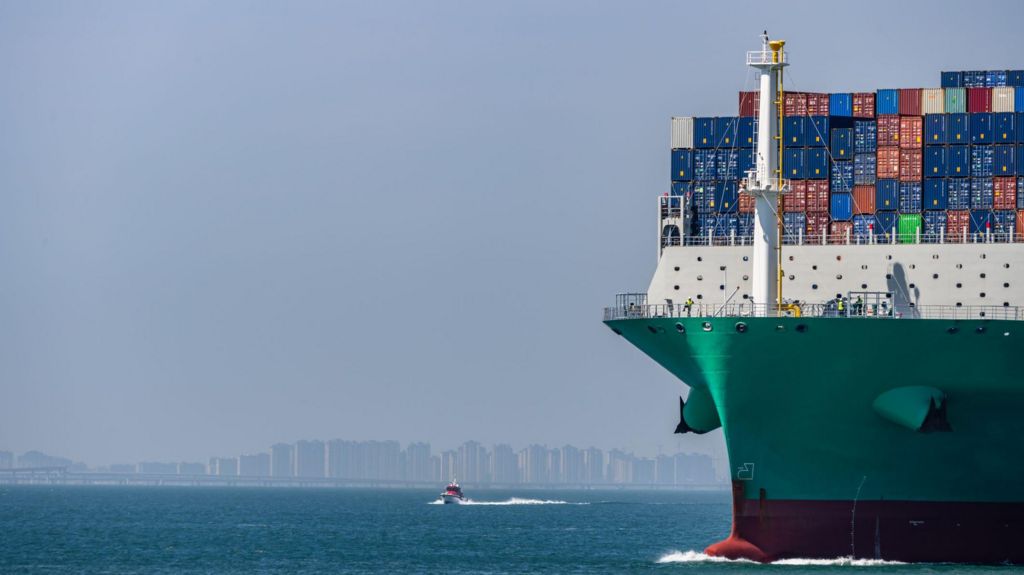
    A high-stakes virtual diplomatic summit focused on the Strait of Hormuz will bring together more than 40 global leaders Wednesday night, with Australian Prime Minister Anthony Albanese set to take part in talks aimed at reopening the critical waterway and cementing regional peace after a months-long blockade.

    Organized under the banner of the Strait of Hormuz Maritime Freedom of Navigation Initiative, the meeting is co-hosted by French President Emmanuel Macron and newly installed British Prime Minister Kier Starmer, who is currently in Paris to oversee the gathering. The summit is scheduled to kick off at 10:30 pm local time, with a clear policy agenda centered on long-term security for one of the world’s busiest global shipping chokepoints.

    Notably, US President Donald Trump will not be in attendance, multiple Australian Broadcasting Corporation reports confirm. The absence comes amid open friction between Trump and the Australian government over his earlier blockade of the strait, during which he publicly slammed Australia for failing to back his actions.

    “I’m not happy with Australia because they were not there when we asked them to be there,” Trump told reporters overnight. “They were not there, having to do with Hormuz. So I’m not happy, I’m not happy with them.”

    Albanese pushed back on the criticism Friday, clarifying that his administration had not received any formal new requests for support from the White House. The prime minister also pointed to Trump’s own past remarks downplaying the need for allied assistance. “And indeed, President Trump has himself said that he has got this and he has made that position clear,” Albanese told reporters.

    Trump has previously doubled down on this stance, writing on social media that the U.S. had achieved such overwhelming military success in the region that it “no longer ‘need,’ or desire” allies’ help — adding “WE NEVER DID!” for emphasis.

    According to an official statement from the British Prime Minister’s office, tonight’s summit will prioritize two core goals: shoring up the fragile ceasefire that has paused active hostilities in the region, and laying the groundwork for the permanent, secure reopening of the strait’s shipping lanes.

    “Discussions will also include supporting the vital work of the International Maritime Organisation, who will dial into the call, to ensure the safety of seafarers and vessels,” the statement continues. The release added that Starmer, who completed a tour of Gulf states last week, has prioritized aligning diplomatic, military and economic tools to protect the ceasefire and mitigate global energy and food price shocks that have driven up cost of living pressures worldwide since the blockade began.

    Following tonight’s diplomatic gathering, a separate multinational military planning session is scheduled for next week at the UK’s Permanent Joint Headquarters in Northwood, where defense officials will work through operational details for long-term security deployments in the region.

  • Bulgaria’s pro-Russian former president is seen as strong front-runner in Sunday’s election

    Bulgaria’s pro-Russian former president is seen as strong front-runner in Sunday’s election

    Just days after Hungarian voters delivered a sharp rebuke to Viktor Orbán’s authoritarian far-right agenda, Bulgaria is gearing up for another early national election that could propel a well-known left-leaning former head of state into the prime minister’s office.

    Years of unbroken political instability have gripped this EU and NATO member state of 6.5 million people, and this April 19 snap vote marks the eighth early election the country has held in just five years. The crisis stretches back to 2021, when long-serving conservative Prime Minister Boyko Borissov stepped down after mass public protests over systemic corruption and pervasive inequality. Since that turning point, no sitting administration has managed to hold power for longer than 12 months, falling to either mass street demonstrations or parliamentary backroom maneuvers. This constant rotation has eroded public trust in state institutions, driven widespread voter apathy, and pushed election turnout down to historic lows in recent cycles.

    The frontrunner in this latest vote is 62-year-old Rumen Radev, a former fighter pilot and air force commander who stepped down from his largely ceremonial post as president in January, cutting his second five-year term short to launch a bid for the prime ministership. One of Bulgaria’s most popular public figures, Radev leads the center-left Progressive Bulgaria coalition, and has campaigned on a promise of sweeping change to end the country’s ongoing political paralysis. His platform centers on rooting out the oligarchic corruption that has plagued Bulgarian public life for decades, a message that has resonated deeply with voters frustrated by years of graft and institutional failure. Mass anti-corruption protests that drew hundreds of thousands of mostly young demonstrators to the streets late last year forced the collapse of the previous conservative-led government, clearing the way for this new snap vote.

    Bulgaria has made major European integration strides in recent years: it joined the border-free Schengen Area in 2024, and adopted the euro as its official currency on January 1 this year. But the country has also faced growing concerns over Russian interference in its domestic politics. Last month, Sofia formally requested assistance from the EU’s diplomatic service to counter coordinated Russian efforts to shape Bulgarian public opinion through social media disinformation campaigns and pro-Kremlin propaganda outlets. Experts have warned that active networks of covert Russian influence accounts are working to sow political division within the country ahead of the vote.

    Unlike previous low-turnout contests, pre-election polling projects that turnout this Sunday will rise above 50%, up from an average of just 35% in recent elections. Analysts attribute the expected increase to the high-profile candidacy of Radev, as well as new confidence-building measures from the interim government, which has carried out nationwide police raids, made multiple arrests, and launched pretrial proceedings targeting widespread vote-buying.

    Most opinion polls, which carry a margin of error between 3 and 3.5 percentage points, show Radev’s coalition capturing more than 30% of the vote, putting it roughly 10 percentage points ahead of its closest competitor: Borissov’s center-right GERB party, the same conservative bloc that was ousted from power in December’s protests. While Radev is widely projected to win a plurality of votes, he will need to form a coalition government to rule, and he has already ruled out working with both GERB and the Movement for Rights and Freedoms, whose leader Delyan Peevksi has been sanctioned for corruption by both the United States and United Kingdom.

    The most likely potential coalition partner is the pro-Western bloc “We Continue the Change”, which polls forecast will take third place with 12% to 14% of the vote. However, deep disagreements over foreign policy threaten to derail any potential partnership. While Radev has officially condemned Moscow’s full-scale invasion of Ukraine, he has repeatedly opposed sending military aid to Kyiv and has publicly called for reopening diplomatic negotiations with Russia to end the conflict, aligning with the Eurosceptic and pro-Russian positions that have drawn support from a segment of the Bulgarian electorate.

    Even with these leanings, some political analysts argue that Radev is unlikely to attempt a major foreign policy reorientation toward Moscow. Evelina Slavkova, a researcher with Bulgaria’s Trend polling center, noted that the country’s existing institutional ties to the EU and NATO — reinforced by its recent accession to the eurozone and Schengen Area — create strong structural guardrails that keep Bulgaria anchored to Western institutions.

    “Our country has succeeded, despite all the obstacles, despite disagreements among some politicians, in building a very important set of tools that keeps Bulgaria on the right track,” Slavkova told the Associated Press. “These memberships allow us to be much more at ease” with our current Western alignment, she added.

    Slavkova also pointed out that Radev has deliberately avoided taking clear, definitive stances on divisive issues during the campaign, attempting to straddle competing political positions to broaden his appeal. While that strategic ambiguity may work well on the campaign trail, she noted, governing the country will eventually require Radev to offer clear, uncompromising answers to the pressing challenges facing Bulgaria.

  • EU officials in Hungary to discuss unlocking billions of euros held while Orbán was in charge

    EU officials in Hungary to discuss unlocking billions of euros held while Orbán was in charge

    Even before Hungary’s newly elected administration takes office, European Union officials have launched urgent preliminary negotiations with the transition team of election winner Péter Magyar in Budapest, aiming to resolve two critical bloc priorities: unlocking €17 billion ($20 billion) in frozen Hungarian aid and moving forward on a massive long-term loan package for Ukraine. The talks, scheduled for Friday, mark an accelerated push to build cooperation with the incoming government after 16 years of Euroskeptic rule under outgoing Prime Minister Viktor Orbán.

    European Commission spokesperson Paula Pinho confirmed the urgency of the discussions from Brussels on Thursday, noting that time is running out for several high-stakes policy files. By holding pre-inauguration talks, Pinho explained, the bloc intends to avoid unnecessary delays, ensuring that immediate action can be taken as soon as Magyar’s government is sworn in next month. “The clock is ticking for a number of topics,” Pinho said, adding that preliminary talks would clear the way for swift action “if appropriate” once the new government takes power.

    The billions in funding were frozen by the EU in 2022 over widespread concerns about systemic corruption and democratic backsliding during Orbán’s populist administration. For years, the European Commission accused Orbán’s government of eroding judicial independence, cracking down on independent media and academia, violating minority rights, and undermining the rule of law — all charges Orbán rejected as illegitimate interference in Hungary’s national sovereignty. Now, both the EU and Hungary’s incoming leadership have made unlocking the funds a top priority, as the injection of capital is widely seen as critical to stabilizing Hungary’s struggling economy.

    The €17 billion is split into two portions: €10 billion in COVID-19 economic recovery funds and €6.3 billion in EU cohesion funding allocated to support underperforming regional economies across the bloc. Negotiators are prioritizing unlocking the recovery funds first, as they face an August expiration deadline, after which the money will be permanently lost to Hungary. Around €10.2 billion of the originally frozen total was approved for release last year after partial reforms under Orbán, leaving the current €17 billion still held in Brussels.

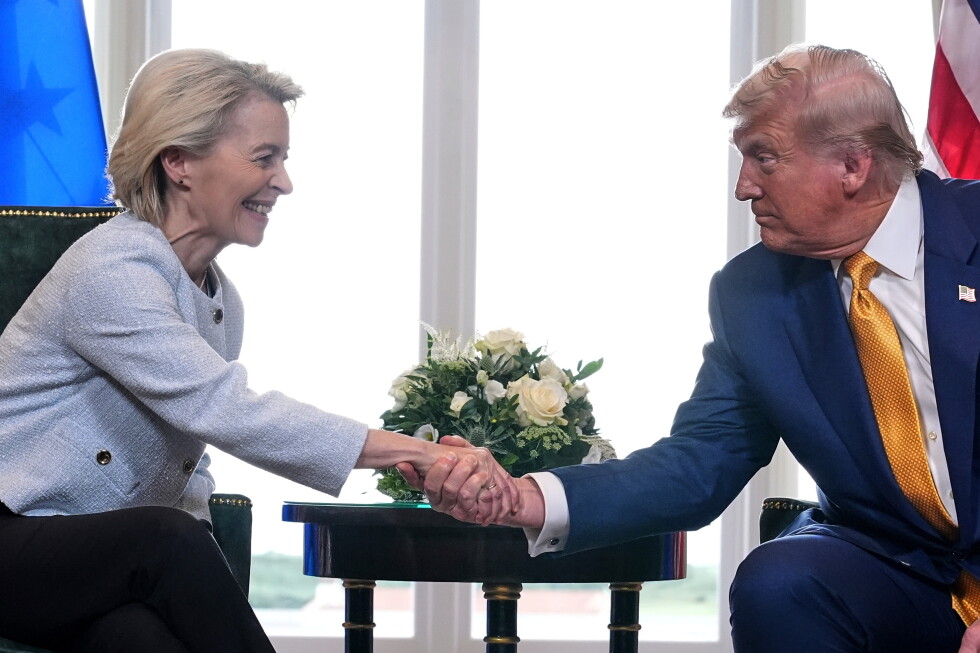
    Speaking on social platform X earlier this week, European Commission President Ursula von der Leyen — who was repeatedly targeted with harsh criticism by Orbán during the recent election campaign — laid out three clear conditions for unlocking the funds: restoring the rule of law, realigning Hungarian policy with shared EU values, and implementing structural reforms to unlock access to European investment. Magyar’s party Tisza secured a parliamentary supermajority in the April 12 landslide election, giving the incoming government the legislative power to pass deep, rapid reforms to meet these conditions.

    Magyar has already publicly committed to making judicial independence, academic freedom, press freedom, and anti-corruption overhauls his administration’s top policy priorities to unlock the funding. In his first post-election press conference Monday, Magyar emphasized that Hungary faces severe financial distress, and his government’s core mission is to secure the funds that rightfully belong to the country. He also made a key commitment to EU leaders: unlike his predecessor, he will honor the December 2024 agreement to provide Ukraine with a €90 billion macroeconomic stabilization loan, a deal Orbán unexpectedly vetoed after initially signaling support, sparking outrage across the 27-nation bloc.

    Policy analysts say the incoming government faces few technical barriers to unlocking the funds quickly, thanks to its legislative supermajority. Zsolt Darvas, a senior fellow at Brussels-based economic think tank Bruegel, noted that all required legislative changes can be completed in a single day if Tisza moves forward with its reform agenda. The core changes required are adjustments to judicial selection processes and judicial powers, changes that Darvas described as technically straightforward and easy to implement.

    To meet the August expiration deadline for COVID recovery funds, Darvas added that Magyar can follow a precedent set by Poland and Portugal, where unused funds were parked in national development banks for future disbursement if final reforms are not completed by the cutoff. Still, Hungary has already incurred significant costs from the two-year funding freeze: Darvas estimates that roughly €2 billion of the originally allocated €16 billion has already been permanently lost. On top of that, Hungary has paid €1 million in daily fines since June 13, 2024, plus a one-time €200 million penalty, over Orbán’s refusal to align Hungary’s asylum policies with EU standards. Darvas noted that Hungary could also end these fines by following Poland’s example, maintaining restrictive migration policies while still complying with basic EU legal requirements.

    While unlocking the frozen funds will not solve Hungary’s long-running economic crisis on its own, Darvas explained that complying with EU regulations will send a critical signal to international investors that Hungary is once again a stable, predictable destination for foreign capital. Beyond the frozen funds, Hungary could also access an additional €16 billion in low-interest loans through the EU’s new €150 billion Security Action for Europe (SAFE) initiative, a program designed to boost European defense industrial capacity as the United States reduces its security commitments to the continent. According to analysis from Jeremy Cliffe of the European Council on Foreign Relations, the combination of frozen funds and SAFE loans would total roughly 15% of Hungary’s annual GDP. Eighteen of the EU’s 27 member states have already accessed SAFE funding, and Hungary is eligible to join the program immediately once it aligns with EU defense policy priorities.

  • Trump says Iran war could end ‘pretty soon’

    Trump says Iran war could end ‘pretty soon’

    WASHINGTON, April 17 — Less than two weeks after addressing the ongoing Iran conflict from the White House Cross Hall, U.S. President Donald Trump has laid out an optimistic timeline for a conclusion to the military engagement. Speaking at a public event in Las Vegas, Nevada on Thursday, the commander-in-chief characterized the war’s progression as “going swimmingly” and suggested the conflict could wrap up much sooner than many analysts have projected.

    The update comes amid a months-long period of heightened tensions in the Middle East that has roiled global shipping, disrupted energy markets, and drawn sharp criticism and pushback from major global powers including China, which has openly opposed U.S. plans to sanction international buyers of Iranian crude oil and has repeatedly called for a diplomatic resolution to the standoff. The U.S. has imposed a full blockade on the Strait of Hormuz, a critical chokepoint for roughly 20% of the world’s daily oil trade, putting international commercial shipping at constant risk of disruption and escalating safety concerns for commercial crews and vessel operators across the region.

    This is not the first time Trump has spoken publicly about the conflict. On April 1, 2026, he delivered a formal address on the Iran war from the Cross Hall of the White House, marking one of his most high-profile public comments on the military operation before Thursday’s remarks in Nevada. The president’s latest optimistic projection contrasts with warnings from global foreign policy leaders that the conflict could spiral into a wider regional war that draws in multiple neighboring nations and disrupts the global economy for years to come.

    As of the latest update, diplomatic efforts to broker a ceasefire remain stalled, though the international community continues to push for a return to negotiations to avoid further bloodshed and regional instability.

  • War in the Middle East: latest developments

    War in the Middle East: latest developments

    A fragile 10-day ceasefire between Israel and Lebanon came into force at midnight local time on Thursday, marking a critical pause to weeks of cross-border conflict that has stoked fears of a wider regional war. The truce, brokered with U.S. mediation, comes hours after a deadly Israeli airstrike in southern Lebanon and intense last-minute exchanges of fire along the border, leaving casualties on both sides.

    Hours before the ceasefire deadline, an Israeli strike on the southern Lebanese town of Ghazieh killed at least seven people and wounded 33, according to Lebanon’s health ministry. Lebanese state media labeled the attack a “massacre against civilians”, with search and rescue operations still underway to pull survivors from rubble. In northern Israel, rocket fire from Hezbollah positions wounded two people, one seriously, in the towns of Karmiel and Nahariya, Israel’s national emergency service Magen David Adom confirmed.

    Despite official warnings from the Lebanese army urging residents of southern Lebanon to avoid returning to their war-damaged homes, dozens of families loaded their belongings into packed cars and began traveling south along Lebanon’s coastal highway before dawn, crossing the remains of a bridge destroyed in earlier Israeli bombing as soon as sunrise broke.

    The ceasefire agreement has drawn mixed official reactions across the region and globally. U.S. President Donald Trump, who announced the truce earlier this week, took to his Truth Social platform Thursday to urge Iran-backed militant group Hezbollah — which has fought Israeli forces along the border since launching rocket attacks in support of Iran last month — to uphold the pause in hostilities. “I hope Hezbollah acts nicely and well during this important period of time,” Trump wrote, adding that honoring the truce would be a “GREAT moment for them if they do. No more killing. Must finally have PEACE!” Trump also confirmed that the ceasefire explicitly includes Hezbollah, and announced he will invite Israeli Prime Minister Benjamin Netanyahu and Lebanese President Joseph Aoun to the White House for diplomatic talks in the coming weeks.

    Israeli Prime Minister Benjamin Netanyahu framed the 10-day truce as a potential opening for a “historic peace agreement” with Beirut, but reaffirmed that the full disarmament of Hezbollah remains a non-negotiable precondition for any long-term deal. Lebanese Prime Minister Nawaf Salam formally welcomed the ceasefire announcement, while a Hezbollah member of parliament told AFP that the group would respect the truce as long as Israel halts all attacks on its operatives — though Hezbollah has not issued an official formal statement endorsing the agreement. Iran, Hezbollah’s primary backer, also welcomed the truce. Iranian foreign ministry spokesman Esmaeil Baghaei confirmed in a Telegram post via state news agency IRNA that the Lebanon ceasefire is part of a broader earlier ceasefire understanding between Iran and the U.S. mediated by Pakistan, agreed to pause the current wave of regional conflict.

    On the Iranian nuclear front, Trump told reporters at the White House that Tehran has agreed to hand over its entire stockpile of enriched uranium, which the U.S. argues could be repurposed to build nuclear weapons. “They’ve agreed to give us back the nuclear dust,” Trump said, adding that Washington and Tehran are “close” to a final peace deal to end six weeks of open conflict.

    In the first hours of the ceasefire, Lebanon’s army reported that “several Israeli acts of aggression” have already occurred, accusing Israel of violating the terms of the truce. The violations have raised new concerns that the fragile 10-day pause could collapse before it can pave the way for longer-term diplomatic talks to end the months-long border conflict.

  • Japan’s presence in overseas drill raises concern

    Japan’s presence in overseas drill raises concern

    In a historic shift that marks the first time Japanese combat-capable forces have returned to Philippine territory since the end of World War II, Tokyo has deployed hundreds of Ground Self-Defense Force (GSDF) personnel to join large-scale joint military exercises hosted by the United States and the Philippines, a move that has drawn sharp criticism from regional security experts for accelerating Japan’s remilitarization and abandoning long-standing post-war security constraints.

    This year’s deployment represents a dramatic escalation from Japan’s observer-only participation in the same drills in 2025. For the 2026 iteration of the annual Salaknib and Balikatan exercises — the largest annual joint drills conducted by the U.S. and Philippines, covering maritime security, amphibious operations, humanitarian response and combat training — Japan has sent 420 armed GSDF troops, who will take part in active defensive operation training scenarios. This departure from Tokyo’s previous limited non-combat roles in multilateral exercises comes 81 years after the close of World War II.

    Regional security analysts warn that the deployment signals Japan has effectively broken free of the constraints imposed by its post-war pacifist constitution and its long-stated “exclusively defense-oriented” security principle, putting the country on a clear path of military expansion and buildup in the Asia-Pacific.

    Associate researcher Liu Shuliang from the Tianjin Academy of Social Sciences described the deployment of combat troops to Philippine exercises as an unprecedented post-WWII milestone for Japan. The move, he explained, reflects a deliberate shift in Tokyo’s security policy, a gradual loosening of restrictions tied to its exclusively defense-oriented doctrine, and a clear acceleration of national remilitarization. Beyond policy shifts, Japan’s growing participation in overseas joint drills demonstrates the country has successfully eroded both domestic legal limits and public opinion barriers that previously blocked overseas military engagement, allowing it to pursue expanded military influence across the Asia-Pacific.

    Liu outlined the clear strategic intent behind the combat-focused participation: the drills both help Japan adapt to the evolving requirements of modern informationized and intelligent warfare, and advance efforts to reinforce containment of China in the South China Sea and broader Western Pacific region. He added that Japan’s increasingly active role in these exercises threatens to erode the long-standing military balance that has preserved regional peace.

    This deployment is only the latest in a series of moves that confirm Tokyo’s shifting defense posture. In recent months, Japan has deployed long-range cruise missiles to bases in Kumamoto and Shizuoka prefectures, and the ruling Liberal Democratic Party has continued its high-profile push to revise the country’s pacifist post-war constitution.

    “Accelerated remilitarization and expanded military capabilities bring inherent risks to regional stability,” Liu noted. “Growing scale and frequency of overseas joint drills increase the chance of accidental encounters and strategic miscalculation, which in turn could spark a regional arms race and push Asia-Pacific states into a self-reinforcing security dilemma.”

    Zhang Yun, a professor of international relations at Nanjing University, echoed these concerns, pointing out that Japan is actively shifting from a purely defense-oriented force structure to one that combines both offensive and defensive capabilities. Tokyo’s ongoing investments in operational and counterstrike capabilities, paired with its growing focus on projecting military power across the Asia-Pacific, stand to have profound destabilizing impacts on regional strategic balance, he explained.

    Zhang added that Japan is actively embedding itself in the U.S.-led alliance framework, deepening military and bilateral cooperation with U.S. regional allies, and advancing the development of small-scale exclusive multilateral security blocs. In practice, experts say, this move sees Japan align with U.S. strategic priorities to build a more militarized exclusive bloc in the Asia-Pacific, while expanding its own military footprint and influence across the region — a dynamic that risks worsening regional tensions and undermining long-standing peace.

    This shift fits into a broader evolution of Japan’s security philosophy that has played out over the past decade, Zhang explained. From a posture of passive defense, Tokyo has moved to proactive overseas military engagement, transitioning away from its post-war identity as a peace-oriented nation to one that maintains full capabilities for offensive military operations abroad.

    In response to this accelerating remilitarization trajectory, experts emphasize that regional states must maintain heightened vigilance. The decades of peace and prosperity that Asia has enjoyed have been built on a foundation of cooperative security, and the future of the Asia-Pacific must continue to be rooted in open dialogue and shared development, Zhang noted.

    Liu called on regional nations to strengthen multilateral security dialogue, uphold the ASEAN-centered regional security architecture, and push back against efforts to build exclusive blocs or incite bloc confrontation aligned with U.S. strategic priorities. “It is essential to advance regional economic integration and strengthen mutually beneficial partnerships through multilateral mechanisms,” Liu said. “We must leverage the benefits of shared development to offset the risks that come with growing security confrontation in the region.”

  • Brazil’s Lula and Sánchez of Spain headline meetings of progressive leaders in Barcelona

    Brazil’s Lula and Sánchez of Spain headline meetings of progressive leaders in Barcelona

    BARCELONA, Spain – Brazil’s progressive President Luiz Inácio Lula da Silva touched down in Barcelona Friday for a high-profile two-day official visit, kicking off a series of multilateral gatherings that bring together like-minded leaders of small and mid-sized nations united by shared concerns over eroding democratic norms and the expanding influence of far-right populism across the globe.

    Lula and his Spanish counterpart Pedro Sánchez, both widely recognized as leading standard-bearers of progressive politics across their respective continents, have positioned themselves as vocal critics of the policies and agenda of U.S. President Donald Trump, who has previously imposed and threatened additional punitive tariffs on both of their economies. For years, reactionary political factions and far-right populist movements have gained steady traction across the Americas and Europe, creating a urgent push for coordinated action from centrist and left-leaning democratic leaders.

    The visit opens with a bilateral meeting between Lula, Sánchez and their full cabinet delegations at Barcelona’s historic former royal palace, where the two heads of state are set to sign a series of new bilateral agreements covering economic cooperation, technological innovation and joint social policy initiatives. These one-on-one talks will serve as a precursor to two major multilateral summits scheduled for Saturday, held at Barcelona’s sprawling central conference center, which will draw political leaders from every populated continent.

    The first of Saturday’s gatherings is the fourth edition of the Meeting in Defense of Democracy, a forum first launched by Brazil and Spain in 2024 to facilitate cross-border collaboration against what organizers frame as three core threats to participatory democracy: rising extremism, deepening political polarization, and rampant misinformation. Previous iterations of the summit have been hosted at United Nations headquarters in New York and in Santiago, Chile, in 2024.

    Despite both leaders’ public opposition to many of Trump’s policy choices – including his joint military strike against Iran alongside Israel – Lula pushed back against framing the summit as an explicit anti-Trump rally. Speaking in an interview with Spanish national newspaper El País Thursday, Lula clarified: “This is not going to be an anti-Trump meeting. We are going to discuss the state of democracy, to see what went wrong and what we have to do to repair it.”

    This year’s summit will boast an impressive lineup of attending heads of state and senior leaders, including European Council President Antonio Costa, Mexican President Claudia Sheinbaum, South African President Cyril Ramaphosa, and Colombian President Gustavo Petro, alongside leaders from smaller nations ranging from Uruguay and Lithuania to Ghana and Albania.

    Sheinbaum’s presence at the gathering comes on the heels of a breakthrough in a long-running diplomatic dispute between Madrid and Mexico City, when Spain’s King Felipe VI recently acknowledged that the Spanish conquest of the Americas resulted in widespread abuse against Indigenous peoples, clearing a path for normalized high-level engagement. Sheinbaum, who has emerged as one of the most influential progressive voices in Latin America amid the region’s recent rightward political shift and mounting pressure from the Trump administration, maintains high approval ratings at home and has struck a careful diplomatic balance: preserving functional ties with Washington while firmly pushing back on Trump’s policies that threaten regional sovereignty.

    Following the close of the democracy summit, most attending leaders will remain in Barcelona for the inaugural Global Progressive Mobilization, a new gathering of left-leaning politicians and policy experts hosted at the same venue later Saturday. The initiative grew out of a 2024 conversation between Sánchez and former Swedish Prime Minister Stefan Löfven, now president of the Party of European Socialists, during a meeting of European socialist leaders.

    Both Lula and Sánchez are set to deliver keynote addresses at the mobilization, which is expected to draw 3,000 total attendees including U.S. Democratic Senator Chris Murphy. The event will feature a full schedule of roundtable discussions covering a wide range of progressive priorities, from addressing global wage inequality to developing new strategies to improve progressive electoral performance at the national level.

    The summits cap a busy stretch of international diplomacy for Sánchez, who recently returned from a meeting with Chinese President Xi Jinping – his fourth trip to Beijing in just over three years. In a striking break with Washington, Sánchez’s center-left government has already closed Spanish airspace to U.S. military aircraft deployed for operations in the Iran war, and has refused to allow the U.S. access to jointly operated military bases in southern Spain for any activities related to the conflict. Earlier this week, Lula also released a public video message expressing “deep solidarity” with Pope Leo XIV, after Trump launched a series of public criticisms of the pontiff following the Pope’s public condemnation of the Iran war.

    Pol Morillas, director of Barcelona-based foreign affairs think tank CIDOB, notes that the dual summits represent a deliberate show of force by mainstream democratic leaders, who have watched far-right populist groups successfully leverage international gatherings to spread their core messages of anti-immigration policy and economic nationalism. Morillas frames the gatherings as aligned with the core argument of Canadian Prime Minister Mark Carney’s widely discussed January speech at the Davos World Economic Forum, which called on global “middle powers” to develop new collective strategies to navigate an increasingly fragmented world dominated by confrontational superpowers.

    Morillas told the Associated Press that Lula, Sánchez and the other participating leaders “share the understanding that the world is not just for the great powers.” The event reflects a growing push among mid-sized and smaller democratic nations to carve out a collective, independent voice on global issues ranging from democratic governance to conflict resolution. AP correspondents Megan Janetsky in Mexico City and Mauricio Savarese in Sao Paulo, Brazil contributed reporting to this article.

  • Turkey, Pakistan could become Israel’s new enemy, analyst says

    Turkey, Pakistan could become Israel’s new enemy, analyst says

    As speculation grows over shifting regional power dynamics in the Middle East and ongoing talks about a potential end to the current conflict against Iran, a prominent Israeli security analyst has thrown out a bold prediction: once Iran steps back from its decades-long role as Israel’s primary arch-adversary, either Turkey or Pakistan will step into that position.

    In an opinion analysis published in Israeli daily newspaper Maariv, analyst Boaz Golani framed the emerging dynamic as a consequence of rapidly changing geopolitical sands across the Middle East. He argues that years of escalating conflict targeting Iran, paired with the country’s collapsing domestic economy, has effectively degraded Tehran’s military capabilities to the point that it can no longer sustain its position as Israel’s main enemy. For more than 30 years under the leadership of Supreme Leader Ali Khamenei, Iran has intentionally occupied this antagonistic role toward Israel, Golani notes, but that era is rapidly drawing to a close.

    Golani’s analysis narrows the field of potential successors down to two major regional powers: Turkey and Pakistan, which he argues are already the only viable candidates vying for the position. He points to key shared traits that make both suitable candidates for the role: both are large, populous nations, with Turkey counting 85 million residents and Pakistan home to 240 million people. Both have solid Sunni Muslim majorities, are governed by authoritarian regimes deeply tied to military power, maintain large, capable standing armies, and, perhaps most surprisingly, both maintain stable, positive diplomatic relations with the United States – Israel’s closest and most powerful global ally.

    Recent geopolitical developments already lend credence to growing tensions between Israel and each of these nations, particularly Turkey. Over the past week, frictions between Jerusalem and Ankara have spiked sharply, with leaders trading sharp public accusations amid a deepening rift driven by two key flashpoints: Israel’s ongoing military campaign in Gaza and competing geopolitical ambitions for influence in Syria.

    Israeli Prime Minister Benjamin Netanyahu escalated the verbal clash in a public post on the social platform X, where he accused Turkish President Recep Tayyip Erdogan of violently oppressing Kurdish citizens within Turkey’s own borders and providing safe harbor and support to Iran’s “terror regime” and its regional proxy militias. Netanyahu has ramped up his critical rhetoric toward Turkey in recent months, as Ankara has moved to strengthen its diplomatic and security ties with two of Israel’s close regional partners: Greece and the Republic of Cyprus. Independent regional analysts have echoed Golani’s observation that any future rivalry between Israel and Turkey would likely center on competing interests in Syria, where clashing regional ambitions have simmered beneath the surface for years.

    Pakistan, meanwhile, has already positioned itself as a prominent critic of Israel in recent months. The South Asian nation has taken on a high-profile role as a neutral mediator for global peace talks between the United States and Iran amid the current conflict, and Pakistani officials have repeatedly voiced harsh condemnation of Israeli policy. Just last week, Pakistani Defense Minister Khawaja Asif drew international headlines when he called Israel an “evil” power and “a curse for humanity” in a post on X – a remark that was deleted just hours before U.S. and Iranian diplomatic delegations were set to arrive in Islamabad for Pakistani-mediated peace negotiations.

    In closing, Golani urged Israeli policymakers to begin immediate preparations for a future where one of the two nations emerges as its new primary adversary immediately after hostilities with Iran wind down. “The choice between them is not in our hands, and both options are almost equally bad,” Golani wrote. “The main lever we have in dealing with them is our relationship with the United States, which we must guard with all our might.”

    This report draws from original independent reporting by Middle East Eye, which provides unrivaled, independent coverage of the Middle East, North Africa, and global geopolitical developments.

  • Russia trains teenage influencers to churn out pro-war content

    Russia trains teenage influencers to churn out pro-war content

    Since launching its full-scale invasion of Ukraine in 2022, the Russian Kremlin has expanded its efforts to shape domestic public opinion from traditional offline spaces into the digital realm, with a new, targeted focus on cultivating a new generation of pro-war content creators. Through specialized youth camps and national competitions, teenage influencers are receiving formal training to spread the Kremlin’s hardline anti-Western narrative and build broader support for its military offensive across younger Russian demographics.

    This ideological campaign is no grassroots initiative — it is directed from the very highest levels of the Russian government. In a 2023 televised press conference, Russian President Vladimir Putin publicly framed youth education as a core pillar of Russia’s national strategy, quoting 19th-century Prussian statesman Otto von Bismarck to emphasize his priorities: “Wars are not won by generals, but by schoolteachers and parish priests.” He went on to stress that “educating young people in the spirit of patriotism is crucial” — a statement that laid out the clear mission of the nationwide youth outreach effort.

    To carry out this mission, the Kremlin has revived and expanded Soviet-style state-aligned youth organizations, including the Young Army (known as Yunarmiya in Russian) and the Movement of the First. The Movement of the First alone claims 14 million online members and more than 1,100 regional projects across the country, giving the state extensive reach into teenage communities. At a Young Army content creation camp held in Moscow this past April, more than 120 teenagers dressed in matching green sweaters and red berets gathered for days of instruction from sitting soldiers and veteran state media journalists. Trainees learned core technical skills: how to shoot engaging short-form videos, leverage artificial intelligence for content production, and grow social media audiences to maximize their reach.

    Vladislav Golovin, a former soldier who serves as chief of the Young Army’s general staff, framed the initiative as a values-building project. “We have created a huge team of kids, who understand how to broadcast government values and our organisation’s values,” he said in an official statement from the movement. Promotional footage from the camp shows teenagers cheering on a speed competition, where a cadet and Golovin raced to reload a sniper rifle — blending digital content training with explicit military-themed ideological engagement. Parallel to the Young Army camps, the Movement of the First runs national competitions that award prizes to teenagers who produce the top pro-Kremlin blogs and build the largest online followings for their content.

    Independent analysts who study Russian disinformation and ideological strategy warn that this targeted campaign carries significant long-term risks. Keir Giles, director of the UK-based Conflict Studies Research Centre, describes the initiative as a “concentrated campaign to restore the prestige of the Russian military.” He notes that teenagers aged 14 to 16 currently growing up in Russia have never experienced any political system outside of Putin’s governance, making them particularly receptive to the state’s messaging. “This is their reality, and so we should not be surprised if these new efforts to spread information reflect that reality,” Giles explained to AFP.

    Veronika Solopova, an artificial intelligence and disinformation researcher at the Technological University of Berlin, points out that social media platforms are uniquely suited to the Kremlin’s outreach goals. Platform algorithms are designed to deliver tailored content that sparks emotional engagement, creating an ideal environment for the state to push its narrative to young users. “Young people are famously easy to radicalise, easy to jump to conclusions on the nature of injustices, which, for Russia, is then all conveniently converted into army enrolments,” Solopova added.

    Data from independent Russian pollster Levada Centre backs up the focus on social media: a March 2024 poll found that more than half of Russians between the ages of 18 and 24 rely on social media as their primary source of daily news. Giorgi Revishvili, a former Senior Advisor to the National Security Council of Georgia, argues that the format of short-form digital content is inherently well-suited to shaping youth opinion. Young people’s “shorter attention spans, combined with the effortless shareability of clips and reels, make digital content an exceptionally powerful tool,” Revishvili noted.

    Dietmar Pichler, a disinformation and propaganda analyst at the European research network INVED, added that the content produced by these young influencers does not always take an overtly pro-war tone. Some content is “direct and radical,” while other pieces are “very subtle, aimed not at generating support for Russia, but at decreasing solidarity with Ukraine” among global audiences, he explained.

    For the teenagers participating in the program, the training has already shaped their understanding of their own role in spreading the Kremlin’s message. In one promotional clip published by camp organizers, a female teenage trainee summed up the core of what she had learned: “When you are the one behind the camera filming the entire process, making audiences happy, you realise … you are the one who has aroused these emotions in people. The truth lies in a frame, and we are operating the camera.”

  • Ex-Philippines MP arrested in Prague over corruption scandal

    Ex-Philippines MP arrested in Prague over corruption scandal

    In a major breakthrough in one of the Philippines’ most high-profile corruption probes, Philippine authorities have confirmed the arrest of former legislator Zaldy Co, a central suspect in a multi-billion dollar flood control project scandal, in the Czech Republic.

    President Ferdinand Marcos Jr. announced Thursday that local law enforcement in Prague detained Co shortly after he entered the country with invalid documentation. The former House of Representatives member, who held his seat from 2019 until stepping down last September, had been a fugitive outside the Philippines since July 2025, according to local Philippine media reports. Last year, Philippine officials revoked his passport and issued a red notice through Interpol to aid in his capture.

    Co stands accused of accepting illegal kickbacks from what investigators have labeled “ghost” flood control infrastructure projects — non-existent or shoddily completed works that have drained an estimated $2 billion from the national economy. The scandal burst into public view last year, when severe flooding across the archipelago upended millions of lives, triggering widespread public anger and massive anti-corruption protests across the country, as residents questioned why government flood control investments had failed to protect communities.

    The Philippines is one of the most disaster-prone countries in Southeast Asia, facing an average of 20 tropical storms and typhoons annually that bring regular, deadly flood events. In November 2025 alone, Typhoon Kalmaegi triggered catastrophic flooding across entire towns on the central island of Cebu, leaving at least 85 people dead. The failure of flood protection systems during that event amplified public calls for accountability for the decades of siphoned public funds meant for infrastructure resilience.

    The arrest comes with a key legal hurdle: the Philippines and the Czech Republic do not share a formal extradition treaty, leaving Co’s repatriation uncertain for the moment. Despite that challenge, President Marcos emphasized that Philippine officials are maintaining close, ongoing coordination with the Czech government to navigate all required legal processes and secure Co’s return to Manila as quickly as possible.

    Interior Secretary Jonvic Remulla told reporters in a Friday radio interview that he remains optimistic, projecting Co could be back in Philippine custody within one to three months.

    Co is not the only high-profile figure tied to the sprawling scandal. Other implicated individuals include the sitting Speaker of the House of Representatives, who has repeatedly denied all wrongdoing, and a former Senate president who was ousted from his leadership post after it was revealed that a infrastructure contractor had made large donations to his election campaign shortly before winning a major government flood control contract.