分类: politics

  • Xiong’an to become a hub of innovation

    Xiong’an to become a hub of innovation

    At a recent press conference held in Shijiazhuang, the capital of Hebei Province, provincial authorities unveiled their ambitious five-year development roadmap centered on advancing two key national strategies: the high-quality growth of the Xiong’an New Area and the deepening of coordinated development across the Beijing-Tianjin-Hebei region. Outlining priority work for the 15th Five-Year Plan period spanning 2026 to 2030, Hebei Governor Wang Zhengpu announced that the province will mobilize all necessary resources to transform Xiong’an into a leading national innovation hub and a benchmark example of high-quality development for the new era.

    A core strategic mission of Xiong’an’s development remains serving as a designated承载 zone for Beijing’s non-capital functions that have been planned for relocation. Wang detailed that provincial authorities will revise and improve master planning frameworks and supporting service systems for organizations relocating to the new area, continue steady progress on construction and launch of the first and second batches of relocation projects, and roll out the third batch of projects to maintain orderly, continuous development momentum.

    To make the new area attractive and welcoming for relocated teams and workers, Hebei will refine and optimize relocation support policies, and deepen integrated development with Beijing to ensure that relocated employees enjoy access to housing conditions and public services that match the high standards available in Beijing. “Our ultimate goal is to shift from the pattern of just individuals moving to the whole family relocating together, so that new residents can put down roots and truly make Xiong’an their home,” Wang explained.

    Early signs of progress and tangible benefits are already emerging after years of targeted development. China Datang Group Technology Innovation Co., a subsidiary of state-owned power giant China Datang Co., completed its relocation from Beijing to Xiong’an in late 2023. Liu Haiyang, deputy director of the company’s hydrogen preparation research institute, shared that the firm currently employs 85 people, nearly 70 of whom are research staff holding master’s degrees or doctorates. Thanks to generous housing subsidies for relocated enterprises and highly streamlined administrative approval services in the new area, the company has been able to expand its research and development focus on cutting-edge future energy sectors including hydrogen energy and grid energy storage, Liu added.

    Beyond the core Xiong’an New Area, other regions across Hebei are also actively taking on non-capital functions relocated from Beijing, advancing the coordinated development strategy across the entire region. For example, the Cangzhou Biomedical Industrial Park, located around 150 kilometers southeast of Xiong’an, has already attracted 49 biomedical enterprises relocated from Beijing and Tianjin, successfully realizing the development model of “R&D in Beijing and Tianjin, manufacturing in Cangzhou”, according to Hebei Executive Vice Governor Zhao Chenxin. Zhao added that Hebei is continuing to deepen this cross-regional collaboration model of “research and innovation in Beijing-Tianjin, industrial transformation in Hebei”. Data shows that in 2025, the total value of technology contracts signed between Hebei and its two neighboring municipalities exceeded 120 billion yuan (equivalent to approximately 17.6 billion U.S. dollars), representing a year-on-year increase of 16.4 percent.

    A second innovative development model gaining significant traction across Hebei is the province’s “shared intelligent manufacturing” framework, which is driving upgrading of county-level industrial clusters across the province. Hebei Vice Governor Zhao Dachun explained that under this model, small and medium-sized enterprises (SMEs) share access to expensive production equipment, joint R&D platforms, and even national and global market distribution channels, transforming the historic pattern of cutthroat competition into mutually beneficial win-win cooperation.

    This innovative model has already delivered striking operational results. In Qinghe County, a specialized production base for cashmere products, a central shared factory equipped with 4,500 automated knitting machines can now fulfill a custom order for 200 cashmere sweaters within a single working day, a level of efficiency that would be impossible for most small individual manufacturers. Hebei plans to scale this shared manufacturing model across a wider range of industries in the coming years. By 2030, the combined total revenue of the province’s 107 key county-level industrial clusters is projected to reach 5 trillion yuan, and Hebei aims to retain its position as one of the provinces with the largest number of national-level competitive industrial clusters in China. A core focus of this expansion will be smart upgrading, Zhao Dachun noted, with artificial intelligence and big data technologies deployed to build a digital “industrial brain” that streamlines and optimizes procurement, R&D, production, and corporate financing processes for all participating SMEs.

  • Chinese vice-premier urges regular assistance, consolidation of poverty alleviation

    Chinese vice-premier urges regular assistance, consolidation of poverty alleviation

    BEIJING — At a national working conference held in Beijing on Monday, Liu Guozhong, Chinese Vice-Premier and member of the Political Bureau of the Communist Party of China Central Committee, outlined key priorities for the nation’s poverty alleviation consolidation efforts, calling for steady progress in rolling out regular assistance mechanisms to protect hard-won anti-poverty achievements.

    Addressing attendees, Liu emphasized that preventing large-scale returns to poverty remains a core policy priority, even years after China achieved its goal of eradicating extreme poverty. He noted that 2026 marks the inaugural year for the full implementation of the regular assistance framework, making targeted, forward-thinking action particularly critical this year.

    To meet the framework’s goals, Liu urged policymakers to strengthen targeted, timely support for vulnerable groups, prioritize development-driven assistance models that empower communities rather than providing only short-term aid, and expand employment assistance through diverse, multi-channel initiatives tailored to local labor market needs.

    He also stressed the necessity of ramping up support for China’s less economically developed regions, further refining the national social security system to cover at-risk populations, and boosting the effectiveness of long-standing East-West regional cooperation schemes and targeted support programs led by central government departments.

    The conference concluded with a tangible step forward in advancing this cross-regional cooperation: eight provincial-level administrative regions in eastern China signed formal assistance agreements with 10 provincial-level regions in western China, cementing new partnerships for shared development and poverty prevention work over the coming term.

  • China defends firms as US sanctions Hengli over Iran oil

    China defends firms as US sanctions Hengli over Iran oil

    On April 24, the United States escalated tensions over Iranian oil trade by blacklisting a major Chinese independent refinery and dozens of shipping-linked entities, triggering a sharp rejection from both the targeted firm and the Chinese government, which has pledged to protect domestic companies operating under international law.

    The U.S. Treasury Department’s Office of Foreign Assets Control (OFAC) added Hengli Petrochemical (Dalian) Refinery Co Ltd to its Specially Designated Nationals and Blocked Persons (SDN) List, labeling the facility — China’s second-largest independent “teapot” refinery — as one of Iran’s most critical crude oil customers. OFAC claims the Dalian refinery generated hundreds of millions of dollars in revenue for Iran’s military through its crude purchases, alleging that since at least 2023, the company has taken delivery of more than five million barrels of Iranian crude carried by multiple already sanctioned shadow-fleet tankers.

    Alongside the action against Hengli (Dalian), OFAC sanctioned roughly 40 vessels and shipping companies that Washington alleges form part of Iran’s informal shadow fleet for oil shipments. The targeted entities have registrations across multiple jurisdictions, including Hong Kong (China), mainland China, the United Arab Emirates, Vietnam and Malaysia. OFAC specifically named five Hong Kong-owned vessels linked to alleged Iranian oil cargo movements: Lisboa, owned by Lisboa Shipping Company Limited, which it says delivered more than 2.5 million barrels of Iranian naphtha to the UAE between July 2025 and January 2026; Lynn, owned by Ting Tao Company Limited, which conducted ship-to-ship crude transfers off Malaysia before delivering cargo to China; Stellar Beverly, owned by Yegua Trading Limited, which transported over two million barrels of Iranian crude to China in 2025; Covenio, owned by Extensive Shipping Limited, which moved more than six million barrels of Iranian oil to China since early 2025; and Golden Sunrise, owned by Xifoides Group Limited, which has carried several million barrels of Iranian crude since mid-2025.

    Hengli Petrochemical Co, the Shanghai-listed parent company of the sanctioned Dalian refinery, has forcefully denied all allegations, stating that it has operated in full compliance with all applicable national and international regulations throughout its history. The company emphasized it has never engaged in any trade with Iran, and all of its crude suppliers provide formal certification that their crude supplies originate from jurisdictions not subject to U.S. sanctions.

    “The U.S. Treasury’s decision to place Hengli (Dalian) on the SDN List lacks both factual and legal basis, and constitutes an unlawful unilateral sanction,” the company said in an official statement. “We firmly oppose these groundless allegations and unlawful measures, and will take all necessary steps to safeguard the legitimate rights and interests of the company and its shareholders.” Hengli added that its operations remain fully normal as of the statement, with production utilization holding at high levels, output and sales proceeding according to plan, crude inventories sufficient to cover more than three months of operations, and ongoing procurement activities unaffected by the sanctions.

    The Chinese Foreign Ministry has echoed the company’s rejection of the U.S. action. Spokesperson Lin Jian told a regular press briefing on Monday that “China opposes illicit unilateral sanctions that have no basis in international law. We urge the U.S. to stop willfully slapping sanctions and using long-arm jurisdiction. China will firmly defend the lawful rights and interests of Chinese companies.”

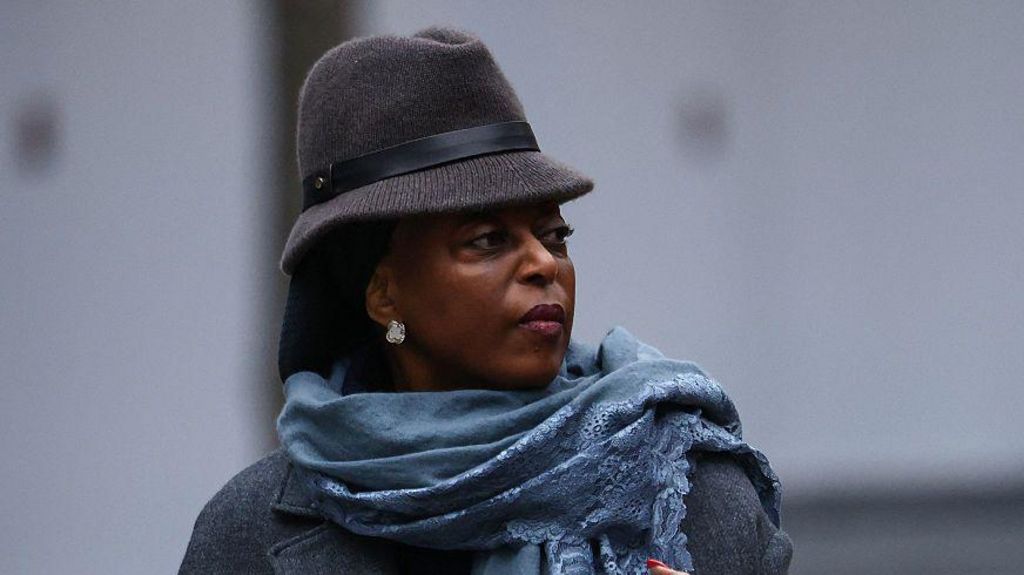
    The Dalian refinery at the center of the dispute is part of the empire built by Fan Hongwei, who currently ranks as the eighth-wealthiest self-made woman in the world and was named China’s richest woman by Bloomberg in 2022. Fan and her husband Chen Jianhua launched their business career in 1994 by purchasing a near-bankrupt textile mill in Suzhou, growing the business dramatically during the 1997 Asian financial crisis through strategic capacity expansion and discounted equipment acquisitions. In the early 2000s, the group moved upstream into chemical production to secure its raw material supply, investing heavily in purified terephthalic acid (PTA) manufacturing to cut operational costs. In 2010, the group outbid multiple state-owned energy firms to win approval for the 20-million-metric-ton Dalian refining and petrochemical complex on Changxing Island, completing the company’s vertically integrated business model and establishing it as one of China’s largest private energy and manufacturing powerhouses. Financial results released by the parent company in mid-April 2026 show 2025 full-year revenue fell 14.9% year-on-year to 201 billion yuan (equivalent to roughly US$28 billion), while net profit edged up 0.4% to 7.1 billion yuan.

    Observers note the timing of the new sanctions, which comes as reports have emerged of potential renewed peace talks between Washington and Tehran. Jiangsu-based political commentator Hua Xiangming argues the sanctions are a deliberate move by the U.S. to gain negotiating leverage ahead of any talks. “Targeting foreign refineries and freezing overseas assets to strengthen bargaining power reflects a typical form of hegemonic politics,” Hua said, adding that such actions abandon all pretense of commitment to free trade and open market principles.

    Hua also pointed to the lack of transparency around the U.S. claims, noting that while Washington alleges the sanctions relate to billions of dollars in Iranian oil purchases, no detailed evidence has been made public. He warned that the increasing weaponization of the U.S. dollar for geopolitical goals is accelerating global de-dollarization trends. “The dollar’s share of global foreign exchange reserves has already fallen below 60%, a multi-decade low. Countries now see that relying on dollar settlement carries the risk of asset freezes and financial coercion,” Hua explained. “Alternatives are already emerging, from non-dollar oil pricing mechanisms to new cross-border payment channels such as China’s Cross-Border Interbank Payment System (CIPS), which are speeding up global efforts to reduce dependence on the dollar.”

    The latest sanctions action builds on earlier U.S. pressure on global financial institutions over Iran-related transactions. On April 15, U.S. Treasury Secretary Scott Bessent confirmed Washington had issued warnings to banks across multiple jurisdictions, including two banks based in Hong Kong, that they could face secondary sanctions if they process transactions linked to Iranian oil trade. On April 21, British outlet The Telegraph reported that a U.S. federal court in New York has ordered five major global banks — HSBC, Standard Chartered, JPMorgan, Citibank and Bank of New York Mellon — to turn over internal documents as part of a civil investigation into alleged Iran sanctions evasion. None of the banks have been accused of wrongdoing, and are only required to cooperate as correspondent banking service providers.

    U.S. media, citing anonymous Treasury Department sources, has reported that Iran routed approximately US$9 billion in oil-related transactions through U.S. correspondent bank accounts in 2024 via a network of front companies, with most of that activity centered in Hong Kong, Oman and the UAE. A Henan-based financial commentator described the $9 billion figure as a “hot potato” for global financial institutions, noting that banks are now forced to spend months combing through transaction records to identify Iran-linked flows, disrupting normal business operations, raising compliance costs, and creating significant operational strain for institutions prioritizing stability. In response to the new risk environment, the commentator expects banks to tighten compliance scrutiny for all Middle East-based clients, particularly those with any potential ties to Iranian trade. Over the medium to long term, however, the commentator predicts Iran will develop alternative transaction channels to continue moving funds, while global oil traders will increasingly shift to settlement in currencies such as the euro and Chinese renminbi to reduce their exposure to U.S. dollar-related financial risk.

  • Australia moves to tax Meta, Google and TikTok to fund newsrooms

    Australia moves to tax Meta, Google and TikTok to fund newsrooms

    MELBOURNE, Australia — The Australian government has tabled a groundbreaking new legislative proposal that would impose a revenue-based tax on three major global digital platforms — Meta, Google, and TikTok — to compensate local news creators for their journalistic work, marking the nation’s second attempt in three years to enforce fair compensation for news content shared on big tech services.

    Unveiled on Tuesday, the draft legislation will be submitted to Australia’s Parliament by July 2. The policy, dubbed the News Bargaining Incentive, is structured to push large platforms to negotiate voluntary commercial deals with domestic news organizations. Under the framework, any qualifying platform that declines to strike such agreements will face a 2.25% levy on their annual Australian-generated revenue. If platforms do agree to compensate publishers for news content, they will qualify for tax offsets that reduce their overall financial obligation.

    This proposal comes in response to the failure of Australia’s 2021 regulatory framework, the News Media Bargaining Code. That original law required platforms to negotiate payment for news content with publishers, threatening binding arbitration if no deal was reached. While most major platforms opted to strike initial deals to avoid arbitration rather than face judicial price-setting, many have since refused to renew agreements, opting instead to remove news content from their platforms to avoid payment obligations.

    The Australian government projects the new incentive scheme will generate between AU$200 million and AU$250 million (US$144 million to US$179 million) annually — a figure that matches the highest annual total of platform payments to news outlets under the original 2021 code. Collected funds will be distributed to local news organizations proportional to the number of journalists each outlet employs, according to Communication Minister Anika Wells.

    Prime Minister Anthony Albanese defended the policy, arguing that journalistic work must be fairly compensated rather than exploited by multinational corporations for profit. “It shouldn’t just be able to be taken by a large multinational corporation and used to generate profits for that organisation with no compensation appropriate for the people who produce that creative content,” Albanese told reporters. “We think that investment in journalism is critical to a healthy democracy.” The prime minister also pushed back against potential criticism from the U.S. — where all three targeted firms are based — noting that Australia is a sovereign nation acting in its own national interest.

    Not surprisingly, the proposal has drawn sharp pushback from the targeted digital giants. All three argue the plan is an unfair “digital services tax” that misrepresents the value exchange between platforms and news publishers, and will not create a sustainable future for the Australian news sector.

    Meta argued in an official statement that news organizations voluntarily share content on its platforms because they benefit from the distribution and audience reach the company provides. “The idea that we take their news content is simply wrong,” the company said, adding that the tax would apply even if platforms host no news content at all, calling the policy “a government-mandated transfer of wealth from one industry to another” that would only create a news sector dependent on government subsidies rather than sustainable innovation.

    Google echoed the criticism, saying it already maintains active commercial agreements with Australian news creators. The company also pointed out that the policy arbitrarily excludes other major digital platforms active in Australia, including Microsoft, Snapchat, and OpenAI, despite the changing landscape of how consumers access news. “It ignores the fact that Google already has commercial agreements with the news industry, misunderstands how the ad market changed and mandates payments from some companies while arbitrarily excluding platforms,” Google’s statement read. TikTok has not yet issued a public response to the proposal as of Tuesday.

  • NZ axes plan for WW2 sex slaves statue after Japan protest

    NZ axes plan for WW2 sex slaves statue after Japan protest

    A highly contentious proposal to install a bronze memorial honoring World War II-era ‘comfort women’ — the systemic victims of Japanese military sexual slavery — has been struck down by local authorities in Auckland, New Zealand, following direct diplomatic pushback from Tokyo.

    The planned monument, which would have mirrored the design of dozens of similar memorials across the globe by depicting a seated young girl beside an empty chair to represent all unrecognized victims, was a gift to New Zealand from the Korean Council for Justice and Remembrance, a South Korean non-profit that has spent decades advocating for acknowledgement and redress for the surviving comfort women and the legacy of the atrocity.

    Historians estimate that between 1932 and 1945, more than 200,000 women and girls from across occupied East and Southeast Asia were forced into sexual servitude in Japanese military brothels. The majority of those victims were Korean, with additional large groups hailing from mainland China, the Philippines, Indonesia, and Taiwan. Only a handful of survivors are still alive today, and the movement to erect public memorials is framed by advocates as a way to preserve the historical record of the atrocity for future generations.

    Japan’s Embassy in Wellington had publicly warned Auckland Council that installing the statue in a public municipal garden would risk severe damage to bilateral diplomatic relations between Japan and New Zealand. In a formal letter to council leadership, Japanese Ambassador Makoto Osawa argued that the memorial would deepen social rifts in New Zealand’s diverse, multiethnic society, particularly between the country’s resident Japanese and Korean communities, who currently coexist peacefully.

    Osawa emphasized that Tokyo does not seek to deny or minimize the history of military sexual slavery during World War II, noting that successive Japanese governments have engaged in sustained diplomatic efforts to address the issue with South Korea over the decades. The ambassador’s pushback echoed a longstanding Japanese policy of opposing public comfort woman memorials in allied countries, a stance that has already triggered diplomatic friction in other parts of the world. In 2018, Osaka cut official sister-city ties with San Francisco after the US city installed a permanent comfort woman memorial in a public park, a move that reflected the depth of Tokyo’s opposition to such monuments.

    In its official explanation for the rejection, Auckland Council’s Land and Property Advisory head Kim O’Neill told the BBC that the recommendation to turn down the proposal grew out of public consultation, which showed a clear lack of broad community support for the project. The rejection was later formalized in a vote by the Devonport-Takapuna Local Board, the local governing body with jurisdiction over the proposed site.

    New Zealand’s national government previously confirmed that Japan had submitted formal diplomatic representations on the statue proposal, but emphasized that decisions around public monuments and memorials fall entirely under the purview of local government and community stakeholders, rather than the national executive. The outcome has reignited debate around the balance of diplomatic courtesy, historical memory, and grassroots advocacy, as activists vow to continue pushing for a public memorial to honor the victims of Japanese military sexual slavery in New Zealand.

  • White House Correspondents’ Association Dinner shooting suspect charged with attempted assassination

    White House Correspondents’ Association Dinner shooting suspect charged with attempted assassination

    On April 27, 2026, senior U.S. law enforcement officials held an official press conference at the Department of Justice in Washington D.C. to update the public on a high-stakes security incident that unfolded the previous weekend at the annual White House Correspondents’ Association Dinner. At the briefing, officials displayed images of the arsenal recovered from 31-year-old suspect Cole Tomas Allen, who is now facing federal charges for orchestrating an assassination plot targeting former president and current officeholder Donald Trump.

    Following the Saturday night shooting incident, Allen appeared for his first federal court hearing at the U.S. District Court for the District of Columbia on Monday, where prosecutors formally levied three criminal counts against him: attempted assassination of the sitting U.S. president, illegal interstate transportation of firearms, and unlawful discharge of a weapon during the commission of a violent felony.

    Per CNBC reporting citing prosecution filings, when law enforcement officers took Allen into custody, he was found in possession of a 12-gauge pump-action shotgun, a .38 caliber handgun, three bladed weapons, and a cache of additional dangerous equipment. Law enforcement investigators have since reconstructed the suspect’s pre-attack movements, confirming that Allen traveled cross-country from his home state of California to Washington D.C. via passenger train, and smuggled his full arsenal into the Washington Hilton — the venue hosting the high-profile dinner — before launching his attack.

    Shortly before he attempted to breach security, Allen sent an email to family members that laid out his premeditated plan in explicit terms. In the message, he identified senior Trump administration officials as his intended targets, ranked in order of priority from highest to lowest. He also wrote, “I walk in with multiple weapons and not a single person there considers the possibility that I could be a threat.”

    Live event footage captured the chaotic moments of the attack: Allen attempted to rush past a magnetometer security checkpoint, triggering an immediate exchange of gunfire between the suspect and responding Secret Service agents. One Secret Service officer was wounded in the shootout before Allen was apprehended.

    Immediately following the incident, Trump, First Lady Melania Trump, Vice President JD Vance, and all sitting Cabinet members were rapidly evacuated from the event venue to secure locations. Live broadcasts from the scene showed hundreds of attendees scrambling for cover, crouching behind dinner tables to avoid stray gunfire.

    U.S. Secret Service spokesperson Anthony Guglielmi confirmed the incident in an early post on X, noting that the agency launched a full investigation into the shooting near the dinner’s main security screening area in close coordination with the Metropolitan Police Department of D.C.

    The incident marks the latest in a growing wave of political violence that has rocked the United States in recent years. Trump has been the target of multiple assassination attempts and repeated death threats both during his 2024 presidential campaign and his current second term in office. The most high-profile prior attack came in July 2024, when a shooter opened fire on Trump at a campaign rally in Butler, Pennsylvania, leaving the then-candidate with minor injuries after he narrowly escaped the assault.

  • New policy to strengthen rights for new occupations

    New policy to strengthen rights for new occupations

    Against a backdrop of explosive growth in China’s gig economy and rising concerns over unfair working conditions for flexible employees, China’s top governing bodies have introduced a landmark policy framework designed to safeguard the legal rights and interests of workers in new forms of employment. The policy, made public on April 27, 2026 by the General Offices of the Communist Party of China Central Committee and the State Council, addresses widespread industry abuses that have accompanied the sector’s rapid expansion, when more than 240 million people now work in flexible roles across the country. According to data from the National Bureau of Statistics, approximately 84 million of these workers hold positions in emerging occupations including food delivery riders, ride-hailing drivers, parcel couriers and online livestreamers. The new regulation sets clear, phased goals for industry reform: by 2027, all gig workers are expected to benefit from standardized labor protocols, safer working environments and fully enforceable legal rights protections. Over a three to five-year implementation window, the entire regulatory system will mature, fostering more harmonious labor relations, greater social recognition for flexible occupations, and enabling comprehensive personal development for gig workers. A key innovation introduced by the policy is the nation’s first mandatory algorithm filing system, which requires all digital employment platforms to complete regular third-party reviews and verification of their operational algorithms. The regulation explicitly guarantees gig workers three core algorithm-related rights: the right to be informed of algorithm rule changes, the right to participate in rule-setting discussions, and the right to voice opposition to unfair algorithm design. When platforms adjust core algorithm parameters that directly impact workers’ livelihoods — including income distribution rules, service pricing structures and estimated delivery timeframes — they are legally required to solicit and consider feedback from trade unions and elected gig worker representatives. The policy also targets the harmful “involution-style” cutthroat competition that has become endemic in the platform economy, where extreme price wars and efficiency overemphasis have suppressed worker wages and intensified job-related stress. Regulatory authorities are directed to strictly prevent infringement on new employment groups’ rights, with mandates to investigate unfair commission schemes, unequal distribution of customer order traffic, and abusive exercise of market dominance by large platforms. To address gaps in social support for mobile flexible workers, the policy expands access to basic public services tied to workers’ habitual residence rather than formal household registration, allowing social service coverage to follow workers as they relocate across provincial and municipal boundaries. It also calls for strengthening the national social security system, including expanding pilot programs for mandatory work-related injury insurance and gradually incorporating gig workers into the national housing provident fund system that provides subsidized housing support. Industry and labor experts have praised the policy as a transformative institutional innovation for modern labor governance in China. Tang Daisheng, a professor of economics and management at Beijing Jiaotong University, noted that the framework replaces the previous unregulated ecosystem driven by uncontrolled capital expansion and opaque algorithmic optimization with a new, fairer operating environment. Under the new system, platforms are required to operate in full compliance with labor laws, algorithmic decision-making is transparent and equitable, and gig workers are guaranteed access to decent, dignified work. “The policy directly targets the current practice where large platform companies seize market share through destructive subsidy wars, a race to the bottom that leaves workers with meager incomes and systematically eroded rights,” Tang explained. “This reform will force platforms to shift their competitive focus to improving service quality and user experience, rather than increasing profits by squeezing gig workers.” Tang added that the mandatory algorithm filing system requires platforms to disclose core algorithm logic, underlying data sources and decision-making rules to regulators before new algorithms are deployed, shifting the previous reactive regulatory model — where intervention only occurred after worker rights were already violated — to a proactive prevention-focused governance model. This new structure allows regulators to trace violations directly to their source and hold platform leadership legally accountable for abuses. The policy builds on earlier regulatory actions to curb unfair platform practices: in July 2025, the State Administration for Market Regulation summoned executives from three of China’s largest food delivery platforms — Taobao Instant Commerce (formerly Ele.me), Meituan, and JD.com — to demand compliance with e-commerce, anti-unfair competition, and food safety laws. The summons was issued in response to a rampant industry price war that included low-threshold consumer coupons, free delivery vouchers and even zero-cost promotional items that put extreme downward pressure on rider earnings. For gig workers already navigating grueling daily schedules, the new rules bring long-awaited relief to longstanding grievances. Yan Dongjian, a Meituan delivery rider based in Beijing, told reporters he works 12-hour shifts even during slow business seasons, earning roughly 400 yuan ($59) per day. During the busier winter peak season, his daily income can climb to 500 to 600 yuan with platform performance incentives. “The biggest challenge we face is traffic safety,” Yan said. “Road accidents are extremely common. We’re all just here to earn a living, but the platform-imposed delivery time limits are unreasonably tight.” He explained that a typical 25 to 26-minute delivery window already includes time spent waiting for restaurants to prepare orders, leaving almost no buffer for unexpected delays. If a restaurant falls behind on cooking, riders are automatically penalized for lateness, creating constant, high-stress pressure throughout every shift. Yan noted that the new regulations will curb one of the most common worker grievances: arbitrary fine deductions from platform operators. “Platforms used to dock pay for any small delay with no room for appeal. Now they won’t be able to do that as easily,” he said. Yang Bin, a Beijing-based ride-hailing driver who now takes nearly all of his passenger orders through mobile platform apps, echoed the widespread hope for meaningful change, while noting that consistent implementation will be the key to success. Yang has long raised concerns about unfair order dispatch algorithms that allocate more high-value trips to a small subset of drivers, leaving many full-time drivers with inconsistent incomes. “If the new rules are actually enforced, and every driver gets fair treatment with more balanced order distribution, this will be a huge win for all of us,” Yang said.

  • Inside Trump press dinner shooting suspect’s court appearance

    Inside Trump press dinner shooting suspect’s court appearance

    A high-stakes court hearing unfolded this week in Washington D.C. for 20-year-old Cole Tomas Allen, the man accused of plotting to assassinate former U.S. President Donald Trump ahead of a high-profile press dinner. As reported by the BBC, the proceedings marked the first public court appearance for Allen, who faces federal charges of attempted assassination of a former U.S. head of state. Court documents outline that the alleged plot was targeted at Trump, who remains the leading Republican contender for the 2024 presidential election, during the annual media dinner hosted by the White House Correspondents’ Association, a widely attended event that draws top political journalists, government officials and public figures each year. No details of a potential plea have been released at this early stage of the legal process, and the hearing centered on establishing formal charges and setting future procedural deadlines. Law enforcement officials have confirmed that they intercepted Allen before he could carry out any violent action, though they have not yet released full details of the evidence gathered in the case. The incident has sparked renewed national discussion around political violence in the United States, amid a deeply polarized 2024 election cycle that has already seen multiple high-profile threats against political figures. Security arrangements for major public political events, particularly those involving leading presidential candidates, are now being reviewed by federal and local law enforcement agencies to address emerging risks.

  • Australia aims to tax tech giants unless they pay news outlets

    Australia aims to tax tech giants unless they pay news outlets

    On Tuesday, the Australian government introduced a sweeping set of draft regulations targeting three of the world’s largest technology companies — Meta, Google, and TikTok — that would mandate the firms compensate domestic news publishers for hosting journalistic content, or face a mandatory annual levy equal to 2.25% of their Australian revenue. The legislative update marks a major correction to the country’s existing news media bargaining framework, closing a longstanding loophole that previously allowed digital platforms to avoid payment obligations by simply removing all news content from their services, a tactic both Meta and Google have deployed in past standoffs with Canberra over similar policy proposals.

    Speaking to reporters after the draft was released, Prime Minister Anthony Albanese made clear that the new rules aim to hold large multinationals accountable for their reliance on original journalism to drive user engagement and platform growth. “Large digital platforms cannot avoid their obligations under the news media bargaining code,” Albanese said, noting that the three companies were specifically targeted based on their massive domestic user bases and significant Australian annual revenue. Under the draft framework, the firms will first get the opportunity to negotiate voluntary commercial compensation deals with local news outlets; only those that refuse to reach agreements will be subject to the compulsory levy.

    The policy comes as traditional news organizations across the globe face an existential crisis: as more consumers turn to social media and search engines for their daily news, the majority of digital advertising revenue has flowed to big tech platforms, rather than to the newsrooms that create the original content attracting those users and ad dollars. A 2024 study from the University of Canberra confirms this shifting landscape, finding that more than half of all Australian adults now get their news primarily from social media platforms.

    Albanese emphasized that the core principle of the legislation is basic fairness for journalism. “Journalism needed to have a ‘monetary value attached to it,’” he said. “It shouldn’t be able to be taken by a large multinational corporation and used to generate profits with no compensation.” Communications Minister Anika Wells echoed this sentiment, adding: “We believe it’s only fair that large digital platforms contribute to the hard work that enriches their feeds and that drives their revenue.”

    Reactions from the targeted tech firms align with past opposition to similar regulations globally. Meta pushed back against the proposal in a statement to Agence France-Presse, calling the new rules “nothing more than a digital services tax.” The company argued that news organizations voluntarily share content on its platforms to gain access to large audiences, adding that “the idea that we take their news content is simply wrong.” Google has also previously threatened to restrict access to its search engine in Australia if forced to implement mandatory compensation for news outlets, while Meta has already moved to end voluntary content deals with news publishers across the United States, United Kingdom, France and Germany in recent months. The 2021 debate over Australia’s original bargaining code saw Meta temporarily block all news content for Australian users, drawing widespread backlash.

    The draft legislation is now open for public consultation, with the comment period set to close in May. Following the consultation phase, the bill will be amended and introduced to the Australian Parliament for a vote later this year. Supporters of the reform say it is a critical step to sustain independent local journalism, which serves as a cornerstone of Australian democratic discourse, while critics argue the levy unfairly targets tech companies and could lead to reduced service access for Australian consumers.

  • The real reason Iran and the US cannot end the war: Money

    The real reason Iran and the US cannot end the war: Money

    For more than a decade, Donald Trump anchored his approach to Iran in uncompromising economic pressure, building his political brand around criticizing the 2015 Joint Comprehensive Plan of Action (JCPOA) nuclear deal for sending what he called “plane loads of cash” to Tehran. Now, as he seeks to broker a deal to end the ongoing Middle East war, the success of his goal rests entirely on the one issue he has spent years refusing to budge on: how much financial relief he is willing to give the Islamic Republic.

    According to Alex Vatanka, a senior Iran expert at the Washington-based Middle East Institute, financial concessions are not just a secondary ask for Iran – they are the foundation of any potential compromise. Multiple current and former U.S. and Arab officials speaking to Middle East Eye confirm that Trump’s reluctance to ease sanctions and unlock frozen Iranian assets is the primary barrier to progress, leaving negotiations deadlocked and at high risk of collapse.

    Contrary to widespread public framing, the core dispute is not Iran’s nuclear program or uranium enrichment limits. Tehran has even tabled a proposal to set the nuclear issue aside temporarily in order to reopen the closed Strait of Hormuz and end hostilities. Insiders familiar with the negotiations say the actual intractable sticking point is sanctions relief, a far more politically charged issue for the Trump administration than nuclear caps.

    A former U.S. official who has consulted with Gulf and American stakeholders on the talks put it bluntly: “Everyone has ideas about a compromise on enrichment, but the hardest circle to square for Trump is lifting sanctions. My understanding is that this is more sensitive than the nuclear file.”

    The roots of this impasse stretch back to Trump’s longstanding Iran policy. After first campaigning against the JCPOA, he unilaterally withdrew from the landmark 2015 agreement in 2018 and reimposed crippling, sweeping sanctions that have gutted Iran’s economy. The JCPOA had granted Tehran broad sanctions relief in exchange for capping uranium enrichment at 3.67% – a level far below what is required for a nuclear weapon – and opening all nuclear facilities to rigorous international inspections. Even after a ceasefire took hold between Iran, the U.S. and Israel this year, Trump has shown no willingness to retreat from his maximum pressure economic campaign.

    Vatanka noted that Trump’s own early rhetoric has boxed him in politically. “The way he misrepresented the JCPOA from the get-go has made life harder for him now, because anything he does will be measured by what he criticised Obama for,” he explained.

    This political trap played out publicly in recent weeks, when the U.S. rolled out new sanctions targeting a Chinese oil refinery and dozens of shipping firms and vessels involved in transporting Iranian oil just hours before scheduled talks between U.S. and Iranian delegates in Islamabad. The meeting was immediately scrapped.

    Diplomats say the reason for this intransigence is clear: if the war ends with Iran in a stronger financial position than it started, the Trump administration would face massive political backlash at home. Barely a month before U.S. and Israeli forces launched strikes against Iranian targets, U.S. Treasury Secretary Scott Bessent celebrated the impact of sanctions at the World Economic Forum in Davos, boasting that U.S. economic pressure had sent Iran’s currency, the rial, “into free fall” and pushed the Iranian people “out on the streets.”

    “This is economic statecraft – no shots fired. And things are moving in a very positive way here,” Bessent said at the time. Turning around that policy now would amount to a major reversal.

    For Iran’s side, however, the need for financial relief is existential. While Tehran has earned higher oil revenues by leveraging its control of the Strait of Hormuz during the war, and can still sell stored crude held on tankers in East Asia in the short term, the long-term economic damage is catastrophic. U.S. and Israeli strikes have caused an estimated $300 billion in damage to Iran’s infrastructure, and an Iranian business newspaper reported in April that full reconstruction will take at least 12 years. For Iran’s leadership, which has seen its domestic popularity rise amid the conflict, securing tangible economic gains to deliver to the public is critical to consolidating that support after the war.

    Alan Eyre, a former member of the U.S. negotiating team that drafted the original JCPOA, argues that the nuclear issue has become a secondary, outdated concern in the current talks – an analogy he compared to Betamax, the obsolete 1970s video format. “Everyone is talking about what the Iranians are willing to give up. But that is largely a function of what they are willing to get,” Eyre said. “What the Iranians want is money.”

    Eyre outlined four key pathways Tehran has outlined to secure that financial compensation: direct war reparations, tolling revenue for access to the Strait of Hormuz, unlocking tens of billions in frozen foreign assets, and broad, permanent sanctions relief. Of these options, he views a Hormuz tolling agreement as the most politically feasible path to a deal.

    Estimates suggest Iran holds roughly $100 billion in frozen assets held abroad – a sum equal to nearly a quarter of the country’s total annual GDP. Billions are held in escrow accounts (including $6 billion in Qatar), while oil sale revenues are locked up in South Korea, Japan and European financial institutions. In April, Axios reported the U.S. had offered to unfreeze $20 billion in assets in exchange for Iran abandoning its entire enriched uranium stockpile, but political headwinds have stalled any movement.

    Eyre noted that Trump is extremely unlikely to approve the release of major tranches of frozen assets before the November 2026 U.S. midterm elections, given his years of political attacks on the 2015 JCPOA over the “plane loads of cash” claim. Iran, for its part, is deeply wary of temporary sanctions relief after being burned by Trump’s 2018 withdrawal from the original nuclear deal. After that exit, Western and Asian businesses fled the country out of fear of secondary U.S. sanctions, leaving Iranian firms with worthless contracts and no economic gains to show for their nuclear concessions.

    “The bad thing about sanctions relief for the Iranians is that it’s reversible. That is what they are scared about – giving away the family jewels for something that can be taken away,” Eyre explained.

    Discussions of a Strait of Hormuz tolling system have also faced major obstacles. Trump initially floated the idea of the U.S. and Iran sharing toll revenue for commercial access to the strategic waterway, but the administration has since walked back that proposal. Secretary of State Marco Rubio told Fox News the U.S. will never accept Iran formalizing control over the international waterway. “They cannot normalise – nor can we tolerate them trying to normalise – a system in which the Iranians decide who gets to use an international waterway and how much you have to pay them to use it,” Rubio said.

    A senior Arab diplomat told MEE that Washington’s initial openness to the idea faced fierce pushback from Gulf Arab states, including the United Arab Emirates, Bahrain and Kuwait, which refuse to accept Iran as the legitimate gatekeeper of the waterway that most of their oil exports pass through. The diplomat added that Iran is well aware its neighbors are already moving ahead with projects to bypass the Strait of Hormuz entirely, regardless of the outcome of talks: Iraq, for example, is already expanding crude shipments by truck to Syria’s Mediterranean coast and increasing the capacity of its oil pipeline to Turkey.

    “Iran knows that a toll is unpalatable with practically all of its neighbours. There would be constant friction, and efforts are underway to bypass Hormuz in the future,” the diplomat said.

    Trita Parsi, executive vice president of the Quincy Institute, argues that Iran is only using the tolling proposal as a bargaining chip to win broader sanctions relief. “I don’t think the money from tolling is anywhere near the amount of money that sanctions relief will provide them,” Parsi explained. “The Iranians are approaching these talks as an attempt to get a final deal with the US, and that means all sanctions have to be lifted.”

    Djavad Salehi-Isfahani, an Iran economy expert at Virginia Tech, agreed that lasting sanctions relief is non-negotiable for Tehran as it seeks to stabilize the country after the war. “Inside Iran, the image of this government has actually improved in people’s eyes because of the war. But the sacrifices made have to lead to something better for people when this ends,” he said. “Iran doesn’t just need to have the ability to export oil, but buy and sell on the international market. They need to create manufacturing jobs. The war needs to end with Iran becoming a normal economy.”

    While the issue of full economic normalization remains politically toxic for Trump, Parsi argues that a deal could still be framed as a political win for his base. Trump himself has previously suggested that reviving Iran’s economy could open massive new opportunities for U.S. businesses. Parsi notes that lifting all sanctions would open the largest new market to U.S. companies since the collapse of the Soviet Union, a point that could resonate with Trump’s pro-business supporters. Even so, Parsi acknowledged that securing a deal will be an uphill battle.

    “This will be the biggest fight Trump has had with the Israelis, who oppose any sanctions relief. They will do everything they can to stop it,” he said.