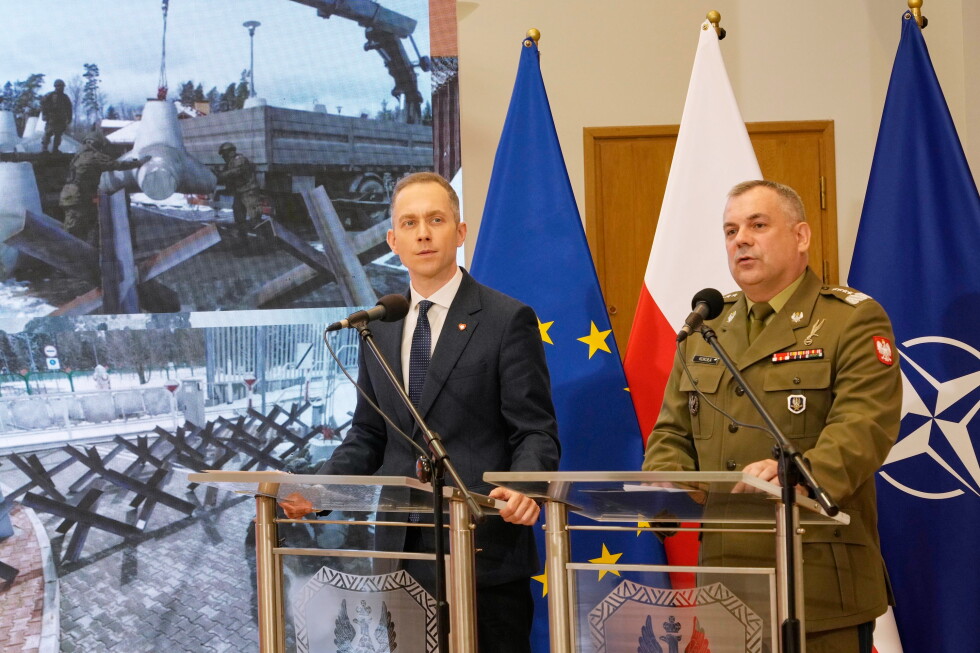
On NATO’s strategically critical eastern flank, Poland has taken a formal step to open the door for a long-term American military presence, with a senior Polish defense official confirming Wednesday that U.S. authorities have signaled preliminary interest in establishing a permanent base on Polish territory.
Cezary Tomczyk, Poland’s deputy defense minister, shared the update with The Associated Press in an interview at the Polish Defense Ministry in Warsaw. His comments came one day after the Polish government approved a series of regulatory and administrative measures to clear the way for the permanent base, framing Tuesday’s government resolution as a formal invitation to the United States.
Tomczyk noted that the joint financing model for the base, which would see costs split between the two allied nations, has drawn U.S. engagement with the proposal. “The Americans are interested in the Polish offer to place a permanent base here,” he told reporters. When reached for comment on Tomczyk’s remarks, U.S. Department of Defense officials based in Washington declined to share any new announcements regarding the potential deployment.
Polish Defense Minister Władysław Kosiniak-Kamysz has reiterated that Polish authorities are moving forward with all necessary preparations to facilitate the base, though he emphasized that the final decision rests entirely with U.S. leadership. Currently, approximately 10,000 U.S. military personnel are deployed in Poland, with the vast majority serving on rotational deployments rather than permanent assignments. As the U.S. undertakes a full review of its European force posture, covering both troop levels and weapons deployments, Polish officials are pushing to convert the current rotational presence into a permanent deployment of thousands of additional troops.
The current talks mark the latest development in a turbulent series of shifts in U.S. force planning for Central Europe that began earlier this year. In May, the Trump administration unexpectedly paused the deployment of 4,000 additional troops to Poland, a move that confused policymakers on both sides of the Atlantic even as the White House labeled Poland a “model ally” for meeting NATO’s defense spending target. The sudden halt came on the heels of then-President Donald Trump’s public threat to withdraw thousands of U.S. troops from Germany, a decision widely attributed to then-German Chancellor Angela Merkel’s criticism of a U.S. military strike on Iran.
Within days of the canceled deployment, Warsaw dispatched a high-level delegation led by Tomczyk to Washington for emergency talks. While Tomczyk was still in the U.S. capital, Trump announced via social media that the U.S. would instead deploy an additional 5,000 troops to Poland, reversing the earlier pause. Since that reversal, U.S. officials have only confirmed that they are reorganizing their European troop footprint, but have released no concrete details about where specific units will be reassigned.
Despite the lack of clarity from Washington, Polish defense leaders have repeatedly expressed optimism that Poland will secure a permanent increase in U.S. troop presence. Speaking in mid-May, Kosiniak-Kamysz noted that transitioning the existing rotational deployment model to a permanent status would bring significant strategic benefits to both nations, adding “Sometimes a rotating model can change into a permanent model and this is always much better.”
When asked whether the recent Polish government resolution was prompted by clear, formal interest from the U.S. side, Tomczyk said that Warsaw and Washington have maintained ongoing working-level dialogue about the proposal. “The next step, after the two sides confirmed they are interested in this, is the official offer from the Polish state,” he said. He declined to predict a final timeline or outcome, noting “We can’t tell fortune from tea leaves. But we are a serious state which is presenting a serious offer to the Americans, in connection with the dialogue we are having with the Americans.”